
the Creative Commons Attribution 4.0 License.
the Creative Commons Attribution 4.0 License.
 | 12 Dec 2025
Dry and moist convective upper bounds for near-surface temperatures
Abstract. The current pace of climate change challenges the statistical methods used for bounding heatwave intensities, prompting the need for a physics-based upper bound to extreme surface temperatures (Ts). A recently proposed approach for deriving such a bound uses the hypothesis that convective instability limits the development of heat extremes. Here, we show that under this hypothesis, the absolute upper bound for extreme Ts — obtained in the limit of zero surface humidity — is set by dry convection. This bound is reached when the mid-troposphere and the surface are connected by a dry adiabat. Previous work suggested that this upper bound is instead set by moist convective instability and exceeds the dry convective limit. We resolve this discrepancy by showing that moist convection only limits heatwave development when surface specific humidity is larger than a threshold, and that the moist convective upper bound cannot exceed the dry limit. Yet, numerous temperature profiles in observational and reanalysis records do exceed the dry convective limit. We show that these occur exclusively in regions where daytime superadiabatic layers develop near the surface and the boundary layer top reaches deep into the mid-troposphere. Our work underscores the need for a finer understanding of the structure of dry convective boundary layers to constrain the intensity of future heatwaves. We conclude with an overview of the different upper bounds applicable in dry and moist scenarios, including the roles of processes such as entrainment and convective inhibition.
-
Notice on discussion status
The requested preprint has a corresponding peer-reviewed final revised paper. You are encouraged to refer to the final revised version.
-
Preprint
(2765 KB)
-
Supplement
(596 KB)
-
The requested preprint has a corresponding peer-reviewed final revised paper. You are encouraged to refer to the final revised version.
- Preprint
(2765 KB) - Metadata XML
-
Supplement
(596 KB) - BibTeX
- EndNote
- Final revised paper


Journal article(s) based on this preprint
Interactive discussion
Status: closed
- RC1: 'Comment on egusphere-2025-6032', Anonymous Referee #1, 08 Jan 2026
-
RC2: 'Comment on egusphere-2025-6032', Anonymous Referee #2, 12 Jan 2026
Review of “Dry and moist convective upper bounds for near-surface temperatures” by Nicolas and Hotz.
Summary:
The authors revisit a moist convective upper bound for near-surface air temperatures proposed by Zhang and Boos (2023, ZB23), identifying an important inconsistency in their argument: their upper bound takes surface specific humidity to be zero, but that implies the lifting condensation level must exceed 500 hPa, contradicting another assumption. In attempting to correct this inconsistency, the authors show that, logically, the upper bound should be instead set by dry convection but, in fact, the resulting dry convective upper bound is regularly exceeded in dry and/or high altitude regions. They attribute this to the presence of a superadiabatic layer at the surface, which is ignored by ZB23 and in the derivation of their updated dry convective bound. They further note that the gradient of this layer is proportional to the surface sensible heat flux, which ties this argument back to the surface energy budget. They conclude by noting that the structure of dry convective boundary layers and resulting bounds on heatwaves depends strongly on land surface properties.
Major comments:
This is an interesting and well-written study. The authors clearly explain the inconsistency in ZB23 and make a compelling argument that I find persuasive. I support publication with minor revisions. That said, the paper could be improved in various ways.
I like the study but it is, to some extent, a victim of its own success. It has clearly shown a major problem with ZB23’s upper bound. To recap, ZB23’s upper bound was surprising because it provided an upper bound for heatwaves purely from free-tropospheric observations. That was somewhat surprising since it is well-known that land surface properties – in particular, dry soils – are very important in attaining the highest temperatures during heatwaves. Their upper bound strongly implied a “top down” control on heatwaves that dominated land surface controls, which was both elegant and practically useful, since the land surface is much messier and poorly understood than the free troposphere, in general. In contrast, the authors conclude here that (line 327) “in such conditions [arid and/or high altitude], T500 may not reliably be considered an external control on surface temperature – understanding the dynamics of PBL growth over dry surfaces may be a more fruitful approach to bounding heatwave intensities in such cases.” This is a more traditional “bottom up” view, in which the details of the land surface are extremely important; but that is also less interesting, since there is a large literature that already makes that point and takes that approach. The authors should more comprehensively review that literature, particularly the many studies that couple a surface energy budget to a bulk mixed layer model to study heat extremes (e.g., Miralles et al. 2014, van Heerwaarden and Teuling 2014, Stap et al. 2014). The authors should also discuss and cite Garratt (1992), which looks at upper bounds on land surface temperatures from the perspective of the surface energy budget, although with a focus on land surface temperature rather than near-surface air temperature, and without coupling the surface energy budget to the PBL.
My question for the authors is: what is learned from this study, beyond the problems identified with ZB23 (which are certainly novel, but apply narrowly to that one prior study) and beyond what is already known in the literature (especially since we already know that land surface properties dictate the magnitude of the superadiabatic layer and are a major control on heatwaves)? What results hold the most lasting value? I encourage the authors to reflect on these questions in revising the manuscript so that the study receives the attention it deserves.
Specific comments:
Abstract: “We show that these occur exclusively in regions where daytime superadiabatic layers develop near the surface and the boundary layer top reaches deep into the mid-troposphere.” I suggest adding “…, as is common over dry land surfaces” or similar, so that readers are not left with the impression that daytime superadiabatic layers are mysterious or a novel finding of the study. It is well understood that they should arise near dry land surfaces.
Abstract: “Our work underscores the need for a finer understanding of the structure of dry convective boundary layers to constrain the intensity of future heatwaves.” It would be good to more explicitly note the need for better understanding of land surface properties relevant to heatwaves – this is in stark contrast to ZB23 and their top down perspective. And, land surface properties are the major source of uncertainty in understanding dry convective boundary layers, anyway.
Line 157: “Under the assumption that Ts is limited by the onset of convective instability, …” Given the authors’ findings, how warranted is this assumption now? ZB23 argued that the onset of moist convective instability triggered rainfall, which acted to reduce surface temperatures. In contrast, dry convective instability needn’t trigger rainfall over land. I know that the authors are aware of this, and to some extent are simply working through the implications starting from the arguments of ZB23, but it would be good to more clearly make those caveats as the argument progresses.
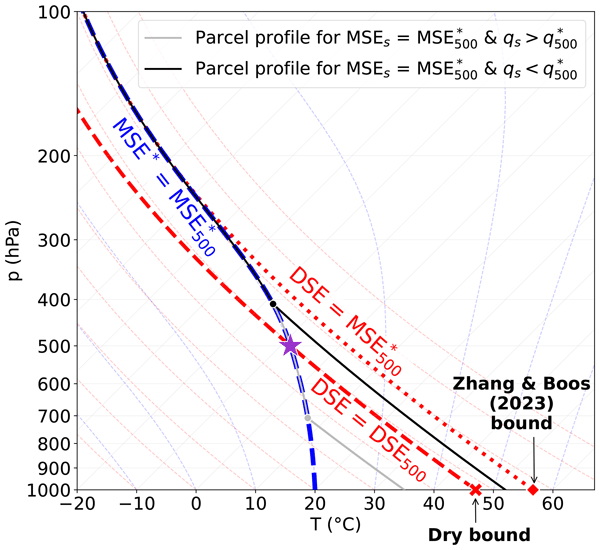
Figure 1: please make the grey and black lines thicker so as to more easily discern them from other lines on the Skew-T diagram.
Line 183: “The profile of Fig. 2b suggests that two conditions are required to exceed the dry adiabatic limit: a deep boundary layer and a strong superadiabatic surface layer.” It would be good to recognize here that decades of prior literature indicates that these two conditions tend to coincide: a strong superadiabatic surface layer typically implies a strong surface sensible heat flux, which, in turn, implies a high boundary layer, all else equal. This would be predicted by any bulk mixed layer model of the ABL coupled with a dry land surface, and there are many studies that look at this already. The two conditions are not exactly equivalent, of course, particularly if the free tropospheric stability is large, but there is a lot of work already looking at this.
Line 187: “This suggests that there is a quasi-equivalence between a PBL reaching higher than 500 hPa and dry bound exceedance.” Yes, exactly, which brings me back to my earlier question: since rainfall is not necessarily triggered when the PBL grows higher than 500 hPa, how much relevance does this have to constraining maximum temperatures over land?
References
Garratt, J.R., 1992. Extreme Maximum Land Surface Temperatures. Journal of Applied Meteorology and Climatology 31, 1096–1105.
Miralles, D.G., Teuling, A.J., Van Heerwaarden, C.C., Vilà-Guerau De Arellano, J., 2014. Mega-heatwave temperatures due to combined soil desiccation and atmospheric heat accumulation. Nature Geosci 7, 345–349. https://doi.org/10.1038/ngeo2141
Stap, L.B., Hurk, B.J.J.M. van den, Heerwaarden, C.C. van, Neggers, R.A.J., 2014. Modeled Contrast in the Response of the Surface Energy Balance to Heat Waves for Forest and Grassland. Journal of Hydrometeorology 15, 973–989. https://doi.org/10.1175/JHM-D-13-029.1
van Heerwaarden, C.C., Teuling, A.J., 2014. Disentangling the response of forest and grassland energy exchange to heatwaves under idealized land–atmosphere coupling. Biogeosciences 11, 6159–6171. https://doi.org/10.5194/bg-11-6159-2014
Citation: https://doi.org/10.5194/egusphere-2025-6032-RC2 -
AC1: 'Comment on egusphere-2025-6032', Quentin Nicolas, 20 Feb 2026
We thank both reviewers for their positive and encouraging comments. Reviewer 1 expressed great appreciation for the manuscript, and we warmly thank them for their positive review. Reviewer 2 expressed some concerns about the way we framed the implications of the manuscript: our work points out a shortcoming of the approach of Zhang & Boos (2023) in the limit of very dry surface air, and suggests focusing on PBL properties in order to obtain a universal bound on surface temperatures in such cases. Yet, this approach has been extensively taken in previous heatwave studies, especially in the land-atmosphere interactions community. We have made important changes to the first part of our discussion in order to clarify this point, better acknowledge existing literature on PBL growth during heatwaves, and provide potential avenues forward. We expect to submit a revised version soon, along with a point-by-point answer to Reviewer 2's comments. The main changes that will feature are summarized below.
The central point of the study remains the problem identified with ZB23 in the limit of dry surfaces. This result is, of course, only relevant to one prior study, but we believe that it is important to clarify the mechanics of these upper bounds based on convective stability assumptions, as they have gained traction in recent years. In particular, one of the contributions of the paper is to clearly state under which conditions different kinds of upper bounds can be applied, as well as to clarify the processes that can lead to exceedance of these bounds (section 5.2 and conclusions).
However, as correctly identified by the reviewer, we do not provide an alternative upper bound valid for these dry cases: the dry upper bound relies on T500, which itself becomes slaved to Ts for very deep boundary layers, and we do not give a bound on the strength of the superadiabatic layer. The original discussion perhaps did not emphasize this enough, and we have modified the text to stress it and better reflect potential ways forward.
Specifically, the revised manuscript describes the two views of heatwaves based on “bottom-up” and “top-down” controls, and clarifies that one of the conclusions of our study is a breakdown of the “top-down” view for very dry heat extremes. We also clarify the fact that our study does not provide an upper bound for dry heat extremes (because of superadiabaticity and surface control on T500), but we discuss two complementary avenues for deriving such a bound: the search for a maximal reachable PBL depth, and the search for a bound on superadiabatic layer strength.
For the first avenue, we now extensively review the “bottom-up” literature on land-PBL coupling and PBL growth over dry surfaces, including the studies the reviewer suggested. However, we point out that the vast majority of these studies look at the processes that grow the PBL, and not those that can arrest its growth (we acknowledge some studies looking at cloud formation linked to diurnal PBL evolution). Does the PBL keep growing ad infinitum in dry heatwave conditions, or does it always lead to cloud formation after a long enough time? Can it reach a radiative–dry-convective equilibrium? Such questions are all valuable research directions.
For the second avenue, we believe that little focus has been placed on superadiabatic layer strength in the context of heatwaves. Many studies using a bulk model of the convective boundary layer do not include a superadiabatic layer, and studies using single-column or more complex models do not put much emphasis on it. We have kept our discussion of the controls on superadiabatic layer strength but slightly modified it to recognize that the main control, i.e. the surface sensible heat flux, is itself relatively well understood thanks to a vast body of land-atmosphere studies.
We hope that this new framing of our discussion (also reflected in the last paragraph of our conclusions) better conveys the main takeaways and limitations of our paper, and thank the reviewer again for raising these points.
Citation: https://doi.org/10.5194/egusphere-2025-6032-AC1
Peer review completion


Interactive discussion
Status: closed
-
RC1: 'Comment on egusphere-2025-6032', Anonymous Referee #1, 08 Jan 2026
"Dry and moist convective upper bounds for near-surface temperatures" by Nicolas and Hotz explores the constraints imposed by atmospheric convection on how hot near-surface air can get. This study follows recent influential papers on these "upper bounds", notably by Zhang & Boos (2023). The authors follow a similar approach to Zhang & Boos and assume that the temperature at the upper bound is realised when the atmospheric column becomes statically unstable. A typical bulk measure of stability is used, namely the difference between near-surface moist static energy (MSE) and saturation MSE at the 500 hPa level (a more accurate formulation in terms of potential temperature is also presented).
The study highlights an important inconsistency in the Zhang & Boos formulation that results in a non-trivial effect on the upper bound. Specifically, the authors highlight that two assumptions embedded in the Zhang & Boos framework – of zero near-surface specific humidity and a lifted condensation level below 500 hPa – are inconsistent with each other. An alternative upper bound on near-surface temperature (limited by dry convection), which reconciles these inconsistencies, is derived and is shown to better capture daily maximum temperatures over NH extratropical land in ERA5. The authors also introduce an additional upper bound which is determined by moist convection and is only relevant when near-surface specific humidity is large enough so that an adiabatically-lifted parcel reaches saturation below 500 hPa. Taken together, these new upper bounds derived by Nicolas and Hotz represent a significant advance in our understanding of how convection limits heat extremes. The authors then explore why a non-negligble fraction of days can exceed the theoretical upper bound and highlight the importance of deep boundary layers and super-adiabatic lapse rates very close to the surface. This latter effect is under-explored for heatwaves and the manuscript neatly sets up the problem of understanding the physics of these super-adiabatic layers as a key next question in this line of research.
This is an excellent paper: exciting new results on an important topic; interesting ideas for next steps which I believe will be influential in shaping the field over coming years; and very well written and presented, with physical mechanisms explained clearly. I recommend publication 'as is'.
Citation: https://doi.org/10.5194/egusphere-2025-6032-RC1 -
RC2: 'Comment on egusphere-2025-6032', Anonymous Referee #2, 12 Jan 2026
Review of “Dry and moist convective upper bounds for near-surface temperatures” by Nicolas and Hotz.
Summary:
The authors revisit a moist convective upper bound for near-surface air temperatures proposed by Zhang and Boos (2023, ZB23), identifying an important inconsistency in their argument: their upper bound takes surface specific humidity to be zero, but that implies the lifting condensation level must exceed 500 hPa, contradicting another assumption. In attempting to correct this inconsistency, the authors show that, logically, the upper bound should be instead set by dry convection but, in fact, the resulting dry convective upper bound is regularly exceeded in dry and/or high altitude regions. They attribute this to the presence of a superadiabatic layer at the surface, which is ignored by ZB23 and in the derivation of their updated dry convective bound. They further note that the gradient of this layer is proportional to the surface sensible heat flux, which ties this argument back to the surface energy budget. They conclude by noting that the structure of dry convective boundary layers and resulting bounds on heatwaves depends strongly on land surface properties.
Major comments:
This is an interesting and well-written study. The authors clearly explain the inconsistency in ZB23 and make a compelling argument that I find persuasive. I support publication with minor revisions. That said, the paper could be improved in various ways.
I like the study but it is, to some extent, a victim of its own success. It has clearly shown a major problem with ZB23’s upper bound. To recap, ZB23’s upper bound was surprising because it provided an upper bound for heatwaves purely from free-tropospheric observations. That was somewhat surprising since it is well-known that land surface properties – in particular, dry soils – are very important in attaining the highest temperatures during heatwaves. Their upper bound strongly implied a “top down” control on heatwaves that dominated land surface controls, which was both elegant and practically useful, since the land surface is much messier and poorly understood than the free troposphere, in general. In contrast, the authors conclude here that (line 327) “in such conditions [arid and/or high altitude], T500 may not reliably be considered an external control on surface temperature – understanding the dynamics of PBL growth over dry surfaces may be a more fruitful approach to bounding heatwave intensities in such cases.” This is a more traditional “bottom up” view, in which the details of the land surface are extremely important; but that is also less interesting, since there is a large literature that already makes that point and takes that approach. The authors should more comprehensively review that literature, particularly the many studies that couple a surface energy budget to a bulk mixed layer model to study heat extremes (e.g., Miralles et al. 2014, van Heerwaarden and Teuling 2014, Stap et al. 2014). The authors should also discuss and cite Garratt (1992), which looks at upper bounds on land surface temperatures from the perspective of the surface energy budget, although with a focus on land surface temperature rather than near-surface air temperature, and without coupling the surface energy budget to the PBL.
My question for the authors is: what is learned from this study, beyond the problems identified with ZB23 (which are certainly novel, but apply narrowly to that one prior study) and beyond what is already known in the literature (especially since we already know that land surface properties dictate the magnitude of the superadiabatic layer and are a major control on heatwaves)? What results hold the most lasting value? I encourage the authors to reflect on these questions in revising the manuscript so that the study receives the attention it deserves.
Specific comments:
Abstract: “We show that these occur exclusively in regions where daytime superadiabatic layers develop near the surface and the boundary layer top reaches deep into the mid-troposphere.” I suggest adding “…, as is common over dry land surfaces” or similar, so that readers are not left with the impression that daytime superadiabatic layers are mysterious or a novel finding of the study. It is well understood that they should arise near dry land surfaces.
Abstract: “Our work underscores the need for a finer understanding of the structure of dry convective boundary layers to constrain the intensity of future heatwaves.” It would be good to more explicitly note the need for better understanding of land surface properties relevant to heatwaves – this is in stark contrast to ZB23 and their top down perspective. And, land surface properties are the major source of uncertainty in understanding dry convective boundary layers, anyway.
Line 157: “Under the assumption that Ts is limited by the onset of convective instability, …” Given the authors’ findings, how warranted is this assumption now? ZB23 argued that the onset of moist convective instability triggered rainfall, which acted to reduce surface temperatures. In contrast, dry convective instability needn’t trigger rainfall over land. I know that the authors are aware of this, and to some extent are simply working through the implications starting from the arguments of ZB23, but it would be good to more clearly make those caveats as the argument progresses.
Figure 1: please make the grey and black lines thicker so as to more easily discern them from other lines on the Skew-T diagram.
Line 183: “The profile of Fig. 2b suggests that two conditions are required to exceed the dry adiabatic limit: a deep boundary layer and a strong superadiabatic surface layer.” It would be good to recognize here that decades of prior literature indicates that these two conditions tend to coincide: a strong superadiabatic surface layer typically implies a strong surface sensible heat flux, which, in turn, implies a high boundary layer, all else equal. This would be predicted by any bulk mixed layer model of the ABL coupled with a dry land surface, and there are many studies that look at this already. The two conditions are not exactly equivalent, of course, particularly if the free tropospheric stability is large, but there is a lot of work already looking at this.
Line 187: “This suggests that there is a quasi-equivalence between a PBL reaching higher than 500 hPa and dry bound exceedance.” Yes, exactly, which brings me back to my earlier question: since rainfall is not necessarily triggered when the PBL grows higher than 500 hPa, how much relevance does this have to constraining maximum temperatures over land?
References
Garratt, J.R., 1992. Extreme Maximum Land Surface Temperatures. Journal of Applied Meteorology and Climatology 31, 1096–1105.
Miralles, D.G., Teuling, A.J., Van Heerwaarden, C.C., Vilà-Guerau De Arellano, J., 2014. Mega-heatwave temperatures due to combined soil desiccation and atmospheric heat accumulation. Nature Geosci 7, 345–349. https://doi.org/10.1038/ngeo2141
Stap, L.B., Hurk, B.J.J.M. van den, Heerwaarden, C.C. van, Neggers, R.A.J., 2014. Modeled Contrast in the Response of the Surface Energy Balance to Heat Waves for Forest and Grassland. Journal of Hydrometeorology 15, 973–989. https://doi.org/10.1175/JHM-D-13-029.1
van Heerwaarden, C.C., Teuling, A.J., 2014. Disentangling the response of forest and grassland energy exchange to heatwaves under idealized land–atmosphere coupling. Biogeosciences 11, 6159–6171. https://doi.org/10.5194/bg-11-6159-2014
Citation: https://doi.org/10.5194/egusphere-2025-6032-RC2 -
AC1: 'Comment on egusphere-2025-6032', Quentin Nicolas, 20 Feb 2026
We thank both reviewers for their positive and encouraging comments. Reviewer 1 expressed great appreciation for the manuscript, and we warmly thank them for their positive review. Reviewer 2 expressed some concerns about the way we framed the implications of the manuscript: our work points out a shortcoming of the approach of Zhang & Boos (2023) in the limit of very dry surface air, and suggests focusing on PBL properties in order to obtain a universal bound on surface temperatures in such cases. Yet, this approach has been extensively taken in previous heatwave studies, especially in the land-atmosphere interactions community. We have made important changes to the first part of our discussion in order to clarify this point, better acknowledge existing literature on PBL growth during heatwaves, and provide potential avenues forward. We expect to submit a revised version soon, along with a point-by-point answer to Reviewer 2's comments. The main changes that will feature are summarized below.
The central point of the study remains the problem identified with ZB23 in the limit of dry surfaces. This result is, of course, only relevant to one prior study, but we believe that it is important to clarify the mechanics of these upper bounds based on convective stability assumptions, as they have gained traction in recent years. In particular, one of the contributions of the paper is to clearly state under which conditions different kinds of upper bounds can be applied, as well as to clarify the processes that can lead to exceedance of these bounds (section 5.2 and conclusions).
However, as correctly identified by the reviewer, we do not provide an alternative upper bound valid for these dry cases: the dry upper bound relies on T500, which itself becomes slaved to Ts for very deep boundary layers, and we do not give a bound on the strength of the superadiabatic layer. The original discussion perhaps did not emphasize this enough, and we have modified the text to stress it and better reflect potential ways forward.
Specifically, the revised manuscript describes the two views of heatwaves based on “bottom-up” and “top-down” controls, and clarifies that one of the conclusions of our study is a breakdown of the “top-down” view for very dry heat extremes. We also clarify the fact that our study does not provide an upper bound for dry heat extremes (because of superadiabaticity and surface control on T500), but we discuss two complementary avenues for deriving such a bound: the search for a maximal reachable PBL depth, and the search for a bound on superadiabatic layer strength.
For the first avenue, we now extensively review the “bottom-up” literature on land-PBL coupling and PBL growth over dry surfaces, including the studies the reviewer suggested. However, we point out that the vast majority of these studies look at the processes that grow the PBL, and not those that can arrest its growth (we acknowledge some studies looking at cloud formation linked to diurnal PBL evolution). Does the PBL keep growing ad infinitum in dry heatwave conditions, or does it always lead to cloud formation after a long enough time? Can it reach a radiative–dry-convective equilibrium? Such questions are all valuable research directions.
For the second avenue, we believe that little focus has been placed on superadiabatic layer strength in the context of heatwaves. Many studies using a bulk model of the convective boundary layer do not include a superadiabatic layer, and studies using single-column or more complex models do not put much emphasis on it. We have kept our discussion of the controls on superadiabatic layer strength but slightly modified it to recognize that the main control, i.e. the surface sensible heat flux, is itself relatively well understood thanks to a vast body of land-atmosphere studies.
We hope that this new framing of our discussion (also reflected in the last paragraph of our conclusions) better conveys the main takeaways and limitations of our paper, and thank the reviewer again for raising these points.
Citation: https://doi.org/10.5194/egusphere-2025-6032-AC1
Peer review completion
Journal article(s) based on this preprint
Viewed
| HTML | XML | Total | Supplement | BibTeX | EndNote | |
|---|---|---|---|---|---|---|
| 1,817 | 1,337 | 196 | 3,350 | 334 | 150 | 153 |
- HTML: 1,817
- PDF: 1,337
- XML: 196
- Total: 3,350
- Supplement: 334
- BibTeX: 150
- EndNote: 153
Viewed (geographical distribution)
| Country | # | Views | % |
|---|
| Total: | 0 |
| HTML: | 0 |
| PDF: | 0 |
| XML: | 0 |
- 1
Quentin Nicolas
Belinda Hotz
The requested preprint has a corresponding peer-reviewed final revised paper. You are encouraged to refer to the final revised version.
- Preprint
(2765 KB) - Metadata XML
-
Supplement
(596 KB) - BibTeX
- EndNote
- Final revised paper
"Dry and moist convective upper bounds for near-surface temperatures" by Nicolas and Hotz explores the constraints imposed by atmospheric convection on how hot near-surface air can get. This study follows recent influential papers on these "upper bounds", notably by Zhang & Boos (2023). The authors follow a similar approach to Zhang & Boos and assume that the temperature at the upper bound is realised when the atmospheric column becomes statically unstable. A typical bulk measure of stability is used, namely the difference between near-surface moist static energy (MSE) and saturation MSE at the 500 hPa level (a more accurate formulation in terms of potential temperature is also presented).
The study highlights an important inconsistency in the Zhang & Boos formulation that results in a non-trivial effect on the upper bound. Specifically, the authors highlight that two assumptions embedded in the Zhang & Boos framework – of zero near-surface specific humidity and a lifted condensation level below 500 hPa – are inconsistent with each other. An alternative upper bound on near-surface temperature (limited by dry convection), which reconciles these inconsistencies, is derived and is shown to better capture daily maximum temperatures over NH extratropical land in ERA5. The authors also introduce an additional upper bound which is determined by moist convection and is only relevant when near-surface specific humidity is large enough so that an adiabatically-lifted parcel reaches saturation below 500 hPa. Taken together, these new upper bounds derived by Nicolas and Hotz represent a significant advance in our understanding of how convection limits heat extremes. The authors then explore why a non-negligble fraction of days can exceed the theoretical upper bound and highlight the importance of deep boundary layers and super-adiabatic lapse rates very close to the surface. This latter effect is under-explored for heatwaves and the manuscript neatly sets up the problem of understanding the physics of these super-adiabatic layers as a key next question in this line of research.
This is an excellent paper: exciting new results on an important topic; interesting ideas for next steps which I believe will be influential in shaping the field over coming years; and very well written and presented, with physical mechanisms explained clearly. I recommend publication 'as is'.