
the Creative Commons Attribution 4.0 License.
the Creative Commons Attribution 4.0 License.
 | 15 Oct 2025
Impact-based early warning of mass movements – A dynamic spatial modelling approach for the Alpine region
Abstract. Early warning systems play a crucial role in mitigating the impacts of severe weather events and related hazards. Traditional systems typically focus on meteorological forecasts and often do not account for the potential consequences that may follow, unlike impact-based approaches. In densely populated mountainous regions, such as the Alps, heavy precipitation frequently causes damaging mass movements. Since mass movement impacts ultimately result from a complex interplay of meteorological, geo-environmental, and socio-economic factors, warnings based solely on precipitation may have limited effectiveness. This study introduces a dynamic, spatially explicit modelling framework for impact-based early warning of precipitation-induced mass movement processes, tailored to three movement types: slides, flows, and falls. The framework integrates predisposing, preparatory, and triggering conditions, combining geo-environmental, meteorological, and exposure data to estimate daily impact potential across the Alpine region (450,000 km²). Using Generalized Additive Mixed Models (GAMMs), the approach captures non-linear relationships between impacts and predictors, ensuring interpretability and operational relevance. Beyond accounting for meteorological, geo-environmental, and exposure information, further key elements of the approach include incorporation of potential runout paths while maintaining a basin-based landscape representation, focusing model training on relevant terrain and time-periods to avoid trivial predictions, generating interpretable outputs, and demonstrating applicability through time-series predictive maps derived from hindcasting and "what-if" scenarios. Results highlight the strong operational potential of slide- and flow-type models, while the fall-type model exhibits limited usability for early warning, due to its low sensitivity to short-term weather conditions. Beyond early warning, the framework demonstrates broad applicability for analysing spatio-temporal patterns, conducting trend analyses, and assessing climate change impacts. This research advances the fields of landslide prediction and impact-based warning by providing a transferable and generalizable approach, offering actionable insights for disaster risk reduction and climate adaptation strategies.
Competing interests: At least one of the (co-)authors is a member of the editorial board of Natural Hazards and Earth System Sciences.
Publisher's note: Copernicus Publications remains neutral with regard to jurisdictional claims made in the text, published maps, institutional affiliations, or any other geographical representation in this paper. While Copernicus Publications makes every effort to include appropriate place names, the final responsibility lies with the authors. Views expressed in the text are those of the authors and do not necessarily reflect the views of the publisher.-
Notice on discussion status
The requested preprint has a corresponding peer-reviewed final revised paper. You are encouraged to refer to the final revised version.
-
Preprint
(3016 KB)
-
The requested preprint has a corresponding peer-reviewed final revised paper. You are encouraged to refer to the final revised version.
- Preprint
(3016 KB) - Metadata XML
- BibTeX
- EndNote
- Final revised paper


Journal article(s) based on this preprint
Interactive discussion
Status: closed
-
RC1: 'Comment on egusphere-2025-4940', Nicola Nocentini, 01 Dec 2025
- AC1: 'Reply on RC1', Stefan Steger, 29 Jan 2026
-
RC2: 'Comment on egusphere-2025-4940', Anonymous Referee #2, 10 Dec 2025
Dear Authors,
I have read and carefully evaluated the manuscript "Impact-based early warning of mass movements – A dynamic spatial modelling approach for the Alpine region" and I believe it deserves publication after minor revisions.
The topic is well within the aims and scopes of NHESS journal, the research is original, significant and well written.
GENERAL COMMENTS
(1) I think that the manuscript is affected by a relevant limitation that has not been clearly stated in the text. I suggest to openly present and discuss it: the work is very good, and this limitation does not diminish its potential, but it makes better framing necessary. This limitation concerns the input landslide dataset. If I have understood correctly (a figure would have made it clearer – see one of my specific comments), the landslide used are only in Austria and in South-Tyrol, which is an Italian Province if I’m not mistaken. This is a big limitation, because you try to apply your model on an area that is very bigger than the area where it is trained. Specific problems are:
- Technically, you are calibrating the model in a “core area” and trying to apply it to a wider surrounding area. Technically, this is more an extrapolation than an application.
- You cannot measure the reliability of this extrapolation, because you don’t have landslide data to validate your extrapolation.
- The claim that the core area (located in the central Apls) is representative of all the Alpine area is not convincing: only taking into account geology, the characteristics are very different with the Western part (harder metamorphic rocks) or the Eastern part (dominated by karst landscapes).
- I don’t know why you limited your dataset only to the core area. Open landslide data (with timestamp) are available for Italy
Peruccacci, S., Gariano, S. L., Melillo, M., Solimano, M., Guzzetti, F., & Brunetti, M. T. (2023). ITALICA, an extensive and accurate spatio-temporal catalogue of rainfall-induced landslides in Italy. Earth System Science Data Discussions, 2023, 1-24.
Calvello, M., & Pecoraro, G. (2018). FraneItalia: a catalog of recent Italian landslides. Geoenvironmental Disasters, 5(1), 13.
And also in Slovenia and Switzerland nation-wide inventories are available (although not open-access).
Those limitations should be clearly highlighted in the manuscript. Moreover, I think that the narrative of the article should be reworked. From the title and abstract, I was expecting a warning system running on the whole Alpine region. You should be clearer on that. The framework you propose is for the Alpine region, but due to limited data you calibrate it only in a smaller portion of the area. You try to present an application to the whole region, but it’s more like an exemplification of the potentiality of the approach, you actually don’t have data to validate it (the comparison with Vaia storm cannot be considered a proper validation – see the specific comment).
(2) I think the existence of operational or prototypal landslide warning systems in your study area is not properly accounted for. In Italy, Switzerland, Slovenia, some examples do exist. Some of them also try to better account for the possible impacts (and not just a mere probability of occurrence). I think it would be fair to account for similar attempts in your study area before you move to describe the improvement you propose.
Wicki, A., Lehmann, P., Hauck, C., Seneviratne, S. I., Waldner, P., & Stähli, M. (2020). Assessing the potential of soil moisture measurements for regional landslide early warning. Landslides, 17(8), 1881-1896.
Segoni, S., Nocentini, N., Barbadori, F., Medici, C., Gatto, A., Rosi, A., & Casagli, N. (2025). A novel prototype national-scale landslide nowcasting system for Italy combining rainfall thresholds and risk indicators. Landslides, 22(5), 1341-1366.
Tiranti, D., & Ronchi, C. (2023). Climate change impacts on shallow landslide events and on the performance of the regional shallow landslide early warning system of Piemonte (Northwestern Italy). GeoHazards, 4(4).
Auflič, M. J., Šinigoj, J., Krivic, M., Podboj, M., Peternel, T., & Komac, M. (2016). Landslide prediction system for rainfall induced landslides in Slovenia (Masprem). Geologija, 59(2), 259-271.
Similarly, outside the study area some relevant examples do exist, like:
Krøgli, I. K., Devoli, G., Colleuille, H., Boje, S., Sund, M., & Engen, I. K. (2018). The Norwegian forecasting and warning service for rainfall-and snowmelt-induced landslides. Natural hazards and earth system sciences, 18(5), 1427-1450.
SPECIFIC COMMENTS
L22. Please cut “Beyond accounting for meteorological, geo-environmental, and exposure nformation,”. It is a repetition and the text flows nicely even without it.
L39-45. Impact-oriented, impact-based, meteorologically focused… the use of all these terms is confusing. Can you clearly define them providing references?
L60 – “short term disturbances”: isn’t it cleared to write “external triggers”, as opposed to the abovementioned static predisposing factors and preparatory factors.
Fig 1: I think the elevation in the bar should go from zero to 4810
Study area: I think a geological or lithological map is very important to be shown.
L161: please consider adding also cultural heritage.
DATA section: It is quite important that you show in a map the landslide data used by the model. This is standard practice in landslide studies, moreover it is very important in your case of study because it should be clear that the dataset used covers only a very specific section of the study area.
L187: I strongly disagree with this claim of representativeness. Landforms and lithology are very different in other parts of the Alps (see also my first general comment). I strongly recommend that you clearly state this as a main limitation of the work instead of minimizing it. The approach you present is very good and the paper deserves publication anyway. No need to pretend that everything is perfect. Perfection does not exist in research, otherwise what’s the point in progressing further?
L196: writing “from Northern Italy” is confusing: you actually use data from a single province among the many provinces7regions of Northern Italy. Please, be clearer.
Figure 3: I suggest adding legend to all panels: having self-explanatory figures is always better than relying on long captions.
L247-252. I suggest moving this part some lines above. I wrote a comment at line L228 about the definition of the starting points, then I discovered that they were defined here.
L266. I see your point and I agree, but can’t you find some supporting basis to give a stronger background to this threshold?
L277: again, I like the approach but just to be sure: aren’t you afraid to omit some potentially relevant interactions between subsequent storms?
L284. I think it is normal that you have a different number of presence observations for each landslide type. Beside that, a downside of your approach that you could have easily controlled is that for each landslide type you have a different presence/absence ratio. Therefore, your model is not uniformly balanced with respect to the different landslide type. Maybe it is worth mentioning this in the discussion of the main limitations.
Table 1. It would be nice to have a figure at least for the static variables. It could be placed in an annex.
L408 – Interestingly, rockfall is the least-performing category and it is also the one with the least numerous sample and the most unbalanced presence/absence sample
Fig 5. I was wondering that the importance of the urban environment maybe reflects the fact that it is responsible both for the exposure to risk and the increase of hazard (e.g. buildings and infrastructures in a mountain environment could alter the stability of the slopes). In a few words, buildings and infrastructures contribute to an increase in risk twice: they increase the hazard and the increase the exposure. What do you think about it? Could it be reasonable?
L520 In my opinion the potential has not been demonstrated. You showcased a possible application, but to demonstrate the application you need a validation and you don’t have the data. We do not know how many false alarms and missed alarms you would have issued with the maps shown in fig. 10. The comparison you present with damages aggregated at the district level are of little use compared to the objective and the granularity of the proposed warning system. I think it is fair to say that you show that the proposed framework could be used to produce output maps but work (including data collection) is needed to validate the approach and fully demonstrate the applicability to real-case scenarios.
Section 6.4 Maybe there is another point to discuss: thinking about real-time applications, the integration of real-time rainfall data, the dataflow, and the processing time are fundamental issues.
Discussion – I suggest synthetizing it. Everything is correct and interesting, but many things were already stated in advance, so this part has a lot of repetitions and the attention of the reader may decline.
Discussion – I suggest adding a subsection about the main limitation of the work (or maybe 6.5 may be the right place to comment on the main limitations I identified).
Citation: https://doi.org/10.5194/egusphere-2025-4940-RC2 - AC2: 'Reply on RC2', Stefan Steger, 29 Jan 2026
Peer review completion


Interactive discussion
Status: closed
-
RC1: 'Comment on egusphere-2025-4940', Nicola Nocentini, 01 Dec 2025
Dear authors,
first, I would like to express my appreciation for the quality of the work. The manuscript is extremely well designed, methodologically robust, and in my opinion already very close to being publishable. The modelling framework is inspiring (particularly the sampling strategy and the use of potential process areas) and represents an important contribution to impact-based landslide early warning.
I would, however, appreciate a clarification regarding the interpretation of the temperature-related predictors. In the current version, daily temperature is interpreted as a meteorological driver, potentially linked to rainfall type or convective activity (see lines 460–465 and 480–585). While this explanation is plausible, I am not entirely convinced that it reflects the true role of temperature in the model. Indeed, temperature is strongly correlated with elevation. Therefore, temperature may act as a proxy for altitude, rather than representing a genuine process-based temperature effect. Lower temperatures typically correspond to higher elevation, where shallow slides or debris flows are less frequent because soil is thinner or absent and rockfall becomes the dominant process. Conversely, higher temperatures coincide with lower elevation, where slopes covered by soil, infrastructures and thus impacts are more common. For this reason, I suspect that the temperature predictor may be capturing elevation-dependent spatial patterns, rather than daily meteorological (temperature-driven) processes.
I would welcome the authors’ comments on this interpretation and on the physical meaning attributed to the temperature effects in the models.
Best regards.
Citation: https://doi.org/10.5194/egusphere-2025-4940-RC1 - AC1: 'Reply on RC1', Stefan Steger, 29 Jan 2026
-
RC2: 'Comment on egusphere-2025-4940', Anonymous Referee #2, 10 Dec 2025
Dear Authors,
I have read and carefully evaluated the manuscript "Impact-based early warning of mass movements – A dynamic spatial modelling approach for the Alpine region" and I believe it deserves publication after minor revisions.
The topic is well within the aims and scopes of NHESS journal, the research is original, significant and well written.
GENERAL COMMENTS
(1) I think that the manuscript is affected by a relevant limitation that has not been clearly stated in the text. I suggest to openly present and discuss it: the work is very good, and this limitation does not diminish its potential, but it makes better framing necessary. This limitation concerns the input landslide dataset. If I have understood correctly (a figure would have made it clearer – see one of my specific comments), the landslide used are only in Austria and in South-Tyrol, which is an Italian Province if I’m not mistaken. This is a big limitation, because you try to apply your model on an area that is very bigger than the area where it is trained. Specific problems are:
- Technically, you are calibrating the model in a “core area” and trying to apply it to a wider surrounding area. Technically, this is more an extrapolation than an application.
- You cannot measure the reliability of this extrapolation, because you don’t have landslide data to validate your extrapolation.
- The claim that the core area (located in the central Apls) is representative of all the Alpine area is not convincing: only taking into account geology, the characteristics are very different with the Western part (harder metamorphic rocks) or the Eastern part (dominated by karst landscapes).
- I don’t know why you limited your dataset only to the core area. Open landslide data (with timestamp) are available for Italy
Peruccacci, S., Gariano, S. L., Melillo, M., Solimano, M., Guzzetti, F., & Brunetti, M. T. (2023). ITALICA, an extensive and accurate spatio-temporal catalogue of rainfall-induced landslides in Italy. Earth System Science Data Discussions, 2023, 1-24.
Calvello, M., & Pecoraro, G. (2018). FraneItalia: a catalog of recent Italian landslides. Geoenvironmental Disasters, 5(1), 13.
And also in Slovenia and Switzerland nation-wide inventories are available (although not open-access).
Those limitations should be clearly highlighted in the manuscript. Moreover, I think that the narrative of the article should be reworked. From the title and abstract, I was expecting a warning system running on the whole Alpine region. You should be clearer on that. The framework you propose is for the Alpine region, but due to limited data you calibrate it only in a smaller portion of the area. You try to present an application to the whole region, but it’s more like an exemplification of the potentiality of the approach, you actually don’t have data to validate it (the comparison with Vaia storm cannot be considered a proper validation – see the specific comment).
(2) I think the existence of operational or prototypal landslide warning systems in your study area is not properly accounted for. In Italy, Switzerland, Slovenia, some examples do exist. Some of them also try to better account for the possible impacts (and not just a mere probability of occurrence). I think it would be fair to account for similar attempts in your study area before you move to describe the improvement you propose.
Wicki, A., Lehmann, P., Hauck, C., Seneviratne, S. I., Waldner, P., & Stähli, M. (2020). Assessing the potential of soil moisture measurements for regional landslide early warning. Landslides, 17(8), 1881-1896.
Segoni, S., Nocentini, N., Barbadori, F., Medici, C., Gatto, A., Rosi, A., & Casagli, N. (2025). A novel prototype national-scale landslide nowcasting system for Italy combining rainfall thresholds and risk indicators. Landslides, 22(5), 1341-1366.
Tiranti, D., & Ronchi, C. (2023). Climate change impacts on shallow landslide events and on the performance of the regional shallow landslide early warning system of Piemonte (Northwestern Italy). GeoHazards, 4(4).
Auflič, M. J., Šinigoj, J., Krivic, M., Podboj, M., Peternel, T., & Komac, M. (2016). Landslide prediction system for rainfall induced landslides in Slovenia (Masprem). Geologija, 59(2), 259-271.
Similarly, outside the study area some relevant examples do exist, like:
Krøgli, I. K., Devoli, G., Colleuille, H., Boje, S., Sund, M., & Engen, I. K. (2018). The Norwegian forecasting and warning service for rainfall-and snowmelt-induced landslides. Natural hazards and earth system sciences, 18(5), 1427-1450.
SPECIFIC COMMENTS
L22. Please cut “Beyond accounting for meteorological, geo-environmental, and exposure nformation,”. It is a repetition and the text flows nicely even without it.
L39-45. Impact-oriented, impact-based, meteorologically focused… the use of all these terms is confusing. Can you clearly define them providing references?
L60 – “short term disturbances”: isn’t it cleared to write “external triggers”, as opposed to the abovementioned static predisposing factors and preparatory factors.
Fig 1: I think the elevation in the bar should go from zero to 4810
Study area: I think a geological or lithological map is very important to be shown.
L161: please consider adding also cultural heritage.
DATA section: It is quite important that you show in a map the landslide data used by the model. This is standard practice in landslide studies, moreover it is very important in your case of study because it should be clear that the dataset used covers only a very specific section of the study area.
L187: I strongly disagree with this claim of representativeness. Landforms and lithology are very different in other parts of the Alps (see also my first general comment). I strongly recommend that you clearly state this as a main limitation of the work instead of minimizing it. The approach you present is very good and the paper deserves publication anyway. No need to pretend that everything is perfect. Perfection does not exist in research, otherwise what’s the point in progressing further?
L196: writing “from Northern Italy” is confusing: you actually use data from a single province among the many provinces7regions of Northern Italy. Please, be clearer.
Figure 3: I suggest adding legend to all panels: having self-explanatory figures is always better than relying on long captions.
L247-252. I suggest moving this part some lines above. I wrote a comment at line L228 about the definition of the starting points, then I discovered that they were defined here.
L266. I see your point and I agree, but can’t you find some supporting basis to give a stronger background to this threshold?
L277: again, I like the approach but just to be sure: aren’t you afraid to omit some potentially relevant interactions between subsequent storms?
L284. I think it is normal that you have a different number of presence observations for each landslide type. Beside that, a downside of your approach that you could have easily controlled is that for each landslide type you have a different presence/absence ratio. Therefore, your model is not uniformly balanced with respect to the different landslide type. Maybe it is worth mentioning this in the discussion of the main limitations.
Table 1. It would be nice to have a figure at least for the static variables. It could be placed in an annex.
L408 – Interestingly, rockfall is the least-performing category and it is also the one with the least numerous sample and the most unbalanced presence/absence sample
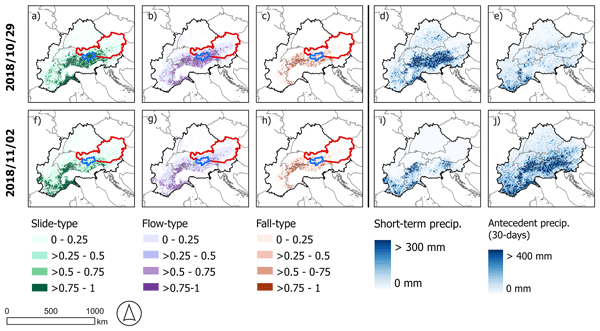
Fig 5. I was wondering that the importance of the urban environment maybe reflects the fact that it is responsible both for the exposure to risk and the increase of hazard (e.g. buildings and infrastructures in a mountain environment could alter the stability of the slopes). In a few words, buildings and infrastructures contribute to an increase in risk twice: they increase the hazard and the increase the exposure. What do you think about it? Could it be reasonable?
L520 In my opinion the potential has not been demonstrated. You showcased a possible application, but to demonstrate the application you need a validation and you don’t have the data. We do not know how many false alarms and missed alarms you would have issued with the maps shown in fig. 10. The comparison you present with damages aggregated at the district level are of little use compared to the objective and the granularity of the proposed warning system. I think it is fair to say that you show that the proposed framework could be used to produce output maps but work (including data collection) is needed to validate the approach and fully demonstrate the applicability to real-case scenarios.
Section 6.4 Maybe there is another point to discuss: thinking about real-time applications, the integration of real-time rainfall data, the dataflow, and the processing time are fundamental issues.
Discussion – I suggest synthetizing it. Everything is correct and interesting, but many things were already stated in advance, so this part has a lot of repetitions and the attention of the reader may decline.
Discussion – I suggest adding a subsection about the main limitation of the work (or maybe 6.5 may be the right place to comment on the main limitations I identified).
Citation: https://doi.org/10.5194/egusphere-2025-4940-RC2 - AC2: 'Reply on RC2', Stefan Steger, 29 Jan 2026
Peer review completion
Journal article(s) based on this preprint
Viewed
| HTML | XML | Total | BibTeX | EndNote | |
|---|---|---|---|---|---|
| 3,203 | 1,123 | 217 | 4,543 | 183 | 205 |
- HTML: 3,203
- PDF: 1,123
- XML: 217
- Total: 4,543
- BibTeX: 183
- EndNote: 205
Viewed (geographical distribution)
| Country | # | Views | % |
|---|
| Total: | 0 |
| HTML: | 0 |
| PDF: | 0 |
| XML: | 0 |
- 1

Raphael Spiekermann
Mateo Moreno
Sebastian Lehner
Katharina Enigl
Alice Crespi
Matthias Schlögl
The requested preprint has a corresponding peer-reviewed final revised paper. You are encouraged to refer to the final revised version.
- Preprint
(3016 KB) - Metadata XML
Dear authors,
first, I would like to express my appreciation for the quality of the work. The manuscript is extremely well designed, methodologically robust, and in my opinion already very close to being publishable. The modelling framework is inspiring (particularly the sampling strategy and the use of potential process areas) and represents an important contribution to impact-based landslide early warning.
I would, however, appreciate a clarification regarding the interpretation of the temperature-related predictors. In the current version, daily temperature is interpreted as a meteorological driver, potentially linked to rainfall type or convective activity (see lines 460–465 and 480–585). While this explanation is plausible, I am not entirely convinced that it reflects the true role of temperature in the model. Indeed, temperature is strongly correlated with elevation. Therefore, temperature may act as a proxy for altitude, rather than representing a genuine process-based temperature effect. Lower temperatures typically correspond to higher elevation, where shallow slides or debris flows are less frequent because soil is thinner or absent and rockfall becomes the dominant process. Conversely, higher temperatures coincide with lower elevation, where slopes covered by soil, infrastructures and thus impacts are more common. For this reason, I suspect that the temperature predictor may be capturing elevation-dependent spatial patterns, rather than daily meteorological (temperature-driven) processes.
I would welcome the authors’ comments on this interpretation and on the physical meaning attributed to the temperature effects in the models.
Best regards.