
the Creative Commons Attribution 4.0 License.
the Creative Commons Attribution 4.0 License.
 | 30 Jan 2026
Climate change and irrigation expansion reshape the water pressure and upstream–downstream interactions in the Lancang–Mekong River Basin
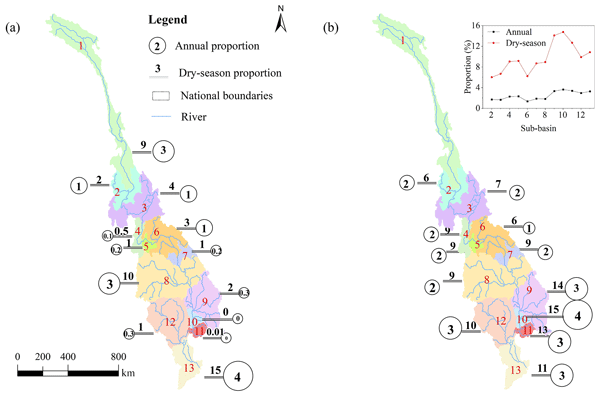
Abstract. In transboundary river basins, water resource pressure results from the combined effects of internal water use growth, external transboundary withdrawal, and climate change, yet the relative contributions of these drivers to both water pressure and upstream–downstream interactions remain poorly quantified. To address this issue, this study adopts the Pressure–State–Response analytical framework to explicitly disentangle and characterize the spatiotemporal patterns and evolution of irrigation water withdrawal pressure in the Lancang–Mekong River Basin under the climate change. Results indicate that the proportion of irrigation water withdrawal relative to available water exhibits a persistent increasing trend. Under the SSP5-8.5 scenario, this proportion is projected to rise to 19 % annually and 59 % during the dry season by 2040. The impact of irrigation water withdrawal on downstream water availability is significantly greater than that on upstream regions, particularly during the dry season. In the historical period, internal irrigation water withdrawal pressure dominates in Subregions 1 (China), 8 (primarily in Thailand), and 13 (primarily in Vietnam), exceeding external pressure from upstream irrigation water withdrawal, whereas external irrigation-induced water appropriation is the primary driver in the remaining subregions. Under future climate scenarios (2021–2040), both internal and external irrigation pressures intensify across the basin, exhibiting pronounced nonlinear dynamics and spatial heterogeneity. Notably, Subregion 8 undergoes a structural shift in dominant pressure, transitioning from internally driven irrigation pressure in the historical period to externally driven irrigation appropriation in the future. Meanwhile, the growth rates of irrigation water withdrawal pressure are redistributed spatially: compared to the historical period, the growth of external irrigation pressure slows in downstream subregions (9–13), while it continues to increase in midstream and upstream subregions (2–8). The analysis aims to identify vulnerable components of the basin system, clarify transboundary responsibility allocation, and support differentiated water governance strategies.
Competing interests: At least one of the (co-)authors is a member of the editorial board of Hydrology and Earth System Sciences. The peer-review process was guided by an independent editor, and the authors also have no other competing interests to declare.
Publisher's note: Copernicus Publications remains neutral with regard to jurisdictional claims made in the text, published maps, institutional affiliations, or any other geographical representation in this paper. While Copernicus Publications makes every effort to include appropriate place names, the final responsibility lies with the authors. Views expressed in the text are those of the authors and do not necessarily reflect the views of the publisher.-
Notice on discussion status
The requested preprint has a corresponding peer-reviewed final revised paper. You are encouraged to refer to the final revised version.
-
Preprint
(1763 KB)
-
The requested preprint has a corresponding peer-reviewed final revised paper. You are encouraged to refer to the final revised version.
- Preprint
(1763 KB) - Metadata XML
- BibTeX
- EndNote
- Final revised paper


Journal article(s) based on this preprint
Interactive discussion
Status: closed
-
CC1: 'Comment on egusphere-2026-537', Nima Zafarmomen, 19 Feb 2026
-
AC3: 'Reply on CC1', Hongling Zhao, 11 Mar 2026
We sincerely thank Professor Nima Zafarmomen for their constructive and thoughtful comments. These suggestions have greatly helped us improve the clarity of the PSR framework’s dynamic interactions and the transparency of our uncertainty analysis. Our point-by-point responses are provided below.
1. Linking the PSR framework with results
In the revised manuscript, we have restructured the Results section to explicitly connect the “Pressure-State-Response” (PSR) framework with the findings. For example, in Section 3.3, we now include:
Within the PSR framework, changes in internal and external irrigation withdrawals constitute pressure factors, which affect the state of the regional water system by modifying water availability and the supply-demand balance. The resulting classification of pressure types then reflects the system’s response.
Subregion 8 is highly sensitive to climate scenario variations during the dry season and exhibits pronounced scenario dependence. Increasing upstream irrigation withdrawals (pressure) interact with climate-driven hydrological changes to influence downstream water availability (state), ultimately leading to shifts in the dominant irrigation pressure regime (response).
2. Justification for reserving 30% of simulated runoff as environmental flow
We have added citations and discussion to justify this threshold:
Methodological basis: Smakhtin et al. (2004) estimated that for the Lancang-Mekong river, an environmental flow requirement of approximately 30% of mean annual runoff is needed to sustain basic ecosystem functions.
Regional consistency: This threshold aligns with the “Good” ecological condition in the Tennant (1976) method.
Sensitivity analysis: While absolute water pressure values vary with the environmental flow threshold, the spatial patterns and timing of the regime shift in Subregion 8 remain robust within a reasonable environmental flow range.
3. Addressing uncertainties in irrigation withdrawal estimation
We have added a new subsection in the Discussion to address uncertainties:
Irrigation efficiency coefficients: We acknowledge that irrigation efficiency varies across countries and crop types in the Lancang–Mekong Basin. Coefficients were adopted from FAO and MRC reports; actual efficiencies may differ due to local management practices and infrastructure age. Sensitivity analysis shows that higher efficiency reduces absolute withdrawal volumes but does not change spatial patterns of water pressure or the timing of regime shifts in Subregion 8.
Irrigation infrastructure mapping: High-resolution (0.5 m) satellite imagery combined with a deep learning–based recognition model was used to minimize mapping uncertainty. This approach provides a more detailed representation than traditional coarse datasets. Validation results indicate over 90% accuracy, supporting the reliability of the identified features.
4. Language and stylistic improvements
We conducted a comprehensive proofreading of the manuscript. Article usage (e.g., “under climate change”) and phrasing consistency (e.g., “30% of the simulated runoff”) have been corrected. Several sections have been restructured to improve readability and professional tone.
5. Addition of missing reference
We thank the reviewer for highlighting this relevant study. The reference: “Assimilation of Sentinel-based leaf area index for modeling surface–groundwater interactions in irrigation districts” has now been added to the Introduction, as it aligns closely with the manuscript’s themes of irrigation modeling.Citation: https://doi.org/10.5194/egusphere-2026-537-AC3
-
AC3: 'Reply on CC1', Hongling Zhao, 11 Mar 2026
-
RC1: 'Comment on egusphere-2026-537', Anonymous Referee #1, 24 Feb 2026
The manuscript discusses an interesting topic on how climate change and the expansion of irrigated agriculture jointly reshape water pressure and upstream‑downstream interactions in the Lancang–Mekong River Basin, the topic falls well within the scope of Hydrology and Earth System Science. The authors introduced an application of the Pressure–State–Response (PSR) analytical framework to disentangle the relative importance of internal versus external irrigation withdrawals under a range of climate scenarios. This approach is both conceptually sound and methodologically rigorous, and it offers a clear pathway for quantifying the water‑use pressures. The findings of the study demonstrate a persistent increase in the proportion of irrigation withdrawals relative to available water, highlight the dominance of downstream impacts during dry periods, and identify subregional shifts in the drivers of water pressure. These results are presented in a concise, logically structured narrative that effectively links the analytical outcomes to practical water governance implications.
Although the scientific content is strong, several aspects of the presentation require attention. First, the figures lack sufficient self‑explanatory power. Line styles, colors, and symbols should be adjusted in some figures, and each legend should explicitly define every element plotted. Figure captions should be expanded to include the essential information conveyed (e.g., time period, scenario, data source). The panels that aggregate the five GCM outputs should display both the ensemble mean and the associated uncertainty range. This visualization of uncertainty is essential for readers to assess the confidence of the projected trends.
Second, the manuscript currently mentions uncertainty only cursorily. A more detailed discussion of the sources of uncertainty (model spread, irrigation‑demand assumptions, and climate‑scenario variability) and their implications for the robustness of the conclusions is needed.
Third, while the results are well described, the discussion section should be expanded to explicitly link the scientific findings to water resource management and transboundary cooperation. The authors should elaborate on how the identified vulnerable subregions and the projected shifts in pressure sources can inform concrete governance actions. By drawing clearer policy implications, the paper will better serve both the scientific community and decision makers involved in basin-wide water management.
Following are my detailed comments:
Line 24 the sentence should clearly discuss how the result of this paper contributes to transboundary water governance but not ‘aims to’
Line 48 investigates
Figure 1 Please check the national boundary line and consider whether they are necessary. The data source of the irrigation should be mentioned in the caption. Which year or period is the spatial map showing?
Line 91 the data sources of spatial distribution of irrigation areas should be mentioned and clarified in the method section.
Line 109 streamflow data were obtained from the China Meteorological Administration; is that correct? The daily runoff data of Jinghong station?
Lines 114-117, 123-125 The data details should be better explained, as well as how these data were used.
Line 141, the temporal resolution should be clarified, monthly or daily, and how the data were integrated or processed.
Line 196 and figure 2, please add the description of the reservoir scenarios in both figures and the main text.
Table 3, a ’%’ may help better understandings.
Figure 4, the national boundary line does not help, but the natural info like the river network or DEM helps.
Figure 6, is there any uncertainty range?
Figure 7, same as the previous, any uncertainty results among GCMs? Why are there two line bars in subfigures d and f, but not two added subfigures?
Figure 9, the line colors in b and c should be changed, as they are not relevant to the legends in a.
Citation: https://doi.org/10.5194/egusphere-2026-537-RC1 -
AC2: 'Reply on RC1', Hongling Zhao, 10 Mar 2026
We sincerely thank the reviewer for the constructive and detailed comments. We have revised the manuscript accordingly, addressing each point with specific improvements to figure clarity, uncertainty analysis, and the discussion of policy implications.
General Responses
1. Improvement of Figure Clarity and Visualization of Uncertainty
We have revised the figures to enhance their self-explanatory power. Legends and captions have been expanded to define all plotted elements, including corresponding time periods, scenarios, and data sources.
Following the reviewer’s suggestion, we quantified the uncertainty associated with the five GCM projections by calculating the deviation of individual GCM outputs from the multi-model ensemble mean for the ratio of irrigation water withdrawal to available water.
Quantified Results: The inter-model spread is relatively limited. At the annual scale, the uncertainty range (maximum deviation) is 0–1% for SSP1-2.6, 0–2% for SSP2-4.5, and 0–3% for SSP5-8.5. During the dry season, the range remains within 0–6% for SSP1-2.6, 0–6% for SSP2-4.5, and 1–6% for SSP5-8.5. Figure 6 and Figure 7 have been updated to display both the ensemble mean and the associated uncertainty range across the five GCMs.
2. Expanded Discussion of Uncertainty Sources
We have added a section discussing three primary sources of uncertainty:
Model Spread: We quantified uncertainty intervals for projected irrigation demand and runoff across the five GCMs to identify areas where projections are most robust.
Irrigation-demand Assumptions: We discussed the limitations of using Mekong River Commission (MRC) irrigation expansion plans. While authoritative, actual implementation may vary due to policy shifts, economic development, or changing cropping patterns.
Climate-scenario Variability: We expanded the analysis to compare how differences in future climate forcing (SSP1-2.6,SSP2-4.5,SSP5-8.5) propagate into uncertainties in runoff and irrigation pressure.
3. Strengthening the Link Between Scientific Findings and Water Governance
To improve policy relevance, we added a new subsection titled “Policy implications and transboundary cooperation.” Specifically, we:
Linked spatial vulnerability and seasonal pressure shifts to management interventions (e.g., targeted demand management, seasonally adaptive allocation, and reservoir adjustments).
Discussed transboundary governance mechanisms, including enhanced data sharing, joint monitoring systems, and institutional frameworks.
Identified priority actions for vulnerable subregions, such as irrigation-efficiency improvements and optimized upstream storage operations.Detailed Point-by-Point Responses
1. The sentence has been revised to: “The analysis identifies vulnerable components of the basin system, clarifies the spatial distribution of transboundary water pressures, and provides a basis for differentiated water governance strategies across the basin.”
2. We have replaced the previous phrasing with a more direct and active structure to improve clarity. The sentence now reads:
"Accordingly, numerous studies have investigated water stress and its driving mechanisms in transboundary river basins (Chen et al., 2020; Do et al., 2020; Tian et al., 2020)."
3. National boundaries are retained as they are essential for illustrating the spatial relationship between subregions and countries in a transboundary context. The caption now explicitly states that the spatial map represents the distribution of irrigation areas for 2020 and includes the data source.
4. We have revised the Methods section to provide a more detailed description of the datasets. Irrigated area data were obtained from the FAO Global Map of Irrigation Areas dataset, which integrates national and subnational irrigation statistics with geospatial information on irrigation locations and extents. The spatial distribution of irrigated land was further combined with the global equipped irrigated area dataset and the Spatial Production Allocation Model (SPAM) dataset to represent irrigated crop distribution across the basin during the period 1980–2020.
5. We apologize for the error. The streamflow data used in this study were obtained from the Mekong River Commission (MRC) database (https://portal.mrcmekong.org/home). This has been corrected.
6. We have expanded the description of data in the Methods section:
Irrigation canal network data were derived from high-resolution Google satellite imagery with a spatial resolution of 0.5 m, which was downloaded through the MapGIS software platform. Irrigation canals were identified using a deep learning–based intelligent remote sensing recognition model. Canal headworks were extracted and treated as irrigation water abstraction points for the irrigation water-withdrawal analysis (Zhao et al., 2025). Reservoir data were obtained from the Mekong River Commission (MRC) and the Mekong Region Futures Institute (2024). The dataset includes reservoir locations, storage capacities, and years of operation, covering both existing and planned reservoirs during the period 1965–2035, and was used to represent basin-scale water storage and regulation capacity in the analysis.
Soil data were obtained from the global soil database of the Food and Agriculture Organization of the United Nations (FAO). The dataset has a spatial resolution of 10 × 10 km and provides key soil parameters used in the hydrological model. The normalized difference vegetation index (NDVI), leaf area index (LAI), and snow cover fraction were derived from MODIS products, with a spatial resolution of 500 × 500 m and a temporal resolution of 16 days. These datasets were used as input variables to drive the hydrological model, representing vegetation and land-surface conditions affecting evapotranspiration and runoff processes.
Irrigated area data were obtained from the FAO Global Map of Irrigation Areas dataset, which integrates national and subnational irrigation statistics with geospatial information on irrigation locations and extents. The spatial distribution of irrigated land was further combined with the global equipped irrigated area dataset and the Spatial Production Allocation Model (SPAM) dataset to represent irrigated crop distribution across the basin during the period 1980–2020. Spatial distributions of irrigated crop types were derived from the SPAM Global dataset, which includes information for 46 crop types and has a spatial resolution of 10 × 10 km (IFPRI, 2024; available at https://www.mapspam.info/data/)
7. Clarified that runoff was first simulated at a daily time step and then aggregated to monthly runoff for each sub-basin (1980–2020). Irrigation water withdrawal was calculated at a monthly scale.
8. We have clarified the scenarios in the text and figure: (1) with reservoir operation and (2) without reservoir operation. The operation scheme follows Zhang et al. (2026) (https://doi.org/10.5194/hess-30-671-2026).
9. Added as suggested.
10.We removed the national boundary lines and added the river network to highlight natural hydrological features and improve interpretability.
11. The figure now explicitly presents the uncertainty ranges (GCM spread) alongside the ensemble mean.
12. We added standard deviation to represent the inter-model spread across the five GCMs.
Dual Bars in d/f: These bars represent different SSPs (Climate Scenarios). We have updated the legend and caption.
13. We have updated the line colors in subplots (b) and (c).Citation: https://doi.org/10.5194/egusphere-2026-537-AC2
-
AC2: 'Reply on RC1', Hongling Zhao, 10 Mar 2026
-
RC2: 'Comment on egusphere-2026-537', Anonymous Referee #2, 25 Feb 2026
This manuscript addresses a highly relevant and timely topic, focusing on the transboundary water stress in the Lancang-Mekong River Basin under the dual pressures of climate change and irrigation expansion. The research presents a novel perspective by attempting to quantify both internal and external water pressures. However, several concerns need to be addressed before the manuscript can be considered for publication, as follows:
1.Temporal Scale: the study analyzes historical patterns from 1980 to 2020, yet the hydrological model is calibrated for 2000-2010 and validated for 2010-2020. Given that data for the full period (1980-2020) appears to be available, it is not clear why the calibration and validation periods were not extended to leverage this longer time series. A longer calibration period could potentially enhance the model's robustness.
Furthermore, the future scenario analysis covers 2021-2040. As we are currently in 2026, five years of observed data (2021-2025) are now available. These recent observations could be critically used to assess the accuracy of the model's baseline predictions for the near-term future. The manuscript would be significantly strengthened by updating the analysis or, at a minimum, discussing how the 2021-2025 observations align with the model's projected baseline for the same period.
2.The introduction effectively highlights that existing studies often focus on single pressure sources or local spatial scales, with few systematic quantifications for the entire basin. The manuscript could be improved by more explicitly discussing the key constraints that have historically hindered such a full-basin, multi-pressure analysis. Was the primary obstacle related to data availability/transboundary data sharing, or is it a challenge of achieving detailed simulation at the basin scale while accounting for complex human-water interactions? Clarifying this would better frame the novelty and technical contribution of this work.
3.The model sub-regions are delineated based on upstream-downstream relationships. However, in reality, the basin is divided by national boundaries (e.g., Thailand and Laos), which often represent a left-right bank relationship rather than a simple upstream-downstream one. In such cases, there are no clearly defined water use priorities, yet these riparian countries significantly interact each other. Given the study's regionalization (Sub-region 1, 2, 3...), it is not entirely clear how the model effectively answers the question of irrigation water pressure transmission between transboundary countries that are not in a direct upstream-downstream geographical relationship (e.g., Thailand and Laos). A more detailed explanation of how the modeling framework captures this lateral interdependency is required.
4.The manuscript should clarify whether the hydrological simulation model accounts for the restoration (or maybe re-naturalization) of streamflow. Specifically, how is the reservoir operation schemes incorporated into the model? A description of the algorithms or rules used to simulate reservoir storage and release is necessary.
5.The result shows that increased irrigation water withdrawal in Sub-region 1 (China) leads to reduced water availability downstream. However, this interpretation seems to potentially overlook the significant regulatory effect of large reservoirs. After the construction of major reservoirs (e.g., around 2009), dry-season outflow from Sub-region 1 often becomes significantly higher than historical natural flow records due to storage and regulated release. Therefore, the "external irrigation water pressure" on Sub-regions 2 and 3 during the dry season might not necessarily increase, and could even decrease, due to this reservoir effect. The manuscript needs to address this apparent paradox and discuss how the model's results reconcile with this observed reservoir impact.
6.Minor Issues:
Figure 8: The labels in Figure 8 overlap, making them difficult to read. Please adjust the layout or formatting to improve clarity.
Figure 6: It is unclear why a line chart was chosen for the data presented in Figure 6.Citation: https://doi.org/10.5194/egusphere-2026-537-RC2 -
AC1: 'Reply on RC2', Hongling Zhao, 09 Mar 2026
Thank you very much for your thoughtful and constructive comments on our manuscript. We have carefully considered each point and will revise the manuscript accordingly. Our detailed responses are provided below.
1. Temporal Scale and Data Availability
Regarding the calibration period, we clarify that the observed streamflow data for the main stem were indeed available for the full period (1980–2020) and were used for model calibration and validation. However, data for several tributary stations only cover 2000–2020. In the original manuscript, we reported a uniform period (2000–2020) to maintain consistency in the description, which we now realize was misleading. In the revised manuscript, we will explicitly distinguish the calibration periods: 1980–2020 for the main stem and 2000–2020 for the tributaries.
In this study, hydro-meteorological data for 2021–2025 were incorporated using the ERA5-Land reanalysis dataset, which represents historical atmospheric and land-surface conditions rather than future scenario projections. However, because the future analysis in this study was conducted at a decadal scale (e.g., 2021–2030 and 2031–2040) to ensure consistency with the scenario-based projections, the period 2021–2025 was grouped within the 2021–2030 interval and analyzed together as part of the first future decade. We acknowledge that this was not clearly explained in the original manuscript and may have caused confusion. Following the reviewer’s suggestion, we will revise the manuscript to clarify it.
2. Clarification of Basin-scale Constraints
Following your suggestion, we will expand the Introduction to explicitly discuss the historical constraints hindering full-basin, multi-pressure analyses. We will focus on two primary obstacles: (i) data scarcity and asymmetry in transboundary contexts, and (ii) the computational complexity of simulating fine-scale human-water interactions within a large-scale hydrological framework.
3. Lateral Interdependency and National Boundaries
We appreciate this insight regarding the "left-right bank" relationships. Our THREW model utilizes the Representative Elementary Watershed (REW) as the fundamental unit, which is delineated based on hydro-geomorphological features rather than political borders. Irrigation withdrawals are represented as nodes at specific river reach locations. Water extracted at these nodes directly alters the streamflow, which is then propagated through the river routing process across connected REWs.
This structure allows the model to capture "lateral" interactions: even if riparian countries are situated on opposite banks, their respective withdrawals impact the shared river reach's water balance within the same or hydrologically connected REWs. We will revise the manuscript to include a more detailed explanation of the REW-based routing and node-link structure to clarify how these transboundary interdependencies are captured.
4. Reservoir Operation Schemes
The reservoir operations in our model are represented by a rule-based module that balances hydropower generation with downstream water requirements. This operational framework follows the established schemes detailed in our previous work (Zhang et al., 2026, https://doi.org/10.5194/hess-30-671-2026), which has been validated for the Lancang-Mekong cascade.
Specifically, the simulation incorporates:
Operating Rules: The module optimizes storage and release based on seasonal water availability and hydropower demand, ensuring that reservoir storage levels are managed within safety and operational limits.
Downstream Constraints: To ensure ecological and agricultural security, a minimum environmental flow requirement is strictly enforced as a baseline constraint for all release processes.
Model Structure: We individually simulate major reservoirs that have direct downstream irrigation dependencies, while smaller or less critical ones are aggregated into complexes to maintain computational efficiency.
In the revised manuscript, we will include a description of these operation rules, while also citing the relevant literature to provide further technical details.
5. Reconciliation of Upstream Withdrawal and Reservoir Regulation
We agree that post-2009 reservoir operations have significantly augmented dry-season discharge compared to historical natural flow. As shown in our results (Figure 3), our model captures this regulatory effect: after 2010, the "reservoir scenario" shows a moderation of dry-season irrigation pressure compared to the "no-reservoir scenario" (e.g., a reduction from 36% to 34%). This indicates the model is sensitive to the reservoirs' compensatory role.
However, the reason the overall water pressure continues to rise is the result of a "dual squeeze" from both supply and demand sides:
Supply Side (Natural Decline): Our analysis shows a sustained decline in natural runoff across the basin since 2000, likely driven by shifting climatic patterns. This reduction in the "total available pool" means that even with reservoir redistribution, the baseline water volume has shrunk.
Demand Side (Irrigation Expansion): Simultaneously, the consumptive use of water for irrigation has grown at a rate that outpaces the supplementary capacity of reservoir regulation.
In summary, while the reservoirs effectively redistribute water to the dry season, the net gain from regulation is partially offset by the overarching decline in natural inflow and further strained by intensifying irrigation withdrawals. In the revised manuscript, we will add a discussion to clarify these competing mechanisms.
6. Minor Issues
Figure 8: We will adjust the layout and font sizes to eliminate label overlap and ensure readability.
Figure 6: We will reconsider the visualization style to better present the specific data type and improve clarity.Citation: https://doi.org/10.5194/egusphere-2026-537-AC1
-
AC1: 'Reply on RC2', Hongling Zhao, 09 Mar 2026
Peer review completion


Interactive discussion
Status: closed
-
CC1: 'Comment on egusphere-2026-537', Nima Zafarmomen, 19 Feb 2026
This manuscript presents a timely and well-structured investigation into irrigation-induced water pressure and upstream–downstream interactions in the Lancang–Mekong River Basin under climate change. The study’s integration of the Pressure–State–Response (PSR) framework with hydrological modelling (THREW), bias-corrected CMIP6 projections, and spatially explicit irrigation withdrawal estimates represents a strong methodological contribution. The work addresses a critical gap in attributing basin-scale water stress drivers and demonstrates high relevance to hydrological science, water resources management, and climate impact assessment. Overall, the manuscript is scientifically sound, novel, and highly suitable for publication in HESS.
1) The manuscript would benefit from a clearer explanation of how the PSR components interact dynamically. While the framework is well introduced, explicitly linking “Pressure → State → Response” with examples from the results (e.g., Subregion 8 regime shift) would improve readability.
2) The study reserves 30% of simulated runoff as environmental flow. Please provide a brief justification or citation supporting this threshold, and discuss how sensitive the results might be to this assumption.
3) Although climate projections and bias correction are described rigorously, the uncertainty associated with irrigation withdrawal estimation (e.g., irrigation efficiency coefficients, canal detection) could be discussed more explicitly.
4) The manuscript is generally well written and easy to follow. Nevertheless, minor language polishing would improve clarity and fluency. In particular, the authors may wish to review article usage and phrasing consistency. For example, expressions such as “under the climate change” could be smoothed to “under climate change,” and “30% simulated runoff was reserved as environmental flow” could be phrased as “30% of the simulated runoff was reserved as environmental flow.” Additionally, several sentences would benefit from small stylistic refinements to enhance readability. A careful proofreading is recommended.
5) A relevant recent contribution appears to be missing from the references. The authors are do strongly encouraged to cite ‘Assimilation of Sentinel-based leaf area index for modeling surface–groundwater interactions in irrigation districts,’ which closely aligns with the manuscript’s themes of irrigation modelling and land-surface dynamics.
Citation: https://doi.org/10.5194/egusphere-2026-537-CC1 -
AC3: 'Reply on CC1', Hongling Zhao, 11 Mar 2026
We sincerely thank Professor Nima Zafarmomen for their constructive and thoughtful comments. These suggestions have greatly helped us improve the clarity of the PSR framework’s dynamic interactions and the transparency of our uncertainty analysis. Our point-by-point responses are provided below.
1. Linking the PSR framework with results
In the revised manuscript, we have restructured the Results section to explicitly connect the “Pressure-State-Response” (PSR) framework with the findings. For example, in Section 3.3, we now include:
Within the PSR framework, changes in internal and external irrigation withdrawals constitute pressure factors, which affect the state of the regional water system by modifying water availability and the supply-demand balance. The resulting classification of pressure types then reflects the system’s response.
Subregion 8 is highly sensitive to climate scenario variations during the dry season and exhibits pronounced scenario dependence. Increasing upstream irrigation withdrawals (pressure) interact with climate-driven hydrological changes to influence downstream water availability (state), ultimately leading to shifts in the dominant irrigation pressure regime (response).
2. Justification for reserving 30% of simulated runoff as environmental flow
We have added citations and discussion to justify this threshold:
Methodological basis: Smakhtin et al. (2004) estimated that for the Lancang-Mekong river, an environmental flow requirement of approximately 30% of mean annual runoff is needed to sustain basic ecosystem functions.
Regional consistency: This threshold aligns with the “Good” ecological condition in the Tennant (1976) method.
Sensitivity analysis: While absolute water pressure values vary with the environmental flow threshold, the spatial patterns and timing of the regime shift in Subregion 8 remain robust within a reasonable environmental flow range.
3. Addressing uncertainties in irrigation withdrawal estimation
We have added a new subsection in the Discussion to address uncertainties:
Irrigation efficiency coefficients: We acknowledge that irrigation efficiency varies across countries and crop types in the Lancang–Mekong Basin. Coefficients were adopted from FAO and MRC reports; actual efficiencies may differ due to local management practices and infrastructure age. Sensitivity analysis shows that higher efficiency reduces absolute withdrawal volumes but does not change spatial patterns of water pressure or the timing of regime shifts in Subregion 8.
Irrigation infrastructure mapping: High-resolution (0.5 m) satellite imagery combined with a deep learning–based recognition model was used to minimize mapping uncertainty. This approach provides a more detailed representation than traditional coarse datasets. Validation results indicate over 90% accuracy, supporting the reliability of the identified features.
4. Language and stylistic improvements
We conducted a comprehensive proofreading of the manuscript. Article usage (e.g., “under climate change”) and phrasing consistency (e.g., “30% of the simulated runoff”) have been corrected. Several sections have been restructured to improve readability and professional tone.
5. Addition of missing reference
We thank the reviewer for highlighting this relevant study. The reference: “Assimilation of Sentinel-based leaf area index for modeling surface–groundwater interactions in irrigation districts” has now been added to the Introduction, as it aligns closely with the manuscript’s themes of irrigation modeling.Citation: https://doi.org/10.5194/egusphere-2026-537-AC3
-
AC3: 'Reply on CC1', Hongling Zhao, 11 Mar 2026
-
RC1: 'Comment on egusphere-2026-537', Anonymous Referee #1, 24 Feb 2026
The manuscript discusses an interesting topic on how climate change and the expansion of irrigated agriculture jointly reshape water pressure and upstream‑downstream interactions in the Lancang–Mekong River Basin, the topic falls well within the scope of Hydrology and Earth System Science. The authors introduced an application of the Pressure–State–Response (PSR) analytical framework to disentangle the relative importance of internal versus external irrigation withdrawals under a range of climate scenarios. This approach is both conceptually sound and methodologically rigorous, and it offers a clear pathway for quantifying the water‑use pressures. The findings of the study demonstrate a persistent increase in the proportion of irrigation withdrawals relative to available water, highlight the dominance of downstream impacts during dry periods, and identify subregional shifts in the drivers of water pressure. These results are presented in a concise, logically structured narrative that effectively links the analytical outcomes to practical water governance implications.
Although the scientific content is strong, several aspects of the presentation require attention. First, the figures lack sufficient self‑explanatory power. Line styles, colors, and symbols should be adjusted in some figures, and each legend should explicitly define every element plotted. Figure captions should be expanded to include the essential information conveyed (e.g., time period, scenario, data source). The panels that aggregate the five GCM outputs should display both the ensemble mean and the associated uncertainty range. This visualization of uncertainty is essential for readers to assess the confidence of the projected trends.
Second, the manuscript currently mentions uncertainty only cursorily. A more detailed discussion of the sources of uncertainty (model spread, irrigation‑demand assumptions, and climate‑scenario variability) and their implications for the robustness of the conclusions is needed.
Third, while the results are well described, the discussion section should be expanded to explicitly link the scientific findings to water resource management and transboundary cooperation. The authors should elaborate on how the identified vulnerable subregions and the projected shifts in pressure sources can inform concrete governance actions. By drawing clearer policy implications, the paper will better serve both the scientific community and decision makers involved in basin-wide water management.
Following are my detailed comments:
Line 24 the sentence should clearly discuss how the result of this paper contributes to transboundary water governance but not ‘aims to’
Line 48 investigates
Figure 1 Please check the national boundary line and consider whether they are necessary. The data source of the irrigation should be mentioned in the caption. Which year or period is the spatial map showing?
Line 91 the data sources of spatial distribution of irrigation areas should be mentioned and clarified in the method section.
Line 109 streamflow data were obtained from the China Meteorological Administration; is that correct? The daily runoff data of Jinghong station?
Lines 114-117, 123-125 The data details should be better explained, as well as how these data were used.
Line 141, the temporal resolution should be clarified, monthly or daily, and how the data were integrated or processed.
Line 196 and figure 2, please add the description of the reservoir scenarios in both figures and the main text.
Table 3, a ’%’ may help better understandings.
Figure 4, the national boundary line does not help, but the natural info like the river network or DEM helps.
Figure 6, is there any uncertainty range?
Figure 7, same as the previous, any uncertainty results among GCMs? Why are there two line bars in subfigures d and f, but not two added subfigures?
Figure 9, the line colors in b and c should be changed, as they are not relevant to the legends in a.
Citation: https://doi.org/10.5194/egusphere-2026-537-RC1 -
AC2: 'Reply on RC1', Hongling Zhao, 10 Mar 2026
We sincerely thank the reviewer for the constructive and detailed comments. We have revised the manuscript accordingly, addressing each point with specific improvements to figure clarity, uncertainty analysis, and the discussion of policy implications.
General Responses
1. Improvement of Figure Clarity and Visualization of Uncertainty
We have revised the figures to enhance their self-explanatory power. Legends and captions have been expanded to define all plotted elements, including corresponding time periods, scenarios, and data sources.
Following the reviewer’s suggestion, we quantified the uncertainty associated with the five GCM projections by calculating the deviation of individual GCM outputs from the multi-model ensemble mean for the ratio of irrigation water withdrawal to available water.
Quantified Results: The inter-model spread is relatively limited. At the annual scale, the uncertainty range (maximum deviation) is 0–1% for SSP1-2.6, 0–2% for SSP2-4.5, and 0–3% for SSP5-8.5. During the dry season, the range remains within 0–6% for SSP1-2.6, 0–6% for SSP2-4.5, and 1–6% for SSP5-8.5. Figure 6 and Figure 7 have been updated to display both the ensemble mean and the associated uncertainty range across the five GCMs.
2. Expanded Discussion of Uncertainty Sources
We have added a section discussing three primary sources of uncertainty:
Model Spread: We quantified uncertainty intervals for projected irrigation demand and runoff across the five GCMs to identify areas where projections are most robust.
Irrigation-demand Assumptions: We discussed the limitations of using Mekong River Commission (MRC) irrigation expansion plans. While authoritative, actual implementation may vary due to policy shifts, economic development, or changing cropping patterns.
Climate-scenario Variability: We expanded the analysis to compare how differences in future climate forcing (SSP1-2.6,SSP2-4.5,SSP5-8.5) propagate into uncertainties in runoff and irrigation pressure.
3. Strengthening the Link Between Scientific Findings and Water Governance
To improve policy relevance, we added a new subsection titled “Policy implications and transboundary cooperation.” Specifically, we:
Linked spatial vulnerability and seasonal pressure shifts to management interventions (e.g., targeted demand management, seasonally adaptive allocation, and reservoir adjustments).
Discussed transboundary governance mechanisms, including enhanced data sharing, joint monitoring systems, and institutional frameworks.
Identified priority actions for vulnerable subregions, such as irrigation-efficiency improvements and optimized upstream storage operations.Detailed Point-by-Point Responses
1. The sentence has been revised to: “The analysis identifies vulnerable components of the basin system, clarifies the spatial distribution of transboundary water pressures, and provides a basis for differentiated water governance strategies across the basin.”
2. We have replaced the previous phrasing with a more direct and active structure to improve clarity. The sentence now reads:
"Accordingly, numerous studies have investigated water stress and its driving mechanisms in transboundary river basins (Chen et al., 2020; Do et al., 2020; Tian et al., 2020)."
3. National boundaries are retained as they are essential for illustrating the spatial relationship between subregions and countries in a transboundary context. The caption now explicitly states that the spatial map represents the distribution of irrigation areas for 2020 and includes the data source.
4. We have revised the Methods section to provide a more detailed description of the datasets. Irrigated area data were obtained from the FAO Global Map of Irrigation Areas dataset, which integrates national and subnational irrigation statistics with geospatial information on irrigation locations and extents. The spatial distribution of irrigated land was further combined with the global equipped irrigated area dataset and the Spatial Production Allocation Model (SPAM) dataset to represent irrigated crop distribution across the basin during the period 1980–2020.
5. We apologize for the error. The streamflow data used in this study were obtained from the Mekong River Commission (MRC) database (https://portal.mrcmekong.org/home). This has been corrected.
6. We have expanded the description of data in the Methods section:
Irrigation canal network data were derived from high-resolution Google satellite imagery with a spatial resolution of 0.5 m, which was downloaded through the MapGIS software platform. Irrigation canals were identified using a deep learning–based intelligent remote sensing recognition model. Canal headworks were extracted and treated as irrigation water abstraction points for the irrigation water-withdrawal analysis (Zhao et al., 2025). Reservoir data were obtained from the Mekong River Commission (MRC) and the Mekong Region Futures Institute (2024). The dataset includes reservoir locations, storage capacities, and years of operation, covering both existing and planned reservoirs during the period 1965–2035, and was used to represent basin-scale water storage and regulation capacity in the analysis.
Soil data were obtained from the global soil database of the Food and Agriculture Organization of the United Nations (FAO). The dataset has a spatial resolution of 10 × 10 km and provides key soil parameters used in the hydrological model. The normalized difference vegetation index (NDVI), leaf area index (LAI), and snow cover fraction were derived from MODIS products, with a spatial resolution of 500 × 500 m and a temporal resolution of 16 days. These datasets were used as input variables to drive the hydrological model, representing vegetation and land-surface conditions affecting evapotranspiration and runoff processes.
Irrigated area data were obtained from the FAO Global Map of Irrigation Areas dataset, which integrates national and subnational irrigation statistics with geospatial information on irrigation locations and extents. The spatial distribution of irrigated land was further combined with the global equipped irrigated area dataset and the Spatial Production Allocation Model (SPAM) dataset to represent irrigated crop distribution across the basin during the period 1980–2020. Spatial distributions of irrigated crop types were derived from the SPAM Global dataset, which includes information for 46 crop types and has a spatial resolution of 10 × 10 km (IFPRI, 2024; available at https://www.mapspam.info/data/)
7. Clarified that runoff was first simulated at a daily time step and then aggregated to monthly runoff for each sub-basin (1980–2020). Irrigation water withdrawal was calculated at a monthly scale.
8. We have clarified the scenarios in the text and figure: (1) with reservoir operation and (2) without reservoir operation. The operation scheme follows Zhang et al. (2026) (https://doi.org/10.5194/hess-30-671-2026).
9. Added as suggested.
10.We removed the national boundary lines and added the river network to highlight natural hydrological features and improve interpretability.
11. The figure now explicitly presents the uncertainty ranges (GCM spread) alongside the ensemble mean.
12. We added standard deviation to represent the inter-model spread across the five GCMs.
Dual Bars in d/f: These bars represent different SSPs (Climate Scenarios). We have updated the legend and caption.
13. We have updated the line colors in subplots (b) and (c).Citation: https://doi.org/10.5194/egusphere-2026-537-AC2
-
AC2: 'Reply on RC1', Hongling Zhao, 10 Mar 2026
-
RC2: 'Comment on egusphere-2026-537', Anonymous Referee #2, 25 Feb 2026
This manuscript addresses a highly relevant and timely topic, focusing on the transboundary water stress in the Lancang-Mekong River Basin under the dual pressures of climate change and irrigation expansion. The research presents a novel perspective by attempting to quantify both internal and external water pressures. However, several concerns need to be addressed before the manuscript can be considered for publication, as follows:
1.Temporal Scale: the study analyzes historical patterns from 1980 to 2020, yet the hydrological model is calibrated for 2000-2010 and validated for 2010-2020. Given that data for the full period (1980-2020) appears to be available, it is not clear why the calibration and validation periods were not extended to leverage this longer time series. A longer calibration period could potentially enhance the model's robustness.
Furthermore, the future scenario analysis covers 2021-2040. As we are currently in 2026, five years of observed data (2021-2025) are now available. These recent observations could be critically used to assess the accuracy of the model's baseline predictions for the near-term future. The manuscript would be significantly strengthened by updating the analysis or, at a minimum, discussing how the 2021-2025 observations align with the model's projected baseline for the same period.
2.The introduction effectively highlights that existing studies often focus on single pressure sources or local spatial scales, with few systematic quantifications for the entire basin. The manuscript could be improved by more explicitly discussing the key constraints that have historically hindered such a full-basin, multi-pressure analysis. Was the primary obstacle related to data availability/transboundary data sharing, or is it a challenge of achieving detailed simulation at the basin scale while accounting for complex human-water interactions? Clarifying this would better frame the novelty and technical contribution of this work.
3.The model sub-regions are delineated based on upstream-downstream relationships. However, in reality, the basin is divided by national boundaries (e.g., Thailand and Laos), which often represent a left-right bank relationship rather than a simple upstream-downstream one. In such cases, there are no clearly defined water use priorities, yet these riparian countries significantly interact each other. Given the study's regionalization (Sub-region 1, 2, 3...), it is not entirely clear how the model effectively answers the question of irrigation water pressure transmission between transboundary countries that are not in a direct upstream-downstream geographical relationship (e.g., Thailand and Laos). A more detailed explanation of how the modeling framework captures this lateral interdependency is required.
4.The manuscript should clarify whether the hydrological simulation model accounts for the restoration (or maybe re-naturalization) of streamflow. Specifically, how is the reservoir operation schemes incorporated into the model? A description of the algorithms or rules used to simulate reservoir storage and release is necessary.
5.The result shows that increased irrigation water withdrawal in Sub-region 1 (China) leads to reduced water availability downstream. However, this interpretation seems to potentially overlook the significant regulatory effect of large reservoirs. After the construction of major reservoirs (e.g., around 2009), dry-season outflow from Sub-region 1 often becomes significantly higher than historical natural flow records due to storage and regulated release. Therefore, the "external irrigation water pressure" on Sub-regions 2 and 3 during the dry season might not necessarily increase, and could even decrease, due to this reservoir effect. The manuscript needs to address this apparent paradox and discuss how the model's results reconcile with this observed reservoir impact.
6.Minor Issues:
Figure 8: The labels in Figure 8 overlap, making them difficult to read. Please adjust the layout or formatting to improve clarity.
Figure 6: It is unclear why a line chart was chosen for the data presented in Figure 6.Citation: https://doi.org/10.5194/egusphere-2026-537-RC2 -
AC1: 'Reply on RC2', Hongling Zhao, 09 Mar 2026
Thank you very much for your thoughtful and constructive comments on our manuscript. We have carefully considered each point and will revise the manuscript accordingly. Our detailed responses are provided below.
1. Temporal Scale and Data Availability
Regarding the calibration period, we clarify that the observed streamflow data for the main stem were indeed available for the full period (1980–2020) and were used for model calibration and validation. However, data for several tributary stations only cover 2000–2020. In the original manuscript, we reported a uniform period (2000–2020) to maintain consistency in the description, which we now realize was misleading. In the revised manuscript, we will explicitly distinguish the calibration periods: 1980–2020 for the main stem and 2000–2020 for the tributaries.
In this study, hydro-meteorological data for 2021–2025 were incorporated using the ERA5-Land reanalysis dataset, which represents historical atmospheric and land-surface conditions rather than future scenario projections. However, because the future analysis in this study was conducted at a decadal scale (e.g., 2021–2030 and 2031–2040) to ensure consistency with the scenario-based projections, the period 2021–2025 was grouped within the 2021–2030 interval and analyzed together as part of the first future decade. We acknowledge that this was not clearly explained in the original manuscript and may have caused confusion. Following the reviewer’s suggestion, we will revise the manuscript to clarify it.
2. Clarification of Basin-scale Constraints
Following your suggestion, we will expand the Introduction to explicitly discuss the historical constraints hindering full-basin, multi-pressure analyses. We will focus on two primary obstacles: (i) data scarcity and asymmetry in transboundary contexts, and (ii) the computational complexity of simulating fine-scale human-water interactions within a large-scale hydrological framework.
3. Lateral Interdependency and National Boundaries
We appreciate this insight regarding the "left-right bank" relationships. Our THREW model utilizes the Representative Elementary Watershed (REW) as the fundamental unit, which is delineated based on hydro-geomorphological features rather than political borders. Irrigation withdrawals are represented as nodes at specific river reach locations. Water extracted at these nodes directly alters the streamflow, which is then propagated through the river routing process across connected REWs.
This structure allows the model to capture "lateral" interactions: even if riparian countries are situated on opposite banks, their respective withdrawals impact the shared river reach's water balance within the same or hydrologically connected REWs. We will revise the manuscript to include a more detailed explanation of the REW-based routing and node-link structure to clarify how these transboundary interdependencies are captured.
4. Reservoir Operation Schemes
The reservoir operations in our model are represented by a rule-based module that balances hydropower generation with downstream water requirements. This operational framework follows the established schemes detailed in our previous work (Zhang et al., 2026, https://doi.org/10.5194/hess-30-671-2026), which has been validated for the Lancang-Mekong cascade.
Specifically, the simulation incorporates:
Operating Rules: The module optimizes storage and release based on seasonal water availability and hydropower demand, ensuring that reservoir storage levels are managed within safety and operational limits.
Downstream Constraints: To ensure ecological and agricultural security, a minimum environmental flow requirement is strictly enforced as a baseline constraint for all release processes.
Model Structure: We individually simulate major reservoirs that have direct downstream irrigation dependencies, while smaller or less critical ones are aggregated into complexes to maintain computational efficiency.
In the revised manuscript, we will include a description of these operation rules, while also citing the relevant literature to provide further technical details.
5. Reconciliation of Upstream Withdrawal and Reservoir Regulation
We agree that post-2009 reservoir operations have significantly augmented dry-season discharge compared to historical natural flow. As shown in our results (Figure 3), our model captures this regulatory effect: after 2010, the "reservoir scenario" shows a moderation of dry-season irrigation pressure compared to the "no-reservoir scenario" (e.g., a reduction from 36% to 34%). This indicates the model is sensitive to the reservoirs' compensatory role.
However, the reason the overall water pressure continues to rise is the result of a "dual squeeze" from both supply and demand sides:
Supply Side (Natural Decline): Our analysis shows a sustained decline in natural runoff across the basin since 2000, likely driven by shifting climatic patterns. This reduction in the "total available pool" means that even with reservoir redistribution, the baseline water volume has shrunk.
Demand Side (Irrigation Expansion): Simultaneously, the consumptive use of water for irrigation has grown at a rate that outpaces the supplementary capacity of reservoir regulation.
In summary, while the reservoirs effectively redistribute water to the dry season, the net gain from regulation is partially offset by the overarching decline in natural inflow and further strained by intensifying irrigation withdrawals. In the revised manuscript, we will add a discussion to clarify these competing mechanisms.
6. Minor Issues
Figure 8: We will adjust the layout and font sizes to eliminate label overlap and ensure readability.
Figure 6: We will reconsider the visualization style to better present the specific data type and improve clarity.Citation: https://doi.org/10.5194/egusphere-2026-537-AC1
-
AC1: 'Reply on RC2', Hongling Zhao, 09 Mar 2026
Peer review completion
Journal article(s) based on this preprint
Viewed
| HTML | XML | Total | BibTeX | EndNote | |
|---|---|---|---|---|---|
| 684 | 309 | 81 | 1,074 | 49 | 117 |
- HTML: 684
- PDF: 309
- XML: 81
- Total: 1,074
- BibTeX: 49
- EndNote: 117
Viewed (geographical distribution)
| Country | # | Views | % |
|---|
| Total: | 0 |
| HTML: | 0 |
| PDF: | 0 |
| XML: | 0 |
- 1
Hongling Zhao
Zilong Zhao

The requested preprint has a corresponding peer-reviewed final revised paper. You are encouraged to refer to the final revised version.
- Preprint
(1763 KB) - Metadata XML
This manuscript presents a timely and well-structured investigation into irrigation-induced water pressure and upstream–downstream interactions in the Lancang–Mekong River Basin under climate change. The study’s integration of the Pressure–State–Response (PSR) framework with hydrological modelling (THREW), bias-corrected CMIP6 projections, and spatially explicit irrigation withdrawal estimates represents a strong methodological contribution. The work addresses a critical gap in attributing basin-scale water stress drivers and demonstrates high relevance to hydrological science, water resources management, and climate impact assessment. Overall, the manuscript is scientifically sound, novel, and highly suitable for publication in HESS.
1) The manuscript would benefit from a clearer explanation of how the PSR components interact dynamically. While the framework is well introduced, explicitly linking “Pressure → State → Response” with examples from the results (e.g., Subregion 8 regime shift) would improve readability.
2) The study reserves 30% of simulated runoff as environmental flow. Please provide a brief justification or citation supporting this threshold, and discuss how sensitive the results might be to this assumption.
3) Although climate projections and bias correction are described rigorously, the uncertainty associated with irrigation withdrawal estimation (e.g., irrigation efficiency coefficients, canal detection) could be discussed more explicitly.
4) The manuscript is generally well written and easy to follow. Nevertheless, minor language polishing would improve clarity and fluency. In particular, the authors may wish to review article usage and phrasing consistency. For example, expressions such as “under the climate change” could be smoothed to “under climate change,” and “30% simulated runoff was reserved as environmental flow” could be phrased as “30% of the simulated runoff was reserved as environmental flow.” Additionally, several sentences would benefit from small stylistic refinements to enhance readability. A careful proofreading is recommended.
5) A relevant recent contribution appears to be missing from the references. The authors are do strongly encouraged to cite ‘Assimilation of Sentinel-based leaf area index for modeling surface–groundwater interactions in irrigation districts,’ which closely aligns with the manuscript’s themes of irrigation modelling and land-surface dynamics.