
the Creative Commons Attribution 4.0 License.
the Creative Commons Attribution 4.0 License.
 | 22 Jan 2026
Impact of vertical coordinate systems on simulations of barotropic and baroclinic tides in the Yellow Sea
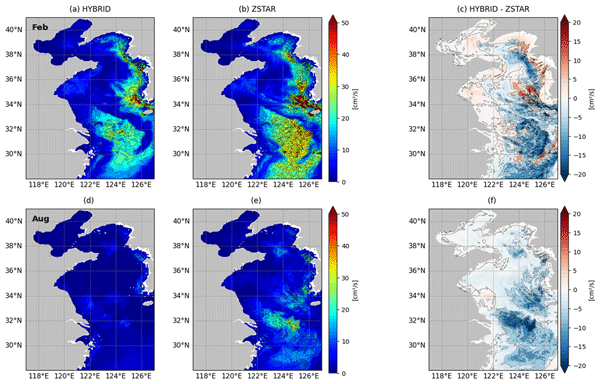
Abstract. An accurate representation of tidal dynamics is critical for simulating physical and biogeochemical processes in marginal seas, such as the Yellow Sea, where energetic tides and strong seasonal stratification coexist. This study assessed the impact of vertical coordinate systems on the simulation of barotropic and baroclinic tides using Modular Ocean Model version 6, evaluating two configurations: the z* coordinate system (ZSTAR) and hybrid z*-isopycnal coordinate system (HYBRID). The model outputs were validated against satellite-derived sea surface temperatures, in situ temperature profiles, and TPXO tidal harmonics, with a focus on contrasting winter and summer conditions. HYBRID more accurately reproduced sea surface temperatures and vertical thermal structures, particularly during strongly stratified summers, and maintained a sharper and deeper thermocline, as confirmed by long-term temperature diagnostics and age tracer experiments, indicating reduced vertical mixing and improved stratification. For barotropic tides, HYBRID showed better agreement with TPXO for the dominant M2 constituent (RMSE: 24.19 cm; correlation: 0.76) than ZSTAR (RMSE: 32.55 cm; correlation: 0.67). A similar improvement is found for the K1 constituent, further confirming the superior barotropic tidal performance of HYBRID across multiple tidal frequencies. HYBRID also produced stronger barotropic tidal energy fluxes across key regions, yielding 13.5–27.6 % larger fluxes in winter and 17.2–51.1 % larger fluxes in summer relative to ZSTAR. Baroclinic tidal dynamics exhibited more contrasting model behavior. In winter, ZSTAR produced 19.5–36.8 % greater baroclinic kinetic energy (KE). However, in summer, HYBRID simulated consistently stronger baroclinic KE, with 9.2–33.6 % larger magnitudes across all regions, reflecting more realistic baroclinic tide generation under strong stratification. Analysis of the baroclinic energy budget further revealed that, although ZSTAR often yielded greater barotropic-to-baroclinic conversion, a substantial portion of this converted energy was locally dissipated rather than radiated, resulting in a much larger residual dissipation term. This indicates that spurious diapycnal mixing in ZSTAR rapidly removes internal-tide energy, degrading propagation and vertical energy transfer. In contrast, HYBRID preserved baroclinic tidal energy more effectively, enabling more coherent energy radiation away from generation hotspots. These results highlight that vertical coordinate design critically influences tidal energetics and stratification-dependent processes in high-resolution regional models. The improved stratification maintenance enabled by HYBRID offers substantial advantages for accurately representing internal-tide dynamics and associated vertical energy pathways in the Yellow Sea.
-
Notice on discussion status
The requested preprint has a corresponding peer-reviewed final revised paper. You are encouraged to refer to the final revised version.
-
Preprint
(10733 KB)
-
The requested preprint has a corresponding peer-reviewed final revised paper. You are encouraged to refer to the final revised version.
- Preprint
(10733 KB) - Metadata XML
- BibTeX
- EndNote
- Final revised paper


Journal article(s) based on this preprint
Interactive discussion
Status: closed
-
RC1: 'Comment on egusphere-2026-47', Anonymous Referee #1, 09 Mar 2026
The comment was uploaded in the form of a supplement: https://egusphere.copernicus.org/preprints/2026/egusphere-2026-47/egusphere-2026-47-RC1-supplement.pdfCitation: https://doi.org/
10.5194/egusphere-2026-47-RC1 -
AC2: 'Reply on RC1', YoungHo Kim, 22 Mar 2026
We thank the reviewer for the positive and constructive assessment of our manuscript. We appreciate the reviewer’s recognition that the study is well written and provides a valuable contribution. We have carefully considered all of the reviewer’s comments and have revised the manuscript accordingly. All suggested changes and clarifications have been incorporated, and the manuscript has been improved in response to the reviewer’s helpful suggestions. Below we provide point-by-point responses to the reviewer’s comments.
Line 760—there were 30+ authors on the MacKinnon et al. study. Your reference to this paper in the reference list only lists a few of them. There should be a “…”, “et al.”, “+ 30 more authors”, or some other indicator of this in your reference.
- We thank the reviewer for pointing this out. The reference to MacKinnon et al. (2017) has been corrected in the reference list to properly indicate the large number of authors by including “et al.” after the listed authors.
- (Revised text) MacKinnon, J. A., Zhao, Z., Whalen, C. B., Waterhouse, A. F., Trossman, D. S., Sun, O. M., Alford, M. H., et al.: Climate Process Team on Internal Wave–Driven Ocean Mixing, Bulletin of the American Meteorological Society, 98(11), 2429–2454, https://doi.org/10.1175/BAMS-D-16-0030.1 , 2017. (L785-787)
L149: Paragraph centered on lines 85 and 90—could also consider citing Hiron et al. 2025 as a study that examined the effect of the model vertical resolution on the simulation of internal tides. This is another important choice that modelers must make, one that probably impacts the results that you are looking at here
- Thank you for this suggestion. Hiron et al. (2025) investigated the influence of vertical resolution on the simulation of internal tides. Because the focus of this paragraph is on studies examining the influence of vertical coordinate systems on tidal simulations, we chose not to include this reference here in order to maintain the clarity of the discussion.
Line 115—related to the previous note, here you mention that you use 75 levels in this study. This seems reasonable. I could be wrong, but I’m guessing that the comparison between results in different coordinate systems is probably influenced by the number of levels that you choose. Could you add a sentence saying something about this, and/or why you chose 75 levels?
- The model uses 75 vertical levels, which is consistent with many recent MOM6 configurations used in both global (Adcroft et al., 2019) and regional applications (Ross et al., 2023). We also conducted sensitivity tests comparing 61 and 75 vertical levels and found that the 75-level configuration provided improved simulation performance relative to the additional computational cost. Therefore, the 75-level configuration was adopted in this study.
- (Revised text) This vertical resolution is consistent with recent MOM6 applications in both global (Adcroft et al., 2019) and regional configurations (Ross et al., 2023; Seijo-Ellis et al., 2024; Drenkard et al., 2025; Liao et al., 2025). (L117-119)
In Section 2.1 you could briefly mention that you are (as far as I can tell) ignoring the self attraction and loading term. That is probably fine, given the small size of your domain, but worth a brief mention. Especially because you are including the astronomical tidal forcing.
- Thank you for the suggestion. We have added a sentence in Section 2.1 clarifying that the self-attraction and loading (SAL) effect is included in the model using the scalar approximation of Accad and Pekeris (1978) with a coefficient of 0.01.
- (Revised text) The self-attraction and loading effect was parameterized using the scalar approximation (Accad and Pekeris, 1978) (line 139-140)
Line 174 and in other places—minor point, but you might want to check whether the journal convention for typing the principal lunar semidiurnal tide is M2 or M2. A similar comment applies for the many mentions of K1 (K1).
- Thank you for the suggestion. We have checked the journal convention and revised the notation of the tidal constituents (e.g., M₂ and K₁) throughout the manuscript for consistency.
Citation: https://doi.org/10.5194/egusphere-2026-47-AC2
-
AC2: 'Reply on RC1', YoungHo Kim, 22 Mar 2026
-
RC2: 'Comment on egusphere-2026-47', Robin Robertson, 10 Mar 2026
I enjoyed reading this well-organized paper. I appreciate when people look into model performance issues, because the basics are important. The English was good and the writing clear.
I am not surprized that the hybrid scheme outperformed the zstar scheme, especially with less vertical overmixing. Many of the vertical mixing parameterizations overmix, so it is good when it is reduced. However, I am not familiar with the Jackson scheme.
I believe the manuscript is almost ready for publication; however, I have a few comments and typos.
1) Generally, M2 and K1 have the numbers as subscripts, so they should do that.
2) lines 276, 313 and elsewhere It is better not to start sentences with Figure. This puts the emphasis on the figure not your ideas. Start the sentence with the idea and shift the focus to your ideas not the figure. Use figures to support your ideas/hypotheses/conclusions.
3) Zhenhua Xu at the Institute of Oceanology Chinese Academy of Sciences has mooring data from the Yellow Sea. His student, Weidong Wang, looked at internal tides. You might be able to get the results of the mooring data for a subsurface comparison, which would be good. Wang, W., R. Robertson, Y. Wang, C. Zhao, Z. Hao, B. Yin, and Z. Xu (2022) Distinct Variability between Semidiurnal and Diurnal Internal Tides at the East China Sea Shelf, Remote Sensing, 14(10), 2570, doi.org/10.3390/rs14112570.
4) line 208 15 days is not really sufficient for tidal analysis. 30 days is much better. I used 15 days in my early papers, but then switched to 30. You can test this out easily. If you make up a time series of different lengths with several tidal constituents and then put it through the tidal analysis, K1 can come up with significant errors with only 15 days. The errors are reduced with 30 or more days. You can see them decrease with additional 15 day lengths (15, 30, 45, 60, 75, ... days). It is an interesting little exercise. M2 is Ok at 15 but better at 30 days. I don't think you have significant errors, or they would show with the TPXO9 comparison.
5) I think that you should run a case with both the hybrid and the zstar depths with no forcing (no tides, no wind, no sun, no blackbody radiation, basically no surface fluxes) and with a uniform temperature and salinity both horizontally and vertically. Theoretically, it should sit still. But sigma and hybrid cases seldom do. This gives you an estimate of the errors in the velocities. I always do one of these when starting a new location/grid. Maybe you already have and know the answer. A sentence in the Methods stating the errors in the velocities with the hybrid scheme would be good. These errors in POM were significant, especially near the critical latitude. Robertson, R., L. Padman, and M. D. Levine (2001), A correction to the baroclinic pressure gradient term in the Princeton Ocean Model, J. Atmos. Ocean. Tech., 18, 1068-1075.
6) The K1 critical latitude goes through your domain at the southern side. So, over most of your domain, there should be no baroclinic K1 tides. You should address this or note this. Now, the critical latitude can be shifted due to background currents. So, if you are getting baroclinic K1 tides, there should be some background vorticity. I noted that you mainly show the M2. Also the M2 can be enhanced near the K1 critical latitude and there may be some evidence of that in Figure 9.
Dong, J., R. Robertson, C. Dong, P. S. Hartlipp, T. Zhou, Z. Shao, W. Lin, M. Zhou, and J. Chen (2019) Impacts of mesoscale currents on the diurnal critical latitude dependence of internal tides: A numerical experiment based on Barcoo Seamount, J. Geophys. Res. Oceans, doi: 10.1029/2018JC014413
Now for the little stuff.
1) line 70 Not only is spurious mixing generated, but also spurious velocities.
2) At 5 km resolution, internal tides are not well described. I found that 1 km was needed for that. But 5 km tells you where to look. This is just FYI. I am not saying to rerun the cases. Robertson, R. (2006), Modeling Internal Tides over Fieberling Guyot: Resolution, Parameterization, Performance, Ocean Dynamics, doi 10.1007/s10236-006-0062-5.
3) Fig 5 There is an incorrect label of Feb in the leftmost panel of the bottom row. That should be fixed
4) lines 610-614 You should also state the improved vertical mixing here. I know it is outlined in the next paragraph.
Citation: https://doi.org/10.5194/egusphere-2026-47-RC2 -
AC3: 'Reply on RC2', YoungHo Kim, 22 Mar 2026
We thank the reviewer for the positive and encouraging evaluation of our manuscript. We appreciate the reviewer’s recognition of the importance of investigating model performance and the clarity of the presentation. We have carefully considered all comments and suggestions and have revised the manuscript accordingly. Below we provide point-by-point responses to the reviewer’s comments.
Generally, M2 and K1 have the numbers as subscripts, so they should do that.
- Thank you for the suggestion. We have revised the notation of the tidal constituents (e.g., M₂ and K₁) throughout the manuscript to follow the conventional subscript format.
lines 276, 313 and elsewhere It is better not to start sentences with Figure. This puts the emphasis on the figure not your ideas. Start the sentence with the idea and shift the focus to your ideas not the figure. Use figures to support your ideas/hypotheses/conclusions.
- Thank you for the helpful suggestion. We agree that sentences should emphasize the scientific interpretation rather than the figures. Accordingly, we have revised the relevant sentences throughout the manuscript so that the discussion begins with the main findings or interpretations, with the figures cited in support.
- (Revised text) The vertical temperature structure in August, when stratification in the Yellow Sea is strongest, is generally well reproduced by both configurations, although noticeable deviations from the observations remain (Fig. 4). (L261-262)
- (Revised text) The spatial distribution of the depth-averaged buoyancy frequency in February and August indicates notable seasonal differences in stratification between the HYBRID and ZSTAR configurations (Fig. 5). (L282-283)
- (Revised text) The M₂ tidal amplitudes and phases in the Yellow Sea from the HYBRID and ZSTAR configurations are compared with those from the TPXO9 tidal model (Fig. 6). (L322-323)
- (Revised text) The barotropic tidal energy flux vectors and magnitudes associated with the M₂ constituent in the Yellow Sea show a similar large-scale propagation pattern in both HYBRID and ZSTAR during February and August (Fig. 8). (L350-352)
- (Revised text) The baroclinic tidal energy flux vectors associated with the M₂ tide in the Yellow Sea during February and August reveal clear seasonal differences (Fig. 10). (L422-423)
Zhenhua Xu at the Institute of Oceanology Chinese Academy of Sciences has mooring data from the Yellow Sea. His student, Weidong Wang, looked at internal tides. You might be able to get the results of the mooring data for a subsurface comparison, which would be good. Wang, W., R. Robertson, Y. Wang, C. Zhao, Z. Hao, B. Yin, and Z. Xu (2022) Distinct Variability between Semidiurnal and Diurnal Internal Tides at the East China Sea Shelf, Remote Sensing, 14(10), 2570, doi.org/10.3390/rs14112570.
- Thank you for the helpful suggestion and for bringing this study to our attention. The mooring observations reported by Wang et al. (2022) correspond to measurements collected in 2014, whereas the present study focuses on model simulations for 2012. Therefore, a direct comparison with these observations was not performed in this study. Extending the analysis period to include 2014 and examining the differences in tidal simulation performance associated with vertical coordinate systems in the East China Sea would be an interesting direction for future work.
line 208 15 days is not really sufficient for tidal analysis. 30 days is much better. I used 15 days in my early papers, but then switched to 30. You can test this out easily. If you make up a time series of different lengths with several tidal constituents and then put it through the tidal analysis, K1 can come up with significant errors with only 15 days. The errors are reduced with 30 or more days. You can see them decrease with additional 15 day lengths (15, 30, 45, 60, 75, ... days). It is an interesting little exercise. M2 is Ok at 15 but better at 30 days. I don't think you have significant errors, or they would show with the TPXO9 comparison.
- Thank you for the helpful comment and suggestion. We apologize for the confusion. The diagnostics such as barotropic energy flux and baroclinic kinetic energy were obtained from harmonic analysis using a 15-day window. However, the M₂ and K₁ tidal amplitudes and phases compared with TPXO9 were derived from harmonic analysis of hourly SSH over a one-year period. To avoid misunderstanding, we have clarified this point in the revised manuscript.
- (Revised text) The M₂ and K₁ tidal amplitudes and phases used for comparison with TPXO9 were obtained from harmonic analysis of hourly sea surface height (SSH) over a one-year period to ensure reliable estimation of the principal tidal constituents. To investigate seasonal variability, February and August were selected as representative winter and summer conditions, respectively. (L209-212)
I think that you should run a case with both the hybrid and the zstar depths with no forcing (no tides, no wind, no sun, no blackbody radiation, basically no surface fluxes) and with a uniform temperature and salinity both horizontally and vertically. Theoretically, it should sit still. But sigma and hybrid cases seldom do. This gives you an estimate of the errors in the velocities. I always do one of these when starting a new location/grid. Maybe you already have and know the answer. A sentence in the Methods stating the errors in the velocities with the hybrid scheme would be good. These errors in POM were significant, especially near the critical latitude. Robertson, R., L. Padman, and M. D. Levine (2001), A correction to the baroclinic pressure gradient term in the Princeton Ocean Model, J. Atmos. Ocean. Tech., 18, 1068-1075.
- Thank you for this helpful suggestion. Resting-ocean tests can indeed be useful for diagnosing spurious velocities associated with pressure-gradient calculations, particularly in terrain-following coordinate models. In such configurations, numerical errors can arise when horizontal pressure gradients are evaluated along sloping coordinate surfaces, which may generate artificial currents even under horizontally and vertically uniform temperature and salinity conditions. However, the HYBRID vertical coordinate system used in MOM6 differs fundamentally from traditional sigma-coordinate models. In MOM6, the HYBRID configuration employs z* coordinates near the surface and bottom and transitions to isopycnal coordinates in the stratified interior. Because terrain-following sigma coordinates are not used, the model does not suffer from the classical pressure-gradient errors commonly associated with sigma-coordinate models such as POM (e.g., Robertson et al., 2001). As a result, spurious velocities arising from pressure-gradient calculation errors are substantially reduced in this configuration.
The K1 critical latitude goes through your domain at the southern side. So, over most of your domain, there should be no baroclinic K1 tides. You should address this or note this. Now, the critical latitude can be shifted due to background currents. So, if you are getting baroclinic K1 tides, there should be some background vorticity. I noted that you mainly show the M2. Also the M2 can be enhanced near the K1 critical latitude and there may be some evidence of that in Figure 9.
- Thank you for this insightful comment and for pointing out the relevance of the diurnal critical latitude. We agree that the K₁ critical latitude (~30°N) lies near the southern boundary of the Yellow Sea and may influence internal tide dynamics in this region. Following the reviewer’s suggestion, we have added a brief discussion of this point in the paragraph describing Fig. 9. In particular, we note that the proximity of the study region to the K₁ critical latitude may favor enhanced internal wave activity around 30–32°N, which could contribute to the baroclinic tidal energy distribution seen in Fig. 9. We have also cited Dong et al. (2019) to provide supporting context.
- (Revised text) In both seasons, pronounced baroclinic KE maxima consistently appear near the Yangtze River Estuary and in regions characterized by steep topographic gradients. These areas are well-known hotspots for internal tide generation associated with strong barotropic-to-baroclinic energy conversion over rough topography. In addition, the Yellow Sea lies close to the critical latitude (~30°N) of the diurnal K1 tide, where the tidal frequency approaches the local inertial frequency, favoring enhanced internal wave activity (Dong et al., 2019). Consequently, enhanced baroclinic KE is also observed around 30–32°N. Such dynamical conditions can further intensify internal wave responses and contribute to the amplification of M2 internal tides, a tendency that is also evident in Fig. 9. (L388-394)
line 70 Not only is spurious mixing generated, but also spurious velocities.
- Thank you for the comment. We agree that spurious velocities can arise in terrain-following coordinate models due to pressure-gradient errors. However, the HYBRID vertical coordinate used in MOM6 does not employ terrain-following sigma coordinates but instead combines z* and isopycnal layers. As a result, the classical pressure-gradient errors that generate spurious velocities in sigma-coordinate models are largely avoided.
At 5 km resolution, internal tides are not well described. I found that 1 km was needed for that. But 5 km tells you where to look. This is just FYI. I am not saying to rerun the cases. Robertson, R. (2006), Modeling Internal Tides over Fieberling Guyot: Resolution, Parameterization, Performance, Ocean Dynamics, doi 10.1007/s10236-006-0062-5.
- Thank you for this helpful comment and for pointing out the study by Robertson (2006). We agree that resolving internal tides in detail often requires kilometer-scale resolution (~1 km), and that a 5 km grid spacing cannot fully resolve the fine-scale structure of internal tide generation and propagation. However, the primary objective of this study is not to fully resolve internal tide dynamics, but to examine how different vertical coordinate systems influence tidal energetics, stratification, and associated physical processes in a regional ocean model. At this resolution, the model is still able to capture the large-scale characteristics of tidal energetics and the relative differences between the HYBRID and ZSTAR configurations. Investigating the sensitivity of internal tide representation to model resolution would be an interesting direction for future work.
Fig 5 There is an incorrect label of Feb in the leftmost panel of the bottom row. That should be fixed
- Thank you for catching this error. We have corrected the label in the leftmost panel of the bottom row of Fig. 5.
lines 610-614 You should also state the improved vertical mixing here. I know it is outlined in the next paragraph.
- Thank you for the suggestion. We agree that the role of improved vertical mixing should be stated more explicitly in this section. Accordingly, we have revised the sentence to clarify that the HYBRID configuration more accurately represents internal tide dynamics owing to its improved representation of vertical mixing and better preservation of stratification.
- (Revised text) Diagnostics of the baroclinic KE, internal tidal energy flux, barotropic-to-baroclinic conversion rate, and time-resolved density fields indicated that HYBRID more accurately captures the generation, propagation, and vertical structure of internal tides, owing to its improved representation of vertical mixing and enhanced preservation of stratification. (L627-630)
Citation: https://doi.org/10.5194/egusphere-2026-47-AC3
-
AC3: 'Reply on RC2', YoungHo Kim, 22 Mar 2026
-
CEC1: 'Comment on egusphere-2026-47', Astrid Kerkweg, 11 Mar 2026
Dear authors,
in my role as Executive editor of GMD, I would like to bring to your attention our Editorial version 1.2: https://www.geosci-model-dev.net/12/2215/2019/
This highlights some requirements of papers published in GMD, which is also available on the GMD website in the ‘Manuscript Types’ section: http://www.geoscientific-model-development.net/submission/manuscript_types.html
In particular, please note that for your paper, the following requirement has not been met in the Discussions paper:
- “If the article relates to a single model then the model name and the version number must be included in the title of the paper. If the main intention of an article is to make a general (i.e. model independent) statement about the usefulness of a new development, but the usefulness is shown with the help of one specific model, the model name and version number must be stated in the title. The title could have a form such as, “Title outlining amazing generic advance: a case study with Model XXX (version Y)”.''
Additionally, the GMD editorial states about Model experiment description papers: "The primary purpose of these papers is to enable modelling communities to perform the same experiments. Therefore, everything required to run the experiment must be provided, apart from the model itself." (GMD Editorial main text, see also appendix B4)
I do not see that your article is about a model experiment which is performed by a larger community with different models. Therefore, your paper fits better the "Technical and development paper" type and I will ask the editorial office to apply this manuscript type to your article.
Yours, Astrid Kerkweg
Citation: https://doi.org/10.5194/egusphere-2026-47-CEC1 -
AC1: 'Reply on CEC1', YoungHo Kim, 16 Mar 2026
Dear Astrid,
Thank you for your message and for pointing out the GMD editorial requirements.
We have revised the title to include the model name (MOM6) in accordance with the GMD guidelines.
Best regards
Citation: https://doi.org/10.5194/egusphere-2026-47-AC1
Peer review completion


Interactive discussion
Status: closed
-
RC1: 'Comment on egusphere-2026-47', Anonymous Referee #1, 09 Mar 2026
The comment was uploaded in the form of a supplement: https://egusphere.copernicus.org/preprints/2026/egusphere-2026-47/egusphere-2026-47-RC1-supplement.pdf
-
AC2: 'Reply on RC1', YoungHo Kim, 22 Mar 2026
We thank the reviewer for the positive and constructive assessment of our manuscript. We appreciate the reviewer’s recognition that the study is well written and provides a valuable contribution. We have carefully considered all of the reviewer’s comments and have revised the manuscript accordingly. All suggested changes and clarifications have been incorporated, and the manuscript has been improved in response to the reviewer’s helpful suggestions. Below we provide point-by-point responses to the reviewer’s comments.
Line 760—there were 30+ authors on the MacKinnon et al. study. Your reference to this paper in the reference list only lists a few of them. There should be a “…”, “et al.”, “+ 30 more authors”, or some other indicator of this in your reference.
- We thank the reviewer for pointing this out. The reference to MacKinnon et al. (2017) has been corrected in the reference list to properly indicate the large number of authors by including “et al.” after the listed authors.
- (Revised text) MacKinnon, J. A., Zhao, Z., Whalen, C. B., Waterhouse, A. F., Trossman, D. S., Sun, O. M., Alford, M. H., et al.: Climate Process Team on Internal Wave–Driven Ocean Mixing, Bulletin of the American Meteorological Society, 98(11), 2429–2454, https://doi.org/10.1175/BAMS-D-16-0030.1 , 2017. (L785-787)
L149: Paragraph centered on lines 85 and 90—could also consider citing Hiron et al. 2025 as a study that examined the effect of the model vertical resolution on the simulation of internal tides. This is another important choice that modelers must make, one that probably impacts the results that you are looking at here
- Thank you for this suggestion. Hiron et al. (2025) investigated the influence of vertical resolution on the simulation of internal tides. Because the focus of this paragraph is on studies examining the influence of vertical coordinate systems on tidal simulations, we chose not to include this reference here in order to maintain the clarity of the discussion.
Line 115—related to the previous note, here you mention that you use 75 levels in this study. This seems reasonable. I could be wrong, but I’m guessing that the comparison between results in different coordinate systems is probably influenced by the number of levels that you choose. Could you add a sentence saying something about this, and/or why you chose 75 levels?
- The model uses 75 vertical levels, which is consistent with many recent MOM6 configurations used in both global (Adcroft et al., 2019) and regional applications (Ross et al., 2023). We also conducted sensitivity tests comparing 61 and 75 vertical levels and found that the 75-level configuration provided improved simulation performance relative to the additional computational cost. Therefore, the 75-level configuration was adopted in this study.
- (Revised text) This vertical resolution is consistent with recent MOM6 applications in both global (Adcroft et al., 2019) and regional configurations (Ross et al., 2023; Seijo-Ellis et al., 2024; Drenkard et al., 2025; Liao et al., 2025). (L117-119)
In Section 2.1 you could briefly mention that you are (as far as I can tell) ignoring the self attraction and loading term. That is probably fine, given the small size of your domain, but worth a brief mention. Especially because you are including the astronomical tidal forcing.
- Thank you for the suggestion. We have added a sentence in Section 2.1 clarifying that the self-attraction and loading (SAL) effect is included in the model using the scalar approximation of Accad and Pekeris (1978) with a coefficient of 0.01.
- (Revised text) The self-attraction and loading effect was parameterized using the scalar approximation (Accad and Pekeris, 1978) (line 139-140)
Line 174 and in other places—minor point, but you might want to check whether the journal convention for typing the principal lunar semidiurnal tide is M2 or M2. A similar comment applies for the many mentions of K1 (K1).
- Thank you for the suggestion. We have checked the journal convention and revised the notation of the tidal constituents (e.g., M₂ and K₁) throughout the manuscript for consistency.
Citation: https://doi.org/10.5194/egusphere-2026-47-AC2
-
AC2: 'Reply on RC1', YoungHo Kim, 22 Mar 2026
-
RC2: 'Comment on egusphere-2026-47', Robin Robertson, 10 Mar 2026
I enjoyed reading this well-organized paper. I appreciate when people look into model performance issues, because the basics are important. The English was good and the writing clear.
I am not surprized that the hybrid scheme outperformed the zstar scheme, especially with less vertical overmixing. Many of the vertical mixing parameterizations overmix, so it is good when it is reduced. However, I am not familiar with the Jackson scheme.
I believe the manuscript is almost ready for publication; however, I have a few comments and typos.
1) Generally, M2 and K1 have the numbers as subscripts, so they should do that.
2) lines 276, 313 and elsewhere It is better not to start sentences with Figure. This puts the emphasis on the figure not your ideas. Start the sentence with the idea and shift the focus to your ideas not the figure. Use figures to support your ideas/hypotheses/conclusions.
3) Zhenhua Xu at the Institute of Oceanology Chinese Academy of Sciences has mooring data from the Yellow Sea. His student, Weidong Wang, looked at internal tides. You might be able to get the results of the mooring data for a subsurface comparison, which would be good. Wang, W., R. Robertson, Y. Wang, C. Zhao, Z. Hao, B. Yin, and Z. Xu (2022) Distinct Variability between Semidiurnal and Diurnal Internal Tides at the East China Sea Shelf, Remote Sensing, 14(10), 2570, doi.org/10.3390/rs14112570.
4) line 208 15 days is not really sufficient for tidal analysis. 30 days is much better. I used 15 days in my early papers, but then switched to 30. You can test this out easily. If you make up a time series of different lengths with several tidal constituents and then put it through the tidal analysis, K1 can come up with significant errors with only 15 days. The errors are reduced with 30 or more days. You can see them decrease with additional 15 day lengths (15, 30, 45, 60, 75, ... days). It is an interesting little exercise. M2 is Ok at 15 but better at 30 days. I don't think you have significant errors, or they would show with the TPXO9 comparison.
5) I think that you should run a case with both the hybrid and the zstar depths with no forcing (no tides, no wind, no sun, no blackbody radiation, basically no surface fluxes) and with a uniform temperature and salinity both horizontally and vertically. Theoretically, it should sit still. But sigma and hybrid cases seldom do. This gives you an estimate of the errors in the velocities. I always do one of these when starting a new location/grid. Maybe you already have and know the answer. A sentence in the Methods stating the errors in the velocities with the hybrid scheme would be good. These errors in POM were significant, especially near the critical latitude. Robertson, R., L. Padman, and M. D. Levine (2001), A correction to the baroclinic pressure gradient term in the Princeton Ocean Model, J. Atmos. Ocean. Tech., 18, 1068-1075.
6) The K1 critical latitude goes through your domain at the southern side. So, over most of your domain, there should be no baroclinic K1 tides. You should address this or note this. Now, the critical latitude can be shifted due to background currents. So, if you are getting baroclinic K1 tides, there should be some background vorticity. I noted that you mainly show the M2. Also the M2 can be enhanced near the K1 critical latitude and there may be some evidence of that in Figure 9.
Dong, J., R. Robertson, C. Dong, P. S. Hartlipp, T. Zhou, Z. Shao, W. Lin, M. Zhou, and J. Chen (2019) Impacts of mesoscale currents on the diurnal critical latitude dependence of internal tides: A numerical experiment based on Barcoo Seamount, J. Geophys. Res. Oceans, doi: 10.1029/2018JC014413
Now for the little stuff.
1) line 70 Not only is spurious mixing generated, but also spurious velocities.
2) At 5 km resolution, internal tides are not well described. I found that 1 km was needed for that. But 5 km tells you where to look. This is just FYI. I am not saying to rerun the cases. Robertson, R. (2006), Modeling Internal Tides over Fieberling Guyot: Resolution, Parameterization, Performance, Ocean Dynamics, doi 10.1007/s10236-006-0062-5.
3) Fig 5 There is an incorrect label of Feb in the leftmost panel of the bottom row. That should be fixed
4) lines 610-614 You should also state the improved vertical mixing here. I know it is outlined in the next paragraph.
Citation: https://doi.org/10.5194/egusphere-2026-47-RC2 -
AC3: 'Reply on RC2', YoungHo Kim, 22 Mar 2026
We thank the reviewer for the positive and encouraging evaluation of our manuscript. We appreciate the reviewer’s recognition of the importance of investigating model performance and the clarity of the presentation. We have carefully considered all comments and suggestions and have revised the manuscript accordingly. Below we provide point-by-point responses to the reviewer’s comments.
Generally, M2 and K1 have the numbers as subscripts, so they should do that.
- Thank you for the suggestion. We have revised the notation of the tidal constituents (e.g., M₂ and K₁) throughout the manuscript to follow the conventional subscript format.
lines 276, 313 and elsewhere It is better not to start sentences with Figure. This puts the emphasis on the figure not your ideas. Start the sentence with the idea and shift the focus to your ideas not the figure. Use figures to support your ideas/hypotheses/conclusions.
- Thank you for the helpful suggestion. We agree that sentences should emphasize the scientific interpretation rather than the figures. Accordingly, we have revised the relevant sentences throughout the manuscript so that the discussion begins with the main findings or interpretations, with the figures cited in support.
- (Revised text) The vertical temperature structure in August, when stratification in the Yellow Sea is strongest, is generally well reproduced by both configurations, although noticeable deviations from the observations remain (Fig. 4). (L261-262)
- (Revised text) The spatial distribution of the depth-averaged buoyancy frequency in February and August indicates notable seasonal differences in stratification between the HYBRID and ZSTAR configurations (Fig. 5). (L282-283)
- (Revised text) The M₂ tidal amplitudes and phases in the Yellow Sea from the HYBRID and ZSTAR configurations are compared with those from the TPXO9 tidal model (Fig. 6). (L322-323)
- (Revised text) The barotropic tidal energy flux vectors and magnitudes associated with the M₂ constituent in the Yellow Sea show a similar large-scale propagation pattern in both HYBRID and ZSTAR during February and August (Fig. 8). (L350-352)
- (Revised text) The baroclinic tidal energy flux vectors associated with the M₂ tide in the Yellow Sea during February and August reveal clear seasonal differences (Fig. 10). (L422-423)
Zhenhua Xu at the Institute of Oceanology Chinese Academy of Sciences has mooring data from the Yellow Sea. His student, Weidong Wang, looked at internal tides. You might be able to get the results of the mooring data for a subsurface comparison, which would be good. Wang, W., R. Robertson, Y. Wang, C. Zhao, Z. Hao, B. Yin, and Z. Xu (2022) Distinct Variability between Semidiurnal and Diurnal Internal Tides at the East China Sea Shelf, Remote Sensing, 14(10), 2570, doi.org/10.3390/rs14112570.
- Thank you for the helpful suggestion and for bringing this study to our attention. The mooring observations reported by Wang et al. (2022) correspond to measurements collected in 2014, whereas the present study focuses on model simulations for 2012. Therefore, a direct comparison with these observations was not performed in this study. Extending the analysis period to include 2014 and examining the differences in tidal simulation performance associated with vertical coordinate systems in the East China Sea would be an interesting direction for future work.
line 208 15 days is not really sufficient for tidal analysis. 30 days is much better. I used 15 days in my early papers, but then switched to 30. You can test this out easily. If you make up a time series of different lengths with several tidal constituents and then put it through the tidal analysis, K1 can come up with significant errors with only 15 days. The errors are reduced with 30 or more days. You can see them decrease with additional 15 day lengths (15, 30, 45, 60, 75, ... days). It is an interesting little exercise. M2 is Ok at 15 but better at 30 days. I don't think you have significant errors, or they would show with the TPXO9 comparison.
- Thank you for the helpful comment and suggestion. We apologize for the confusion. The diagnostics such as barotropic energy flux and baroclinic kinetic energy were obtained from harmonic analysis using a 15-day window. However, the M₂ and K₁ tidal amplitudes and phases compared with TPXO9 were derived from harmonic analysis of hourly SSH over a one-year period. To avoid misunderstanding, we have clarified this point in the revised manuscript.
- (Revised text) The M₂ and K₁ tidal amplitudes and phases used for comparison with TPXO9 were obtained from harmonic analysis of hourly sea surface height (SSH) over a one-year period to ensure reliable estimation of the principal tidal constituents. To investigate seasonal variability, February and August were selected as representative winter and summer conditions, respectively. (L209-212)
I think that you should run a case with both the hybrid and the zstar depths with no forcing (no tides, no wind, no sun, no blackbody radiation, basically no surface fluxes) and with a uniform temperature and salinity both horizontally and vertically. Theoretically, it should sit still. But sigma and hybrid cases seldom do. This gives you an estimate of the errors in the velocities. I always do one of these when starting a new location/grid. Maybe you already have and know the answer. A sentence in the Methods stating the errors in the velocities with the hybrid scheme would be good. These errors in POM were significant, especially near the critical latitude. Robertson, R., L. Padman, and M. D. Levine (2001), A correction to the baroclinic pressure gradient term in the Princeton Ocean Model, J. Atmos. Ocean. Tech., 18, 1068-1075.
- Thank you for this helpful suggestion. Resting-ocean tests can indeed be useful for diagnosing spurious velocities associated with pressure-gradient calculations, particularly in terrain-following coordinate models. In such configurations, numerical errors can arise when horizontal pressure gradients are evaluated along sloping coordinate surfaces, which may generate artificial currents even under horizontally and vertically uniform temperature and salinity conditions. However, the HYBRID vertical coordinate system used in MOM6 differs fundamentally from traditional sigma-coordinate models. In MOM6, the HYBRID configuration employs z* coordinates near the surface and bottom and transitions to isopycnal coordinates in the stratified interior. Because terrain-following sigma coordinates are not used, the model does not suffer from the classical pressure-gradient errors commonly associated with sigma-coordinate models such as POM (e.g., Robertson et al., 2001). As a result, spurious velocities arising from pressure-gradient calculation errors are substantially reduced in this configuration.
The K1 critical latitude goes through your domain at the southern side. So, over most of your domain, there should be no baroclinic K1 tides. You should address this or note this. Now, the critical latitude can be shifted due to background currents. So, if you are getting baroclinic K1 tides, there should be some background vorticity. I noted that you mainly show the M2. Also the M2 can be enhanced near the K1 critical latitude and there may be some evidence of that in Figure 9.
- Thank you for this insightful comment and for pointing out the relevance of the diurnal critical latitude. We agree that the K₁ critical latitude (~30°N) lies near the southern boundary of the Yellow Sea and may influence internal tide dynamics in this region. Following the reviewer’s suggestion, we have added a brief discussion of this point in the paragraph describing Fig. 9. In particular, we note that the proximity of the study region to the K₁ critical latitude may favor enhanced internal wave activity around 30–32°N, which could contribute to the baroclinic tidal energy distribution seen in Fig. 9. We have also cited Dong et al. (2019) to provide supporting context.
- (Revised text) In both seasons, pronounced baroclinic KE maxima consistently appear near the Yangtze River Estuary and in regions characterized by steep topographic gradients. These areas are well-known hotspots for internal tide generation associated with strong barotropic-to-baroclinic energy conversion over rough topography. In addition, the Yellow Sea lies close to the critical latitude (~30°N) of the diurnal K1 tide, where the tidal frequency approaches the local inertial frequency, favoring enhanced internal wave activity (Dong et al., 2019). Consequently, enhanced baroclinic KE is also observed around 30–32°N. Such dynamical conditions can further intensify internal wave responses and contribute to the amplification of M2 internal tides, a tendency that is also evident in Fig. 9. (L388-394)
line 70 Not only is spurious mixing generated, but also spurious velocities.
- Thank you for the comment. We agree that spurious velocities can arise in terrain-following coordinate models due to pressure-gradient errors. However, the HYBRID vertical coordinate used in MOM6 does not employ terrain-following sigma coordinates but instead combines z* and isopycnal layers. As a result, the classical pressure-gradient errors that generate spurious velocities in sigma-coordinate models are largely avoided.
At 5 km resolution, internal tides are not well described. I found that 1 km was needed for that. But 5 km tells you where to look. This is just FYI. I am not saying to rerun the cases. Robertson, R. (2006), Modeling Internal Tides over Fieberling Guyot: Resolution, Parameterization, Performance, Ocean Dynamics, doi 10.1007/s10236-006-0062-5.
- Thank you for this helpful comment and for pointing out the study by Robertson (2006). We agree that resolving internal tides in detail often requires kilometer-scale resolution (~1 km), and that a 5 km grid spacing cannot fully resolve the fine-scale structure of internal tide generation and propagation. However, the primary objective of this study is not to fully resolve internal tide dynamics, but to examine how different vertical coordinate systems influence tidal energetics, stratification, and associated physical processes in a regional ocean model. At this resolution, the model is still able to capture the large-scale characteristics of tidal energetics and the relative differences between the HYBRID and ZSTAR configurations. Investigating the sensitivity of internal tide representation to model resolution would be an interesting direction for future work.
Fig 5 There is an incorrect label of Feb in the leftmost panel of the bottom row. That should be fixed
- Thank you for catching this error. We have corrected the label in the leftmost panel of the bottom row of Fig. 5.
lines 610-614 You should also state the improved vertical mixing here. I know it is outlined in the next paragraph.
- Thank you for the suggestion. We agree that the role of improved vertical mixing should be stated more explicitly in this section. Accordingly, we have revised the sentence to clarify that the HYBRID configuration more accurately represents internal tide dynamics owing to its improved representation of vertical mixing and better preservation of stratification.
- (Revised text) Diagnostics of the baroclinic KE, internal tidal energy flux, barotropic-to-baroclinic conversion rate, and time-resolved density fields indicated that HYBRID more accurately captures the generation, propagation, and vertical structure of internal tides, owing to its improved representation of vertical mixing and enhanced preservation of stratification. (L627-630)
Citation: https://doi.org/10.5194/egusphere-2026-47-AC3
-
AC3: 'Reply on RC2', YoungHo Kim, 22 Mar 2026
-
CEC1: 'Comment on egusphere-2026-47', Astrid Kerkweg, 11 Mar 2026
Dear authors,
in my role as Executive editor of GMD, I would like to bring to your attention our Editorial version 1.2: https://www.geosci-model-dev.net/12/2215/2019/
This highlights some requirements of papers published in GMD, which is also available on the GMD website in the ‘Manuscript Types’ section: http://www.geoscientific-model-development.net/submission/manuscript_types.html
In particular, please note that for your paper, the following requirement has not been met in the Discussions paper:
- “If the article relates to a single model then the model name and the version number must be included in the title of the paper. If the main intention of an article is to make a general (i.e. model independent) statement about the usefulness of a new development, but the usefulness is shown with the help of one specific model, the model name and version number must be stated in the title. The title could have a form such as, “Title outlining amazing generic advance: a case study with Model XXX (version Y)”.''
Additionally, the GMD editorial states about Model experiment description papers: "The primary purpose of these papers is to enable modelling communities to perform the same experiments. Therefore, everything required to run the experiment must be provided, apart from the model itself." (GMD Editorial main text, see also appendix B4)
I do not see that your article is about a model experiment which is performed by a larger community with different models. Therefore, your paper fits better the "Technical and development paper" type and I will ask the editorial office to apply this manuscript type to your article.
Yours, Astrid Kerkweg
Citation: https://doi.org/10.5194/egusphere-2026-47-CEC1 -
AC1: 'Reply on CEC1', YoungHo Kim, 16 Mar 2026
Dear Astrid,
Thank you for your message and for pointing out the GMD editorial requirements.
We have revised the title to include the model name (MOM6) in accordance with the GMD guidelines.
Best regards
Citation: https://doi.org/10.5194/egusphere-2026-47-AC1
Peer review completion
Journal article(s) based on this preprint
Viewed
| HTML | XML | Total | BibTeX | EndNote | |
|---|---|---|---|---|---|
| 687 | 450 | 75 | 1,212 | 62 | 66 |
- HTML: 687
- PDF: 450
- XML: 75
- Total: 1,212
- BibTeX: 62
- EndNote: 66
Viewed (geographical distribution)
| Country | # | Views | % |
|---|
| Total: | 0 |
| HTML: | 0 |
| PDF: | 0 |
| XML: | 0 |
- 1
Inseong Chang

Young-Gyu Park
Hyunkeun Jin
Gyundo Pak
Andrew C. Ross
Robert Hallberg
The requested preprint has a corresponding peer-reviewed final revised paper. You are encouraged to refer to the final revised version.
- Preprint
(10733 KB) - Metadata XML