
the Creative Commons Attribution 4.0 License.
the Creative Commons Attribution 4.0 License.
 | 23 Apr 2026
Ideas and perspectives: Nitrite turnover controls nitrogen fate across redox gradients
Abstract. Reactive nitrogen fate in natural systems remains difficult to predict because pathway partitioning occurs at the stage of nitrite turnover, where rapid and tightly coupled production and consumption processes obscure the underlying fluxes. Concentration-based assessments emphasize the dominant pools — nitrate and ammonium — and pathway divergence is determined at the stage of nitrite turnover, independently of pool size. Nitrite is the only inorganic nitrogen species produced under both oxidative and reductive regimes and the obligatory precursor to all downstream dissolved and gaseous products. Because nitrite rarely accumulates, it has often been treated as a transient intermediate of limited interpretive value. This apparent invisibility reflects rapid, tightly coupled turnover and does not indicate functional insignificance. Nitrogen retention, recycling and atmospheric loss are resolved at the stage of nitrite turnover, where competing pathways partition fluxes under kinetic and environmental constraints.
Observed concentrations integrate formation and consumption into a net signal that masks opposing fluxes when internal cycling is rapid. Coupled δ¹⁵N–δ¹⁸O measurements of nitrite constrain simultaneous production and consumption and differentiate biological from abiotic pathways. Partial oxygen isotope exchange with water increases the diagnostic primacy of δ¹⁵N in resolving hidden turnover. Centering nitrogen-cycle interpretation on nitrite dynamics and isotopic expression across redox gradients from oxic soils to oxygen minimum zones, provides a mechanistic basis for predicting nitrogen budgets, N₂O emissions, and ecosystem sensitivity to increasing redox variability under climate change and land-use intensification.
-
Notice on discussion status
The requested preprint has a corresponding peer-reviewed final revised paper. You are encouraged to refer to the final revised version.
-
Preprint
(832 KB)
-
The requested preprint has a corresponding peer-reviewed final revised paper. You are encouraged to refer to the final revised version.
- Preprint
(832 KB) - Metadata XML
- BibTeX
- EndNote
- Final revised paper


Journal article(s) based on this preprint
Interactive discussion
Status: closed
-
RC1: 'Comment on egusphere-2026-2169', Anonymous Referee #1, 13 May 2026
-
AC1: 'Reply on RC1', Rosanna Margalef, 04 Jun 2026
We thank the reviewer for the careful reading of our manuscript and for the constructive comments, which have helped improve the clarity and balance of the text. We have addressed all comments point by point and have provided a detailed response to the reviewer’s feedback as a supplement. In this document, we describe the revisions made in response to the reviewer’s comments in the preliminary revised manuscript. The revised manuscript is included at the end of the response letter and incorporates the concerns of both RC1 and RC2. Line numbers referenced in our responses correspond to this revised manuscript.
Briefly, the main changes we have implemented are the following:
- A sentence in the introduction has been revised to clarify the dual role of nitrite as the only stable dissolved inorganic intermediate produced under both oxidative and reductive regimes, distinguishing it explicitly from nitric oxide (NO). We have clarified that despite NO also participates in both oxidative and reductive branches of the nitrogen cycle it is extremely short-lived in aqueous solution. Therefore, it does not accumulate to measurable concentrations under environmental conditions. Also, we have explained in more detail the role of hydroxylamine in the Figure 1 caption.
- Several paragraphs have been reformulated to reduce apparent repetition and improve the logical progression between sections. Also, a number of terminological imprecisions have been corrected throughout the text.
- A dedicated paragraph has been added acknowledging the current analytical limitations of natural-abundance nitrite isotope approaches, mainly due to its low concentration in natural environments.
- We have reviewed the most recent literature on the topic and included additional references to latest studies.
-
AC1: 'Reply on RC1', Rosanna Margalef, 04 Jun 2026
-
RC2: 'Comment on egusphere-2026-2169', Anonymous Referee #2, 27 May 2026
I appreciate the effort by the authors to reposition nitrite as a central node governing nitrogen fate across redox gradients. The conceptual framework is interesting and potentially valuable for linking microbial metabolism, isotope dynamics, and nitrogen loss pathways.
That said, I found some sections repetitive and occasionally overly abstract, which made the manuscript difficult to follow at times. Several lines and concepts would benefit from clearer wording and additional explanation, particularly for readers who may be less familiar with isotope systematics or nitrite turnover dynamics. The manuscript would also benefit from incorporating more concrete environmental examples to contextualize better and illustrate the conceptual arguments being made.
A major point that I think deserves stronger discussion is the practical limitation associated with natural-abundance nitrite isotope approaches. Although the manuscript advocates for shifting focus from accumulated pools to nitrite turnover and coupling, these approaches are inherently biased toward environments and transition zones where nitrite accumulates to detectable concentrations. In many natural systems, nitrite concentrations remain below detection despite active nitrogen cycling, owing to extremely rapid turnover and tight coupling between production and consumption processes. As a result, many oxic-anoxic transition zones are spatially narrow, transient, and analytically challenging to resolve. This limitation is important because it constrains where nitrite natural-abundance isotope techniques can realistically be applied. I therefore think the manuscript would benefit from a more explicit discussion of current analytical detection limits, the concentration ranges typically required for robust d15N and d18O measurements of nitrite, and future methodological developments aimed at improving sensitivity toward nanomolar-level nitrite detection and isotope analysis.
Specific comments:
Lines 24–26: “Nitrogen retention, recycling and atmospheric loss are resolved at the stage of nitrite turnover, where competing pathways partition fluxes under kinetic and environmental constraints.” Not sure what the authors are getting at here. The framing feels overly complicated.
Lines 41–42: Another timely study to consider, as it discusses the impact of climate change on denitrification in an aquatic environment: https://doi.org/10.1038/s41564-026-02349-9
Lines 55–62: “Nitrite is the only inorganic nitrogen species produced by both oxidative and reductive processes…” I agree that nitrite plays a central role in the nitrogen cycle, but I would suggest being a little cautious with the wording here. Nitric oxide (NO) also participates in both oxidative and reductive branches of the nitrogen cycling, and is an even more reactive and transient intermediate that is often difficult to measure. So while I agree with the overall point being made, describing nitrite as the “only” inorganic nitrogen species linking these processes may be somewhat overstated.
Lines 63–64: “Current diagnostics rely on concentration measurements of nitrate, ammonium and gaseous products.” A bit repetitive.
Line 64: “metrics” Did you mean nutrients? Not sure what is meant by metrics?
Lines 64–67: “These metrics integrate multiple processes, masking mechanistic controls on pathway partitioning…” The sentence is a bit vague. Could the authors provide more clarity by illustrating an environmental example?
Lines 70–71: “its isotopic composition records concurrent production and consumption…”
To provide a bit of pushback here, it is precisely because nitrite is simultaneously produced and consumed that analyzing nitrite using natural abundance isotopes becomes very complicated. This may be worth acknowledging in this passage.Lines 71–72: “Recent methodological advances…” Is it still appropriate to describe this as “recent” if the method was reported in 2005?
Lines 73–74: “Oxygen isotopes are partially modified by exchange with water, increasing the diagnostic importance of d15N.” For the uninitiated reader, this likely requires further explanation.
Lines 78–79: “a basis accessible only when nitrite is treated as a control point rather than a transient residual.” Not sure what the authors mean by treating nitrite as a “control point.” This needs additional elaboration.
Line 103: “outcomes” Perhaps “end points” would be clearer?
Line 107: “this configuration is redistribution, not accumulation.” This is a bit vague. Also, what exactly is meant by “this configuration”?
Line 108: “flux junction” This term could benefit from further clarification.
Lines 108–109: Nitrite operates as a flux junction: its concentration reflects the balance between upstream formation and downstream consumption. It's a bit repetitive.
Lines 109–115: A lot of this comes across as repetitive and reiterates the same concepts multiple times.
Lines 118–122: “The direction and magnitude of nitrogen redistribution…” Again, this feels like the same concept discussed above.
Lines 123–128: “Residence time at the nitrite stage…” Could the authors point to a concrete environmental example of this?
Line 129: “Gaseous nitrogen production…” I would suggest explicitly stating the two gases being discussed upfront — i.e., dinitrogen (N2) and nitrous oxide (N2O).
Line 129: “the most” I do not fully understand why this is framed as “the most” important aspect of nitrite turnover. Perhaps the authors mean from a biogeochemical perspective. From an environmental perspective, nitrite oxidation to nitrate — thereby sustaining denitrification pathways — is also critically important. I would suggest dropping “the most.”
Line 130: “biological” I might refer to these processes as “microbial” rather than “biological.”
Line 132: “electron supply” Could you be a bit more specific?
Line 132: “completion of the sequence and” Could be worded to favor complete nitrate reduction to N2.
Lines 140–142: “indirectly shaping N2O production in mixed-metabolism environments…” Anammox also directly contributes to N2 production using nitrite, which would also fit into the importance of nitrite. The connection of anammox to nitrite and linking this to N2O is a bit of a stretch. Why not connect anammox to nitrogen loss via N2 production?
Line 142: “the speciation” Not sure I understand this, might need rewording
Line 147: “Stable isotope measurements…” Perhaps specify “stable isotope measurements of nitrite” for clarity.
Lines 209-211: Might be worth specifically referring to the oxic-anoxic transition zones.
Lines 212-213: “In fully oxic environments, nitrite is produced during ammonia oxidation and rapidly oxidized to nitrate, reflecting tight coupling between nitrification steps (Casciotti, 2016).” I think an important practical limitation should be acknowledged here. In many fully oxic environments, nitrite turnover is so rapid that nitrite concentrations may remain below detection or at levels insufficient for natural-abundance isotope analyses. For example, in stratified water column systems, we often observe elevated nitrate concentrations alongside undetectable nitrite, despite clear evidence for active ammonium oxidation based on 15NH4+ tracer-rate experiments and metagenomic data. Thus, the absence of measurable nitrite does not imply the absence of nitrification activity. This highlights one of the major challenges of using natural-abundance nitrite isotopes to assess nitrogen cycling: the approach is only feasible when sufficient nitrite accumulates for analysis, which often restricts applications to narrow oxic–anoxic transition zones where nitrite transiently accumulates. It may therefore be helpful for the review to discuss the current analytical limits for natural-abundance nitrite isotope measurements. What nitrite concentrations are presently required for robust d15N and d18O analyses, and what represents the current cutting edge in analytical sensitivity? More broadly, it would be interesting to discuss whether the field is moving toward the ability to quantify nitrite isotopes at nanomolar concentrations, analogous to recent advances enabling oxygen measurements at picomolar levels. Without such advances, natural-abundance NO2- isotope approaches may remain restricted to relatively localized environments with micromolar nitrite accumulation, which can be spatially and temporally very constrained.
Lines 218-220: “2016). These zones are recognized as hotspots of N2O production, consistent with the central role of nitrite in regulating the N2O:N2 ratio (Butterbach-Bahl et al., 2013; Babbin et al., 2020).” One challenge worth acknowledging here is that many environmental hotspots of N2O and N2 production occur under conditions where nitrite itself remains below detection. In such systems, strong nitrogen turnover may clearly be occurring, yet the direct application of natural-abundance nitrite isotope approaches becomes extremely difficult or even impossible. This limitation is fundamentally tied to analytical sensitivity at multiple stages: first, the chemical detection of nitrite itself; second, the efficiency and sensitivity of converting NO2- to an analyzable gas species (e.g., N2O or N2, depending on the analytical approach); and finally, the detection limits and precision of the isotope ratio mass spectrometer. As a result, although nitrite may mechanistically regulate these processes, the practical ability to use nitrite natural-abundance isotopes as a tracer is often restricted to environments where nitrite transiently accumulates to sufficiently high concentrations for robust analysis.
Line 241: “from accumulation to coupling…” As mentioned above, an important practical limitation is that natural-abundance nitrite isotope approaches are inherently biased toward environments and transition zones where nitrite accumulates to detectable concentrations. In many systems, these zones are spatially narrow, transient, or characterized by NO2- concentrations below analytical detection limits despite active nitrogen cycling. This analytical constraint may be worth acknowledging more explicitly when advocating for a shift from accumulation-based to coupling-based interpretations of nitrogen cycling.
Citation: https://doi.org/10.5194/egusphere-2026-2169-RC2 -
AC2: 'Reply on RC2', Rosanna Margalef, 04 Jun 2026
We thank the reviewer for the careful reading of our manuscript and for the constructive comments, which have helped improve the clarity and balance of the text. We have addressed all comments point by point and have provided a detailed response to the reviewer’s feedback as a supplement. In this document, we describe the revisions made in response to the reviewer’s comments in the preliminary revised manuscript. The revised manuscript is included at the end of the response letter and incorporates the concerns of both RC1 and RC2. Line numbers referenced in our responses correspond to this revised manuscript.
Briefly, the main changes we have implemented are the following:
- A sentence in the introduction has been revised to clarify the dual role of nitrite as the only stable dissolved inorganic intermediate produced under both oxidative and reductive regimes, distinguishing it explicitly from nitric oxide (NO). We have clarified that despite NO also participates in both oxidative and reductive branches of the nitrogen cycle it is extremely short-lived in aqueous solution. Therefore, it does not accumulate to measurable concentrations under environmental conditions. Also, we have explained in more detail the role of hydroxylamine in the Figure 1 caption.
- Several paragraphs have been reformulated to reduce apparent repetition and improve the logical progression between sections. Also, a number of terminological imprecisions have been corrected throughout the text.
- A dedicated paragraph has been added acknowledging the current analytical limitations of natural-abundance nitrite isotope approaches, mainly due to its low concentration in natural environments.
- We have reviewed the most recent literature on the topic and included additional references to latest studies.
-
AC2: 'Reply on RC2', Rosanna Margalef, 04 Jun 2026
Peer review completion


Interactive discussion
Status: closed
-
RC1: 'Comment on egusphere-2026-2169', Anonymous Referee #1, 13 May 2026
Review
Ideas and perspectives: Nitrite turnover controls nitrogen fate across redox gradients
Dear authors,
This is a very valuable summary manuscript highlighting the unique, important and still very underused N-compound. I definitely agree with the manuscript thesis of the critical role of nitrite turnover in controlling the N cycling dynamics. The manuscript provides an interesting overview of N-transformations from the nitrite perspective as a central compound of the N-cycle. I appreciate your in-depth insight into the N-cycle and the role of nitrite, that provides a “snapshot” of the currently undergoing processes. I like very much your statement: “A nitrite-centred framework shifts emphasis from storage to flux, from accumulation to coupling, and from static pools to dynamic turnover”, these are very important observations, however not totally novel, but definitely still undervalued.
However, while the general idea is precious and worth publishing, the manuscript is not complete and up-to-date, hence needs to be complemented and updated. Quite a few very important and most recent research on nitrite role and isotope characteristics were omitted. It seems like the manuscript was prepared a few years ago, since the most recent citation is from 2021, except authors own paper from 2026. At least these important literature positions are missing, not only as citations, but also in referring to the progress presented by these authors:
Müller, C., Laughlin, R. J., Spott, O., and Rütting, T.: Quantification of N2O emission pathways via a 15N tracing model, Soil Biol. Biochem., 72, 44–54, https://doi.org/10.1016/j.soilbio.2014.01.013, 2014. – first idea that nitrite play a central role in N cycle – applied for N-trace model
Lewicka-Szczebak, D., Jansen-Willems, A., Müller, C., Dyckmans, J., and Well, R.: Nitrite isotope characteristics and associated soil N transformations, Sci. Rep., 11, 5008, https://doi.org/10.1038/s41598-021-83786-w, 2021. – first isotope analyses of soil nitrite, with modelling approach for natural abundance and 15N-traced systems
Deb, S., Espenberg, M., Well, R., Bucha, M., Jakubiak, M., Mander, Ü., Jędrysek, M.O., Lewicka-Szczebak, D.: N transformations in nitrate-rich groundwaters: combined isotope and microbial approach, Biogeosciences, 22 (19), 5535-5556, doi.org/10.5194/bg-22-5535-2025. – first application of nitrite isotopes for groundwater studies, together with nitrates and N2O, indication of simultaneous reduction and oxidation processes
Deb, S., Lewicka-Szczebak, D., and Rohe, L.: Microbial nitrogen transformations tracked by natural abundance isotope studies and microbiological methods: a review, Sci. Total Environ., 926, 172073, https://doi.org/10.1016/j.scitotenv.2024.172073, 2024 – most recent review paper on application of stable isotopes of different N-compounds including nitrite, also describing it as the central N-compound
Zheng, J., Fujii, K., Koba, K., Wanek, W., Müller, C., et al., Revisiting process-based simulations of soil nitrite dynamics: Tighter cycling between nitrite and nitrate than considered previously, Soil Biology and Biochemistry, 178, 108958, doi.org/10.1016/j.soilbio.2023.108958 – new N-trace modelling approach with even more emphasis on nitrite central role
Only after taking into account all the recent research on this topic the proposed perspective manuscript can be considered for publication.
Detailed comments:
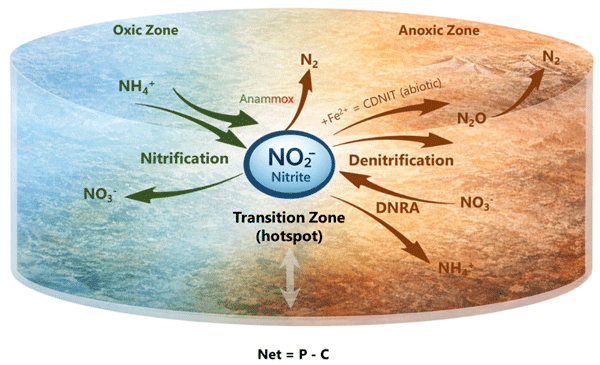
P3, L55-56 “Nitrite is the only inorganic nitrogen species produced by both oxidative and reductive processes” – not really, what about N2O?! it can be produced due to nitrate reduction and as well from ammonia and hydroxylamine oxidation – this nitrification pathway is missing in the Figure 1!
P3 L62 you should also add newer N-cycle reviews here, eg. Denk et al., 2017, Deb et al, 2024
P4 L73 also some more recent technical developments of nitrite isotope measurements should be mentioned: Deb and Lewicka-Szczebak, 2025 (doi.org/10.3389/fenvs.2025.1536882), Hu et al., 2026 (doi.org/10.1039/D5JA00363F)
P5 L122 – this was also observed in the recent case study (Deb et al., 2025)
P5 L 136 – the nitrifier denitrification pathway that you describe here is also omitted in your Fig.1
P6 Fig 2 – I don’t understand the bottom left panel illustrating delta 15N for dominating production, what do the 2 arrows mean? Two following graphs are clear, present the expected possible trends in isotope changes, but the first graph do not show change in time, just as one-point?
P7 L198 – the sentence beginning with “Direct determination…” is a totally different topic, you said about analytical techniques before and here the paragraph was about N2O. Also, a citation for N2O reduction overprinting its isotopic signal should be added here.
P9 Fig.3 – really great figure with perfect presentation of nitrite central role
P10 L262 The oxygen exchange with water is also an important tracer because allows us to estimate the nitrite residence time and rates of biological NO2 turnover relative to abiotic exchange (Lewicka-Szczebak et al., 2021, Buchwald and Casciotti, 2013)
P10 L279 I am missing the chapter on limitation of this approach. Most difficult one is the chemical instability of nitrite and its very low concentrations. If improperly stored and not analysed immediately it is quickly partially oxidised to nitrate and the isotope signal can be totally changed. Therefore, the analysis should be performed immediately, and the samples must be carefully conserved, best with high pH conditions. Because of typically low nitrite concentrations, especially in terrestrial environments, the development of new analytical methods for lowering the detection limit for its isotope analysis is critical (Deb and Lewicka-Szczebak, 2025). I think these are important points because these analytical challenges are most probably the main reasons why nitrite isotope analyses in terrestrial systems are still very rare.
Citation: https://doi.org/10.5194/egusphere-2026-2169-RC1 -
AC1: 'Reply on RC1', Rosanna Margalef, 04 Jun 2026
We thank the reviewer for the careful reading of our manuscript and for the constructive comments, which have helped improve the clarity and balance of the text. We have addressed all comments point by point and have provided a detailed response to the reviewer’s feedback as a supplement. In this document, we describe the revisions made in response to the reviewer’s comments in the preliminary revised manuscript. The revised manuscript is included at the end of the response letter and incorporates the concerns of both RC1 and RC2. Line numbers referenced in our responses correspond to this revised manuscript.
Briefly, the main changes we have implemented are the following:
- A sentence in the introduction has been revised to clarify the dual role of nitrite as the only stable dissolved inorganic intermediate produced under both oxidative and reductive regimes, distinguishing it explicitly from nitric oxide (NO). We have clarified that despite NO also participates in both oxidative and reductive branches of the nitrogen cycle it is extremely short-lived in aqueous solution. Therefore, it does not accumulate to measurable concentrations under environmental conditions. Also, we have explained in more detail the role of hydroxylamine in the Figure 1 caption.
- Several paragraphs have been reformulated to reduce apparent repetition and improve the logical progression between sections. Also, a number of terminological imprecisions have been corrected throughout the text.
- A dedicated paragraph has been added acknowledging the current analytical limitations of natural-abundance nitrite isotope approaches, mainly due to its low concentration in natural environments.
- We have reviewed the most recent literature on the topic and included additional references to latest studies.
-
AC1: 'Reply on RC1', Rosanna Margalef, 04 Jun 2026
-
RC2: 'Comment on egusphere-2026-2169', Anonymous Referee #2, 27 May 2026
I appreciate the effort by the authors to reposition nitrite as a central node governing nitrogen fate across redox gradients. The conceptual framework is interesting and potentially valuable for linking microbial metabolism, isotope dynamics, and nitrogen loss pathways.
That said, I found some sections repetitive and occasionally overly abstract, which made the manuscript difficult to follow at times. Several lines and concepts would benefit from clearer wording and additional explanation, particularly for readers who may be less familiar with isotope systematics or nitrite turnover dynamics. The manuscript would also benefit from incorporating more concrete environmental examples to contextualize better and illustrate the conceptual arguments being made.
A major point that I think deserves stronger discussion is the practical limitation associated with natural-abundance nitrite isotope approaches. Although the manuscript advocates for shifting focus from accumulated pools to nitrite turnover and coupling, these approaches are inherently biased toward environments and transition zones where nitrite accumulates to detectable concentrations. In many natural systems, nitrite concentrations remain below detection despite active nitrogen cycling, owing to extremely rapid turnover and tight coupling between production and consumption processes. As a result, many oxic-anoxic transition zones are spatially narrow, transient, and analytically challenging to resolve. This limitation is important because it constrains where nitrite natural-abundance isotope techniques can realistically be applied. I therefore think the manuscript would benefit from a more explicit discussion of current analytical detection limits, the concentration ranges typically required for robust d15N and d18O measurements of nitrite, and future methodological developments aimed at improving sensitivity toward nanomolar-level nitrite detection and isotope analysis.
Specific comments:
Lines 24–26: “Nitrogen retention, recycling and atmospheric loss are resolved at the stage of nitrite turnover, where competing pathways partition fluxes under kinetic and environmental constraints.” Not sure what the authors are getting at here. The framing feels overly complicated.
Lines 41–42: Another timely study to consider, as it discusses the impact of climate change on denitrification in an aquatic environment: https://doi.org/10.1038/s41564-026-02349-9
Lines 55–62: “Nitrite is the only inorganic nitrogen species produced by both oxidative and reductive processes…” I agree that nitrite plays a central role in the nitrogen cycle, but I would suggest being a little cautious with the wording here. Nitric oxide (NO) also participates in both oxidative and reductive branches of the nitrogen cycling, and is an even more reactive and transient intermediate that is often difficult to measure. So while I agree with the overall point being made, describing nitrite as the “only” inorganic nitrogen species linking these processes may be somewhat overstated.
Lines 63–64: “Current diagnostics rely on concentration measurements of nitrate, ammonium and gaseous products.” A bit repetitive.
Line 64: “metrics” Did you mean nutrients? Not sure what is meant by metrics?
Lines 64–67: “These metrics integrate multiple processes, masking mechanistic controls on pathway partitioning…” The sentence is a bit vague. Could the authors provide more clarity by illustrating an environmental example?
Lines 70–71: “its isotopic composition records concurrent production and consumption…”
To provide a bit of pushback here, it is precisely because nitrite is simultaneously produced and consumed that analyzing nitrite using natural abundance isotopes becomes very complicated. This may be worth acknowledging in this passage.Lines 71–72: “Recent methodological advances…” Is it still appropriate to describe this as “recent” if the method was reported in 2005?
Lines 73–74: “Oxygen isotopes are partially modified by exchange with water, increasing the diagnostic importance of d15N.” For the uninitiated reader, this likely requires further explanation.
Lines 78–79: “a basis accessible only when nitrite is treated as a control point rather than a transient residual.” Not sure what the authors mean by treating nitrite as a “control point.” This needs additional elaboration.
Line 103: “outcomes” Perhaps “end points” would be clearer?
Line 107: “this configuration is redistribution, not accumulation.” This is a bit vague. Also, what exactly is meant by “this configuration”?
Line 108: “flux junction” This term could benefit from further clarification.
Lines 108–109: Nitrite operates as a flux junction: its concentration reflects the balance between upstream formation and downstream consumption. It's a bit repetitive.
Lines 109–115: A lot of this comes across as repetitive and reiterates the same concepts multiple times.
Lines 118–122: “The direction and magnitude of nitrogen redistribution…” Again, this feels like the same concept discussed above.
Lines 123–128: “Residence time at the nitrite stage…” Could the authors point to a concrete environmental example of this?
Line 129: “Gaseous nitrogen production…” I would suggest explicitly stating the two gases being discussed upfront — i.e., dinitrogen (N2) and nitrous oxide (N2O).
Line 129: “the most” I do not fully understand why this is framed as “the most” important aspect of nitrite turnover. Perhaps the authors mean from a biogeochemical perspective. From an environmental perspective, nitrite oxidation to nitrate — thereby sustaining denitrification pathways — is also critically important. I would suggest dropping “the most.”
Line 130: “biological” I might refer to these processes as “microbial” rather than “biological.”
Line 132: “electron supply” Could you be a bit more specific?
Line 132: “completion of the sequence and” Could be worded to favor complete nitrate reduction to N2.
Lines 140–142: “indirectly shaping N2O production in mixed-metabolism environments…” Anammox also directly contributes to N2 production using nitrite, which would also fit into the importance of nitrite. The connection of anammox to nitrite and linking this to N2O is a bit of a stretch. Why not connect anammox to nitrogen loss via N2 production?
Line 142: “the speciation” Not sure I understand this, might need rewording
Line 147: “Stable isotope measurements…” Perhaps specify “stable isotope measurements of nitrite” for clarity.
Lines 209-211: Might be worth specifically referring to the oxic-anoxic transition zones.
Lines 212-213: “In fully oxic environments, nitrite is produced during ammonia oxidation and rapidly oxidized to nitrate, reflecting tight coupling between nitrification steps (Casciotti, 2016).” I think an important practical limitation should be acknowledged here. In many fully oxic environments, nitrite turnover is so rapid that nitrite concentrations may remain below detection or at levels insufficient for natural-abundance isotope analyses. For example, in stratified water column systems, we often observe elevated nitrate concentrations alongside undetectable nitrite, despite clear evidence for active ammonium oxidation based on 15NH4+ tracer-rate experiments and metagenomic data. Thus, the absence of measurable nitrite does not imply the absence of nitrification activity. This highlights one of the major challenges of using natural-abundance nitrite isotopes to assess nitrogen cycling: the approach is only feasible when sufficient nitrite accumulates for analysis, which often restricts applications to narrow oxic–anoxic transition zones where nitrite transiently accumulates. It may therefore be helpful for the review to discuss the current analytical limits for natural-abundance nitrite isotope measurements. What nitrite concentrations are presently required for robust d15N and d18O analyses, and what represents the current cutting edge in analytical sensitivity? More broadly, it would be interesting to discuss whether the field is moving toward the ability to quantify nitrite isotopes at nanomolar concentrations, analogous to recent advances enabling oxygen measurements at picomolar levels. Without such advances, natural-abundance NO2- isotope approaches may remain restricted to relatively localized environments with micromolar nitrite accumulation, which can be spatially and temporally very constrained.
Lines 218-220: “2016). These zones are recognized as hotspots of N2O production, consistent with the central role of nitrite in regulating the N2O:N2 ratio (Butterbach-Bahl et al., 2013; Babbin et al., 2020).” One challenge worth acknowledging here is that many environmental hotspots of N2O and N2 production occur under conditions where nitrite itself remains below detection. In such systems, strong nitrogen turnover may clearly be occurring, yet the direct application of natural-abundance nitrite isotope approaches becomes extremely difficult or even impossible. This limitation is fundamentally tied to analytical sensitivity at multiple stages: first, the chemical detection of nitrite itself; second, the efficiency and sensitivity of converting NO2- to an analyzable gas species (e.g., N2O or N2, depending on the analytical approach); and finally, the detection limits and precision of the isotope ratio mass spectrometer. As a result, although nitrite may mechanistically regulate these processes, the practical ability to use nitrite natural-abundance isotopes as a tracer is often restricted to environments where nitrite transiently accumulates to sufficiently high concentrations for robust analysis.
Line 241: “from accumulation to coupling…” As mentioned above, an important practical limitation is that natural-abundance nitrite isotope approaches are inherently biased toward environments and transition zones where nitrite accumulates to detectable concentrations. In many systems, these zones are spatially narrow, transient, or characterized by NO2- concentrations below analytical detection limits despite active nitrogen cycling. This analytical constraint may be worth acknowledging more explicitly when advocating for a shift from accumulation-based to coupling-based interpretations of nitrogen cycling.
Citation: https://doi.org/10.5194/egusphere-2026-2169-RC2 -
AC2: 'Reply on RC2', Rosanna Margalef, 04 Jun 2026
We thank the reviewer for the careful reading of our manuscript and for the constructive comments, which have helped improve the clarity and balance of the text. We have addressed all comments point by point and have provided a detailed response to the reviewer’s feedback as a supplement. In this document, we describe the revisions made in response to the reviewer’s comments in the preliminary revised manuscript. The revised manuscript is included at the end of the response letter and incorporates the concerns of both RC1 and RC2. Line numbers referenced in our responses correspond to this revised manuscript.
Briefly, the main changes we have implemented are the following:
- A sentence in the introduction has been revised to clarify the dual role of nitrite as the only stable dissolved inorganic intermediate produced under both oxidative and reductive regimes, distinguishing it explicitly from nitric oxide (NO). We have clarified that despite NO also participates in both oxidative and reductive branches of the nitrogen cycle it is extremely short-lived in aqueous solution. Therefore, it does not accumulate to measurable concentrations under environmental conditions. Also, we have explained in more detail the role of hydroxylamine in the Figure 1 caption.
- Several paragraphs have been reformulated to reduce apparent repetition and improve the logical progression between sections. Also, a number of terminological imprecisions have been corrected throughout the text.
- A dedicated paragraph has been added acknowledging the current analytical limitations of natural-abundance nitrite isotope approaches, mainly due to its low concentration in natural environments.
- We have reviewed the most recent literature on the topic and included additional references to latest studies.
-
AC2: 'Reply on RC2', Rosanna Margalef, 04 Jun 2026
Peer review completion
Journal article(s) based on this preprint
Viewed
| HTML | XML | Total | BibTeX | EndNote | |
|---|---|---|---|---|---|
| 340 | 76 | 26 | 442 | 26 | 19 |
- HTML: 340
- PDF: 76
- XML: 26
- Total: 442
- BibTeX: 26
- EndNote: 19
Viewed (geographical distribution)
| Country | # | Views | % |
|---|
| Total: | 0 |
| HTML: | 0 |
| PDF: | 0 |
| XML: | 0 |
- 1
Rosanna Margalef-Marti
The requested preprint has a corresponding peer-reviewed final revised paper. You are encouraged to refer to the final revised version.
- Preprint
(832 KB) - Metadata XML
Review
Ideas and perspectives: Nitrite turnover controls nitrogen fate across redox gradients
Dear authors,
This is a very valuable summary manuscript highlighting the unique, important and still very underused N-compound. I definitely agree with the manuscript thesis of the critical role of nitrite turnover in controlling the N cycling dynamics. The manuscript provides an interesting overview of N-transformations from the nitrite perspective as a central compound of the N-cycle. I appreciate your in-depth insight into the N-cycle and the role of nitrite, that provides a “snapshot” of the currently undergoing processes. I like very much your statement: “A nitrite-centred framework shifts emphasis from storage to flux, from accumulation to coupling, and from static pools to dynamic turnover”, these are very important observations, however not totally novel, but definitely still undervalued.
However, while the general idea is precious and worth publishing, the manuscript is not complete and up-to-date, hence needs to be complemented and updated. Quite a few very important and most recent research on nitrite role and isotope characteristics were omitted. It seems like the manuscript was prepared a few years ago, since the most recent citation is from 2021, except authors own paper from 2026. At least these important literature positions are missing, not only as citations, but also in referring to the progress presented by these authors:
Müller, C., Laughlin, R. J., Spott, O., and Rütting, T.: Quantification of N2O emission pathways via a 15N tracing model, Soil Biol. Biochem., 72, 44–54, https://doi.org/10.1016/j.soilbio.2014.01.013, 2014. – first idea that nitrite play a central role in N cycle – applied for N-trace model
Lewicka-Szczebak, D., Jansen-Willems, A., Müller, C., Dyckmans, J., and Well, R.: Nitrite isotope characteristics and associated soil N transformations, Sci. Rep., 11, 5008, https://doi.org/10.1038/s41598-021-83786-w, 2021. – first isotope analyses of soil nitrite, with modelling approach for natural abundance and 15N-traced systems
Deb, S., Espenberg, M., Well, R., Bucha, M., Jakubiak, M., Mander, Ü., Jędrysek, M.O., Lewicka-Szczebak, D.: N transformations in nitrate-rich groundwaters: combined isotope and microbial approach, Biogeosciences, 22 (19), 5535-5556, doi.org/10.5194/bg-22-5535-2025. – first application of nitrite isotopes for groundwater studies, together with nitrates and N2O, indication of simultaneous reduction and oxidation processes
Deb, S., Lewicka-Szczebak, D., and Rohe, L.: Microbial nitrogen transformations tracked by natural abundance isotope studies and microbiological methods: a review, Sci. Total Environ., 926, 172073, https://doi.org/10.1016/j.scitotenv.2024.172073, 2024 – most recent review paper on application of stable isotopes of different N-compounds including nitrite, also describing it as the central N-compound
Zheng, J., Fujii, K., Koba, K., Wanek, W., Müller, C., et al., Revisiting process-based simulations of soil nitrite dynamics: Tighter cycling between nitrite and nitrate than considered previously, Soil Biology and Biochemistry, 178, 108958, doi.org/10.1016/j.soilbio.2023.108958 – new N-trace modelling approach with even more emphasis on nitrite central role
Only after taking into account all the recent research on this topic the proposed perspective manuscript can be considered for publication.
Detailed comments:
P3, L55-56 “Nitrite is the only inorganic nitrogen species produced by both oxidative and reductive processes” – not really, what about N2O?! it can be produced due to nitrate reduction and as well from ammonia and hydroxylamine oxidation – this nitrification pathway is missing in the Figure 1!
P3 L62 you should also add newer N-cycle reviews here, eg. Denk et al., 2017, Deb et al, 2024
P4 L73 also some more recent technical developments of nitrite isotope measurements should be mentioned: Deb and Lewicka-Szczebak, 2025 (doi.org/10.3389/fenvs.2025.1536882), Hu et al., 2026 (doi.org/10.1039/D5JA00363F)
P5 L122 – this was also observed in the recent case study (Deb et al., 2025)
P5 L 136 – the nitrifier denitrification pathway that you describe here is also omitted in your Fig.1
P6 Fig 2 – I don’t understand the bottom left panel illustrating delta 15N for dominating production, what do the 2 arrows mean? Two following graphs are clear, present the expected possible trends in isotope changes, but the first graph do not show change in time, just as one-point?
P7 L198 – the sentence beginning with “Direct determination…” is a totally different topic, you said about analytical techniques before and here the paragraph was about N2O. Also, a citation for N2O reduction overprinting its isotopic signal should be added here.
P9 Fig.3 – really great figure with perfect presentation of nitrite central role
P10 L262 The oxygen exchange with water is also an important tracer because allows us to estimate the nitrite residence time and rates of biological NO2 turnover relative to abiotic exchange (Lewicka-Szczebak et al., 2021, Buchwald and Casciotti, 2013)
P10 L279 I am missing the chapter on limitation of this approach. Most difficult one is the chemical instability of nitrite and its very low concentrations. If improperly stored and not analysed immediately it is quickly partially oxidised to nitrate and the isotope signal can be totally changed. Therefore, the analysis should be performed immediately, and the samples must be carefully conserved, best with high pH conditions. Because of typically low nitrite concentrations, especially in terrestrial environments, the development of new analytical methods for lowering the detection limit for its isotope analysis is critical (Deb and Lewicka-Szczebak, 2025). I think these are important points because these analytical challenges are most probably the main reasons why nitrite isotope analyses in terrestrial systems are still very rare.