
the Creative Commons Attribution 4.0 License.
the Creative Commons Attribution 4.0 License.
 | 30 Dec 2025
Spatial variability of VOCs, ozone, and carbonaceous aerosols during the 2022 European summer heatwave
Abstract. This study presents results from an Intensive Measurement Period conducted during the European heatwave of July 2022, focusing on ozone, volatile organic compounds (VOCs), and carbonaceous aerosols at 31 sites across Europe. The episode featured persistent high-pressure systems, record-breaking temperatures, widespread ozone exceedances and concurrent atmospheric new particle formation and growth events. Although the roles of biogenic and anthropogenic precursors in ozone, secondary organic aerosol (SOA) formation and nanoparticle growth are recognized, their relative importance during extreme events remains poorly constrained. This work therefore aimed to quantify these interactions using coordinated measurements and model simulations. Measurements showed that oxygenated VOCs formed the largest fraction of total VOCs, followed by non-methane hydrocarbons (NMHCs) and aromatics, with substantial contributions from both anthropogenic and biogenic sources. Elevated ozone and SOA levels were driven by the combined influence of biogenic VOCs and NOx emissions under predominantly NOx-limited conditions. Isoprene, NMHCs, and O-VOCs dominated the ozone formation potential, while aromatics and monoterpenes were the most important SOA precursors. Model simulations indicated that higher NOx concentrations can reduce SOA formation by about 10 %. The campaign also highlighted observational gaps underscoring the need for broader and higher-resolution VOC monitoring across Europe. Overall, further reductions in NOx emissions, alongside targeted control of key anthropogenic VOCs, would benefit air quality, during extreme pollution episodes. These findings illustrate the complex interplay between meteorology, emissions, and atmospheric chemistry during heatwaves and emphasize the need for comprehensive precursor monitoring and improved modelling for effective air-quality management under future climate conditions.
Competing interests: At least one of the (co-)authors is a member of the editorial board of Atmospheric Chemistry and Physics. The peer-review process was guided by an independent editor, and the authors also have no other competing interests to declare.
Publisher's note: Copernicus Publications remains neutral with regard to jurisdictional claims made in the text, published maps, institutional affiliations, or any other geographical representation in this paper. While Copernicus Publications makes every effort to include appropriate place names, the final responsibility lies with the authors. Views expressed in the text are those of the authors and do not necessarily reflect the views of the publisher.-
Notice on discussion status
The requested preprint has a corresponding peer-reviewed final revised paper. You are encouraged to refer to the final revised version.
-
Preprint
(3240 KB)
-
Supplement
(7257 KB)
-
The requested preprint has a corresponding peer-reviewed final revised paper. You are encouraged to refer to the final revised version.
- Preprint
(3240 KB) - Metadata XML
-
Supplement
(7257 KB) - BibTeX
- EndNote
- Final revised paper


Journal article(s) based on this preprint
Interactive discussion
Status: closed
- RC1: 'Comment on egusphere-2025-6166', Anonymous Referee #1, 25 Feb 2026
-
RC2: 'Comment on egusphere-2025-6166', Anonymous Referee #2, 26 Feb 2026
The manuscript entitled “Spatial variability of VOCs, ozone, and carbonaceous aerosols during the 2022 European summer heatwave” collected and analyzed data on NMHCs, OVOCs, monoterpenes, sesquiterpenes, larger hydrocarbons, as well as OC/EC from 31 sites across Europe during July 12-19, 2022. A wide range of models and methods were employed for analysis, which plays an important role in understanding the spatial distribution characteristics of these pollutants during the European heatwave. However, this paper exhibited substantial deficiencies in: the comparability of multiple data types; the uncertainty, rationality, and applicability of the modeling approaches; and the coherence and logic among different sections of manuscript. In its current version, I cannot recommend its publication. My specific concerns are as follows:
- Abstract: It is recommended that the abstract be reorganized and rewritten to highlight the quantitative results and innovations of this study, rather than merely providing qualitative descriptions.
- Introduction section should be reorganized and rewritten. In its current version, the author covered a large amount of content, including the macro-level background of air pollution and health, the key role of volatile organic compounds (VOCs) in atmospheric chemistry, the effectiveness and shortcomings of European emission reduction policies, and the limitations of the current monitoring system, etc. However, the logical connections between these topics were not very clear. Meanwhile, the key scientific question this study aims to address was the spatial variability of VOCs, O3, and carbonaceous aerosols across Europe during the heatwave, and its implications for understanding O3 and SOA formation. Therefore, it seems necessary for the authors to summarize and review whether similar studies have been conducted in Europe or globally. To the best of my knowledge, such studies do exist. The authors should clarify the differences between this study and those previous works, as well as its unique features, to highlight the innovation of this study.
- Materials and methods: The authors need to provide adequate and reasonable quality control analysis and uncertainty analysis for the sampling and analysis components. Specifically, the authors collected and analyzed NMHCs, OVOCs, monoterpenes, sesquiterpenes, and larger hydrocarbons, as well as OC and EC at 31 sites. Were the sampling instruments for the same component consistent across all sites? Was any comparability analysis conducted on these instruments prior to sampling? Furthermore, different components were collected using different sampling instruments and analyzed with different analytical platforms. For example, NMHCs were collected using Silcosteel canisters and analyzed by gas chromatography-mass spectrometry and flame ionization detector at Forschungszentrum Jülich; OVOCs were collected using solid adsorbent cartridges coated with 2,4-dinitrophenylhydrazine, with derivatives analyzed by high-performance liquid chromatography equipped with a UV detector at the ACTRIS Centre for Reactive Trace Gases in-situ measurements at IMT Nord Europe, France; monoterpenes, sesquiterpenes, and larger hydrocarbons were collected using Tenax TA-Carbopack B tubes and analyzed by thermal desorption-gas chromatography–mass spectrometers at the Finnish Meteorological Institute. Therefore, the comparability of these components was questionable, as the sampling and measurement processes for VOCs often involve substantial uncertainties. The authors did not adequately address this critical point in the manuscript, which poses substantial risks to all the analytical data and conclusions drawn therefrom.
- Section 2.3: The authors provided a detailed description of the model configuration. However, there was a clear lack of discussion on how the reasonableness of the model simulations was validated, how uncertainties in input data (such as emission inventories under extreme heatwave conditions) were assessed, and how the impacts of missing key processes (particularly wildfires and drought) were assessed. This deficiency leads readers to question the validity of the subsequent attribution analyses conducted with this model (e.g., “NOx reduction would lower ozone” and “aromatics dominate SOA”). Therefore, it is recommended that the authors supplement this section by explaining: 1) how uncertainties in emission inventories under extreme heatwave episodes were addressed and quantified; 2) why wildfire emissions, an obviously influential factor, were omitted from the model; and 3) whether the model’s capability to simulate new particle formation and SOA formation has been subjected to more detailed validation.
- Section 3.1: This section should be revised and improved to provide a clearer understanding of what this heatwave episodes entailed, the severity of ozone pollution, and the evolution of meteorological conditions. Additionally, this section suffered from poor correspondence between text and figures, completely overlooks the important influence of wildfires when explaining model biases, and presents a disconnect between the meteorological description and subsequent analytical sections.
- Section 3.2: the authors devote considerable space to analyzing the variability of different VOC species across multiple sites. However, such variability analysis presupposes that the data are comparable. Since the authors did not adequately and reasonably demonstrate in the Materials and Methods section that VOC data obtained under different measurement and analytical methods are indeed comparable, the multi-site comparative analysis presented here is therefore questionable.
- Section 3.3: the authors employ two analytical approaches: one is the calculation of ozone formation potential based on fixed POCP values, and the other is sensitivity experiments using the ADCHEM model. What is the rationale for using these models in this study? Meanwhile, the authors completely avoid discussing the potential impacts of model biases themselves (such as the overestimation of VOCs in Southern Europe and the overall underestimation of OC by up to 50%) on ozone simulations and the assessment of NOx sensitivity. They also fail to consider the measurement bias caused by the use of molybdenum converters at some sites, which leads to overestimation of NO2 observations. Consequently, the core conclusion that “ozone formation is mainly NOx-limited” is built upon an inadequately validated evidence base.
- Section 3.4: the authors employed a tracer extrapolation method heavily reliant on fixed conversion factors for source apportionment. However, they did not conduct any sensitivity analysis or uncertainty assessment regarding the applicability of these factors during a wildfire-dominated heatwave. As a result, the final estimated SOA contribution (84±11%) appears precise but may merely represent an “exact mistake”.
- Section 3.5: the description of NPF events relies heavily on visual judgment and lacks quantitative and statistical analysis of key parameters such as formation rates and growth rates, rendering conclusions like "the model captures [the events] well" devoid of objective basis. Furthermore, this section simplistically attributes the model's systematic underestimation of particle number concentrations to underestimated SOA, creating a circular argument. It also fails to integrate the VOC observations from Section 3.2 and the SOA analysis from Section 3.4 to investigate the root causes of the underestimation, resulting in a lack of organic integration among the three threads of NPF, VOCs, and SOA.
- Additionally, there are some minor issues that need revision. For example, if the authors have not conducted statistical tests, they should avoid using the word “significantly”; alternatives such as “substantially” or “markedly” could be used instead. Line 106: The word "specie" contains a spelling error (it should be “species”).
Citation: https://doi.org/10.5194/egusphere-2025-6166-RC2 - RC3: 'Comment on egusphere-2025-6166', Anonymous Referee #3, 03 Mar 2026
-
AC1: 'Respond to the referees on egusphere-2025-6166', Wenche Aas, 20 Apr 2026
The comment was uploaded in the form of a supplement: https://egusphere.copernicus.org/preprints/2025/egusphere-2025-6166/egusphere-2025-6166-AC1-supplement.pdf
Peer review completion


Interactive discussion
Status: closed
-
RC1: 'Comment on egusphere-2025-6166', Anonymous Referee #1, 25 Feb 2026
This manuscript presents a comprehensive multi-site analysis of VOCs, ozone, and carbonaceous aerosols during the July 2022 European heatwave, combining intensive measurements across a wide spatial network. The dataset is extensive and valuable, particularly given the coordinated speciation of VOCs and the simultaneous examination of ozone formation, SOA production, and particle number concentrations across diverse European environments. The study aims to assess the role of biogenic and anthropogenic precursors in shaping ozone and secondary aerosol formation under heatwave conditions. Such harmonized observations and analysis during an extreme heatwave event are of clear scientific interest and fall within the scope of ACP.
However, the manuscript does not yet clearly demonstrate a substantial and well-articulated scientific advance beyond the presentation of a large dataset. While numerous analyses are performed, the central conceptual contribution and the specific insights emerging from the VOC, ozone, and aerosol investigations remain insufficiently defined. To meet the level of conceptual advancement expected for ACP publication, the manuscript would need to more clearly demonstrate how the analyses lead to robust and quantitatively supported new insight, rather than primarily descriptive characterization.
At present, significant revision would be necessary considering the comments below.
General comments:
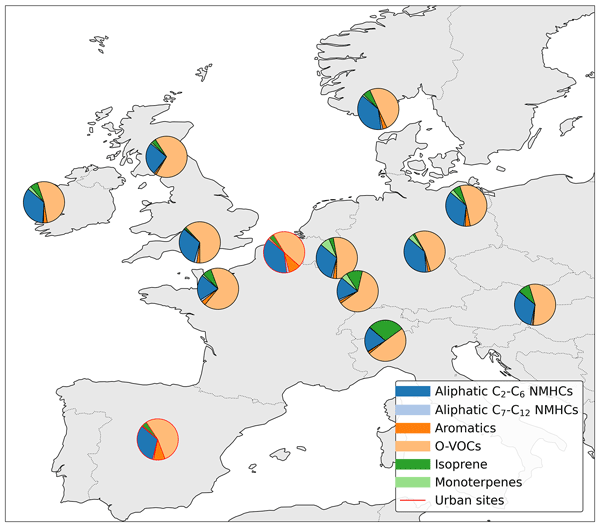
- The classification of VOC groups (O-VOCs, isoprene, monoterpenes, NMHCs, and aromatics) is potentially confusing and inconsistent throughout the manuscript. Aromatic hydrocarbons are formally a subset of NMHCs, yet they are treated separately, and in Figure 3 isoprene appears to be grouped together with C2–C6 NMHCs (also, Line 394 “isoprene contributing up to 75 % of NMHCs.”). It should be clearly specified whether “NMHCs” in this manuscript refer only to aliphatic hydrocarbons, and the categorization should be defined explicitly and applied consistently throughout the text and figures.
- The units used for reporting species concentrations are not fully consistent. Expressions such as ppb, ppt, pptv, pmol/mol, ng/m3, and µg/m3 are used interchangeably. For clarity and readability, the author should adopt a more consistent unit where possible. In addition, the ACP submission guideline (https://www.atmospheric-chemistry-and-physics.net/submission.html) requests ‘Units must be written exponentially (e.g. W m–2).’
- The manuscript includes a very large number of supplementary figures, many of which appear to contain information that is central to the interpretation of the results. However, these figures are often only briefly mentioned in the main text, with limited discussion. This makes it difficult for the reader to fully assess the robustness and internal consistency of the analysis. The authors may consider either strengthening the discussion of key supplementary results in the main manuscript or streamlining the scope of the study. In particular, given the breadth of topics covered, it may be worth considering separating the ozone-focused and aerosol-focused analyses into two more targeted manuscripts, which would allow a clearer narrative and a more in-depth treatment of each set of results.
- Throughout the manuscript, several mechanistic interpretations and source attributions are proposed to explain observed or modelled patterns (e.g., causes of model bias, effects of VOC and NOx on OH and H2SO4 production, drivers of SOA underestimation, and interactions between BVOCs and particle growth). While these explanations are chemically or geographically plausible, they are often presented without direct quantitative support from model diagnostics, sensitivity analyses or references. Given the complexity and regime dependence of atmospheric chemistry during heatwaves, it would strengthen the manuscript to either provide explicit supporting evidence or to moderate the language to clearly distinguish between findings and speculative interpretations.
- As currently structured, the manuscript attempts to cover both detailed ozone chemistry and aerosol formation processes within a single study. While the dataset is highly valuable, the scientific narrative may benefit from a clearer focus and prioritization of the core scientific questions. Alternatively, the authors may wish to reflect on whether the manuscript would benefit from a more explicitly measurement-oriented structure, similar in spirit to a measurement report. Ultimately, the most appropriate format and scope of the manuscript is of course a decision for the authors and the editor, but clarifying the primary focus would likely strengthen the overall coherence and impact of the study.
- Sections 3.3 and 3.4 contain extensive analyses of ozone production, SOA formation, and source apportionment. However, the connection to the central heatwave focus of the manuscript is not always clearly described. Much of the discussion reads as a characterization of general spatial patterns across Europe, rather than explicitly highlighting what is specific to the 2022 heatwave conditions. It would strengthen the manuscript to more clearly distinguish between typical regional features and heatwave-driven anomalies, and to explicitly state how elevated temperatures and associated chemical conditions modified oxidation pathways, SOA formation, or source contributions. In addition, a more explicit comparison between observation-based apportionment (Section 3.4.2) and model-derived OA budgets (Section 3.4.3), along with a discussion of the uncertainties associated with the empirical assumptions used, would improve the overall coherence and robustness of interpretation.
Specific comments:
- Line 68-69: The statement in the abstract that elevated ozone and SOA occurred under predominantly NOx-limited conditions appears inconsistent with the results. While Section 3.3 suggests NOx-limited ozone formation, Section 3.4 does not clearly demonstrate NOx-limited SOA formation, and the conclusion states that ozone was similarly sensitive to both NOx and BVOC at most sites. The regime characterization should be clarified for consistency.
- Line 70-71: The statement that higher NOx concentrations reduce SOA formation by about 10 % appears somewhat abrupt in the abstract. It would be helpful to clarify under which conditions (e.g., sites, precursor types, or model scenarios) this reduction occurs, and to briefly indicate the underlying mechanism (e.g., altered RO2 chemistry or organic nitrate formation pathways). In addition, the sentence does not appear fully consistent with the quantitative results presented in Section 3.4 (which report changes of −5 ± 3 % for 2×NOx and +3 ± 1 % for 0.5×NOx). The origin of the “~10 %” value is unclear. Moreover, given that NOx sensitivity of SOA is only briefly discussed in the main text and not emphasized in the conclusions, it is unclear why this specific number is highlighted in the abstract, while other potentially more central findings (e.g., related to NPF) are not mentioned. This point should be reconsidered for consistency and balance.
- Line 90-92: The two consecutive sentences on regional variability and uncertainties in vegetation-driven emissions appear somewhat repetitive (vegetation composition and vegetation types). The authors should consider clarifying the distinction between spatial variability in vegetation composition and process-level uncertainties in emission controls, including uncertainties in how emission factors respond to environmental stressors such as heatwaves and drought, or merging the statements for conciseness.
- Line 118-122: The statement that high NOₓ levels favor ozone production while low NOₓ conditions favor SOA formation appears overly simplified. The effect of NOₓ on both ozone and SOA is highly non-linear. In addition, following statement of NOx dependence to SOA formation is somewhat circular. The text states that SOA formation is non-linear with respect to NOx and then restates this by noting enhancement at low NOx and suppression at high NOx. However, the underlying chemical reasons for this non-linearity are not explained. A brief mechanistic clarification should be specified briefly.
- Section 2.1: Although the spatial variability of species is quite important topic in this manuscript, the geographical distribution of the campaign sites is not immediately clear. While site names and coordinates are provided in Supplement Table S1, it is difficult to obtain an intuitive overview of the spatial coverage, particularly for readers less familiar with European geography and name of cities. The authors may consider explicitly referring to Table S1 in the opening of Section 2.1 and adding a map illustrating the locations of the participating sites with site numbers to improve clarity.
- Section 2.2: The detailed description of PTR-QMS and PTR-ToF-MS m/z assignments in Section 2.2 can be moved to the Supplement (in a table or so), with only a brief summary retained in the main text to improve conciseness.
- Line 264-266: Please briefly clarify the reason for prioritizing canister data for benzene and toluene, while Tenax data were prioritized for other aromatic compounds.
- Line 362-364: The statement that the large contribution of O-VOCs highlights the need to expand monitoring networks is not fully supported by the analysis presented here. While O-VOCs dominate in terms of mixing ratio, their relative importance for ozone or SOA formation is not explicitly demonstrated in this section. The authors may consider clarifying what is meant by their “known impact on atmospheric chemistry” or supporting this statement with reactivity-based arguments.
- Line 396-397: As noted in General comment #4, The statement that low nighttime isoprene concentrations at Ispra suggest a dominant biogenic source is not fully convincing. Given the short atmospheric lifetime of isoprene, low nighttime concentrations would be expected regardless of whether the source is local or transported. Moreover, no diel cycle figure is presented to support this interpretation. The reasoning should be clarified or supported with additional evidence.
- Line 399-415: The discussion largely attributes monoterpene concentrations to biogenic sources. However, compounds such as α-pinene, β-pinene, and limonene may also have anthropogenic sources (e.g., volatile chemical products, cleaning agents). A brief acknowledgment of potential anthropogenic contributions, particularly at sites influenced by urban or regional emissions, would provide a more balanced interpretation.
- Line 552-558: The description of the Ox and basic ozone photochemistry could be shortened or moved to the Introduction.
- Line 560-567: As noted in General comment #4, the explanations provided for model biases (e.g., marine air masses, misrepresented nighttime conditions, inadequate representation of free tropospheric influence, overestimated emissions, limited vertical mixing) appear largely interpretative and are not directly supported by quantitative evidence or references in the text. Please clarify whether these attributions are supported by trajectory analysis, sensitivity tests, or additional diagnostics. Otherwise, the statements should be framed more cautiously.
- Line 569 and Figure 7: The purpose and interpretation of Figure7 are not entirely clear. While the figure presents a detailed ozone production and loss budget (expressed in DU over 0–2100 m and integrated over the past three days), the manuscript provides very limited explanation of how these values are calculated and how they should be interpreted. In particular, it is unclear whether the reported values represent time-integrated column production along trajectories, and why DU is used to express chemical production and loss. A clearer description of the budget calculation and a more detailed discussion of the dominant terms and sensitivity responses would be needed.
- Line 591-593: Please clarify how the potential NO₂ overestimation from molybdenum converters affects the subsequent analysis, particularly the NOx-based regime classification and modelling results.
- Line 610-635: While Section 3.4 includes detailed analyses in the subsequent subsections, the introductory part of Section 3.4 does not clearly state the overall objective of this section. It would help briefly outline the main question being addressed and how the following subsections consisted of.
- Line 610: Please add a short summary of previous findings from Yttri et al., 2007.
- Line: 619-620: The author may consider add a short discussion why Montseny and Ispra showed higher OC levels while others doesn't.
- Line 627: As noted in General comment #4, Please provide justification for the assumed OM/OC ratio of 1.8 and discuss its potential variability and impact on the reported carbonaceous fraction. Given the wide range of environments considered in this study, applying a uniform OM/OC ratio of 1.8 may introduce uncertainty in the estimated carbonaceous contribution.
- Section 3.4.1 (refer also general comment #6): Given that this study focuses on heatwave conditions, it would be helpful to more explicitly discuss which aspects of the observed SOA tracers (e.g., 2-MT and 3-MBTCA) are characteristic of the 2022 heatwave, rather than reflecting typical spatial gradients across Europe. As currently written, the interpretation mainly describes general regional differences in biogenic sources, without clearly highlighting what is specific to the heatwave event.
- Line 647: The statement that the 3-MBTCA/2-MT ratio reflects “a shift in the relative importance of biogenic sources” is rather general. Since 2-MT and 3-MBTCA represent oxidation products of isoprene and α-pinene, respectively, it would be helpful to more explicitly discuss how the observed spatial gradient relates to differences in vegetation type (e.g., deciduous vs. coniferous forests) and associated emission patterns across Europe.
- Section 3.4.2: Section 3.4.2 relies on several literature-based scaling factors and fixed conversion ratios (e.g., tracer-to-OC relationships) to estimate source-specific OC contributions. While appropriate references are cited, the associated uncertainties are not discussed. Given that these empirical factors can vary substantially depending on atmospheric conditions and source composition, especially under heatwave conditions, a quantitative assessment of uncertainty or a sensitivity analysis would strengthen the robustness of the conclusions. Specifically, in Eq 7 and 9, using fixed scaling factors appears to be a strong assumption. Please provide clearer justification and discuss its applicability across different sites and heatwave conditions.
- Figure 10: It presents derived OC fractions, including uncertainty estimates (e.g., error bars or ranges based on sensitivity tests) which would improve transparency.
- Line 760 “despite lower OH and ozone levels”: As noted in General comment #4, Is this statement can be supported by any figure? There seems no mention earlier about this. Figure 7 shows the increased net ozone formation in 2xNOx scenario.
- Line 763-766: The description may overemphasize autoxidation as the key SOA formation pathway for aromatics. Please clarify that multiple oxidation pathways contribute to aromatic SOA formation.
- Line 867: The discussion of VOC and NOx effects on OH, H₂SO₄ production, and particle growth appears somewhat speculative. Please clarify whether these statements are directly supported by the model results or rephrase them more cautiously.
- Line 869-870: Same as #25 comment. “At the same time the formed O-VOCs tend to be more volatile under high-NOx conditions, which can in contrast reduce nanoparticle GR.” This also needs to be supported with an evidence.
- Conclusion: Given the extensive quantitative analyses presented in the manuscript, it would improve the clarity and strength of the conclusions to explicitly reference key numerical findings, rather than relying solely on general statements.
- Conclusion: No conclusion for NPF?
- Line 894-895: The authors may consider briefly reflecting on the likely causes of the model underestimation identified in this study. The statement “, highlighting the need…” is also too general. It should be specified with the outcome of this study.
- Figure S10: Given that ozone production isopleths are highly sensitive to precursor composition and environmental conditions, the use of a single background isopleth derived from Stuttgart (2020) for all IMP sites raises questions regarding representativeness. A discussion of the potential impact of heatwave conditions and site-specific chemistry on the isopleth structure would be required. Since the background contours show O3 and the marker colors indicate PO3, it would improve clarity to include two separate color bars or otherwise differentiate the color coding to avoid misinterpretation.
- Figure S10 caption (Line 54): Is kOH for VOC same as R VOC? If so, please make it consistent. Also, CO should not add to the VOC reactivity.
- Figure S11: The right-hand panels attribute individual VOCs to single source categories (e.g., natural gas, combustion, biogenic), which represents a strong simplification. In reality, many compounds have multiple primary and secondary origins, and their atmospheric concentrations reflect mixed and regionally transported sources. Therefore, assigning each compound exclusively to one source category may overstate the apparent source-specific contributions to OFP and SOAP. If the intention is to discuss quantitative source contributions, a more detailed source apportionment approach (PMF analysis or similar to that applied for OA in Section 3.4.2) would be necessary. At minimum, the manuscript should clearly acknowledge the limitations of this simplified categorization.
Technical corrections:
- Line 66: Change to ‘Measurement showed that oxygenated VOCs (O-VOCs) contributed the largest…’. Here, O-VOCs can be defined.
- Line 106: Add ‘s’ to be ‘species.
- Line 136: Add a number to indicate the limit value.
- Table 1: What does ‘x’ mean in O3?
- Line 320: Is ‘without BVOC’ includes Isoprene? Or does it indicates only monoterpenes?
- Line 329: add numbers to ‘high ozone levels’.
- Line 382-384 “…by elevated NO2 values at…” & Line 386 “(e.g. AT0002R, FR0008R, FR0018R) without correspondingly high NO2 levels…”: Figure 4 does not show NO2 values. Is this referring Figure S2 or? Please refer a figure to this sentence.
- Line 399-400: Please clarify the reference to “the latter two sites,” as it does not appear to match with the order in the previous sentence.
- Line 561: Add site numbers for Birkenes, Mace Head, and Ispra.
- Figure 9: Unit for 3-MBTCA/2-MTs should be unitless.
- Line 820 “H2SO4”: Subscript 4.
- Line 887: Change “combustion” to “anthropogenic”.
- Line 894: Add “ADCHEM”.
Citation: https://doi.org/10.5194/egusphere-2025-6166-RC1 -
RC2: 'Comment on egusphere-2025-6166', Anonymous Referee #2, 26 Feb 2026
The manuscript entitled “Spatial variability of VOCs, ozone, and carbonaceous aerosols during the 2022 European summer heatwave” collected and analyzed data on NMHCs, OVOCs, monoterpenes, sesquiterpenes, larger hydrocarbons, as well as OC/EC from 31 sites across Europe during July 12-19, 2022. A wide range of models and methods were employed for analysis, which plays an important role in understanding the spatial distribution characteristics of these pollutants during the European heatwave. However, this paper exhibited substantial deficiencies in: the comparability of multiple data types; the uncertainty, rationality, and applicability of the modeling approaches; and the coherence and logic among different sections of manuscript. In its current version, I cannot recommend its publication. My specific concerns are as follows:
- Abstract: It is recommended that the abstract be reorganized and rewritten to highlight the quantitative results and innovations of this study, rather than merely providing qualitative descriptions.
- Introduction section should be reorganized and rewritten. In its current version, the author covered a large amount of content, including the macro-level background of air pollution and health, the key role of volatile organic compounds (VOCs) in atmospheric chemistry, the effectiveness and shortcomings of European emission reduction policies, and the limitations of the current monitoring system, etc. However, the logical connections between these topics were not very clear. Meanwhile, the key scientific question this study aims to address was the spatial variability of VOCs, O3, and carbonaceous aerosols across Europe during the heatwave, and its implications for understanding O3 and SOA formation. Therefore, it seems necessary for the authors to summarize and review whether similar studies have been conducted in Europe or globally. To the best of my knowledge, such studies do exist. The authors should clarify the differences between this study and those previous works, as well as its unique features, to highlight the innovation of this study.
- Materials and methods: The authors need to provide adequate and reasonable quality control analysis and uncertainty analysis for the sampling and analysis components. Specifically, the authors collected and analyzed NMHCs, OVOCs, monoterpenes, sesquiterpenes, and larger hydrocarbons, as well as OC and EC at 31 sites. Were the sampling instruments for the same component consistent across all sites? Was any comparability analysis conducted on these instruments prior to sampling? Furthermore, different components were collected using different sampling instruments and analyzed with different analytical platforms. For example, NMHCs were collected using Silcosteel canisters and analyzed by gas chromatography-mass spectrometry and flame ionization detector at Forschungszentrum Jülich; OVOCs were collected using solid adsorbent cartridges coated with 2,4-dinitrophenylhydrazine, with derivatives analyzed by high-performance liquid chromatography equipped with a UV detector at the ACTRIS Centre for Reactive Trace Gases in-situ measurements at IMT Nord Europe, France; monoterpenes, sesquiterpenes, and larger hydrocarbons were collected using Tenax TA-Carbopack B tubes and analyzed by thermal desorption-gas chromatography–mass spectrometers at the Finnish Meteorological Institute. Therefore, the comparability of these components was questionable, as the sampling and measurement processes for VOCs often involve substantial uncertainties. The authors did not adequately address this critical point in the manuscript, which poses substantial risks to all the analytical data and conclusions drawn therefrom.
- Section 2.3: The authors provided a detailed description of the model configuration. However, there was a clear lack of discussion on how the reasonableness of the model simulations was validated, how uncertainties in input data (such as emission inventories under extreme heatwave conditions) were assessed, and how the impacts of missing key processes (particularly wildfires and drought) were assessed. This deficiency leads readers to question the validity of the subsequent attribution analyses conducted with this model (e.g., “NOx reduction would lower ozone” and “aromatics dominate SOA”). Therefore, it is recommended that the authors supplement this section by explaining: 1) how uncertainties in emission inventories under extreme heatwave episodes were addressed and quantified; 2) why wildfire emissions, an obviously influential factor, were omitted from the model; and 3) whether the model’s capability to simulate new particle formation and SOA formation has been subjected to more detailed validation.
- Section 3.1: This section should be revised and improved to provide a clearer understanding of what this heatwave episodes entailed, the severity of ozone pollution, and the evolution of meteorological conditions. Additionally, this section suffered from poor correspondence between text and figures, completely overlooks the important influence of wildfires when explaining model biases, and presents a disconnect between the meteorological description and subsequent analytical sections.
- Section 3.2: the authors devote considerable space to analyzing the variability of different VOC species across multiple sites. However, such variability analysis presupposes that the data are comparable. Since the authors did not adequately and reasonably demonstrate in the Materials and Methods section that VOC data obtained under different measurement and analytical methods are indeed comparable, the multi-site comparative analysis presented here is therefore questionable.
- Section 3.3: the authors employ two analytical approaches: one is the calculation of ozone formation potential based on fixed POCP values, and the other is sensitivity experiments using the ADCHEM model. What is the rationale for using these models in this study? Meanwhile, the authors completely avoid discussing the potential impacts of model biases themselves (such as the overestimation of VOCs in Southern Europe and the overall underestimation of OC by up to 50%) on ozone simulations and the assessment of NOx sensitivity. They also fail to consider the measurement bias caused by the use of molybdenum converters at some sites, which leads to overestimation of NO2 observations. Consequently, the core conclusion that “ozone formation is mainly NOx-limited” is built upon an inadequately validated evidence base.
- Section 3.4: the authors employed a tracer extrapolation method heavily reliant on fixed conversion factors for source apportionment. However, they did not conduct any sensitivity analysis or uncertainty assessment regarding the applicability of these factors during a wildfire-dominated heatwave. As a result, the final estimated SOA contribution (84±11%) appears precise but may merely represent an “exact mistake”.
- Section 3.5: the description of NPF events relies heavily on visual judgment and lacks quantitative and statistical analysis of key parameters such as formation rates and growth rates, rendering conclusions like "the model captures [the events] well" devoid of objective basis. Furthermore, this section simplistically attributes the model's systematic underestimation of particle number concentrations to underestimated SOA, creating a circular argument. It also fails to integrate the VOC observations from Section 3.2 and the SOA analysis from Section 3.4 to investigate the root causes of the underestimation, resulting in a lack of organic integration among the three threads of NPF, VOCs, and SOA.
- Additionally, there are some minor issues that need revision. For example, if the authors have not conducted statistical tests, they should avoid using the word “significantly”; alternatives such as “substantially” or “markedly” could be used instead. Line 106: The word "specie" contains a spelling error (it should be “species”).
Citation: https://doi.org/10.5194/egusphere-2025-6166-RC2 - RC3: 'Comment on egusphere-2025-6166', Anonymous Referee #3, 03 Mar 2026
-
AC1: 'Respond to the referees on egusphere-2025-6166', Wenche Aas, 20 Apr 2026
The comment was uploaded in the form of a supplement: https://egusphere.copernicus.org/preprints/2025/egusphere-2025-6166/egusphere-2025-6166-AC1-supplement.pdf
Peer review completion
Journal article(s) based on this preprint
Viewed
| HTML | XML | Total | Supplement | BibTeX | EndNote | |
|---|---|---|---|---|---|---|
| 3,181 | 1,735 | 175 | 5,091 | 299 | 447 | 508 |
- HTML: 3,181
- PDF: 1,735
- XML: 175
- Total: 5,091
- Supplement: 299
- BibTeX: 447
- EndNote: 508
Viewed (geographical distribution)
| Country | # | Views | % |
|---|
| Total: | 0 |
| HTML: | 0 |
| PDF: | 0 |
| XML: | 0 |
- 1
Cited



Thérèse Salameh
Robert Wegener
Heidi Hellén
Jean-Luc Jaffrezo
Pontus Roldin
Elisabeth Alonso-Blanco
Andres Alastuey
Crist Amelynck
Jgor Arduini
Benjamin Bergmans
Marie Bertrand
Agnes Borbon
Efstratios Bourtsoukidis
Laetitia Bouvier
David Butterfield
Iris Buxbaum
Darius Ceburnis
Anja Claude
Aurélie Colomb
Sophie Darfeuil
James Dernie
Maximilien Desservettaz
Elías Díaz-Ramiro
Marvin Dufresne
René Dubus
Mario Duval
Marie Dury
Anna Font
Kirsten Fossum
Evelyn Freney
Gotzon Gangoiti
Maria Carmen Gomez
Francisco J. Gómez-Moreno
Marie Gohy
Valérie Gros
Paul Hamer
Bryan Hellack
Hartmut Herrmann
Robert Holla
Adéla Holubová
Niels Jensen
Tuija Jokinen
Matthew Jones
Uwe Käfer
Lukas Kesper
Dieter Klemp
Dagmar Kubistin
Angela Marinoni
Martina Mazzini
Vy Ngoc Thuy Dinh
Jurgita Ovadnevaite
Tuukka Petäjä
Miguel Portillo-Estrada
Jitka Přívozníková
Jean-Philippe Putaud
Stefan Reimann
Laura Renzi
Veronique Riffault
Stuart Ritchie
Chris Robins
Begoña Artíñano Rodríguez de Torres
Laurent Poulain
Julian Rüdiger
Agnieszka Sanocka
Estibaliz Saez de Camara Oleaga
Niels Schoon
Roger Seco
Ivan Simmons
Leïla Simon
David Simpson
Emmanuel Tison
August Thomasson
Svetlana Tsyro
Marsailidh Twigg
Toni Tykkä
Bert Verreyken
Ana Maria Yáñez-Serrano
Sverre Solberg
Karen Yeung
Ilona Ylivinkka
Karl Espen Yttri
Ågot Watne
Katie Williams
The requested preprint has a corresponding peer-reviewed final revised paper. You are encouraged to refer to the final revised version.
- Preprint
(3240 KB) - Metadata XML
-
Supplement
(7257 KB) - BibTeX
- EndNote
- Final revised paper
This manuscript presents a comprehensive multi-site analysis of VOCs, ozone, and carbonaceous aerosols during the July 2022 European heatwave, combining intensive measurements across a wide spatial network. The dataset is extensive and valuable, particularly given the coordinated speciation of VOCs and the simultaneous examination of ozone formation, SOA production, and particle number concentrations across diverse European environments. The study aims to assess the role of biogenic and anthropogenic precursors in shaping ozone and secondary aerosol formation under heatwave conditions. Such harmonized observations and analysis during an extreme heatwave event are of clear scientific interest and fall within the scope of ACP.
However, the manuscript does not yet clearly demonstrate a substantial and well-articulated scientific advance beyond the presentation of a large dataset. While numerous analyses are performed, the central conceptual contribution and the specific insights emerging from the VOC, ozone, and aerosol investigations remain insufficiently defined. To meet the level of conceptual advancement expected for ACP publication, the manuscript would need to more clearly demonstrate how the analyses lead to robust and quantitatively supported new insight, rather than primarily descriptive characterization.
At present, significant revision would be necessary considering the comments below.
General comments:
Specific comments:
Technical corrections: