
the Creative Commons Attribution 4.0 License.
the Creative Commons Attribution 4.0 License.
 | 18 Dec 2025
Ideas and Perspectives: Max MACS – constraining the potential global scale of Marine Anoxic Carbon Storage for CO2 removal
Abstract. Marine Anoxic Carbon Storage (MACS) is a potential strategy for enhancing atmospheric CO2 removal (CDR) by sequestering organic carbon produced by terrestrial plants in stable, anoxic marine reservoirs. Initial results suggest that MACS could, in theory, operate at the gigatonne scale that would be required to impact global climate, with limited environmental risk and promising opportunities for co-benefits. However, several outstanding knowledge gaps make it challenging to quantify the actual potential global scale of MACS with confidence. To inform decisions about climate mitigation and trade-offs in the future, it is essential that we know how MACS implementation at scale would impact critical environmental and economic systems in the context of likely future scenarios.
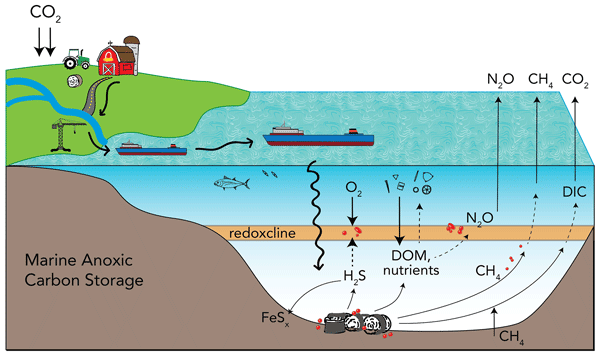
Building on the results of a workshop in Bucharest, Romania in 2025, we discuss the potential impacts of MACS activities on the ecology, biogeochemistry, economy, and community around the Black Sea, seafloor brines, and other anoxic marine sites. Quantifiable limits to the potential maximum feasible scale of MACS for CDR are organized into five criteria: (1) Durable storage site capacity; (2) Biomass sources and logistics; (3) Greenhouse gas balance; (4) Oxygen and sulfide impacts at the redoxcline; and (5) Impacts on dissolved organic matter or nutrients in the oxic zone. For each criterion, we evaluate the factors that could limit scale, our current state of knowledge, and the priority knowledge gaps that, if addressed, would improve our ability to estimate the potential global scale of MACS for CDR. Research is needed to understand its potential impacts at scale, but MACS is nonetheless worthy of serious consideration as a potential pathway for climate mitigation in coming decades.
Competing interests: In addition to her primary role as UCSB faculty, MR serves as the Chief Science Officer for Carboniferous, a U.S.-based startup company exploring potential applications of MACS. Both the coordination of the Bucharest Workshop and the resulting analysis presented here were supported by philanthropic funds and/or grants to UCSB; an unconflicted PI is included on all CDR-related funds in the Raven group. Co-author TT is a member of the editorial team at Biogeosciences.
Publisher's note: Copernicus Publications remains neutral with regard to jurisdictional claims made in the text, published maps, institutional affiliations, or any other geographical representation in this paper. While Copernicus Publications makes every effort to include appropriate place names, the final responsibility lies with the authors. Views expressed in the text are those of the authors and do not necessarily reflect the views of the publisher.-
Notice on discussion status
The requested preprint has a corresponding peer-reviewed final revised paper. You are encouraged to refer to the final revised version.
-
Preprint
(1365 KB)
-
The requested preprint has a corresponding peer-reviewed final revised paper. You are encouraged to refer to the final revised version.
- Preprint
(1365 KB) - Metadata XML
- BibTeX
- EndNote
- Final revised paper


Journal article(s) based on this preprint
Interactive discussion
Status: closed
-
RC1: 'Comment on egusphere-2025-6086', Anonymous Referee #1, 31 Dec 2025
-
AC1: 'Reply on RC1', Morgan Raven, 06 Apr 2026
R1
We thank the Reviewer for taking the time to provide constructive feedback on our manuscript. We have addressed each of the comments and suggestions raised below.
This paper addresses an important topic and, in part, builds on related work (e.g., Raven et al., 2024, 2025; Roberts et al., 2025) in the context of carbon dioxide removal (CDR). I agree that action is needed, and the paper is well written and very timely. While I have generally been cautious about relying on natural ecological systems to address anthropogenic problems (e.g., iron fertilization, species introductions), the hypersaline systems proposed here appear to be promising candidates with potentially minimal ecological disruption. However, before pursuing this approach, it would be useful to make a stronger case for why it may be preferable to geochemical CO₂ storage in deep geological reservoirs. While not perfect, geological storage leverages existing knowledge from fossil fuel exploration and avoids many ecological and logistical challenges associated with aquatic systems. I am not an expert, so I could be mistaken, but I believe this comparison should be emphasized before advocating the introduction of materials into aquatic environments. Overall, I recommend the paper for publication once this issue and some of the other more detailed points I have raised are addressed.
We thank the Reviewer for their feedback overall, and especially for their perspective on how MACS fits in to the context of many CDR methods. Future decision makers will certainly need to compare methods with each other when selecting a suite of tools for implementation, and we agree that geochemical storage is an approach with particularly favorable characteristics in many cases. At the same time, many types of CDR strategies will be needed in a portfolio approach, which can balance different dependencies, strengths, and risks in the context of local conditions. The ability of MACS to contribute to climate goals therefore does not require that MACS is, universally preferable to any other pathway type.
At this early stage of research, given the many uncertainties involved in scaling any individual pathway, we prefer to avoid making too many claims about the relative strengths of MACS vs other proposals in a competitive framework. Through ongoing research and development of MACS alongside geochemical storage, alkalinity enhancement, and other potential mitigation tools, we will be better prepared to have a conversation about the relative merits and drawbacks of different CDR pathways for various scenarios in the future.
To address the Reviewer’s request, we will add a note in the Conclusion to emphasize how the paper’s scaling analysis might inform critical comparisons with e.g. geochemical storage. We will also briefly expand our discussion of how different CDR mechanisms might be selected in the future to meet site-specific needs in a CDR portfolio approach.
Lines 85-90; “Recent results suggest that most of this storage may be in the form of nonliving (soil) organic carbon; models suggest that global stocks may have increased by as much as 4.8 Gt CO2e/yr since 1993 (Bar-On et al., 2025).”
I think some clarification would be helpful here, as soil scientists have recognized this relationship for quite some time. Perhaps I am missing something, but as written it comes across as somewhat naïve. While I understand that these measurements were conducted at a global scale using satellite-based data, the underlying linkage aligns closely with what has long been established in the literature on long-term carbon storage in soils. The authors do discuss the role of organo-mineral protection elsewhere in the manuscript; it may be useful to explicitly note here that these findings reinforce and provide broader-scale support for concepts that have been well documented in the geochemical literature for decades, albeit from a more ecological perspective.
We are happy to expand this discussion to acknowledge earlier work.
94-96: “For example, during events like Ocean Anoxic Event 2 (OAE-2; ~97 Ma), widespread anoxia supported the burial and preservation of largely marine OC, which contributed to global cooling (Jarvis et al., 2011).”
I really like the connection to OAE events, as it makes a strong case for the potential for global-scale MACS applications. While some OAE events involved hypersaline conditions, many did not, so it may be useful to clarify how hypersaline waters differ in terms of extreme ionic effects on terrestrially derived particulate material, and how this might influence deposition in bottom waters and sediments.
We appreciate the chance to avoid potential confusion here. We will revise this line to clarify the role of hypersalinity in each of the paleo examples.
Although reduced anoxic microbial decay under hypersaline conditions could favor greater OC storage, I am more concerned about the potential physical breakdown of POC and its dispersal, which could counteract enhanced preservation.
We agree with the Reviewer that extreme ionic conditions may promote physical fragmentation and lateral dispersal of some types of POC (or the clay minerals that host them), although flocculation of compressed lignocellulosic biomass is far less dramatic than, for example, natural marine particles. In this revision, we will add a note highlighting this important property of hypersaline systems. This idea will be incorporated into the introduction of biomass sources, in context of the biomass types discussed, or considered optimal, for MACS (Line 313).
Line 101-103: “Under the right conditions, the preservation efficiency of terrestrial materials in coastal sediments can approach 100%, although it averages 20–44% today; Blair and Aller, 2012).” I would also cite the Galy et al. (2015) paper here (doi:10.1038/nature14400)
Ok!
121-124: “Marine anoxic storage is only one of several proposed methods for sequestering terrestrial biomass; woody materials are also being stored in anoxic vaults on land (Zeng et al., 2024) and as slurries in deep wells (Snyder, 2022).”
In the Snyder (2022) paper, the authors describe a biomass slurry fracture injection approach, in which biogenic wastes are injected into fractures created within permeable saline formations, rather than into water-filled wells, unless I am misunderstanding the phrasing here.
Thank you for catching this imprecise phrasing; we will clarify the target formations.
189-193: “Carbon storage in a third type of anoxic environment, rapidly-accumulating sediment at (e.g.) major river mouths, is less well understood but has the advantages of engaging multiple sites across the global North and South and having vast potential storage capacity.”
I think that anoxic events near major river mouths are much more dynamic (e.g., presence of mobile muds, and coastal currents) than many other deep basin systems (e.g., hypersaline and fjords) mentioned in the paper and would NOT be good sites for MACS. While I realize that this was not the focus in this paper, I think there has been much published on these environments to make the case against it (e.g., Aller et al., 2008, doi:10.1029/2006JF000689; Bianchi et al., 2011; doi.org/10.1016/j.scitotenv.2009.11.047). Major river fans are a different case, as the authors discuss later in the paper.
Thank you for catching this potential point of confusion; we intended to reference river fans in both cases and will revise for clarity. E.g.: “Anoxic zones near major river mouths are highly dynamic environments characterized by mobile muds, strong lateral transport, and rapid sediment reworking (Aller et al., 2008; Bianchi et al., 2011). These characteristics make them unsuitable for MACS, despite their high sedimentation rates. In contrast, large river‑fan systems with more stable depositional regimes may offer more favorable conditions.”
Line 218-220 “Sediments from Orca Basin exhibit exceptional organic matter preservation
efficiencies, with reports of unprecedented levels of seaweed preservation for thousands of years (Kennett and Penrose, 1978).”
This is an interesting point regarding the preservation of brown macroalgae and could support a strong case for using such sites to dispose of nuisance Sargassum blooms. It would also be valuable to mention the role of fucoidan in brown macroalgal preservation, as highlighted in recent studies. There has been substantial work on this topic in recent years, and it remains an active area of research in the context of carbon sequestration (e.g., Sichert et al., 2020, doi.org/10.1038/s41564-020-0720-2; Li et al., 2024, doi.org/10.1016/j.ijbiomac.2024.137944).
Thank you for the excuse to talk about fucoidan! We are happy to add such a note (e.g., Buck-Wiese et al, 2023).
249-251: Additional sites may be valuable scientific resources and analogs for the development of MACS datasets and MRV 250 systems. Fjords with anoxic bottom water, for example in Norway, British Columbia, and Alaska, provide insights into anoxic organic carbon burial over centuries to millennia.
Once again, while I understand the motivation for mentioning these estuarine systems, I would argue against considering them as potential MACS sites due to their dynamic nature, albeit less so than many estuaries, and their status as some of the world’s most iconic and valued coastal regions.
We agree, which was the reason for their description as “resources and analogs” rather than potential sites. We will revise this sentence to emphasize this point with e.g. “and MRV systems, although their ecological sensitivity and cultural significance make them poorly suited for MACS deployment at scale” or similar.
292-295:The seawater or brine volumes of the reservoirs discussed here (Black Sea, Orca Basin) are well known. The abyssal Black Sea as a whole is not physically storage-limited at the Gt scale (Murray et al., 1991; Raven et al., 2024), but sub-regions of the Black Sea with particularly favorable conditions for storage remain to be quantified.
This is an excellent point, as the depth of the pycnocline can vary over time. A related issue, which I mentioned earlier, is the potential for physical disruption of POC at the density interface. It is unclear how much terrestrially derived organic carbon would be able to penetrate this high-density layer, or how it would need to be “packaged” to do so. For example, sinking marine particles and materials transported from the Mississippi River are retained at this interface, where they undergo aging and substantial degradation (Diercks et al., 2019). As a result of this prolonged accumulation of organic matter breakdown products, the brines of Orca Basin are enriched in DOM (Diercks et al., 2019). Another issue is that lignocellulosic biomass is generally less soluble in seawater than biomass from marine primary producers, which could disperse at the pycnocline.
We agree that the density of biomass for placement is an essential component of MACS project design, and that relatively low-density biomass could be susceptible to dispersal as POC. The manuscript had addressed this issue a bit indirectly, in the context of the need for biomass preparation (e.g., densification) in a project’s biomass sourcing and greenhouse gas balance (e.g., Lines 311-322, 379-383).
In the revised manuscript, we will more explicitly discuss the need to manage biomass density as part of handling and sourcing (section 3.2), noting categories of approaches to address this issue (compression, drying, ballasting, deployment techniques). We will also add a description of the potential environmental consequences of low-density biomass addition to this section and to the redoxcline impacts discussion in section 3.4.
375-376: Additionally, both the Black Sea and Orca Basin are naturally methane-rich environments (Wiesenburg et al., 1985; Reeburgh et al., 1991), and changes to natural rates of methane release would contribute to the net greenhouse gas impacts of a hypothetical MACS project.
I agree that this point needs to be carefully evaluated, as most methane is retained below the pycnocline due to limited vertical mixing; however, any methane that does enter the overlying waters is likely to be rapidly oxidized by microbial communities in the oxic waters of the Gulf of Mexico (Kessler et al., 2011).
Agreed, e.g. line 398.
454-456. “Over decadal timescales, increases in dissolved inorganic carbon are observed in the oxic layers (Voynova et al., in prep).” Perhaps citing Dorofeev and Sukhikh (2024) here would be useful: ISSN 2413-5577, Ecological Safety of Coastal and Shelf Zones of Sea, 2024, No. 3, pp. 36–48.
Ok!
Line 523-525: example, both iron oxide and iron sulfide minerals can contribute to organic carbon preservation in sediments because organic molecules within and on the surfaces of these minerals may be protected from microbial breakdown (Lalonde et al., 2012; Nabeh et al., 2022).
Perhaps it would be helpful to add a few more lines and references on this topic here, as there is a substantial body of literature addressing it.
We are happy to expand this discussion (we included a longer version in an earlier version of the draft but had trimmed for length). E.g.,: Mineral interactions may enhance OC preservation by adsorbing, encapsulating, or co‑precipitating organic molecules (Keil & Mayer, 2014; Hemingway et al., 2019). These interactions reduce microbial accessibility and contribute to long‑term stabilization.”
Line 566-569: “…From the perspective of marine organisms, the vast pool of molecules categorized as DOM includes energy sources (food), building blocks for biosynthesis (e.g., amino acids), and key reactants in cellular processes (e.g., B vitamins, signalling molecules). Additionally, some DOM molecules are acidic and can cause pH change (e.g., carboxylic acids), while others can complex and stabilize trace metals…” Need to add some references here.
Agreed, we will add a few key references here. E.g., Hansell and Carlson, 2015; Bundschuh et al., 2020.
584-587: In contrast, the overlying water column is generally oligotrophic, although surface nutrients and primary productivity vary in response to seasonal cycles and mesoscale eddies (Damien et al., 2021).
What about long lived dissolved species that escape laterally at the pycnocline to other regions???
In the specific case of Orca Basin, the pycnocline intersects the sides of the basin such that there is essentially no lateral connectivity between the hypersaline waters and the surrounding ocean. Background DOM in Orca Basin appears to be terrestrial in origin, with abundant lignin and tannin species resembling plant biomass leachates (Bowman et al., in prep; Evans et al., in prep). In the revised manuscript, we will provide an expanded discussion of the structure of the Orca Basin pycnocline and its trapping effect on dissolved species within the brine, in order to clarify under which conditions DOM is likely to impact ecosystems at the oxycline.
Citation: https://doi.org/10.5194/egusphere-2025-6086-AC1
-
AC1: 'Reply on RC1', Morgan Raven, 06 Apr 2026
-
CC1: 'Comment on egusphere-2025-6086', Rienk Smittenberg, 08 Jan 2026
This is an interesting topic worth discussing, and I have myself always thought that MACS is a logical way to mimic a natural, geologic process of of the carbon cycle for CDR. I am adding some thoughts here that could be added to the paper.
Instead of bluntly dumping biomass that is readily degradable, it is also worth considering the use case and effect of treated biomass that has first seen a cascade use. I am thinking in particular about biochar and hydrochar. Biochar by itself is a means of CDR, where (dried) biomass is pyrolyzed becoming much more resistant against biological breakdown. Biochar production still generates value in the form of bio-oil and syngas which can be used for heat. Biochar itself can be applied to soils but then the quality needs to be high and verified both for the sake of soil quality and carbon credit verification (durability). At present, Biochar CDR (BCR) faces the problem that production may be higher than what can be placed in soils, if farmers do not see any value in it or if the quality isn't good enough. In this case it needs to be placed elsewhere. Adding it into concrete is a developing field but again this needs a certain consistent quality. I can see a use-case for low-quality biochar produced in a relatively cheap way, that is difficult to integrate into soils, concrete or elsewhere, to be stored in anoxic basins. The same is tru for hydrochar, made of wet biomass (e.g. the solid residue after biogas digestion) by hydrothermal conversion at 200-300'C. This is low quality, medium degradable Carbon that needs to be stored in stabilizing reservoirs for it to be used for durable CDR. MACS would be a useful target for Hydrochar as well.
Secondly, I think we need to be careful with removing too much biomass from the biosphere for the sake of CDR. Biomass residues are important for the biogeochemical cycling not only of Carbon, but also other elements. Extracting these at scale from the biological cycle has the risk of depleting the critical zone. Such effects are known from unsustainable agroforestry for instance in Scandinavia, where ever more nutrients disappear upon harvesting of whole trees, but even regular agriculture that can only work if accompanied by soil fertilization. The nutrient aspect of biomass-based CDR deserves more attention. There are many uses for biomass also from agricultural waste, and the biobased economy is growing. Hence I a sceptical how much biomass would really be available for MACS in the first place.
Lastly, I propose to consider algal biomass instead of lignocellulosic biomass. There are CDR incentives underway to grow kelp or microalgae (including cyanobacteria) under controlled conditions for the purpose of CDR. This biomass needs to be stored, with or without a pretreatment like making biochar or hydrochar. At places where eutrophication is a problem, this may solve two problems - removing excess nutrients from the aquatic system and removing Carbon.
Citation: https://doi.org/10.5194/egusphere-2025-6086-CC1 -
AC3: 'Reply on CC1', Morgan Raven, 06 Apr 2026
This is an interesting topic worth discussing, and I have myself always thought that MACS is a logical way to mimic a natural, geologic process of of the carbon cycle for CDR. I am adding some thoughts here that could be added to the paper.
Thank you for taking the time to read and comment on our manuscript. We appreciate your input and have incorporated several of your suggestions into the revised manuscript, described below.
Instead of bluntly dumping biomass that is readily degradable, it is also worth considering the use case and effect of treated biomass that has first seen a cascade use. I am thinking in particular about biochar and hydrochar. Biochar by itself is a means of CDR, where (dried) biomass is pyrolyzed becoming much more resistant against biological breakdown. Biochar production still generates value in the form of bio-oil and syngas which can be used for heat. Biochar itself can be applied to soils but then the quality needs to be high and verified both for the sake of soil quality and carbon credit verification (durability). At present, Biochar CDR (BCR) faces the problem that production may be higher than what can be placed in soils, if farmers do not see any value in it or if the quality isn't good enough. In this case it needs to be placed elsewhere. Adding it into concrete is a developing field but again this needs a certain consistent quality. I can see a use-case for low-quality biochar produced in a relatively cheap way, that is difficult to integrate into soils, concrete or elsewhere, to be stored in anoxic basins. The same is tru for hydrochar, made of wet biomass (e.g. the solid residue after biogas digestion) by hydrothermal conversion at 200-300'C. This is low quality, medium degradable Carbon that needs to be stored in stabilizing reservoirs for it to be used for durable CDR. MACS would be a useful target for Hydrochar as well.
Thank you for this suggestion. In this first analysis, we have focused on direct biomass storage rather than biochar due to the carbon losses associated in biochar production, which would substantially reduce total carbon storage. However, we agree that there may be circumstances under which biochar storage could be a useful substrate for MACS at at least a regional scale. In this revision, we will include biochar and hydrochar in our list of potential biomass source alternatives for future work (Line 310). A detailed analysis of alternative biomass types in the context of their energy efficiency is likely to be a fruitful area for future work.
Secondly, I think we need to be careful with removing too much biomass from the biosphere for the sake of CDR. Biomass residues are important for the biogeochemical cycling not only of Carbon, but also other elements. Extracting these at scale from the biological cycle has the risk of depleting the critical zone. Such effects are known from unsustainable agroforestry for instance in Scandinavia, where ever more nutrients disappear upon harvesting of whole trees, but even regular agriculture that can only work if accompanied by soil fertilization. The nutrient aspect of biomass-based CDR deserves more attention. There are many uses for biomass also from agricultural waste, and the biobased economy is growing. Hence I a sceptical how much biomass would really be available for MACS in the first place.
We agree that one of the central challenges for MACS is to define sustainable biomass sources. We identified this as the second criteria in our manuscript and a critical subject for future research.
Lastly, I propose to consider algal biomass instead of lignocellulosic biomass. There are CDR incentives underway to grow kelp or microalgae (including cyanobacteria) under controlled conditions for the purpose of CDR. This biomass needs to be stored, with or without a pretreatment like making biochar or hydrochar. At places where eutrophication is a problem, this may solve two problems - removing excess nutrients from the aquatic system and removing Carbon.
We appreciate this suggestion, which was the subject of considerable discussion within the team. Our reasoning for excluding cultivated algal biomass at this time is that the cultivation of algal biomass is a much more complex set of interactions with the surface ocean, as well as the construction of a non-trivial amount of new infrastructure. These processes are beyond the scope of what is relevant for MACS, but future work could add such a module to this type of analysis (Lines 310-314).
Citation: https://doi.org/10.5194/egusphere-2025-6086-AC3
-
AC3: 'Reply on CC1', Morgan Raven, 06 Apr 2026
-
RC2: 'Comment on egusphere-2025-6086', Anonymous Referee #2, 17 Mar 2026
Overall, this is a nice summary of MACS and the various topics under consideration regarding scaling this approach.
I generally like the format of this manuscript, it calls out several (but not all!) important considerations and then provides some addressing of these topics. My comments below pertain to certain questions and clarifying targets that, I think, should help improve this manuscript.
In the Abstract, the authors discuss Gt scale sequestration, but this should be framed as Gt/unit time so as to be relevant to CDR goals
Line 66--somewhere it would be helpful to see some estimate of degradation rates of terrestrial Corg (in general) under normal disposal conditions vs what is thought to be the degradation rates under anoxic conditions
The use of CO2e (line 75) is not explained and should be
Table 1 is interesting, but why mass of cement, or waste and not provide these in C units? I think that would be most helpful
Line 194, what about global OMZ's---not mentioned in this manuscript
Line 257--the use of the header Greenhouse gas balance doesn't seem quite as helpful as, perhaps, Greenhouse gas leakage potential ....
295, it is not clear but seems implied that one option is to fill up a brine-basin with organic matter? this will surely result in displacing basin water. what is the limit of how much you'd add, how do you set this limit??
It would help me if somewhere the authors provided a sort of scaling table or text that gave estimates of how much terrestrial Corg waste is generated per acre of 'farmed' land and is this amount generated per year or per what unit time
331--explain more what is meant by incentives for economic development
340-360 This section seems a bit disjointed and random
Key unknown in regards to exchange with the upper ocean seems to be the instability of the redox horizon, perhaps caused by the dumpting process or it's inherent exchange capacity due to unusual turbulent mixing etc.
Summary--I find it surprising that there is no mention of benthic life (meiofauna, worms) impacts of dumping
Citation: https://doi.org/10.5194/egusphere-2025-6086-RC2 -
AC2: 'Reply on RC2', Morgan Raven, 06 Apr 2026
We thank the Reviewer for taking the time to provide constructive feedback on our manuscript. We have addressed each of the comments and suggestions raised below.
Overall, this is a nice summary of MACS and the various topics under consideration regarding scaling this approach.
I generally like the format of this manuscript, it calls out several (but not all!) important considerations and then provides some addressing of these topics. My comments below pertain to certain questions and clarifying targets that, I think, should help improve this manuscript.
In the Abstract, the authors discuss Gt scale sequestration, but this should be framed as Gt/unit time so as to be relevant to CDR goals
We appreciate the reasoning behind the Reviewer’s suggestion. However, our intention was to give a total integrated order-of-magnitude scale, rather than a per-year value. We considered presenting a rate, but we found that the phrasing required to be precise is unapproachable for an Abstract. We prefer the “gigatonnes” framing as many of the limitations to scale are actually in absolute values (e.g., capacity of the Black Sea relative to perturbation) rather than steady-state rates.
Line 66--somewhere it would be helpful to see some estimate of degradation rates of terrestrial Corg (in general) under normal disposal conditions vs what is thought to be the degradation rates under anoxic conditions
We agree that a comparison of oxic and anoxic degradation rates would be very useful to inform this discussion. The current literature is patchy, however, especially for terrestrial materials in marine systems. Several of the authors are currently preparing a manuscript that addresses this issue and provides estimates for reasonable rates of breakdown; hopefully this will provide more satisfying answers in the near future.
In this revision, we will address the Reviewer’s request by presenting results from Keil et al. (2010) in this paragraph, specifically their estimates for the ratio of oxic to anoxic breakdown for terrestrial materials in sediment mesocosms.
The use of CO2e (line 75) is not explained and should be
Thank you for catching this; we will clarify the definition of CO2e here.
Table 1 is interesting, but why mass of cement, or waste and not provide these in C units? I think that would be most helpful
For Table 1, we were unfortunately unable to find official statistics for cement or waste in carbon units, presumably because they are monitored as mass instead (presumably, the carbon content of global wastewater is a non-trivial number to know). Rather than introduce error through assumptions about water content and composition, we report primary statistics as a means of thinking about physical scale.
Line 194, what about global OMZ's---not mentioned in this manuscript
The fully anoxic portions of global OMZs are obliquely referenced in line 187 as part of “large regions of sediment along the continental shelves.” Thank you for catching this potential point of confusion. O2-deficient zones were discussed within the group but were excluded from initial analysis because they are generally upwelling zones with very short residence times for dissolved species, and without the environmental isolation of other basins. In this revision, we will extend the framing discussion at the top of section 2 to explain this reasoning.
Line 257--the use of the header Greenhouse gas balance doesn't seem quite as helpful as, perhaps, Greenhouse gas leakage potential ....
Thank you for this suggestion. Our reasoning for using “balance” instead of “leakage” is because this parameter includes the greenhouse gas cost of shipping, handling, and monitoring as well as leakage.
295, it is not clear but seems implied that one option is to fill up a brine-basin with organic matter? this will surely result in displacing basin water. what is the limit of how much you'd add, how do you set this limit??
We agree that brine displacement could represent an important limit to the scale of biomass storage in brines, which we define as our second “risk mechanism” in this section. In this revision, we will add a sentence to the paragraph starting in line 295, noting a typical volume per tonne for biomass materials and the brine displacement potential per volume in Orca Basin (0.26 Gt for a 4-meter vertical displacement; Raven et al., 2024). We will also clarify that the criteria for acceptable displacement is minimization of new hypersaline seafloor volume.
It would help me if somewhere the authors provided a sort of scaling table or text that gave estimates of how much terrestrial Corg waste is generated per acre of 'farmed' land and is this amount generated per year or per what unit time
We thank the Reviewer for this suggestion and will incorporate add a line to Table 1 to this effect. Global agricultural systems generate approximately 4–6 t C km⁻² yr⁻¹ in crop residues (Lal, 2005), equivalent to ~0.016–0.024 t C acre⁻¹ yr⁻¹. These values vary widely by crop type, management, and climate, but provide an order‑of‑magnitude estimate of terrestrial biomass available for MACS. Although there is significant variability in this value for different situations, we will also select one or two illustrative statistics to provide a sense of scale relative to other global values: for example, the total use of corn for ethanol in the U.S. in 2025 (~11.8 Mt/yr), the sustainable forestry residues in Europe (~40 Mt/yr), or maximum theoretical tree production (10 Gt/yr, Zeng et al., 2024).
Lal, R. (2005). World crop residues production and implications of its use as a biofuel. Environment International, 31(4), 575–584.
331--explain more what is meant by incentives for economic development
We will revise this line to clarify examples of economic incentive shifts, such as changes in demand for inputs or products impacting pricing relative to other biomass uses. E.g.: Incentives for economic development may include job creation in biomass collection and transport, infrastructure investment in coastal regions, and revenue from carbon credit markets associated with verified MACS sequestration.
340-360 This section seems a bit disjointed and random
We will work to revise this section for clarity. This section describes the current availability of relevant datasets and the state of regional analyses of that data, which is the key need for MACS analysis. We will extend the final paragraph in this section to link with the Reviewer’s suggestions for agricultural biomass production and to tie these ideas back together; we will also revise transition sentences to highlight the main ideas in this section.
Key unknown in regards to exchange with the upper ocean seems to be the instability of the redox horizon, perhaps caused by the dumpting process or it's inherent exchange capacity due to unusual turbulent mixing etc.
We agree that turbulence and mixing at the redoxcline has the potential to be a source of disruption, and we discuss this topic in section 3.1. The stability of the redox horizon the Black Sea is a strong function of changes in near-surface water masses, salinity, and temperature patterns, making this issue part of the overall analysis of future circulation and stratification. In the Orca Basin, the redox horizon is not located near the upper ocean and is energetically stable due to the extremely strong density differences between layers and the lack of annual shallow water mass renewal (as in the Black Sea). However, it does experience episodic instabilities due to mass wasting of sediments. To address this comment in the a more generalizable context, we will also add a note in Line 298 to highlight that changes in the physical stability of the pycnocline are an important aspect of defining durable volume.
E.g, A key uncertainty is the stability of the redox horizon, which may be perturbed by biomass emplacement, internal waves, or episodic turbulent mixing. Such disturbances could enhance vertical exchange and must be carefully evaluated in site‑specific MACS assessments (Sawyer et al., 2019).
Derek E. Sawyer et al., “Submarine Landslides Induce Massive Waves in Subsea Brine Pools,” Scientific Reports 9, no. 1 (2019): 128, https://doi.org/10.1038/s41598-018-36781-7.
Summary--I find it surprising that there is no mention of benthic life (meiofauna, worms) impacts of dumping
Thank you for highlighting this issue. We discuss the general absence of animal life in permanently anoxic environments in Lines 474-479 and the potential impacts of expanded anoxia on benthic and pelagic communities (Line 512). In this revision, we will will re-emphasize this point and its nuances in the conclusions, adding an explicit statement that benthic animal communities are absent from these environments and that potential risks would occur at the margins of the oxycline.
Citation: https://doi.org/10.5194/egusphere-2025-6086-AC2
-
AC2: 'Reply on RC2', Morgan Raven, 06 Apr 2026
Peer review completion


Interactive discussion
Status: closed
-
RC1: 'Comment on egusphere-2025-6086', Anonymous Referee #1, 31 Dec 2025
This paper addresses an important topic and, in part, builds on related work (e.g., Raven et al., 2024, 2025; Roberts et al., 2025) in the context of carbon dioxide removal (CDR). I agree that action is needed, and the paper is well written and very timely. While I have generally been cautious about relying on natural ecological systems to address anthropogenic problems (e.g., iron fertilization, species introductions), the hypersaline systems proposed here appear to be promising candidates with potentially minimal ecological disruption. However, before pursuing this approach, it would be useful to make a stronger case for why it may be preferable to geochemical CO₂ storage in deep geological reservoirs. While not perfect, geological storage leverages existing knowledge from fossil fuel exploration and avoids many ecological and logistical challenges associated with aquatic systems. I am not an expert, so I could be mistaken, but I believe this comparison should be emphasized before advocating the introduction of materials into aquatic environments. Overall, I recommend the paper for publication once this issue and some of the other more detailed points I have raised are addressed.
Lines 85-90; “Recent results suggest that most of this storage may be in the form of nonliving (soil) organic carbon; models suggest that global stocks may have increased by as much as 4.8 Gt CO2e/yr since 1993 (Bar-On et al., 2025).”
I think some clarification would be helpful here, as soil scientists have recognized this relationship for quite some time. Perhaps I am missing something, but as written it comes across as somewhat naïve. While I understand that these measurements were conducted at a global scale using satellite-based data, the underlying linkage aligns closely with what has long been established in the literature on long-term carbon storage in soils. The authors do discuss the role of organo-mineral protection elsewhere in the manuscript; it may be useful to explicitly note here that these findings reinforce and provide broader-scale support for concepts that have been well documented in the geochemical literature for decades, albeit from a more ecological perspective.
94-96: “For example, during events like Ocean Anoxic Event 2 (OAE-2; ~97 Ma), widespread anoxia supported the burial and preservation of largely marine OC, which contributed to global cooling (Jarvis et al., 2011).”
I really like the connection to OAE events, as it makes a strong case for the potential for global-scale MACS applications. While some OAE events involved hypersaline conditions, many did not, so it may be useful to clarify how hypersaline waters differ in terms of extreme ionic effects on terrestrially derived particulate material, and how this might influence deposition in bottom waters and sediments. Although reduced anoxic microbial decay under hypersaline conditions could favor greater OC storage, I am more concerned about the potential physical breakdown of POC and its dispersal, which could counteract enhanced preservation.
Line 101-103: “Under the right conditions, the preservation efficiency of terrestrial materials in coastal sediments can approach 100%, although it averages 20–44% today; Blair and Aller, 2012).” I would also cite the Galy et al. (2015) paper here (doi:10.1038/nature14400)
121-124: “Marine anoxic storage is only one of several proposed methods for sequestering terrestrial biomass; woody materials are also being stored in anoxic vaults on land (Zeng et al., 2024) and as slurries in deep wells (Snyder, 2022).”
In the Snyder (2022) paper, the authors describe a biomass slurry fracture injection approach, in which biogenic wastes are injected into fractures created within permeable saline formations, rather than into water-filled wells, unless I am misunderstanding the phrasing here.
189-193: “Carbon storage in a third type of anoxic environment, rapidly-accumulating sediment at (e.g.) major river mouths, is less well understood but has the advantages of engaging multiple sites across the global North and South and having vast potential storage capacity.”
I think that anoxic events near major river mouths are much more dynamic (e.g., presence of mobile muds, and coastal currents) than many other deep basin systems (e.g., hypersaline and fjords) mentioned in the paper and would NOT be good sites for MACS. While I realize that this was not the focus in this paper, I think there has been much published on these environments to make the case against it (e.g., Aller et al., 2008, doi:10.1029/2006JF000689; Bianchi et al., 2011; doi.org/10.1016/j.scitotenv.2009.11.047). Major river fans are a different case, as the authors discuss later in the paper.
Line 218-220 “Sediments from Orca Basin exhibit exceptional organic matter preservation
efficiencies, with reports of unprecedented levels of seaweed preservation for thousands of years (Kennett and Penrose, 1978).”
This is an interesting point regarding the preservation of brown macroalgae and could support a strong case for using such sites to dispose of nuisance Sargassum blooms. It would also be valuable to mention the role of fucoidan in brown macroalgal preservation, as highlighted in recent studies. There has been substantial work on this topic in recent years, and it remains an active area of research in the context of carbon sequestration (e.g., Sichert et al., 2020, doi.org/10.1038/s41564-020-0720-2; Li et al., 2024, doi.org/10.1016/j.ijbiomac.2024.137944).
249-251: Additional sites may be valuable scientific resources and analogs for the development of MACS datasets and MRV 250 systems. Fjords with anoxic bottom water, for example in Norway, British Columbia, and Alaska, provide insights into anoxic organic carbon burial over centuries to millennia.
Once again, while I understand the motivation for mentioning these estuarine systems, I would argue against considering them as potential MACS sites due to their dynamic nature, albeit less so than many estuaries, and their status as some of the world’s most iconic and valued coastal regions.
292-295:The seawater or brine volumes of the reservoirs discussed here (Black Sea, Orca Basin) are well known. The abyssal Black Sea as a whole is not physically storage-limited at the Gt scale (Murray et al., 1991; Raven et al., 2024), but sub-regions of the Black Sea with particularly favorable conditions for storage remain to be quantified.
This is an excellent point, as the depth of the pycnocline can vary over time. A related issue, which I mentioned earlier, is the potential for physical disruption of POC at the density interface. It is unclear how much terrestrially derived organic carbon would be able to penetrate this high-density layer, or how it would need to be “packaged” to do so. For example, sinking marine particles and materials transported from the Mississippi River are retained at this interface, where they undergo aging and substantial degradation (Diercks et al., 2019). As a result of this prolonged accumulation of organic matter breakdown products, the brines of Orca Basin are enriched in DOM (Diercks et al., 2019). Another issue is that lignocellulosic biomass is generally less soluble in seawater than biomass from marine primary producers, which could disperse at the pycnocline.
375-376: Additionally, both the Black Sea and Orca Basin are naturally methane-rich environments (Wiesenburg et al., 1985; Reeburgh et al., 1991), and changes to natural rates of methane release would contribute to the net greenhouse gas impacts of a hypothetical MACS project.
I agree that this point needs to be carefully evaluated, as most methane is retained below the pycnocline due to limited vertical mixing; however, any methane that does enter the overlying waters is likely to be rapidly oxidized by microbial communities in the oxic waters of the Gulf of Mexico (Kessler et al., 2011).
454-456. “Over decadal timescales, increases in dissolved inorganic carbon are observed in the oxic layers (Voynova et al., in prep).” Perhaps citing Dorofeev and Sukhikh (2024) here would be useful: ISSN 2413-5577, Ecological Safety of Coastal and Shelf Zones of Sea, 2024, No. 3, pp. 36–48.
Line523-525: example, both iron oxide and iron sulfide minerals can contribute to organic carbon preservation in sediments because organic molecules within and on the surfaces of these minerals may be protected from microbial breakdown (Lalonde et al., 2012; Nabeh et al., 2022).
Perhaps it would be helpful to add a few more lines and references on this topic here, as there is a substantial body of literature addressing it.
Line 566-569: “…From the perspective of marine organisms, the vast pool of molecules categorized as DOM includes energy sources (food), building blocks for biosynthesis (e.g., amino acids), and key reactants in cellular processes (e.g., B vitamins, signalling molecules). Additionally, some DOM molecules are acidic and can cause pH change (e.g., carboxylic acids), while others can complex and stabilize trace metals…” Need to add some references here.
584-587: In contrast, the overlying water column is generally oligotrophic, although surface nutrients and primary productivity vary in response to seasonal cycles and mesoscale eddies (Damien et al., 2021). What about long lived dissolved species that escape laterally at the pycnocline to other regions???
Citation: https://doi.org/10.5194/egusphere-2025-6086-RC1 -
AC1: 'Reply on RC1', Morgan Raven, 06 Apr 2026
R1
We thank the Reviewer for taking the time to provide constructive feedback on our manuscript. We have addressed each of the comments and suggestions raised below.
This paper addresses an important topic and, in part, builds on related work (e.g., Raven et al., 2024, 2025; Roberts et al., 2025) in the context of carbon dioxide removal (CDR). I agree that action is needed, and the paper is well written and very timely. While I have generally been cautious about relying on natural ecological systems to address anthropogenic problems (e.g., iron fertilization, species introductions), the hypersaline systems proposed here appear to be promising candidates with potentially minimal ecological disruption. However, before pursuing this approach, it would be useful to make a stronger case for why it may be preferable to geochemical CO₂ storage in deep geological reservoirs. While not perfect, geological storage leverages existing knowledge from fossil fuel exploration and avoids many ecological and logistical challenges associated with aquatic systems. I am not an expert, so I could be mistaken, but I believe this comparison should be emphasized before advocating the introduction of materials into aquatic environments. Overall, I recommend the paper for publication once this issue and some of the other more detailed points I have raised are addressed.
We thank the Reviewer for their feedback overall, and especially for their perspective on how MACS fits in to the context of many CDR methods. Future decision makers will certainly need to compare methods with each other when selecting a suite of tools for implementation, and we agree that geochemical storage is an approach with particularly favorable characteristics in many cases. At the same time, many types of CDR strategies will be needed in a portfolio approach, which can balance different dependencies, strengths, and risks in the context of local conditions. The ability of MACS to contribute to climate goals therefore does not require that MACS is, universally preferable to any other pathway type.
At this early stage of research, given the many uncertainties involved in scaling any individual pathway, we prefer to avoid making too many claims about the relative strengths of MACS vs other proposals in a competitive framework. Through ongoing research and development of MACS alongside geochemical storage, alkalinity enhancement, and other potential mitigation tools, we will be better prepared to have a conversation about the relative merits and drawbacks of different CDR pathways for various scenarios in the future.
To address the Reviewer’s request, we will add a note in the Conclusion to emphasize how the paper’s scaling analysis might inform critical comparisons with e.g. geochemical storage. We will also briefly expand our discussion of how different CDR mechanisms might be selected in the future to meet site-specific needs in a CDR portfolio approach.
Lines 85-90; “Recent results suggest that most of this storage may be in the form of nonliving (soil) organic carbon; models suggest that global stocks may have increased by as much as 4.8 Gt CO2e/yr since 1993 (Bar-On et al., 2025).”
I think some clarification would be helpful here, as soil scientists have recognized this relationship for quite some time. Perhaps I am missing something, but as written it comes across as somewhat naïve. While I understand that these measurements were conducted at a global scale using satellite-based data, the underlying linkage aligns closely with what has long been established in the literature on long-term carbon storage in soils. The authors do discuss the role of organo-mineral protection elsewhere in the manuscript; it may be useful to explicitly note here that these findings reinforce and provide broader-scale support for concepts that have been well documented in the geochemical literature for decades, albeit from a more ecological perspective.
We are happy to expand this discussion to acknowledge earlier work.
94-96: “For example, during events like Ocean Anoxic Event 2 (OAE-2; ~97 Ma), widespread anoxia supported the burial and preservation of largely marine OC, which contributed to global cooling (Jarvis et al., 2011).”
I really like the connection to OAE events, as it makes a strong case for the potential for global-scale MACS applications. While some OAE events involved hypersaline conditions, many did not, so it may be useful to clarify how hypersaline waters differ in terms of extreme ionic effects on terrestrially derived particulate material, and how this might influence deposition in bottom waters and sediments.
We appreciate the chance to avoid potential confusion here. We will revise this line to clarify the role of hypersalinity in each of the paleo examples.
Although reduced anoxic microbial decay under hypersaline conditions could favor greater OC storage, I am more concerned about the potential physical breakdown of POC and its dispersal, which could counteract enhanced preservation.
We agree with the Reviewer that extreme ionic conditions may promote physical fragmentation and lateral dispersal of some types of POC (or the clay minerals that host them), although flocculation of compressed lignocellulosic biomass is far less dramatic than, for example, natural marine particles. In this revision, we will add a note highlighting this important property of hypersaline systems. This idea will be incorporated into the introduction of biomass sources, in context of the biomass types discussed, or considered optimal, for MACS (Line 313).
Line 101-103: “Under the right conditions, the preservation efficiency of terrestrial materials in coastal sediments can approach 100%, although it averages 20–44% today; Blair and Aller, 2012).” I would also cite the Galy et al. (2015) paper here (doi:10.1038/nature14400)
Ok!
121-124: “Marine anoxic storage is only one of several proposed methods for sequestering terrestrial biomass; woody materials are also being stored in anoxic vaults on land (Zeng et al., 2024) and as slurries in deep wells (Snyder, 2022).”
In the Snyder (2022) paper, the authors describe a biomass slurry fracture injection approach, in which biogenic wastes are injected into fractures created within permeable saline formations, rather than into water-filled wells, unless I am misunderstanding the phrasing here.
Thank you for catching this imprecise phrasing; we will clarify the target formations.
189-193: “Carbon storage in a third type of anoxic environment, rapidly-accumulating sediment at (e.g.) major river mouths, is less well understood but has the advantages of engaging multiple sites across the global North and South and having vast potential storage capacity.”
I think that anoxic events near major river mouths are much more dynamic (e.g., presence of mobile muds, and coastal currents) than many other deep basin systems (e.g., hypersaline and fjords) mentioned in the paper and would NOT be good sites for MACS. While I realize that this was not the focus in this paper, I think there has been much published on these environments to make the case against it (e.g., Aller et al., 2008, doi:10.1029/2006JF000689; Bianchi et al., 2011; doi.org/10.1016/j.scitotenv.2009.11.047). Major river fans are a different case, as the authors discuss later in the paper.
Thank you for catching this potential point of confusion; we intended to reference river fans in both cases and will revise for clarity. E.g.: “Anoxic zones near major river mouths are highly dynamic environments characterized by mobile muds, strong lateral transport, and rapid sediment reworking (Aller et al., 2008; Bianchi et al., 2011). These characteristics make them unsuitable for MACS, despite their high sedimentation rates. In contrast, large river‑fan systems with more stable depositional regimes may offer more favorable conditions.”
Line 218-220 “Sediments from Orca Basin exhibit exceptional organic matter preservation
efficiencies, with reports of unprecedented levels of seaweed preservation for thousands of years (Kennett and Penrose, 1978).”
This is an interesting point regarding the preservation of brown macroalgae and could support a strong case for using such sites to dispose of nuisance Sargassum blooms. It would also be valuable to mention the role of fucoidan in brown macroalgal preservation, as highlighted in recent studies. There has been substantial work on this topic in recent years, and it remains an active area of research in the context of carbon sequestration (e.g., Sichert et al., 2020, doi.org/10.1038/s41564-020-0720-2; Li et al., 2024, doi.org/10.1016/j.ijbiomac.2024.137944).
Thank you for the excuse to talk about fucoidan! We are happy to add such a note (e.g., Buck-Wiese et al, 2023).
249-251: Additional sites may be valuable scientific resources and analogs for the development of MACS datasets and MRV 250 systems. Fjords with anoxic bottom water, for example in Norway, British Columbia, and Alaska, provide insights into anoxic organic carbon burial over centuries to millennia.
Once again, while I understand the motivation for mentioning these estuarine systems, I would argue against considering them as potential MACS sites due to their dynamic nature, albeit less so than many estuaries, and their status as some of the world’s most iconic and valued coastal regions.
We agree, which was the reason for their description as “resources and analogs” rather than potential sites. We will revise this sentence to emphasize this point with e.g. “and MRV systems, although their ecological sensitivity and cultural significance make them poorly suited for MACS deployment at scale” or similar.
292-295:The seawater or brine volumes of the reservoirs discussed here (Black Sea, Orca Basin) are well known. The abyssal Black Sea as a whole is not physically storage-limited at the Gt scale (Murray et al., 1991; Raven et al., 2024), but sub-regions of the Black Sea with particularly favorable conditions for storage remain to be quantified.
This is an excellent point, as the depth of the pycnocline can vary over time. A related issue, which I mentioned earlier, is the potential for physical disruption of POC at the density interface. It is unclear how much terrestrially derived organic carbon would be able to penetrate this high-density layer, or how it would need to be “packaged” to do so. For example, sinking marine particles and materials transported from the Mississippi River are retained at this interface, where they undergo aging and substantial degradation (Diercks et al., 2019). As a result of this prolonged accumulation of organic matter breakdown products, the brines of Orca Basin are enriched in DOM (Diercks et al., 2019). Another issue is that lignocellulosic biomass is generally less soluble in seawater than biomass from marine primary producers, which could disperse at the pycnocline.
We agree that the density of biomass for placement is an essential component of MACS project design, and that relatively low-density biomass could be susceptible to dispersal as POC. The manuscript had addressed this issue a bit indirectly, in the context of the need for biomass preparation (e.g., densification) in a project’s biomass sourcing and greenhouse gas balance (e.g., Lines 311-322, 379-383).
In the revised manuscript, we will more explicitly discuss the need to manage biomass density as part of handling and sourcing (section 3.2), noting categories of approaches to address this issue (compression, drying, ballasting, deployment techniques). We will also add a description of the potential environmental consequences of low-density biomass addition to this section and to the redoxcline impacts discussion in section 3.4.
375-376: Additionally, both the Black Sea and Orca Basin are naturally methane-rich environments (Wiesenburg et al., 1985; Reeburgh et al., 1991), and changes to natural rates of methane release would contribute to the net greenhouse gas impacts of a hypothetical MACS project.
I agree that this point needs to be carefully evaluated, as most methane is retained below the pycnocline due to limited vertical mixing; however, any methane that does enter the overlying waters is likely to be rapidly oxidized by microbial communities in the oxic waters of the Gulf of Mexico (Kessler et al., 2011).
Agreed, e.g. line 398.
454-456. “Over decadal timescales, increases in dissolved inorganic carbon are observed in the oxic layers (Voynova et al., in prep).” Perhaps citing Dorofeev and Sukhikh (2024) here would be useful: ISSN 2413-5577, Ecological Safety of Coastal and Shelf Zones of Sea, 2024, No. 3, pp. 36–48.
Ok!
Line 523-525: example, both iron oxide and iron sulfide minerals can contribute to organic carbon preservation in sediments because organic molecules within and on the surfaces of these minerals may be protected from microbial breakdown (Lalonde et al., 2012; Nabeh et al., 2022).
Perhaps it would be helpful to add a few more lines and references on this topic here, as there is a substantial body of literature addressing it.
We are happy to expand this discussion (we included a longer version in an earlier version of the draft but had trimmed for length). E.g.,: Mineral interactions may enhance OC preservation by adsorbing, encapsulating, or co‑precipitating organic molecules (Keil & Mayer, 2014; Hemingway et al., 2019). These interactions reduce microbial accessibility and contribute to long‑term stabilization.”
Line 566-569: “…From the perspective of marine organisms, the vast pool of molecules categorized as DOM includes energy sources (food), building blocks for biosynthesis (e.g., amino acids), and key reactants in cellular processes (e.g., B vitamins, signalling molecules). Additionally, some DOM molecules are acidic and can cause pH change (e.g., carboxylic acids), while others can complex and stabilize trace metals…” Need to add some references here.
Agreed, we will add a few key references here. E.g., Hansell and Carlson, 2015; Bundschuh et al., 2020.
584-587: In contrast, the overlying water column is generally oligotrophic, although surface nutrients and primary productivity vary in response to seasonal cycles and mesoscale eddies (Damien et al., 2021).
What about long lived dissolved species that escape laterally at the pycnocline to other regions???
In the specific case of Orca Basin, the pycnocline intersects the sides of the basin such that there is essentially no lateral connectivity between the hypersaline waters and the surrounding ocean. Background DOM in Orca Basin appears to be terrestrial in origin, with abundant lignin and tannin species resembling plant biomass leachates (Bowman et al., in prep; Evans et al., in prep). In the revised manuscript, we will provide an expanded discussion of the structure of the Orca Basin pycnocline and its trapping effect on dissolved species within the brine, in order to clarify under which conditions DOM is likely to impact ecosystems at the oxycline.
Citation: https://doi.org/10.5194/egusphere-2025-6086-AC1
-
AC1: 'Reply on RC1', Morgan Raven, 06 Apr 2026
-
CC1: 'Comment on egusphere-2025-6086', Rienk Smittenberg, 08 Jan 2026
This is an interesting topic worth discussing, and I have myself always thought that MACS is a logical way to mimic a natural, geologic process of of the carbon cycle for CDR. I am adding some thoughts here that could be added to the paper.
Instead of bluntly dumping biomass that is readily degradable, it is also worth considering the use case and effect of treated biomass that has first seen a cascade use. I am thinking in particular about biochar and hydrochar. Biochar by itself is a means of CDR, where (dried) biomass is pyrolyzed becoming much more resistant against biological breakdown. Biochar production still generates value in the form of bio-oil and syngas which can be used for heat. Biochar itself can be applied to soils but then the quality needs to be high and verified both for the sake of soil quality and carbon credit verification (durability). At present, Biochar CDR (BCR) faces the problem that production may be higher than what can be placed in soils, if farmers do not see any value in it or if the quality isn't good enough. In this case it needs to be placed elsewhere. Adding it into concrete is a developing field but again this needs a certain consistent quality. I can see a use-case for low-quality biochar produced in a relatively cheap way, that is difficult to integrate into soils, concrete or elsewhere, to be stored in anoxic basins. The same is tru for hydrochar, made of wet biomass (e.g. the solid residue after biogas digestion) by hydrothermal conversion at 200-300'C. This is low quality, medium degradable Carbon that needs to be stored in stabilizing reservoirs for it to be used for durable CDR. MACS would be a useful target for Hydrochar as well.
Secondly, I think we need to be careful with removing too much biomass from the biosphere for the sake of CDR. Biomass residues are important for the biogeochemical cycling not only of Carbon, but also other elements. Extracting these at scale from the biological cycle has the risk of depleting the critical zone. Such effects are known from unsustainable agroforestry for instance in Scandinavia, where ever more nutrients disappear upon harvesting of whole trees, but even regular agriculture that can only work if accompanied by soil fertilization. The nutrient aspect of biomass-based CDR deserves more attention. There are many uses for biomass also from agricultural waste, and the biobased economy is growing. Hence I a sceptical how much biomass would really be available for MACS in the first place.
Lastly, I propose to consider algal biomass instead of lignocellulosic biomass. There are CDR incentives underway to grow kelp or microalgae (including cyanobacteria) under controlled conditions for the purpose of CDR. This biomass needs to be stored, with or without a pretreatment like making biochar or hydrochar. At places where eutrophication is a problem, this may solve two problems - removing excess nutrients from the aquatic system and removing Carbon.
Citation: https://doi.org/10.5194/egusphere-2025-6086-CC1 -
AC3: 'Reply on CC1', Morgan Raven, 06 Apr 2026
This is an interesting topic worth discussing, and I have myself always thought that MACS is a logical way to mimic a natural, geologic process of of the carbon cycle for CDR. I am adding some thoughts here that could be added to the paper.
Thank you for taking the time to read and comment on our manuscript. We appreciate your input and have incorporated several of your suggestions into the revised manuscript, described below.
Instead of bluntly dumping biomass that is readily degradable, it is also worth considering the use case and effect of treated biomass that has first seen a cascade use. I am thinking in particular about biochar and hydrochar. Biochar by itself is a means of CDR, where (dried) biomass is pyrolyzed becoming much more resistant against biological breakdown. Biochar production still generates value in the form of bio-oil and syngas which can be used for heat. Biochar itself can be applied to soils but then the quality needs to be high and verified both for the sake of soil quality and carbon credit verification (durability). At present, Biochar CDR (BCR) faces the problem that production may be higher than what can be placed in soils, if farmers do not see any value in it or if the quality isn't good enough. In this case it needs to be placed elsewhere. Adding it into concrete is a developing field but again this needs a certain consistent quality. I can see a use-case for low-quality biochar produced in a relatively cheap way, that is difficult to integrate into soils, concrete or elsewhere, to be stored in anoxic basins. The same is tru for hydrochar, made of wet biomass (e.g. the solid residue after biogas digestion) by hydrothermal conversion at 200-300'C. This is low quality, medium degradable Carbon that needs to be stored in stabilizing reservoirs for it to be used for durable CDR. MACS would be a useful target for Hydrochar as well.
Thank you for this suggestion. In this first analysis, we have focused on direct biomass storage rather than biochar due to the carbon losses associated in biochar production, which would substantially reduce total carbon storage. However, we agree that there may be circumstances under which biochar storage could be a useful substrate for MACS at at least a regional scale. In this revision, we will include biochar and hydrochar in our list of potential biomass source alternatives for future work (Line 310). A detailed analysis of alternative biomass types in the context of their energy efficiency is likely to be a fruitful area for future work.
Secondly, I think we need to be careful with removing too much biomass from the biosphere for the sake of CDR. Biomass residues are important for the biogeochemical cycling not only of Carbon, but also other elements. Extracting these at scale from the biological cycle has the risk of depleting the critical zone. Such effects are known from unsustainable agroforestry for instance in Scandinavia, where ever more nutrients disappear upon harvesting of whole trees, but even regular agriculture that can only work if accompanied by soil fertilization. The nutrient aspect of biomass-based CDR deserves more attention. There are many uses for biomass also from agricultural waste, and the biobased economy is growing. Hence I a sceptical how much biomass would really be available for MACS in the first place.
We agree that one of the central challenges for MACS is to define sustainable biomass sources. We identified this as the second criteria in our manuscript and a critical subject for future research.
Lastly, I propose to consider algal biomass instead of lignocellulosic biomass. There are CDR incentives underway to grow kelp or microalgae (including cyanobacteria) under controlled conditions for the purpose of CDR. This biomass needs to be stored, with or without a pretreatment like making biochar or hydrochar. At places where eutrophication is a problem, this may solve two problems - removing excess nutrients from the aquatic system and removing Carbon.
We appreciate this suggestion, which was the subject of considerable discussion within the team. Our reasoning for excluding cultivated algal biomass at this time is that the cultivation of algal biomass is a much more complex set of interactions with the surface ocean, as well as the construction of a non-trivial amount of new infrastructure. These processes are beyond the scope of what is relevant for MACS, but future work could add such a module to this type of analysis (Lines 310-314).
Citation: https://doi.org/10.5194/egusphere-2025-6086-AC3
-
AC3: 'Reply on CC1', Morgan Raven, 06 Apr 2026
-
RC2: 'Comment on egusphere-2025-6086', Anonymous Referee #2, 17 Mar 2026
Overall, this is a nice summary of MACS and the various topics under consideration regarding scaling this approach.
I generally like the format of this manuscript, it calls out several (but not all!) important considerations and then provides some addressing of these topics. My comments below pertain to certain questions and clarifying targets that, I think, should help improve this manuscript.
In the Abstract, the authors discuss Gt scale sequestration, but this should be framed as Gt/unit time so as to be relevant to CDR goals
Line 66--somewhere it would be helpful to see some estimate of degradation rates of terrestrial Corg (in general) under normal disposal conditions vs what is thought to be the degradation rates under anoxic conditions
The use of CO2e (line 75) is not explained and should be
Table 1 is interesting, but why mass of cement, or waste and not provide these in C units? I think that would be most helpful
Line 194, what about global OMZ's---not mentioned in this manuscript
Line 257--the use of the header Greenhouse gas balance doesn't seem quite as helpful as, perhaps, Greenhouse gas leakage potential ....
295, it is not clear but seems implied that one option is to fill up a brine-basin with organic matter? this will surely result in displacing basin water. what is the limit of how much you'd add, how do you set this limit??
It would help me if somewhere the authors provided a sort of scaling table or text that gave estimates of how much terrestrial Corg waste is generated per acre of 'farmed' land and is this amount generated per year or per what unit time
331--explain more what is meant by incentives for economic development
340-360 This section seems a bit disjointed and random
Key unknown in regards to exchange with the upper ocean seems to be the instability of the redox horizon, perhaps caused by the dumpting process or it's inherent exchange capacity due to unusual turbulent mixing etc.
Summary--I find it surprising that there is no mention of benthic life (meiofauna, worms) impacts of dumping
Citation: https://doi.org/10.5194/egusphere-2025-6086-RC2 -
AC2: 'Reply on RC2', Morgan Raven, 06 Apr 2026
We thank the Reviewer for taking the time to provide constructive feedback on our manuscript. We have addressed each of the comments and suggestions raised below.
Overall, this is a nice summary of MACS and the various topics under consideration regarding scaling this approach.
I generally like the format of this manuscript, it calls out several (but not all!) important considerations and then provides some addressing of these topics. My comments below pertain to certain questions and clarifying targets that, I think, should help improve this manuscript.
In the Abstract, the authors discuss Gt scale sequestration, but this should be framed as Gt/unit time so as to be relevant to CDR goals
We appreciate the reasoning behind the Reviewer’s suggestion. However, our intention was to give a total integrated order-of-magnitude scale, rather than a per-year value. We considered presenting a rate, but we found that the phrasing required to be precise is unapproachable for an Abstract. We prefer the “gigatonnes” framing as many of the limitations to scale are actually in absolute values (e.g., capacity of the Black Sea relative to perturbation) rather than steady-state rates.
Line 66--somewhere it would be helpful to see some estimate of degradation rates of terrestrial Corg (in general) under normal disposal conditions vs what is thought to be the degradation rates under anoxic conditions
We agree that a comparison of oxic and anoxic degradation rates would be very useful to inform this discussion. The current literature is patchy, however, especially for terrestrial materials in marine systems. Several of the authors are currently preparing a manuscript that addresses this issue and provides estimates for reasonable rates of breakdown; hopefully this will provide more satisfying answers in the near future.
In this revision, we will address the Reviewer’s request by presenting results from Keil et al. (2010) in this paragraph, specifically their estimates for the ratio of oxic to anoxic breakdown for terrestrial materials in sediment mesocosms.
The use of CO2e (line 75) is not explained and should be
Thank you for catching this; we will clarify the definition of CO2e here.
Table 1 is interesting, but why mass of cement, or waste and not provide these in C units? I think that would be most helpful
For Table 1, we were unfortunately unable to find official statistics for cement or waste in carbon units, presumably because they are monitored as mass instead (presumably, the carbon content of global wastewater is a non-trivial number to know). Rather than introduce error through assumptions about water content and composition, we report primary statistics as a means of thinking about physical scale.
Line 194, what about global OMZ's---not mentioned in this manuscript
The fully anoxic portions of global OMZs are obliquely referenced in line 187 as part of “large regions of sediment along the continental shelves.” Thank you for catching this potential point of confusion. O2-deficient zones were discussed within the group but were excluded from initial analysis because they are generally upwelling zones with very short residence times for dissolved species, and without the environmental isolation of other basins. In this revision, we will extend the framing discussion at the top of section 2 to explain this reasoning.
Line 257--the use of the header Greenhouse gas balance doesn't seem quite as helpful as, perhaps, Greenhouse gas leakage potential ....
Thank you for this suggestion. Our reasoning for using “balance” instead of “leakage” is because this parameter includes the greenhouse gas cost of shipping, handling, and monitoring as well as leakage.
295, it is not clear but seems implied that one option is to fill up a brine-basin with organic matter? this will surely result in displacing basin water. what is the limit of how much you'd add, how do you set this limit??
We agree that brine displacement could represent an important limit to the scale of biomass storage in brines, which we define as our second “risk mechanism” in this section. In this revision, we will add a sentence to the paragraph starting in line 295, noting a typical volume per tonne for biomass materials and the brine displacement potential per volume in Orca Basin (0.26 Gt for a 4-meter vertical displacement; Raven et al., 2024). We will also clarify that the criteria for acceptable displacement is minimization of new hypersaline seafloor volume.
It would help me if somewhere the authors provided a sort of scaling table or text that gave estimates of how much terrestrial Corg waste is generated per acre of 'farmed' land and is this amount generated per year or per what unit time
We thank the Reviewer for this suggestion and will incorporate add a line to Table 1 to this effect. Global agricultural systems generate approximately 4–6 t C km⁻² yr⁻¹ in crop residues (Lal, 2005), equivalent to ~0.016–0.024 t C acre⁻¹ yr⁻¹. These values vary widely by crop type, management, and climate, but provide an order‑of‑magnitude estimate of terrestrial biomass available for MACS. Although there is significant variability in this value for different situations, we will also select one or two illustrative statistics to provide a sense of scale relative to other global values: for example, the total use of corn for ethanol in the U.S. in 2025 (~11.8 Mt/yr), the sustainable forestry residues in Europe (~40 Mt/yr), or maximum theoretical tree production (10 Gt/yr, Zeng et al., 2024).
Lal, R. (2005). World crop residues production and implications of its use as a biofuel. Environment International, 31(4), 575–584.
331--explain more what is meant by incentives for economic development
We will revise this line to clarify examples of economic incentive shifts, such as changes in demand for inputs or products impacting pricing relative to other biomass uses. E.g.: Incentives for economic development may include job creation in biomass collection and transport, infrastructure investment in coastal regions, and revenue from carbon credit markets associated with verified MACS sequestration.
340-360 This section seems a bit disjointed and random
We will work to revise this section for clarity. This section describes the current availability of relevant datasets and the state of regional analyses of that data, which is the key need for MACS analysis. We will extend the final paragraph in this section to link with the Reviewer’s suggestions for agricultural biomass production and to tie these ideas back together; we will also revise transition sentences to highlight the main ideas in this section.
Key unknown in regards to exchange with the upper ocean seems to be the instability of the redox horizon, perhaps caused by the dumpting process or it's inherent exchange capacity due to unusual turbulent mixing etc.
We agree that turbulence and mixing at the redoxcline has the potential to be a source of disruption, and we discuss this topic in section 3.1. The stability of the redox horizon the Black Sea is a strong function of changes in near-surface water masses, salinity, and temperature patterns, making this issue part of the overall analysis of future circulation and stratification. In the Orca Basin, the redox horizon is not located near the upper ocean and is energetically stable due to the extremely strong density differences between layers and the lack of annual shallow water mass renewal (as in the Black Sea). However, it does experience episodic instabilities due to mass wasting of sediments. To address this comment in the a more generalizable context, we will also add a note in Line 298 to highlight that changes in the physical stability of the pycnocline are an important aspect of defining durable volume.
E.g, A key uncertainty is the stability of the redox horizon, which may be perturbed by biomass emplacement, internal waves, or episodic turbulent mixing. Such disturbances could enhance vertical exchange and must be carefully evaluated in site‑specific MACS assessments (Sawyer et al., 2019).
Derek E. Sawyer et al., “Submarine Landslides Induce Massive Waves in Subsea Brine Pools,” Scientific Reports 9, no. 1 (2019): 128, https://doi.org/10.1038/s41598-018-36781-7.
Summary--I find it surprising that there is no mention of benthic life (meiofauna, worms) impacts of dumping
Thank you for highlighting this issue. We discuss the general absence of animal life in permanently anoxic environments in Lines 474-479 and the potential impacts of expanded anoxia on benthic and pelagic communities (Line 512). In this revision, we will will re-emphasize this point and its nuances in the conclusions, adding an explicit statement that benthic animal communities are absent from these environments and that potential risks would occur at the margins of the oxycline.
Citation: https://doi.org/10.5194/egusphere-2025-6086-AC2
-
AC2: 'Reply on RC2', Morgan Raven, 06 Apr 2026
Peer review completion
Journal article(s) based on this preprint
Viewed
| HTML | XML | Total | BibTeX | EndNote | |
|---|---|---|---|---|---|
| 4,391 | 1,812 | 236 | 6,439 | 228 | 280 |
- HTML: 4,391
- PDF: 1,812
- XML: 236
- Total: 6,439
- BibTeX: 228
- EndNote: 280
Viewed (geographical distribution)
| Country | # | Views | % |
|---|
| Total: | 0 |
| HTML: | 0 |
| PDF: | 0 |
| XML: | 0 |
- 1

Nitai Amiel
Dror L. Angel
James P. Barry
Thomas M. Blattmann
Laura Boicenco
Antoine Crémière
Natalya Evans
Nora Gallarotti
Sebastian Haas
Jan-Hendrik Hehemann
Pranay Lal
David Lordkipanidze
Tiia Luostarinen
Aaron M. Martinez
Allison J. Matzelle
Selma Menabit
Mihaela Muresan
Andreas Neumann
Jean-Daniel Paris
Christopher R. Pearce
Nick Reynard
Daniel L. Sanchez
Florence Schubotz
Violeta Slabakova
Adrian Stanica
Andrew K. Sweetman
Tina Treude
Yoana G. Voynova
D. Nikolaos Zarokanellos
The requested preprint has a corresponding peer-reviewed final revised paper. You are encouraged to refer to the final revised version.
- Preprint
(1365 KB) - Metadata XML
This paper addresses an important topic and, in part, builds on related work (e.g., Raven et al., 2024, 2025; Roberts et al., 2025) in the context of carbon dioxide removal (CDR). I agree that action is needed, and the paper is well written and very timely. While I have generally been cautious about relying on natural ecological systems to address anthropogenic problems (e.g., iron fertilization, species introductions), the hypersaline systems proposed here appear to be promising candidates with potentially minimal ecological disruption. However, before pursuing this approach, it would be useful to make a stronger case for why it may be preferable to geochemical CO₂ storage in deep geological reservoirs. While not perfect, geological storage leverages existing knowledge from fossil fuel exploration and avoids many ecological and logistical challenges associated with aquatic systems. I am not an expert, so I could be mistaken, but I believe this comparison should be emphasized before advocating the introduction of materials into aquatic environments. Overall, I recommend the paper for publication once this issue and some of the other more detailed points I have raised are addressed.
Lines 85-90; “Recent results suggest that most of this storage may be in the form of nonliving (soil) organic carbon; models suggest that global stocks may have increased by as much as 4.8 Gt CO2e/yr since 1993 (Bar-On et al., 2025).”
I think some clarification would be helpful here, as soil scientists have recognized this relationship for quite some time. Perhaps I am missing something, but as written it comes across as somewhat naïve. While I understand that these measurements were conducted at a global scale using satellite-based data, the underlying linkage aligns closely with what has long been established in the literature on long-term carbon storage in soils. The authors do discuss the role of organo-mineral protection elsewhere in the manuscript; it may be useful to explicitly note here that these findings reinforce and provide broader-scale support for concepts that have been well documented in the geochemical literature for decades, albeit from a more ecological perspective.
94-96: “For example, during events like Ocean Anoxic Event 2 (OAE-2; ~97 Ma), widespread anoxia supported the burial and preservation of largely marine OC, which contributed to global cooling (Jarvis et al., 2011).”
I really like the connection to OAE events, as it makes a strong case for the potential for global-scale MACS applications. While some OAE events involved hypersaline conditions, many did not, so it may be useful to clarify how hypersaline waters differ in terms of extreme ionic effects on terrestrially derived particulate material, and how this might influence deposition in bottom waters and sediments. Although reduced anoxic microbial decay under hypersaline conditions could favor greater OC storage, I am more concerned about the potential physical breakdown of POC and its dispersal, which could counteract enhanced preservation.
Line 101-103: “Under the right conditions, the preservation efficiency of terrestrial materials in coastal sediments can approach 100%, although it averages 20–44% today; Blair and Aller, 2012).” I would also cite the Galy et al. (2015) paper here (doi:10.1038/nature14400)
121-124: “Marine anoxic storage is only one of several proposed methods for sequestering terrestrial biomass; woody materials are also being stored in anoxic vaults on land (Zeng et al., 2024) and as slurries in deep wells (Snyder, 2022).”
In the Snyder (2022) paper, the authors describe a biomass slurry fracture injection approach, in which biogenic wastes are injected into fractures created within permeable saline formations, rather than into water-filled wells, unless I am misunderstanding the phrasing here.
189-193: “Carbon storage in a third type of anoxic environment, rapidly-accumulating sediment at (e.g.) major river mouths, is less well understood but has the advantages of engaging multiple sites across the global North and South and having vast potential storage capacity.”
I think that anoxic events near major river mouths are much more dynamic (e.g., presence of mobile muds, and coastal currents) than many other deep basin systems (e.g., hypersaline and fjords) mentioned in the paper and would NOT be good sites for MACS. While I realize that this was not the focus in this paper, I think there has been much published on these environments to make the case against it (e.g., Aller et al., 2008, doi:10.1029/2006JF000689; Bianchi et al., 2011; doi.org/10.1016/j.scitotenv.2009.11.047). Major river fans are a different case, as the authors discuss later in the paper.
Line 218-220 “Sediments from Orca Basin exhibit exceptional organic matter preservation
efficiencies, with reports of unprecedented levels of seaweed preservation for thousands of years (Kennett and Penrose, 1978).”
This is an interesting point regarding the preservation of brown macroalgae and could support a strong case for using such sites to dispose of nuisance Sargassum blooms. It would also be valuable to mention the role of fucoidan in brown macroalgal preservation, as highlighted in recent studies. There has been substantial work on this topic in recent years, and it remains an active area of research in the context of carbon sequestration (e.g., Sichert et al., 2020, doi.org/10.1038/s41564-020-0720-2; Li et al., 2024, doi.org/10.1016/j.ijbiomac.2024.137944).
249-251: Additional sites may be valuable scientific resources and analogs for the development of MACS datasets and MRV 250 systems. Fjords with anoxic bottom water, for example in Norway, British Columbia, and Alaska, provide insights into anoxic organic carbon burial over centuries to millennia.
Once again, while I understand the motivation for mentioning these estuarine systems, I would argue against considering them as potential MACS sites due to their dynamic nature, albeit less so than many estuaries, and their status as some of the world’s most iconic and valued coastal regions.
292-295:The seawater or brine volumes of the reservoirs discussed here (Black Sea, Orca Basin) are well known. The abyssal Black Sea as a whole is not physically storage-limited at the Gt scale (Murray et al., 1991; Raven et al., 2024), but sub-regions of the Black Sea with particularly favorable conditions for storage remain to be quantified.
This is an excellent point, as the depth of the pycnocline can vary over time. A related issue, which I mentioned earlier, is the potential for physical disruption of POC at the density interface. It is unclear how much terrestrially derived organic carbon would be able to penetrate this high-density layer, or how it would need to be “packaged” to do so. For example, sinking marine particles and materials transported from the Mississippi River are retained at this interface, where they undergo aging and substantial degradation (Diercks et al., 2019). As a result of this prolonged accumulation of organic matter breakdown products, the brines of Orca Basin are enriched in DOM (Diercks et al., 2019). Another issue is that lignocellulosic biomass is generally less soluble in seawater than biomass from marine primary producers, which could disperse at the pycnocline.
375-376: Additionally, both the Black Sea and Orca Basin are naturally methane-rich environments (Wiesenburg et al., 1985; Reeburgh et al., 1991), and changes to natural rates of methane release would contribute to the net greenhouse gas impacts of a hypothetical MACS project.
I agree that this point needs to be carefully evaluated, as most methane is retained below the pycnocline due to limited vertical mixing; however, any methane that does enter the overlying waters is likely to be rapidly oxidized by microbial communities in the oxic waters of the Gulf of Mexico (Kessler et al., 2011).
454-456. “Over decadal timescales, increases in dissolved inorganic carbon are observed in the oxic layers (Voynova et al., in prep).” Perhaps citing Dorofeev and Sukhikh (2024) here would be useful: ISSN 2413-5577, Ecological Safety of Coastal and Shelf Zones of Sea, 2024, No. 3, pp. 36–48.
Line523-525: example, both iron oxide and iron sulfide minerals can contribute to organic carbon preservation in sediments because organic molecules within and on the surfaces of these minerals may be protected from microbial breakdown (Lalonde et al., 2012; Nabeh et al., 2022).
Perhaps it would be helpful to add a few more lines and references on this topic here, as there is a substantial body of literature addressing it.
Line 566-569: “…From the perspective of marine organisms, the vast pool of molecules categorized as DOM includes energy sources (food), building blocks for biosynthesis (e.g., amino acids), and key reactants in cellular processes (e.g., B vitamins, signalling molecules). Additionally, some DOM molecules are acidic and can cause pH change (e.g., carboxylic acids), while others can complex and stabilize trace metals…” Need to add some references here.
584-587: In contrast, the overlying water column is generally oligotrophic, although surface nutrients and primary productivity vary in response to seasonal cycles and mesoscale eddies (Damien et al., 2021). What about long lived dissolved species that escape laterally at the pycnocline to other regions???