
the Creative Commons Attribution 4.0 License.
the Creative Commons Attribution 4.0 License.
 | 19 Dec 2025
Wave effect mechanisms enhancing sea–air CO2 exchange and modulating seawater carbonate–pH adaptation in the POP2–waves coupled model
Abstract. Wave and bubble mechanisms have demonstrated their impact on sea–air CO2 flux by enhancing gas transfer velocity (Kw) through significant wave height (Hs). Neglecting wave and bubble processes may lead to an underestimation of CO2 flux under high 10-m wind speeds (U₁₀) in most state-of-the-art climate models. In this study, a waves module from the Princeton Ocean Model (POM) has been incorporated into the Parallel Ocean Program version 2 (POP2), referred to as POP2–waves, in the Community Earth System Model version 1.2.2 (CESM1.2.2) framework. The POP2–waves and a control run of CESM1.2.2 (B–CTL) CO₂ flux simulations are compared with the National Oceanic and Atmospheric Administration’s (NOAA) CarbonTracker, version 2022 (CT2022) data. Overall, bubbles contribute up to 41.3 % to the total sea–air CO₂ flux, consistent with recent studies, and POP2–waves exhibits a stronger CO₂ flux than B–CTL under high U₁₀. Likewise, the spatial distribution of POP2–waves CO₂ flux is broadly agrees with that of NOAA CT2022, although some discrepancies remain. Under the sea–air partial pressure differences (dpCO₂) negative feedback associated with the interaction between CO₂ fluxes and the carbonate–pH system, POP2–waves show increases of 11.8 %, 41.6 %, and 1.8 % in the CO₂ sink, source, and global average, respectively, compared to the B–CTL. The dpCO₂ (pH) exhibits the strongest positive (negative) regression coefficient with CO₂ flux across the global ocean. Additionally, Kw shows a positive (negative) regression coefficient with CO₂ flux in source (sink) regions, while SST displays the opposite pattern relative to Kw.
-
Notice on discussion status
The requested preprint has a corresponding peer-reviewed final revised paper. You are encouraged to refer to the final revised version.
-
Preprint
(2427 KB)
-
The requested preprint has a corresponding peer-reviewed final revised paper. You are encouraged to refer to the final revised version.
- Preprint
(2427 KB) - Metadata XML
- BibTeX
- EndNote
- Final revised paper


Journal article(s) based on this preprint
Interactive discussion
Status: closed
-
RC1: 'Comment on egusphere-2025-4773', Anonymous Referee #1, 31 Mar 2026
-
AC1: 'Reply on RC1', Yung-Yao Lan, 30 Apr 2026
Publisher’s note: the content of this comment was removed on 4 May 2026 since the comment was posted by mistake.
Citation: https://doi.org/10.5194/egusphere-2025-4773-AC1 -
AC2: 'Reply on RC1', Yung-Yao Lan, 30 Apr 2026
The comment was uploaded in the form of a supplement: https://egusphere.copernicus.org/preprints/2025/egusphere-2025-4773/egusphere-2025-4773-AC2-supplement.pdf
-
AC1: 'Reply on RC1', Yung-Yao Lan, 30 Apr 2026
-
RC2: 'Comment on egusphere-2025-4773', Anonymous Referee #2, 09 Apr 2026
This manuscript demonstrates the impact of wave-bubble processes on air-sea CO2 exchange using a coupled ocean-wave model. This is a timely and relevant area of study, as recent papers have proposed bubble-informed formulations that can be readily implemented in models. Here, the authors apply one such wave-bubble formulation and contrast it with a traditional wind-dependent formulation to evaluate the effects of wave-bubble processes on surface CO2 fluxes and pH.
The manuscript, in its current form, lacks a clear structure and detail, particularly for a journal focused on model development. The main limitations are:
- The methodology and model configuration are insufficiently described
- The results focus heavily on description rather than interpretation
- Several figures lack clear messages or connections to the text
I provide some comments that may help tailor the analysis presented in this paper. I encourage the authors to address these points before the work can be considered for publication.
Specific comments:
L26/Figure 9: The interpretation of the regressions should consider the flux direction. The sign convention in this paper assumes that ocean outgassing is positive, so it’s positively correlated with kw, while ocean uptake is negatively correlated with kw; however, its magnitude may still be enhanced, if not more so. Consider providing more interpretation than simply stating correlations. For example, kw and SST are negatively correlated because they reflect the latitudinal structure of colder ocean waters and more intense sea states.
L37: Consider adding a line that makes the flux direction convection explicit, clearly stating that positive fluxes are ocean outgassing to the atmosphere.
L44/L139/L230: I believe the equation you’re showing is from Wanninkhof (2014), not from Wanninkhof (1992). Please modify here and elsewhere. Please add that the 10 m wind speed is the neutral wind speed.
L51/L98: Rustogi et al. (2025) used an ocean circulation model to quantify wave-bubble effects on CO2. Might be a relevant reference.
Data, model experiments, and methodology: I agree with the other reviewer that there isn’t sufficient information to understand how the model was spun up, how wave properties through coupling lead to the significant wave height variable, and about the individual model components, such as the biogeochemical module. Please also add information about how wind friction is calculated, as it’s used in the wave-bubble formulation. Perhaps more details can be added to Figure 1, which is currently not very informative and, in its current form, should be moved to the supplementary material.
L155: Equation 3 is missing a Schmidt term in the symmetric bubble gas exchange formulation. Please check the original publication. I’d suggest updating the formulation to the new generalized formulation proposed by Deike et al. (2025), which includes updated coefficients and an asymmetric bubble flux contribution, expected to have a small impact on CO2 but potentially significant for O2 fluxes.
L181/L184: These statements need more depth - what is consistent and what isn’t? Perhaps adding global integrals values can help quantify if adding waves improves the match with the NOAA product. I agree with the other reviewer that adding difference plots may be more informative at least when comparing model simulations.
Figure 3: It isn’t evident what this figure is demonstrating. The seasonal cycles vary between the product and coupled simulations across regions. If the point is to compare with the observation-based reference, then it’s useful to continue that analysis throughout the manuscript; otherwise, it may be more informative to focus largely on the differences among the model simulations, since they are internally self-consistent. One interesting question would be to evaluate the difference in the carbon inventory in the ocean interior.
Results: The results also include discussion material (e.g., L203-206, L282-283). In general, hard to understand the results without referencing the figures, and the text includes a lot of details about what the figures show, without interpreting the findings. Consider streamlining the key findings.
Figure 5: The standard unit for kw is cm/hr - please update in this figure and elsewhere (Figure 7, L296). It isn’t clear why the analysis shifts to focus on two regions (WP and EP) that weren’t explicitly indicated by the masks in Figure 2.
Figure 6: Consider adding wind speed distribution to better distinguish modeled responses.
Figure 7: The figure doesn’t show the surface circulation or the Hs fields as stated in the text. The Kw from the ctrl experiment and the kwNB from the wave experiment aren’t directly comparable, so if the point is to compare the two, it should be the total kw, and perhaps their difference. Could you comment on the kw pattern in panel c: it lacks the structure seen across products and modeled fluxes (e.g., Reichl and Deike, 2020) – is it related to the coupling? Are there other references that demonstrate that the kw/flux structure is CESM-specific?
L290: There shouldn’t be a discrepancy in the Ab coefficient between this study and Reichl and Deike’s formulation, since that’s what is used here. Perhaps the differences have more to do with the tool?
L310: This point is not sufficiently demonstrated in your study - there is only a brief mention of changes in pH in two ocean regions. Either remove or restructure results to show this.
Discussion: There is nontrivial overlap between the discussion and the results. Consider rewording so the results are explained alongside the figures, while the discussion puts these results in a broader context.
L343: The differences between simulations don’t suggest mitigation or enhancement (which is a separate mechanism), just different mean states. Please reword.
Section 4.3/Figure 10: The point about the negative feedback from pCO2 is not explored enough - how was this feedback shut off in the simulations? Note that Rustogi et al. (2025) go into this in detail. This is a key difference between models and observation-based products.
Other points:
L9: Consider rewording this line — “Wave and bubble mechanisms impact the air-sea CO2 flux by enhancing the gas transfer velocity (kw), often modeled through significant wave height (Hs)”.
L85: I agree with the other reviewer that if the point about data assimilation is to be included, it should be better motivated.
L92: Are you thinking of observation-based products when you reference non-model simulations? Please reword for clarity.
L228: Spell out acronyms WP and EP.
Citation: https://doi.org/10.5194/egusphere-2025-4773-RC2 -
AC3: 'Reply on RC2', Yung-Yao Lan, 15 May 2026
The comment was uploaded in the form of a supplement: https://egusphere.copernicus.org/preprints/2025/egusphere-2025-4773/egusphere-2025-4773-AC3-supplement.pdf
Peer review completion


Interactive discussion
Status: closed
-
RC1: 'Comment on egusphere-2025-4773', Anonymous Referee #1, 31 Mar 2026
Wave effect mechanisms enhancing sea-air CO2 exchange and modulating seawater carbonate-pH adaptation in the POP2-waves coupled model
by Yung-Yao Lan et al.
The work presented in this manuscript investigates the effect of wave- and bubble-mediated mechanisms on air-sea CO2 fluxes. The topic remains an open research question and can certainly benefit from further exploration. Moreover, the integration of these mechanisms into Earth system models is a significant endeavor. In this work, the authors incorporate a wave module into the Parallel Ocean Program (POP2) and use an existing air-sea CO2 parametrization which includes wave parameters. The authors then assess the impact of wave- and bubble-mediated mechanisms in the gas exchange and the implications for the marine carbonate system from the model results.
Although the work has potential significance, the manuscript requires substantial improvements before it is suitable for publication in GMD. Specifically, the manuscript lacks a thorough methodology. Detailed information on the model integration and implementation would be essential. Additionally, consistent and sound objectives, results, and discussion are missing. Please see below for detailed comments.
I hope the authors find the following comments useful to improve their manuscript. I would be happy to see this work published once these concerns, as well as those raised by other reviewers and the community in general, have been addressed in a satisfactory manner.
Specific comments:
- Consider using the revised version of Kw from Wanninkhof (2014) instead of Wanninkhof (1992).
- L78-L87: the text on direct flux observations requires revisions. When referring to ‘direct observations’ in this context, it is usually understood ‘direct flux measurements’. However, here the authors first refer to pCO2 observations and then to direct fluxes using eddy covariance. Please revise the text to increase clarity. Also note that direct fluxes using eddy covariance can be made with both open- and close-path analyzer, which is not mentioned in the text. Furthermore, data assimilation is mentioned here, where it seems rather isolated. Please provide the necessary information to present a sound context for the reader.
- Section 2.1 should not be called ‘observational data’, this is misleading as the NOAA CarbonTracker is not only based on observations, but largely on model predictions and numerical techniques to estimate the fluxes.
- As mentioned above, the methodology section requires substantial improvements. This is particularly important given that the manuscript is submitted to a model development journal. Therefore, strong emphasis should be made in presenting the relevant aspects of such model development. In this case, details about the wave module and its implementation in POP2 is of particular relevance. However, other aspects are also lacking. For example, details about the CarbonTracker, details of each of the models and model components, information about input data, forcing, etc. The authors mention pCO2, pH and the ‘POP2 (bio)geochemistry response’ in the methodology section, but there is no information about the biogeochemical module, and this is not included in the architecture diagram in figure 1 either. This is all essential for the reproducibility of the results.
- Following on my previous comment, Section 2.3 should include much more than 10 lines on the coupling of POP2-waves. The information here should be enough for a reader to be able to reproduce the results!
- There is a notation issue that can cause confusion. The authors refer to the gas transfer velocity as Kw, often mentioning Kw from W92, i.e. eq (2). However, in eq. (3) Kw is not only the wind-based component of the parametrization, but the total gas transfer velocity (i.e. including waves), and KwNB refers to wind-based component from W92, not Kw anymore. Please, use a consistent notation.
- In section 3.1, a figure of the differences would be useful, e.g. B-CTL minus NOAA CT2022 and POP2-waves minus NOAA CT2022.
- In figures 3, 4 and 5, having the SD in percentage represented by bars makes it very hard to get the idea of the magnitude. It would be better to find the way of having the SD along the flux or K magnitude lines.
- Through the results, suddenly the NOAA CT2022 is not used anymore, why? This should be considered as the reference throughout the manuscript, as it is used in Section 3.1.
- Please add information about how the different ‘regions’ mentioned in L188-L196 are selected. Relevant information should be disclosed in the methodology section. Also, why are 12 regions selected first, and then only 9 are used (L197)? Please, provide the necessary explanations.
- In connection to the previous comment, section 3.2 focuses on the Pacific sink and source regions. Why these regions? Not only the methodological information is needed, but at this point also the overall objective becomes confusing. Are these test cases? Is is the focus of the work to evaluate the global impact of wave and bubble-mediated mechanisms on CO2 flux? Or only focus on certain regions.
- It is interesting to assess the impact of waves and bubbles in terms of the total flux (e.g. section 3.3). This has a lot of potential in terms of the relevance of including waves and wave-mediated processes in models to address carbon budgets, but also in terms of the process understanding. Posing questions like is the wave effect equally significant for source and sink regions? What does that represent for the global ocean carbon sink? Does integrating waves into models could bring global carbon sink estimates closer to observational-based estimates? All these questions are incredibly relevant and possible to address in this study.
- While the results focus on the ‘kinematic’ part of the flux, assessing the effect of waves and bubbles on the gas exchange, the discussion section largely focuses on the ‘thermodynamic’ component of the flux, and the links between physics and biogeochemistry. Large parts of the discussion are written as introductory concepts (e.g. L334-338), of course, because previously the focus was on the kinematic properties (i.e. waves, bubbles, wind, u*, Kw, etc.). Other parts are largely written as results, describing additional figures and introducing new findings, correlations, uncertainty analysis. Despite being interesting, all this is not a discussion. I encourage the authors to reconsider the key objectives and structure of the manuscript.
- In the conclusions, the authors point to significant challenges in the POP2-waves coupling. However, these are not described or discussed in the paper. It is also mentioned that the results are used to compare CO2 fluxes (including wave and bubble-mediated effects) with NOAA CT2022, but this is only very briefly done. The conclusions must be consistent with the content of the rest of the manuscript.
Technical corrections:
- Use ‘biogeochemistry’ not ‘geochemistry’
- Use ‘air-sea flux’ instead of ‘sea-air flux’
- L55: ‘slow conduction’ can be removed from the sentence has here the main topic is on mass transport which under non-turbulent conditions ‘occurs through molecular diffusion’.
- Avoid using ‘sources and sinks of CO2 flux’. Either refer to a region as a ‘source or sink of CO2’, or use ‘positive or negative CO2 flux’, but there is no such thing as a source or sink of the flux.
- L179: ‘mean air-sea CO2 flux’ or 'mean atmosphere-ocean CO2 flux' instead of ‘mean ocean CO2 flux’
Citation: https://doi.org/10.5194/egusphere-2025-4773-RC1 -
AC1: 'Reply on RC1', Yung-Yao Lan, 30 Apr 2026
Publisher’s note: the content of this comment was removed on 4 May 2026 since the comment was posted by mistake.
Citation: https://doi.org/10.5194/egusphere-2025-4773-AC1 -
AC2: 'Reply on RC1', Yung-Yao Lan, 30 Apr 2026
The comment was uploaded in the form of a supplement: https://egusphere.copernicus.org/preprints/2025/egusphere-2025-4773/egusphere-2025-4773-AC2-supplement.pdf
-
RC2: 'Comment on egusphere-2025-4773', Anonymous Referee #2, 09 Apr 2026
This manuscript demonstrates the impact of wave-bubble processes on air-sea CO2 exchange using a coupled ocean-wave model. This is a timely and relevant area of study, as recent papers have proposed bubble-informed formulations that can be readily implemented in models. Here, the authors apply one such wave-bubble formulation and contrast it with a traditional wind-dependent formulation to evaluate the effects of wave-bubble processes on surface CO2 fluxes and pH.
The manuscript, in its current form, lacks a clear structure and detail, particularly for a journal focused on model development. The main limitations are:
- The methodology and model configuration are insufficiently described
- The results focus heavily on description rather than interpretation
- Several figures lack clear messages or connections to the text
I provide some comments that may help tailor the analysis presented in this paper. I encourage the authors to address these points before the work can be considered for publication.
Specific comments:
L26/Figure 9: The interpretation of the regressions should consider the flux direction. The sign convention in this paper assumes that ocean outgassing is positive, so it’s positively correlated with kw, while ocean uptake is negatively correlated with kw; however, its magnitude may still be enhanced, if not more so. Consider providing more interpretation than simply stating correlations. For example, kw and SST are negatively correlated because they reflect the latitudinal structure of colder ocean waters and more intense sea states.
L37: Consider adding a line that makes the flux direction convection explicit, clearly stating that positive fluxes are ocean outgassing to the atmosphere.
L44/L139/L230: I believe the equation you’re showing is from Wanninkhof (2014), not from Wanninkhof (1992). Please modify here and elsewhere. Please add that the 10 m wind speed is the neutral wind speed.
L51/L98: Rustogi et al. (2025) used an ocean circulation model to quantify wave-bubble effects on CO2. Might be a relevant reference.
Data, model experiments, and methodology: I agree with the other reviewer that there isn’t sufficient information to understand how the model was spun up, how wave properties through coupling lead to the significant wave height variable, and about the individual model components, such as the biogeochemical module. Please also add information about how wind friction is calculated, as it’s used in the wave-bubble formulation. Perhaps more details can be added to Figure 1, which is currently not very informative and, in its current form, should be moved to the supplementary material.
L155: Equation 3 is missing a Schmidt term in the symmetric bubble gas exchange formulation. Please check the original publication. I’d suggest updating the formulation to the new generalized formulation proposed by Deike et al. (2025), which includes updated coefficients and an asymmetric bubble flux contribution, expected to have a small impact on CO2 but potentially significant for O2 fluxes.
L181/L184: These statements need more depth - what is consistent and what isn’t? Perhaps adding global integrals values can help quantify if adding waves improves the match with the NOAA product. I agree with the other reviewer that adding difference plots may be more informative at least when comparing model simulations.
Figure 3: It isn’t evident what this figure is demonstrating. The seasonal cycles vary between the product and coupled simulations across regions. If the point is to compare with the observation-based reference, then it’s useful to continue that analysis throughout the manuscript; otherwise, it may be more informative to focus largely on the differences among the model simulations, since they are internally self-consistent. One interesting question would be to evaluate the difference in the carbon inventory in the ocean interior.
Results: The results also include discussion material (e.g., L203-206, L282-283). In general, hard to understand the results without referencing the figures, and the text includes a lot of details about what the figures show, without interpreting the findings. Consider streamlining the key findings.
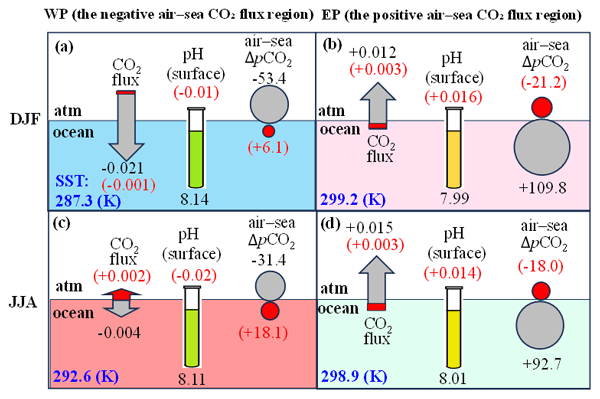
Figure 5: The standard unit for kw is cm/hr - please update in this figure and elsewhere (Figure 7, L296). It isn’t clear why the analysis shifts to focus on two regions (WP and EP) that weren’t explicitly indicated by the masks in Figure 2.
Figure 6: Consider adding wind speed distribution to better distinguish modeled responses.
Figure 7: The figure doesn’t show the surface circulation or the Hs fields as stated in the text. The Kw from the ctrl experiment and the kwNB from the wave experiment aren’t directly comparable, so if the point is to compare the two, it should be the total kw, and perhaps their difference. Could you comment on the kw pattern in panel c: it lacks the structure seen across products and modeled fluxes (e.g., Reichl and Deike, 2020) – is it related to the coupling? Are there other references that demonstrate that the kw/flux structure is CESM-specific?
L290: There shouldn’t be a discrepancy in the Ab coefficient between this study and Reichl and Deike’s formulation, since that’s what is used here. Perhaps the differences have more to do with the tool?
L310: This point is not sufficiently demonstrated in your study - there is only a brief mention of changes in pH in two ocean regions. Either remove or restructure results to show this.
Discussion: There is nontrivial overlap between the discussion and the results. Consider rewording so the results are explained alongside the figures, while the discussion puts these results in a broader context.
L343: The differences between simulations don’t suggest mitigation or enhancement (which is a separate mechanism), just different mean states. Please reword.
Section 4.3/Figure 10: The point about the negative feedback from pCO2 is not explored enough - how was this feedback shut off in the simulations? Note that Rustogi et al. (2025) go into this in detail. This is a key difference between models and observation-based products.
Other points:
L9: Consider rewording this line — “Wave and bubble mechanisms impact the air-sea CO2 flux by enhancing the gas transfer velocity (kw), often modeled through significant wave height (Hs)”.
L85: I agree with the other reviewer that if the point about data assimilation is to be included, it should be better motivated.
L92: Are you thinking of observation-based products when you reference non-model simulations? Please reword for clarity.
L228: Spell out acronyms WP and EP.
Citation: https://doi.org/10.5194/egusphere-2025-4773-RC2 -
AC3: 'Reply on RC2', Yung-Yao Lan, 15 May 2026
The comment was uploaded in the form of a supplement: https://egusphere.copernicus.org/preprints/2025/egusphere-2025-4773/egusphere-2025-4773-AC3-supplement.pdf
Peer review completion
Journal article(s) based on this preprint
Viewed
| HTML | XML | Total | BibTeX | EndNote | |
|---|---|---|---|---|---|
| 1,383 | 766 | 155 | 2,304 | 239 | 288 |
- HTML: 1,383
- PDF: 766
- XML: 155
- Total: 2,304
- BibTeX: 239
- EndNote: 288
Viewed (geographical distribution)
| Country | # | Views | % |
|---|
| Total: | 0 |
| HTML: | 0 |
| PDF: | 0 |
| XML: | 0 |
- 1
Yung-Yao Lan
Huang-Hsiung Hsu
Wei-Liang Lee

Simon Chou
The requested preprint has a corresponding peer-reviewed final revised paper. You are encouraged to refer to the final revised version.
- Preprint
(2427 KB) - Metadata XML
Wave effect mechanisms enhancing sea-air CO2 exchange and modulating seawater carbonate-pH adaptation in the POP2-waves coupled model
by Yung-Yao Lan et al.
The work presented in this manuscript investigates the effect of wave- and bubble-mediated mechanisms on air-sea CO2 fluxes. The topic remains an open research question and can certainly benefit from further exploration. Moreover, the integration of these mechanisms into Earth system models is a significant endeavor. In this work, the authors incorporate a wave module into the Parallel Ocean Program (POP2) and use an existing air-sea CO2 parametrization which includes wave parameters. The authors then assess the impact of wave- and bubble-mediated mechanisms in the gas exchange and the implications for the marine carbonate system from the model results.
Although the work has potential significance, the manuscript requires substantial improvements before it is suitable for publication in GMD. Specifically, the manuscript lacks a thorough methodology. Detailed information on the model integration and implementation would be essential. Additionally, consistent and sound objectives, results, and discussion are missing. Please see below for detailed comments.
I hope the authors find the following comments useful to improve their manuscript. I would be happy to see this work published once these concerns, as well as those raised by other reviewers and the community in general, have been addressed in a satisfactory manner.
Specific comments:
Technical corrections: