
the Creative Commons Attribution 4.0 License.
the Creative Commons Attribution 4.0 License.
 | 16 Sep 2025
Newly discovered series of meteorological measurements in SW Greenland (Nuuk) in the period 1806–13
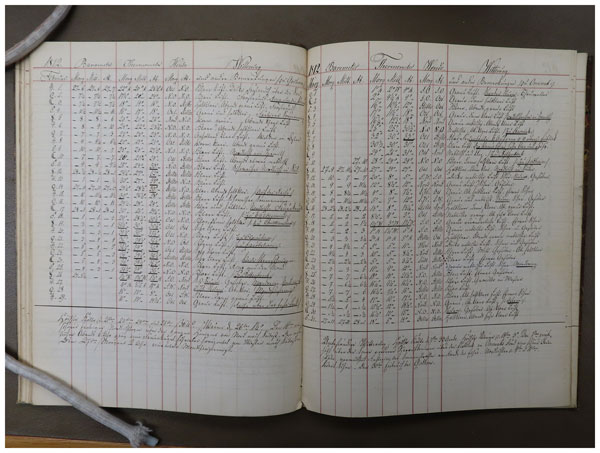
Abstract. The article presents a description of a newly discovered, unique series of meteorological measurements in SW Greenland (Godthåb [now Nuuk]) from the beginning of the 19th century (1 November 1806 to 16 August 1813). The series is the longest available from before 1840, not only for Greenland but also for the entire Arctic. The handwritten meteorological register was discovered in the archives of the Royal Society in London (MA/154). The meteorological observations were carried out by the German mineralogist Dr Charles Lewis Giesecke. The observations include measurements, taken two to three times per day, of air temperature, atmospheric pressure and wind direction. In addition, the meteorological register briefly describes the weather conditions for each day. In the article, we present a detailed analysis of thermal conditions for the period covered by a complete series of measurements (Aug 1807–Jul 1813). The analysis of air temperature clearly shows that the study period was one of the coldest periods (possibly the coldest) in the past two millennia. A cooling of this severity has previously been found for the study region, the whole of Greenland and the whole Arctic. Among the available reconstructions that use different proxy data or that use climate models for this purpose, most of the reconstructions of air temperature are almost fully consistent with the available results of meteorological observations for this period. Intense volcanic activity and, to a lesser degree, the low solar activity connected with the Dalton minimum are most often given as reasons for the cooling of the early 19th century.
-
Notice on discussion status
The requested preprint has a corresponding peer-reviewed final revised paper. You are encouraged to refer to the final revised version.
-
Preprint
(2710 KB)
-
Supplement
(511 KB)
-
The requested preprint has a corresponding peer-reviewed final revised paper. You are encouraged to refer to the final revised version.
- Preprint
(2710 KB) - Metadata XML
-
Supplement
(511 KB) - BibTeX
- EndNote
- Final revised paper


Journal article(s) based on this preprint
Interactive discussion
Status: closed
-
RC1: 'Comment on egusphere-2025-4313', Anonymous Referee #1, 20 Oct 2025
-
AC1: 'Reply on RC1', Garima Singh, 18 Nov 2025
The text of the reply to the reviewer comments is in the supplement PDF file.
Citation: https://doi.org/10.5194/egusphere-2025-4313-AC1 -
AC4: 'Reply on RC1', Garima Singh, 18 Nov 2025
The comment was uploaded in the form of a supplement: https://egusphere.copernicus.org/preprints/2025/egusphere-2025-4313/egusphere-2025-4313-AC4-supplement.pdf
-
AC1: 'Reply on RC1', Garima Singh, 18 Nov 2025
-
RC2: 'Small correction on my previous comment', Anonymous Referee #1, 20 Oct 2025
I meant, of course, 'Nuuk, Western Greenland'
Citation: https://doi.org/10.5194/egusphere-2025-4313-RC2 -
AC3: 'Reply on RC2', Garima Singh, 18 Nov 2025
We replied to this in the first PDF file.
Citation: https://doi.org/10.5194/egusphere-2025-4313-AC3
-
AC3: 'Reply on RC2', Garima Singh, 18 Nov 2025
-
RC3: 'Comment on egusphere-2025-4313', Anonymous Referee #2, 05 Nov 2025
The manuscript analyzes what the authors describe as a “newly discovered series of historical meteorological data” recorded by Karl Ludwig Giesecke in Nuuk between 1806 and 1813, with regular measurements from 1807 to 1813. The authors claim to compare Giesecke’s data with recent observations from the same location.
The paper outlines what the authors call the “state of knowledge about early meteorological observations” and formulates two main objectives:
- To present this newly discovered series of observations to a broader scientific audience and to offer preliminary results of a climate analysis—limited to a description of conditions and changes in air temperature in Nuuk.
- To compare air temperatures during the study period with earlier measurements from the late 18th century as well as later records, including modern observations from 1991–2020.
The authors identify the place of measurement as “the territory of present-day Nuuk.” They briefly introduce the author of the manuscript, though the title, language, and signature are not mentioned, and the archival location is initially described only as “Royal Society,” with further details provided later. Throughout the paper, the authors repeatedly speculate about the authorship of the text and the exact location of the thermometer.
Evaluation
The manuscript lacks a solid historical methodology for working with handwritten German-language sources. Consequently, the object of study is not clearly defined, and historical methods for analyzing early measurements and observations are not adequately applied.
The state of the art contains factual inaccuracies and is incomplete. For example:
- The archives consulted are vaguely referred to as “many European and Canadian archives and libraries,” without precise identification.
- The authors mention “measurements for the expedition year September 1767–July 1768,” although no expedition took place during that time. Information about who collected the data, for what purpose, and in which context is missing—despite the fact that these aspects are well-known in existing research.
There are also several factual errors and speculative statements regarding the Moravian Brethren. For instance, the authors write:
“They are usually available as meteorological registers (some have survived and are available in archives in Germany, the UK and the USA; see Demarée and Ogilvie (2008) for more details), and some have also been published in annual reports (diaries handwritten in Old German or English).”
In reality:
- Only one set of measurements from Neu-Herrnhut is known for the second half of the 18th century.
- The archival materials are not listed precisely.
- The Moravian missionaries did not produce “annual reports” before the mid-19th century, and this varied by region and mission station.
- The term “Moravian handwritten diaries” is imprecise and does not clarify what kind of documents are meant.
- It remains unclear what the authors mean by “meteorological registers,” since the Moravians did not use such terminology.
- The references to “archives in the UK and USA” are vague; if the authors mean Moravian archives, these mainly contain copies of original documents preserved in Germany.
- The use of the term “Moravian Brothers” is incorrect.
- The Moravians generally did not collect data for scientific purposes. Their possible involvement in Giesecke’s measurements could, however, be verified in the relevant archives. Before Giesecke’s arrival, Moravian meteorological observations in Greenland were limited to their own use—this is well documented in previous research.
- No specific old English script exists, in contrast to the old German script.
The claim that the series from September 1767 to July 1768 represents the “oldest meteorological data for Nuuk” is also inaccurate, as the location was Neu-Herrnhut (now within modern Nuuk but not historically identical). Furthermore, the dataset analyzed is not the longest pre-1840 meteorological series for the Arctic—the authors do not clarify which definition of “Arctic” they apply.
The manuscript is not, in fact, a newly discovered source. It was already known and received by scholars in the 19th century and remains known in current research (see Schmidt 2020). Not all references cited in the text appear in the bibliography, and the archival sources themselves are not listed there.
The historical source is not described in detail; even the original title is omitted. The authors rely on a copy available in London without referencing or verifying it against the original manuscript from Denmark and other existing copies. They also appear unaware that Giesecke produced two manuscripts containing meteorological observations from his Greenland travels. No comparison is made with Giesecke’s travel diary—published several times in the 19th and 20th centuries—which contains relevant meteorological data and the location of the thermometer.
The German text at the bottom of the table is neither transcribed nor analyzed.
In summary, the paper lacks a solid historical and archival foundation. Due to historical methodological weaknesses and factual inaccuracies, the object of analysis is not clearly defined, the author of the manuscript not identified, and the reliability of the scientific results is uncertain. A thorough methodological revision, including proper archival research and accurate use of historical sources, is strongly recommended to establish a solid basis for scientific analysis.
Citation: https://doi.org/10.5194/egusphere-2025-4313-RC3 -
AC2: 'Reply on RC3', Garima Singh, 18 Nov 2025
The comment was uploaded in the form of a supplement: https://egusphere.copernicus.org/preprints/2025/egusphere-2025-4313/egusphere-2025-4313-AC2-supplement.pdf


Interactive discussion
Status: closed
-
RC1: 'Comment on egusphere-2025-4313', Anonymous Referee #1, 20 Oct 2025
Summary: The manuscript presents an analysis of a newly discovered series of historical meteorological data comprising subdaily air temperature, wind and pressure taken by Charles Lewis Giesecke in Nuuk, Eastern Greenland, covering the period 1809-1813. The authors compare these observations with recent observations from the same location, analyse long-term changes in temperature and its connection to wind direction.
The main findings are that air temperature was almost always colder than in recent times, and that advection from the North-East played a more significant role than it does today. The colder temperatures agree with other indirect information derived from ice-core records.Recommendation:
The study is interesting, as meteorological observations this old are very rare. The manuscript is, in my opinion, well and clearly written, although a few figures could be more clearly designed. There are some aspects that the study does not cover, and that could also be interesting for the reader, as I explained in more detail below. My recommendation is that the manuscript can gain from some moderate revisions, which are certainly feasibleMain points:
1) Clarity of some figures. Figure 5, perhaps one of the most relevant in the study, is not optimally designed, making it difficult for the reader to skim the relevant information. My suggestion is to display the 1D and 2D spreads of the modern temperatures as coloured surfaces in the background, against which the mean of the modern and of the historical temperatures is plotted as dark lines
Similarly, Figure 9 could include the temperature levels as circles, instead of a linear scale on the y-axis as it is now.2) Perhaps more importantly, the study is strongly focused on the mean annual cycle, and essentially all figures display in some way or another the mean annual cycle derived from the 5 years of observations. No figures actually show a time series over the period of observations, such as monthly or annual means. The period is admittedly short, but this type of information would be useful when discussing the purported impact of volcanic eruptions. For instance, this period includes the 1809 Tambora (?) eruption, less known than its 1815 counterpart, but nevertheless intense. The time series of annual means or monthly anomalies might provide insights into the impact of this eruption on temperature in Nuuk and its recovery in the following years. Also, the lack of any clear signal would be relevant. A time series of wind direction frequency could also be interesting, as eruptions have been suggested to impact the state of the NAO towards a more zonal state. Would this impact be visible in the wind direction data? Again, a positive or negative answer would be, in my view, interesting
3) Following this time-series approach, another suggestion is to compare the monthly anomalies or annual means with those from the neighbouring cell in the 20CR reanalysis. The agreement probably cannot be expected to be good, but it would also be an interesting test for the 20CR reanalysis using independent historical observations.
Particular points:
4) 'A cooling of this severity has previously been found for the study region, the whole of Greenland and the whole Arctic.'
The meaning of this sentence in the abstract is not clear to me, unless it refers to previous studies (?). If yes, please state it so.
5) 'Intense volcanic activity and, to a lesser degree, the low solar activity connected with the Dalton minimum are most often given as reasons for the cooling of the early 19th century.'I would be reluctant to include this sentence in the abstract, as it is actually not a conclusion of the present study. It can mislead the reader into thinking that this study also attributed the cooling to those climate forcings.
6) 'about the existence of long-term continuous meteorological observations'
What does 'continuous' mean here ? I guess daily temporal scales, but it is unclear.
7) 'We calculated MDATs according to eight different formulas:'I would have a suggestion that the authors may want to follow, although it is not critical. Instead of testing different links between subdaily measurements and daily means, a linear regression would yield the proper weights for the three subdaily data to reconstruct the daily mean
8) 'temperature between 5 and 25 February never rose above ˗20 °C, and between 19 and 25
February it was even above ˗30 °C'I guess the authors mean that the temperature remains above -30 °C. The formulation is ambiguous
9) 'The question arises: What could be the reason for such great heating from one day to
the next? '
The authors suggest that föhn was responsible for this sudden warming. It seems plausible, but perhaps
One analogous situation can be found in 20th-century observations to support this hypothesis, possibly dating back to before the retreat of the ice sheet.
10) line 410 , consider opening subsections for wind, daily temperature variability, etc. It would later help the reader skimming the article.
11) 'In historical times, the irregularity of thermal roses is..'
Perhaps not irregularity, but the deviation from circular symmetryCitation: https://doi.org/10.5194/egusphere-2025-4313-RC1 -
AC1: 'Reply on RC1', Garima Singh, 18 Nov 2025
The text of the reply to the reviewer comments is in the supplement PDF file.
Citation: https://doi.org/10.5194/egusphere-2025-4313-AC1 -
AC4: 'Reply on RC1', Garima Singh, 18 Nov 2025
The comment was uploaded in the form of a supplement: https://egusphere.copernicus.org/preprints/2025/egusphere-2025-4313/egusphere-2025-4313-AC4-supplement.pdf
-
AC1: 'Reply on RC1', Garima Singh, 18 Nov 2025
-
RC2: 'Small correction on my previous comment', Anonymous Referee #1, 20 Oct 2025
I meant, of course, 'Nuuk, Western Greenland'
Citation: https://doi.org/10.5194/egusphere-2025-4313-RC2 -
AC3: 'Reply on RC2', Garima Singh, 18 Nov 2025
We replied to this in the first PDF file.
Citation: https://doi.org/10.5194/egusphere-2025-4313-AC3
-
AC3: 'Reply on RC2', Garima Singh, 18 Nov 2025
-
RC3: 'Comment on egusphere-2025-4313', Anonymous Referee #2, 05 Nov 2025
The manuscript analyzes what the authors describe as a “newly discovered series of historical meteorological data” recorded by Karl Ludwig Giesecke in Nuuk between 1806 and 1813, with regular measurements from 1807 to 1813. The authors claim to compare Giesecke’s data with recent observations from the same location.
The paper outlines what the authors call the “state of knowledge about early meteorological observations” and formulates two main objectives:
- To present this newly discovered series of observations to a broader scientific audience and to offer preliminary results of a climate analysis—limited to a description of conditions and changes in air temperature in Nuuk.
- To compare air temperatures during the study period with earlier measurements from the late 18th century as well as later records, including modern observations from 1991–2020.
The authors identify the place of measurement as “the territory of present-day Nuuk.” They briefly introduce the author of the manuscript, though the title, language, and signature are not mentioned, and the archival location is initially described only as “Royal Society,” with further details provided later. Throughout the paper, the authors repeatedly speculate about the authorship of the text and the exact location of the thermometer.
Evaluation
The manuscript lacks a solid historical methodology for working with handwritten German-language sources. Consequently, the object of study is not clearly defined, and historical methods for analyzing early measurements and observations are not adequately applied.
The state of the art contains factual inaccuracies and is incomplete. For example:
- The archives consulted are vaguely referred to as “many European and Canadian archives and libraries,” without precise identification.
- The authors mention “measurements for the expedition year September 1767–July 1768,” although no expedition took place during that time. Information about who collected the data, for what purpose, and in which context is missing—despite the fact that these aspects are well-known in existing research.
There are also several factual errors and speculative statements regarding the Moravian Brethren. For instance, the authors write:
“They are usually available as meteorological registers (some have survived and are available in archives in Germany, the UK and the USA; see Demarée and Ogilvie (2008) for more details), and some have also been published in annual reports (diaries handwritten in Old German or English).”
In reality:
- Only one set of measurements from Neu-Herrnhut is known for the second half of the 18th century.
- The archival materials are not listed precisely.
- The Moravian missionaries did not produce “annual reports” before the mid-19th century, and this varied by region and mission station.
- The term “Moravian handwritten diaries” is imprecise and does not clarify what kind of documents are meant.
- It remains unclear what the authors mean by “meteorological registers,” since the Moravians did not use such terminology.
- The references to “archives in the UK and USA” are vague; if the authors mean Moravian archives, these mainly contain copies of original documents preserved in Germany.
- The use of the term “Moravian Brothers” is incorrect.
- The Moravians generally did not collect data for scientific purposes. Their possible involvement in Giesecke’s measurements could, however, be verified in the relevant archives. Before Giesecke’s arrival, Moravian meteorological observations in Greenland were limited to their own use—this is well documented in previous research.
- No specific old English script exists, in contrast to the old German script.
The claim that the series from September 1767 to July 1768 represents the “oldest meteorological data for Nuuk” is also inaccurate, as the location was Neu-Herrnhut (now within modern Nuuk but not historically identical). Furthermore, the dataset analyzed is not the longest pre-1840 meteorological series for the Arctic—the authors do not clarify which definition of “Arctic” they apply.
The manuscript is not, in fact, a newly discovered source. It was already known and received by scholars in the 19th century and remains known in current research (see Schmidt 2020). Not all references cited in the text appear in the bibliography, and the archival sources themselves are not listed there.
The historical source is not described in detail; even the original title is omitted. The authors rely on a copy available in London without referencing or verifying it against the original manuscript from Denmark and other existing copies. They also appear unaware that Giesecke produced two manuscripts containing meteorological observations from his Greenland travels. No comparison is made with Giesecke’s travel diary—published several times in the 19th and 20th centuries—which contains relevant meteorological data and the location of the thermometer.
The German text at the bottom of the table is neither transcribed nor analyzed.
In summary, the paper lacks a solid historical and archival foundation. Due to historical methodological weaknesses and factual inaccuracies, the object of analysis is not clearly defined, the author of the manuscript not identified, and the reliability of the scientific results is uncertain. A thorough methodological revision, including proper archival research and accurate use of historical sources, is strongly recommended to establish a solid basis for scientific analysis.
Citation: https://doi.org/10.5194/egusphere-2025-4313-RC3 -
AC2: 'Reply on RC3', Garima Singh, 18 Nov 2025
The comment was uploaded in the form of a supplement: https://egusphere.copernicus.org/preprints/2025/egusphere-2025-4313/egusphere-2025-4313-AC2-supplement.pdf
Peer review completion


Journal article(s) based on this preprint
Viewed
| HTML | XML | Total | Supplement | BibTeX | EndNote | |
|---|---|---|---|---|---|---|
| 6,913 | 1,648 | 187 | 8,748 | 400 | 143 | 206 |
- HTML: 6,913
- PDF: 1,648
- XML: 187
- Total: 8,748
- Supplement: 400
- BibTeX: 143
- EndNote: 206
Viewed (geographical distribution)
| Country | # | Views | % |
|---|
| Total: | 0 |
| HTML: | 0 |
| PDF: | 0 |
| XML: | 0 |
- 1
Rajmund Przybylak
Andrzej Araźny
Przemysław Wyszyński
Garima Singh
Konrad Chmist
The requested preprint has a corresponding peer-reviewed final revised paper. You are encouraged to refer to the final revised version.
- Preprint
(2710 KB) - Metadata XML
-
Supplement
(511 KB) - BibTeX
- EndNote
- Final revised paper
Summary: The manuscript presents an analysis of a newly discovered series of historical meteorological data comprising subdaily air temperature, wind and pressure taken by Charles Lewis Giesecke in Nuuk, Eastern Greenland, covering the period 1809-1813. The authors compare these observations with recent observations from the same location, analyse long-term changes in temperature and its connection to wind direction.
The main findings are that air temperature was almost always colder than in recent times, and that advection from the North-East played a more significant role than it does today. The colder temperatures agree with other indirect information derived from ice-core records.
Recommendation:
The study is interesting, as meteorological observations this old are very rare. The manuscript is, in my opinion, well and clearly written, although a few figures could be more clearly designed. There are some aspects that the study does not cover, and that could also be interesting for the reader, as I explained in more detail below. My recommendation is that the manuscript can gain from some moderate revisions, which are certainly feasible
Main points:
1) Clarity of some figures. Figure 5, perhaps one of the most relevant in the study, is not optimally designed, making it difficult for the reader to skim the relevant information. My suggestion is to display the 1D and 2D spreads of the modern temperatures as coloured surfaces in the background, against which the mean of the modern and of the historical temperatures is plotted as dark lines
Similarly, Figure 9 could include the temperature levels as circles, instead of a linear scale on the y-axis as it is now.
2) Perhaps more importantly, the study is strongly focused on the mean annual cycle, and essentially all figures display in some way or another the mean annual cycle derived from the 5 years of observations. No figures actually show a time series over the period of observations, such as monthly or annual means. The period is admittedly short, but this type of information would be useful when discussing the purported impact of volcanic eruptions. For instance, this period includes the 1809 Tambora (?) eruption, less known than its 1815 counterpart, but nevertheless intense. The time series of annual means or monthly anomalies might provide insights into the impact of this eruption on temperature in Nuuk and its recovery in the following years. Also, the lack of any clear signal would be relevant. A time series of wind direction frequency could also be interesting, as eruptions have been suggested to impact the state of the NAO towards a more zonal state. Would this impact be visible in the wind direction data? Again, a positive or negative answer would be, in my view, interesting
3) Following this time-series approach, another suggestion is to compare the monthly anomalies or annual means with those from the neighbouring cell in the 20CR reanalysis. The agreement probably cannot be expected to be good, but it would also be an interesting test for the 20CR reanalysis using independent historical observations.
Particular points:
4) 'A cooling of this severity has previously been found for the study region, the whole of Greenland and the whole Arctic.'
The meaning of this sentence in the abstract is not clear to me, unless it refers to previous studies (?). If yes, please state it so.
5) 'Intense volcanic activity and, to a lesser degree, the low solar activity connected with the Dalton minimum are most often given as reasons for the cooling of the early 19th century.'
I would be reluctant to include this sentence in the abstract, as it is actually not a conclusion of the present study. It can mislead the reader into thinking that this study also attributed the cooling to those climate forcings.
6) 'about the existence of long-term continuous meteorological observations'
What does 'continuous' mean here ? I guess daily temporal scales, but it is unclear.
7) 'We calculated MDATs according to eight different formulas:'
I would have a suggestion that the authors may want to follow, although it is not critical. Instead of testing different links between subdaily measurements and daily means, a linear regression would yield the proper weights for the three subdaily data to reconstruct the daily mean
8) 'temperature between 5 and 25 February never rose above ˗20 °C, and between 19 and 25
February it was even above ˗30 °C'
I guess the authors mean that the temperature remains above -30 °C. The formulation is ambiguous
9) 'The question arises: What could be the reason for such great heating from one day to
the next? '
The authors suggest that föhn was responsible for this sudden warming. It seems plausible, but perhaps
One analogous situation can be found in 20th-century observations to support this hypothesis, possibly dating back to before the retreat of the ice sheet.
10) line 410 , consider opening subsections for wind, daily temperature variability, etc. It would later help the reader skimming the article.
11) 'In historical times, the irregularity of thermal roses is..'
Perhaps not irregularity, but the deviation from circular symmetry