
the Creative Commons Attribution 4.0 License.
the Creative Commons Attribution 4.0 License.
 | 12 Nov 2025
Predicting spatio-temporal wildfire propagation with dynamic firebreaks
Abstract. Wildfire management strategies increasingly demand accurate predictive models that integrate real-time intervention measures. Despite advances in machine learning (ML) for wildfire modelling, existing approaches largely overlook the role of firebreak placement. In this work, we present the first deep learning-based predictive model for simulating spatio-temporal wildfire propagation with dynamic firebreaks. Utilizing a Convolutional Long Short-Term Memory (ConvLSTM) architecture, the model captures both the spatial and temporal complexities of wildfire spread while incorporating data on firebreak positioning and effectiveness. Our training dataset, derived from Cellular Automata (CA) simulations, integrates key geophysical parameters and human intervention strategies, including temporary and permanent firebreaks. Model validation across three major wildfire events in California demonstrates robust performance, with significant accuracy gains in scenarios involving strategic firebreak placement. This integration of movable firebreak placement into a wildfire spread model provides a tool for improving real-time wildfire management efforts.
-
Notice on discussion status
The requested preprint has a corresponding peer-reviewed final revised paper. You are encouraged to refer to the final revised version.
-
Preprint
(15136 KB)
-
The requested preprint has a corresponding peer-reviewed final revised paper. You are encouraged to refer to the final revised version.
- Preprint
(15136 KB) - Metadata XML
- BibTeX
- EndNote
- Final revised paper


Journal article(s) based on this preprint
Interactive discussion
Status: closed
-
RC1: 'Comment on egusphere-2025-4007', Anonymous Referee #1, 19 Nov 2025
- AC2: 'Reply on RC1', Sibo Cheng, 13 Mar 2026
-
RC2: 'Comment on egusphere-2025-4007', Anonymous Referee #2, 28 Nov 2025
General comment:
The manuscript presents an interesting and valuable comparison of machine learning (ML) methods for wildfire prediction and introduces the integration of permanent and temporary firebreaks. This is an important first step toward understanding how suppression strategies influence fire spread. However, some sections and the figures need clarification and expansion to strengthen the work.
Technical comments:
- The complexity of wildfire behaviour depends on multiple environmental variables. While the study includes vegetation density, canopy cover, slope, and wind, future development of training datasets should incorporate additional critical factors such as fuel type (not just vegetation density, but species-specific combustibility) and moisture content of soil/vegetation (highly variable across seasons and strongly influences ignition and spread).
- CA uses States 1–15, while ConvLSTM uses States 0–12. This difference may be confusing to the reader. Recommendation is to include a table comparing or brief explanation of CA and ConvLSTM state definitions and why/how numbering differs.
- The manuscript states “100% suppression for 10 time steps,” but does not clarify whether suppression weakens progressively or remains full until expiration. Explicitly state if suppression is binary or gradual during degradation.
- Section 2.2 mentions the second channel for landscape data but notes it is zero-filled. Is this topography? Explain “Currently, the second channel is unused, limiting the model’s ability to incorporate terrain features. Future work should populate this channel with detailed landscape data to improve predictive accuracy.”
- The results section could benefit from a short discussion on why scenarios with firebreaks improve accuracy such as, firebreaks reduce randomness and constrain fire spread, making patterns more predictable and easier for the model to learn.
Figures:
Figure 2: Needs a clearer caption explaining arrows and state transitions.
Figure 3: Add a scale bar for spatial reference.
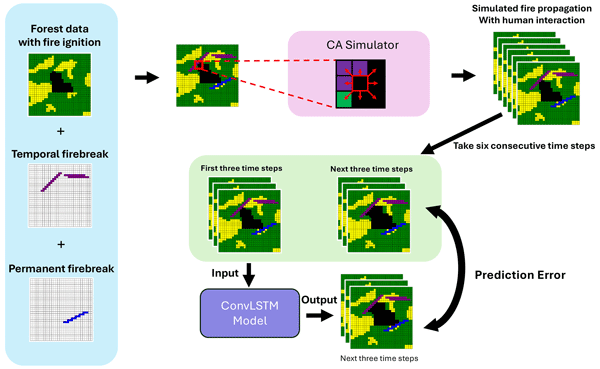
Figure 4: This workflow figure is important to explain the workflow. Ensure it is explicitly discussed in the text.
Colourscales: All figures should include legends and units for clarity (esp. Figure 1).
Citation: https://doi.org/10.5194/egusphere-2025-4007-RC2 - AC1: 'Reply on RC2', Sibo Cheng, 13 Mar 2026
-
RC3: 'Comment on egusphere-2025-4007', Anonymous Referee #3, 03 Dec 2025
Some minor changes
Fig. 1: The images are not the same size and are not aligned. Please correct.
Fig. 1: In the caption, it is better to put the letter beside the map that they are representing.
For all the figures, you should check the captions and make them more understandable.
Citation: https://doi.org/10.5194/egusphere-2025-4007-RC3 - AC3: 'Reply on RC3', Sibo Cheng, 13 Mar 2026
Peer review completion


Interactive discussion
Status: closed
-
RC1: 'Comment on egusphere-2025-4007', Anonymous Referee #1, 19 Nov 2025
Predicting spatio-temporal wildfire propagation with dynamic firebreaks
General Comments
This is a well-structured research paper on introducing fire breaks to simulations that predict fire spread, while detailing the different machine learning algorithms that take this important element into account. While the research is novel and the methodology is reproducible, the impact it may have in actual wildfire situations is questionable. The approach that the authors propose can certainly be used to better test/understand wildfire dynamics in virtual environments, and may even be used to train first responders, however it falls short of becoming a core application in case of a live wildfire mainly for two reasons: 1- Wildfire propagation is greatly related to wind, and with climate change we see higher uncertainty and extremes in wind patterns. Coarse resolution wind data may grossly underestimate what is going on in the actual wildfire scene, as not only wind speed, but wind gusts during an active fire are major players in fire severity and spread (starting new ignitions in forest patches that are far away from the main ignition zone, regardless of a fire break). Also, a severe wildfire can produce its own wind patterns, shift the current wind direction, or increase its intensity. The authors state that they are aware of this shortcoming in their study. But this undermines their claim that their methodology may prove as an effective strategy to reduce wildfire impacts, since wind can also affect how temporary breaks are (or can be) deployed. 2- Wildfire propagation is also greatly related to topography, but the authors mention that they did not have a comprehensive landscape dataset available, so the ConvLSTM simulations were run with null input for landscape.
As a learning and potential training tool, despite its limitations, I find the work insightful with room for improvement, a possible first step towards developing a global dynamic simulator that considers fire breaks while projecting potential wildfire spread and provide valuable insight for effective containment. The clear methodology helps the simulations’ reproducibility, and aid researchers to test it in their study areas. However, speed vs accuracy between CA and DL models needs to be carefully considered, as one should not replace the other.Technical Comments
There is little to no discussion of the simulation results.
All figures containing spatial information (maps) need improvement:
In Figure 1 the color selection makes it hard to interpret figures b, c, f and g. The natural color figures are also too small to see, “e” is of different size.
In Figure 3 the simulation results are hard to see over a colorful background (especially when we are not sure what the colors denote, is it land cover?), either crop to the simulation zone, or utilize a blow-up window to show us the simulation results separately and in close up fashion. Alternatively, if you will not
make any reference to the background, you can neutralize it with a filter, or other color selection so the BA and fire breaks are more visible, and preferably larger (same for Figure 8).
There is a Figure 4, but there is no reference to it in the text. I would have preferred it was introduced towards the beginning of the methodology when the reader is trying to visualize how the experiment runs. May be a few sentences before the detailed explanations of CA and ConvLSTM models introducing the workflow, and referencing the figure would also help understand the grid structure better, through actual visualization.
In Section 3.2 the authors compare the speed of a CPU run simulation to a GPU run simulation, which will produce slower results. To be able to compare both simulations head on, they should be run on the same set up. CA model may run slower but from the rate quoted here it is unclear how much of it comes from the machine how much of it from the model’s own performance. Therefore a “250x” expression should be re-evaluated.
In the simulation results shown in Figure 8, there is a varying degree of false negative and positives among the three text examples. Ferguson fire being the smallest whereas Chimney Fire showing several (Bear Fire also). It is expected for a model that is trained on model data to exponentially over/under predict overtime, however the difference among the three test cases could have been better explained in the text. Also, I would expect to see a ratio timeseries (along with the map demarcations) so it is easier to interpret accurately. In an attempt to explain the false positive/negatives, a mention of landscape data limitation is mentioned here and wind speed, but the reader would appreciate a more in-depth explanation/discussion. Also “Despite these challenges, the model performs well, ..” is a bit of an overstatement given the results, toning that down may help meet expectations.
In sum, the authors undertake an important task, including fire breaks (and their efficiency) in fire propagation simulations. Among the pros the work’s easy reproducibility tops the list due to a clear methodological break down. However, these series of experiments are limited in capacity since they fall short of considering wind (speed and direction) as well as topography. The manuscript has room for improvement, especially through a solid discussion of results.- AC2: 'Reply on RC1', Sibo Cheng, 13 Mar 2026
-
RC2: 'Comment on egusphere-2025-4007', Anonymous Referee #2, 28 Nov 2025
General comment:
The manuscript presents an interesting and valuable comparison of machine learning (ML) methods for wildfire prediction and introduces the integration of permanent and temporary firebreaks. This is an important first step toward understanding how suppression strategies influence fire spread. However, some sections and the figures need clarification and expansion to strengthen the work.
Technical comments:
- The complexity of wildfire behaviour depends on multiple environmental variables. While the study includes vegetation density, canopy cover, slope, and wind, future development of training datasets should incorporate additional critical factors such as fuel type (not just vegetation density, but species-specific combustibility) and moisture content of soil/vegetation (highly variable across seasons and strongly influences ignition and spread).
- CA uses States 1–15, while ConvLSTM uses States 0–12. This difference may be confusing to the reader. Recommendation is to include a table comparing or brief explanation of CA and ConvLSTM state definitions and why/how numbering differs.
- The manuscript states “100% suppression for 10 time steps,” but does not clarify whether suppression weakens progressively or remains full until expiration. Explicitly state if suppression is binary or gradual during degradation.
- Section 2.2 mentions the second channel for landscape data but notes it is zero-filled. Is this topography? Explain “Currently, the second channel is unused, limiting the model’s ability to incorporate terrain features. Future work should populate this channel with detailed landscape data to improve predictive accuracy.”
- The results section could benefit from a short discussion on why scenarios with firebreaks improve accuracy such as, firebreaks reduce randomness and constrain fire spread, making patterns more predictable and easier for the model to learn.
Figures:
Figure 2: Needs a clearer caption explaining arrows and state transitions.
Figure 3: Add a scale bar for spatial reference.
Figure 4: This workflow figure is important to explain the workflow. Ensure it is explicitly discussed in the text.
Colourscales: All figures should include legends and units for clarity (esp. Figure 1).
Citation: https://doi.org/10.5194/egusphere-2025-4007-RC2 - AC1: 'Reply on RC2', Sibo Cheng, 13 Mar 2026
-
RC3: 'Comment on egusphere-2025-4007', Anonymous Referee #3, 03 Dec 2025
Some minor changes
Fig. 1: The images are not the same size and are not aligned. Please correct.
Fig. 1: In the caption, it is better to put the letter beside the map that they are representing.
For all the figures, you should check the captions and make them more understandable.
Citation: https://doi.org/10.5194/egusphere-2025-4007-RC3 - AC3: 'Reply on RC3', Sibo Cheng, 13 Mar 2026
Peer review completion
Journal article(s) based on this preprint
Model code and software
Predicting spatio-temporal wildfire propagation with firebreak placement: code and data Jiahe Zheng and Sibo Cheng https://zenodo.org/records/16419810
Viewed
| HTML | XML | Total | BibTeX | EndNote | |
|---|---|---|---|---|---|
| 2,451 | 725 | 212 | 3,388 | 144 | 127 |
- HTML: 2,451
- PDF: 725
- XML: 212
- Total: 3,388
- BibTeX: 144
- EndNote: 127
Viewed (geographical distribution)
| Country | # | Views | % |
|---|
| Total: | 0 |
| HTML: | 0 |
| PDF: | 0 |
| XML: | 0 |
- 1
Jiahe Zheng
Zhengsen Xu
Rossella Arcucci
Sandy P. Harrison
Lincoln Linlin Xu
Sibo Cheng

The requested preprint has a corresponding peer-reviewed final revised paper. You are encouraged to refer to the final revised version.
- Preprint
(15136 KB) - Metadata XML
Predicting spatio-temporal wildfire propagation with dynamic firebreaks
General Comments
This is a well-structured research paper on introducing fire breaks to simulations that predict fire spread, while detailing the different machine learning algorithms that take this important element into account. While the research is novel and the methodology is reproducible, the impact it may have in actual wildfire situations is questionable. The approach that the authors propose can certainly be used to better test/understand wildfire dynamics in virtual environments, and may even be used to train first responders, however it falls short of becoming a core application in case of a live wildfire mainly for two reasons: 1- Wildfire propagation is greatly related to wind, and with climate change we see higher uncertainty and extremes in wind patterns. Coarse resolution wind data may grossly underestimate what is going on in the actual wildfire scene, as not only wind speed, but wind gusts during an active fire are major players in fire severity and spread (starting new ignitions in forest patches that are far away from the main ignition zone, regardless of a fire break). Also, a severe wildfire can produce its own wind patterns, shift the current wind direction, or increase its intensity. The authors state that they are aware of this shortcoming in their study. But this undermines their claim that their methodology may prove as an effective strategy to reduce wildfire impacts, since wind can also affect how temporary breaks are (or can be) deployed. 2- Wildfire propagation is also greatly related to topography, but the authors mention that they did not have a comprehensive landscape dataset available, so the ConvLSTM simulations were run with null input for landscape.
As a learning and potential training tool, despite its limitations, I find the work insightful with room for improvement, a possible first step towards developing a global dynamic simulator that considers fire breaks while projecting potential wildfire spread and provide valuable insight for effective containment. The clear methodology helps the simulations’ reproducibility, and aid researchers to test it in their study areas. However, speed vs accuracy between CA and DL models needs to be carefully considered, as one should not replace the other.
Technical Comments
There is little to no discussion of the simulation results.
All figures containing spatial information (maps) need improvement:
In Figure 1 the color selection makes it hard to interpret figures b, c, f and g. The natural color figures are also too small to see, “e” is of different size.
In Figure 3 the simulation results are hard to see over a colorful background (especially when we are not sure what the colors denote, is it land cover?), either crop to the simulation zone, or utilize a blow-up window to show us the simulation results separately and in close up fashion. Alternatively, if you will not
make any reference to the background, you can neutralize it with a filter, or other color selection so the BA and fire breaks are more visible, and preferably larger (same for Figure 8).
There is a Figure 4, but there is no reference to it in the text. I would have preferred it was introduced towards the beginning of the methodology when the reader is trying to visualize how the experiment runs. May be a few sentences before the detailed explanations of CA and ConvLSTM models introducing the workflow, and referencing the figure would also help understand the grid structure better, through actual visualization.
In Section 3.2 the authors compare the speed of a CPU run simulation to a GPU run simulation, which will produce slower results. To be able to compare both simulations head on, they should be run on the same set up. CA model may run slower but from the rate quoted here it is unclear how much of it comes from the machine how much of it from the model’s own performance. Therefore a “250x” expression should be re-evaluated.
In the simulation results shown in Figure 8, there is a varying degree of false negative and positives among the three text examples. Ferguson fire being the smallest whereas Chimney Fire showing several (Bear Fire also). It is expected for a model that is trained on model data to exponentially over/under predict overtime, however the difference among the three test cases could have been better explained in the text. Also, I would expect to see a ratio timeseries (along with the map demarcations) so it is easier to interpret accurately. In an attempt to explain the false positive/negatives, a mention of landscape data limitation is mentioned here and wind speed, but the reader would appreciate a more in-depth explanation/discussion. Also “Despite these challenges, the model performs well, ..” is a bit of an overstatement given the results, toning that down may help meet expectations.
In sum, the authors undertake an important task, including fire breaks (and their efficiency) in fire propagation simulations. Among the pros the work’s easy reproducibility tops the list due to a clear methodological break down. However, these series of experiments are limited in capacity since they fall short of considering wind (speed and direction) as well as topography. The manuscript has room for improvement, especially through a solid discussion of results.