
the Creative Commons Attribution 4.0 License.
the Creative Commons Attribution 4.0 License.
 | 26 Sep 2025
Hydrogeological characterization of alpine karst using the transient analysis of flow and transport
Abstract. Karst springs in alpine catchments are important for maintaining groundwater-dependent ecosystems in fragile environments and for sustaining baseflow in mountain rivers. Despite its importance, rugged and inaccessible terrains pose major challenges in hydrogeological studies of alpine karst. This study developed a practical approach for characterizing an alpine karst system in the Canadian Rocky Mountains that had no previous information aside from the location of the spring outlet. Using geological maps, satellite images, simple water balance, water sampling and analysis, and dye tracer tests, it was possible to estimate the extent of the spring catchment and infer the hydrogeological characteristics of the karst system. Of particular importance was the information obtained from the fluctuations of spring discharge and electrical conductivity in response to diurnal snowmelt cycles. Synthesis of the diverse data set indicates that the karst system has a large volume of groundwater stored in the fractured rock matrix that buffers the interannual variability of precipitation and sustains steady baseflow throughout the year. The karst system consists of fractured rock matrix, saturated conduits acting like pipes, unsaturated conduits acting like open channels, and many pools delaying the propagation of transport and hydraulic signals through the conduit network. The approach developed in this study will be applicable to other alpine karst systems in snow-dominated catchments in rugged and inaccessible terrains.
-
Notice on discussion status
The requested preprint has a corresponding peer-reviewed final revised paper. You are encouraged to refer to the final revised version.
-
Preprint
(4656 KB)
-
The requested preprint has a corresponding peer-reviewed final revised paper. You are encouraged to refer to the final revised version.
- Preprint
(4656 KB) - Metadata XML
- BibTeX
- EndNote
- Final revised paper


Journal article(s) based on this preprint
Interactive discussion
Status: closed
-
CC1: 'Comment on egusphere-2025-3767', Giacomo Medici, 02 Oct 2025
- AC3: 'Reply on CC1', Masaki Hayashi, 19 Feb 2026
-
CC2: 'Comment on egusphere-2025-3767', Stephen Worthington, 04 Oct 2025
This paper presents a wide range of data from a karst spring in Canada. I feel that the greatest strength of the paper is on the detailed analysis of the celerity and velocity of percolation recharge, and that the discussion on these should be expanded and better integrated with the discussion on the slow fraction of flow from isotope data. I have two major concerns with the paper:
Comment 1) Groundwater flow velocity
line 472-473 "the flow velocity through the karst conduit network is expected to be on the order of 1 m s-1 during May–December when Q varies between 0.3 and 3 m3 s-1."
The prediction of 1 m/s conduit velocities comes from calculations at lines 455-475. The calculations use the Darcy-Weisbach equation, which calculates flow in a pipe as a function of pipe size, hydraulic gradient, and friction (roughness) factor. Estimates of hydraulic gradient (lines 464-468) were based on values from Castleguard Cave (0.03: Ford et al., 1983), high flow conditions at Maligne (0.025: Smart, 1988), and Hölloch (0.0004-0.006: Jeannin, 2001). However, a later interpretation of Castleguard Cave (Ford, 2000; Worthington, 1991) suggested that hydraulic gradients during the formation of the cave could have been 0.0005 or less. Furthermore, a compilation of data in 20 karst aquifers showed that hydraulic gradients along major flow paths to springs are typically 0.0001-0.001 at low flow and 0.001-0.01 at high flow (Worthington, 1991). Moreover, field studies have shown that the Darcy-Weisbach friction factor can vary by more than three orders of magnitude in karst conduits (Jeannin, 2001, Table 3), and pipe size and hydraulic gradient also have a wide variation in their values. Consequently, the uncertainty in the 1 m/s conduit velocity is very large.
Given the lack of information on friction factors and hydraulic gradients at the site, a better approach is to consider measured groundwater velocities from other studies. It is very rare for velocities of 1 m/s to be measured from tracer tests, and velocities are usually between 0.003 and 0.3 m/s. This is true globally (Ford and Williams (2007, p. 125) and also in the Canadian Rocky Mountains, such as in the cited references by Smart (1983, 1988) and Worthington (1991). Furthermore, conduit diameter has been measured by a scuba diver in the conduit feeding Watridge Spring (line 470), and this gives a velocity of 0.028 m/s at moderately low flow (0.3 m3/s) and 0.28 m/s at high flow (3 m3/s), assuming a circular conduit. These measured velocities give more accurate values for assessing the aquifer than the 1 m/s estimate made at line 473. The similarity of the measured velocities to velocities in other karst aquifers mean that there is no need to suggest retardation or invoke pools to explain the measured travel times.
Comment 2) Subsurface residence times
line 359-361 ". It is impossible to determine the residence time of water, considering the possible variability of tritium contents between Ottawa and the WKS, but in an approximate sense, it seems likely that most spring water samples had a residence time of five to ten years."
line 502 "This [del 18O variation] is consistent with the tritium content suggesting a residence time of multiple years (Figures 8d and 9)."
These two comments are the only specific references in the paper to residence times for the groundwater discharging at Watridge Spring. However, Figure 7d shows day by day residence times (which can also be referred to as transit times) for snowmelt and glacier melt from May to September 2021, with dye traces (Figures 5 and 7d) confirming the rapid transit times for specific recharge locations.
There have been several previous studies that have measured lag times between surface snow or glacier melt and variation in spring flow in carbonate aquifers, including Gremaud et al. (2009), Krainer et al. (2021), Smart and Ford (1986), Vigna and Banzato (2015), and Zeng et al. (2012). However, this study includes an exceptional data set on subsurface residence times for snow and ice melt (Figure 7d) and on the lag time for the pressure pulse for snow and glacier melt to reach a limestone spring (Figure 7c). Furthermore, seasonal variation in major ions, tritium, and del 18O (Figure 8), could help define the fractions of young water with an age of 0.4 to 4 days (Figure 4d) from older water with transit times up to several years.
The wide range of residence times in carbonate aquifers has been widely described in the literature and they are sometimes referred to as dual- or as triple-porosity aquifers. Małoszewski and Zuber (1985) and Zuber et al. (2011) presented the theory to interpret the ages of injected and environmental tracers in dual-porosity bedrock aquifers, and useful studies in carbonate rocks in mountain environments that have included transit times and the fraction of flow in each component include Maloszewski et al. (2002) and Lauber and Goldscheider (2014).
I think that it would be well worth adding a new section to Section 5 that specifically discusses subsurface residence times and fractions of spring flow involved. This would consider both vadose zone residence times and groundwater residence times and use most of the data sets collected, thus providing a suitable concluding section to the Discussion. If the authors adequately address the above comments, then this paper would be a fine contribution to the literature.
Other comments
Comment 3 - line 359-361 "It is impossible to determine the residence time of water, considering the possible variability of tritium contents between Ottawa and the WKS, but in an approximate sense, it seems likely that most spring water samples had a residence time of five to ten years."
This statement needs to be clarified that it is referring to tritium, and so reflects the residence of the slow-moving water through the matrix and narrow fractures. The residence time of snow and glacier melt has been very well determined in this aquifer. The three tracer tests give subsurface residence times of some days (Figure 5a), and the EC signal at the spring during the spring freshet demonstrates a snowmelt residence time of 0.5 to 2 days, rising to 3-4 days later in the summer when glacier melt predominates (Figure 7d). This strength of the study needs to be better emphasized, such as by adding a section to the Discussion that describes residence times.
Comment 4 - line 465 ", a map of the Castleguard Cave (Ford et al.,1983, Figure 3) suggests a gradient of ~0.03"
This needs to be updated with the conclusions on gradients in Ford (2000), as noted above, or else omitted.
Comment 5 - line 484-485 "meaning that the diel fluctuations of discharge would have a delay of less than an hour between BP14 and WKS. This is contrary to the observed delay of 12–15 h (Figure 7c)"
The radon data suggests that "most of the conduit flow occurs under pipe-flow conditions" (lines 453-454), and active karst conduits are frequently predominantly below the water table, so the lag time of <1 hour along the main conduit seems probable. However, BP11 and BP14 are 593 m and 575 m above Watridge Spring, respectively, suggesting that there is a vadose zone that is likely to be hundreds of metres thick at these locations. Thick vadose zones are typical in karst aquifers in mountain settings, and the more than 400 caves around the world that are >600 m deep provide a graphic illustration of the widespread presence of deep vadose zones in carbonate aquifers (Burger, 2025).
Flow peaks in karst springs due to snow or glacier melt in mountain areas usually occur in the evening or night, reflecting a lag that is typically 6-12 hours after the mid-afternoon peak of snow or ice melt (Gremaud et al., 2009; Krainer et al., 2021; Smart and Ford, 1986; Vigna and Banzato, 2015; Zeng et al., 2012). These lags predominantly reflect the much slower hydraulic responses in the vadose zone compared to the saturated zone. Consequently, most of the 12-15 hour lag shown in Figure 7c is likely to be in the vadose zone, such as the several hundred metres from the surface at BP14 down to the water table. Thus, the alternative explanation for the 12-15 h lag offered at lines 491-492 is the most probable explanation.
Comment 6 - line 525 - " transport velocity (0.05 – 0.15 m s-1) is much slower than the order of velocity (1 m s-1) expected for conduit flow or open-channel flow. Therefore, there likely are many pools within the conduit network, causing the physical retardation of solute transport."
See Comment 1.
Additional references cited above, to consider for inclusion
Burger, P., 2025, https://cave-exploring.com/index.php/long-and-deep-caves-of-the-world/world-deep-caves/, accessed October 3, 2025.
Ford, D., Lauritzen, S-E., Worthington, S., 2000 Speleogenesis of Castleguard Cave, Rocky Mountains, Alberta, Canada. In: Speleogenesis: Evolution of karst aquifers (Eds. Klimchouk, A.B., Ford, D.C., Palmer, A.N., Dreybrodt, W.), National Speleological Society, Huntsville, Alabama, USA
Lauber, U., Goldscheider, N., 2014. Use of artificial and natural tracers to assess groundwater transit-time distribution and flow systems in a high-alpine karst system (Wetterstein Mountains, Germany). Hydrogeol. J. 22, 1807-1824.
Małoszewski, P., & Zuber, A., 1985. On the theory of tracer experiments in fissured rocks with a porous matrix. Journal of Hydrology, 79, 333-358.
Maloszewski, P., Stichler, W., Zuber, A., and Rank, D., 2002. identifying the flow systems in a karstic-fissured-porous aquifer, the Schneealpe, Austria, by modelling of environmental 18O and 3H isotopes. Journal of Hydrology, 256, 48-59.
Vigna, B. and Banzato, C., 2015. The hydrogeology of high-mountain carbonate areas: an example of some Alpine systems in southern Piedmont (Italy). Environmental Earth Sciences, 74(1), pp.267-280.
Zeng, C., Gremaud, V., Zeng, H., Liu, Z. and Goldscheider, N., 2012. Temperature-driven meltwater production and hydrochemical variations at a glaciated alpine karst aquifer: implication for the atmospheric CO2 sink under global warming. nvironmental Earth Sciences, 65(8), 2285-2297.
Zuber, A., Różański, K., Kania, J., Purtschert, R., 2011. On some methodological problems in the use of environmental tracers to estimate hydrogeologic parameters and to calibrate flow and transport models. Hydrogeol. J. 19, 53-69.
Citation: https://doi.org/10.5194/egusphere-2025-3767-CC2 - AC4: 'Reply on CC2', Masaki Hayashi, 19 Feb 2026
-
RC1: 'Comment on egusphere-2025-3767', Alan Fryar, 09 Dec 2025
The authors have done a commendable job of explaining seasonal and lithologic controls on groundwater flow in an alpine karst basin in the Canadian Rocky Mountains. This study stands out through its integration of multiple, complementary data sets, including continuous monitoring of stage and electrical conductivity over multiple years; development of a stage-discharge rating curve for the spring; repeated sampling for hydrochemical and isotopic analyses; tracer testing; time series analyses; and information from other sources (geologic mapping, meteorological data, and satellite imagery). The approach and findings contribute to the literature on the hydrology of alpine karst, which has been understudied outside Europe and which constitutes an important resource for human use and ecological functioning in various parts of the world.
In general, I would answer yes to all the questions posed to reviewers. I reviewed the manuscript before reading the comments already posted online. In particular, I affirm Dr. Worthington's comments on clarifying the discussion of groundwater velocity and expanding the discussion of the range of residence times in the system. My suggestions primarily address providing additional information, plus some minor editorial corrections. Note that I did not check citations against the references and vice versa.
Main comments:
line 36: Re: “the unique alpine settings offer potential advantages that are not available in lowlands”— What are these advantages? Rephrase following lines 549–551.
lines 75–76: Note that the age of the Palliser Fm. is Devonian.
Fig. 1 and lines 90–91: Which direction does the syncline plunge? Are conduit development and flow paths to the spring structurally controlled?
lines 195–198: The assumption that diurnal timing of maximum snowmelt coincided with maximum air temperature seems reasonable, but I recommend citing one or more references to support this assumption.
lines 264–265: Re: "a is an empirical coefficient taking a value of 0.082 m-1/2 s-1/2 for an intermediate value of SF (= 1.4) within the expected range” — Fig. 5b shows a = 0.077. Which value is correct?
line 325: SO4 should be > 99% of total anions analyzed by ion chromatography (emphasis added). HCO3, which was analyzed by alkalinity titration, is the dominant anion in groundwater here.
lines 336–337: Re: “the component associated with snowmelt recharge having a higher Ca/Mg ratio and carbonate fraction but lower ion concentrations” — the lower Ca/Mg ratio between snowmelt periods could reflect proportionally more solute contributions from dolomite, which dissolves more slowly than calcite (for example, see Barna et al., Environ. Eng. Geosci. 26(3), 2020, p. 281, and references therein).
lines 342–344: Were saturation indices for dolomite, calcite, and anhydrite calculated?
lines 345–347 and Fig. A2: How were rain and snow samples collected? Were snow samples fresh? Were steps taken to limit evaporation or sublimation, which can alter the isotopic composition? How does the LWML compare to other LWMLs from the region?
lines 416–417: The observation “The component with low carbonate fraction represents groundwater released from over-winter storage, which is presumably in contact with evaporite deposits within the Palliser Fm.” is consistent with Barna et al. (2020, p. 281) and references therein.
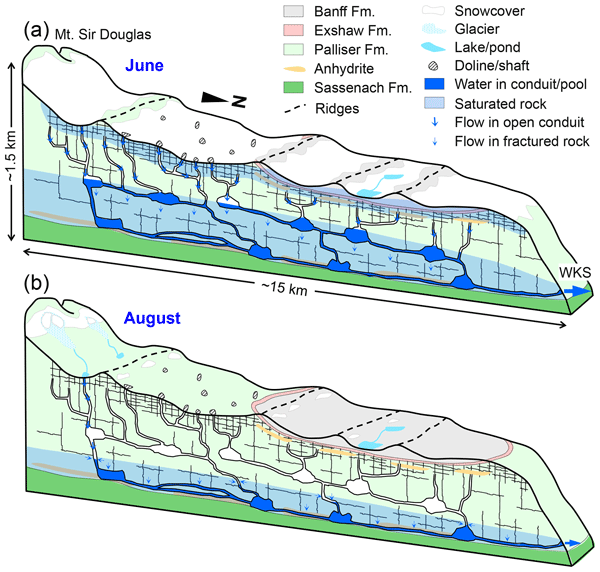
Fig. 14: Do dashed lines on the surface represent local drainage basin divides? Note on legend.
Minor edits:
lines 8, 19, 546, 565: By definition, inaccessible terrains can’t be accessed. Use “remote” or “relatively inaccessible” instead.
lines 36–37: “accumulation and melt has” should be “accumulation and melt have”
line 74: “Front Range…is” should be “Front Ranges…are”
line 128: “with a 0.45-μm membrane filters” should be “with 0.45-μm membrane filters”
lines 134–135: “by a cavity ring-down spectroscopy” should be “by cavity ring-down spectroscopy”
line 135: “to the Vienna Standard Mean Ocean Water” should be “to Vienna Standard Mean Ocean Water”
line 142: “and the V-SMOW” should be “and V-SMOW”
Fig. 3 caption: “Augst” should be “August”
line 206: “the kth the element” should be “the kth element”
line 273: “unlikely serve” should be “unlikely to serve”
line 305: “hereafter referred to” should be “hereafter is referred to”
line 336: “ion concentration” should be “ion concentrations”
line 355: “appear” should be “appeared”
line 423: “majority discharge” should be “majority of discharge”
lines 450–451: “the Darcy’s law” should be “Darcy’s law”
lines 455–456: “discharge…and velocity…is estimated” should be “discharge…and velocity…are estimated”
line 465: “Jennin” should be “Jeannin”
line 470: “than ~3.7 m” should be “than the value of ~3.7 m”
line 733: “mapping procedure map” should be “mapping procedure and map”
line 746: “Wavel” should be “Waveland”
line 765: “Alberta British Columbia” should be “Alberta and British Columbia”
line 775: “Tracer test” should be “Tracer tests”
line 855: “Savanna” should be “Savannah”
Citation: https://doi.org/10.5194/egusphere-2025-3767-RC1 - AC1: 'Reply on RC1', Masaki Hayashi, 19 Feb 2026
-
RC2: 'Comment on egusphere-2025-3767', Zhao Chen, 24 Jan 2026
The authors investigated a remote, high-alpine catchment in the Canadian Rocky Mountains using multiple approaches, despite having very limited information at the beginning of the study. They combined hydrological, geological, hydrochemical and isotopic information to characterize the karst system, which is strongly influenced by snow and glaciers. The main outcome is a hydrogeological conceptual model that reflects the system's main hydrological and hydrogeological processes. Additionally, the authors highlight that the methods applied to this study could be transferred to other high alpine systems with similar characteristics. The manuscript is clearly structured and well written. The results seem solid. Overall, it is great work, demonstrating considerable effort in terms of fieldwork in such a remote area, as well as the combination of many different investigative methods and guidance to reach reasonable and logical interpretations, which is surely a strength of this study. However, critical discussions are missing in some places, which could be improved. I recommend considering this work as a minor revision.
Major comments:
1) Introduction / Novelties:
I suggest that the authors elaborate better on the novelties of this research work in the introduction. In my opinion, there are three main novelties in the current research work: 1) improvement of the process understanding about the impact of snow/ice behavior on recharge, storage, drainage and discharge in high alpine karst aquifers; 2) the combination and application of multiple investigation approaches (hydrological, hydrogeological, hydrochemical and isotopic) to a high alpine karst system to achieve a robust and coherent conceptual site model and 3) knowledge production for the local karst system (Watridge Karst Spring).
2) Representiveness of weather parameters (P and T):
The only available weather station is located at 2260 m a.s.l. within the study area. The study area varies between 1870 (WKS) and 3406 (Mount Sir Douglas) m a.s.l. How representative are P and T measured for the entire study area, and how will the analysis and interpretation relate to the hydrological water balance and diel fluctuations of discharge and EC be influenced by these data uncertainties? It is expected that there will be spatial and temporal variation of snow/ice accumulation and melting behavior within the study area. How does this influence the diel fluctuations of discharge and EC? I suggest the authors incorporate/consider this aspect, at least for critical discussion.
3) Artificial tracer experiments:
BP14(2) shows a mass recovery of 115%, which is impossible. The authors mentioned a technical issue regarding sensor calibration. How reliable are the measurements taken by the field device installed in the spring generally? Have factors such as UV, turbidity, and temperature, which can disturb the tracer measurements, been considered? To better understand the results of the tracer experiment, the breakthrough curves (BTC) should also be compared with the system input signals (e.g., precipitation, air temperature), as the shape of the BTCs differs significantly. The BTCs do not show significant tailing, but multiple peaks, which indicate the transport via multiple paths within the main karst drainage conduit network. If we assume that the measurements are reliable, how can the significant difference in mass recovery rate between BP14(2) and BP14(1) & BP11 be explained?
4) Recharge area delineation
The uncertainty of meteorological forcing, as well as its impact on recharge area delineation and water balance calculation, should be critically discussed. In my opinion, this is one of the main sources of uncertainty when estimating the water balance of high Alpine catchments. The authors estimated that there was about 90% recharge rate (if I understood the estimation correctly) for the studied karst aquifer system. The map (Figure 1) does not show any surface drainage features (streams), so it indicates high karstification of the studied system, and precipitation or melt can easily infiltrate. The study for estimation of recharge rates for karst systems in the European Alps can be used here to support (Malard et al. 2016: A novel approach for estimating karst groundwater recharge in mountainous regions, and its application in Switzerland). To validate the recharge delineation and also the associated water balance calculation, hydrological karst modelling should be applied for future work.
5) Conduit flow and transport
In general, regarding the terms 'open channel' and 'pipe flow', I personally think that the descriptions of open and pressurized conduit flow are more accurate. Most conduits have a closed section. Depending on the water level, the conduits can be unpressurized or pressurized. The authors discussed how the existence of large pools can cause retardation during solute transport along the conduit network. In my view, there is an inconsistency or at least an open discussion point, regarding the concept of large pools when compared with dye tracer experiments. If such large pools exist in the conduit network, they should significantly impact the shape of breakthrough curves (Hauns et al. 2001: Dispersion, retardation and scale effect in tracer breakthrough curves in karst conduits; Yang et al. 2025: Effects of karst conduit structure on breakthrough curves: Experiments and modeling). Can this effect be observed or identified in the measured breakthrough curves? Additionally, the authors tried to use the concept with large pools to explain the observed increase in transport response time concurrent with the reduction in discharge. However, I think a more general reason is the change in hydraulic gradient in the groundwater level distribution in the karst aquifer during varying flow conditions. The authors used the Darcy-Weisbach equation to estimate potential flow velocity in a pressurized conduit. To my understanding, the transport time (derived from tracer experiments) and the transport response time (derived from time series analysis) should reflect the transport process through the entire aquifer (including the unsaturated and saturated parts) along fast flow paths. This is surely more than pure transport in a saturated drainage conduit. I recommend that the authors explicitly consider and discuss the role of the unsaturated part of the studied karst aquifer (e.g., the epikarst) to transport processes (transport time and transport response time). This would provide a more complete picture.
Minor comments
1) Line 30: please remove Chen et al. 2017 and add the following references (Goldscheider 2005; Lauber & Goldscheider 2014; Lucianetti et al. 2016; Frank et al. 2019):
- Goldscheider 2005: Fold structure and underground drainage pattern in the alpine karst system Hochifen-Gottesacker, Eclogae geol. Helv.
- Lauber & Goldscheider 2014: Use of artificial and natural tracers to assess groundwater transit-time distribution and flow systems in a high-alpine karst system (Wetterstein Mountains, Germany), Hydrogeol J
- Lucianetti et al. 2016: Preliminary conceptual model of an Alpine carbonate aquifer (Pale di San Martino, Dolomites, Italy), Italian Journal of Groundwater
- Frank et al. 2019: Sulfate variations as a natural tracer for conduit-matrix interaction in a complex karst aquifer, Hydrological Processes
2) Figure 1: Where are the glaciers on the map? There is a legend for them, but I cannot find any in the study area.
3) Figure 14: The symbol for flow in open conduits is difficult to see. It would be useful to have a symbol for snow cover in both figures: extensive snow cover in (a) and no snow cover, only glaciers in (b). Please ensure that the saturated part in (b) is fully colored (some saturated conduits are not colored).
Citation: https://doi.org/10.5194/egusphere-2025-3767-RC2 - AC2: 'Reply on RC2', Masaki Hayashi, 19 Feb 2026
Peer review completion


Interactive discussion
Status: closed
-
CC1: 'Comment on egusphere-2025-3767', Giacomo Medici, 02 Oct 2025
General comments
Very good research on karst hydrology. Please, follow my specific comments to fix minor issues and bring the impact out.
Specific comments
Lines 23-54. Specify the most novel aspect of the research.
Lines 42-43. "complex flow pathways consisting of fractured rock matrix and conduits". Insert recent literature on fracture and conduit flow in palaeozoic and mesozoic carbonate aquifers
- Medici, G., Munn, J.D., Parker, B.L. 2024. Delineating aquitard characteristics within a Silurian dolostone aquifer using high-density hydraulic head and fracture datasets. Hydrogeology Journal, 32(6), 1663-1691.
- Jourde, H., & Wang, X. (2023). Advances, challenges and perspective in modelling the functioning of karst systems: a review. Environmental Earth Sciences, 82(17), 396.
Lines 56-100. What about minor faults? Any link with the small-scale karst landforms that you describe?
Lines 538-539. There are several other relevant researches on karst in mountain ranges in the Jura and the French/Swiss Alps. It would be good to enlarge the comparison.
Figures and tables
Figure 2c. Syncline beds or tectonic foliation on the back? Please, specify if there is a link between the figure and the conceptual model in Figure 1.
Figures 3 to 5. Make the figures and the graphs larger.
Figure 6. You need to report the days on the horizontal axes on the graph of water temperature.
Figure 7. You need to report the days on the horizontal axes for all the graphs.
Figure 9. Make this graph on tritium larger.
Figure 10a. Is it clear enough the link between the conceptual models in Figs 10c and 14.
Figure 14. Write on top of the cartoons what the two block diagrams represent.
Citation: https://doi.org/10.5194/egusphere-2025-3767-CC1 - AC3: 'Reply on CC1', Masaki Hayashi, 19 Feb 2026
-
CC2: 'Comment on egusphere-2025-3767', Stephen Worthington, 04 Oct 2025
This paper presents a wide range of data from a karst spring in Canada. I feel that the greatest strength of the paper is on the detailed analysis of the celerity and velocity of percolation recharge, and that the discussion on these should be expanded and better integrated with the discussion on the slow fraction of flow from isotope data. I have two major concerns with the paper:
Comment 1) Groundwater flow velocity
line 472-473 "the flow velocity through the karst conduit network is expected to be on the order of 1 m s-1 during May–December when Q varies between 0.3 and 3 m3 s-1."
The prediction of 1 m/s conduit velocities comes from calculations at lines 455-475. The calculations use the Darcy-Weisbach equation, which calculates flow in a pipe as a function of pipe size, hydraulic gradient, and friction (roughness) factor. Estimates of hydraulic gradient (lines 464-468) were based on values from Castleguard Cave (0.03: Ford et al., 1983), high flow conditions at Maligne (0.025: Smart, 1988), and Hölloch (0.0004-0.006: Jeannin, 2001). However, a later interpretation of Castleguard Cave (Ford, 2000; Worthington, 1991) suggested that hydraulic gradients during the formation of the cave could have been 0.0005 or less. Furthermore, a compilation of data in 20 karst aquifers showed that hydraulic gradients along major flow paths to springs are typically 0.0001-0.001 at low flow and 0.001-0.01 at high flow (Worthington, 1991). Moreover, field studies have shown that the Darcy-Weisbach friction factor can vary by more than three orders of magnitude in karst conduits (Jeannin, 2001, Table 3), and pipe size and hydraulic gradient also have a wide variation in their values. Consequently, the uncertainty in the 1 m/s conduit velocity is very large.
Given the lack of information on friction factors and hydraulic gradients at the site, a better approach is to consider measured groundwater velocities from other studies. It is very rare for velocities of 1 m/s to be measured from tracer tests, and velocities are usually between 0.003 and 0.3 m/s. This is true globally (Ford and Williams (2007, p. 125) and also in the Canadian Rocky Mountains, such as in the cited references by Smart (1983, 1988) and Worthington (1991). Furthermore, conduit diameter has been measured by a scuba diver in the conduit feeding Watridge Spring (line 470), and this gives a velocity of 0.028 m/s at moderately low flow (0.3 m3/s) and 0.28 m/s at high flow (3 m3/s), assuming a circular conduit. These measured velocities give more accurate values for assessing the aquifer than the 1 m/s estimate made at line 473. The similarity of the measured velocities to velocities in other karst aquifers mean that there is no need to suggest retardation or invoke pools to explain the measured travel times.
Comment 2) Subsurface residence times
line 359-361 ". It is impossible to determine the residence time of water, considering the possible variability of tritium contents between Ottawa and the WKS, but in an approximate sense, it seems likely that most spring water samples had a residence time of five to ten years."
line 502 "This [del 18O variation] is consistent with the tritium content suggesting a residence time of multiple years (Figures 8d and 9)."
These two comments are the only specific references in the paper to residence times for the groundwater discharging at Watridge Spring. However, Figure 7d shows day by day residence times (which can also be referred to as transit times) for snowmelt and glacier melt from May to September 2021, with dye traces (Figures 5 and 7d) confirming the rapid transit times for specific recharge locations.
There have been several previous studies that have measured lag times between surface snow or glacier melt and variation in spring flow in carbonate aquifers, including Gremaud et al. (2009), Krainer et al. (2021), Smart and Ford (1986), Vigna and Banzato (2015), and Zeng et al. (2012). However, this study includes an exceptional data set on subsurface residence times for snow and ice melt (Figure 7d) and on the lag time for the pressure pulse for snow and glacier melt to reach a limestone spring (Figure 7c). Furthermore, seasonal variation in major ions, tritium, and del 18O (Figure 8), could help define the fractions of young water with an age of 0.4 to 4 days (Figure 4d) from older water with transit times up to several years.
The wide range of residence times in carbonate aquifers has been widely described in the literature and they are sometimes referred to as dual- or as triple-porosity aquifers. Małoszewski and Zuber (1985) and Zuber et al. (2011) presented the theory to interpret the ages of injected and environmental tracers in dual-porosity bedrock aquifers, and useful studies in carbonate rocks in mountain environments that have included transit times and the fraction of flow in each component include Maloszewski et al. (2002) and Lauber and Goldscheider (2014).
I think that it would be well worth adding a new section to Section 5 that specifically discusses subsurface residence times and fractions of spring flow involved. This would consider both vadose zone residence times and groundwater residence times and use most of the data sets collected, thus providing a suitable concluding section to the Discussion. If the authors adequately address the above comments, then this paper would be a fine contribution to the literature.
Other comments
Comment 3 - line 359-361 "It is impossible to determine the residence time of water, considering the possible variability of tritium contents between Ottawa and the WKS, but in an approximate sense, it seems likely that most spring water samples had a residence time of five to ten years."
This statement needs to be clarified that it is referring to tritium, and so reflects the residence of the slow-moving water through the matrix and narrow fractures. The residence time of snow and glacier melt has been very well determined in this aquifer. The three tracer tests give subsurface residence times of some days (Figure 5a), and the EC signal at the spring during the spring freshet demonstrates a snowmelt residence time of 0.5 to 2 days, rising to 3-4 days later in the summer when glacier melt predominates (Figure 7d). This strength of the study needs to be better emphasized, such as by adding a section to the Discussion that describes residence times.
Comment 4 - line 465 ", a map of the Castleguard Cave (Ford et al.,1983, Figure 3) suggests a gradient of ~0.03"
This needs to be updated with the conclusions on gradients in Ford (2000), as noted above, or else omitted.
Comment 5 - line 484-485 "meaning that the diel fluctuations of discharge would have a delay of less than an hour between BP14 and WKS. This is contrary to the observed delay of 12–15 h (Figure 7c)"
The radon data suggests that "most of the conduit flow occurs under pipe-flow conditions" (lines 453-454), and active karst conduits are frequently predominantly below the water table, so the lag time of <1 hour along the main conduit seems probable. However, BP11 and BP14 are 593 m and 575 m above Watridge Spring, respectively, suggesting that there is a vadose zone that is likely to be hundreds of metres thick at these locations. Thick vadose zones are typical in karst aquifers in mountain settings, and the more than 400 caves around the world that are >600 m deep provide a graphic illustration of the widespread presence of deep vadose zones in carbonate aquifers (Burger, 2025).
Flow peaks in karst springs due to snow or glacier melt in mountain areas usually occur in the evening or night, reflecting a lag that is typically 6-12 hours after the mid-afternoon peak of snow or ice melt (Gremaud et al., 2009; Krainer et al., 2021; Smart and Ford, 1986; Vigna and Banzato, 2015; Zeng et al., 2012). These lags predominantly reflect the much slower hydraulic responses in the vadose zone compared to the saturated zone. Consequently, most of the 12-15 hour lag shown in Figure 7c is likely to be in the vadose zone, such as the several hundred metres from the surface at BP14 down to the water table. Thus, the alternative explanation for the 12-15 h lag offered at lines 491-492 is the most probable explanation.
Comment 6 - line 525 - " transport velocity (0.05 – 0.15 m s-1) is much slower than the order of velocity (1 m s-1) expected for conduit flow or open-channel flow. Therefore, there likely are many pools within the conduit network, causing the physical retardation of solute transport."
See Comment 1.
Additional references cited above, to consider for inclusion
Burger, P., 2025, https://cave-exploring.com/index.php/long-and-deep-caves-of-the-world/world-deep-caves/, accessed October 3, 2025.
Ford, D., Lauritzen, S-E., Worthington, S., 2000 Speleogenesis of Castleguard Cave, Rocky Mountains, Alberta, Canada. In: Speleogenesis: Evolution of karst aquifers (Eds. Klimchouk, A.B., Ford, D.C., Palmer, A.N., Dreybrodt, W.), National Speleological Society, Huntsville, Alabama, USA
Lauber, U., Goldscheider, N., 2014. Use of artificial and natural tracers to assess groundwater transit-time distribution and flow systems in a high-alpine karst system (Wetterstein Mountains, Germany). Hydrogeol. J. 22, 1807-1824.
Małoszewski, P., & Zuber, A., 1985. On the theory of tracer experiments in fissured rocks with a porous matrix. Journal of Hydrology, 79, 333-358.
Maloszewski, P., Stichler, W., Zuber, A., and Rank, D., 2002. identifying the flow systems in a karstic-fissured-porous aquifer, the Schneealpe, Austria, by modelling of environmental 18O and 3H isotopes. Journal of Hydrology, 256, 48-59.
Vigna, B. and Banzato, C., 2015. The hydrogeology of high-mountain carbonate areas: an example of some Alpine systems in southern Piedmont (Italy). Environmental Earth Sciences, 74(1), pp.267-280.
Zeng, C., Gremaud, V., Zeng, H., Liu, Z. and Goldscheider, N., 2012. Temperature-driven meltwater production and hydrochemical variations at a glaciated alpine karst aquifer: implication for the atmospheric CO2 sink under global warming. nvironmental Earth Sciences, 65(8), 2285-2297.
Zuber, A., Różański, K., Kania, J., Purtschert, R., 2011. On some methodological problems in the use of environmental tracers to estimate hydrogeologic parameters and to calibrate flow and transport models. Hydrogeol. J. 19, 53-69.
Citation: https://doi.org/10.5194/egusphere-2025-3767-CC2 - AC4: 'Reply on CC2', Masaki Hayashi, 19 Feb 2026
-
RC1: 'Comment on egusphere-2025-3767', Alan Fryar, 09 Dec 2025
The authors have done a commendable job of explaining seasonal and lithologic controls on groundwater flow in an alpine karst basin in the Canadian Rocky Mountains. This study stands out through its integration of multiple, complementary data sets, including continuous monitoring of stage and electrical conductivity over multiple years; development of a stage-discharge rating curve for the spring; repeated sampling for hydrochemical and isotopic analyses; tracer testing; time series analyses; and information from other sources (geologic mapping, meteorological data, and satellite imagery). The approach and findings contribute to the literature on the hydrology of alpine karst, which has been understudied outside Europe and which constitutes an important resource for human use and ecological functioning in various parts of the world.
In general, I would answer yes to all the questions posed to reviewers. I reviewed the manuscript before reading the comments already posted online. In particular, I affirm Dr. Worthington's comments on clarifying the discussion of groundwater velocity and expanding the discussion of the range of residence times in the system. My suggestions primarily address providing additional information, plus some minor editorial corrections. Note that I did not check citations against the references and vice versa.
Main comments:
line 36: Re: “the unique alpine settings offer potential advantages that are not available in lowlands”— What are these advantages? Rephrase following lines 549–551.
lines 75–76: Note that the age of the Palliser Fm. is Devonian.
Fig. 1 and lines 90–91: Which direction does the syncline plunge? Are conduit development and flow paths to the spring structurally controlled?
lines 195–198: The assumption that diurnal timing of maximum snowmelt coincided with maximum air temperature seems reasonable, but I recommend citing one or more references to support this assumption.
lines 264–265: Re: "a is an empirical coefficient taking a value of 0.082 m-1/2 s-1/2 for an intermediate value of SF (= 1.4) within the expected range” — Fig. 5b shows a = 0.077. Which value is correct?
line 325: SO4 should be > 99% of total anions analyzed by ion chromatography (emphasis added). HCO3, which was analyzed by alkalinity titration, is the dominant anion in groundwater here.
lines 336–337: Re: “the component associated with snowmelt recharge having a higher Ca/Mg ratio and carbonate fraction but lower ion concentrations” — the lower Ca/Mg ratio between snowmelt periods could reflect proportionally more solute contributions from dolomite, which dissolves more slowly than calcite (for example, see Barna et al., Environ. Eng. Geosci. 26(3), 2020, p. 281, and references therein).
lines 342–344: Were saturation indices for dolomite, calcite, and anhydrite calculated?
lines 345–347 and Fig. A2: How were rain and snow samples collected? Were snow samples fresh? Were steps taken to limit evaporation or sublimation, which can alter the isotopic composition? How does the LWML compare to other LWMLs from the region?
lines 416–417: The observation “The component with low carbonate fraction represents groundwater released from over-winter storage, which is presumably in contact with evaporite deposits within the Palliser Fm.” is consistent with Barna et al. (2020, p. 281) and references therein.
Fig. 14: Do dashed lines on the surface represent local drainage basin divides? Note on legend.
Minor edits:
lines 8, 19, 546, 565: By definition, inaccessible terrains can’t be accessed. Use “remote” or “relatively inaccessible” instead.
lines 36–37: “accumulation and melt has” should be “accumulation and melt have”
line 74: “Front Range…is” should be “Front Ranges…are”
line 128: “with a 0.45-μm membrane filters” should be “with 0.45-μm membrane filters”
lines 134–135: “by a cavity ring-down spectroscopy” should be “by cavity ring-down spectroscopy”
line 135: “to the Vienna Standard Mean Ocean Water” should be “to Vienna Standard Mean Ocean Water”
line 142: “and the V-SMOW” should be “and V-SMOW”
Fig. 3 caption: “Augst” should be “August”
line 206: “the kth the element” should be “the kth element”
line 273: “unlikely serve” should be “unlikely to serve”
line 305: “hereafter referred to” should be “hereafter is referred to”
line 336: “ion concentration” should be “ion concentrations”
line 355: “appear” should be “appeared”
line 423: “majority discharge” should be “majority of discharge”
lines 450–451: “the Darcy’s law” should be “Darcy’s law”
lines 455–456: “discharge…and velocity…is estimated” should be “discharge…and velocity…are estimated”
line 465: “Jennin” should be “Jeannin”
line 470: “than ~3.7 m” should be “than the value of ~3.7 m”
line 733: “mapping procedure map” should be “mapping procedure and map”
line 746: “Wavel” should be “Waveland”
line 765: “Alberta British Columbia” should be “Alberta and British Columbia”
line 775: “Tracer test” should be “Tracer tests”
line 855: “Savanna” should be “Savannah”
Citation: https://doi.org/10.5194/egusphere-2025-3767-RC1 - AC1: 'Reply on RC1', Masaki Hayashi, 19 Feb 2026
-
RC2: 'Comment on egusphere-2025-3767', Zhao Chen, 24 Jan 2026
The authors investigated a remote, high-alpine catchment in the Canadian Rocky Mountains using multiple approaches, despite having very limited information at the beginning of the study. They combined hydrological, geological, hydrochemical and isotopic information to characterize the karst system, which is strongly influenced by snow and glaciers. The main outcome is a hydrogeological conceptual model that reflects the system's main hydrological and hydrogeological processes. Additionally, the authors highlight that the methods applied to this study could be transferred to other high alpine systems with similar characteristics. The manuscript is clearly structured and well written. The results seem solid. Overall, it is great work, demonstrating considerable effort in terms of fieldwork in such a remote area, as well as the combination of many different investigative methods and guidance to reach reasonable and logical interpretations, which is surely a strength of this study. However, critical discussions are missing in some places, which could be improved. I recommend considering this work as a minor revision.
Major comments:
1) Introduction / Novelties:
I suggest that the authors elaborate better on the novelties of this research work in the introduction. In my opinion, there are three main novelties in the current research work: 1) improvement of the process understanding about the impact of snow/ice behavior on recharge, storage, drainage and discharge in high alpine karst aquifers; 2) the combination and application of multiple investigation approaches (hydrological, hydrogeological, hydrochemical and isotopic) to a high alpine karst system to achieve a robust and coherent conceptual site model and 3) knowledge production for the local karst system (Watridge Karst Spring).
2) Representiveness of weather parameters (P and T):
The only available weather station is located at 2260 m a.s.l. within the study area. The study area varies between 1870 (WKS) and 3406 (Mount Sir Douglas) m a.s.l. How representative are P and T measured for the entire study area, and how will the analysis and interpretation relate to the hydrological water balance and diel fluctuations of discharge and EC be influenced by these data uncertainties? It is expected that there will be spatial and temporal variation of snow/ice accumulation and melting behavior within the study area. How does this influence the diel fluctuations of discharge and EC? I suggest the authors incorporate/consider this aspect, at least for critical discussion.
3) Artificial tracer experiments:
BP14(2) shows a mass recovery of 115%, which is impossible. The authors mentioned a technical issue regarding sensor calibration. How reliable are the measurements taken by the field device installed in the spring generally? Have factors such as UV, turbidity, and temperature, which can disturb the tracer measurements, been considered? To better understand the results of the tracer experiment, the breakthrough curves (BTC) should also be compared with the system input signals (e.g., precipitation, air temperature), as the shape of the BTCs differs significantly. The BTCs do not show significant tailing, but multiple peaks, which indicate the transport via multiple paths within the main karst drainage conduit network. If we assume that the measurements are reliable, how can the significant difference in mass recovery rate between BP14(2) and BP14(1) & BP11 be explained?
4) Recharge area delineation
The uncertainty of meteorological forcing, as well as its impact on recharge area delineation and water balance calculation, should be critically discussed. In my opinion, this is one of the main sources of uncertainty when estimating the water balance of high Alpine catchments. The authors estimated that there was about 90% recharge rate (if I understood the estimation correctly) for the studied karst aquifer system. The map (Figure 1) does not show any surface drainage features (streams), so it indicates high karstification of the studied system, and precipitation or melt can easily infiltrate. The study for estimation of recharge rates for karst systems in the European Alps can be used here to support (Malard et al. 2016: A novel approach for estimating karst groundwater recharge in mountainous regions, and its application in Switzerland). To validate the recharge delineation and also the associated water balance calculation, hydrological karst modelling should be applied for future work.
5) Conduit flow and transport
In general, regarding the terms 'open channel' and 'pipe flow', I personally think that the descriptions of open and pressurized conduit flow are more accurate. Most conduits have a closed section. Depending on the water level, the conduits can be unpressurized or pressurized. The authors discussed how the existence of large pools can cause retardation during solute transport along the conduit network. In my view, there is an inconsistency or at least an open discussion point, regarding the concept of large pools when compared with dye tracer experiments. If such large pools exist in the conduit network, they should significantly impact the shape of breakthrough curves (Hauns et al. 2001: Dispersion, retardation and scale effect in tracer breakthrough curves in karst conduits; Yang et al. 2025: Effects of karst conduit structure on breakthrough curves: Experiments and modeling). Can this effect be observed or identified in the measured breakthrough curves? Additionally, the authors tried to use the concept with large pools to explain the observed increase in transport response time concurrent with the reduction in discharge. However, I think a more general reason is the change in hydraulic gradient in the groundwater level distribution in the karst aquifer during varying flow conditions. The authors used the Darcy-Weisbach equation to estimate potential flow velocity in a pressurized conduit. To my understanding, the transport time (derived from tracer experiments) and the transport response time (derived from time series analysis) should reflect the transport process through the entire aquifer (including the unsaturated and saturated parts) along fast flow paths. This is surely more than pure transport in a saturated drainage conduit. I recommend that the authors explicitly consider and discuss the role of the unsaturated part of the studied karst aquifer (e.g., the epikarst) to transport processes (transport time and transport response time). This would provide a more complete picture.
Minor comments
1) Line 30: please remove Chen et al. 2017 and add the following references (Goldscheider 2005; Lauber & Goldscheider 2014; Lucianetti et al. 2016; Frank et al. 2019):
- Goldscheider 2005: Fold structure and underground drainage pattern in the alpine karst system Hochifen-Gottesacker, Eclogae geol. Helv.
- Lauber & Goldscheider 2014: Use of artificial and natural tracers to assess groundwater transit-time distribution and flow systems in a high-alpine karst system (Wetterstein Mountains, Germany), Hydrogeol J
- Lucianetti et al. 2016: Preliminary conceptual model of an Alpine carbonate aquifer (Pale di San Martino, Dolomites, Italy), Italian Journal of Groundwater
- Frank et al. 2019: Sulfate variations as a natural tracer for conduit-matrix interaction in a complex karst aquifer, Hydrological Processes
2) Figure 1: Where are the glaciers on the map? There is a legend for them, but I cannot find any in the study area.
3) Figure 14: The symbol for flow in open conduits is difficult to see. It would be useful to have a symbol for snow cover in both figures: extensive snow cover in (a) and no snow cover, only glaciers in (b). Please ensure that the saturated part in (b) is fully colored (some saturated conduits are not colored).
Citation: https://doi.org/10.5194/egusphere-2025-3767-RC2 - AC2: 'Reply on RC2', Masaki Hayashi, 19 Feb 2026
Peer review completion
Journal article(s) based on this preprint
Viewed
| HTML | XML | Total | BibTeX | EndNote | |
|---|---|---|---|---|---|
| 4,373 | 1,757 | 255 | 6,385 | 176 | 202 |
- HTML: 4,373
- PDF: 1,757
- XML: 255
- Total: 6,385
- BibTeX: 176
- EndNote: 202
Viewed (geographical distribution)
| Country | # | Views | % |
|---|
| Total: | 0 |
| HTML: | 0 |
| PDF: | 0 |
| XML: | 0 |
- 1
Sara Lilley

The requested preprint has a corresponding peer-reviewed final revised paper. You are encouraged to refer to the final revised version.
- Preprint
(4656 KB) - Metadata XML
General comments
Very good research on karst hydrology. Please, follow my specific comments to fix minor issues and bring the impact out.
Specific comments
Lines 23-54. Specify the most novel aspect of the research.
Lines 42-43. "complex flow pathways consisting of fractured rock matrix and conduits". Insert recent literature on fracture and conduit flow in palaeozoic and mesozoic carbonate aquifers
- Medici, G., Munn, J.D., Parker, B.L. 2024. Delineating aquitard characteristics within a Silurian dolostone aquifer using high-density hydraulic head and fracture datasets. Hydrogeology Journal, 32(6), 1663-1691.
- Jourde, H., & Wang, X. (2023). Advances, challenges and perspective in modelling the functioning of karst systems: a review. Environmental Earth Sciences, 82(17), 396.
Lines 56-100. What about minor faults? Any link with the small-scale karst landforms that you describe?
Lines 538-539. There are several other relevant researches on karst in mountain ranges in the Jura and the French/Swiss Alps. It would be good to enlarge the comparison.
Figures and tables
Figure 2c. Syncline beds or tectonic foliation on the back? Please, specify if there is a link between the figure and the conceptual model in Figure 1.
Figures 3 to 5. Make the figures and the graphs larger.
Figure 6. You need to report the days on the horizontal axes on the graph of water temperature.
Figure 7. You need to report the days on the horizontal axes for all the graphs.
Figure 9. Make this graph on tritium larger.
Figure 10a. Is it clear enough the link between the conceptual models in Figs 10c and 14.
Figure 14. Write on top of the cartoons what the two block diagrams represent.