
the Creative Commons Attribution 4.0 License.
the Creative Commons Attribution 4.0 License.
 | 22 Jul 2025
Mineral-bound organic carbon exposed by hillslope thermokarst terrain: case study in Cape Bounty, Canadian High Arctic
Abstract. Arctic landscapes could add 55–230 Pg of carbon (in CO2 equivalent) to the atmosphere, through CO2 and CH4 emissions, by the end of this century. These estimates could be quantified more accurately by constraining the contribution of rapid thawing processes such as thermokarst landscapes to permafrost carbon loss, and by investigating the exposed organic carbon (OC) interacting with mineral surfaces or metallic cations, i.e., the nature of these interactions and what controls their relative abundance. Here, we investigate two contrasted types of hillslope thermokarst landscapes: an Active Layer Detachment (ALD) which is a one-time event, and a Retrogressive Thaw Slump (RTS) which repeats annually during summer months in the Cape Bounty Arctic Watershed Observatory (Melville Island, Canada). We analyzed mineralogy, total and soluble element concentrations, total OC and mineral-OC interactions within the headwalls of both disturbances, and within corresponding undisturbed profiles. Our results show that OC stabilized by chemical bonds account for 13 ± 5 % of total OC in the form of organo-metallic complexes and up to 6 ± 2 % associated with poorly crystalline iron oxides. If we add the mechanisms of physical protection of particulate organic matter in aggregates and larger molecules stabilized by chemical bonds, we reach 64 ± 10 % of the total OC being stabilized. Importantly, we observe a decrease in the proportion of mineral-bound OC in the deeper layers exposed by the retrogressive thaw slump: the proportion of organo-metallic complexes drops from ~18 % in surface samples to ~1 % in the deepest samples. These results therefore suggest that the OC exposed by thermokarst disturbances at Cape Bounty is protected by interactions with minerals to a certain extent, but that deep thaw features could expose OC more readily accessible to degradation.
-
Notice on discussion status
The requested preprint has a corresponding peer-reviewed final revised paper. You are encouraged to refer to the final revised version.
-
Preprint
(2797 KB)
-
The requested preprint has a corresponding peer-reviewed final revised paper. You are encouraged to refer to the final revised version.
- Preprint
(2797 KB) - Metadata XML
- BibTeX
- EndNote
- Final revised paper


Journal article(s) based on this preprint
Interactive discussion
Status: closed
-
RC1: 'Comment on egusphere-2025-3428', Anonymous Referee #1, 15 Aug 2025
General Comments
The manuscript details a case study of organic carbon fractions with varying degrees of mineral-complexation in layers exposed by contrasting thaw slump or detachment types (active layer detachment vs. retrogressive thaw slump) in the Canadian High Arctic for four distinct profiles. The authors find that chemically stabilized organic carbon makes up about 20% of total OC, mostly as organo–metal complexes and C bound to poorly crystalline iron oxides. This is low compared to other Arctic sites, which they attribute to local temperature and humidity. Deep sediments exposed by retrogressive thaw slumps contain even less chemically stabilized C, making them more susceptible to decomposition. In contrast, physically protected C in aggregates and large, stable molecules represents a larger fraction (45%) of total OC. The study analyzes a wide breadth of mineral phases, elemental compositions, and OC fractions and makes good use of the complementary methods selective chemical extractions and density fractionation.
The manuscript is well-written and the study design is well-conceptualized, and this is a topic of great interest and importance in the context of the warming of the arctic. The conceptual diagrams and figures are useful and clearly convey the information (with a couple small exceptions noted in specific comments section below).
The discussion is quite long, although the authors do a good job of putting their results within the context of other studies. Perhaps each discussion subsection could be shortened to improve readability.
I appreciate and commend the inclusion of all data and figures in the supplementary information.
The authors acknowledge the limitations of the small sample size.
Specific Comments
As you state, selective extractions omit large biopolymers and physically occluded OC, so the conclusion that 20% of TOC is chemically stabilized may be an underestimate. The wording could be tweaked to acknowledge this, since it’s a central conclusion.
Regarding the RTS deep sediments, could it be possible that cryoturbation and/or post-thaw mobilization of OC or FE/Al from the profile could be contributing to the high soluble ions, pH, and low Cp in RTS-D deep layers?
L89-90: This isn’t really a hypothesis. It should be more specific as to the magnitude and direction of the change expected, and the hypothesized mechanism for that change.
L224-5: Please describe how robust R2 was calculated, since it can differ between type of statistical test and by software package. This is important since correlations between OC fractions and metal concentrations are central to some conclusions.
L 470-2: This is speculative and perhaps should not be included since the study didn’t measure it.
L491-3: The wording makes this sentence a little unclear. Recommend to reword to something like: “Only about one-fifth of the total organic carbon (20 ± 4%) is chemically stabilized through strong associations with minerals, yet this fraction likely persists the longest in soils. Physical protection, which traps carbon within aggregates or in large, chemically stable molecules, accounts for a larger portion (45 ± 8%) and spans a wider variety of carbon forms.”
On Fig. 9, it would be useful to include typical depths of the various features for comparison among the slump detachment types.
Fig. 10: Are the error bars in fact standard deviation or are they standard error?
Technical Corrections
L 126: Change to SI convention (decimal point, not comma)
L 377: Please correct plural vs. singular: “In particular, organometallic complexes, an efficient mechanisms for OC protection”
Citation: https://doi.org/10.5194/egusphere-2025-3428-RC1 -
AC1: 'Reply on RC1', Maxime Thomas, 23 Nov 2025
Author responses to reviewer comments, and edits to manuscript “Mineral-bound organic carbon exposed by hillslope thermokarst terrain: case study in Cape Bounty, Canadian High Arctic” (Paper submitted to ‘SOIL’ | egusphere-2025-3428)
We would like to thank the reviewers for the comments on our manuscript # egusphere-2025-3428. We have paid close attention to the suggested edits and made the requested changes as detailed below, with reviewer’s comments in regular font, directly followed by our responses in italic.Reviewing 1 | Anonymous Referee #1, 15 Aug 2025
(Citation: https://doi.org/10.5194/egusphere-2025-3428-RC1)General Comments
Comment
The manuscript details a case study of organic carbon fractions with varying degrees of mineral-complexation in layers exposed by contrasting thaw slump or detachment types (active layer detachment vs. retrogressive thaw slump) in the Canadian High Arctic for four distinct profiles. The authors find that chemically stabilized organic carbon makes up about 20% of total OC, mostly as organo–metal complexes and C bound to poorly crystalline iron oxides. This is low compared to other Arctic sites, which they attribute to local temperature and humidity. Deep sediments exposed by retrogressive thaw slumps contain even less chemically stabilized C, making them more susceptible to decomposition. In contrast, physically protected C in aggregates and large, stable molecules represents a larger fraction (45%) of total OC. The study analyzes a wide breadth of mineral phases, elemental compositions, and OC fractions and makes good use of the complementary methods selective chemical extractions and density fractionation.
The manuscript is well-written and the study design is well-conceptualized, and this is a topic of great interest and importance in the context of the warming of the arctic. The conceptual diagrams and figures are useful and clearly convey the information (with a couple small exceptions noted in specific comments section below).
The discussion is quite long, although the authors do a good job of putting their results within the context of other studies. Perhaps each discussion subsection could be shortened to improve readability.
I appreciate and commend the inclusion of all data and figures in the supplementary information.
The authors acknowledge the limitations of the small sample size.Response
We would like to thank the reviewer for the positive evaluation of our manuscript. We have paid careful attention to the revisions of the suggested edits, as described in detail below. Specifically, we have substantially reduced the lengths of the paragraphs in section 4.1 comparing our study with other papers, and now present only a single average value and standard deviation combining the available data.Specific Comments
Comment
As you state, selective extractions omit large biopolymers and physically occluded OC, so the conclusion that 20% of TOC is chemically stabilized may be an underestimate. The wording could be tweaked to acknowledge this, since it’s a central conclusion.Response
We thank the reviewer for this comment. We have acknowledged this further in the methods (section 2.7) and modified the wording in section 4.3, to now read “Chemical stabilization mechanisms targeting small fragments of biopolymers therefore account for a relatively small proportion of the TOC (20 ± 4%) but likely support […]”. We have also adapted the wording in the conclusion.Comment
Regarding the RTS deep sediments, could it be possible that cryoturbation and/or post-thaw mobilization of OC or Fe/Al from the profile could be contributing to the high soluble ions, pH, and low Cp in RTS-D deep layers?Response
We attribute the high concentrations in soluble cations, high pH, and low Cp concentrations in the deep horizons of the RTS-D to an absence/very limited pedological development in these layers. A contribution from cryoturbation is considered unlikely for two reasons: (i) no clear cryoturbation was observed during sampling, (ii) we believe that the deep layers exposed by the RTS-D have only been subjected to a relatively limited number of freeze/thaw cycles, since the permafrost formed syngenetically with the sediment deposition. Since deposition, these deeper sediments have likely remained permanently frozen, making advanced cryoturbation unlikely.Comment
L89-90: This isn’t really a hypothesis. It should be more specific as to the magnitude and direction of the change expected, and the hypothesized mechanism for that change.Response
The sentence has been changed to now read “We hypothesize that organo-mineral interactions may be more prominent in surface layers that are subject to recurrent positive temperatures, but that it may be limited at depth if buried sediments have not experienced pedological development.”Comment
L224-5: Please describe how robust R2 was calculated, since it can differ between type of statistical test and by software package. This is important since correlations between OC fractions and metal concentrations are central to some conclusions.Response
Robust regressions were initially calculated using the ltsReg function from the robustbase package v0.93-5 in R (Maechler et al., 2019) with an alpha of 0.95 in the previous version of the manuscript. Following a suggestion from reviewer 2, we further adapted the methodology to implement robust mixed-effect models. The updated method section now reads “Robust mixed-effect models presented in this study were fitted using the rlmer function from the robustlmm package v3.3-3 (Koller, 2016). The variable ‘profile’ (RTS-D, RTS-UD, ALD-D, ALD-UD) has been included as a random factor, with random intercept and slope. We report the marginal R² (R²m), representing the population-level trend (variance explained by fixed effects) in the main text. The conditional R² (R²c), which includes both fixed and random effects and reflects total model performance, is additionally shown on the plots for reference.” For reference, in this method, outlying residuals are down-weighted using M-estimation with Huber-type ψ-functions (Koller, 2016) which uses default tuning parameter k = 1.345 (consisting in trimming about 5% of the data; which corresponds to an alpha of 0.95 in the ltsReg function).Comment
L470-2: This is speculative and perhaps should not be included since the study didn’t measure it.Response
We have modified this sentence so as not to go too far in speculation, which now reads “The fate of the sediments carried downstream from the headwall and into the debris tongues remains yet unclear, and further research needs to evaluate mineral-OC interactions along the sediment cascade of materials exported by thaw slumps”Comment
L491-3: The wording makes this sentence a little unclear. Recommend to reword to something like: “Only about one-fifth of the total organic carbon (20 ± 4%) is chemically stabilized through strong associations with minerals, yet this fraction likely persists the longest in soils. Physical protection, which traps carbon within aggregates or in large, chemically stable molecules, accounts for a larger portion (45 ± 8%) and spans a wider variety of carbon forms.”Response
We thank the reviewer for this suggestion. We have changed the sentence accordingly.Comment
On Fig. 9, it would be useful to include typical depths of the various features for comparison among the slump detachment types.Response
The purpose of Fig. 9 is not so much to show differences in depths reached between RTS and ALD. These depths are extremely variable across the Arctic. They range from a few tens of centimeters to a few tens of meters for RTSs and from a few centimeters to ~1 m for ALDs. At other study sites, the depth is therefore potentially very contrasted between RTSs and ALDs. In this study, however, sampling of the RTS-D headwall only reaches a few centimeters more than in the ALD-D. We therefore believe that adding typical depths would potentially be misleading for the reader. As described in the caption of Fig. 9, the main difference we are trying to show in this conceptual model is that an RTS exposes fresh material every summer (until it stabilizes) while an ALD is a one-off event. We have reduced the relative thickness of the RTS-D headwall in Fig. 9 so as not to mislead the reader.Comment
Fig. 10: Are the error bars in fact standard deviation or are they standard error?Response
Thank you for this comment. Each error bar in the figure did represent a standard deviation. A new version of the figure now shows the error bars and explicitly mentions that it is a standard deviation (on either side of the mean), for more consistency. The new version of the figure is shown in the supplement.Technical Corrections
Comment
L126: Change to SI convention (decimal point, not comma)Response
We have changed the text accordingly (21.3 ha).Comment
L377: Please correct plural vs. singular: “In particular, organometallic complexes, an efficient mechanisms for OC protection”Response
We have modified the text accordingly to now read: “In particular, organometallic complexation, an efficient mechanism for OC protection (Kleber et al., 2015; Mikutta et al., 2006), […]”.References
Kleber, M., Eusterhues, K., Keiluweit, M., Mikutta, C., Mikutta, R., and Nico, P. S.: Mineral–Organic Associations: Formation, Properties, and Relevance in Soil Environments, in: Advances in Agronomy, vol. 130, edited by: Sparks, D. L., Academic Press, 1–140, https://doi.org/10.1016/bs.agron.2014.10.005, 2015.
Koller, M.: robustlmm: An R Package for Robust Estimation of Linear Mixed-Effects Models, Journal of Statistical Software, 75, 1–24, https://doi.org/10.18637/jss.v075.i06, 2016.
Maechler, M., Rousseeuw, P., Croux, C., Todorov, V., Ruckstuhl, A., Salibian-Barrera, M., Verbeke, T., Koller, M., Conceicao, E. L. T., and di Palma, M. A.: robustbase: Basic Robust Statistics R package version 0.93-5, 2019.
Mikutta, R., Kleber, M., Torn, M. S., and Jahn, R.: Stabilization of Soil Organic Matter: Association with Minerals or Chemical Recalcitrance?, Biogeochemistry, 77, 25–56, https://doi.org/10.1007/s10533-005-0712-6, 2006.
-
AC1: 'Reply on RC1', Maxime Thomas, 23 Nov 2025
-
RC2: 'Comment on egusphere-2025-3428', Adrian A Wackett, 19 Oct 2025
GENERAL COMMENTS –
The authors present a case study from the Cape Bounty Arctic Observatory on Mellville Island in the Canadian high Arctic, where they have measured the quantity and quality of organic carbon (OC) in permafrost exposed by two contrasting types of abrupt thaw disturbances: active layer detachments (ALD) and retrogressive thaw slumps (RTS). The authors find that roughly 20% of the total OC pool is chemically-bound and another ~45% is physically occluded, which they discuss in the context of other circumpolar sites where abrupt thaw disturbances are occurring. Their study is well-motivated by the wealth of literature linking permafrost thaw to the carbon-climate feedback, which typically (and simplistically) presumes gradual exposure of thermally-stabilized permafrost C as the active layer steadily thickens with high-latitude warming. This is an important and interesting research question that is well-contextualized by their introduction, and in general I find their writing easy to follow and their main inferences to be well-documented. I also greatly appreciate their efforts to make their data easily interpretable and verifiable by including a comprehensive set of figures and tables in the supplement.
As currently written the discussion section starts to drag at times, and I see some opportunities to streamline the text there by incorporating some relatively straightforward analyses (some of which they already allude to). Shortening the discussion of their measurements in the context of other Arctic sites would also free up some space to discuss the unique characteristics of permafrost soils and how this might impact the stability and behavior of chemical and/or physical OC-mineral interactions under different thaw scenarios, which seems critical given their emphasis on linking mineral (and specifically sorptive) protection to OC stabilization.
There are some minor statistical errors to address and I highlight a few opportunities to incorporate additional analyses/measurements that would further improve the study, although I fully recognize that additional measurements may not be viable
SPECIFIC COMMENTS –
Organic carbon concentrations vs. stocks/inventories: Have you measured bulk density and/or coarse fraction contents for the four profiles? It seems likely that these abrupt thaw events would alter the volume of soil contained within a given depth scale (i.e., from 0 to 70 cm), even if sampling was restricted to headwall features. I recognize that much of your focus is on the form of OC contained within the profiles, but it seems important to discuss these inferences on a volumetric basis as well given that this is what ultimately controls the quantity of potentially mineralizable OC. If these measurements have been made it would be great to see them included alongside some discussion of how changes in OC stabilization might be augmented (or neutralized) by concomitant volumetric changes, especially in the lowermost RTS-D sample where the most profound differences are observed
Regression modeling: Given that you are regressing multiple observations from individual pedons, I recommend a linear mixed modeling framework with profile and site included as nested random factors. Given the small sample size there may not be enough degrees of freedom available to build a nested model, but at minimum I suggest re-running the regression models with profile included as a random intercept and/or slope term. This seems critical considering that there are several instances where there are visible variations in the relationship (i.e., slope) at the profile scale (see Fig. D1c, D7b-f, etc.) A hierarchical modeling framework would help tease this out and enrich the ensuing discussion. The robust regression approach they opted for (rather than OLS) can still be exported into a mixed modeling framework (see robustlmm package in R for one example)
Streamlining discussion section: As mentioned earlier, the authors do a commendable job of placing their results from Cape Bounty in the context of other circumpolar sites that they (and others) have studied, but the writing in the discussion begins to drag on at times. Could you shorten the writing and instead insert some relatively simple analyses examining the dominant environmental and edaphic controls on mineral-associated OC across the permafrost thaw sites that you reference? For example, perhaps take the cumulative portion of stabilized (both physical and chemical) OC and plot these site-level averages against mean annual temperature, precipitation, or NPP. It’s probably also worth exploring some edaphic controls of interest like extractable Fe+Al content, silt+clay content (see Georgiou et al., 2022 https://doi.org/10.1029/2009JG000947), pH, cation exchange capacity, etc. As the authors already allude to when discussing the relatively low proportion of stabilized OC at Cape Bounty, I suspect precipitation likely emerges as a major (if not dominant) control (see e.g., Klaminder et al., 2009 https://doi.org/10.1029/2009JG000947). It seems more useful to explore these other probable controls rather than focusing on the latitude of the various sites, which the authors reference repeatedly.
Discussing unique characteristics of permafrost OC: It would be nice to see some additional discussion of the unique characteristics of permafrost soils that then explicitly links how these distinct attributes might impact the different modes of OC stabilization laid out in current Fig. 1. There is a strong temperate bias in the literature relating different modes of OC stabilization to C turnover times. Currently I noted only one very brief mention (line 470) of the possibility that some of this mineral-associated OC could be solubilized if redox/pH conditions change as soils become increasingly saturated during (and after) extensive thawing. I recognize that the specific OM-mineral complexes in these Cape Bounty soils have not been investigated directly through incubations and/or other manipulations, radiocarbon measurements, etc., which would have been optimal to more directly quantify their stability. While I would of course welcome such additional measurements, I fully recognize this would be a major undertaking and is likely untenable. But at the very least it would be helpful to include some discussion of these possible interactions, and to bring this discussion forward in the text so that it appears sooner than the final sentences of the discussion section.
Importance of pH dependence in mineral-OM stabilization: Somewhat related to the point above, I think it’s worth diving just a little deeper into the pH dependence of the different OM-mineral stabilization modes. For example, isn’t it somewhat surprising that pyrophosphate-extractable Al is the strongest predictor of OC in organometallic complexes, whereas Ca carries no predictive power? I would typically expect low Al (and Fe) solubility and abundant Ca2+ ions available to form cation bridges with negatively charged DOM under circumneutral pH conditions. Again, some additional discussion of how this might differ between the Cape Bounty sites versus the soil types where much of the literature on organo-mineral interactions has been established (which carries a significant temperate and acidic forest soil bias) would be fruitful. This pH dependence could be interesting to explore in association with the site-level compilation/analysis discussed above.
TECHNICAL CORRECTIONS –
Line 35: comparable to emissions over what timescales? Annual? Please specify.
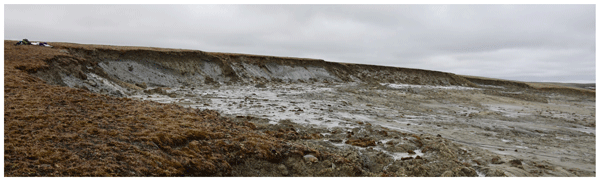
Line 44: I suggest re-ordering the figures and relocating the current figure 3 (photos of the ALD and RTS) into figure 1, which can then be cited here. I have some additional recommendations for improving this figure below (see comments on line 135).
Line 56: Can you include an estimate of what proportion of permafrost landscapes are susceptible to these alternative (and rapid) thaw mechanisms? Is this value known from the literature? If not, perhaps it could be worth trying to make an initial first order estimate (see discussion of this in general comments).
Line 76: This is not always true (re: that MAOC is stabilized over decadal to millennial timescales). For a great discussion see Jillig et al., 2025 (https://doi.org/10.1038/s43247-025-02681-8). This fast-cycling MAOM pool might be expected to be particularly large in permafrost landscapes where saturated soil conditions are prevalent following thaw (see discussion in general comments above).
Line 100: Beautiful figure!! Very nicely done to capture so much information in a digestible and aesthetically pleasing way.
Line 130: I recommend moving current Fig. 9 and making this panels e, f, and g of this figure. It’s an excellent conceptual figure but it seems best suited to depict the two disturbance types and show how you sampled. I find that it doesn’t add very much when included so late in the manuscript, but it could be very helpful if moved forward and included as a set of additional panels here in (current) Fig. 2 to augment the site/sampling descriptions.
Line 135: See comment above about this figure. I recommend moving this up to become a new fig 1 that can be referenced in the introductory discussion about the ALD and RTS disturbances. It would also be ideal to include a scale and potentially demarcate where on the ALD and RTS features these samples came from.
Line 156: I believe that these are better suited for a linear mixed model than simple linear regression, given that the samples are not truly independent from one another (i.e., multiple samples from the same profile, which are genetically linked and therefore cannot be considered independent). I recommend a linear mixed modeling framework with profile and/or site included as random factor(s). See discussion in general comments
Line 175: Which samples were analyzed for IC? How many of the 33 total samples were screened?
Line 176: Did you measure organic (and/or inorganic) N on any of the samples? It would be nice to know if there are any variations in OM quality down the profiles (which could be at least superficially surmised through C:N ratios and ON content). Was there too long of a gap between sampling and measurement to obtain reliable N estimates?
Line 225: See general comments for discussion of regression models
Line 303: I would change to say ‘amorphous’ or specify ‘poorly crystalline Fe oxides’. Reading crystalline Fe oxides makes me think of citrate-dithionite extractable oxides (which were not measured here?)
Citation: https://doi.org/10.5194/egusphere-2025-3428-RC2 -
AC2: 'Reply on RC2', Maxime Thomas, 23 Nov 2025
Author responses to reviewer comments, and edits to manuscript “Mineral-bound organic carbon exposed by hillslope thermokarst terrain: case study in Cape Bounty, Canadian High Arctic” (Paper submitted to ‘SOIL’ | egusphere-2025-3428)
We would like to thank the reviewers for the comments on our manuscript # egusphere-2025-3428. We have paid close attention to the suggested edits and made the requested changes as detailed below, with reviewer’s comments in regular font, directly followed by our responses in italic.Reviewing 2 | Adrian A Wackett, 19 Oct 2025
(Citation: https://doi.org/10.5194/egusphere-2025-3428-RC2)General Comments
Comment
The authors present a case study from the Cape Bounty Arctic Observatory on Mellville Island in the Canadian high Arctic, where they have measured the quantity and quality of organic carbon (OC) in permafrost exposed by two contrasting types of abrupt thaw disturbances: active layer detachments (ALD) and retrogressive thaw slumps (RTS). The authors find that roughly 20% of the total OC pool is chemically-bound and another ~45% is physically occluded, which they discuss in the context of other circumpolar sites where abrupt thaw disturbances are occurring. Their study is well-motivated by the wealth of literature linking permafrost thaw to the carbon-climate feedback, which typically (and simplistically) presumes gradual exposure of thermally-stabilized permafrost C as the active layer steadily thickens with high-latitude warming. This is an important and interesting research question that is well-contextualized by their introduction, and in general I find their writing easy to follow and their main inferences to be well-documented. I also greatly appreciate their efforts to make their data easily interpretable and verifiable by including a comprehensive set of figures and tables in the supplement.Response
We would like to thank Mr. Wackett for his positive evaluation, and for his extensive, very constructive comments, which have helped to improve the manuscript. The changes we made are described in detail below.Comment
As currently written the discussion section starts to drag at times, and I see some opportunities to streamline the text there by incorporating some relatively straightforward analyses (some of which they already allude to). Shortening the discussion of their measurements in the context of other Arctic sites would also free up some space to discuss the unique characteristics of permafrost soils and how this might impact the stability and behavior of chemical and/or physical OC-mineral interactions under different thaw scenarios, which seems critical given their emphasis on linking mineral (and specifically sorptive) protection to OC stabilization.
There are some minor statistical errors to address and I highlight a few opportunities to incorporate additional analyses/measurements that would further improve the study, although I fully recognize that additional measurements may not be viable
Response
The changes relating to these points are detailed in specific comments below.
Specific CommentsComment
Organic carbon concentrations vs. stocks/inventories: Have you measured bulk density and/or coarse fraction contents for the four profiles? It seems likely that these abrupt thaw events would alter the volume of soil contained within a given depth scale (i.e., from 0 to 70 cm), even if sampling was restricted to headwall features. I recognize that much of your focus is on the form of OC contained within the profiles, but it seems important to discuss these inferences on a volumetric basis as well given that this is what ultimately controls the quantity of potentially mineralizable OC. If these measurements have been made it would be great to see them included alongside some discussion of how changes in OC stabilization might be augmented (or neutralized) by concomitant volumetric changes, especially in the lowermost RTS-D sample where the most profound differences are observedResponse
We appreciate the importance of these considerations. Unfortunately, data on bulk density were not collected for the sampled profiles and structurally-intact samples are no longer available to perform these measurements. Yet, analyses on carbon stocks and volumetric/mass balance assessments have been done for other study sites undergoing hillslope thermokarst degradation (e.g., Thomas et al., 2023, 2024), and we can speculate on the outcome that could be expected at Cape Bounty. Deep sediments exposed by hillslope thermokarst structures may contain very high volumetric proportions of ice. For a given exposed thickness, the mass of sediment/soil material (excluding ice) may therefore be lower in deep layers than that exposed by shallower layers (Bernhard et al., 2022; Thomas et al., 2023, 2024). At the Cape Bounty, ice-rich layers (>50 %) are reported at depth >60 cm (Lamhonwah et al., 2016) and dry bulk density measurements vary from ~1.5 g·cm-3 for 5 – 15 cm depth to ~1.7 g·cm-3 for 30 – 50 cm depth (Stanton, 2023).
Assuming an excess ice content of 50% for depths ≥ 60 cm (Lamhonwah et al., 2016) and dry bulk densities of 1.53 g/cm³ for depths of 0–7 cm, 1.55 g/cm³ for depths of 7–26 cm, 1.67 g/cm³ for depths of 26–46 cm, and 1.71 g/cm³ for depths greater than 46 cm (Stanton, 2023), we can establish a first-order estimate of the carbon stocks exposed by the RTS and the ALD over the entire headwall. It appears that the RTS exposes more OC than the ALD (~13.5 kg/m² for the RTS versus ~9.8 kg/m² for the ALD) but this confirms that the proportion stabilized in the RTS is lower than in the ALD (~17.2% for the RTS versus ~18.4% for the ALD). Given that these estimates are highly speculative, we express reserve about presenting the associated figure in the main text, but we have added the following paragraph and the new figure in the appendix as Fig. D.8 (available in the supplement to this response).
“Using a mass balance approach, we can derive a first order estimate of the OC stock exposed by the ALD and the RTS per square meter of exposed horizontal surface area and for the entire headwall. Assuming an excess ice content of 50% for depths ≥ 60 cm (Lamhonwah et al., 2016) and dry bulk densities of 1.53 g/cm³ for depths of 0 7 cm, 1.55 g/cm³ for depths of 7 26 cm, 1.67 g/cm³ for depths of 26 46 cm, and 1.71 g/cm³ for depths greater than 46 cm (Stanton, 2023), it appears that the RTS exposes a greater stock of OC than the ALD (~13.5 kg/m² for RTS-D versus ~9.8 kg/m² for the ALD-D; Fig. D.8). This besides supports evidence that the proportion of OC stabilized in sediments exposed by the RTS is lower than that of the ALD (~17.2% for the RTS-D versus ~18.4% for the ALD-D; Fig. D.8). It is worth pointing out that OC stocks exposed at Cape Bounty are quite low compared to OC stocks exported by thaw slumps such as at the Peel Plateau (~150 to ~400 kg/m² ; Thomas et al., 2023) or Batagay (~460 kg/m² ; Thomas et al., 2024), which is mainly due to the shallow headwall heights in Cape Bounty.”Comment
Regression modeling: Given that you are regressing multiple observations from individual pedons, I recommend a linear mixed modeling framework with profile and site included as nested random factors. Given the small sample size there may not be enough degrees of freedom available to build a nested model, but at minimum I suggest re-running the regression models with profile included as a random intercept and/or slope term. This seems critical considering that there are several instances where there are visible variations in the relationship (i.e., slope) at the profile scale (see Fig. D1c, D7b-f, etc.) A hierarchical modeling framework would help tease this out and enrich the ensuing discussion. The robust regression approach they opted for (rather than OLS) can still be exported into a mixed modeling framework (see robustlmm package in R for one example)Response
Thank you for this insightful comment. We have adapted the methodology and now present the results of mixed-effects models in the paper and in Fig. D.1 & Fig. D.7 (with the profile variable included as random factor, i.e., RTS-D, RTS-UD, ALD-D, ALD-UD). The overall conclusions following the regression modeling are the same, but the R² values obtained are now more statistically valid. We present the marginal R² (R²m) - fixed effects - in the main text and in the associated figures. The conditional R² (R²c) are presented along in the figures for reference. The new method section now stands as “Robust mixed-effect models presented in this study were fitted using the rlmer function from the robustlmm package v3.3-3 (Koller, 2016). The variable ‘profile’ (RTS-D, RTS-UD, ALD-D, ALD-UD) has been included as a random factor, with random intercept and slope. We report the marginal R² (R²m), representing the population-level trend (variance explained by fixed effects) in the main text. The conditional R² (R²c), which includes both fixed and random effects and reflects total model performance, is additionally shown on the plots for reference.”Comment
Streamlining discussion section: As mentioned earlier, the authors do a commendable job of placing their results from Cape Bounty in the context of other circumpolar sites that they (and others) have studied, but the writing in the discussion begins to drag on at times. Could you shorten the writing and instead insert some relatively simple analyses examining the dominant environmental and edaphic controls on mineral-associated OC across the permafrost thaw sites that you reference? For example, perhaps take the cumulative portion of stabilized (both physical and chemical) OC and plot these site-level averages against mean annual temperature, precipitation, or NPP. It’s probably also worth exploring some edaphic controls of interest like extractable Fe+Al content, silt+clay content (see Georgiou et al., 2022 https://doi.org/10.1029/2009JG000947), pH, cation exchange capacity, etc. As the authors already allude to when discussing the relatively low proportion of stabilized OC at Cape Bounty, I suspect precipitation likely emerges as a major (if not dominant) control (see e.g., Klaminder et al., 2009 https://doi.org/10.1029/2009JG000947). It seems more useful to explore these other probable controls rather than focusing on the latitude of the various sites, which the authors reference repeatedly.Response
We have substantially reduced the lengths of the paragraphs of section 4.1 comparing our study with other papers, and now present only a single average value and standard deviation combining the available data. The new, modified paragraphs now read: “Indeed, it compares with 43 ± 20% from other studies on hillslope thermokarst or Yedoma sediments in Siberia and Canada (Monhonval et al., 2021a, 2022; Thomas et al., 2023, 2024), all of which report fairly low TOC content, i.e. on average 1.6 ± 1.5%wt, which is in the same range as the samples from this study (1.1 ± 0.2%wt; section 3.3). This confirms that – for sites with comparable TOC contents – the level of stabilization through chemical interactions appears to be about half as high at Cape Bounty in comparison to other studies in the Arctic.” ; “By comparison, the same method applied to Siberian permafrost sediments showed a stabilization 73 ± 17% of the TOC (Yedoma sediments from Dutta et al., 2006; Kolyma permafrost soils from Gentsch et al., 2015; and Pleistocene permafrost of Bol'shoy Lyakhovsky Island from Martens et al., 2023). These proportions are extremely variable across the Arctic and show no latitudinal trend.”
Concerning the dominant environmental and edaphic controls on mineral-interacting OC across sites: To carry out the analysis proposed in a comprehensive and robust manner, we would need more study sites along the latitudinal gradient (especially high-latitude) and be confident that the data used to identify environmental and edaphic controls on mineral-interacting OC are independent, mutually comparable across sites, as well as to define the time period over which to integrate or average the environmental variables. Besides, data on e.g., pH levels, CEC and silt and clay content are not available for all study sites, as is stabilized OC content assessed through granulo-densimetric methods. We believe that presenting a more comprehensive analysis in this site-specific study would be a bit beyond its scope. However, we have incorporated the opportunity to study these different parameters as perspectives in the revised version of our manuscript. This new paragraph reads “Future work needs to address a systematic analysis of past and present environmental controls (e.g., soil and air temperature, precipitation, soil moisture) and edaphic controls (e.g., lithology, pH, pyrophosphate- & oxalate-extractable Fe and Al, silt and clay content) of the concentration and proportion of mineral-interacting OC. Total precipitation and effective soil moisture appear promising since they has been shown to be significant positive drivers of soil carbon accumulation in dry tundra (Klaminder et al., 2009) and mineral-interacting OC at the global scale (Kramer and Chadwick, 2018), as are silt and clay content (e.g., Georgiou et al., 2022).”Comment
Discussing unique characteristics of permafrost OC: It would be nice to see some additional discussion of the unique characteristics of permafrost soils that then explicitly links how these distinct attributes might impact the different modes of OC stabilization laid out in current Fig. 1. There is a strong temperate bias in the literature relating different modes of OC stabilization to C turnover times. Currently I noted only one very brief mention (line 470) of the possibility that some of this mineral-associated OC could be solubilized if redox/pH conditions change as soils become increasingly saturated during (and after) extensive thawing. I recognize that the specific OM-mineral complexes in these Cape Bounty soils have not been investigated directly through incubations and/or other manipulations, radiocarbon measurements, etc., which would have been optimal to more directly quantify their stability. While I would of course welcome such additional measurements, I fully recognize this would be a major undertaking and is likely untenable. But at the very least it would be helpful to include some discussion of these possible interactions, and to bring this discussion forward in the text so that it appears sooner than the final sentences of the discussion section.Response
We recognize that the discussion on the fate of mineral-OC interactions – particularly after potential modifications in the redox conditions – do come quite late in the paper. Yet, hillslope thermokarst landforms are generally located on well-drained terrains leading to redox conditions considered, arguably, as oxic and relatively stable (Abbott and Jones, 2015). We are certainly not facing anoxic conditions, such as those found, for example, in lowland themokarst areas, which lead to the disappearance of iron-carbon bonds (e.g., Patzner et al., 2020). We have besides shown in another study that OC-mineral interactions are likely preserved in sediments mobilized by slumping, at least within the scar zone (Thomas et al., 2023). Since thaw slumps expose deep, minimally-weathered material, a substantial decrease in pH, which would induce dissolution of Al-OC bonds, is unlikely at Cape Bounty, where pH levels are close to neutral. We have added these considerations in section 4.3. However, these are only hypotheses, and we believe it would be unreasonable to go any further than this in the discussion of this paper.Comment
Importance of pH dependence in mineral-OM stabilization: Somewhat related to the point above, I think it’s worth diving just a little deeper into the pH dependence of the different OM-mineral stabilization modes. For example, isn’t it somewhat surprising that pyrophosphate-extractable Al is the strongest predictor of OC in organometallic complexes, whereas Ca carries no predictive power? I would typically expect low Al (and Fe) solubility and abundant Ca2+ ions available to form cation bridges with negatively charged DOM under circumneutral pH conditions. Again, some additional discussion of how this might differ between the Cape Bounty sites versus the soil types where much of the literature on organo-mineral interactions has been established (which carries a significant temperate and acidic forest soil bias) would be fruitful. This pH dependence could be interesting to explore in association with the site-level compilation/analysis discussed above.Response
We believe that calcium certainly plays a role in organo-mineral interactions at Cape Bounty. Unfortunately, it is impossible – from pyrophosphate extractions – to isolate the fraction of Ca reactive towards OC from the soluble fraction that originates from easily-weatherable mineral phases, as we have stated in section 3.2.Technical Corrections
Comment
Line 35: comparable to emissions over what timescales? Annual? Please specify.Response
Those are cumulative projected greenhouse gas emissions for to the atmosphere for 2000–2099. We have corrected the sentence which now reads “[…] emissions from the Arctic could add 55 - 230 Pg of carbon (in CO2 equivalent) to the atmosphere by the end of this century - a level comparable to emissions of industrialized countries - and must therefore be considered […]”Comment
Line 44: I suggest re-ordering the figures and relocating the current figure 3 (photos of the ALD and RTS) into figure 1, which can then be cited here. I have some additional recommendations for improving this figure below (see comments on line 135).Response
We believe that reducing the number of figures is a positive improvement, but we feel that the maps and photos of the specific thaw slump and active layer detachment at Cape Bounty should not be placed so early in the paper. The different types of thermokarst degradation can indeed have very diverse morphologies, and the purpose of this introductory paragraph is not to be specific to Cape Bounty. We therefore suggest grouping the maps (Fig. 2) and photos (Fig. 3) together in the method section 2.2 and instead presenting a conceptual diagram of a thaw slump (modified from Thomas et al., 2023) in the introduction.Comment
Line 56: Can you include an estimate of what proportion of permafrost landscapes are susceptible to these alternative (and rapid) thaw mechanisms? Is this value known from the literature? If not, perhaps it could be worth trying to make an initial first order estimate (see discussion of this in general comments).Response
We added the following sentence : “The area susceptible to be affected by hillslope thermokarst landforms is indeed projected to increase by 250,000 km2 by the end of the 21st century (Turetsky et al., 2020).”Comment
Line 76: This is not always true (re: that MAOC is stabilized over decadal to millennial timescales). For a great discussion see Jillig et al., 2025 (https://doi.org/10.1038/s43247-025-02681-8). This fast-cycling MAOM pool might be expected to be particularly large in permafrost landscapes where saturated soil conditions are prevalent following thaw (see discussion in general comments above).Response
Thank you for this reference. We have adapted the text to now read “Overall, the turnover time of the mineral- interacting pool of OC ranges from decades to millennia (Kleber et al., 2015 and references therein), although a substantial portion of mineral-interacting OC may cycle at relatively fast timescales (minutes to years ; Jilling et al., 2025).”Comment
Line 100: Beautiful figure!! Very nicely done to capture so much information in a digestible and aesthetically pleasing way.Response
We thank you for your thoughtful comment.Comment
Line 130: I recommend moving current Fig. 9 and making this panels e, f, and g of this figure. It’s an excellent conceptual figure but it seems best suited to depict the two disturbance types and show how you sampled. I find that it doesn’t add very much when included so late in the manuscript, but it could be very helpful if moved forward and included as a set of additional panels here in (current) Fig. 2 to augment the site/sampling descriptions.
Line 135: See comment above about this figure. I recommend moving this up to become a new fig 1 that can be referenced in the introductory discussion about the ALD and RTS disturbances. It would also be ideal to include a scale and potentially demarcate where on the ALD and RTS features these samples came from.Response
We understand that the location of the precise sampling points on the headwalls was missing from the previous version of the manuscript. However, we believe that Fig. 9 is appropriate in the discussion (in particular, panels (b) and (c) would seem somewhat out of place in this methodology section). Instead, we will implement your suggestion to draw the location of the sampling points directly on the photographs of the RTS and ALD headwalls for greater clarity.Comment
Line 156: I believe that these are better suited for a linear mixed model than simple linear regression, given that the samples are not truly independent from one another (i.e., multiple samples from the same profile, which are genetically linked and therefore cannot be considered independent). I recommend a linear mixed modeling framework with profile and/or site included as random factor(s). See discussion in general commentsResponse
See the response in the general comments.Comment
Line 175: Which samples were analyzed for IC? How many of the 33 total samples were screened?Response
All samples have been analyzed for inorganic carbon (n = 33). It has been clarified in the manuscript.Comment
Line 176: Did you measure organic (and/or inorganic) N on any of the samples? It would be nice to know if there are any variations in OM quality down the profiles (which could be at least superficially surmised through C:N ratios and ON content). Was there too long of a gap between sampling and measurement to obtain reliable N estimates?Response
Total nitrogen (TN) content has been measured after dry combustion via a Vario El Cube Elemental Analyser and display very homogenous concentrations of 0,10 ± 0,02 %wt, while the molar ratio of TOC/TN shows similar homogeneity and stands at 13 ± 1 (-). We have decided not to include nitrogen data as we believe it would not add much to the research question addressed in the paper.Comment
Line 225: See general comments for discussion of regression modelsResponse
We have also responded extensively above.Comment
Line 303: I would change to say ‘amorphous’ or specify ‘poorly crystalline Fe oxides’. Reading crystalline Fe oxides makes me think of citrate-dithionite extractable oxides (which were not measured here?)Response
This was an unfortunate mistake, and we appreciate you bringing it to our attention. We have updated the figure.References
Abbott, B. W. and Jones, J. B.: Permafrost collapse alters soil carbon stocks, respiration, CH4, and N2O in upland tundra, Global Change Biology, 21, 4570–4587, https://doi.org/10.1111/gcb.13069, 2015.
Bernhard, P., Zwieback, S., and Hajnsek, I.: Accelerated mobilization of organic carbon from retrogressive thaw slumps on the northern Taymyr Peninsula, The Cryosphere, 16, 2819–2835, https://doi.org/10.5194/tc-16-2819-2022, 2022.
Dutta, K., Schuur, E. a. G., Neff, J. C., and Zimov, S. A.: Potential carbon release from permafrost soils of Northeastern Siberia, Global Change Biology, 12, 2336–2351, https://doi.org/10.1111/j.1365-2486.2006.01259.x, 2006.
Gentsch, N., Mikutta, R., Shibistova, O., Wild, B., Schnecker, J., Richter, A., Urich, T., Gittel, A., Šantrůčková, H., Bárta, J., Lashchinskiy, N., Mueller, C. W., Fuß, R., and Guggenberger, G.: Properties and bioavailability of particulate and mineral-associated organic matter in Arctic permafrost soils, Lower Kolyma Region, Russia, European Journal of Soil Science, 66, 722–734, https://doi.org/10.1111/ejss.12269, 2015.
Georgiou, K., Jackson, R. B., Vindušková, O., Abramoff, R. Z., Ahlström, A., Feng, W., Harden, J. W., Pellegrini, A. F. A., Polley, H. W., Soong, J. L., Riley, W. J., and Torn, M. S.: Global stocks and capacity of mineral-associated soil organic carbon, Nat Commun, 13, 3797, https://doi.org/10.1038/s41467-022-31540-9, 2022.
Jilling, A., Grandy, A. S., Daly, A. B., Hestrin, R., Possinger, A., Abramoff, R., Annis, M., Cates, A. M., Dynarski, K., Georgiou, K., Heckman, K., Keiluweit, M., Lang, A. K., Phillips, R. P., Rocci, K.,Shabtai, I. A., Sokol, N. W., and Whalen, E. D.: Evidence for the existence and ecological relevance of fast-cycling mineral-associated organic matter, Commun Earth Environ, 6, 690, https://doi.org/10.1038/s43247-025-02681-8, 2025.
Klaminder, J., Yoo, K., and Giesler, R.: Soil carbon accumulation in the dry tundra: Important role played by precipitation, Journal of Geophysical Research: Biogeosciences, 114, https://doi.org/10.1029/2009JG000947, 2009.
Kleber, M., Eusterhues, K., Keiluweit, M., Mikutta, C., Mikutta, R., and Nico, P. S.: Mineral–Organic Associations: Formation, Properties, and Relevance in Soil Environments, in: Advances in Agronomy, vol. 130, edited by: Sparks, D. L., Academic Press, 1–140, https://doi.org/10.1016/bs.agron.2014.10.005, 2015.
Koller, M.: robustlmm: An R Package for Robust Estimation of Linear Mixed-Effects Models, Journal of Statistical Software, 75, 1–24, https://doi.org/10.18637/jss.v075.i06, 2016.
Kramer, M. G. and Chadwick, O. A.: Climate-driven thresholds in reactive mineral retention of soil carbon at the global scale, Nature Climate Change, 8, 1104–1108, https://doi.org/10.1038/s41558-018-0341-4, 2018.
Lamhonwah, D., Lafreniere, M., Lamoureux, S., and Wolfe, B.: Multi-year impacts of permafrost disturbance and thermal perturbation on High Arctic stream chemistry, Arctic Science, 3, 254–276, https://doi.org/10.1139/AS-2016-0024, 2016.
Martens, J., Mueller, C. W., Joshi, P., Rosinger, C., Maisch, M., Kappler, A., Bonkowski, M., Schwamborn, G., Schirrmeister, L., and Rethemeyer, J.: Stabilization of mineral-associated organic carbon in Pleistocene permafrost, Nat Commun, 14, 2120, https://doi.org/10.1038/s41467-023-37766-5, 2023.
Monhonval, A., Strauss, J., Mauclet, E., Hirst, C., Bemelmans, N., Grosse, G., Schirrmeister, L., Fuchs, M., and Opfergelt, S.: Iron Redistribution Upon Thermokarst Processes in the Yedoma Domain, Front. Earth Sci., 9, 703339, https://doi.org/10.3389/feart.2021.703339, 2021.
Monhonval, A., Strauss, J., Thomas, M., Hirst, C., Titeux, H., Louis, J., Gilliot, A., du Bois d’Aische, E., Pereira, B., Vandeuren, A., Grosse, G., Schirrmeister, L., Jongejans, L. L., Ulrich, M., and Opfergelt, S.: Thermokarst processes increase the supply of stabilizing surfaces and elements (Fe, Mn, Al, and Ca) for mineral–organic carbon interactions, Permafr. Periglac. Process., 33, 452–469, https://doi.org/10.1002/ppp.2162, 2022.
Patzner, M. S., Mueller, C. W., Malusova, M., Baur, M., Nikeleit, V., Scholten, T., Hoeschen, C., Byrne, J. M., Borch, T., Kappler, A., and Bryce, C.: Iron mineral dissolution releases iron and associated organic carbon during permafrost thaw, Nat Commun, 11, 6329, https://doi.org/10.1038/s41467-020-20102-6, 2020.
Stanton, T.: Soil Properties and Trace Gas Fluxes in a Chronosequence of Permafrost Disturbances, Cape Bounty, Melville Island, Nunavut, Master Thesis, Queen’s University, Kingston, Ontario, Canada, 128 pp., 2023.
Thomas, M., Monhonval, A., Hirst, C., Bröder, L., Zolkos, S., Vonk, J. E., Tank, S. E., Keskitalo, K. H., Shakil, S., Kokelj, S. V., van der Sluijs, J., and Opfergelt, S.: Evidence for preservation of organic carbon interacting with iron in material displaced from retrogressive thaw slumps: Case study in Peel Plateau, western Canadian Arctic, Geoderma, 433, 116443, https://doi.org/10.1016/j.geoderma.2023.116443, 2023.
Thomas, M., Jongejans, L. L., Strauss, J., Vermylen, C., Calcus, S., Opel, T., Kizyakov, A., Wetterich, S., Grosse, G., and Opfergelt, S.: A Third of Organic Carbon Is Mineral Bound in Permafrost Sediments Exposed by the World’s Largest Thaw Slump, Batagay, Siberia, Permafr. Periglac. Process., 35, 278–293, https://doi.org/10.1002/ppp.2230, 2024.
Turetsky, M. R., Abbott, B. W., Jones, M. C., Anthony, K. W., Olefeldt, D., Schuur, E. A. G., Grosse, G., Kuhry, P., Hugelius, G., Koven, C., Lawrence, D. M., Gibson, C., Sannel, A. B. K., and McGuire, A. D.: Carbon release through abrupt permafrost thaw, Nature Geoscience, 13, 138–143, https://doi.org/10.1038/s41561-019-0526-0, 2020.
-
AC2: 'Reply on RC2', Maxime Thomas, 23 Nov 2025
-
EC1: 'Comment on egusphere-2025-3428', Estela Nadal Romero, 24 Nov 2025
Thank you to the authors and reviewers of the article "Mineral-bound organic carbon exposed by hillslope thermokarst terrain: case study in Cape Bounty, Canadian High Arctic" for their valuable discussion, comments, and corrections. In light of all these contributions, I consider that the manuscript should be reviewed once more by at least one of the previous reviewers before a final decision is reached.
Yours sincerely,Citation: https://doi.org/10.5194/egusphere-2025-3428-EC1
Peer review completion


Interactive discussion
Status: closed
-
RC1: 'Comment on egusphere-2025-3428', Anonymous Referee #1, 15 Aug 2025
General Comments
The manuscript details a case study of organic carbon fractions with varying degrees of mineral-complexation in layers exposed by contrasting thaw slump or detachment types (active layer detachment vs. retrogressive thaw slump) in the Canadian High Arctic for four distinct profiles. The authors find that chemically stabilized organic carbon makes up about 20% of total OC, mostly as organo–metal complexes and C bound to poorly crystalline iron oxides. This is low compared to other Arctic sites, which they attribute to local temperature and humidity. Deep sediments exposed by retrogressive thaw slumps contain even less chemically stabilized C, making them more susceptible to decomposition. In contrast, physically protected C in aggregates and large, stable molecules represents a larger fraction (45%) of total OC. The study analyzes a wide breadth of mineral phases, elemental compositions, and OC fractions and makes good use of the complementary methods selective chemical extractions and density fractionation.
The manuscript is well-written and the study design is well-conceptualized, and this is a topic of great interest and importance in the context of the warming of the arctic. The conceptual diagrams and figures are useful and clearly convey the information (with a couple small exceptions noted in specific comments section below).
The discussion is quite long, although the authors do a good job of putting their results within the context of other studies. Perhaps each discussion subsection could be shortened to improve readability.
I appreciate and commend the inclusion of all data and figures in the supplementary information.
The authors acknowledge the limitations of the small sample size.
Specific Comments
As you state, selective extractions omit large biopolymers and physically occluded OC, so the conclusion that 20% of TOC is chemically stabilized may be an underestimate. The wording could be tweaked to acknowledge this, since it’s a central conclusion.
Regarding the RTS deep sediments, could it be possible that cryoturbation and/or post-thaw mobilization of OC or FE/Al from the profile could be contributing to the high soluble ions, pH, and low Cp in RTS-D deep layers?
L89-90: This isn’t really a hypothesis. It should be more specific as to the magnitude and direction of the change expected, and the hypothesized mechanism for that change.
L224-5: Please describe how robust R2 was calculated, since it can differ between type of statistical test and by software package. This is important since correlations between OC fractions and metal concentrations are central to some conclusions.
L 470-2: This is speculative and perhaps should not be included since the study didn’t measure it.
L491-3: The wording makes this sentence a little unclear. Recommend to reword to something like: “Only about one-fifth of the total organic carbon (20 ± 4%) is chemically stabilized through strong associations with minerals, yet this fraction likely persists the longest in soils. Physical protection, which traps carbon within aggregates or in large, chemically stable molecules, accounts for a larger portion (45 ± 8%) and spans a wider variety of carbon forms.”
On Fig. 9, it would be useful to include typical depths of the various features for comparison among the slump detachment types.
Fig. 10: Are the error bars in fact standard deviation or are they standard error?
Technical Corrections
L 126: Change to SI convention (decimal point, not comma)
L 377: Please correct plural vs. singular: “In particular, organometallic complexes, an efficient mechanisms for OC protection”
Citation: https://doi.org/10.5194/egusphere-2025-3428-RC1 -
AC1: 'Reply on RC1', Maxime Thomas, 23 Nov 2025
Author responses to reviewer comments, and edits to manuscript “Mineral-bound organic carbon exposed by hillslope thermokarst terrain: case study in Cape Bounty, Canadian High Arctic” (Paper submitted to ‘SOIL’ | egusphere-2025-3428)
We would like to thank the reviewers for the comments on our manuscript # egusphere-2025-3428. We have paid close attention to the suggested edits and made the requested changes as detailed below, with reviewer’s comments in regular font, directly followed by our responses in italic.Reviewing 1 | Anonymous Referee #1, 15 Aug 2025
(Citation: https://doi.org/10.5194/egusphere-2025-3428-RC1)General Comments
Comment
The manuscript details a case study of organic carbon fractions with varying degrees of mineral-complexation in layers exposed by contrasting thaw slump or detachment types (active layer detachment vs. retrogressive thaw slump) in the Canadian High Arctic for four distinct profiles. The authors find that chemically stabilized organic carbon makes up about 20% of total OC, mostly as organo–metal complexes and C bound to poorly crystalline iron oxides. This is low compared to other Arctic sites, which they attribute to local temperature and humidity. Deep sediments exposed by retrogressive thaw slumps contain even less chemically stabilized C, making them more susceptible to decomposition. In contrast, physically protected C in aggregates and large, stable molecules represents a larger fraction (45%) of total OC. The study analyzes a wide breadth of mineral phases, elemental compositions, and OC fractions and makes good use of the complementary methods selective chemical extractions and density fractionation.
The manuscript is well-written and the study design is well-conceptualized, and this is a topic of great interest and importance in the context of the warming of the arctic. The conceptual diagrams and figures are useful and clearly convey the information (with a couple small exceptions noted in specific comments section below).
The discussion is quite long, although the authors do a good job of putting their results within the context of other studies. Perhaps each discussion subsection could be shortened to improve readability.
I appreciate and commend the inclusion of all data and figures in the supplementary information.
The authors acknowledge the limitations of the small sample size.Response
We would like to thank the reviewer for the positive evaluation of our manuscript. We have paid careful attention to the revisions of the suggested edits, as described in detail below. Specifically, we have substantially reduced the lengths of the paragraphs in section 4.1 comparing our study with other papers, and now present only a single average value and standard deviation combining the available data.Specific Comments
Comment
As you state, selective extractions omit large biopolymers and physically occluded OC, so the conclusion that 20% of TOC is chemically stabilized may be an underestimate. The wording could be tweaked to acknowledge this, since it’s a central conclusion.Response
We thank the reviewer for this comment. We have acknowledged this further in the methods (section 2.7) and modified the wording in section 4.3, to now read “Chemical stabilization mechanisms targeting small fragments of biopolymers therefore account for a relatively small proportion of the TOC (20 ± 4%) but likely support […]”. We have also adapted the wording in the conclusion.Comment
Regarding the RTS deep sediments, could it be possible that cryoturbation and/or post-thaw mobilization of OC or Fe/Al from the profile could be contributing to the high soluble ions, pH, and low Cp in RTS-D deep layers?Response
We attribute the high concentrations in soluble cations, high pH, and low Cp concentrations in the deep horizons of the RTS-D to an absence/very limited pedological development in these layers. A contribution from cryoturbation is considered unlikely for two reasons: (i) no clear cryoturbation was observed during sampling, (ii) we believe that the deep layers exposed by the RTS-D have only been subjected to a relatively limited number of freeze/thaw cycles, since the permafrost formed syngenetically with the sediment deposition. Since deposition, these deeper sediments have likely remained permanently frozen, making advanced cryoturbation unlikely.Comment
L89-90: This isn’t really a hypothesis. It should be more specific as to the magnitude and direction of the change expected, and the hypothesized mechanism for that change.Response
The sentence has been changed to now read “We hypothesize that organo-mineral interactions may be more prominent in surface layers that are subject to recurrent positive temperatures, but that it may be limited at depth if buried sediments have not experienced pedological development.”Comment
L224-5: Please describe how robust R2 was calculated, since it can differ between type of statistical test and by software package. This is important since correlations between OC fractions and metal concentrations are central to some conclusions.Response
Robust regressions were initially calculated using the ltsReg function from the robustbase package v0.93-5 in R (Maechler et al., 2019) with an alpha of 0.95 in the previous version of the manuscript. Following a suggestion from reviewer 2, we further adapted the methodology to implement robust mixed-effect models. The updated method section now reads “Robust mixed-effect models presented in this study were fitted using the rlmer function from the robustlmm package v3.3-3 (Koller, 2016). The variable ‘profile’ (RTS-D, RTS-UD, ALD-D, ALD-UD) has been included as a random factor, with random intercept and slope. We report the marginal R² (R²m), representing the population-level trend (variance explained by fixed effects) in the main text. The conditional R² (R²c), which includes both fixed and random effects and reflects total model performance, is additionally shown on the plots for reference.” For reference, in this method, outlying residuals are down-weighted using M-estimation with Huber-type ψ-functions (Koller, 2016) which uses default tuning parameter k = 1.345 (consisting in trimming about 5% of the data; which corresponds to an alpha of 0.95 in the ltsReg function).Comment
L470-2: This is speculative and perhaps should not be included since the study didn’t measure it.Response
We have modified this sentence so as not to go too far in speculation, which now reads “The fate of the sediments carried downstream from the headwall and into the debris tongues remains yet unclear, and further research needs to evaluate mineral-OC interactions along the sediment cascade of materials exported by thaw slumps”Comment
L491-3: The wording makes this sentence a little unclear. Recommend to reword to something like: “Only about one-fifth of the total organic carbon (20 ± 4%) is chemically stabilized through strong associations with minerals, yet this fraction likely persists the longest in soils. Physical protection, which traps carbon within aggregates or in large, chemically stable molecules, accounts for a larger portion (45 ± 8%) and spans a wider variety of carbon forms.”Response
We thank the reviewer for this suggestion. We have changed the sentence accordingly.Comment
On Fig. 9, it would be useful to include typical depths of the various features for comparison among the slump detachment types.Response
The purpose of Fig. 9 is not so much to show differences in depths reached between RTS and ALD. These depths are extremely variable across the Arctic. They range from a few tens of centimeters to a few tens of meters for RTSs and from a few centimeters to ~1 m for ALDs. At other study sites, the depth is therefore potentially very contrasted between RTSs and ALDs. In this study, however, sampling of the RTS-D headwall only reaches a few centimeters more than in the ALD-D. We therefore believe that adding typical depths would potentially be misleading for the reader. As described in the caption of Fig. 9, the main difference we are trying to show in this conceptual model is that an RTS exposes fresh material every summer (until it stabilizes) while an ALD is a one-off event. We have reduced the relative thickness of the RTS-D headwall in Fig. 9 so as not to mislead the reader.Comment
Fig. 10: Are the error bars in fact standard deviation or are they standard error?Response
Thank you for this comment. Each error bar in the figure did represent a standard deviation. A new version of the figure now shows the error bars and explicitly mentions that it is a standard deviation (on either side of the mean), for more consistency. The new version of the figure is shown in the supplement.Technical Corrections
Comment
L126: Change to SI convention (decimal point, not comma)Response
We have changed the text accordingly (21.3 ha).Comment
L377: Please correct plural vs. singular: “In particular, organometallic complexes, an efficient mechanisms for OC protection”Response
We have modified the text accordingly to now read: “In particular, organometallic complexation, an efficient mechanism for OC protection (Kleber et al., 2015; Mikutta et al., 2006), […]”.References
Kleber, M., Eusterhues, K., Keiluweit, M., Mikutta, C., Mikutta, R., and Nico, P. S.: Mineral–Organic Associations: Formation, Properties, and Relevance in Soil Environments, in: Advances in Agronomy, vol. 130, edited by: Sparks, D. L., Academic Press, 1–140, https://doi.org/10.1016/bs.agron.2014.10.005, 2015.
Koller, M.: robustlmm: An R Package for Robust Estimation of Linear Mixed-Effects Models, Journal of Statistical Software, 75, 1–24, https://doi.org/10.18637/jss.v075.i06, 2016.
Maechler, M., Rousseeuw, P., Croux, C., Todorov, V., Ruckstuhl, A., Salibian-Barrera, M., Verbeke, T., Koller, M., Conceicao, E. L. T., and di Palma, M. A.: robustbase: Basic Robust Statistics R package version 0.93-5, 2019.
Mikutta, R., Kleber, M., Torn, M. S., and Jahn, R.: Stabilization of Soil Organic Matter: Association with Minerals or Chemical Recalcitrance?, Biogeochemistry, 77, 25–56, https://doi.org/10.1007/s10533-005-0712-6, 2006.
-
AC1: 'Reply on RC1', Maxime Thomas, 23 Nov 2025
-
RC2: 'Comment on egusphere-2025-3428', Adrian A Wackett, 19 Oct 2025
GENERAL COMMENTS –
The authors present a case study from the Cape Bounty Arctic Observatory on Mellville Island in the Canadian high Arctic, where they have measured the quantity and quality of organic carbon (OC) in permafrost exposed by two contrasting types of abrupt thaw disturbances: active layer detachments (ALD) and retrogressive thaw slumps (RTS). The authors find that roughly 20% of the total OC pool is chemically-bound and another ~45% is physically occluded, which they discuss in the context of other circumpolar sites where abrupt thaw disturbances are occurring. Their study is well-motivated by the wealth of literature linking permafrost thaw to the carbon-climate feedback, which typically (and simplistically) presumes gradual exposure of thermally-stabilized permafrost C as the active layer steadily thickens with high-latitude warming. This is an important and interesting research question that is well-contextualized by their introduction, and in general I find their writing easy to follow and their main inferences to be well-documented. I also greatly appreciate their efforts to make their data easily interpretable and verifiable by including a comprehensive set of figures and tables in the supplement.
As currently written the discussion section starts to drag at times, and I see some opportunities to streamline the text there by incorporating some relatively straightforward analyses (some of which they already allude to). Shortening the discussion of their measurements in the context of other Arctic sites would also free up some space to discuss the unique characteristics of permafrost soils and how this might impact the stability and behavior of chemical and/or physical OC-mineral interactions under different thaw scenarios, which seems critical given their emphasis on linking mineral (and specifically sorptive) protection to OC stabilization.
There are some minor statistical errors to address and I highlight a few opportunities to incorporate additional analyses/measurements that would further improve the study, although I fully recognize that additional measurements may not be viable
SPECIFIC COMMENTS –
Organic carbon concentrations vs. stocks/inventories: Have you measured bulk density and/or coarse fraction contents for the four profiles? It seems likely that these abrupt thaw events would alter the volume of soil contained within a given depth scale (i.e., from 0 to 70 cm), even if sampling was restricted to headwall features. I recognize that much of your focus is on the form of OC contained within the profiles, but it seems important to discuss these inferences on a volumetric basis as well given that this is what ultimately controls the quantity of potentially mineralizable OC. If these measurements have been made it would be great to see them included alongside some discussion of how changes in OC stabilization might be augmented (or neutralized) by concomitant volumetric changes, especially in the lowermost RTS-D sample where the most profound differences are observed
Regression modeling: Given that you are regressing multiple observations from individual pedons, I recommend a linear mixed modeling framework with profile and site included as nested random factors. Given the small sample size there may not be enough degrees of freedom available to build a nested model, but at minimum I suggest re-running the regression models with profile included as a random intercept and/or slope term. This seems critical considering that there are several instances where there are visible variations in the relationship (i.e., slope) at the profile scale (see Fig. D1c, D7b-f, etc.) A hierarchical modeling framework would help tease this out and enrich the ensuing discussion. The robust regression approach they opted for (rather than OLS) can still be exported into a mixed modeling framework (see robustlmm package in R for one example)
Streamlining discussion section: As mentioned earlier, the authors do a commendable job of placing their results from Cape Bounty in the context of other circumpolar sites that they (and others) have studied, but the writing in the discussion begins to drag on at times. Could you shorten the writing and instead insert some relatively simple analyses examining the dominant environmental and edaphic controls on mineral-associated OC across the permafrost thaw sites that you reference? For example, perhaps take the cumulative portion of stabilized (both physical and chemical) OC and plot these site-level averages against mean annual temperature, precipitation, or NPP. It’s probably also worth exploring some edaphic controls of interest like extractable Fe+Al content, silt+clay content (see Georgiou et al., 2022 https://doi.org/10.1029/2009JG000947), pH, cation exchange capacity, etc. As the authors already allude to when discussing the relatively low proportion of stabilized OC at Cape Bounty, I suspect precipitation likely emerges as a major (if not dominant) control (see e.g., Klaminder et al., 2009 https://doi.org/10.1029/2009JG000947). It seems more useful to explore these other probable controls rather than focusing on the latitude of the various sites, which the authors reference repeatedly.
Discussing unique characteristics of permafrost OC: It would be nice to see some additional discussion of the unique characteristics of permafrost soils that then explicitly links how these distinct attributes might impact the different modes of OC stabilization laid out in current Fig. 1. There is a strong temperate bias in the literature relating different modes of OC stabilization to C turnover times. Currently I noted only one very brief mention (line 470) of the possibility that some of this mineral-associated OC could be solubilized if redox/pH conditions change as soils become increasingly saturated during (and after) extensive thawing. I recognize that the specific OM-mineral complexes in these Cape Bounty soils have not been investigated directly through incubations and/or other manipulations, radiocarbon measurements, etc., which would have been optimal to more directly quantify their stability. While I would of course welcome such additional measurements, I fully recognize this would be a major undertaking and is likely untenable. But at the very least it would be helpful to include some discussion of these possible interactions, and to bring this discussion forward in the text so that it appears sooner than the final sentences of the discussion section.
Importance of pH dependence in mineral-OM stabilization: Somewhat related to the point above, I think it’s worth diving just a little deeper into the pH dependence of the different OM-mineral stabilization modes. For example, isn’t it somewhat surprising that pyrophosphate-extractable Al is the strongest predictor of OC in organometallic complexes, whereas Ca carries no predictive power? I would typically expect low Al (and Fe) solubility and abundant Ca2+ ions available to form cation bridges with negatively charged DOM under circumneutral pH conditions. Again, some additional discussion of how this might differ between the Cape Bounty sites versus the soil types where much of the literature on organo-mineral interactions has been established (which carries a significant temperate and acidic forest soil bias) would be fruitful. This pH dependence could be interesting to explore in association with the site-level compilation/analysis discussed above.
TECHNICAL CORRECTIONS –
Line 35: comparable to emissions over what timescales? Annual? Please specify.
Line 44: I suggest re-ordering the figures and relocating the current figure 3 (photos of the ALD and RTS) into figure 1, which can then be cited here. I have some additional recommendations for improving this figure below (see comments on line 135).
Line 56: Can you include an estimate of what proportion of permafrost landscapes are susceptible to these alternative (and rapid) thaw mechanisms? Is this value known from the literature? If not, perhaps it could be worth trying to make an initial first order estimate (see discussion of this in general comments).
Line 76: This is not always true (re: that MAOC is stabilized over decadal to millennial timescales). For a great discussion see Jillig et al., 2025 (https://doi.org/10.1038/s43247-025-02681-8). This fast-cycling MAOM pool might be expected to be particularly large in permafrost landscapes where saturated soil conditions are prevalent following thaw (see discussion in general comments above).
Line 100: Beautiful figure!! Very nicely done to capture so much information in a digestible and aesthetically pleasing way.
Line 130: I recommend moving current Fig. 9 and making this panels e, f, and g of this figure. It’s an excellent conceptual figure but it seems best suited to depict the two disturbance types and show how you sampled. I find that it doesn’t add very much when included so late in the manuscript, but it could be very helpful if moved forward and included as a set of additional panels here in (current) Fig. 2 to augment the site/sampling descriptions.
Line 135: See comment above about this figure. I recommend moving this up to become a new fig 1 that can be referenced in the introductory discussion about the ALD and RTS disturbances. It would also be ideal to include a scale and potentially demarcate where on the ALD and RTS features these samples came from.
Line 156: I believe that these are better suited for a linear mixed model than simple linear regression, given that the samples are not truly independent from one another (i.e., multiple samples from the same profile, which are genetically linked and therefore cannot be considered independent). I recommend a linear mixed modeling framework with profile and/or site included as random factor(s). See discussion in general comments
Line 175: Which samples were analyzed for IC? How many of the 33 total samples were screened?
Line 176: Did you measure organic (and/or inorganic) N on any of the samples? It would be nice to know if there are any variations in OM quality down the profiles (which could be at least superficially surmised through C:N ratios and ON content). Was there too long of a gap between sampling and measurement to obtain reliable N estimates?
Line 225: See general comments for discussion of regression models
Line 303: I would change to say ‘amorphous’ or specify ‘poorly crystalline Fe oxides’. Reading crystalline Fe oxides makes me think of citrate-dithionite extractable oxides (which were not measured here?)
Citation: https://doi.org/10.5194/egusphere-2025-3428-RC2 -
AC2: 'Reply on RC2', Maxime Thomas, 23 Nov 2025
Author responses to reviewer comments, and edits to manuscript “Mineral-bound organic carbon exposed by hillslope thermokarst terrain: case study in Cape Bounty, Canadian High Arctic” (Paper submitted to ‘SOIL’ | egusphere-2025-3428)
We would like to thank the reviewers for the comments on our manuscript # egusphere-2025-3428. We have paid close attention to the suggested edits and made the requested changes as detailed below, with reviewer’s comments in regular font, directly followed by our responses in italic.Reviewing 2 | Adrian A Wackett, 19 Oct 2025
(Citation: https://doi.org/10.5194/egusphere-2025-3428-RC2)General Comments
Comment
The authors present a case study from the Cape Bounty Arctic Observatory on Mellville Island in the Canadian high Arctic, where they have measured the quantity and quality of organic carbon (OC) in permafrost exposed by two contrasting types of abrupt thaw disturbances: active layer detachments (ALD) and retrogressive thaw slumps (RTS). The authors find that roughly 20% of the total OC pool is chemically-bound and another ~45% is physically occluded, which they discuss in the context of other circumpolar sites where abrupt thaw disturbances are occurring. Their study is well-motivated by the wealth of literature linking permafrost thaw to the carbon-climate feedback, which typically (and simplistically) presumes gradual exposure of thermally-stabilized permafrost C as the active layer steadily thickens with high-latitude warming. This is an important and interesting research question that is well-contextualized by their introduction, and in general I find their writing easy to follow and their main inferences to be well-documented. I also greatly appreciate their efforts to make their data easily interpretable and verifiable by including a comprehensive set of figures and tables in the supplement.Response
We would like to thank Mr. Wackett for his positive evaluation, and for his extensive, very constructive comments, which have helped to improve the manuscript. The changes we made are described in detail below.Comment
As currently written the discussion section starts to drag at times, and I see some opportunities to streamline the text there by incorporating some relatively straightforward analyses (some of which they already allude to). Shortening the discussion of their measurements in the context of other Arctic sites would also free up some space to discuss the unique characteristics of permafrost soils and how this might impact the stability and behavior of chemical and/or physical OC-mineral interactions under different thaw scenarios, which seems critical given their emphasis on linking mineral (and specifically sorptive) protection to OC stabilization.
There are some minor statistical errors to address and I highlight a few opportunities to incorporate additional analyses/measurements that would further improve the study, although I fully recognize that additional measurements may not be viable
Response
The changes relating to these points are detailed in specific comments below.
Specific CommentsComment
Organic carbon concentrations vs. stocks/inventories: Have you measured bulk density and/or coarse fraction contents for the four profiles? It seems likely that these abrupt thaw events would alter the volume of soil contained within a given depth scale (i.e., from 0 to 70 cm), even if sampling was restricted to headwall features. I recognize that much of your focus is on the form of OC contained within the profiles, but it seems important to discuss these inferences on a volumetric basis as well given that this is what ultimately controls the quantity of potentially mineralizable OC. If these measurements have been made it would be great to see them included alongside some discussion of how changes in OC stabilization might be augmented (or neutralized) by concomitant volumetric changes, especially in the lowermost RTS-D sample where the most profound differences are observedResponse
We appreciate the importance of these considerations. Unfortunately, data on bulk density were not collected for the sampled profiles and structurally-intact samples are no longer available to perform these measurements. Yet, analyses on carbon stocks and volumetric/mass balance assessments have been done for other study sites undergoing hillslope thermokarst degradation (e.g., Thomas et al., 2023, 2024), and we can speculate on the outcome that could be expected at Cape Bounty. Deep sediments exposed by hillslope thermokarst structures may contain very high volumetric proportions of ice. For a given exposed thickness, the mass of sediment/soil material (excluding ice) may therefore be lower in deep layers than that exposed by shallower layers (Bernhard et al., 2022; Thomas et al., 2023, 2024). At the Cape Bounty, ice-rich layers (>50 %) are reported at depth >60 cm (Lamhonwah et al., 2016) and dry bulk density measurements vary from ~1.5 g·cm-3 for 5 – 15 cm depth to ~1.7 g·cm-3 for 30 – 50 cm depth (Stanton, 2023).
Assuming an excess ice content of 50% for depths ≥ 60 cm (Lamhonwah et al., 2016) and dry bulk densities of 1.53 g/cm³ for depths of 0–7 cm, 1.55 g/cm³ for depths of 7–26 cm, 1.67 g/cm³ for depths of 26–46 cm, and 1.71 g/cm³ for depths greater than 46 cm (Stanton, 2023), we can establish a first-order estimate of the carbon stocks exposed by the RTS and the ALD over the entire headwall. It appears that the RTS exposes more OC than the ALD (~13.5 kg/m² for the RTS versus ~9.8 kg/m² for the ALD) but this confirms that the proportion stabilized in the RTS is lower than in the ALD (~17.2% for the RTS versus ~18.4% for the ALD). Given that these estimates are highly speculative, we express reserve about presenting the associated figure in the main text, but we have added the following paragraph and the new figure in the appendix as Fig. D.8 (available in the supplement to this response).
“Using a mass balance approach, we can derive a first order estimate of the OC stock exposed by the ALD and the RTS per square meter of exposed horizontal surface area and for the entire headwall. Assuming an excess ice content of 50% for depths ≥ 60 cm (Lamhonwah et al., 2016) and dry bulk densities of 1.53 g/cm³ for depths of 0 7 cm, 1.55 g/cm³ for depths of 7 26 cm, 1.67 g/cm³ for depths of 26 46 cm, and 1.71 g/cm³ for depths greater than 46 cm (Stanton, 2023), it appears that the RTS exposes a greater stock of OC than the ALD (~13.5 kg/m² for RTS-D versus ~9.8 kg/m² for the ALD-D; Fig. D.8). This besides supports evidence that the proportion of OC stabilized in sediments exposed by the RTS is lower than that of the ALD (~17.2% for the RTS-D versus ~18.4% for the ALD-D; Fig. D.8). It is worth pointing out that OC stocks exposed at Cape Bounty are quite low compared to OC stocks exported by thaw slumps such as at the Peel Plateau (~150 to ~400 kg/m² ; Thomas et al., 2023) or Batagay (~460 kg/m² ; Thomas et al., 2024), which is mainly due to the shallow headwall heights in Cape Bounty.”Comment
Regression modeling: Given that you are regressing multiple observations from individual pedons, I recommend a linear mixed modeling framework with profile and site included as nested random factors. Given the small sample size there may not be enough degrees of freedom available to build a nested model, but at minimum I suggest re-running the regression models with profile included as a random intercept and/or slope term. This seems critical considering that there are several instances where there are visible variations in the relationship (i.e., slope) at the profile scale (see Fig. D1c, D7b-f, etc.) A hierarchical modeling framework would help tease this out and enrich the ensuing discussion. The robust regression approach they opted for (rather than OLS) can still be exported into a mixed modeling framework (see robustlmm package in R for one example)Response
Thank you for this insightful comment. We have adapted the methodology and now present the results of mixed-effects models in the paper and in Fig. D.1 & Fig. D.7 (with the profile variable included as random factor, i.e., RTS-D, RTS-UD, ALD-D, ALD-UD). The overall conclusions following the regression modeling are the same, but the R² values obtained are now more statistically valid. We present the marginal R² (R²m) - fixed effects - in the main text and in the associated figures. The conditional R² (R²c) are presented along in the figures for reference. The new method section now stands as “Robust mixed-effect models presented in this study were fitted using the rlmer function from the robustlmm package v3.3-3 (Koller, 2016). The variable ‘profile’ (RTS-D, RTS-UD, ALD-D, ALD-UD) has been included as a random factor, with random intercept and slope. We report the marginal R² (R²m), representing the population-level trend (variance explained by fixed effects) in the main text. The conditional R² (R²c), which includes both fixed and random effects and reflects total model performance, is additionally shown on the plots for reference.”Comment
Streamlining discussion section: As mentioned earlier, the authors do a commendable job of placing their results from Cape Bounty in the context of other circumpolar sites that they (and others) have studied, but the writing in the discussion begins to drag on at times. Could you shorten the writing and instead insert some relatively simple analyses examining the dominant environmental and edaphic controls on mineral-associated OC across the permafrost thaw sites that you reference? For example, perhaps take the cumulative portion of stabilized (both physical and chemical) OC and plot these site-level averages against mean annual temperature, precipitation, or NPP. It’s probably also worth exploring some edaphic controls of interest like extractable Fe+Al content, silt+clay content (see Georgiou et al., 2022 https://doi.org/10.1029/2009JG000947), pH, cation exchange capacity, etc. As the authors already allude to when discussing the relatively low proportion of stabilized OC at Cape Bounty, I suspect precipitation likely emerges as a major (if not dominant) control (see e.g., Klaminder et al., 2009 https://doi.org/10.1029/2009JG000947). It seems more useful to explore these other probable controls rather than focusing on the latitude of the various sites, which the authors reference repeatedly.Response
We have substantially reduced the lengths of the paragraphs of section 4.1 comparing our study with other papers, and now present only a single average value and standard deviation combining the available data. The new, modified paragraphs now read: “Indeed, it compares with 43 ± 20% from other studies on hillslope thermokarst or Yedoma sediments in Siberia and Canada (Monhonval et al., 2021a, 2022; Thomas et al., 2023, 2024), all of which report fairly low TOC content, i.e. on average 1.6 ± 1.5%wt, which is in the same range as the samples from this study (1.1 ± 0.2%wt; section 3.3). This confirms that – for sites with comparable TOC contents – the level of stabilization through chemical interactions appears to be about half as high at Cape Bounty in comparison to other studies in the Arctic.” ; “By comparison, the same method applied to Siberian permafrost sediments showed a stabilization 73 ± 17% of the TOC (Yedoma sediments from Dutta et al., 2006; Kolyma permafrost soils from Gentsch et al., 2015; and Pleistocene permafrost of Bol'shoy Lyakhovsky Island from Martens et al., 2023). These proportions are extremely variable across the Arctic and show no latitudinal trend.”
Concerning the dominant environmental and edaphic controls on mineral-interacting OC across sites: To carry out the analysis proposed in a comprehensive and robust manner, we would need more study sites along the latitudinal gradient (especially high-latitude) and be confident that the data used to identify environmental and edaphic controls on mineral-interacting OC are independent, mutually comparable across sites, as well as to define the time period over which to integrate or average the environmental variables. Besides, data on e.g., pH levels, CEC and silt and clay content are not available for all study sites, as is stabilized OC content assessed through granulo-densimetric methods. We believe that presenting a more comprehensive analysis in this site-specific study would be a bit beyond its scope. However, we have incorporated the opportunity to study these different parameters as perspectives in the revised version of our manuscript. This new paragraph reads “Future work needs to address a systematic analysis of past and present environmental controls (e.g., soil and air temperature, precipitation, soil moisture) and edaphic controls (e.g., lithology, pH, pyrophosphate- & oxalate-extractable Fe and Al, silt and clay content) of the concentration and proportion of mineral-interacting OC. Total precipitation and effective soil moisture appear promising since they has been shown to be significant positive drivers of soil carbon accumulation in dry tundra (Klaminder et al., 2009) and mineral-interacting OC at the global scale (Kramer and Chadwick, 2018), as are silt and clay content (e.g., Georgiou et al., 2022).”Comment
Discussing unique characteristics of permafrost OC: It would be nice to see some additional discussion of the unique characteristics of permafrost soils that then explicitly links how these distinct attributes might impact the different modes of OC stabilization laid out in current Fig. 1. There is a strong temperate bias in the literature relating different modes of OC stabilization to C turnover times. Currently I noted only one very brief mention (line 470) of the possibility that some of this mineral-associated OC could be solubilized if redox/pH conditions change as soils become increasingly saturated during (and after) extensive thawing. I recognize that the specific OM-mineral complexes in these Cape Bounty soils have not been investigated directly through incubations and/or other manipulations, radiocarbon measurements, etc., which would have been optimal to more directly quantify their stability. While I would of course welcome such additional measurements, I fully recognize this would be a major undertaking and is likely untenable. But at the very least it would be helpful to include some discussion of these possible interactions, and to bring this discussion forward in the text so that it appears sooner than the final sentences of the discussion section.Response
We recognize that the discussion on the fate of mineral-OC interactions – particularly after potential modifications in the redox conditions – do come quite late in the paper. Yet, hillslope thermokarst landforms are generally located on well-drained terrains leading to redox conditions considered, arguably, as oxic and relatively stable (Abbott and Jones, 2015). We are certainly not facing anoxic conditions, such as those found, for example, in lowland themokarst areas, which lead to the disappearance of iron-carbon bonds (e.g., Patzner et al., 2020). We have besides shown in another study that OC-mineral interactions are likely preserved in sediments mobilized by slumping, at least within the scar zone (Thomas et al., 2023). Since thaw slumps expose deep, minimally-weathered material, a substantial decrease in pH, which would induce dissolution of Al-OC bonds, is unlikely at Cape Bounty, where pH levels are close to neutral. We have added these considerations in section 4.3. However, these are only hypotheses, and we believe it would be unreasonable to go any further than this in the discussion of this paper.Comment
Importance of pH dependence in mineral-OM stabilization: Somewhat related to the point above, I think it’s worth diving just a little deeper into the pH dependence of the different OM-mineral stabilization modes. For example, isn’t it somewhat surprising that pyrophosphate-extractable Al is the strongest predictor of OC in organometallic complexes, whereas Ca carries no predictive power? I would typically expect low Al (and Fe) solubility and abundant Ca2+ ions available to form cation bridges with negatively charged DOM under circumneutral pH conditions. Again, some additional discussion of how this might differ between the Cape Bounty sites versus the soil types where much of the literature on organo-mineral interactions has been established (which carries a significant temperate and acidic forest soil bias) would be fruitful. This pH dependence could be interesting to explore in association with the site-level compilation/analysis discussed above.Response
We believe that calcium certainly plays a role in organo-mineral interactions at Cape Bounty. Unfortunately, it is impossible – from pyrophosphate extractions – to isolate the fraction of Ca reactive towards OC from the soluble fraction that originates from easily-weatherable mineral phases, as we have stated in section 3.2.Technical Corrections
Comment
Line 35: comparable to emissions over what timescales? Annual? Please specify.Response
Those are cumulative projected greenhouse gas emissions for to the atmosphere for 2000–2099. We have corrected the sentence which now reads “[…] emissions from the Arctic could add 55 - 230 Pg of carbon (in CO2 equivalent) to the atmosphere by the end of this century - a level comparable to emissions of industrialized countries - and must therefore be considered […]”Comment
Line 44: I suggest re-ordering the figures and relocating the current figure 3 (photos of the ALD and RTS) into figure 1, which can then be cited here. I have some additional recommendations for improving this figure below (see comments on line 135).Response
We believe that reducing the number of figures is a positive improvement, but we feel that the maps and photos of the specific thaw slump and active layer detachment at Cape Bounty should not be placed so early in the paper. The different types of thermokarst degradation can indeed have very diverse morphologies, and the purpose of this introductory paragraph is not to be specific to Cape Bounty. We therefore suggest grouping the maps (Fig. 2) and photos (Fig. 3) together in the method section 2.2 and instead presenting a conceptual diagram of a thaw slump (modified from Thomas et al., 2023) in the introduction.Comment
Line 56: Can you include an estimate of what proportion of permafrost landscapes are susceptible to these alternative (and rapid) thaw mechanisms? Is this value known from the literature? If not, perhaps it could be worth trying to make an initial first order estimate (see discussion of this in general comments).Response
We added the following sentence : “The area susceptible to be affected by hillslope thermokarst landforms is indeed projected to increase by 250,000 km2 by the end of the 21st century (Turetsky et al., 2020).”Comment
Line 76: This is not always true (re: that MAOC is stabilized over decadal to millennial timescales). For a great discussion see Jillig et al., 2025 (https://doi.org/10.1038/s43247-025-02681-8). This fast-cycling MAOM pool might be expected to be particularly large in permafrost landscapes where saturated soil conditions are prevalent following thaw (see discussion in general comments above).Response
Thank you for this reference. We have adapted the text to now read “Overall, the turnover time of the mineral- interacting pool of OC ranges from decades to millennia (Kleber et al., 2015 and references therein), although a substantial portion of mineral-interacting OC may cycle at relatively fast timescales (minutes to years ; Jilling et al., 2025).”Comment
Line 100: Beautiful figure!! Very nicely done to capture so much information in a digestible and aesthetically pleasing way.Response
We thank you for your thoughtful comment.Comment
Line 130: I recommend moving current Fig. 9 and making this panels e, f, and g of this figure. It’s an excellent conceptual figure but it seems best suited to depict the two disturbance types and show how you sampled. I find that it doesn’t add very much when included so late in the manuscript, but it could be very helpful if moved forward and included as a set of additional panels here in (current) Fig. 2 to augment the site/sampling descriptions.
Line 135: See comment above about this figure. I recommend moving this up to become a new fig 1 that can be referenced in the introductory discussion about the ALD and RTS disturbances. It would also be ideal to include a scale and potentially demarcate where on the ALD and RTS features these samples came from.Response
We understand that the location of the precise sampling points on the headwalls was missing from the previous version of the manuscript. However, we believe that Fig. 9 is appropriate in the discussion (in particular, panels (b) and (c) would seem somewhat out of place in this methodology section). Instead, we will implement your suggestion to draw the location of the sampling points directly on the photographs of the RTS and ALD headwalls for greater clarity.Comment
Line 156: I believe that these are better suited for a linear mixed model than simple linear regression, given that the samples are not truly independent from one another (i.e., multiple samples from the same profile, which are genetically linked and therefore cannot be considered independent). I recommend a linear mixed modeling framework with profile and/or site included as random factor(s). See discussion in general commentsResponse
See the response in the general comments.Comment
Line 175: Which samples were analyzed for IC? How many of the 33 total samples were screened?Response
All samples have been analyzed for inorganic carbon (n = 33). It has been clarified in the manuscript.Comment
Line 176: Did you measure organic (and/or inorganic) N on any of the samples? It would be nice to know if there are any variations in OM quality down the profiles (which could be at least superficially surmised through C:N ratios and ON content). Was there too long of a gap between sampling and measurement to obtain reliable N estimates?Response
Total nitrogen (TN) content has been measured after dry combustion via a Vario El Cube Elemental Analyser and display very homogenous concentrations of 0,10 ± 0,02 %wt, while the molar ratio of TOC/TN shows similar homogeneity and stands at 13 ± 1 (-). We have decided not to include nitrogen data as we believe it would not add much to the research question addressed in the paper.Comment
Line 225: See general comments for discussion of regression modelsResponse
We have also responded extensively above.Comment
Line 303: I would change to say ‘amorphous’ or specify ‘poorly crystalline Fe oxides’. Reading crystalline Fe oxides makes me think of citrate-dithionite extractable oxides (which were not measured here?)Response
This was an unfortunate mistake, and we appreciate you bringing it to our attention. We have updated the figure.References
Abbott, B. W. and Jones, J. B.: Permafrost collapse alters soil carbon stocks, respiration, CH4, and N2O in upland tundra, Global Change Biology, 21, 4570–4587, https://doi.org/10.1111/gcb.13069, 2015.
Bernhard, P., Zwieback, S., and Hajnsek, I.: Accelerated mobilization of organic carbon from retrogressive thaw slumps on the northern Taymyr Peninsula, The Cryosphere, 16, 2819–2835, https://doi.org/10.5194/tc-16-2819-2022, 2022.
Dutta, K., Schuur, E. a. G., Neff, J. C., and Zimov, S. A.: Potential carbon release from permafrost soils of Northeastern Siberia, Global Change Biology, 12, 2336–2351, https://doi.org/10.1111/j.1365-2486.2006.01259.x, 2006.
Gentsch, N., Mikutta, R., Shibistova, O., Wild, B., Schnecker, J., Richter, A., Urich, T., Gittel, A., Šantrůčková, H., Bárta, J., Lashchinskiy, N., Mueller, C. W., Fuß, R., and Guggenberger, G.: Properties and bioavailability of particulate and mineral-associated organic matter in Arctic permafrost soils, Lower Kolyma Region, Russia, European Journal of Soil Science, 66, 722–734, https://doi.org/10.1111/ejss.12269, 2015.
Georgiou, K., Jackson, R. B., Vindušková, O., Abramoff, R. Z., Ahlström, A., Feng, W., Harden, J. W., Pellegrini, A. F. A., Polley, H. W., Soong, J. L., Riley, W. J., and Torn, M. S.: Global stocks and capacity of mineral-associated soil organic carbon, Nat Commun, 13, 3797, https://doi.org/10.1038/s41467-022-31540-9, 2022.
Jilling, A., Grandy, A. S., Daly, A. B., Hestrin, R., Possinger, A., Abramoff, R., Annis, M., Cates, A. M., Dynarski, K., Georgiou, K., Heckman, K., Keiluweit, M., Lang, A. K., Phillips, R. P., Rocci, K.,Shabtai, I. A., Sokol, N. W., and Whalen, E. D.: Evidence for the existence and ecological relevance of fast-cycling mineral-associated organic matter, Commun Earth Environ, 6, 690, https://doi.org/10.1038/s43247-025-02681-8, 2025.
Klaminder, J., Yoo, K., and Giesler, R.: Soil carbon accumulation in the dry tundra: Important role played by precipitation, Journal of Geophysical Research: Biogeosciences, 114, https://doi.org/10.1029/2009JG000947, 2009.
Kleber, M., Eusterhues, K., Keiluweit, M., Mikutta, C., Mikutta, R., and Nico, P. S.: Mineral–Organic Associations: Formation, Properties, and Relevance in Soil Environments, in: Advances in Agronomy, vol. 130, edited by: Sparks, D. L., Academic Press, 1–140, https://doi.org/10.1016/bs.agron.2014.10.005, 2015.
Koller, M.: robustlmm: An R Package for Robust Estimation of Linear Mixed-Effects Models, Journal of Statistical Software, 75, 1–24, https://doi.org/10.18637/jss.v075.i06, 2016.
Kramer, M. G. and Chadwick, O. A.: Climate-driven thresholds in reactive mineral retention of soil carbon at the global scale, Nature Climate Change, 8, 1104–1108, https://doi.org/10.1038/s41558-018-0341-4, 2018.
Lamhonwah, D., Lafreniere, M., Lamoureux, S., and Wolfe, B.: Multi-year impacts of permafrost disturbance and thermal perturbation on High Arctic stream chemistry, Arctic Science, 3, 254–276, https://doi.org/10.1139/AS-2016-0024, 2016.
Martens, J., Mueller, C. W., Joshi, P., Rosinger, C., Maisch, M., Kappler, A., Bonkowski, M., Schwamborn, G., Schirrmeister, L., and Rethemeyer, J.: Stabilization of mineral-associated organic carbon in Pleistocene permafrost, Nat Commun, 14, 2120, https://doi.org/10.1038/s41467-023-37766-5, 2023.
Monhonval, A., Strauss, J., Mauclet, E., Hirst, C., Bemelmans, N., Grosse, G., Schirrmeister, L., Fuchs, M., and Opfergelt, S.: Iron Redistribution Upon Thermokarst Processes in the Yedoma Domain, Front. Earth Sci., 9, 703339, https://doi.org/10.3389/feart.2021.703339, 2021.
Monhonval, A., Strauss, J., Thomas, M., Hirst, C., Titeux, H., Louis, J., Gilliot, A., du Bois d’Aische, E., Pereira, B., Vandeuren, A., Grosse, G., Schirrmeister, L., Jongejans, L. L., Ulrich, M., and Opfergelt, S.: Thermokarst processes increase the supply of stabilizing surfaces and elements (Fe, Mn, Al, and Ca) for mineral–organic carbon interactions, Permafr. Periglac. Process., 33, 452–469, https://doi.org/10.1002/ppp.2162, 2022.
Patzner, M. S., Mueller, C. W., Malusova, M., Baur, M., Nikeleit, V., Scholten, T., Hoeschen, C., Byrne, J. M., Borch, T., Kappler, A., and Bryce, C.: Iron mineral dissolution releases iron and associated organic carbon during permafrost thaw, Nat Commun, 11, 6329, https://doi.org/10.1038/s41467-020-20102-6, 2020.
Stanton, T.: Soil Properties and Trace Gas Fluxes in a Chronosequence of Permafrost Disturbances, Cape Bounty, Melville Island, Nunavut, Master Thesis, Queen’s University, Kingston, Ontario, Canada, 128 pp., 2023.
Thomas, M., Monhonval, A., Hirst, C., Bröder, L., Zolkos, S., Vonk, J. E., Tank, S. E., Keskitalo, K. H., Shakil, S., Kokelj, S. V., van der Sluijs, J., and Opfergelt, S.: Evidence for preservation of organic carbon interacting with iron in material displaced from retrogressive thaw slumps: Case study in Peel Plateau, western Canadian Arctic, Geoderma, 433, 116443, https://doi.org/10.1016/j.geoderma.2023.116443, 2023.
Thomas, M., Jongejans, L. L., Strauss, J., Vermylen, C., Calcus, S., Opel, T., Kizyakov, A., Wetterich, S., Grosse, G., and Opfergelt, S.: A Third of Organic Carbon Is Mineral Bound in Permafrost Sediments Exposed by the World’s Largest Thaw Slump, Batagay, Siberia, Permafr. Periglac. Process., 35, 278–293, https://doi.org/10.1002/ppp.2230, 2024.
Turetsky, M. R., Abbott, B. W., Jones, M. C., Anthony, K. W., Olefeldt, D., Schuur, E. A. G., Grosse, G., Kuhry, P., Hugelius, G., Koven, C., Lawrence, D. M., Gibson, C., Sannel, A. B. K., and McGuire, A. D.: Carbon release through abrupt permafrost thaw, Nature Geoscience, 13, 138–143, https://doi.org/10.1038/s41561-019-0526-0, 2020.
-
AC2: 'Reply on RC2', Maxime Thomas, 23 Nov 2025
-
EC1: 'Comment on egusphere-2025-3428', Estela Nadal Romero, 24 Nov 2025
Thank you to the authors and reviewers of the article "Mineral-bound organic carbon exposed by hillslope thermokarst terrain: case study in Cape Bounty, Canadian High Arctic" for their valuable discussion, comments, and corrections. In light of all these contributions, I consider that the manuscript should be reviewed once more by at least one of the previous reviewers before a final decision is reached.
Yours sincerely,Citation: https://doi.org/10.5194/egusphere-2025-3428-EC1
Peer review completion
Journal article(s) based on this preprint
Data sets
Mineral-bound organic carbon exposed by hillslope thermokarst terrain: case study in Cape Bounty, Canadian High Arctic Maxime Thomas et al. https://doi.org/10.14428/DVN/5O6FJ3
Viewed
| HTML | XML | Total | BibTeX | EndNote | |
|---|---|---|---|---|---|
| 6,755 | 883 | 265 | 7,903 | 352 | 374 |
- HTML: 6,755
- PDF: 883
- XML: 265
- Total: 7,903
- BibTeX: 352
- EndNote: 374
Viewed (geographical distribution)
| Country | # | Views | % |
|---|
| Total: | 0 |
| HTML: | 0 |
| PDF: | 0 |
| XML: | 0 |
- 1

Julien Fouché
Hugues Titeux
Charlotte Morelle
Nathan Bemelmans
Melissa J. Lafrenière
Joanne K. Heslop
Sophie Opfergelt
The requested preprint has a corresponding peer-reviewed final revised paper. You are encouraged to refer to the final revised version.
- Preprint
(2797 KB) - Metadata XML