
the Creative Commons Attribution 4.0 License.
the Creative Commons Attribution 4.0 License.
 | 25 Feb 2026
Challenges in Soil Carbon Modelling and Measurement: A Decade of Experimental Data vs. RothC Simulations in an Organic Olive Grove
Abstract. Modelling the persistence of soil organic carbon (SOC) is currently recognised as a key approach to enhance our understanding of its potential contribution to climate change mitigation. Despite its value, SOC modelling is challenged by soil heterogeneity and the limited availability of reliable data for model calibration and validation, often resulting in discrepancies between simulated and measured SOC dynamics. This study employs a modified version of the RothC model, adapted for amended soils, to simulate soil C dynamics under an 11-year experiment in an organic olive grove. The experiment evaluated four treatments of soil amendment: Compost, Biochar, a Mixture of both, and a control soil without amendment. By comparing the SOC data simulated by the RothC model with experimental field-sampling data, we assessed the model’s accuracy in estimating SOC accumulation and stability in the soil. Both field measurements and RothC simulations consistently identified biochar as the most effective amendment for soil carbon accumulation over the 11-year period, followed by the Mixture and Compost treatments. Estimated soil carbon sequestration rates ranged from 1.67 to 2.66 Mg C ha⁻¹ yr⁻¹ based on field measurements and from 2.88 to 5.30 Mg C ha⁻¹ yr⁻¹ according to model simulations. However, treatment-dependent discrepancies were observed between modelled and field-based SOC stocks. While Compost and Mixture showed close agreement, Biochar exhibited the largest mismatch, likely due to its intrinsic properties that complicate field quantification and are not fully represented in current SOC models, posing challenges for monitoring and verification within carbon accounting frameworks.
-
Notice on discussion status
The requested preprint has a corresponding peer-reviewed final revised paper. You are encouraged to refer to the final revised version.
-
Preprint
(1077 KB)
-
Supplement
(315 KB)
-
The requested preprint has a corresponding peer-reviewed final revised paper. You are encouraged to refer to the final revised version.
- Preprint
(1077 KB) - Metadata XML
-
Supplement
(315 KB) - BibTeX
- EndNote
- Final revised paper


Journal article(s) based on this preprint
Interactive discussion
Status: closed
-
RC1: 'Comment on egusphere-2026-944', Anonymous Referee #1, 10 Apr 2026
-
AC1: 'Reply on RC1', Francisco Contreras Ródenas, 12 May 2026
We would like to sincerely thank the referee for their thorough and constructive review of our manuscript. Below, we provide detailed responses to the main concerns and observations raised. For clarity, the reviewer’s comments are shown in bold, and our responses are given in regular text.
General comment
This interesting and well-structured manuscript is about the challenge of matching soil carbon modelling results with soil carbon measurements of a field experiment with organic amendments (biochar, compost). Specifically, it compares soil carbon dynamics that were modelled with a modified version of the RothC model with measurements from an 11-year old field experiment on an olive grove. The authors found a large mismatch for the biochar treatment, and an acceptable match for the compost treatment. The manuscript is well written and covers many important aspects. Thus, it has the potential to be an important contribution to the discussion around using SOC models for MRV systems in carbon accounting frameworks.
However, I see one larger issue that is not discussed well enough at the moment: The biochar treatment included a massive addition of C of up to 13.46 Mg C ha-1 per application (L.114). This does not seem to be reflected well in the measured SOC over time (Fig. 4). In the biochar facet of Fig. 4, we basically see a step from the first measurement (that is, the mean SOC from the control plot only) to the second measurement (that is, the first real measurement from the biochar plots), and no change afterwards anymore, even though there were four additional biochar application events over that time. In my view, this shows two issues: (1) It could be possible that the treatment plots are not comparable to the control plots. This needs to be checked and, ideally, the initial SOC of each plot needs to be shown in the corresponding figure instead of using the mean SOC from the control plot for all treatment plots. And (2) surprisingly, there is almost no biochar-induced C increase detectable. In the discussion, the authors attribute this to the “randomness associated with manual soil sampling” (L. 405), but this seems to apply only to the biochar treatment but not the compost treatment and therefore, cannot tell the whole story. Could this also be a result of the outlier exclusion (L.135), where potentially those measurements with large local amounts of biochar-C were excluded? Do the authors have any recommendations how to improve future field experiments and sampling? The fact that this massive biochar application does not result in significant SOC increases is a surprising and interesting finding that needs more discussion (after thorough checks of potential errors) before the manuscript can be considered for publication.
Thank you for your comments and for highlighting this important issue. The behaviour of the biochar treatment in the field measurements is indeed an unexpected outcome of this study, and we agree that it deserves clarification.
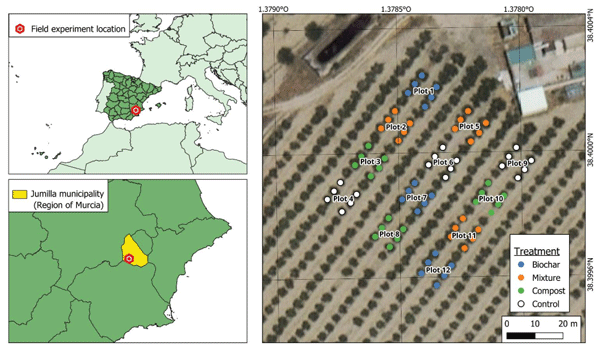
We used the average SOC value of the control plots at the first sampling date as the baseline because we considered it to be the most consistent reference, as it was based on a larger number of observations and represented soil conditions before any treatment effect could occur. Based on the design of the field experiment, we assumed that the plots were comparable at the beginning of the trial.
Regarding the amount of biochar-C added, we agree that the measured response appears unusual, as the biochar treatment does not show a clear increase throughout the experiment despite repeated applications. Concerning the filtering process, the excluded samples were identified according to the MAD-based procedure described in the manuscript. It is true that including these excluded values would increase the average SOC values of the biochar plots. However, we considered that these extreme values were more likely to reflect local hotspots with a high concentration of biochar, rather than representative plot-scale SOC values. In that sense, retaining them would probably overestimate the average SOC content of the sampled soil.
We agree that this point should be discussed more thoroughly. We will therefore expand the discussion to better address this unexpected result, including the possible role of spatial heterogeneity, sampling limitations, problems related to appropriate soil incorporation, and the challenges of adequately capturing biochar-derived carbon in field conditions. One important point is the limited association of biochar with mineral soil fractions, as most of the biochar remains as particulate organic carbon (POC) rather than mineral-associated organic carbon (MAOC), making it more susceptible to losses through wind or rainfall events.
Specific comments
L92: Please clarify for which treatment and time this organic C content applies. Or is it the average from all measurements?
We will clarify this point to improve the description of the site characteristics. We assumed the same initial organic C content for all plots, based on the average of the control samples collected at the beginning of the experiment.
L135: Please add how many samples were classified as outliers (number and % of all samples). Could this lead to exclusion of samples with large local amounts of biochar-C? Please consider showing all data in the supplement.
Thank you for this constructive comment. We agree that the excluded samples are an important aspect to evaluate. To clarify this issue, we will include a table in the Supplementary reporting the number and percentage of samples classified as outliers.
We also agree that this point is particularly relevant because the excluded values mainly correspond to samples with very high C contents. These extreme values were more frequent in the biochar treatment, likely because the particulate and spatially heterogeneous nature of biochar increase the probability of collecting local hotspots compared with the compost treatment.
L147: How large was the short-term variability? Did this also affect the earlier measurements?
Thank you for this comment. Lines 145–147 refer to the procedure used to define the final SOC stock for the calculation of SCS, SOC increase, and the other parameters reported in Table 2. As shown in Figure 2, the last three samples were collected between November 2023 and May 2024. Therefore, the term “short-term variability” refers to the use of three consecutive sampling campaigns, instead of relying on a single final sampling date.
This approach was used to reduce the influence of temporary fluctuations and to obtain a more robust estimate of the final SOC stock than would be obtained from a single sampling event
In this context, earlier measurements were not included in the calculation of the final SOC stock and therefore did not affect this specific estimate. We will rewrite this paragraph to make the procedure and the meaning of “short-term variability” clearer.
L202: Please specify whether the amount of irrigated water was considered in the simulations, e.g. as precipitation. In case it was not considered, it needs to be added in the simulations.
Thank you for this comment. Irrigation water was not included in the original simulations. As stated in the manuscript, the olive grove is equipped with a drip irrigation system, but irrigation is applied only occasionally and mainly during periods of high water demand. In this system, irrigation should be regarded as a form of survival irrigation rather than regular irrigation aimed at increasing productivity. Although olive trees are naturally highly resilient to water stress, the prolonged dry summers associated with current climatic conditions have made occasional irrigation necessary to avoid tree mortality.
Irrigation was applied homogeneously as part of the general management of the orchard, rather than as a variable specifically controlled within the experimental design. For this reason, irrigation was not initially included as a separate water input in the RothC simulations, which were therefore performed assuming rainfed conditions.
Following the reviewer’s suggestion, we will rerun the simulations including an approximate irrigation input based on the average amount of water applied annually under the management conditions of the orchard. We agree that this point should be stated more clearly in the manuscript, and we will revise the text accordingly.
L206: Please clarify how the plant residues were handled prior to the experiment and during the experiment: Is this annual C input only belowground C input (roots and exudates) due to removal of aboveground biomass (branches, leaves are removed), or is it also woody biomass input (branches and leaves decompose directly in the soil)? Did the residue management change with the beginning of the experiment or during the experiment (e.g., branches were left on the ground and are now removed in order to convert them as compost/biochar)?
Regarding residue management, before the experiment shredded prunings were applied to the soil. Pruning residues were chipped and at least partially left on the ground between the tree rows, while another significant fraction was transported to the composting facility. Compost had also been applied to the field since 1997, although at a different application rate. More details on the farm management practices before the start of the experiment will be included in the revised manuscript. We will clarify this point, as it is relevant to understanding whether pruning-derived C may have contributed to soil inputs. If possible, we will also explore whether an approximate quantitative estimate of these proportions can be provided.
In the drip-line zone, where soil samples were collected, the main C inputs during the experiment were the applied amendments and the naturally fallen aboveground biomass, mainly leaves and olive fruits. In the current version of the manuscript, the annual plant C inputs used in the forward simulations were not directly measured in the field, but were estimated from the 1000-year equilibrium run of the model. Due to the lack of direct measurements of aboveground biomass inputs, we assumed that this equilibrium-derived input was constant during the experiment. However, since olive trees at the beginning of the experiment had not yet reached their maturity, their growth during the trial is likely to have also increased the annual amount of plant derived-C entering into the soil. To overcome this limitation of our work, in the revised version of the manuscript, we will consider, in the simulations, the annual variation in the total plant C inputs. Starting from the plant C input estimated through the model initialization procedure, we will adjust the yearly plant C input using annual indirect estimates of aboveground biomass derived from satellite images (see also our response to the comment on line 192). We will use the remote sensing estimates of aboveground biomass as a proxy for biomass availability, and therefore as an indicator related to plant-derived C inputs.
L.210: Please consider to add the distance of the weather station to the experimental field.
We agree that this information would improve the site description, and we will add the distance between the weather station and the experimental field in the revised manuscript. The distance is 3.9 km.
L240: Please consider to add the amount of irrigated water to this figure, to cover the whole effect on soil moisture.
Thank you for this suggestion. In the previous version of the manuscript, irrigation water was not included in the RothC simulations.
However, in the revised manuscript, we will include irrigation water in the simulations, and therefore this information will also be incorporated into Figure 2. Because irrigation was not directly monitored, the added water will be incorporated as an approximate average input.
L241: “Bars represent standard deviation.” This is incorrect for the upper panel: Bars show the precipitation; standard deviation is not shown in upper panel.
Thank you for this comment. The sentence “Bars represent standard deviation” was intended to refer to panel (b), not to the upper panel. We will correct this mistake in the figure.
Figure 3: The resolution is not sufficient; Please consider to submit as vector graphic if possible.
Yes, we will include a better version in the revised manuscript.
L274: Are there also measurements of the initial SOC of the treatment plots?
No, SOC was not measured in the treatment plots before the first amendment application. For this reason, the initial SOC baseline used in the analysis was the mean value of the control plots at the first sampling date.
L292: Which means that the assumption of the SOC being in equilibrium was not valid. Please clarify in the Material and Methods section how the land has been used before the implementation of the experiment and prior to the establishment of the orchard). Land-use changes can have a long legacy effect on SOC of more than 100 years (e.g., Emde et al. 2024).
We agree that the increase in SOC observed in the control treatment suggests that the assumption of strict SOC equilibrium was not fully valid.
We will try to address this concern in two ways:
1) We will apply a historically driven spin-up procedure to initialize the model, as suggested by Wiltshire et al. (2024), in order to account for the effect of land-use history prior to the establishment of the experiment. For this purpose, we can use SOC data from a neighbouring plot located approximately 300 m from the experimental site, where organic amendments have never been applied and irrigation has never been used. We consider these conditions to be the most similar to those of the experimental plot before the land-use change in 1997. This soil can reasonably be considered close to equilibrium, and therefore suitable for applying the “historical” spin-up approach proposed by Wiltshire et al. (2024). This method may improve the estimation of the initial pool sizes, assuming that at the beginning of the trial the system was not at equilibrium because of the land-use change in 1997.
2) We will consider the variation of the annual amount of plant C inputs entering in the soil on the basis of annual variation in Above Ground Biomass as derived from remote sensing data.
Reference:
Wiltshire S., Grobe S., Beckage B. 2023. A historically driven spinup procedure for soil carbon modelling. Soil systems, 7.35. DOI: 10.3390/soilsystems7020035
We believe that this behaviour may be related to the growth of the olive trees during the experimental period, which likely increased plant-derived C inputs over time. This point is already discussed in the manuscript, and we will make it clearer in the revised version.
Regarding land-use history, the site has been managed as an olive grove since 1997. Before the establishment of the orchard, the land was also used for agriculture. We will clarify this information in the Materials and Methods section.
L318: Please specify for which model the statistics are given: RothC or the regression line. Please include your approach for the regression line in the Material & Methods section.
The regression line applies to the measurement data. It will be explained clearly in the revised manuscript.
L322: It is not clear to me how the control SOC change was included in this estimate. If we want to know the treatment effect, the control SOC trend needs to be subtracted from the treatment SOC trend (baseline== control trend), but I think this was not done here. Please clarify this accordingly.
As the reviewer pointed out, the control treatment reflects the SOC dynamics in the absence of amendment application and therefore serves as the reference condition. In the upper part of Table 2, however, we show the SOC evolution of each treatment throughout the experiment, including the control as one of the treatments.
For example, the final SOC stock for the compost treatment corresponds to the mean SOC value of the last three sampling dates, collected after the final amendment application. This procedure is described in the Materials and Methods section.
The treatment effect relative to the control is considered in the lower part of Table 2, where the remaining EOM-C and the SCS rate are calculated with respect to the control treatment. So the control SOC values were subtracted from the treatment SOC for the calculation of the yearly sequestration rate of the amendments, as correctly suggested by the reviewer. Example for Compost: (61.49-43.09)/11 = 1.67 Mg ha-1 y-1
The table 2 also reports SCS normalized for an EOM addition of 1 t C ha-1 y-1.
We will clarify this distinction more explicitly in the revised manuscript.
L325: Does this mean that the compost was more stable than the biochar?
This is the result obtained from the measured field data after normalizing for the amount of C added with each amendment. However, this result should be interpreted with caution, because the field measurements involve a high degree of uncertainty.
In Section 4.3, we discussed that the apparent similarity between compost and biochar in the measured data does not necessarily indicate that compost was intrinsically more stable than biochar, but rather that biochar-derived C is more difficult to quantify reliably under field conditions and may also be particularly susceptible to wind erosion.
We think that these data highlight the difficulties to effectively measure variations in SOC stocks in biochar amended soils as outlined by Chiaramonti et al. (2026).
L355: There are also studies which claim that RothC does not represent the soil moisture conditions in semi-arid conditions well - please refer to Farina et al. 2013 for more information.
Thank you for this interesting reference. The main scope of this paper is to compare field-measured SOC data with RothC simulations, as RothC is a widely used biogeochemical model in many applications, including MRV assessments.
As the olive grove was irrigated, we assume that the soil never reached the condition (very low water content) for which the modified model proposed by Farina et al. 2013 would be more appropriate. In the revised manuscript, we will therefore acknowledge this limitation more clearly and explore whether adapting the soil-moisture function following the approach proposed by Farina et al. (2013) could represent a useful way to improve the simulations under our semi-arid conditions.
L364: The assumption of both the SOC and C input from the olive grove being in equilibrium is not valid.
Thank you for these important remarks. As explained previously (L292) we will try to address both these concerns by considering an historically driven initialization procedure and by varying plant C during the experiment input according to AGB data.
L379: Please consider to add the biochar content in parentheses, e.g. (5%).
Thank you for the comment. We will add the biochar content to the mixture.
L390: Please clarify what other "routine agricultural practices" could increase the "background carbon inputs".
By this, we refer to natural and management-related processes that could affect SOC over the course of the field experiment. Using the control treatment as a reference allows us to account for these effects and makes the comparison among treatments more consistent.
L401-409: Please elaborate a bit more on how biochar field experiments should be sampled to fully capture the SOC increase. How could the study design and sampling design be improved in the future? Now it is not clear enough how to reduce the error, and everything between 100% model error and 100% sampling error seems possible. Can you give a tendency, what needs to be done to find out whether the biochar was really not as stable as we thought, or whether the sampling approach needs to be changed? How should biochar research proceed in the future?
Thank you for the comment. The main focus of this study is to quantify the discrepancy between SOC measurements and RothC simulations. A detailed methodological assessment of how to reduce uncertainty in biochar field sampling goes beyond the scope of the present work and cannot be fully addressed with the methodology used here. However, we believe that this study helps to identify the main sources of difficulty, particularly for biochar, which is a material that is difficult to quantify reliably under field conditions.
We agree that this point needs further discussion, and we can modify this section to better highlight the challenges associated with biochar sampling and field-based verification.
Furthermore, it is worth noting that FAO recommends using less data-demanding models, such as RothC, which parameterizes soil processes primarily through empirical and conceptual functions. Due to its low input data requirements and its proven suitability for simulating SOC in various LULC areas with limited data availability, the RothC model was selected for use in the FAO procedure for the determination of the Global SOC Sequestration Potential (GSOCSeq) Map.
We think that an integration of well-designed sampling strategies with accurate modelling could be the way forward for reliable SOC measuring fit/adapted to MRV systems
L463: Do you think these output pathways could be of relevance in this specific study? Please elaborate a bit more on potential losses via erosion.
Given the topography of the experimental field, we consider water transport of the amendments to be insignificant in this specific study. However, we agree that wind transport could represent a potential source of uncertainty, particularly for biochar, and we will mention this as a possible source of error.
Technical corrections
L92: Remove the % sign after the pH value.
We will remove the % sign
L219: Abbreviation not yet defined.
Root Mean Square Error (RMSE) will be written as it.
L283: Move the definition to the first mentioning of the abbreviation.
We will move the RMSE for the previous mention
Citation: https://doi.org/10.5194/egusphere-2026-944-AC1
-
AC1: 'Reply on RC1', Francisco Contreras Ródenas, 12 May 2026
-
RC2: 'Comment on egusphere-2026-944', Anonymous Referee #2, 10 Apr 2026
The comment was uploaded in the form of a supplement: https://egusphere.copernicus.org/preprints/2026/egusphere-2026-944/egusphere-2026-944-RC2-supplement.pdf
-
AC2: 'Reply on RC2', Francisco Contreras Ródenas, 12 May 2026
We would like to sincerely thank the referee for their thorough and constructive review of our manuscript. For clarity, the reviewer’s comments are shown in bold, and our responses are given in regular text.
This manuscript presents an 11-year field experiment in an organic olive grove combined with RothC simulations to evaluate soil organic carbon (SOC) dynamics under different organic amendments (compost, biochar, and their mixture). This manuscript involves a considerable amount of work on field experiments and model simulations. The availability of long-term experimental data is a notable strength and provides valuable data for model validation, yet these uncertainties in model validation and model prediction accuracy are not adequately discussed. I have the following suggestions for improving the research.
Major
- This manuscript compares the model-simulated SOC with observed values, and a key result of the study is the poor agreement between modelled and measured SOC, particularly for the biochar treatment (e.g., R2=0.10, high RMSE). However, the manuscript does not adequately explain the reasons for this discrepancy. More discussion is needed to explore potential sources of inconsistency, such as model structural limitations, the absence of potential mechanism processes (e.g., priming effects), and parameterization choices.
Thank you for your constructive comment. As you say, the agreement between simulated and measured SOC was poor, especially for the biochar treatment. We acknowledge that SOC monitoring under field conditions is affected by substantial uncertainty related to soil sampling and spatial heterogeneity, as discussed in Section 4.1.
The biochar treatment showed the lowest agreement between measured and modelled SOC. We believe that such discrepancy relies more on the problems related to the field measurement, as depicted by Chiaramonti et al 2024. In particular, we believe that this discrepancy is mainly influenced by:
- The high spatial heterogeneity of soils, which is increased by the random component inherent to manual soil sampling.
- The particulate component of biochar, which makes its distribution in soil more heterogeneous and may affect the representativeness of normal soil sampling for monitoring SOC changes.
The model does not take into consideration priming effect, but due to the quite low H/C of applied biochar, indicative of extremely stable biochar, possible positive priming effect due to biochar are likely negligible. In addition, if any priming effect would have occurred this would have been too be higher in compost amended soil.
From a modelling perspective, several aspects related to model parameterization and application may also contribute to the observed discrepancies, and we agree that the discussion can be expanded to better explain these aspects, in particular the role of parameterization choices. In particular, biochar was parameterized using the H/C molar ratio following Keel et al. (2023), whereas compost was parameterized by model inversion using the approach proposed by Mondini et al. (2017). This last approach is more specific to the material used in our case and could be expected to provide a more precise parameterization than the literature values adopted for biochar.
However, in the new version of the manuscript, we will adopt for biochar the parameterization proposed in the Deliverable WP3.1-3.5 of the EJPSoil project CarboSeq (Leifeld et al., 2024). In this procedure the more relevant model parameter (i.e. the decomposition rate of biochar resistant pool) is obtained by fitting a double exponential model to Fperm i.e. the amount of biochar C remaining in the soil after 100 years. Fperm was derived by several laboratories and field biochar decomposition studies with a duration of at least one year. As such, biochar parameters estimation is based on best available experimental data and we assume to be sufficiently robust as the approach we have followed for compost.
In summary, we agree that the manuscript already addressed several sources of discrepancy between measured and modelled SOC, but that the discussion was too dispersed and not explicit enough. We will revise this section in detail to present these reasons more clearly in the revised manuscript.
Reference:
Keel, S. G., Bretscher, D., Leifeld, J., von Ow, A., and Wüst-Galley, C.: Soil carbon sequestration potential bounded by population growth, land availability, food production, and climate change, Carbon Manag., 14, https://doi.org/10.1080/17583004.2023.2244456, 2023.
Leifed J., Hardy B., Budai A, Elsgaard A., Keel S.G., Levavasseur F., Liang Z., Mondini C., Plaza C., Rodrigues L. 2024. WP3.1-3.5. Final report work package 3 – Biochar and other organic amendments. CarboSeq project. DOI: 10.5281/zenodo.14046237
Mondini, C., Cayuela, M. L., Sinicco, T., Fornasier, F., Galvez, A., and Sánchez-Monedero, M. A. 2017. Modification of the RothC model to simulate soil C mineralization of exogenous organic matter, Biogeosciences, 14, 3253–3274, https://doi.org/10.5194/bg-14-3253-2017, 2017.
- Has the model been sufficiently validated with consideration of soil heterogeneity? What is the scalability of the single-point validation? That is, can the model be reasonably applied to other regions? It is recommended that the authors further validate the RothC model using literature data or by testing alternative validation data from other soil carbon models (e.g., MIMICS-BC, EPIC, APSIM). At the very least, this issue should be discussed.
References:
Han M, Zhao Q, Wang X, et al. Modeling biochar effects on soil organic carbon on croplands in a microbial decomposition model (MIMICS-BC_v1.0)[J]. Geoscientific Model Development, 2024, 17(12): 4871-4890.
Lychuk T E, Izaurralde R C, Hill R L, et al. Biochar as a global change adaptation: predicting biochar impacts on crop productivity and soil quality for a tropical soil with the Environmental Policy Integrated Climate (EPIC) model[J]. Mitigation and Adaptation Strategies for Global Change, 2015, 20(8): 1437-1458.
Archontoulis S V, Huber I, Miguez F E, et al. A model for mechanistic and system assessments of biochar effects on soils and crops and trade‐offs[J]. Gcb Bioenergy, 2016, 8(6): 1028-1045.
Thank you for this comment. This study was designed as a site-specific comparative analysis under different amendment applications. Therefore, the main objective was not to perform a multi-model validation, but rather to compare field-based SOC measurements with the outputs of a widely used model such as RothC, identify the main limitations of both approaches, and evaluate how different amendment types affect the agreement between measured and modelled SOC.
We selected RothC has it has been extensively tested in different regions and under different managements. Moreover, it has been validated at different scales from single field data to regional scale.
For this reason, we did not intend to validate RothC against other modelling frameworks. We agree that such a comparison would be interesting and valuable, particularly for assessing the scalability of the results and the representation of biochar-specific processes, but it is beyond the scope of the present article.
We also agree that the issue of scalability should be discussed in more detail. In the revised manuscript, we will clarify that our conclusions are based on a single long-term experimental site and that the transferability of the results to other regions or systems should be considered with caution.
- Given that the compost contains sheep manure, it is likely a source of nutrients. How were these nutrients accounted for in the model? Was the nutrient content of the added compost measured experimentally? Because the nutrient may stimulate soil microbial activity, thereby influencing soil carbon decomposition. This is a critical issue that the manuscript does not address. For example, on L175, the mixture of compost and biochar is treated as independent components without considering interactions. However, nutrients from compost could stimulate microbial activity and potentially affect biochar degradation. This will introduce uncertainty that should at least be discussed.
Thank you for this important comment. We did not explicitly account for nutrient interactions in the simulations, mainly because RothC does not represent nutrient microbial interactions. Our simulations were performed from the perspective of SOC dynamics and C sequestration. Therefore, the mixture treatment was modelled as the sum of two independently decomposing components, which is a simplifying assumption of the present study and a potential source of uncertainty.
We agree that nutrients supplied by compost could influence microbial activity and potentially affect the decomposition dynamics of both native SOC and biochar. This effect was not explicitly represented in our modelling approach, and we will discuss this limitation more clearly in the revised manuscript.
Biochar is acknowledged to be extremely resistant to degradation, and we do not think that adding sheep manure would increase biochar degradation. In contrast there are evidence that adding biochar to compost increases the stability of compost
Regarding the interaction of biochar and composting, although this interaction is relatively well understood in composting, the long-term behavior in biochar-enriched compost after soil application remains uncertain. While biochar addition is known to enhance microbial activity and influence carbon stabilization during composting, it is unclear whether this interaction persists once the material is stabilised and incorporated into soil organic matter.
In this study, the similar field behavior and comparable model performance for compost-only and biochar-enriched treatments indicate that representing compost and biochar as two separate components does not introduce a significant source of uncertainty in modelling long-term SOC dynamics. Both amendments exhibit similar experimental trends in the field, which are consistently reproduced by the model, suggesting that any potential interaction between compost and biochar during soil mineralisation does not substantially alter SOC dynamics in a way that is not captured by the current modelling approach. Therefore, the use of two independent EOMs (compost and biochar) rather than a single combined representation does not appear to bias the simulation of biochar-enriched compost behavior under the conditions of this study. Nevertheless, this aspect warrants further investigation under different soil and climatic conditions.
- The irrigation was conducted in the field experiment. However, how was this considered in the model? Irrigation practice can affect soil moisture, which further influences soil carbon decomposition (e.g., soil moisture process in Millennial, MEND model).
References:
Abramoff R Z, Guenet B, Zhang H, et al. Improved global-scale predictions of soil carbon stocks with Millennial Version 2[J]. Soil Biology and Biochemistry, 2022, 164: 108466.
Wang G, Huang W, Zhou G, et al. Modeling the processes of soil moisture in regulating microbial and carbon-nitrogen cycling[J]. Journal of Hydrology, 2020, 585: 124777.
Thank you for your suggestion. We will rerun the simulations including an average value for the irrigation water applied throughout the trial. Because irrigation was managed uniformly under the general orchard practices rather than monitored as an experimental variable, this input will be incorporated as a representative average annual value.
Minor
- Line 50: In addition to these first-order kinetic soil carbon models, there are also microbial models, such as MIMICS and MEND, which might offer greater utility for understanding the impact of biochar addition on soil carbon dynamics (e.g., microbial process, priming effect). The authors should provide a more comprehensive overview of existing modeling approaches and discuss how their model choice compares with these alternatives.
Thank you for this comment. We will consider mentioning these kinds of models to provide a broader overview of the existing modelling approaches. However, the purpose of this paragraph was to mention the main standard SOC models that have been widely used for soils receiving organic amendments.
There are indeed models more complex than RothC capable of a better description of the processes affected by biochar addition, but such models require a larger set of input data that are also difficult to measure/obtain. In our opinion, the RothC model represents a good trade-off between reliable and robust results and simplicity and availability of input data.
- Line 128-129: The determination method for SOC concentration should refer to the corresponding references.
The parentheses in this paragraph were intended to indicate the analytical instruments used to determine SOC concentration, not references. We will rewrite this paragraph to avoid misunderstanding and make the analytical method clearer.
- Line 134: Why was the MAD threshold set to 4, and what percentage of the data was filtered out as a result?
Thank you for your suggestion. The threshold was selected after testing different MAD thresholds and evaluating their influence on data retention and on the exclusion of clearly extreme values.
There is no universal MAD threshold in the literature. Thresholds can vary depending on the application and the desired balance between sensitivity and data retention. In our case, because the dataset comes from field experiment with limited replication and substantial spatial variability, we intentionally adopted a relatively high threshold (MAD = 4) as a conservative filtering criterion. The threshold was selected after testing different thresholds and evaluating their effect on data retention and on the exclusion of only the most extreme values. We can add a table with the percentage of removed values per date and per plot in the supplementary.
- Line 153: Is there evidence to support the assumption that complete mixing occurs within 5 months? Several methodological choices are not sufficiently justified and may bias the results.
We agree that this decision has limitations. The exclusion of the first five months after amendment application was intended as a conservative choice, in order to avoid using SOC measurements that could still be affected by incomplete incorporation or by short-term variability immediately after amendment addition.
As shown in Figure 2, some SOC measurements taken soon after amendment application displayed unusual behaviour. This was particularly evident after the last amendment event, when the observed values appeared anomalous. For this reason, we considered that excluding the first five months after each application provided a more reliable basis for comparing measured SOC with the modelled values.
We will revise this part of the manuscript to explain this methodological choice more clearly and acknowledge its limitations.
- Line 155-159: The current description of the RothC model is too general. At least a structural diagram of the RothC model should be provided, illustrating the carbon pools and carbon flows, to facilitate a more intuitive understanding of the simulation processes for different amendment additions. In addition, the model time step of the RothC simulations is not explicitly specified.
We appreciate the reviewer’s comment. While a detailed description of the RothC model (a widely used SOC turnover model) is beyond the main scope of this study, we agree that the current presentation can be clarified to improve readability.
In this work, the key focus is the parameterization of amendment-specific pools and their application to the field experiment, rather than a full methodological description of the model itself. Nevertheless, we acknowledge the importance of providing sufficient clarity for the reader.
- Line 188-200: Compost parameters are derived via model inversion, but biochar parameters are adopted from the literature without calibration. This inconsistency may limit the comparability of treatments and should be explicitly acknowledged and discussed.
We thank the reviewer for this comment. The different approach used for compost and biochar reflects differences in data availability and suitability for parameter estimation rather than an inconsistency in the modelling framework.
For compost, extensive datasets generated within our research group across different soils and organic amendments (including olive mill residues) were available, allowing robust parameter optimisation through model inversion and ensuring that a wide range of system variability was captured.
For biochar, such datasets were not available. In addition, the very low CO₂ emissions associated with biochar mineralisation limited the applicability of model inversion, as the resulting signals were too small and insufficiently variable to reliably constrain parameters.
Therefore, biochar parameters were taken from previously published and widely validated literature sources (See our comment to the point n.1). This approach is commonly adopted for highly stable carbon fractions and provides consistent and comparable parameter values across studies.
This point will be explicitly clarified in the revised manuscript.
- Line 189: More details or a summary of the inversion procedure should be provided in the main text. Currently, the description is too dependent on supplementary material.
We understand your concern. Our intention was not to describe the inversion procedure in full detail in the main text, in order to keep the manuscript concise and avoid overloading the reader with methodological detail. For this reason, the full description was provided in the Supplementary. Nevertheless, as requested by the reviewer, we can provide a summary of the procedure in the main text of the article
- Section 2.3.3: The model assumes constant plant carbon inputs derived from equilibrium runs. However, the field system is a perennial olive grove, where biomass accumulation is likely to increase over time. The authors should justify this assumption, discuss its implications, and consider uncertainty tests or sensitivity tests on the main model parameters to strengthen the credibility of the findings.
Thank you for your constructive comment. This issue is already addressed in the current Discussion, but we agree that it should be explained in more detail. In particular, we will clarify more explicitly that the assumption of constant plant C inputs is a simplification, and that it may not fully represent the progressive biomass accumulation expected in a perennial olive grove.
To solve this problem, we will perform simulations varying C plant inputs based on aboveground biomass availability, in order to better evaluate the sensitivity of the results to this assumption.
We have addressed this problem also in our response to Reviewer 1 (L206, L292).
- Section 2.3.3: The input variables information (e.g., source, spatial and temporal resolution) of the model, including those used for long-term equilibrium and forward simulations, should be described in detail. A summary table would greatly improve clarity and reproducibility.
Thank you for your comment. In the next manuscript version, we can include a table in the supplementary material specifying the model input variables, their source, and the main settings used for both the equilibrium and forward simulations.
- Line 219: Performance metrics (R2, RMSE, Bias) should be explicitly defined at first mention, including their calculation, unit, and interpretation.
In the revised manuscript, we will define the performance metrics in the Materials and Methods section, including their formulas and units. The information we will provide is the following:
Model performance was evaluated using the coefficient of determination (R²), root mean square error (RMSE), and bias.
R² (unitless) was obtained from a linear regression between measured and simulated values and was used to describe the strength of the association between both datasets.
RMSE was calculated as the square root of the mean squared difference between measured and simulated values, and is expressed in the same units as the data (Mg C ha⁻¹). Lower RMSE values indicate better agreement between observed and simulated values.
Bias was calculated as the mean difference between simulated and measured values (simulated − observed), also expressed in Mg C ha⁻¹. Positive bias indicates model overestimation, whereas negative bias indicates model underestimation.
- Line 241: The note “Bars represent standard deviation” is suggested to be added to the end of the Figure 2 caption.
Yes, it was an error. We will correct this problem in the next manuscript version.
- Fig. 4: Statistical significance should be added.
We thank the reviewer for this suggestion. Figure 4 already includes regression lines fitted to the measured SOC values. To clarify their statistical support, we will add the significance level of each regression (p-value) in the corresponding Figure.
- Line 377-380: The authors should explain why compost treatments are more predictable than biochar treatments. One reason is likely due to the lack of mechanisms to capture biochar-induced changes in native soil carbon dynamics. These uncertainties should be discussed.
Thank you for this comment. This point was already addressed in the Discussion, although we agree that the explanation can be made more explicit. In the manuscript, we already indicated that compost showed the closest agreement between field measurements and RothC simulations, whereas biochar treatments exhibited substantially larger discrepancies.
We also discussed that this difference is likely related to the more homogeneous distribution and integration of compost within the soil matrix, in contrast to biochar, whose granular nature, high carbon concentration, and spatial heterogeneity make its field quantification more uncertain. In addition, there are few available data from LTE experiments to parameterize biochar in RothC and such parameterization may not fully capture its behaviour under field conditions.
We will revise this part of the Discussion to make these sources of uncertainty clearer and more explicit.
- Line 454-455: The authors mention that a two-pool decay model was tested, which seems that the test was conducted by the authors, yet no supporting results or references are provided. Please clarify this point.
These lines refer to the work of Sanei et al. (2025), not to a test conducted by the authors of the present study. We will rewrite this part of the manuscript to avoid misunderstanding.
Sanei, H., Petersen, H. I., Chiaramonti, D., and Masek, O.: Evaluating the two-pool decay model for biochar carbon permanence, Biochar, 7, 9, https://doi.org/10.1007/s42773-024-00408-0, 2025.
Citation: https://doi.org/10.5194/egusphere-2026-944-AC2
-
AC2: 'Reply on RC2', Francisco Contreras Ródenas, 12 May 2026
Peer review completion


Interactive discussion
Status: closed
-
RC1: 'Comment on egusphere-2026-944', Anonymous Referee #1, 10 Apr 2026
General comment
This interesting and well-structured manuscript is about the challenge of matching soil carbon modelling results with soil carbon measurements of a field experiment with organic amendments (biochar, compost). Specifically, it compares soil carbon dynamics that were modelled with a modified version of the RothC model with measurements from an 11-year old field experiment on an olive grove. The authors found a large mismatch for the biochar treatment, and an acceptable match for the compost treatment. The manuscript is well written and covers many important aspects. Thus, it has the potential to be an important contribution to the discussion around using SOC models for MRV systems in carbon accounting frameworks.
However, I see one larger issue that is not discussed well enough at the moment: The biochar treatment included a massive addition of C of up to 13.46 Mg C ha-1 per application (L.114). This does not seem to be reflected well in the measured SOC over time (Fig. 4). In the biochar facet of Fig. 4, we basically see a step from the first measurement (that is, the mean SOC from the control plot only) to the second measurement (that is, the first real measurement from the biochar plots), and no change afterwards anymore, even though there were four additional biochar application events over that time. In my view, this shows two issues: (1) It could be possible that the treatment plots are not comparable to the control plots. This needs to be checked and, ideally, the initial SOC of each plot needs to be shown in the corresponding figure instead of using the mean SOC from the control plot for all treatment plots. And (2) surprisingly, there is almost no biochar-induced C increase detectable. In the discussion, the authors attribute this to the “randomness associated with manual soil sampling” (L. 405), but this seems to apply only to the biochar treatment but not the compost treatment and therefore, cannot tell the whole story. Could this also be a result of the outlier exclusion (L.135), where potentially those measurements with large local amounts of biochar-C were excluded? Do the authors have any recommendations how to improve future field experiments and sampling? The fact that this massive biochar application does not result in significant SOC increases is a surprising and interesting finding that needs more discussion (after thorough checks of potential errors) before the manuscript can be considered for publication.
Specific comments
L92: Please clarify for which treatment and time this organic C content applies. Or is it the average from all measurements?
L135: Please add how many samples were classified as outliers (number and % of all samples). Could this lead to exclusion of samples with large local amounts of biochar-C? Please consider showing all data in the supplement.
L147: How large was the short-term variability? Did this also affect the earlier measurements?
L202: Please specify whether the amount of irrigated water was considered in the simulations, e.g. as precipitation. In case it was not considered, it needs to be added in the simulations.
L206: Please clarify how the plant residues were handled prior to the experiment and during the experiment: Is this annual C input only belowground C input (roots and exudates) due to removal of aboveground biomass (branches, leaves are removed), or is it also woody biomass input (branches and leaves decompose directly in the soil)? Did the residue management change with the beginning of the experiment or during the experiment (e.g., branches were left on the ground and are now removed in order to convert them as compost/biochar)?
L.210: Please consider to add the distance of the weather station to the experimental field.
L240: Please consider to add the amount of irrigated water to this figure, to cover the whole effect on soil moisture.
L241: “Bars represent standard deviation.” This is incorrect for the upper panel: Bars show the precipitation; standard deviation is not shown in upper panel.
Figure 3: The resolution is not sufficient; Please consider to submit as vector graphic if possible.
L274: Are there also measurements of the initial SOC of the treatment plots?
L292: Which means that the assumption of the SOC being in equilibrium was not valid. Please clarify in the Material and Methods section how the land has been used before the implementation of the experiment and prior to the establishment of the orchard). Land-use changes can have a long legacy effect on SOC of more than 100 years (e.g., Emde et al. 2024).
L318: Please specify for which model the statistics are given: RothC or the regression line. Please include your approach for the regression line in the Material & Methods section.
L322: It is not clear to me how the control SOC change was included in this estimate. If we want to know the treatment effect, the control SOC trend needs to be substracted from the treatment SOC trend (baseline== control trend), but I think this was not done here. Please clarify this accordingly.
L325: Does this mean that the compost was more stable than the biochar?
L355: There are also studies which claim that RothC does not represent the soil moisture conditions in semi-arid conditions well - please refer to Farina et al. 2013 for more information.
L364: The assumption of both the SOC and C input from the olive grove being in equilibrium is not valid.
L379: Please consider to add the biochar content in parentheses, e.g. (5%).
L390: Please clarify what other "routine agricultural practices" could increase the "background carbon inputs".
L401-409: Please elaborate a bit more on how biochar field experiments should be sampled to fully capture the SOC increase. How could the study design and sampling design be improved in the future? Now it is not clear enough how to reduce the error, and everything between 100% model error and 100% sampling error seems possible. Can you give a tendency, what needs to be done to find out whether the biochar was really not as stable as we thought, or whether the sampling approach needs to be changed? How should biochar research proceed in the future?
L463: Do you think these output pathways could be of relevance in this specific study? Please elaborate a bit more on potential losses via erosion.
Technical corrections
L92: Remove the % sign after the pH value.
L219: Abbreviation not yet defined.
L283: Move the definition to the first mentioning of the abbreviation.
Citation: https://doi.org/10.5194/egusphere-2026-944-RC1 -
AC1: 'Reply on RC1', Francisco Contreras Ródenas, 12 May 2026
We would like to sincerely thank the referee for their thorough and constructive review of our manuscript. Below, we provide detailed responses to the main concerns and observations raised. For clarity, the reviewer’s comments are shown in bold, and our responses are given in regular text.
General comment
This interesting and well-structured manuscript is about the challenge of matching soil carbon modelling results with soil carbon measurements of a field experiment with organic amendments (biochar, compost). Specifically, it compares soil carbon dynamics that were modelled with a modified version of the RothC model with measurements from an 11-year old field experiment on an olive grove. The authors found a large mismatch for the biochar treatment, and an acceptable match for the compost treatment. The manuscript is well written and covers many important aspects. Thus, it has the potential to be an important contribution to the discussion around using SOC models for MRV systems in carbon accounting frameworks.
However, I see one larger issue that is not discussed well enough at the moment: The biochar treatment included a massive addition of C of up to 13.46 Mg C ha-1 per application (L.114). This does not seem to be reflected well in the measured SOC over time (Fig. 4). In the biochar facet of Fig. 4, we basically see a step from the first measurement (that is, the mean SOC from the control plot only) to the second measurement (that is, the first real measurement from the biochar plots), and no change afterwards anymore, even though there were four additional biochar application events over that time. In my view, this shows two issues: (1) It could be possible that the treatment plots are not comparable to the control plots. This needs to be checked and, ideally, the initial SOC of each plot needs to be shown in the corresponding figure instead of using the mean SOC from the control plot for all treatment plots. And (2) surprisingly, there is almost no biochar-induced C increase detectable. In the discussion, the authors attribute this to the “randomness associated with manual soil sampling” (L. 405), but this seems to apply only to the biochar treatment but not the compost treatment and therefore, cannot tell the whole story. Could this also be a result of the outlier exclusion (L.135), where potentially those measurements with large local amounts of biochar-C were excluded? Do the authors have any recommendations how to improve future field experiments and sampling? The fact that this massive biochar application does not result in significant SOC increases is a surprising and interesting finding that needs more discussion (after thorough checks of potential errors) before the manuscript can be considered for publication.
Thank you for your comments and for highlighting this important issue. The behaviour of the biochar treatment in the field measurements is indeed an unexpected outcome of this study, and we agree that it deserves clarification.
We used the average SOC value of the control plots at the first sampling date as the baseline because we considered it to be the most consistent reference, as it was based on a larger number of observations and represented soil conditions before any treatment effect could occur. Based on the design of the field experiment, we assumed that the plots were comparable at the beginning of the trial.
Regarding the amount of biochar-C added, we agree that the measured response appears unusual, as the biochar treatment does not show a clear increase throughout the experiment despite repeated applications. Concerning the filtering process, the excluded samples were identified according to the MAD-based procedure described in the manuscript. It is true that including these excluded values would increase the average SOC values of the biochar plots. However, we considered that these extreme values were more likely to reflect local hotspots with a high concentration of biochar, rather than representative plot-scale SOC values. In that sense, retaining them would probably overestimate the average SOC content of the sampled soil.
We agree that this point should be discussed more thoroughly. We will therefore expand the discussion to better address this unexpected result, including the possible role of spatial heterogeneity, sampling limitations, problems related to appropriate soil incorporation, and the challenges of adequately capturing biochar-derived carbon in field conditions. One important point is the limited association of biochar with mineral soil fractions, as most of the biochar remains as particulate organic carbon (POC) rather than mineral-associated organic carbon (MAOC), making it more susceptible to losses through wind or rainfall events.
Specific comments
L92: Please clarify for which treatment and time this organic C content applies. Or is it the average from all measurements?
We will clarify this point to improve the description of the site characteristics. We assumed the same initial organic C content for all plots, based on the average of the control samples collected at the beginning of the experiment.
L135: Please add how many samples were classified as outliers (number and % of all samples). Could this lead to exclusion of samples with large local amounts of biochar-C? Please consider showing all data in the supplement.
Thank you for this constructive comment. We agree that the excluded samples are an important aspect to evaluate. To clarify this issue, we will include a table in the Supplementary reporting the number and percentage of samples classified as outliers.
We also agree that this point is particularly relevant because the excluded values mainly correspond to samples with very high C contents. These extreme values were more frequent in the biochar treatment, likely because the particulate and spatially heterogeneous nature of biochar increase the probability of collecting local hotspots compared with the compost treatment.
L147: How large was the short-term variability? Did this also affect the earlier measurements?
Thank you for this comment. Lines 145–147 refer to the procedure used to define the final SOC stock for the calculation of SCS, SOC increase, and the other parameters reported in Table 2. As shown in Figure 2, the last three samples were collected between November 2023 and May 2024. Therefore, the term “short-term variability” refers to the use of three consecutive sampling campaigns, instead of relying on a single final sampling date.
This approach was used to reduce the influence of temporary fluctuations and to obtain a more robust estimate of the final SOC stock than would be obtained from a single sampling event
In this context, earlier measurements were not included in the calculation of the final SOC stock and therefore did not affect this specific estimate. We will rewrite this paragraph to make the procedure and the meaning of “short-term variability” clearer.
L202: Please specify whether the amount of irrigated water was considered in the simulations, e.g. as precipitation. In case it was not considered, it needs to be added in the simulations.
Thank you for this comment. Irrigation water was not included in the original simulations. As stated in the manuscript, the olive grove is equipped with a drip irrigation system, but irrigation is applied only occasionally and mainly during periods of high water demand. In this system, irrigation should be regarded as a form of survival irrigation rather than regular irrigation aimed at increasing productivity. Although olive trees are naturally highly resilient to water stress, the prolonged dry summers associated with current climatic conditions have made occasional irrigation necessary to avoid tree mortality.
Irrigation was applied homogeneously as part of the general management of the orchard, rather than as a variable specifically controlled within the experimental design. For this reason, irrigation was not initially included as a separate water input in the RothC simulations, which were therefore performed assuming rainfed conditions.
Following the reviewer’s suggestion, we will rerun the simulations including an approximate irrigation input based on the average amount of water applied annually under the management conditions of the orchard. We agree that this point should be stated more clearly in the manuscript, and we will revise the text accordingly.
L206: Please clarify how the plant residues were handled prior to the experiment and during the experiment: Is this annual C input only belowground C input (roots and exudates) due to removal of aboveground biomass (branches, leaves are removed), or is it also woody biomass input (branches and leaves decompose directly in the soil)? Did the residue management change with the beginning of the experiment or during the experiment (e.g., branches were left on the ground and are now removed in order to convert them as compost/biochar)?
Regarding residue management, before the experiment shredded prunings were applied to the soil. Pruning residues were chipped and at least partially left on the ground between the tree rows, while another significant fraction was transported to the composting facility. Compost had also been applied to the field since 1997, although at a different application rate. More details on the farm management practices before the start of the experiment will be included in the revised manuscript. We will clarify this point, as it is relevant to understanding whether pruning-derived C may have contributed to soil inputs. If possible, we will also explore whether an approximate quantitative estimate of these proportions can be provided.
In the drip-line zone, where soil samples were collected, the main C inputs during the experiment were the applied amendments and the naturally fallen aboveground biomass, mainly leaves and olive fruits. In the current version of the manuscript, the annual plant C inputs used in the forward simulations were not directly measured in the field, but were estimated from the 1000-year equilibrium run of the model. Due to the lack of direct measurements of aboveground biomass inputs, we assumed that this equilibrium-derived input was constant during the experiment. However, since olive trees at the beginning of the experiment had not yet reached their maturity, their growth during the trial is likely to have also increased the annual amount of plant derived-C entering into the soil. To overcome this limitation of our work, in the revised version of the manuscript, we will consider, in the simulations, the annual variation in the total plant C inputs. Starting from the plant C input estimated through the model initialization procedure, we will adjust the yearly plant C input using annual indirect estimates of aboveground biomass derived from satellite images (see also our response to the comment on line 192). We will use the remote sensing estimates of aboveground biomass as a proxy for biomass availability, and therefore as an indicator related to plant-derived C inputs.
L.210: Please consider to add the distance of the weather station to the experimental field.
We agree that this information would improve the site description, and we will add the distance between the weather station and the experimental field in the revised manuscript. The distance is 3.9 km.
L240: Please consider to add the amount of irrigated water to this figure, to cover the whole effect on soil moisture.
Thank you for this suggestion. In the previous version of the manuscript, irrigation water was not included in the RothC simulations.
However, in the revised manuscript, we will include irrigation water in the simulations, and therefore this information will also be incorporated into Figure 2. Because irrigation was not directly monitored, the added water will be incorporated as an approximate average input.
L241: “Bars represent standard deviation.” This is incorrect for the upper panel: Bars show the precipitation; standard deviation is not shown in upper panel.
Thank you for this comment. The sentence “Bars represent standard deviation” was intended to refer to panel (b), not to the upper panel. We will correct this mistake in the figure.
Figure 3: The resolution is not sufficient; Please consider to submit as vector graphic if possible.
Yes, we will include a better version in the revised manuscript.
L274: Are there also measurements of the initial SOC of the treatment plots?
No, SOC was not measured in the treatment plots before the first amendment application. For this reason, the initial SOC baseline used in the analysis was the mean value of the control plots at the first sampling date.
L292: Which means that the assumption of the SOC being in equilibrium was not valid. Please clarify in the Material and Methods section how the land has been used before the implementation of the experiment and prior to the establishment of the orchard). Land-use changes can have a long legacy effect on SOC of more than 100 years (e.g., Emde et al. 2024).
We agree that the increase in SOC observed in the control treatment suggests that the assumption of strict SOC equilibrium was not fully valid.
We will try to address this concern in two ways:
1) We will apply a historically driven spin-up procedure to initialize the model, as suggested by Wiltshire et al. (2024), in order to account for the effect of land-use history prior to the establishment of the experiment. For this purpose, we can use SOC data from a neighbouring plot located approximately 300 m from the experimental site, where organic amendments have never been applied and irrigation has never been used. We consider these conditions to be the most similar to those of the experimental plot before the land-use change in 1997. This soil can reasonably be considered close to equilibrium, and therefore suitable for applying the “historical” spin-up approach proposed by Wiltshire et al. (2024). This method may improve the estimation of the initial pool sizes, assuming that at the beginning of the trial the system was not at equilibrium because of the land-use change in 1997.
2) We will consider the variation of the annual amount of plant C inputs entering in the soil on the basis of annual variation in Above Ground Biomass as derived from remote sensing data.
Reference:
Wiltshire S., Grobe S., Beckage B. 2023. A historically driven spinup procedure for soil carbon modelling. Soil systems, 7.35. DOI: 10.3390/soilsystems7020035
We believe that this behaviour may be related to the growth of the olive trees during the experimental period, which likely increased plant-derived C inputs over time. This point is already discussed in the manuscript, and we will make it clearer in the revised version.
Regarding land-use history, the site has been managed as an olive grove since 1997. Before the establishment of the orchard, the land was also used for agriculture. We will clarify this information in the Materials and Methods section.
L318: Please specify for which model the statistics are given: RothC or the regression line. Please include your approach for the regression line in the Material & Methods section.
The regression line applies to the measurement data. It will be explained clearly in the revised manuscript.
L322: It is not clear to me how the control SOC change was included in this estimate. If we want to know the treatment effect, the control SOC trend needs to be subtracted from the treatment SOC trend (baseline== control trend), but I think this was not done here. Please clarify this accordingly.
As the reviewer pointed out, the control treatment reflects the SOC dynamics in the absence of amendment application and therefore serves as the reference condition. In the upper part of Table 2, however, we show the SOC evolution of each treatment throughout the experiment, including the control as one of the treatments.
For example, the final SOC stock for the compost treatment corresponds to the mean SOC value of the last three sampling dates, collected after the final amendment application. This procedure is described in the Materials and Methods section.
The treatment effect relative to the control is considered in the lower part of Table 2, where the remaining EOM-C and the SCS rate are calculated with respect to the control treatment. So the control SOC values were subtracted from the treatment SOC for the calculation of the yearly sequestration rate of the amendments, as correctly suggested by the reviewer. Example for Compost: (61.49-43.09)/11 = 1.67 Mg ha-1 y-1
The table 2 also reports SCS normalized for an EOM addition of 1 t C ha-1 y-1.
We will clarify this distinction more explicitly in the revised manuscript.
L325: Does this mean that the compost was more stable than the biochar?
This is the result obtained from the measured field data after normalizing for the amount of C added with each amendment. However, this result should be interpreted with caution, because the field measurements involve a high degree of uncertainty.
In Section 4.3, we discussed that the apparent similarity between compost and biochar in the measured data does not necessarily indicate that compost was intrinsically more stable than biochar, but rather that biochar-derived C is more difficult to quantify reliably under field conditions and may also be particularly susceptible to wind erosion.
We think that these data highlight the difficulties to effectively measure variations in SOC stocks in biochar amended soils as outlined by Chiaramonti et al. (2026).
L355: There are also studies which claim that RothC does not represent the soil moisture conditions in semi-arid conditions well - please refer to Farina et al. 2013 for more information.
Thank you for this interesting reference. The main scope of this paper is to compare field-measured SOC data with RothC simulations, as RothC is a widely used biogeochemical model in many applications, including MRV assessments.
As the olive grove was irrigated, we assume that the soil never reached the condition (very low water content) for which the modified model proposed by Farina et al. 2013 would be more appropriate. In the revised manuscript, we will therefore acknowledge this limitation more clearly and explore whether adapting the soil-moisture function following the approach proposed by Farina et al. (2013) could represent a useful way to improve the simulations under our semi-arid conditions.
L364: The assumption of both the SOC and C input from the olive grove being in equilibrium is not valid.
Thank you for these important remarks. As explained previously (L292) we will try to address both these concerns by considering an historically driven initialization procedure and by varying plant C during the experiment input according to AGB data.
L379: Please consider to add the biochar content in parentheses, e.g. (5%).
Thank you for the comment. We will add the biochar content to the mixture.
L390: Please clarify what other "routine agricultural practices" could increase the "background carbon inputs".
By this, we refer to natural and management-related processes that could affect SOC over the course of the field experiment. Using the control treatment as a reference allows us to account for these effects and makes the comparison among treatments more consistent.
L401-409: Please elaborate a bit more on how biochar field experiments should be sampled to fully capture the SOC increase. How could the study design and sampling design be improved in the future? Now it is not clear enough how to reduce the error, and everything between 100% model error and 100% sampling error seems possible. Can you give a tendency, what needs to be done to find out whether the biochar was really not as stable as we thought, or whether the sampling approach needs to be changed? How should biochar research proceed in the future?
Thank you for the comment. The main focus of this study is to quantify the discrepancy between SOC measurements and RothC simulations. A detailed methodological assessment of how to reduce uncertainty in biochar field sampling goes beyond the scope of the present work and cannot be fully addressed with the methodology used here. However, we believe that this study helps to identify the main sources of difficulty, particularly for biochar, which is a material that is difficult to quantify reliably under field conditions.
We agree that this point needs further discussion, and we can modify this section to better highlight the challenges associated with biochar sampling and field-based verification.
Furthermore, it is worth noting that FAO recommends using less data-demanding models, such as RothC, which parameterizes soil processes primarily through empirical and conceptual functions. Due to its low input data requirements and its proven suitability for simulating SOC in various LULC areas with limited data availability, the RothC model was selected for use in the FAO procedure for the determination of the Global SOC Sequestration Potential (GSOCSeq) Map.
We think that an integration of well-designed sampling strategies with accurate modelling could be the way forward for reliable SOC measuring fit/adapted to MRV systems
L463: Do you think these output pathways could be of relevance in this specific study? Please elaborate a bit more on potential losses via erosion.
Given the topography of the experimental field, we consider water transport of the amendments to be insignificant in this specific study. However, we agree that wind transport could represent a potential source of uncertainty, particularly for biochar, and we will mention this as a possible source of error.
Technical corrections
L92: Remove the % sign after the pH value.
We will remove the % sign
L219: Abbreviation not yet defined.
Root Mean Square Error (RMSE) will be written as it.
L283: Move the definition to the first mentioning of the abbreviation.
We will move the RMSE for the previous mention
Citation: https://doi.org/10.5194/egusphere-2026-944-AC1
-
AC1: 'Reply on RC1', Francisco Contreras Ródenas, 12 May 2026
-
RC2: 'Comment on egusphere-2026-944', Anonymous Referee #2, 10 Apr 2026
The comment was uploaded in the form of a supplement: https://egusphere.copernicus.org/preprints/2026/egusphere-2026-944/egusphere-2026-944-RC2-supplement.pdf
-
AC2: 'Reply on RC2', Francisco Contreras Ródenas, 12 May 2026
We would like to sincerely thank the referee for their thorough and constructive review of our manuscript. For clarity, the reviewer’s comments are shown in bold, and our responses are given in regular text.
This manuscript presents an 11-year field experiment in an organic olive grove combined with RothC simulations to evaluate soil organic carbon (SOC) dynamics under different organic amendments (compost, biochar, and their mixture). This manuscript involves a considerable amount of work on field experiments and model simulations. The availability of long-term experimental data is a notable strength and provides valuable data for model validation, yet these uncertainties in model validation and model prediction accuracy are not adequately discussed. I have the following suggestions for improving the research.
Major
- This manuscript compares the model-simulated SOC with observed values, and a key result of the study is the poor agreement between modelled and measured SOC, particularly for the biochar treatment (e.g., R2=0.10, high RMSE). However, the manuscript does not adequately explain the reasons for this discrepancy. More discussion is needed to explore potential sources of inconsistency, such as model structural limitations, the absence of potential mechanism processes (e.g., priming effects), and parameterization choices.
Thank you for your constructive comment. As you say, the agreement between simulated and measured SOC was poor, especially for the biochar treatment. We acknowledge that SOC monitoring under field conditions is affected by substantial uncertainty related to soil sampling and spatial heterogeneity, as discussed in Section 4.1.
The biochar treatment showed the lowest agreement between measured and modelled SOC. We believe that such discrepancy relies more on the problems related to the field measurement, as depicted by Chiaramonti et al 2024. In particular, we believe that this discrepancy is mainly influenced by:
- The high spatial heterogeneity of soils, which is increased by the random component inherent to manual soil sampling.
- The particulate component of biochar, which makes its distribution in soil more heterogeneous and may affect the representativeness of normal soil sampling for monitoring SOC changes.
The model does not take into consideration priming effect, but due to the quite low H/C of applied biochar, indicative of extremely stable biochar, possible positive priming effect due to biochar are likely negligible. In addition, if any priming effect would have occurred this would have been too be higher in compost amended soil.
From a modelling perspective, several aspects related to model parameterization and application may also contribute to the observed discrepancies, and we agree that the discussion can be expanded to better explain these aspects, in particular the role of parameterization choices. In particular, biochar was parameterized using the H/C molar ratio following Keel et al. (2023), whereas compost was parameterized by model inversion using the approach proposed by Mondini et al. (2017). This last approach is more specific to the material used in our case and could be expected to provide a more precise parameterization than the literature values adopted for biochar.
However, in the new version of the manuscript, we will adopt for biochar the parameterization proposed in the Deliverable WP3.1-3.5 of the EJPSoil project CarboSeq (Leifeld et al., 2024). In this procedure the more relevant model parameter (i.e. the decomposition rate of biochar resistant pool) is obtained by fitting a double exponential model to Fperm i.e. the amount of biochar C remaining in the soil after 100 years. Fperm was derived by several laboratories and field biochar decomposition studies with a duration of at least one year. As such, biochar parameters estimation is based on best available experimental data and we assume to be sufficiently robust as the approach we have followed for compost.
In summary, we agree that the manuscript already addressed several sources of discrepancy between measured and modelled SOC, but that the discussion was too dispersed and not explicit enough. We will revise this section in detail to present these reasons more clearly in the revised manuscript.
Reference:
Keel, S. G., Bretscher, D., Leifeld, J., von Ow, A., and Wüst-Galley, C.: Soil carbon sequestration potential bounded by population growth, land availability, food production, and climate change, Carbon Manag., 14, https://doi.org/10.1080/17583004.2023.2244456, 2023.
Leifed J., Hardy B., Budai A, Elsgaard A., Keel S.G., Levavasseur F., Liang Z., Mondini C., Plaza C., Rodrigues L. 2024. WP3.1-3.5. Final report work package 3 – Biochar and other organic amendments. CarboSeq project. DOI: 10.5281/zenodo.14046237
Mondini, C., Cayuela, M. L., Sinicco, T., Fornasier, F., Galvez, A., and Sánchez-Monedero, M. A. 2017. Modification of the RothC model to simulate soil C mineralization of exogenous organic matter, Biogeosciences, 14, 3253–3274, https://doi.org/10.5194/bg-14-3253-2017, 2017.
- Has the model been sufficiently validated with consideration of soil heterogeneity? What is the scalability of the single-point validation? That is, can the model be reasonably applied to other regions? It is recommended that the authors further validate the RothC model using literature data or by testing alternative validation data from other soil carbon models (e.g., MIMICS-BC, EPIC, APSIM). At the very least, this issue should be discussed.
References:
Han M, Zhao Q, Wang X, et al. Modeling biochar effects on soil organic carbon on croplands in a microbial decomposition model (MIMICS-BC_v1.0)[J]. Geoscientific Model Development, 2024, 17(12): 4871-4890.
Lychuk T E, Izaurralde R C, Hill R L, et al. Biochar as a global change adaptation: predicting biochar impacts on crop productivity and soil quality for a tropical soil with the Environmental Policy Integrated Climate (EPIC) model[J]. Mitigation and Adaptation Strategies for Global Change, 2015, 20(8): 1437-1458.
Archontoulis S V, Huber I, Miguez F E, et al. A model for mechanistic and system assessments of biochar effects on soils and crops and trade‐offs[J]. Gcb Bioenergy, 2016, 8(6): 1028-1045.
Thank you for this comment. This study was designed as a site-specific comparative analysis under different amendment applications. Therefore, the main objective was not to perform a multi-model validation, but rather to compare field-based SOC measurements with the outputs of a widely used model such as RothC, identify the main limitations of both approaches, and evaluate how different amendment types affect the agreement between measured and modelled SOC.
We selected RothC has it has been extensively tested in different regions and under different managements. Moreover, it has been validated at different scales from single field data to regional scale.
For this reason, we did not intend to validate RothC against other modelling frameworks. We agree that such a comparison would be interesting and valuable, particularly for assessing the scalability of the results and the representation of biochar-specific processes, but it is beyond the scope of the present article.
We also agree that the issue of scalability should be discussed in more detail. In the revised manuscript, we will clarify that our conclusions are based on a single long-term experimental site and that the transferability of the results to other regions or systems should be considered with caution.
- Given that the compost contains sheep manure, it is likely a source of nutrients. How were these nutrients accounted for in the model? Was the nutrient content of the added compost measured experimentally? Because the nutrient may stimulate soil microbial activity, thereby influencing soil carbon decomposition. This is a critical issue that the manuscript does not address. For example, on L175, the mixture of compost and biochar is treated as independent components without considering interactions. However, nutrients from compost could stimulate microbial activity and potentially affect biochar degradation. This will introduce uncertainty that should at least be discussed.
Thank you for this important comment. We did not explicitly account for nutrient interactions in the simulations, mainly because RothC does not represent nutrient microbial interactions. Our simulations were performed from the perspective of SOC dynamics and C sequestration. Therefore, the mixture treatment was modelled as the sum of two independently decomposing components, which is a simplifying assumption of the present study and a potential source of uncertainty.
We agree that nutrients supplied by compost could influence microbial activity and potentially affect the decomposition dynamics of both native SOC and biochar. This effect was not explicitly represented in our modelling approach, and we will discuss this limitation more clearly in the revised manuscript.
Biochar is acknowledged to be extremely resistant to degradation, and we do not think that adding sheep manure would increase biochar degradation. In contrast there are evidence that adding biochar to compost increases the stability of compost
Regarding the interaction of biochar and composting, although this interaction is relatively well understood in composting, the long-term behavior in biochar-enriched compost after soil application remains uncertain. While biochar addition is known to enhance microbial activity and influence carbon stabilization during composting, it is unclear whether this interaction persists once the material is stabilised and incorporated into soil organic matter.
In this study, the similar field behavior and comparable model performance for compost-only and biochar-enriched treatments indicate that representing compost and biochar as two separate components does not introduce a significant source of uncertainty in modelling long-term SOC dynamics. Both amendments exhibit similar experimental trends in the field, which are consistently reproduced by the model, suggesting that any potential interaction between compost and biochar during soil mineralisation does not substantially alter SOC dynamics in a way that is not captured by the current modelling approach. Therefore, the use of two independent EOMs (compost and biochar) rather than a single combined representation does not appear to bias the simulation of biochar-enriched compost behavior under the conditions of this study. Nevertheless, this aspect warrants further investigation under different soil and climatic conditions.
- The irrigation was conducted in the field experiment. However, how was this considered in the model? Irrigation practice can affect soil moisture, which further influences soil carbon decomposition (e.g., soil moisture process in Millennial, MEND model).
References:
Abramoff R Z, Guenet B, Zhang H, et al. Improved global-scale predictions of soil carbon stocks with Millennial Version 2[J]. Soil Biology and Biochemistry, 2022, 164: 108466.
Wang G, Huang W, Zhou G, et al. Modeling the processes of soil moisture in regulating microbial and carbon-nitrogen cycling[J]. Journal of Hydrology, 2020, 585: 124777.
Thank you for your suggestion. We will rerun the simulations including an average value for the irrigation water applied throughout the trial. Because irrigation was managed uniformly under the general orchard practices rather than monitored as an experimental variable, this input will be incorporated as a representative average annual value.
Minor
- Line 50: In addition to these first-order kinetic soil carbon models, there are also microbial models, such as MIMICS and MEND, which might offer greater utility for understanding the impact of biochar addition on soil carbon dynamics (e.g., microbial process, priming effect). The authors should provide a more comprehensive overview of existing modeling approaches and discuss how their model choice compares with these alternatives.
Thank you for this comment. We will consider mentioning these kinds of models to provide a broader overview of the existing modelling approaches. However, the purpose of this paragraph was to mention the main standard SOC models that have been widely used for soils receiving organic amendments.
There are indeed models more complex than RothC capable of a better description of the processes affected by biochar addition, but such models require a larger set of input data that are also difficult to measure/obtain. In our opinion, the RothC model represents a good trade-off between reliable and robust results and simplicity and availability of input data.
- Line 128-129: The determination method for SOC concentration should refer to the corresponding references.
The parentheses in this paragraph were intended to indicate the analytical instruments used to determine SOC concentration, not references. We will rewrite this paragraph to avoid misunderstanding and make the analytical method clearer.
- Line 134: Why was the MAD threshold set to 4, and what percentage of the data was filtered out as a result?
Thank you for your suggestion. The threshold was selected after testing different MAD thresholds and evaluating their influence on data retention and on the exclusion of clearly extreme values.
There is no universal MAD threshold in the literature. Thresholds can vary depending on the application and the desired balance between sensitivity and data retention. In our case, because the dataset comes from field experiment with limited replication and substantial spatial variability, we intentionally adopted a relatively high threshold (MAD = 4) as a conservative filtering criterion. The threshold was selected after testing different thresholds and evaluating their effect on data retention and on the exclusion of only the most extreme values. We can add a table with the percentage of removed values per date and per plot in the supplementary.
- Line 153: Is there evidence to support the assumption that complete mixing occurs within 5 months? Several methodological choices are not sufficiently justified and may bias the results.
We agree that this decision has limitations. The exclusion of the first five months after amendment application was intended as a conservative choice, in order to avoid using SOC measurements that could still be affected by incomplete incorporation or by short-term variability immediately after amendment addition.
As shown in Figure 2, some SOC measurements taken soon after amendment application displayed unusual behaviour. This was particularly evident after the last amendment event, when the observed values appeared anomalous. For this reason, we considered that excluding the first five months after each application provided a more reliable basis for comparing measured SOC with the modelled values.
We will revise this part of the manuscript to explain this methodological choice more clearly and acknowledge its limitations.
- Line 155-159: The current description of the RothC model is too general. At least a structural diagram of the RothC model should be provided, illustrating the carbon pools and carbon flows, to facilitate a more intuitive understanding of the simulation processes for different amendment additions. In addition, the model time step of the RothC simulations is not explicitly specified.
We appreciate the reviewer’s comment. While a detailed description of the RothC model (a widely used SOC turnover model) is beyond the main scope of this study, we agree that the current presentation can be clarified to improve readability.
In this work, the key focus is the parameterization of amendment-specific pools and their application to the field experiment, rather than a full methodological description of the model itself. Nevertheless, we acknowledge the importance of providing sufficient clarity for the reader.
- Line 188-200: Compost parameters are derived via model inversion, but biochar parameters are adopted from the literature without calibration. This inconsistency may limit the comparability of treatments and should be explicitly acknowledged and discussed.
We thank the reviewer for this comment. The different approach used for compost and biochar reflects differences in data availability and suitability for parameter estimation rather than an inconsistency in the modelling framework.
For compost, extensive datasets generated within our research group across different soils and organic amendments (including olive mill residues) were available, allowing robust parameter optimisation through model inversion and ensuring that a wide range of system variability was captured.
For biochar, such datasets were not available. In addition, the very low CO₂ emissions associated with biochar mineralisation limited the applicability of model inversion, as the resulting signals were too small and insufficiently variable to reliably constrain parameters.
Therefore, biochar parameters were taken from previously published and widely validated literature sources (See our comment to the point n.1). This approach is commonly adopted for highly stable carbon fractions and provides consistent and comparable parameter values across studies.
This point will be explicitly clarified in the revised manuscript.
- Line 189: More details or a summary of the inversion procedure should be provided in the main text. Currently, the description is too dependent on supplementary material.
We understand your concern. Our intention was not to describe the inversion procedure in full detail in the main text, in order to keep the manuscript concise and avoid overloading the reader with methodological detail. For this reason, the full description was provided in the Supplementary. Nevertheless, as requested by the reviewer, we can provide a summary of the procedure in the main text of the article
- Section 2.3.3: The model assumes constant plant carbon inputs derived from equilibrium runs. However, the field system is a perennial olive grove, where biomass accumulation is likely to increase over time. The authors should justify this assumption, discuss its implications, and consider uncertainty tests or sensitivity tests on the main model parameters to strengthen the credibility of the findings.
Thank you for your constructive comment. This issue is already addressed in the current Discussion, but we agree that it should be explained in more detail. In particular, we will clarify more explicitly that the assumption of constant plant C inputs is a simplification, and that it may not fully represent the progressive biomass accumulation expected in a perennial olive grove.
To solve this problem, we will perform simulations varying C plant inputs based on aboveground biomass availability, in order to better evaluate the sensitivity of the results to this assumption.
We have addressed this problem also in our response to Reviewer 1 (L206, L292).
- Section 2.3.3: The input variables information (e.g., source, spatial and temporal resolution) of the model, including those used for long-term equilibrium and forward simulations, should be described in detail. A summary table would greatly improve clarity and reproducibility.
Thank you for your comment. In the next manuscript version, we can include a table in the supplementary material specifying the model input variables, their source, and the main settings used for both the equilibrium and forward simulations.
- Line 219: Performance metrics (R2, RMSE, Bias) should be explicitly defined at first mention, including their calculation, unit, and interpretation.
In the revised manuscript, we will define the performance metrics in the Materials and Methods section, including their formulas and units. The information we will provide is the following:
Model performance was evaluated using the coefficient of determination (R²), root mean square error (RMSE), and bias.
R² (unitless) was obtained from a linear regression between measured and simulated values and was used to describe the strength of the association between both datasets.
RMSE was calculated as the square root of the mean squared difference between measured and simulated values, and is expressed in the same units as the data (Mg C ha⁻¹). Lower RMSE values indicate better agreement between observed and simulated values.
Bias was calculated as the mean difference between simulated and measured values (simulated − observed), also expressed in Mg C ha⁻¹. Positive bias indicates model overestimation, whereas negative bias indicates model underestimation.
- Line 241: The note “Bars represent standard deviation” is suggested to be added to the end of the Figure 2 caption.
Yes, it was an error. We will correct this problem in the next manuscript version.
- Fig. 4: Statistical significance should be added.
We thank the reviewer for this suggestion. Figure 4 already includes regression lines fitted to the measured SOC values. To clarify their statistical support, we will add the significance level of each regression (p-value) in the corresponding Figure.
- Line 377-380: The authors should explain why compost treatments are more predictable than biochar treatments. One reason is likely due to the lack of mechanisms to capture biochar-induced changes in native soil carbon dynamics. These uncertainties should be discussed.
Thank you for this comment. This point was already addressed in the Discussion, although we agree that the explanation can be made more explicit. In the manuscript, we already indicated that compost showed the closest agreement between field measurements and RothC simulations, whereas biochar treatments exhibited substantially larger discrepancies.
We also discussed that this difference is likely related to the more homogeneous distribution and integration of compost within the soil matrix, in contrast to biochar, whose granular nature, high carbon concentration, and spatial heterogeneity make its field quantification more uncertain. In addition, there are few available data from LTE experiments to parameterize biochar in RothC and such parameterization may not fully capture its behaviour under field conditions.
We will revise this part of the Discussion to make these sources of uncertainty clearer and more explicit.
- Line 454-455: The authors mention that a two-pool decay model was tested, which seems that the test was conducted by the authors, yet no supporting results or references are provided. Please clarify this point.
These lines refer to the work of Sanei et al. (2025), not to a test conducted by the authors of the present study. We will rewrite this part of the manuscript to avoid misunderstanding.
Sanei, H., Petersen, H. I., Chiaramonti, D., and Masek, O.: Evaluating the two-pool decay model for biochar carbon permanence, Biochar, 7, 9, https://doi.org/10.1007/s42773-024-00408-0, 2025.
Citation: https://doi.org/10.5194/egusphere-2026-944-AC2
-
AC2: 'Reply on RC2', Francisco Contreras Ródenas, 12 May 2026
Peer review completion
Journal article(s) based on this preprint
Viewed
| HTML | XML | Total | Supplement | BibTeX | EndNote | |
|---|---|---|---|---|---|---|
| 1,007 | 637 | 87 | 1,731 | 138 | 85 | 132 |
- HTML: 1,007
- PDF: 637
- XML: 87
- Total: 1,731
- Supplement: 138
- BibTeX: 85
- EndNote: 132
Viewed (geographical distribution)
| Country | # | Views | % |
|---|
| Total: | 0 |
| HTML: | 0 |
| PDF: | 0 |
| XML: | 0 |
- 1
Francisco Contreras
Maria Luz Cayuela
Maria Sánchez-Garcia
Erika Ronchin
Claudio Mondini
Miguel Ángel Sánchez-Monedero
The requested preprint has a corresponding peer-reviewed final revised paper. You are encouraged to refer to the final revised version.
- Preprint
(1077 KB) - Metadata XML
-
Supplement
(315 KB) - BibTeX
- EndNote
- Final revised paper
General comment
This interesting and well-structured manuscript is about the challenge of matching soil carbon modelling results with soil carbon measurements of a field experiment with organic amendments (biochar, compost). Specifically, it compares soil carbon dynamics that were modelled with a modified version of the RothC model with measurements from an 11-year old field experiment on an olive grove. The authors found a large mismatch for the biochar treatment, and an acceptable match for the compost treatment. The manuscript is well written and covers many important aspects. Thus, it has the potential to be an important contribution to the discussion around using SOC models for MRV systems in carbon accounting frameworks.
However, I see one larger issue that is not discussed well enough at the moment: The biochar treatment included a massive addition of C of up to 13.46 Mg C ha-1 per application (L.114). This does not seem to be reflected well in the measured SOC over time (Fig. 4). In the biochar facet of Fig. 4, we basically see a step from the first measurement (that is, the mean SOC from the control plot only) to the second measurement (that is, the first real measurement from the biochar plots), and no change afterwards anymore, even though there were four additional biochar application events over that time. In my view, this shows two issues: (1) It could be possible that the treatment plots are not comparable to the control plots. This needs to be checked and, ideally, the initial SOC of each plot needs to be shown in the corresponding figure instead of using the mean SOC from the control plot for all treatment plots. And (2) surprisingly, there is almost no biochar-induced C increase detectable. In the discussion, the authors attribute this to the “randomness associated with manual soil sampling” (L. 405), but this seems to apply only to the biochar treatment but not the compost treatment and therefore, cannot tell the whole story. Could this also be a result of the outlier exclusion (L.135), where potentially those measurements with large local amounts of biochar-C were excluded? Do the authors have any recommendations how to improve future field experiments and sampling? The fact that this massive biochar application does not result in significant SOC increases is a surprising and interesting finding that needs more discussion (after thorough checks of potential errors) before the manuscript can be considered for publication.
Specific comments
L92: Please clarify for which treatment and time this organic C content applies. Or is it the average from all measurements?
L135: Please add how many samples were classified as outliers (number and % of all samples). Could this lead to exclusion of samples with large local amounts of biochar-C? Please consider showing all data in the supplement.
L147: How large was the short-term variability? Did this also affect the earlier measurements?
L202: Please specify whether the amount of irrigated water was considered in the simulations, e.g. as precipitation. In case it was not considered, it needs to be added in the simulations.
L206: Please clarify how the plant residues were handled prior to the experiment and during the experiment: Is this annual C input only belowground C input (roots and exudates) due to removal of aboveground biomass (branches, leaves are removed), or is it also woody biomass input (branches and leaves decompose directly in the soil)? Did the residue management change with the beginning of the experiment or during the experiment (e.g., branches were left on the ground and are now removed in order to convert them as compost/biochar)?
L.210: Please consider to add the distance of the weather station to the experimental field.
L240: Please consider to add the amount of irrigated water to this figure, to cover the whole effect on soil moisture.
L241: “Bars represent standard deviation.” This is incorrect for the upper panel: Bars show the precipitation; standard deviation is not shown in upper panel.
Figure 3: The resolution is not sufficient; Please consider to submit as vector graphic if possible.
L274: Are there also measurements of the initial SOC of the treatment plots?
L292: Which means that the assumption of the SOC being in equilibrium was not valid. Please clarify in the Material and Methods section how the land has been used before the implementation of the experiment and prior to the establishment of the orchard). Land-use changes can have a long legacy effect on SOC of more than 100 years (e.g., Emde et al. 2024).
L318: Please specify for which model the statistics are given: RothC or the regression line. Please include your approach for the regression line in the Material & Methods section.
L322: It is not clear to me how the control SOC change was included in this estimate. If we want to know the treatment effect, the control SOC trend needs to be substracted from the treatment SOC trend (baseline== control trend), but I think this was not done here. Please clarify this accordingly.
L325: Does this mean that the compost was more stable than the biochar?
L355: There are also studies which claim that RothC does not represent the soil moisture conditions in semi-arid conditions well - please refer to Farina et al. 2013 for more information.
L364: The assumption of both the SOC and C input from the olive grove being in equilibrium is not valid.
L379: Please consider to add the biochar content in parentheses, e.g. (5%).
L390: Please clarify what other "routine agricultural practices" could increase the "background carbon inputs".
L401-409: Please elaborate a bit more on how biochar field experiments should be sampled to fully capture the SOC increase. How could the study design and sampling design be improved in the future? Now it is not clear enough how to reduce the error, and everything between 100% model error and 100% sampling error seems possible. Can you give a tendency, what needs to be done to find out whether the biochar was really not as stable as we thought, or whether the sampling approach needs to be changed? How should biochar research proceed in the future?
L463: Do you think these output pathways could be of relevance in this specific study? Please elaborate a bit more on potential losses via erosion.
Technical corrections
L92: Remove the % sign after the pH value.
L219: Abbreviation not yet defined.
L283: Move the definition to the first mentioning of the abbreviation.