
the Creative Commons Attribution 4.0 License.
the Creative Commons Attribution 4.0 License.
 | 13 Mar 2026
Measurement report: Investigation of regional pollutant transport to Beijing, China based on a unique 528-meter platform
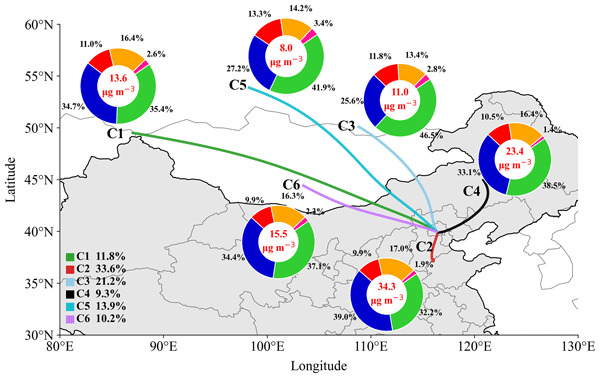
Abstract. Observations at elevated altitudes can capture the chemical characteristics of regional aerosols more effectively than ground-level measurements, but in situ measurements of aerosols over megacities remain scarce. In this work, aerosol composition and gaseous pollutants measured from 2020 to 2024 at a 528‑m landmark tower in downtown Beijing, together with ground-level observations, are analyzed to understand regional pollutant transport. The results reveal that both aerosol mass concentration and composition differ significantly among air masses originating from different directions. Further analysis of sulfur and nitrogen oxidation ratios showed that both were significantly higher in air masses from the south and northeast compared to those from the northwest. This difference is likely attributable to higher relative humidity (RH) in the former, which promotes heterogeneous oxidation of SO2 and NO2 during transport. Regional aerosols were downwards transported to ground efficiently through planetary boundary layer (PBL) process during daytime, thereby exacerbating air pollution in Beijing. These findings underscore the critical role of regional transport in shaping Beijing's aerosol burden and highlight how the chemical signatures of transported aerosols reflect their diverse source regions and formation mechanisms.
-
Notice on discussion status
The requested preprint has a corresponding peer-reviewed final revised paper. You are encouraged to refer to the final revised version.
-
Preprint
(2245 KB)
-
The requested preprint has a corresponding peer-reviewed final revised paper. You are encouraged to refer to the final revised version.
- Preprint
(2245 KB) - Metadata XML
- BibTeX
- EndNote
- Final revised paper


Journal article(s) based on this preprint
Interactive discussion
Status: closed
-
RC1: 'Comment on egusphere-2026-801', Anonymous Referee #1, 23 Apr 2026
-
AC1: 'Reply on RC1', Jiannong Quan, 22 Jun 2026
The comment was uploaded in the form of a supplement: https://egusphere.copernicus.org/preprints/2026/egusphere-2026-801/egusphere-2026-801-AC1-supplement.pdf
-
AC1: 'Reply on RC1', Jiannong Quan, 22 Jun 2026
-
RC2: 'Comment on egusphere-2026-801', Theobard Habineza, 30 Apr 2026
Review of “Measurement report: Regional transport and vertical variability of aerosol pollution over Beijing using a 528 m meteorological tower” (EGUsphere-2026-801)”
This measurement report presents a valuable multi-year dataset (2020–2024) of vertically resolved aerosol pollution in Beijing, utilizing a unique 528 m meteorological tower. By combining elevated and surface measurements, the study investigates how air mass origin, boundary layer dynamics, and chemical indicators (SOR and NOR) are associated with variability in urban air quality.
The long-term nature of these high-altitude, in situ observations is rare and provides important observational constraints on the interaction between elevated pollution layers and surface conditions. The dataset is therefore of high relevance and well suited for publication as a Measurement Report in ACP.
However, several aspects of the analysis rely on classification-based and correlation-based interpretations that require clearer methodological description and more cautious framing. In particular, the reproducibility of air mass classification, the treatment of measurement and derived uncertainties.
Overall, the dataset is strong and publication-worthy, but the manuscript would benefit from improved methodological transparency and more conservative interpretation aligned with observational evidence.
The manuscript is suitable for publication in ACP after addressing the following key issues:
- Methodological clarity, particularly regarding air mass classification procedures and measurement/instrument calibration records.
- Uncertainty reporting, including variability and limitations in both measured and derived quantities
- Careful limitation of causal interpretation, ensuring that conclusions remain consistent with observational (rather than mechanistic or quantitative attribution) evidence
I. Main concern/questions
- Air mass classification methodology and reproducibility
The manuscript attributes differences in aerosol composition to air mass origin (e.g., north, south, northeast). However, the method used to define these air mass categories is not clearly described in the Methods section, and key elements appear only in the Results, the description of the cluster is important.
For example, around L255–L256, a “48-hour trajectory” is mentioned, but the manuscript does not specify:
- The time period over which trajectories were calculated
- The seasonal coverage of the trajectory analysis
- The procedure used to cluster trajectories into air mass categories
Since all conclusions regarding regional transport depend on this classification, the current description is not sufficient for reproducibility.
Required revisions:
- Provide a complete description of the trajectory running/configuration in the Methods section,
- Specify the temporal coverage (dates/seasons/year)
- Describe clearly how air masses clustering was performed and why if applicable.
- Data quality assurance (QA/QC) and instrument calibration
The measurement report uses reference-grade instruments (such as TOF-ACSM, gas analyzers, TEOM) and includes co-located data from the NZG station. However, QA/QC procedures and calibration details are not described, which is essential for a Measurement Report.
At present, the manuscript does not specify:
- Calibration frequency for each instrument
- Data quality control (DQC) and data quality assurance (DQA) procedures
- How consistency between tower and NZG station data was ensured.
Required revisions:
Discuss more about the QA/QC subsection in the Methods including:
- Calibration frequency and standards for each instrument
- Data filtering and flagging criteria
- Treatment of instrument drift and data gaps
- Impact of the higher altitude on the instruments flow change and the correction applied
Here he author can be mentioned for instance that “The relative ionization efficiency( RIE) calibration of the ACSM was performed before the starting of the campaign and on quarterly basis based on the calibration frequency”
Instrument-specific details:
- TOF-ACSM: the flow calibration, Lense alignment, if done, RIE calibration method, and collection efficiency assumptions the type of vaporizer that is used.
- Gas analyzers: calibration standards and zero/span check frequency
- TEOM: calibration approach and any applied corrections to PM₂.₅
- Confirm that NZG station data follow standard QA/QC procedures and describe how datasets were harmonized
- Uncertainty reporting and interpretation of observational relationships
Uncertainty and variability are not consistently reported, and some interpretations extend beyond what can be directly supported by observations.
In particular:
- Derived quantities (SOR, NOR) are reported without uncertainty bounds
- The relationship between RH and SOR/NOR is interpreted as enhanced formation without clearly stating it is an observational association
Required revisions:
- Report mean ± standard deviation (or equivalent) for all grouped analyses
- Include variability or uncertainty ranges in figures
- Rephrase interpretations to indicate association rather than causation for RH–SOR/NOR relationships
II. Minor correction
L63, Please add a reference for this statement.
L77: Add reference.
L79, L88, please remove the hyphen “-”and do the same for the whole document. This sounds like it is AI generated text that might be used for paraphrasing.
L82, L91, L11, L113, add reference
L104: Explain the acronym SIAs used here.
L118, As the first time using the chemical formula for Nitrogen Dioxide SO2 and PM, please give the full names for the chemical formulars
L124, Please add the latitude and longitude of the tower for the specific geographical location
L128, list the mentioned meteorological parameter that were measured
L132, Figure 1a, the sampling location is not clearly identifiable within the presented map. It is difficult to precisely locate the site relative to the surrounding residential and commercial areas. I recommend replacing or complementing the current map with a satellite-based map view, which would better illustrate the surrounding urban context and improve spatial interpretability. In its current form, the road network and surrounding neighborhood structure are not clearly visible. For Figure 1b, it should be explicitly stated whether the reported height refers to above sea level (a.s.l.) or above ground level (a.g.l.). For clarity in atmospheric measurements, the altitude should be consistently labeled (e.g., “528 m a.g.l.” or “528 m a.s.l.” depending on the actual reference used). Regarding Figures 1c and 1d, these figures appear to present results rather than methodological description. I suggest relocating them to the Results section, as they are more consistent with data interpretation than study setup. In addition, the following improvements are recommended to strengthen statistical and graphical clarity:
- Add error bars (e.g., standard deviation or standard error) to all bar plots showing variability
- Clearly specify the statistical metric used (mean, median, or other) in the caption.
- Explicitly describe the plotted quantity, for example:
- “Mean PM₂.₅ mass concentration by station (±SD)”
- or “Median BC concentration with interquartile range”
These improvements will enhance figure readability, statistical transparency, and consistency with ACP presentation standards.
L145: The current description would benefit from explicit explanation, I recommend add this sentence:
“The dried ambient aerosol particles are focused into the 600 °C standard/ captive vaporizer through aerodynamic lenses at a flow of ∼ 0.1 L min−1, where they are thermally vaporized to produce gaseous fragments. These vapors are subsequently ionized by electron impact at 70 eV using a tungsten filament, after which the resulting ions are analyzed in a time-of-flight mass spectrometer based on their mass-to-charge ratio. The detected ion signals are then converted into mass concentrations using standard calibration and ionization efficiency procedures, as described in Fröhlich et al. (2013) and Williams et al. (2013). “
Including a brief and clear description of this sequence would improve methodological transparency and help ensure correct interpretation of the measurement technique.
Was the sampling line made of a cyclone connected to the Nafion dryer, or was there a tube in between connecting the cyclone and the dryer? Please explain more clearly how the sampling line setup was configured. If a tube was used, please specify its material (e.g., stainless steel or Teflon) and its length and cross section area. This information will help determine whether particle loss calculations are needed to compensate for particle losses due to wall losses for longer sampling inlet lines.
L150: precise the model number for the gas measurement instrument mentioned (SO2, NOx and O3, etc ).
L154: add the latitude and longitude for the NZG station for the transparence in the measurement. L154, I would recommend proving more details about the HYSPLIT model configuration in this section (mentioning the model run details, including dispersion direction: back-trajectory, runtime parameters, as well as the used resolution, period, date, time, season, and year for each run). Similarly, please keep these run parameters in the model output in the Results section.
For this Methods section, please consider adding the following:
Add a section detailing the sampling lines for all instruments, as well as the data quality assurance and data quality control procedures that were performed. In addition, include the sampling frequency for each instrument used is useful.
The reader should also be informed about how the data were analyzed and which tools were used to ensure reproducibility. Therefore, please explain the data analysis approach and the software or tools used.
Add a paragraph describing the type of calibration performed, how often calibrations were conducted, how consistent the calibration factors were from one calibration to another, and how calibration was validated and applied to the measurements reported in this study (ACSM, TEOM, and gas measurements). This section is important for ensuring data quality and strengthening the credibility of the results.
In the Methods section, also include a section describing the meteorological characteristics, such as the statistical distribution (e.g., mean, variability) of temperature, relative humidity, wind direction, and wind speed.
Finally, add a section explaining your clustering method, you can refer to the work of Chen et al. (2015) (doi:10.5194/acp-15-12879-2015).
L163-L167: add the ± SD at each quantity to show the variability.
L175: I would replace during 2020 to 2024 by “from 2020 to 2025 “to indicate the time period
L178: Do you have any PBLH data you can use to support this observation?
L200–210 (Figure 2, Panel B):
The observed daytime increase in organic aerosol and sulfate at the 528 m site may indicate that the station is intermittently located within the evolving planetary boundary layer (PBL). During daytime PBL growth, the upward expansion of the mixed layer can incorporate the site into the PBL, leading to enhanced concentrations of secondary aerosol components such as organic aerosol and sulfate due to stronger vertical mixing and in-situ photochemical production.However, the observed diurnal behavior of nitrate is opposite to that of organic aerosol and sulfate. This suggests a more complex partitioning process. In particular, it is plausible that a significant fraction of particulate nitrate is present in the form of organic nitrates (PON/OrgNO₃), which have different volatility and formation pathways compared to inorganic nitrate. We therefore recommend that the authors quantify the organic nitrate fraction (POrgNO₃) if possible, (similar to the observation in this recent paper Habineza et al (2025) DOI: https://doi.org/10.5194/acp-25-15953-2025 ) or at minimum discuss its potential contribution to the observed nitrate diurnal cycle. The morning increase in nitrate, despite expected boundary-layer growth, remains unclear and requires further examination in terms of partitioning, thermodynamics, and photochemical evolution.
L209–210 (SO₂–NO₂ decoupling):
Similarly, the observed decoupling between NO₂ and SO₂ requires additional justification. In a megacity environment such as Beijing, NO₂ and SO₂ are typically co-emitted from combustion-related sources (traffic, industry, power generation) and therefore often exhibit correlated variability at the surface. The reported vertical and temporal decoupling between these species suggests either (i) distinct source regions and transport pathways, or (ii) differential chemical lifetimes and removal processes. The current explanation invoking a combination of vertical mixing and regional transport is insufficiently constrained without supporting analysis.We recommend that the authors include boundary layer height (PBLH) data, if available, to better resolve whether the 528 m site is within or above the mixed layer during different periods.
For Figures 2(c–d), I recommend replacing the current presentation with a single figure organized by seasonal facets, where each panel displays the four components of NR-PM₂.₅ (e.g., organic aerosol, sulfate, nitrate, and ammonium), similar to the approach used in Fig. 2a of DOI: https://doi.org/10.5194/acp-25-15953-2025. This would improve interpretability by allowing clearer seasonal comparisons of chemical composition and reducing redundancy across panels.
In addition, to strengthen the interpretation of PM₂.₅ variability and its driving factors in this region, I strongly recommend performing a source apportionment analysis (e.g., PMF or equivalent receptor modeling). Such an analysis would provide quantitative insights into the dominant emission sources and their seasonal variability, thereby improving the robustness of the conclusions regarding both primary and secondary aerosol contributions. The correlation between the source profiles and the cluster analysis in section 2.3 Will improve the impact on the measurement report on regional sources and provide a supporting inference on the regional transport’s pollution across the used air masses clusters.
L212: please Link this to the Figure 9, a and b
L 212: Add reference.
L222, add reference
L223, add reference
L262, add reference
L264, add reference
L 271, Remove the hyphen “-”
L 341 to 346, add the ±SD
L361: We recommend performing a correlation analysis between seasonal PM composition and the air mass clusters to assess the relative importance of local and regional sources contributing to PM mass composition at the site. A similar approach applied to PM source profiles would be more useful, particularly if PMF analysis is performed.
Citation: https://doi.org/10.5194/egusphere-2026-801-RC2 -
AC2: 'Reply on RC2', Jiannong Quan, 22 Jun 2026
The comment was uploaded in the form of a supplement: https://egusphere.copernicus.org/preprints/2026/egusphere-2026-801/egusphere-2026-801-AC2-supplement.pdf
-
RC3: 'Comment on egusphere-2026-801', Anonymous Referee #3, 04 May 2026
The manuscript by Liu et al. is a solid measurement report whose main strength lies in several years of monitoring the chemical composition of aerosols at an altitude over half a kilometer above the ground. There are not many such measurements but they are important for understanding the vertical distribution of particles. From this perspective, ACP is a suitable journal for publishing this report. However, before publishing, I have a few following comments that should be addressed.
Discussion on the vertical mixing of pollutants due to the changes in the PBL is provided in Section 3.4. This is based on measurements of trace gases and PM2.5 taken at both heights (ground level and 528 m above ground level). I think it would be very useful to divide the aerosol measurements from ACSM based on whether they were above or below the PBL. Based on this, it would then be possible to interpret the impact of local and regional/LRT transport on specific measurements. Is it possible to determine the PBL height for a given measurement period (for example, using a ceilometer or at least a model) and analyze the impact of changes in the PBL on aerosol measurements at an altitude of 528 m?
Furthermore, Fig. 9 shows changes in diurnal variations for PM2.5 and trace gases at ground level and at 528 m. Could these graphs be divided by season and included, for example, in a supplement? I would expect these variations depending on the season. Is it so?
The summer months (June–August?) are not so well represented. There are even no data at all for August. It would be appropriate to explain why this data is missing for the summer and to further consider how representative this data is for the discussion in Section 3.3 (seasonal aerosol composition). Yes, concentrations are lowest in the summer, but this is based solely on data from 36 days in the summer of 2023. This is then compared with other seasons, where the data typically covers at least three years. The statistics used for comparison are therefore probably different.
What was the data coverage for the parallel measurements of NO₂, SO₂, O₃, and PM₂.₅ used for comparison at various study sites? Were only periods where measurements from ACSM were available included in the comparison, while others were excluded? For example, were trace gas data for August excluded from the overall comparison because parallel data from ACSM were missing?
Does Fig. 5 represent data from the ground or 528 m? Can data from the second level be added to it as well?
lines 333–335: Please develop a discussion of what these ratios imply, for example, regarding the age of the aerosol or, in more detail, the chemical reactions occurring during aerosol transport.
l. 143: instead of "a University Research Glassware (URG) cyclone to remove coarse particles with a 2.5 µm size cutoff...", I would prefer to write "and PM2.5 cyclone (by URG)"
l. 381: correct NR-PN to NR-PM
Fig 4: Explain what is WPSCF?Citation: https://doi.org/10.5194/egusphere-2026-801-RC3 -
AC3: 'Reply on RC3', Jiannong Quan, 22 Jun 2026
The comment was uploaded in the form of a supplement: https://egusphere.copernicus.org/preprints/2026/egusphere-2026-801/egusphere-2026-801-AC3-supplement.pdf
-
AC3: 'Reply on RC3', Jiannong Quan, 22 Jun 2026
Peer review completion


Interactive discussion
Status: closed
-
RC1: 'Comment on egusphere-2026-801', Anonymous Referee #1, 23 Apr 2026
It is the first time to analyze the sources of aerosols in Beijing using urban sites at a height of 528 meters. The research has clear research significance and application value. However, the article needs to conduct a thorough analysis and further clarify the following issues.
1. In Figure 2, why do the diurnal variation characteristics of various aerosol components differ? Is it due to different sources? Further analysis is needed.
2. What are the differences between analyzing the source of aerosol components at 500 meters and at ground observation stations? Especially, what are the differences in source statistics and potential source area analysis? A difference analysis needs to be provided.
3. In Figure 9, why is the NO2 at the CITIC station higher than that at the NZG station near the ground in the afternoon? Why is there still a difference in SO2 concentration between the two stations at noon when convection is strong, instead of being close?Citation: https://doi.org/10.5194/egusphere-2026-801-RC1 -
AC1: 'Reply on RC1', Jiannong Quan, 22 Jun 2026
The comment was uploaded in the form of a supplement: https://egusphere.copernicus.org/preprints/2026/egusphere-2026-801/egusphere-2026-801-AC1-supplement.pdf
-
AC1: 'Reply on RC1', Jiannong Quan, 22 Jun 2026
-
RC2: 'Comment on egusphere-2026-801', Theobard Habineza, 30 Apr 2026
Review of “Measurement report: Regional transport and vertical variability of aerosol pollution over Beijing using a 528 m meteorological tower” (EGUsphere-2026-801)”
This measurement report presents a valuable multi-year dataset (2020–2024) of vertically resolved aerosol pollution in Beijing, utilizing a unique 528 m meteorological tower. By combining elevated and surface measurements, the study investigates how air mass origin, boundary layer dynamics, and chemical indicators (SOR and NOR) are associated with variability in urban air quality.
The long-term nature of these high-altitude, in situ observations is rare and provides important observational constraints on the interaction between elevated pollution layers and surface conditions. The dataset is therefore of high relevance and well suited for publication as a Measurement Report in ACP.
However, several aspects of the analysis rely on classification-based and correlation-based interpretations that require clearer methodological description and more cautious framing. In particular, the reproducibility of air mass classification, the treatment of measurement and derived uncertainties.
Overall, the dataset is strong and publication-worthy, but the manuscript would benefit from improved methodological transparency and more conservative interpretation aligned with observational evidence.
The manuscript is suitable for publication in ACP after addressing the following key issues:
- Methodological clarity, particularly regarding air mass classification procedures and measurement/instrument calibration records.
- Uncertainty reporting, including variability and limitations in both measured and derived quantities
- Careful limitation of causal interpretation, ensuring that conclusions remain consistent with observational (rather than mechanistic or quantitative attribution) evidence
I. Main concern/questions
- Air mass classification methodology and reproducibility
The manuscript attributes differences in aerosol composition to air mass origin (e.g., north, south, northeast). However, the method used to define these air mass categories is not clearly described in the Methods section, and key elements appear only in the Results, the description of the cluster is important.
For example, around L255–L256, a “48-hour trajectory” is mentioned, but the manuscript does not specify:
- The time period over which trajectories were calculated
- The seasonal coverage of the trajectory analysis
- The procedure used to cluster trajectories into air mass categories
Since all conclusions regarding regional transport depend on this classification, the current description is not sufficient for reproducibility.
Required revisions:
- Provide a complete description of the trajectory running/configuration in the Methods section,
- Specify the temporal coverage (dates/seasons/year)
- Describe clearly how air masses clustering was performed and why if applicable.
- Data quality assurance (QA/QC) and instrument calibration
The measurement report uses reference-grade instruments (such as TOF-ACSM, gas analyzers, TEOM) and includes co-located data from the NZG station. However, QA/QC procedures and calibration details are not described, which is essential for a Measurement Report.
At present, the manuscript does not specify:
- Calibration frequency for each instrument
- Data quality control (DQC) and data quality assurance (DQA) procedures
- How consistency between tower and NZG station data was ensured.
Required revisions:
Discuss more about the QA/QC subsection in the Methods including:
- Calibration frequency and standards for each instrument
- Data filtering and flagging criteria
- Treatment of instrument drift and data gaps
- Impact of the higher altitude on the instruments flow change and the correction applied
Here he author can be mentioned for instance that “The relative ionization efficiency( RIE) calibration of the ACSM was performed before the starting of the campaign and on quarterly basis based on the calibration frequency”
Instrument-specific details:
- TOF-ACSM: the flow calibration, Lense alignment, if done, RIE calibration method, and collection efficiency assumptions the type of vaporizer that is used.
- Gas analyzers: calibration standards and zero/span check frequency
- TEOM: calibration approach and any applied corrections to PM₂.₅
- Confirm that NZG station data follow standard QA/QC procedures and describe how datasets were harmonized
- Uncertainty reporting and interpretation of observational relationships
Uncertainty and variability are not consistently reported, and some interpretations extend beyond what can be directly supported by observations.
In particular:
- Derived quantities (SOR, NOR) are reported without uncertainty bounds
- The relationship between RH and SOR/NOR is interpreted as enhanced formation without clearly stating it is an observational association
Required revisions:
- Report mean ± standard deviation (or equivalent) for all grouped analyses
- Include variability or uncertainty ranges in figures
- Rephrase interpretations to indicate association rather than causation for RH–SOR/NOR relationships
II. Minor correction
L63, Please add a reference for this statement.
L77: Add reference.
L79, L88, please remove the hyphen “-”and do the same for the whole document. This sounds like it is AI generated text that might be used for paraphrasing.
L82, L91, L11, L113, add reference
L104: Explain the acronym SIAs used here.
L118, As the first time using the chemical formula for Nitrogen Dioxide SO2 and PM, please give the full names for the chemical formulars
L124, Please add the latitude and longitude of the tower for the specific geographical location
L128, list the mentioned meteorological parameter that were measured
L132, Figure 1a, the sampling location is not clearly identifiable within the presented map. It is difficult to precisely locate the site relative to the surrounding residential and commercial areas. I recommend replacing or complementing the current map with a satellite-based map view, which would better illustrate the surrounding urban context and improve spatial interpretability. In its current form, the road network and surrounding neighborhood structure are not clearly visible. For Figure 1b, it should be explicitly stated whether the reported height refers to above sea level (a.s.l.) or above ground level (a.g.l.). For clarity in atmospheric measurements, the altitude should be consistently labeled (e.g., “528 m a.g.l.” or “528 m a.s.l.” depending on the actual reference used). Regarding Figures 1c and 1d, these figures appear to present results rather than methodological description. I suggest relocating them to the Results section, as they are more consistent with data interpretation than study setup. In addition, the following improvements are recommended to strengthen statistical and graphical clarity:
- Add error bars (e.g., standard deviation or standard error) to all bar plots showing variability
- Clearly specify the statistical metric used (mean, median, or other) in the caption.
- Explicitly describe the plotted quantity, for example:
- “Mean PM₂.₅ mass concentration by station (±SD)”
- or “Median BC concentration with interquartile range”
These improvements will enhance figure readability, statistical transparency, and consistency with ACP presentation standards.
L145: The current description would benefit from explicit explanation, I recommend add this sentence:
“The dried ambient aerosol particles are focused into the 600 °C standard/ captive vaporizer through aerodynamic lenses at a flow of ∼ 0.1 L min−1, where they are thermally vaporized to produce gaseous fragments. These vapors are subsequently ionized by electron impact at 70 eV using a tungsten filament, after which the resulting ions are analyzed in a time-of-flight mass spectrometer based on their mass-to-charge ratio. The detected ion signals are then converted into mass concentrations using standard calibration and ionization efficiency procedures, as described in Fröhlich et al. (2013) and Williams et al. (2013). “
Including a brief and clear description of this sequence would improve methodological transparency and help ensure correct interpretation of the measurement technique.
Was the sampling line made of a cyclone connected to the Nafion dryer, or was there a tube in between connecting the cyclone and the dryer? Please explain more clearly how the sampling line setup was configured. If a tube was used, please specify its material (e.g., stainless steel or Teflon) and its length and cross section area. This information will help determine whether particle loss calculations are needed to compensate for particle losses due to wall losses for longer sampling inlet lines.
L150: precise the model number for the gas measurement instrument mentioned (SO2, NOx and O3, etc ).
L154: add the latitude and longitude for the NZG station for the transparence in the measurement. L154, I would recommend proving more details about the HYSPLIT model configuration in this section (mentioning the model run details, including dispersion direction: back-trajectory, runtime parameters, as well as the used resolution, period, date, time, season, and year for each run). Similarly, please keep these run parameters in the model output in the Results section.
For this Methods section, please consider adding the following:
Add a section detailing the sampling lines for all instruments, as well as the data quality assurance and data quality control procedures that were performed. In addition, include the sampling frequency for each instrument used is useful.
The reader should also be informed about how the data were analyzed and which tools were used to ensure reproducibility. Therefore, please explain the data analysis approach and the software or tools used.
Add a paragraph describing the type of calibration performed, how often calibrations were conducted, how consistent the calibration factors were from one calibration to another, and how calibration was validated and applied to the measurements reported in this study (ACSM, TEOM, and gas measurements). This section is important for ensuring data quality and strengthening the credibility of the results.
In the Methods section, also include a section describing the meteorological characteristics, such as the statistical distribution (e.g., mean, variability) of temperature, relative humidity, wind direction, and wind speed.
Finally, add a section explaining your clustering method, you can refer to the work of Chen et al. (2015) (doi:10.5194/acp-15-12879-2015).
L163-L167: add the ± SD at each quantity to show the variability.
L175: I would replace during 2020 to 2024 by “from 2020 to 2025 “to indicate the time period
L178: Do you have any PBLH data you can use to support this observation?
L200–210 (Figure 2, Panel B):
The observed daytime increase in organic aerosol and sulfate at the 528 m site may indicate that the station is intermittently located within the evolving planetary boundary layer (PBL). During daytime PBL growth, the upward expansion of the mixed layer can incorporate the site into the PBL, leading to enhanced concentrations of secondary aerosol components such as organic aerosol and sulfate due to stronger vertical mixing and in-situ photochemical production.However, the observed diurnal behavior of nitrate is opposite to that of organic aerosol and sulfate. This suggests a more complex partitioning process. In particular, it is plausible that a significant fraction of particulate nitrate is present in the form of organic nitrates (PON/OrgNO₃), which have different volatility and formation pathways compared to inorganic nitrate. We therefore recommend that the authors quantify the organic nitrate fraction (POrgNO₃) if possible, (similar to the observation in this recent paper Habineza et al (2025) DOI: https://doi.org/10.5194/acp-25-15953-2025 ) or at minimum discuss its potential contribution to the observed nitrate diurnal cycle. The morning increase in nitrate, despite expected boundary-layer growth, remains unclear and requires further examination in terms of partitioning, thermodynamics, and photochemical evolution.
L209–210 (SO₂–NO₂ decoupling):
Similarly, the observed decoupling between NO₂ and SO₂ requires additional justification. In a megacity environment such as Beijing, NO₂ and SO₂ are typically co-emitted from combustion-related sources (traffic, industry, power generation) and therefore often exhibit correlated variability at the surface. The reported vertical and temporal decoupling between these species suggests either (i) distinct source regions and transport pathways, or (ii) differential chemical lifetimes and removal processes. The current explanation invoking a combination of vertical mixing and regional transport is insufficiently constrained without supporting analysis.We recommend that the authors include boundary layer height (PBLH) data, if available, to better resolve whether the 528 m site is within or above the mixed layer during different periods.
For Figures 2(c–d), I recommend replacing the current presentation with a single figure organized by seasonal facets, where each panel displays the four components of NR-PM₂.₅ (e.g., organic aerosol, sulfate, nitrate, and ammonium), similar to the approach used in Fig. 2a of DOI: https://doi.org/10.5194/acp-25-15953-2025. This would improve interpretability by allowing clearer seasonal comparisons of chemical composition and reducing redundancy across panels.
In addition, to strengthen the interpretation of PM₂.₅ variability and its driving factors in this region, I strongly recommend performing a source apportionment analysis (e.g., PMF or equivalent receptor modeling). Such an analysis would provide quantitative insights into the dominant emission sources and their seasonal variability, thereby improving the robustness of the conclusions regarding both primary and secondary aerosol contributions. The correlation between the source profiles and the cluster analysis in section 2.3 Will improve the impact on the measurement report on regional sources and provide a supporting inference on the regional transport’s pollution across the used air masses clusters.
L212: please Link this to the Figure 9, a and b
L 212: Add reference.
L222, add reference
L223, add reference
L262, add reference
L264, add reference
L 271, Remove the hyphen “-”
L 341 to 346, add the ±SD
L361: We recommend performing a correlation analysis between seasonal PM composition and the air mass clusters to assess the relative importance of local and regional sources contributing to PM mass composition at the site. A similar approach applied to PM source profiles would be more useful, particularly if PMF analysis is performed.
Citation: https://doi.org/10.5194/egusphere-2026-801-RC2 -
AC2: 'Reply on RC2', Jiannong Quan, 22 Jun 2026
The comment was uploaded in the form of a supplement: https://egusphere.copernicus.org/preprints/2026/egusphere-2026-801/egusphere-2026-801-AC2-supplement.pdf
-
RC3: 'Comment on egusphere-2026-801', Anonymous Referee #3, 04 May 2026
The manuscript by Liu et al. is a solid measurement report whose main strength lies in several years of monitoring the chemical composition of aerosols at an altitude over half a kilometer above the ground. There are not many such measurements but they are important for understanding the vertical distribution of particles. From this perspective, ACP is a suitable journal for publishing this report. However, before publishing, I have a few following comments that should be addressed.
Discussion on the vertical mixing of pollutants due to the changes in the PBL is provided in Section 3.4. This is based on measurements of trace gases and PM2.5 taken at both heights (ground level and 528 m above ground level). I think it would be very useful to divide the aerosol measurements from ACSM based on whether they were above or below the PBL. Based on this, it would then be possible to interpret the impact of local and regional/LRT transport on specific measurements. Is it possible to determine the PBL height for a given measurement period (for example, using a ceilometer or at least a model) and analyze the impact of changes in the PBL on aerosol measurements at an altitude of 528 m?
Furthermore, Fig. 9 shows changes in diurnal variations for PM2.5 and trace gases at ground level and at 528 m. Could these graphs be divided by season and included, for example, in a supplement? I would expect these variations depending on the season. Is it so?
The summer months (June–August?) are not so well represented. There are even no data at all for August. It would be appropriate to explain why this data is missing for the summer and to further consider how representative this data is for the discussion in Section 3.3 (seasonal aerosol composition). Yes, concentrations are lowest in the summer, but this is based solely on data from 36 days in the summer of 2023. This is then compared with other seasons, where the data typically covers at least three years. The statistics used for comparison are therefore probably different.
What was the data coverage for the parallel measurements of NO₂, SO₂, O₃, and PM₂.₅ used for comparison at various study sites? Were only periods where measurements from ACSM were available included in the comparison, while others were excluded? For example, were trace gas data for August excluded from the overall comparison because parallel data from ACSM were missing?
Does Fig. 5 represent data from the ground or 528 m? Can data from the second level be added to it as well?
lines 333–335: Please develop a discussion of what these ratios imply, for example, regarding the age of the aerosol or, in more detail, the chemical reactions occurring during aerosol transport.
l. 143: instead of "a University Research Glassware (URG) cyclone to remove coarse particles with a 2.5 µm size cutoff...", I would prefer to write "and PM2.5 cyclone (by URG)"
l. 381: correct NR-PN to NR-PM
Fig 4: Explain what is WPSCF?Citation: https://doi.org/10.5194/egusphere-2026-801-RC3 -
AC3: 'Reply on RC3', Jiannong Quan, 22 Jun 2026
The comment was uploaded in the form of a supplement: https://egusphere.copernicus.org/preprints/2026/egusphere-2026-801/egusphere-2026-801-AC3-supplement.pdf
-
AC3: 'Reply on RC3', Jiannong Quan, 22 Jun 2026
Peer review completion
Journal article(s) based on this preprint
Data sets
Cloud data-GRL-2025 J. Quan https://doi.org/10.5281/zenodo.18424062
Viewed
| HTML | XML | Total | BibTeX | EndNote | |
|---|---|---|---|---|---|
| 950 | 427 | 100 | 1,477 | 77 | 100 |
- HTML: 950
- PDF: 427
- XML: 100
- Total: 1,477
- BibTeX: 77
- EndNote: 100
Viewed (geographical distribution)
| Country | # | Views | % |
|---|
| Total: | 0 |
| HTML: | 0 |
| PDF: | 0 |
| XML: | 0 |
- 1
Xiaoxue Liu
Pengkun Ma
Yubing Pan
Qianqian Wang

Lei Zhang
The requested preprint has a corresponding peer-reviewed final revised paper. You are encouraged to refer to the final revised version.
- Preprint
(2245 KB) - Metadata XML
It is the first time to analyze the sources of aerosols in Beijing using urban sites at a height of 528 meters. The research has clear research significance and application value. However, the article needs to conduct a thorough analysis and further clarify the following issues.
1. In Figure 2, why do the diurnal variation characteristics of various aerosol components differ? Is it due to different sources? Further analysis is needed.
2. What are the differences between analyzing the source of aerosol components at 500 meters and at ground observation stations? Especially, what are the differences in source statistics and potential source area analysis? A difference analysis needs to be provided.
3. In Figure 9, why is the NO2 at the CITIC station higher than that at the NZG station near the ground in the afternoon? Why is there still a difference in SO2 concentration between the two stations at noon when convection is strong, instead of being close?