
the Creative Commons Attribution 4.0 License.
the Creative Commons Attribution 4.0 License.
 | 02 Mar 2026
Revisiting the surface impacts of the QBO in the Large Ensemble Single Forcing MIP simulations: are teleconnections still too weak?
Abstract. The teleconnections of the Quasi-Biennial Oscillation are revisited using ~65,000 years of model output contributed by four modeling centers to the Large Ensemble Single Forcing Model Intercomparison Project (LESFMIP). The large ensemble size (at least 10, and in many cases 50) allows isolation of weak signals that are usually hidden by internal variability, as well as better quantification of the role of internal variability in possible model–observation discrepancies in the magnitude of the signals. All four models simulate a Holton-Tan effect, and two of the models also simulate a subtropical downward arching wind horseshoe teleconnection that is most prominent in the Pacific sector. The magnitudes of these teleconnections are statistically indistinguishable from those observed in two of the models but not in the other two; this is a notable improvement from previous work that analyzed small ensembles. These large-scale teleconnections lead to surface temperature and precipitation anomalies over the mid-latitude continents, including an impact on western North America surface temperature which appears to have not been noted before. Furthermore, all models show impacts of the QBO on tropical surface temperature and precipitation, however the nature of these responses differs across the models due, in part, to qualitatively different interactions with El Niño. Remarkably, one of the models simulates a connection between the QBO and the Madden Julian Oscillation that mimics observations, although it remains too weak. Finally, the LESFMIP simulations allow an exploration of external forcings impacting the magnitude of teleconnections. Among these experiments, greenhouse gas forcing is seen to significantly influence the subtropical wind horseshoe of the QBO.
-
Notice on discussion status
The requested preprint has a corresponding peer-reviewed final revised paper. You are encouraged to refer to the final revised version.
-
Preprint
(9949 KB)
-
Supplement
(8138 KB)
-
The requested preprint has a corresponding peer-reviewed final revised paper. You are encouraged to refer to the final revised version.
- Preprint
(9949 KB) - Metadata XML
-
Supplement
(8138 KB) - BibTeX
- EndNote
- Final revised paper


Journal article(s) based on this preprint
Interactive discussion
Status: closed
-
RC1: 'Comment on egusphere-2026-759', Anonymous Referee #1, 15 Apr 2026
-
AC1: 'Reply on RC1', Chaim Garfinkel, 01 Jun 2026
The comment was uploaded in the form of a supplement: https://egusphere.copernicus.org/preprints/2026/egusphere-2026-759/egusphere-2026-759-AC1-supplement.pdf
-
AC1: 'Reply on RC1', Chaim Garfinkel, 01 Jun 2026
-
RC2: 'Comment on egusphere-2026-759', Anonymous Referee #2, 12 May 2026
Review of "Revisiting the surface impacts of the QBO in the Large Ensemble Single Forcing MIP simulations: are teleconnections still too weak?" by Garfinkel et al.
This very interesting study examines QBO teleconnections in four models with spontaneous QBOs that contributed data to LESFMIP. The large ensembles allow clearer isolation of previously diagnosed teleconnection signals. It also discovers a QBO impact on western North American near-surface temperature, and finds that one of the models reproduces the observed QBO-MJO teleconnection (albeit very weakly in comparison with observations). The paper is very clearly written and the figures clearly presented. I found these results compelling and recommend publication after minor revisions.
Comments/suggestions by line number:
Fig. S1 caption: state the value of the blue & red line contours shown below 30 hPa.
136-137: If this refers to the positive (red) regression coefficients, is CNRM the exception (not IPSL)?
Fig. 4 caption: from the panel d5 title it seems to be the same region as for the models (220-240E, 55-70N).
157: insert " (any of December, January or February)" after "available data" to help clarify these are the available months for this test (if I've understood correctly).
188-189: Uncertainty in the observed response is so large (confidence intervals in Fig. 4b5) that it may not be possible to say that the models' seasonality differs from that observed.
205: typo: "Scandinavia"
222: Weaker westerlies? Based on the negative values in the Pacific boxes in Fig. 6 or Fig. S11. I guess some plots show stronger westerlies on the poleward side of this feature, but it looks to me like the negative blob is more consistent across all plots. (Line 231 also mentions weaker westerlies.)
269-270: Not sure what features are being highlighted as robust in South Asia or East Asia. For HadGEM and MIROC at least there seems enough agreement across experiments that these patterns represent a real response, but the two models don't look very similar to me in South and East Asia.
284: Fig S10 shows ERA5. Fig S12 uses 1970-onward but for tas. Was a figure mistakenly left out of the Supplemental?
286: warm anomaly --> cold anomaly
287: Meant to refer to Fig. S12 here? (in addition to Fig 9)
301: This argument seems to assume the vertical shear remains the same, but if the QBO weakens then the shear weakens. Is that decrease large enough to affect this conclusion? e.g., in eq. (2) could N and the T anomaly both decrease, leaving w* about the same? Are there any runs of the same models with w* available that could be used to check? (I don't imagine a large ensemble would be needed for this.)
312: "Prescribed ozone changes invigorate the QBO in both models": the QBO amplitude in wind and/or temperature increases? Is a reference to Butchart et al. 2023 appropriate? (https://doi.org/10.1029/2023GL104401)
332: "leads to" --> "is consistent with"
375: Line 280 said that this increase is not statistically significant, so if this finding is mentioned in the conclusions I think at least that caveat should be mentioned.
380-384: It seems to me this hinges on what exactly is meant by the term "teleconnection". If it refers to a response magnitude, e.g. size of a polar-vortex composite difference, then the models do underestimate these responses. If it refers to the mechanism(s) by which a QBO influence leads to a response, the regression results argue that the models do represent the mechanisms but underestimated QBO amplitude results in a weak response. If so, perhaps that point could be made more explicit here.
Citation: https://doi.org/10.5194/egusphere-2026-759-RC2 -
AC2: 'Reply on RC2', Chaim Garfinkel, 01 Jun 2026
The comment was uploaded in the form of a supplement: https://egusphere.copernicus.org/preprints/2026/egusphere-2026-759/egusphere-2026-759-AC2-supplement.pdf
-
AC2: 'Reply on RC2', Chaim Garfinkel, 01 Jun 2026
Peer review completion


Interactive discussion
Status: closed
-
RC1: 'Comment on egusphere-2026-759', Anonymous Referee #1, 15 Apr 2026
Review of manuscript “Revisiting the surface impacts of the QBO in the Large Ensemble Single Forcing MIP simulations: are teleconnections still too weak?”
This study revisits QBO teleconnections using a large ensemble of four model outputs from LESFMIP mainly to examine the H–T effect and subtropical downward arching, focusing on their modulation of surface temperature and precipitation. It is argued that large ensembles enable the isolation of weak signals that are typically obscured by internal variability and provide better quantification of their magnitude. QBO teleconnections remain an important research topic; however, only marginal improvement is found across the stratospheric route (H–T effect), subtropical route (horseshoe arching), and tropical route (convective pathway), with model signals still weaker than those observed. Accurate isolation of these weak signals, which are hidden by internal variability, could significantly improve long-range forecasting of surface climate. However, in its current form, the manuscript does not yet meet the required standards for publication in terms of clarity of novelty, and technical errors. I therefore return the manuscript for the following revisions:
Novelty of the study:
Thus, the novelty of this work requires further clarification. The authors should explicitly state what is new or improved compared to previous studies. Earlier research has already shown that QBO teleconnections tend to be too weak in models. The present study largely revisits this conclusion using the recent availability of large ensembles from models with spontaneously generated QBOs.
Moreover, the discussion and summary rely heavily on findings from previous studies, with limited new insights. Overall, the manuscript concludes that the use of large ensembles provides a clearer picture of how well models simulate QBO teleconnections; however, this contribution needs to be more clearly articulated in terms of its originality and added value.
Technical errors:
The current study requires technical corrections. The figures appear to have been prepared in a rather casual manner, particularly with respect to font sizes, consistent notation, titles, color bar levels, and axis labels. Also, there is random use of abbreviations in the text without introduce them. The authors should ensure consistency in notation and presentation throughout the manuscript.
Some of these issues have been highlighted in the specific comments; however, it has not been possible to identify all of them due to the large number of inconsistencies.
Specific comments:
Second paragraph 2 (33-43). Also, emphasize the routes associated with these three distinct mechanisms.
L77 Use the QBO E and QBO W instead of eQBO and wQBO .
L118 remove “also”
L119 “NH”, Abbreviations should be defined at first use by providing the full term. Replace “(all but IPSL6)” with “ but except IPSL6”
L125 “the mean meridional circulation of the QBO” with “the QBO mean meridional circulation (MMC)”, and further use of this abbreviation.
L130 “on the other hand”. Move it to the beginning of the sentence.
L148 -149 In ERA5…., rewrite the sentence with more clarity.
L 152, “larger uncertainty in observation”, please specify them briefly.
L171 “ Northern Hemisphere” Please refer to the comment at line 119, where the abbreviation “NH” is used without first defining the full term. Insert a full stop after ‘Europe’ and begin a new sentence.”
L172 North Atlantic Oscillation, the abbreviation NAO has already been introduced.
L173 “previous work…” Include one or two most relevant citations instead of referring to the Introduction.
Corrections in figures:
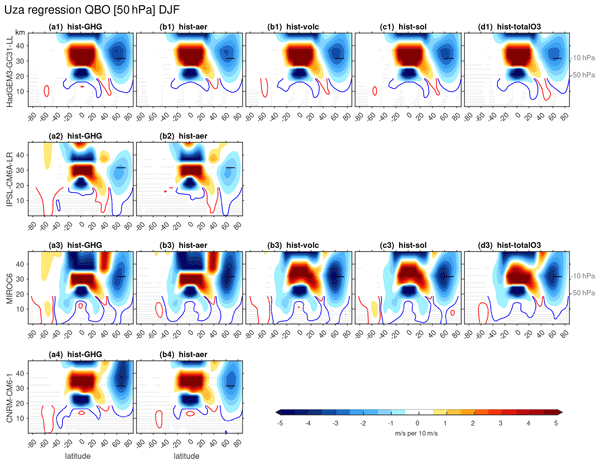
Fig.1 Interchange the left and right sides of the y-axis, i.e., place the pressure scale on the left side and the height scale on the right side. Also, ensure a clear separation between the y-axis label and the unit text.”
Set the colorbar scale at appropriate intervals to avoid crowding or spacing. In subsequent Fig. 3, the left panel shows only the extreme values on the colorbar, whereas the right panel includes intermediate values as well.
Colorbar scale unit is “m/s per 10 m/s” but for the supplement (Figure S5) “m/s”. Same inconstancy in other figures and their supplementary.
Proper use of title. Text Uzaregress is confusing, do you mean “Uza regression”? Same for Tzaregress ?
In Fig.2 caption “x-es”?
Fig,4 Shift panel (a1)---.. at title level. Revise ‘Uza60N10hPa’ to ‘Uza 60N 10hPa’. The spacing used for longitude- latitude–pressure variables is inconsistent; please ensure a consistent format is maintained throughout the manuscript. Main title should start capital letter i.e. “regression” to “Regression”.
Fig.6 The box size for the calculation can be extended over the entire significant region, rather than being restricted to a very small core region.
Fig. 10 Use the same colour code as in Figure 9
S10 -S12 Display the x- and y-axis labels with adequate spacing for better readability (Figs. 6, 7, 9, 12 too)
The above suggestions are only indicative; please review all figures carefully to ensure consistency and improved presentation.
-
AC1: 'Reply on RC1', Chaim Garfinkel, 01 Jun 2026
The comment was uploaded in the form of a supplement: https://egusphere.copernicus.org/preprints/2026/egusphere-2026-759/egusphere-2026-759-AC1-supplement.pdf
-
AC1: 'Reply on RC1', Chaim Garfinkel, 01 Jun 2026
-
RC2: 'Comment on egusphere-2026-759', Anonymous Referee #2, 12 May 2026
Review of "Revisiting the surface impacts of the QBO in the Large Ensemble Single Forcing MIP simulations: are teleconnections still too weak?" by Garfinkel et al.
This very interesting study examines QBO teleconnections in four models with spontaneous QBOs that contributed data to LESFMIP. The large ensembles allow clearer isolation of previously diagnosed teleconnection signals. It also discovers a QBO impact on western North American near-surface temperature, and finds that one of the models reproduces the observed QBO-MJO teleconnection (albeit very weakly in comparison with observations). The paper is very clearly written and the figures clearly presented. I found these results compelling and recommend publication after minor revisions.
Comments/suggestions by line number:
Fig. S1 caption: state the value of the blue & red line contours shown below 30 hPa.
136-137: If this refers to the positive (red) regression coefficients, is CNRM the exception (not IPSL)?
Fig. 4 caption: from the panel d5 title it seems to be the same region as for the models (220-240E, 55-70N).
157: insert " (any of December, January or February)" after "available data" to help clarify these are the available months for this test (if I've understood correctly).
188-189: Uncertainty in the observed response is so large (confidence intervals in Fig. 4b5) that it may not be possible to say that the models' seasonality differs from that observed.
205: typo: "Scandinavia"
222: Weaker westerlies? Based on the negative values in the Pacific boxes in Fig. 6 or Fig. S11. I guess some plots show stronger westerlies on the poleward side of this feature, but it looks to me like the negative blob is more consistent across all plots. (Line 231 also mentions weaker westerlies.)
269-270: Not sure what features are being highlighted as robust in South Asia or East Asia. For HadGEM and MIROC at least there seems enough agreement across experiments that these patterns represent a real response, but the two models don't look very similar to me in South and East Asia.
284: Fig S10 shows ERA5. Fig S12 uses 1970-onward but for tas. Was a figure mistakenly left out of the Supplemental?
286: warm anomaly --> cold anomaly
287: Meant to refer to Fig. S12 here? (in addition to Fig 9)
301: This argument seems to assume the vertical shear remains the same, but if the QBO weakens then the shear weakens. Is that decrease large enough to affect this conclusion? e.g., in eq. (2) could N and the T anomaly both decrease, leaving w* about the same? Are there any runs of the same models with w* available that could be used to check? (I don't imagine a large ensemble would be needed for this.)
312: "Prescribed ozone changes invigorate the QBO in both models": the QBO amplitude in wind and/or temperature increases? Is a reference to Butchart et al. 2023 appropriate? (https://doi.org/10.1029/2023GL104401)
332: "leads to" --> "is consistent with"
375: Line 280 said that this increase is not statistically significant, so if this finding is mentioned in the conclusions I think at least that caveat should be mentioned.
380-384: It seems to me this hinges on what exactly is meant by the term "teleconnection". If it refers to a response magnitude, e.g. size of a polar-vortex composite difference, then the models do underestimate these responses. If it refers to the mechanism(s) by which a QBO influence leads to a response, the regression results argue that the models do represent the mechanisms but underestimated QBO amplitude results in a weak response. If so, perhaps that point could be made more explicit here.
Citation: https://doi.org/10.5194/egusphere-2026-759-RC2 -
AC2: 'Reply on RC2', Chaim Garfinkel, 01 Jun 2026
The comment was uploaded in the form of a supplement: https://egusphere.copernicus.org/preprints/2026/egusphere-2026-759/egusphere-2026-759-AC2-supplement.pdf
-
AC2: 'Reply on RC2', Chaim Garfinkel, 01 Jun 2026
Peer review completion
Journal article(s) based on this preprint
Viewed
| HTML | XML | Total | Supplement | BibTeX | EndNote | |
|---|---|---|---|---|---|---|
| 839 | 430 | 95 | 1,364 | 903 | 139 | 165 |
- HTML: 839
- PDF: 430
- XML: 95
- Total: 1,364
- Supplement: 903
- BibTeX: 139
- EndNote: 165
Viewed (geographical distribution)
| Country | # | Views | % |
|---|
| Total: | 0 |
| HTML: | 0 |
| PDF: | 0 |
| XML: | 0 |
- 1
Chaim I. Garfinkel

David Avisar
Scott M. Osprey
Doug Smith
Jonathon S. Wright
The requested preprint has a corresponding peer-reviewed final revised paper. You are encouraged to refer to the final revised version.
- Preprint
(9949 KB) - Metadata XML
-
Supplement
(8138 KB) - BibTeX
- EndNote
- Final revised paper
Review of manuscript “Revisiting the surface impacts of the QBO in the Large Ensemble Single Forcing MIP simulations: are teleconnections still too weak?”
This study revisits QBO teleconnections using a large ensemble of four model outputs from LESFMIP mainly to examine the H–T effect and subtropical downward arching, focusing on their modulation of surface temperature and precipitation. It is argued that large ensembles enable the isolation of weak signals that are typically obscured by internal variability and provide better quantification of their magnitude. QBO teleconnections remain an important research topic; however, only marginal improvement is found across the stratospheric route (H–T effect), subtropical route (horseshoe arching), and tropical route (convective pathway), with model signals still weaker than those observed. Accurate isolation of these weak signals, which are hidden by internal variability, could significantly improve long-range forecasting of surface climate. However, in its current form, the manuscript does not yet meet the required standards for publication in terms of clarity of novelty, and technical errors. I therefore return the manuscript for the following revisions:
Novelty of the study:
Thus, the novelty of this work requires further clarification. The authors should explicitly state what is new or improved compared to previous studies. Earlier research has already shown that QBO teleconnections tend to be too weak in models. The present study largely revisits this conclusion using the recent availability of large ensembles from models with spontaneously generated QBOs.
Moreover, the discussion and summary rely heavily on findings from previous studies, with limited new insights. Overall, the manuscript concludes that the use of large ensembles provides a clearer picture of how well models simulate QBO teleconnections; however, this contribution needs to be more clearly articulated in terms of its originality and added value.
Technical errors:
The current study requires technical corrections. The figures appear to have been prepared in a rather casual manner, particularly with respect to font sizes, consistent notation, titles, color bar levels, and axis labels. Also, there is random use of abbreviations in the text without introduce them. The authors should ensure consistency in notation and presentation throughout the manuscript.
Some of these issues have been highlighted in the specific comments; however, it has not been possible to identify all of them due to the large number of inconsistencies.
Specific comments:
Second paragraph 2 (33-43). Also, emphasize the routes associated with these three distinct mechanisms.
L77 Use the QBO E and QBO W instead of eQBO and wQBO .
L118 remove “also”
L119 “NH”, Abbreviations should be defined at first use by providing the full term. Replace “(all but IPSL6)” with “ but except IPSL6”
L125 “the mean meridional circulation of the QBO” with “the QBO mean meridional circulation (MMC)”, and further use of this abbreviation.
L130 “on the other hand”. Move it to the beginning of the sentence.
L148 -149 In ERA5…., rewrite the sentence with more clarity.
L 152, “larger uncertainty in observation”, please specify them briefly.
L171 “ Northern Hemisphere” Please refer to the comment at line 119, where the abbreviation “NH” is used without first defining the full term. Insert a full stop after ‘Europe’ and begin a new sentence.”
L172 North Atlantic Oscillation, the abbreviation NAO has already been introduced.
L173 “previous work…” Include one or two most relevant citations instead of referring to the Introduction.
Corrections in figures:
Fig.1 Interchange the left and right sides of the y-axis, i.e., place the pressure scale on the left side and the height scale on the right side. Also, ensure a clear separation between the y-axis label and the unit text.”
Set the colorbar scale at appropriate intervals to avoid crowding or spacing. In subsequent Fig. 3, the left panel shows only the extreme values on the colorbar, whereas the right panel includes intermediate values as well.
Colorbar scale unit is “m/s per 10 m/s” but for the supplement (Figure S5) “m/s”. Same inconstancy in other figures and their supplementary.
Proper use of title. Text Uzaregress is confusing, do you mean “Uza regression”? Same for Tzaregress ?
In Fig.2 caption “x-es”?
Fig,4 Shift panel (a1)---.. at title level. Revise ‘Uza60N10hPa’ to ‘Uza 60N 10hPa’. The spacing used for longitude- latitude–pressure variables is inconsistent; please ensure a consistent format is maintained throughout the manuscript. Main title should start capital letter i.e. “regression” to “Regression”.
Fig.6 The box size for the calculation can be extended over the entire significant region, rather than being restricted to a very small core region.
Fig. 10 Use the same colour code as in Figure 9
S10 -S12 Display the x- and y-axis labels with adequate spacing for better readability (Figs. 6, 7, 9, 12 too)
The above suggestions are only indicative; please review all figures carefully to ensure consistency and improved presentation.