
the Creative Commons Attribution 4.0 License.
the Creative Commons Attribution 4.0 License.
 | 17 Feb 2026
JUICE-JANUS observations of Earth in preparation for the JANUS investigation of Jupiter’s atmosphere
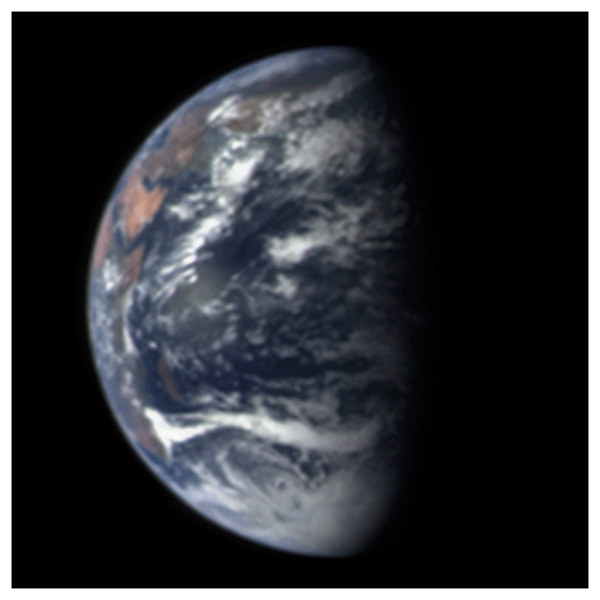
Abstract. JANUS (Jovis, Amorum ac Natorum Undique Scrutator), the high-resolution camera on the JUICE mission (JUpiter ICy moons Explorer), obtained observations of the Earth during and short-after a Lunar and Earth Gravitational Assist maneuver (LEGA) that was run on August 19–20, 2024. We report on the observations of the Earth that were acquired on August 20, 2024 at a closest approach to the surface of 8,408 km, and on September 9, 2024 at a distance of 564,300 km. The close approach observations covered a narrow strip of the Earth, starting in the night-side of the planet and moving over the terminator and day-side. The later observation provided a low spatial resolution portrait of the Earth and the Moon. Here we examine JANUS observations of the Earth as an example of the different science topics that will be addressed in future observations of Jupiter's atmosphere.
The Earth night-side images show atmospheric airglow, clouds illuminated by a full Moon, fires in rural areas, lights over the ocean from maritime traffic, city lights, no firm detections of lightning, and two meteor candidates compatible with meteoroids of 1–30 g entering Earth's atmosphere. The day-side images show crepuscular rays under extreme incidence angles, atmospheric gravity waves on elevated cirrus, sun glint on multi-filter images of the tropical Western Pacific, convective storms, internal waves in the ocean and multiple cloud systems at a variety of spatial resolutions. Some images acquired with the panchromatic filter showed islands such as Luzon and the Big Island of Hawaii. We compare spectral trends of the ocean and various cloud systems extracted from JANUS multi-spectral images with spectra from the EnMAP and PRISMA satellites. JANUS images acquired on September 9, 2024 allow to form a multi-spectral view of the Earth at low spatial resolution. The data confirm the expected instrument performance in terms of optical quality and multi-wavelength radiometry precision, and the ensemble of observations contains a wide variety of features that are good analogs to multiple systems in Jupiter's atmosphere.
-
Notice on discussion status
The requested preprint has a corresponding peer-reviewed final revised paper. You are encouraged to refer to the final revised version.
-
Preprint
(49842 KB)
-
The requested preprint has a corresponding peer-reviewed final revised paper. You are encouraged to refer to the final revised version.
- Preprint
(49842 KB) - Metadata XML
- BibTeX
- EndNote
- Final revised paper


Journal article(s) based on this preprint
Interactive discussion
Status: closed
-
RC1: 'Comment on egusphere-2026-710', Anonymous Referee #1, 20 Apr 2026
-
AC1: 'Reply on RC1', Ricardo Hueso, 01 Jul 2026
We thank both reviewers for their detailed and careful review of this paper and the valuable comments and suggestions. They have helped us to provide a more clear version of this paper and we have generally introduced changes suggested. Below are point-by-point answers to the comments made on the manuscript.
In addition to comments raised by the reviewers, we have also updated references to Agostini et al. (2026), Lucchetti et al. (2025), Tubiana et al. (2026) and Poulet et al. (2025) from their most recent Bibtex references available at EGUsphere at the JUICE LEGA Special issue.
The comments below provide point-by-point answers to the reviewer’s comments. These answers generally involve changes in the manuscript. However, we would like to note to the editor and reviewers, that following the editorial instructions received by email:
“You - as the contact author - are requested to individually respond to all referee comments (RCs) by posting final author comments (ACs) on behalf of all co-authors …Please note that your revised manuscript should not be prepared at this stage.”
we have not yet uploaded the revised version of the document, even if this is ready.
We eagerly wait for the opportunity to do it and instructions from EGUSphere to fully provide the revised version, which contains key information requested by the reviewers in the form of revised texts and revised figures where applicable.
RC1: 'Comment on egusphere-2026-710', Anonymous Referee #1, 20 Apr 2026
General Comments
The manuscript "JUICE-JANUS observations of Earth in preparation for the JANUS investigation of Jupiter’s atmosphere," by Hueso et al., is a comprehensive summary of Earth imaging observations during the August 2024 flyby of the JUICE spacecraft. The encounter provided a demonstration of the JANUS instrument capabilities in advance of future science activities in the Jupiter system. The novelty of the manuscript lies in the data---which are the first science observations with JANUS---rather than any new ideas or scientific conclusions. The Earth observations reveal stray light (Fig. 1a) and photometric (Fig. 20c) calibration issues to be addressed before JUICE arrives at Jupiter. The manuscript is somewhat long, but all of the material is equally interesting, so there is no clear pathway to shorten it without losing key insights from the dataset. Also, the current manuscript should provide a reference point for the planning and analysis of future flyby encounter data, enabling more concise future publications that can cite the work here. I do not recommend cutting any of the figures or tables, although the detailed "Image ID" numbers are of unclear usefulness given the inability of readers outside the JANUS team to actually access the images.
The paper is mostly publishable in its current form, but I have identified a few minor technical comments that could further improve the usefulness of the manuscript. This is my first time attempting to review a manuscript using the novel approach of commenting in a web form, rather than corresponding with an editor, so please excuse any irregularities due to the unfamiliar system.
Answer: We thank the reviewer for the detailed revision of this manuscript and the valuable comments. They have helped to improve the quality of the presentation and have been very useful to improve the analysis. Given the new information added in the manuscript as a consequence of this review the new version is slightly larger than the original manuscript. However, we have tried to trim the text whenever it was possible. We would like to acknowledge early in this review that JANUS data used in this paper will be fully released making useful to maintain the Image ID numbers as a reference to the original individual images.
Specific comments
1. The concentric ring artifact is a prominent feature in Fig. 1a. It should be briefly explained in the caption (in addition to the discussion already present in the text at line 103). The text should give more detail on planned methods to remove such artifacts from JANUS observations in the Jupiter system, either operationally (observation geometry restrictions) or in post-processing (e.g., flatfielding). The explanation of the artifact ("internal reflections in the baffles") should be clarified, because of the preconception that baffles are typically light-absorbing, rather than reflecting. Any light leaks in the baffles could be expected to produce a gradient or generally unstructured pattern. Could there be internal reflections within optical elements contributing to the artifact?
Answer: We have included a mention to stray light at the start of the figure caption. We also describe the source of the stray light. According to our current understanding, the rings artifact came from the illumination of the internal vanes of the long external baffle even in the presence of highly-absorbing coating (note that the detector is extremely sensitive). Plans for potential mitigation through modeling of this effect are being developed (e.g. Munari et al. 2024; https://doi.org/10.1117/12.3019738) but require additional data to characterize the ring artifacts. Acquisition of new data are being planned during checkouts of the instrument in the cruise phase of the mission. Flat fielding has been attempted over the sequence of images sharing the same stray light component (same orientation of the spacecraft). These attempts were only partially successful due to the limited number of images in the sequence (20 nighttime images with strong gradients in illumination) and thus we have not updated the figure in the manuscript. We have modified the text accordingly (second paragraph on section 3.1).
2. Somewhere in Sec. 1, the proprietary status of the data should be mentioned. Currently, this is covered only in the "Data availability" section on Line 639. Although it is understandable to keep the entire full/raw dataset proprietary, would it be possible for the authors to publish the selected map data used in the paper, as a supplemental collection? The images (especially the cloud maps later in the paper) are beautiful, and providing them in a high-level map format could increase the reach and impact of the JANUS Earth flyby dataset.
Answer: This has been a cause of concern for the full issue and the full set of JUICE papers around LEGA. It has been agreed with the project that LEGA data from these papers will be released as a single release at the Planetary Science Archive (PSA) through its Guest Storage Facility. There is an updated statement on Section 1 and an updated statement on the Data Availability section with the DOI that will make easy and transparent the access to the data. In particular, the data is accessible as the ESA-JUICE_LEGA-Special-Issue_v1.0 data set with doi: https://doi.org/10.57780/esa-2bb387d.
Regarding the publication of selected map data as a supplement collection, we believe the figures have only illustrative value at this point and the dataset publication allows accessing the full resolution data. However, the JANUS team might release a supplemental collection of Earth images after observations of the Earth to be acquired in September 2026.
3. The lightning analysis is intriguing, but some details could be clarified. Could the authors rule out other reasons for lightning to go undetected besides exceptionally weak signals as claimed on line 171, such as gaps in the ground-based network? Figure 6 shows some areas with lightning and some without lighting, but it does not show the locations or coverage areas of ground stations.
Answer: The main reason for non-detections of lightning with JANUS is the combination of small area coverage and the low amount of accumulated time. Potentially detected candidates have very weak brightness and they are not fully compatible with most space-based observations of lightning events. This is explained near the end of Section 3.2. Gaps in the ground-based network do indeed exist and the WWLLN only counts with about 60 stations with a spatial distribution that is not updated on modern references. Detection efficiency also depends on climatological variables and ionospheric state. Maps of detection efficiency are provided by Hutchins et al. (GRL, 2022; doi:10.1029/2012RS005049) showing that the region observed by JANUS is reasonably well observed by the WWLNN even if only two of the 70 stations worldwide would be located in the area covered on Figure 6. Data from https://wwlln.net/archive.html shows that only two WWLNN stations are located in the area shown in Figure 6 (in Singapore and Tripura in north east India), but the nature of the VLF detections allows to detect lightning on that area from the distant stations from Madagascar to Continental China and Australia. Since including all these details in the manuscript can blur the focus of the lightning search with JANUS, we only include a brief sentence in the text and the reference to Hutchins et al. (2022) when introducing Figure 6. In addition, the local time of the observed area was 03:00–04:00 LT. As shown in the diurnal cycle of lightning activity on the Earth (Blakeslee et al. Atmos. Res., 2014; doi:10.1016/j.atmosres.2012.09.023), lightning activity is near its minimum during these hours, which may contribute to the non-detection by JANUS. A brief comment has also been added as well as this reference.
4. On line 215, it should be clarified that the intrinsic optical energy of the flash is unknown, only the observed energy can be described. It is possible for a bright flash to be completely undetectable from space if there is sufficient cloud obscuration. I am curious whether the Jupiter campaign will include scanned exposures capable of characterizing temporal distribution of optical flashes within a storm.
Answer: We have introduced this “observed energy” term in the previous paragraph and we have also modified the paragraph to better address this point. Scanned exposures capable of characterizing temporal distribution of optical flashes are probably not easy to accomplish with JANUS which is a framing camera. We will use different exposure times (short and long) to capture individual and accumulated flashes. Other instruments such as UVS and MAJIS with a slit and a scanning mirror might also provide information about the temporal cadence of the optical flashes.
5. On page 10, difficulties determining whether a feature is a TLE or a cosmic ray artifact are mentioned. Is it possible to rule out cosmic rays based on the point spread function of the instrument? Depending on the size of the PSF compared to the pixel scale, it may be possible to say that a point source (lightning) would be spread out more than the observed signal. Little et al. (1999) used the FWHM of lightning features to estimate source depth below a screening cloud layer, and van Dokkum (2001, DOI: 10.1086/323894) used the sharpness of cosmic ray features to remove them from images where the PSF is sufficiently well sampled by the detector. Similarly, in the Fig. 14 caption, "hot pixel" seems to refer to an actual image feature, but this term usually refers to pixels with a higher background level or quantum efficiency compared to neighboring pixels in the context of astronomical detectors.
Answer: We have largely rewritten this section. Recent JANUS observations of other astrophysical objects run after LEGA, and in particular, observations with much larger exposure times, have allowed us to acquire more experience on the instrument performance. Based on fits to the PSF and the method exposure in van Dokkum (2001), the features identified in this section are most likely cosmic rays. However more characterization work is needed to fully classify these events as cosmic rays or energetic particles. Thus, we maintain a shorter version of this section, provide the citation to van Dokkum and describe plans to develop that technique for JANUS images. We have also removed the “hot pixel” term in the Figure 14 caption and the main text.
6. Some additional references would give a better summary of how the anticipated Jupiter observations relate to prior work.
• On line 415, other work focused on the 727-nm band (JANUS F9) and its sensitivity for screening deep clouds: Banfield et al. (1998, DOI: 10.1006/icar.1998.5985), Vasavada et al. (1998, DOI: 10.1006/icar.1998.5984), and West et al. (2004, in the Bagenal et al. Jupiter book). Wong et al. (2023, DOI: 10.3390/rs15030702) found that in the HST/WFC3 filter system, a red filter (at 631 nm) provided a more effective continuum reference for JANUS-F9 than 750 nm (JANUS F5) due to ammonia absorption within the 750-nm filter bandpass.
• On line 441, Fletcher et al. (2018, DOI: 10.3847/1538-3881/aace02) also analyzed mesoscale waves on Jupiter in visible-wavelength (HST) data, and correlated them with thermal imaging at 5 microns. Similar types of multiwavelength studies could be conducted at Jupiter by JUICE if it will be able to conduct coordinated thermal infrared and visible wavelength imaging (e.g., with MAJIS).
• On line 565, Dyudina et al. (2001, DOI: 10.1006/icar.2000.6582) should be listed as an earlier application of PCA to Jupiter prior to Simon et al. (2015).
Answer: These are all excellent references to add and we have incorporated them through the manuscript in their appropriate sections. We believe they broaden and illustrate the expected science results of future Jupiter observations and we are grateful to the reviewer for this collection of references.
Technical comments
Table 1 - State whether bandwidth means FWHM (full width at half maximum) or some other meaning.
Answer: The filters have sharp cutoffs and are best described as bandpass filters with defined central wavelengths and bandwidths, rather than using a full-width at half-maximum (FWHM) description. This information is now given at the figure caption.
Line 140 - Observations are not serendipitous if planned/anticipated many years in advance.
Answer: We agree and we have removed this term.
Line 149 - An early mention could be added here regarding the search for bolides in Jupiter's atmosphere.
Answer: The fact that we treat meteor candidates in another section makes us less willing to mix both contents in this particular section. Instead, we have incorporated an early mention to bolides much earlier on the introduction of section 3 and we have also updated the title of subsection 3.3: “Searches for meteor candidates”
Fig. 6 - Image 15 is mentioned in the caption but image 14 has the red outline on the map.
Answer: Thank you for the careful inspection of the figure and the caption. Indeed the figure caption should say image 14. We have corrected this mistake in the figure caption.
Line 176 - Would "light extinction" be a better word choice because it includes scattering, or did the authors really mean absorption only?
Answer: This is a great suggestion. Both scattering and absorption play a role in detection of optical lightning and light extinction is a much better choice here than the one originally in the paper. We have updated the paragraph using “light extinction”.
Line 192 - "on the WWS direction" should be "in the WSW direction" if you mean azimuth 248 degrees east of north. There are other small English issues throughout the manuscript (e.g., should be "examination" rather than "examen" on line 235), but in every case the intended meaning is clear, so I have not listed them all here.
Answer: We have corrected WSW and examen into inspection. We have also identified some other minor issues with English terms correcting those.
Line 206 - Add to say "highlighted with a red circle"
Answer: Thank you. This better links the text and the figure. We have added this into the sentence.
Line 296 - Is there also an implication on the size distribution of meteoroids in the outer solar system?
Answer: This is a very good point. A sufficiently large number of detections of impacts would certainly provide valuable information on the size distribution of meteoroids. We have incorporated this aspect into the sentence.
Fig. 8 - Please provide the gamma correction formula, or perhaps just reference Irwin et al. (2024, DOI: 10.1093/mnras/stad3761, see appendix A).
Answer: We now provide the gamma correction formula and a reference to the Gonzalez and Woods (2009) book on digital image processing. We found the reference to Irwin et al. would be too technical for this particular case and preferred a more general one.
Fig. 8 - Add to the caption to say "highlighted by the gold box in (a)"
Answer: We have slightly modified the figure caption to better indicate the features highlighted in panels (b-e).
Line 324 - It may be more accurate to say "diffuse dawn light" which could be interpreted to include scattering as well as refraction.
Answer: Thank you. We agree this is a better description of the illumination and we have incorporated this into the manuscript.
Line 342 - Cumulus or cumulonimbus?
Answer: This cloud is most likely a cumulonimbus but it is certainly not a cumulus which would be much lower in the atmosphere. The cumulonimbus term has been incorporated for this cloud in the manuscript.
Fig. 23 - Although it would break the nice 2x3 arrangement, the authors should show PC1 separately, and define luminance, which could potentially be a weighted average of brightness in different filters. If this is the case, the weights should be stated.
Answer: We have modified this figure and its figure caption showing PC1 to PC4 (2x2 arrangement). Then we also show the Luminance RGB color composition from PC1 as Luminance and P2, PC3 and PC4 as RGB color information. The last panel shows the F5-F3 composition. Notice that the LRGB from PC1PC2PC3PC4 is a four-filter combination in which Luminance is not a perceptual RGB-weighted luminance. To build that image, PC2, PC3 and PC4 are combined into an RGB image that is then transformed into chrominance-luminance. Then the luminance information is substituted by PC1 and remapped into an RGB image effectively blending the four images into the three layers defining the RGB color image. A brief description of this chrominance-luminance model is incorporated in the figure caption. We have also modified Figure 24 removing the last panel (f) which contained the weights of PC5 (now not shown). The information about PC5 and higher components in the manuscript has also been revised to better fit with the current versions of these figures.
Citation: https://doi.org/10.5194/egusphere-2026-710-AC1
-
AC1: 'Reply on RC1', Ricardo Hueso, 01 Jul 2026
-
RC2: 'Comment on egusphere-2026-710', Anonymous Referee #2, 08 Jun 2026
This manuscript presents a fairly complete set of observations of the Earth by the JANUS instrument on board the JUICE spacecraft during its recent close fly-by en route to Jupiter. The results presented include an impressive set of images taken on both the day and nightsides of the planet, together with some quantitative analysis and interpretation, focusing on features such as convective clouds, waves and possible lightning events that may have analogues on Jupiter itself. The emphasis is clearly on demonstrating the capabilities of the instrument rather than on learning much that is new about the Earth. In that sense, it reads more like a technical report than a scientific paper, which is slightly disappointing. Previous encounters with Earth or Venus by spacecraft otherwise designed for the outer Solar System, such as the Galileo orbiter, have revealed new perspectives previously unexplored (e.g. imaging in recently discovered “window’ wavelengths on Venus). But this encounter produced fewer surprises, though it is reassuring that the JANUS instrument performed well and that a wealth of new science will be possible when it reaches Jupiter.
The manuscript is quite long though it is difficult to suggest sections or results that should be omitted. It generally reads pretty well and the manuscript is publishable, though there are a few minor points (listed below) that I would suggest should be addressed before final acceptance.
Speciific comments;
1. The ring-shaped artifact in Fig. 1 is distracting and tends to obscure the features to which the reader’s attention is being directed. It could do with more explanation and perhaps clearer direction in the figure itself and the caption.
2. Lines 147-9 and the issue of nondetection of lightning: The two sentences here seem to be a non-sequitur in that a lack of detection in these observations doesn’t seem to indicate positive potential to detect lightning anywhere else in the Solar System. Maybe rephrase or elaborate? The lack of detection of lightning does seem surprising given where the instrument was pointed - discuss a little more?
3. Section 6: The term “spectral trends” is used here quite a lot, but in most cases simply seems to refer to presentation of spectra as represented in the filter bands utilised in the JANUS instrument and comparisons with fully resolved spectra. This is somewhat confusing to the reader. What are the “trends” being related to? Maybe rephrase (e.g. to comparison of/with spectra)?
Technical comments;
1. The manuscript is generally well written but there are several phrases that are not colloquial English that it would be preferable to correct. A recurring phrase is “associated to…” which is almost never used in English - should be ‘associated with”. I would suggest replacing generally throughout the manuscript.
2. The word ‘examen’ is also not widely used in English, even though the meaning is reasonably clear. e.g. replace line 217 with “the apparent lack of detection…..suggests a need for an investigation of strategies….”; line 235 “A close inspection of this image….”.
3. line 242; “concentrated in” rather than ‘concentrating on’.
4. Line 375; “highly oblique/tangential illumination” instead of “very tangent”
Citation: https://doi.org/10.5194/egusphere-2026-710-RC2 -
AC2: 'Reply on RC2', Ricardo Hueso, 01 Jul 2026
We thank both reviewers for their detailed and careful review of this paper and the valuable comments and suggestions. They have helped us to provide a more clear version of this paper and we have generally introduced changes suggested. Below are point-by-point answers to the comments made on the manuscript.
In addition to comments raised by the reviewers, we have also updated references to Agostini et al. (2026), Lucchetti et al. (2025), Tubiana et al. (2026) and Poulet et al. (2025) from their most recent Bibtex references available at EGUsphere at the JUICE LEGA Special issue.
The comments below provide point-by-point answers to the reviewer’s comments. These answers generally involve changes in the manuscript. However, we would like to note to the editor and reviewers, that following the editorial instructions received by email:
“You - as the contact author - are requested to individually respond to all referee comments (RCs) by posting final author comments (ACs) on behalf of all co-authors … Please note that your revised manuscript should not be prepared at this stage.”
we have not yet uploaded the revised version of the document, even if this is ready.
We eagerly wait for the opportunity to do it and instructions from EGUSphere to fully provide the revised version, which contains key information requested by the reviwers in the form of revised texts and revised figures where applicable.
• RC2: 'Comment on egusphere-2026-710', Anonymous Referee #2, 08 Jun 2026
This manuscript presents a fairly complete set of observations of the Earth by the JANUS instrument on board the JUICE spacecraft during its recent close fly-by en route to Jupiter. The results presented include an impressive set of images taken on both the day and nightsides of the planet, together with some quantitative analysis and interpretation, focusing on features such as convective clouds, waves and possible lightning events that may have analogues on Jupiter itself. The emphasis is clearly on demonstrating the capabilities of the instrument rather than on learning much that is new about the Earth. In that sense, it reads more like a technical report than a scientific paper, which is slightly disappointing. Previous encounters with Earth or Venus by spacecraft otherwise designed for the outer Solar System, such as the Galileo orbiter, have revealed new perspectives previously unexplored (e.g. imaging in recently discovered “window’ wavelengths on Venus). But this encounter produced fewer surprises, though it is reassuring that the JANUS instrument performed well and that a wealth of new science will be possible when it reaches Jupiter.
The manuscript is quite long though it is difficult to suggest sections or results that should be omitted. It generally reads pretty well and the manuscript is publishable, though there are a few minor points (listed below) that I would suggest should be addressed before final acceptance.
Answer: We thank the reviewer for the detailed revision of this manuscript and the valuable comments. They have helped to improve the quality of the presentation and have been very useful to improve the analysis. Given the new information added in the manuscript because of this review, the new version is slightly larger than the original manuscript. However, we have tried to trim the text whenever it was possible.
Specific comments;
1. The ring-shaped artifact in Fig. 1 is distracting and tends to obscure the features to which the reader’s attention is being directed. It could do with more explanation and perhaps clearer direction in the figure itself and the caption.
Answer: Following also comments from reviewer 1 we now discuss in more detail the source of the ring-shaped artifact and comment its presence in the figure caption with a longer explanation on the nature of this artifact and potential mitigation strategies at the start of section 3.1.
2. Lines 147-9 and the issue of nondetection of lightning: The two sentences here seem to be a non-sequitur in that a lack of detection in these observations doesn’t seem to indicate positive potential to detect lightning anywhere else in the Solar System. Maybe rephrase or elaborate? The lack of detection of lightning does seem surprising given where the instrument was pointed - discuss a little more?
Answer: Thank you for this comment. We have largely rewritten this paragraph to avoid this logical conflict. We also discuss later over the section about why lightning was not observed and the low probability of detecting lightning on this particular data set.
3. Section 6: The term “spectral trends” is used here quite a lot, but in most cases simply seems to refer to presentation of spectra as represented in the filter bands utilised in the JANUS instrument and comparisons with fully resolved spectra. This is somewhat confusing to the reader. What are the “trends” being related to? Maybe rephrase (e.g. to comparison of/with spectr
Answer: The term spectral trends has been changed for multispectral images or broadband spectroscopic data and other similar variants through the manuscript.
Technical comments:
1. The manuscript is generally well written but there are several phrases that are not colloquial English that it would be preferable to correct. A recurring phrase is “associated to…” which is almost never used in English - should be ‘associated with”. I would suggest replacing generally throughout the manuscript.
Answer: Thank you. We have corrected this grammar mistake and modified some sentences to avoid using “associated with” as often as it was present in the original manuscript.
2. The word ‘examen’ is also not widely used in English, even though the meaning is reasonably clear. e.g. replace line 217 with “the apparent lack of detection…..suggests a need for an investigation of strategies….”; line 235 “A close inspection of this image….”.
Answer: We thank the reviewer for these corrections. We have introduced these corrections in the new version of the manuscript.
3. line 242; “concentrated in” rather than ‘concentrating on’.
Answer: Thank you. We have corrected this.
4. Line 375; “highly oblique/tangential illumination” instead of “very tangent”
Answer: Thank you. We now state tangential illumination.
Citation: https://doi.org/10.5194/egusphere-2026-710-AC2
-
AC2: 'Reply on RC2', Ricardo Hueso, 01 Jul 2026
Peer review completion


Interactive discussion
Status: closed
-
RC1: 'Comment on egusphere-2026-710', Anonymous Referee #1, 20 Apr 2026
General Comments
The manuscript "JUICE-JANUS observations of Earth in preparation for the JANUS investigation of Jupiter’s atmosphere," by Hueso et al., is a comprehensive summary of Earth imaging observations during the August 2024 flyby of the JUICE spacecraft. The encounter provided a demonstration of the JANUS instrument capabilities in advance of future science activities in the Jupiter system. The novelty of the manuscript lies in the data---which are the first science observations with JANUS---rather than any new ideas or scientific conclusions. The Earth observations reveal stray light (Fig. 1a) and photometric (Fig. 20c) calibration issues to be addressed before JUICE arrives at Jupiter. The manuscript is somewhat long, but all of the material is equally interesting, so there is no clear pathway to shorten it without losing key insights from the dataset. Also, the current manuscript should provide a reference point for the planning and analysis of future flyby encounter data, enabling more concise future publications that can cite the work here. I do not recommend cutting any of the figures or tables, although the detailed "Image ID" numbers are of unclear usefulness given the inability of readers outside the JANUS team to actually access the images.
The paper is mostly publishable in its current form, but I have identified a few minor technical comments that could further improve the usefulness of the manuscript. This is my first time attempting to review a manuscript using the novel approach of commenting in a web form, rather than corresponding with an editor, so please excuse any irregularities due to the unfamiliar system.
Specific comments
- The concentric ring artifact is a prominent feature in Fig. 1a. It should be briefly explained in the caption (in addition to the discussion already present in the text at line 103). The text should give more detail on planned methods to remove such artifacts from JANUS observations in the Jupiter system, either operationally (observation geometry restrictions) or in post-processing (e.g., flatfielding). The explanation of the artifact ("internal reflections in the baffles") should be clarified, because of the preconception that baffles are typically light-absorbing, rather than reflecting. Any light leaks in the baffles could be expected to produce a gradient or generally unstructured pattern. Could there be internal reflections within optical elements contributing to the artifact?
- Somewhere in Sec. 1, the proprietary status of the data should be mentioned. Currently, this is covered only in the "Data availability" section on Line 639. Although it is understandable to keep the entire full/raw dataset proprietary, would it be possible for the authors to publish the selected map data used in the paper, as a supplemental collection? The images (especially the cloud maps later in the paper) are beautiful, and providing them in a high-level map format could increase the reach and impact of the JANUS Earth flyby dataset.
- The lightning analysis is intriguing, but some details could be clarified. Could the authors rule out other reasons for lightning to go undetected besides exceptionally weak signals as claimed on line 171, such as gaps in the ground-based network? Figure 6 shows some areas with lightning and some without lighting, but it does not show the locations or coverage areas of ground stations. On line 215, it should be clarified that the intrinsic optical energy of the flash is unknown, only the observed energy can be described. It is possible for a bright flash to be completely undetectable from space if there is sufficient cloud obscuration. I am curious whether the Jupiter campaign will include scanned exposures capable of characterizing temporal distribution of optical flashes within a storm.
- On page 10, difficulties determining whether a feature is a TLE or a cosmic ray artifact are mentioned. Is it possible to rule out cosmic rays based on the point spread function of the instrument? Depending on the size of the PSF compared to the pixel scale, it may be possible to say that a point source (lightning) would be spread out more than the observed signal. Little et al. (1999) used the FWHM of lightning features to estimate source depth below a screening cloud layer, and van Dokkum (2001, DOI: 10.1086/323894) used the sharpness of cosmic ray features to remove them from images where the PSF is sufficiently well sampled by the detector. Similarly, in the Fig. 14 caption, "hot pixel" seems to refer to an actual image feature, but this term usually refers to pixels with a higher background level or quantum efficiency compared to neighboring pixels in the context of astronomical detectors.
- Some additional references would give a better summary of how the anticipated Jupiter observations relate to prior work. On line 415, other work focused on the 727-nm band (JANUS F9) and its sensitivity for screening deep clouds: Banfield et al. (1998, DOI: 10.1006/icar.1998.5985), Vasavada et al. (1998, DOI: 10.1006/icar.1998.5984), and West et al. (2004, in the Bagenal et al. Jupiter book). Wong et al. (2023, DOI: 10.3390/rs15030702) found that in the HST/WFC3 filter system, a red filter (at 631 nm) provided a more effective continuum reference for JANUS-F9 than 750 nm (JANUS F5) due to ammonia absorption within the 750-nm filter bandpass. On line 441, Fletcher et al. (2018, DOI: 10.3847/1538-3881/aace02) also analyzed mesoscale waves on Jupiter in visible-wavelength (HST) data, and correlated them with thermal imaging at 5 microns. Similar types of multiwavelength studies could be conducted at Jupiter by JUICE if it will be able to conduct coordinated thermal infrared and visible wavelength imaging (e.g., with MAJIS). On line 565, Dyudina et al. (2001, DOI: 10.1006/icar.2000.6582) should be listed as an earlier application of PCA to Jupiter prior to Simon et al. (2015).
Technical comments
Table 1 - State whether bandwidth means FWHM (full width at half maximum) or some other meaning.
Line 140 - Observations are not serendipitous if planned/anticipated many years in advance.
Line 149 - An early mention could be added here regarding the search for bolides in Jupiter's atmosphere.
Fig. 6 - Image 15 is mentioned in the caption but image 14 has the red outline on the map.
Line 176 - Would "light extinction" be a better word choice because it includes scattering, or did the authors really mean absorption only?
Line 192 - "on the WWS direction" should be "in the WSW direction" if you mean azimuth 248 degrees east of north. There are other small English issues throughout the manuscript (e.g., should be "examination" rather than "examen" on line 235), but in every case the intended meaning is clear, so I have not listed them all here.
Line 206 - Add to say "highlighted with a red circle"
Line 296 - Is there also an implication on the size distribution of meteoroids in the outer solar system?
Fig. 8 - Please provide the gamma correction formula, or perhaps just reference Irwin et al. (2024, DOI: 10.1093/mnras/stad3761, see appendix A).
Fig. 8 - Add to the caption to say "highlighted by the gold box in (a)"
Line 324 - It may be more accurate to say "diffuse dawn light" which could be interpreted to include scattering as well as refraction.
Line 342 - Cumulus or cumulonimbus?
Fig. 23 - Although it would break the nice 2x3 arrangement, the authors should show PC1 separately, and define luminance, which could potentially be a weighted average of brightness in different filters. If this is the case, the weights should be stated.
Citation: https://doi.org/10.5194/egusphere-2026-710-RC1 -
AC1: 'Reply on RC1', Ricardo Hueso, 01 Jul 2026
We thank both reviewers for their detailed and careful review of this paper and the valuable comments and suggestions. They have helped us to provide a more clear version of this paper and we have generally introduced changes suggested. Below are point-by-point answers to the comments made on the manuscript.
In addition to comments raised by the reviewers, we have also updated references to Agostini et al. (2026), Lucchetti et al. (2025), Tubiana et al. (2026) and Poulet et al. (2025) from their most recent Bibtex references available at EGUsphere at the JUICE LEGA Special issue.
The comments below provide point-by-point answers to the reviewer’s comments. These answers generally involve changes in the manuscript. However, we would like to note to the editor and reviewers, that following the editorial instructions received by email:
“You - as the contact author - are requested to individually respond to all referee comments (RCs) by posting final author comments (ACs) on behalf of all co-authors …Please note that your revised manuscript should not be prepared at this stage.”
we have not yet uploaded the revised version of the document, even if this is ready.
We eagerly wait for the opportunity to do it and instructions from EGUSphere to fully provide the revised version, which contains key information requested by the reviewers in the form of revised texts and revised figures where applicable.
RC1: 'Comment on egusphere-2026-710', Anonymous Referee #1, 20 Apr 2026
General Comments
The manuscript "JUICE-JANUS observations of Earth in preparation for the JANUS investigation of Jupiter’s atmosphere," by Hueso et al., is a comprehensive summary of Earth imaging observations during the August 2024 flyby of the JUICE spacecraft. The encounter provided a demonstration of the JANUS instrument capabilities in advance of future science activities in the Jupiter system. The novelty of the manuscript lies in the data---which are the first science observations with JANUS---rather than any new ideas or scientific conclusions. The Earth observations reveal stray light (Fig. 1a) and photometric (Fig. 20c) calibration issues to be addressed before JUICE arrives at Jupiter. The manuscript is somewhat long, but all of the material is equally interesting, so there is no clear pathway to shorten it without losing key insights from the dataset. Also, the current manuscript should provide a reference point for the planning and analysis of future flyby encounter data, enabling more concise future publications that can cite the work here. I do not recommend cutting any of the figures or tables, although the detailed "Image ID" numbers are of unclear usefulness given the inability of readers outside the JANUS team to actually access the images.
The paper is mostly publishable in its current form, but I have identified a few minor technical comments that could further improve the usefulness of the manuscript. This is my first time attempting to review a manuscript using the novel approach of commenting in a web form, rather than corresponding with an editor, so please excuse any irregularities due to the unfamiliar system.
Answer: We thank the reviewer for the detailed revision of this manuscript and the valuable comments. They have helped to improve the quality of the presentation and have been very useful to improve the analysis. Given the new information added in the manuscript as a consequence of this review the new version is slightly larger than the original manuscript. However, we have tried to trim the text whenever it was possible. We would like to acknowledge early in this review that JANUS data used in this paper will be fully released making useful to maintain the Image ID numbers as a reference to the original individual images.
Specific comments
1. The concentric ring artifact is a prominent feature in Fig. 1a. It should be briefly explained in the caption (in addition to the discussion already present in the text at line 103). The text should give more detail on planned methods to remove such artifacts from JANUS observations in the Jupiter system, either operationally (observation geometry restrictions) or in post-processing (e.g., flatfielding). The explanation of the artifact ("internal reflections in the baffles") should be clarified, because of the preconception that baffles are typically light-absorbing, rather than reflecting. Any light leaks in the baffles could be expected to produce a gradient or generally unstructured pattern. Could there be internal reflections within optical elements contributing to the artifact?
Answer: We have included a mention to stray light at the start of the figure caption. We also describe the source of the stray light. According to our current understanding, the rings artifact came from the illumination of the internal vanes of the long external baffle even in the presence of highly-absorbing coating (note that the detector is extremely sensitive). Plans for potential mitigation through modeling of this effect are being developed (e.g. Munari et al. 2024; https://doi.org/10.1117/12.3019738) but require additional data to characterize the ring artifacts. Acquisition of new data are being planned during checkouts of the instrument in the cruise phase of the mission. Flat fielding has been attempted over the sequence of images sharing the same stray light component (same orientation of the spacecraft). These attempts were only partially successful due to the limited number of images in the sequence (20 nighttime images with strong gradients in illumination) and thus we have not updated the figure in the manuscript. We have modified the text accordingly (second paragraph on section 3.1).
2. Somewhere in Sec. 1, the proprietary status of the data should be mentioned. Currently, this is covered only in the "Data availability" section on Line 639. Although it is understandable to keep the entire full/raw dataset proprietary, would it be possible for the authors to publish the selected map data used in the paper, as a supplemental collection? The images (especially the cloud maps later in the paper) are beautiful, and providing them in a high-level map format could increase the reach and impact of the JANUS Earth flyby dataset.
Answer: This has been a cause of concern for the full issue and the full set of JUICE papers around LEGA. It has been agreed with the project that LEGA data from these papers will be released as a single release at the Planetary Science Archive (PSA) through its Guest Storage Facility. There is an updated statement on Section 1 and an updated statement on the Data Availability section with the DOI that will make easy and transparent the access to the data. In particular, the data is accessible as the ESA-JUICE_LEGA-Special-Issue_v1.0 data set with doi: https://doi.org/10.57780/esa-2bb387d.
Regarding the publication of selected map data as a supplement collection, we believe the figures have only illustrative value at this point and the dataset publication allows accessing the full resolution data. However, the JANUS team might release a supplemental collection of Earth images after observations of the Earth to be acquired in September 2026.
3. The lightning analysis is intriguing, but some details could be clarified. Could the authors rule out other reasons for lightning to go undetected besides exceptionally weak signals as claimed on line 171, such as gaps in the ground-based network? Figure 6 shows some areas with lightning and some without lighting, but it does not show the locations or coverage areas of ground stations.
Answer: The main reason for non-detections of lightning with JANUS is the combination of small area coverage and the low amount of accumulated time. Potentially detected candidates have very weak brightness and they are not fully compatible with most space-based observations of lightning events. This is explained near the end of Section 3.2. Gaps in the ground-based network do indeed exist and the WWLLN only counts with about 60 stations with a spatial distribution that is not updated on modern references. Detection efficiency also depends on climatological variables and ionospheric state. Maps of detection efficiency are provided by Hutchins et al. (GRL, 2022; doi:10.1029/2012RS005049) showing that the region observed by JANUS is reasonably well observed by the WWLNN even if only two of the 70 stations worldwide would be located in the area covered on Figure 6. Data from https://wwlln.net/archive.html shows that only two WWLNN stations are located in the area shown in Figure 6 (in Singapore and Tripura in north east India), but the nature of the VLF detections allows to detect lightning on that area from the distant stations from Madagascar to Continental China and Australia. Since including all these details in the manuscript can blur the focus of the lightning search with JANUS, we only include a brief sentence in the text and the reference to Hutchins et al. (2022) when introducing Figure 6. In addition, the local time of the observed area was 03:00–04:00 LT. As shown in the diurnal cycle of lightning activity on the Earth (Blakeslee et al. Atmos. Res., 2014; doi:10.1016/j.atmosres.2012.09.023), lightning activity is near its minimum during these hours, which may contribute to the non-detection by JANUS. A brief comment has also been added as well as this reference.
4. On line 215, it should be clarified that the intrinsic optical energy of the flash is unknown, only the observed energy can be described. It is possible for a bright flash to be completely undetectable from space if there is sufficient cloud obscuration. I am curious whether the Jupiter campaign will include scanned exposures capable of characterizing temporal distribution of optical flashes within a storm.
Answer: We have introduced this “observed energy” term in the previous paragraph and we have also modified the paragraph to better address this point. Scanned exposures capable of characterizing temporal distribution of optical flashes are probably not easy to accomplish with JANUS which is a framing camera. We will use different exposure times (short and long) to capture individual and accumulated flashes. Other instruments such as UVS and MAJIS with a slit and a scanning mirror might also provide information about the temporal cadence of the optical flashes.
5. On page 10, difficulties determining whether a feature is a TLE or a cosmic ray artifact are mentioned. Is it possible to rule out cosmic rays based on the point spread function of the instrument? Depending on the size of the PSF compared to the pixel scale, it may be possible to say that a point source (lightning) would be spread out more than the observed signal. Little et al. (1999) used the FWHM of lightning features to estimate source depth below a screening cloud layer, and van Dokkum (2001, DOI: 10.1086/323894) used the sharpness of cosmic ray features to remove them from images where the PSF is sufficiently well sampled by the detector. Similarly, in the Fig. 14 caption, "hot pixel" seems to refer to an actual image feature, but this term usually refers to pixels with a higher background level or quantum efficiency compared to neighboring pixels in the context of astronomical detectors.
Answer: We have largely rewritten this section. Recent JANUS observations of other astrophysical objects run after LEGA, and in particular, observations with much larger exposure times, have allowed us to acquire more experience on the instrument performance. Based on fits to the PSF and the method exposure in van Dokkum (2001), the features identified in this section are most likely cosmic rays. However more characterization work is needed to fully classify these events as cosmic rays or energetic particles. Thus, we maintain a shorter version of this section, provide the citation to van Dokkum and describe plans to develop that technique for JANUS images. We have also removed the “hot pixel” term in the Figure 14 caption and the main text.
6. Some additional references would give a better summary of how the anticipated Jupiter observations relate to prior work.
• On line 415, other work focused on the 727-nm band (JANUS F9) and its sensitivity for screening deep clouds: Banfield et al. (1998, DOI: 10.1006/icar.1998.5985), Vasavada et al. (1998, DOI: 10.1006/icar.1998.5984), and West et al. (2004, in the Bagenal et al. Jupiter book). Wong et al. (2023, DOI: 10.3390/rs15030702) found that in the HST/WFC3 filter system, a red filter (at 631 nm) provided a more effective continuum reference for JANUS-F9 than 750 nm (JANUS F5) due to ammonia absorption within the 750-nm filter bandpass.
• On line 441, Fletcher et al. (2018, DOI: 10.3847/1538-3881/aace02) also analyzed mesoscale waves on Jupiter in visible-wavelength (HST) data, and correlated them with thermal imaging at 5 microns. Similar types of multiwavelength studies could be conducted at Jupiter by JUICE if it will be able to conduct coordinated thermal infrared and visible wavelength imaging (e.g., with MAJIS).
• On line 565, Dyudina et al. (2001, DOI: 10.1006/icar.2000.6582) should be listed as an earlier application of PCA to Jupiter prior to Simon et al. (2015).
Answer: These are all excellent references to add and we have incorporated them through the manuscript in their appropriate sections. We believe they broaden and illustrate the expected science results of future Jupiter observations and we are grateful to the reviewer for this collection of references.
Technical comments
Table 1 - State whether bandwidth means FWHM (full width at half maximum) or some other meaning.
Answer: The filters have sharp cutoffs and are best described as bandpass filters with defined central wavelengths and bandwidths, rather than using a full-width at half-maximum (FWHM) description. This information is now given at the figure caption.
Line 140 - Observations are not serendipitous if planned/anticipated many years in advance.
Answer: We agree and we have removed this term.
Line 149 - An early mention could be added here regarding the search for bolides in Jupiter's atmosphere.
Answer: The fact that we treat meteor candidates in another section makes us less willing to mix both contents in this particular section. Instead, we have incorporated an early mention to bolides much earlier on the introduction of section 3 and we have also updated the title of subsection 3.3: “Searches for meteor candidates”
Fig. 6 - Image 15 is mentioned in the caption but image 14 has the red outline on the map.
Answer: Thank you for the careful inspection of the figure and the caption. Indeed the figure caption should say image 14. We have corrected this mistake in the figure caption.
Line 176 - Would "light extinction" be a better word choice because it includes scattering, or did the authors really mean absorption only?
Answer: This is a great suggestion. Both scattering and absorption play a role in detection of optical lightning and light extinction is a much better choice here than the one originally in the paper. We have updated the paragraph using “light extinction”.
Line 192 - "on the WWS direction" should be "in the WSW direction" if you mean azimuth 248 degrees east of north. There are other small English issues throughout the manuscript (e.g., should be "examination" rather than "examen" on line 235), but in every case the intended meaning is clear, so I have not listed them all here.
Answer: We have corrected WSW and examen into inspection. We have also identified some other minor issues with English terms correcting those.
Line 206 - Add to say "highlighted with a red circle"
Answer: Thank you. This better links the text and the figure. We have added this into the sentence.
Line 296 - Is there also an implication on the size distribution of meteoroids in the outer solar system?
Answer: This is a very good point. A sufficiently large number of detections of impacts would certainly provide valuable information on the size distribution of meteoroids. We have incorporated this aspect into the sentence.
Fig. 8 - Please provide the gamma correction formula, or perhaps just reference Irwin et al. (2024, DOI: 10.1093/mnras/stad3761, see appendix A).
Answer: We now provide the gamma correction formula and a reference to the Gonzalez and Woods (2009) book on digital image processing. We found the reference to Irwin et al. would be too technical for this particular case and preferred a more general one.
Fig. 8 - Add to the caption to say "highlighted by the gold box in (a)"
Answer: We have slightly modified the figure caption to better indicate the features highlighted in panels (b-e).
Line 324 - It may be more accurate to say "diffuse dawn light" which could be interpreted to include scattering as well as refraction.
Answer: Thank you. We agree this is a better description of the illumination and we have incorporated this into the manuscript.
Line 342 - Cumulus or cumulonimbus?
Answer: This cloud is most likely a cumulonimbus but it is certainly not a cumulus which would be much lower in the atmosphere. The cumulonimbus term has been incorporated for this cloud in the manuscript.
Fig. 23 - Although it would break the nice 2x3 arrangement, the authors should show PC1 separately, and define luminance, which could potentially be a weighted average of brightness in different filters. If this is the case, the weights should be stated.
Answer: We have modified this figure and its figure caption showing PC1 to PC4 (2x2 arrangement). Then we also show the Luminance RGB color composition from PC1 as Luminance and P2, PC3 and PC4 as RGB color information. The last panel shows the F5-F3 composition. Notice that the LRGB from PC1PC2PC3PC4 is a four-filter combination in which Luminance is not a perceptual RGB-weighted luminance. To build that image, PC2, PC3 and PC4 are combined into an RGB image that is then transformed into chrominance-luminance. Then the luminance information is substituted by PC1 and remapped into an RGB image effectively blending the four images into the three layers defining the RGB color image. A brief description of this chrominance-luminance model is incorporated in the figure caption. We have also modified Figure 24 removing the last panel (f) which contained the weights of PC5 (now not shown). The information about PC5 and higher components in the manuscript has also been revised to better fit with the current versions of these figures.
Citation: https://doi.org/10.5194/egusphere-2026-710-AC1
-
RC2: 'Comment on egusphere-2026-710', Anonymous Referee #2, 08 Jun 2026
This manuscript presents a fairly complete set of observations of the Earth by the JANUS instrument on board the JUICE spacecraft during its recent close fly-by en route to Jupiter. The results presented include an impressive set of images taken on both the day and nightsides of the planet, together with some quantitative analysis and interpretation, focusing on features such as convective clouds, waves and possible lightning events that may have analogues on Jupiter itself. The emphasis is clearly on demonstrating the capabilities of the instrument rather than on learning much that is new about the Earth. In that sense, it reads more like a technical report than a scientific paper, which is slightly disappointing. Previous encounters with Earth or Venus by spacecraft otherwise designed for the outer Solar System, such as the Galileo orbiter, have revealed new perspectives previously unexplored (e.g. imaging in recently discovered “window’ wavelengths on Venus). But this encounter produced fewer surprises, though it is reassuring that the JANUS instrument performed well and that a wealth of new science will be possible when it reaches Jupiter.
The manuscript is quite long though it is difficult to suggest sections or results that should be omitted. It generally reads pretty well and the manuscript is publishable, though there are a few minor points (listed below) that I would suggest should be addressed before final acceptance.
Speciific comments;
1. The ring-shaped artifact in Fig. 1 is distracting and tends to obscure the features to which the reader’s attention is being directed. It could do with more explanation and perhaps clearer direction in the figure itself and the caption.
2. Lines 147-9 and the issue of nondetection of lightning: The two sentences here seem to be a non-sequitur in that a lack of detection in these observations doesn’t seem to indicate positive potential to detect lightning anywhere else in the Solar System. Maybe rephrase or elaborate? The lack of detection of lightning does seem surprising given where the instrument was pointed - discuss a little more?
3. Section 6: The term “spectral trends” is used here quite a lot, but in most cases simply seems to refer to presentation of spectra as represented in the filter bands utilised in the JANUS instrument and comparisons with fully resolved spectra. This is somewhat confusing to the reader. What are the “trends” being related to? Maybe rephrase (e.g. to comparison of/with spectra)?
Technical comments;
1. The manuscript is generally well written but there are several phrases that are not colloquial English that it would be preferable to correct. A recurring phrase is “associated to…” which is almost never used in English - should be ‘associated with”. I would suggest replacing generally throughout the manuscript.
2. The word ‘examen’ is also not widely used in English, even though the meaning is reasonably clear. e.g. replace line 217 with “the apparent lack of detection…..suggests a need for an investigation of strategies….”; line 235 “A close inspection of this image….”.
3. line 242; “concentrated in” rather than ‘concentrating on’.
4. Line 375; “highly oblique/tangential illumination” instead of “very tangent”
Citation: https://doi.org/10.5194/egusphere-2026-710-RC2 -
AC2: 'Reply on RC2', Ricardo Hueso, 01 Jul 2026
We thank both reviewers for their detailed and careful review of this paper and the valuable comments and suggestions. They have helped us to provide a more clear version of this paper and we have generally introduced changes suggested. Below are point-by-point answers to the comments made on the manuscript.
In addition to comments raised by the reviewers, we have also updated references to Agostini et al. (2026), Lucchetti et al. (2025), Tubiana et al. (2026) and Poulet et al. (2025) from their most recent Bibtex references available at EGUsphere at the JUICE LEGA Special issue.
The comments below provide point-by-point answers to the reviewer’s comments. These answers generally involve changes in the manuscript. However, we would like to note to the editor and reviewers, that following the editorial instructions received by email:
“You - as the contact author - are requested to individually respond to all referee comments (RCs) by posting final author comments (ACs) on behalf of all co-authors … Please note that your revised manuscript should not be prepared at this stage.”
we have not yet uploaded the revised version of the document, even if this is ready.
We eagerly wait for the opportunity to do it and instructions from EGUSphere to fully provide the revised version, which contains key information requested by the reviwers in the form of revised texts and revised figures where applicable.
• RC2: 'Comment on egusphere-2026-710', Anonymous Referee #2, 08 Jun 2026
This manuscript presents a fairly complete set of observations of the Earth by the JANUS instrument on board the JUICE spacecraft during its recent close fly-by en route to Jupiter. The results presented include an impressive set of images taken on both the day and nightsides of the planet, together with some quantitative analysis and interpretation, focusing on features such as convective clouds, waves and possible lightning events that may have analogues on Jupiter itself. The emphasis is clearly on demonstrating the capabilities of the instrument rather than on learning much that is new about the Earth. In that sense, it reads more like a technical report than a scientific paper, which is slightly disappointing. Previous encounters with Earth or Venus by spacecraft otherwise designed for the outer Solar System, such as the Galileo orbiter, have revealed new perspectives previously unexplored (e.g. imaging in recently discovered “window’ wavelengths on Venus). But this encounter produced fewer surprises, though it is reassuring that the JANUS instrument performed well and that a wealth of new science will be possible when it reaches Jupiter.
The manuscript is quite long though it is difficult to suggest sections or results that should be omitted. It generally reads pretty well and the manuscript is publishable, though there are a few minor points (listed below) that I would suggest should be addressed before final acceptance.
Answer: We thank the reviewer for the detailed revision of this manuscript and the valuable comments. They have helped to improve the quality of the presentation and have been very useful to improve the analysis. Given the new information added in the manuscript because of this review, the new version is slightly larger than the original manuscript. However, we have tried to trim the text whenever it was possible.
Specific comments;
1. The ring-shaped artifact in Fig. 1 is distracting and tends to obscure the features to which the reader’s attention is being directed. It could do with more explanation and perhaps clearer direction in the figure itself and the caption.
Answer: Following also comments from reviewer 1 we now discuss in more detail the source of the ring-shaped artifact and comment its presence in the figure caption with a longer explanation on the nature of this artifact and potential mitigation strategies at the start of section 3.1.
2. Lines 147-9 and the issue of nondetection of lightning: The two sentences here seem to be a non-sequitur in that a lack of detection in these observations doesn’t seem to indicate positive potential to detect lightning anywhere else in the Solar System. Maybe rephrase or elaborate? The lack of detection of lightning does seem surprising given where the instrument was pointed - discuss a little more?
Answer: Thank you for this comment. We have largely rewritten this paragraph to avoid this logical conflict. We also discuss later over the section about why lightning was not observed and the low probability of detecting lightning on this particular data set.
3. Section 6: The term “spectral trends” is used here quite a lot, but in most cases simply seems to refer to presentation of spectra as represented in the filter bands utilised in the JANUS instrument and comparisons with fully resolved spectra. This is somewhat confusing to the reader. What are the “trends” being related to? Maybe rephrase (e.g. to comparison of/with spectr
Answer: The term spectral trends has been changed for multispectral images or broadband spectroscopic data and other similar variants through the manuscript.
Technical comments:
1. The manuscript is generally well written but there are several phrases that are not colloquial English that it would be preferable to correct. A recurring phrase is “associated to…” which is almost never used in English - should be ‘associated with”. I would suggest replacing generally throughout the manuscript.
Answer: Thank you. We have corrected this grammar mistake and modified some sentences to avoid using “associated with” as often as it was present in the original manuscript.
2. The word ‘examen’ is also not widely used in English, even though the meaning is reasonably clear. e.g. replace line 217 with “the apparent lack of detection…..suggests a need for an investigation of strategies….”; line 235 “A close inspection of this image….”.
Answer: We thank the reviewer for these corrections. We have introduced these corrections in the new version of the manuscript.
3. line 242; “concentrated in” rather than ‘concentrating on’.
Answer: Thank you. We have corrected this.
4. Line 375; “highly oblique/tangential illumination” instead of “very tangent”
Answer: Thank you. We now state tangential illumination.
Citation: https://doi.org/10.5194/egusphere-2026-710-AC2
-
AC2: 'Reply on RC2', Ricardo Hueso, 01 Jul 2026
Peer review completion
Journal article(s) based on this preprint
Viewed
| HTML | XML | Total | BibTeX | EndNote | |
|---|---|---|---|---|---|
| 1,060 | 2,769 | 106 | 3,935 | 132 | 243 |
- HTML: 1,060
- PDF: 2,769
- XML: 106
- Total: 3,935
- BibTeX: 132
- EndNote: 243
Viewed (geographical distribution)
| Country | # | Views | % |
|---|
| Total: | 0 |
| HTML: | 0 |
| PDF: | 0 |
| XML: | 0 |
- 1
Cited


3 citations as recorded by crossref.
- ESA/JUICE encounters Earth/Moon in 2024: overview of the Moons And Jupiter Imaging Spectrometer (MAJIS) observations F. Poulet et al. https://doi.org/10.5194/angeo-44-163-2026
- Spectroscopic detection of terrestrial lightning from space by JUICE-MAJIS during Earth Gravity Assist E. D'Aversa et al. https://doi.org/10.5194/angeo-44-435-2026
- JUICE-MAJIS Earth observations during the 2024 gravity assist: first analysis and comparison with PRISMA data F. Oliva et al. https://doi.org/10.5194/angeo-44-511-2026

Arrate Antuñano
Luisa María Lara
Katrin Stephan
Angelo Zinzi
Athena Coustenis
Yoav Yair
Mitsuteru Sato
Junichi Haruyama
Amy Simon
Cecilia Tubiana
Luca Penasa
Livio Agostini
Alice Luchetti
Alessio Aboudan
Michael Aye
Elke Kersten
Klaus-Dieter Matz
Romolo Politti
Frank Trauthan
Ry Evill
Ines Belgacem
Takahashi Yukihiro
Jose María Castro-Marín
Vincenzo Della Corte
Stubbe Hviid
Thomas Roatsch
Nicole Schmitz
Manish Patel
Ganna Portyankina
Pasquale Palumbo
The requested preprint has a corresponding peer-reviewed final revised paper. You are encouraged to refer to the final revised version.
- Preprint
(49842 KB) - Metadata XML
General Comments
The manuscript "JUICE-JANUS observations of Earth in preparation for the JANUS investigation of Jupiter’s atmosphere," by Hueso et al., is a comprehensive summary of Earth imaging observations during the August 2024 flyby of the JUICE spacecraft. The encounter provided a demonstration of the JANUS instrument capabilities in advance of future science activities in the Jupiter system. The novelty of the manuscript lies in the data---which are the first science observations with JANUS---rather than any new ideas or scientific conclusions. The Earth observations reveal stray light (Fig. 1a) and photometric (Fig. 20c) calibration issues to be addressed before JUICE arrives at Jupiter. The manuscript is somewhat long, but all of the material is equally interesting, so there is no clear pathway to shorten it without losing key insights from the dataset. Also, the current manuscript should provide a reference point for the planning and analysis of future flyby encounter data, enabling more concise future publications that can cite the work here. I do not recommend cutting any of the figures or tables, although the detailed "Image ID" numbers are of unclear usefulness given the inability of readers outside the JANUS team to actually access the images.
The paper is mostly publishable in its current form, but I have identified a few minor technical comments that could further improve the usefulness of the manuscript. This is my first time attempting to review a manuscript using the novel approach of commenting in a web form, rather than corresponding with an editor, so please excuse any irregularities due to the unfamiliar system.
Specific comments
Technical comments
Table 1 - State whether bandwidth means FWHM (full width at half maximum) or some other meaning.
Line 140 - Observations are not serendipitous if planned/anticipated many years in advance.
Line 149 - An early mention could be added here regarding the search for bolides in Jupiter's atmosphere.
Fig. 6 - Image 15 is mentioned in the caption but image 14 has the red outline on the map.
Line 176 - Would "light extinction" be a better word choice because it includes scattering, or did the authors really mean absorption only?
Line 192 - "on the WWS direction" should be "in the WSW direction" if you mean azimuth 248 degrees east of north. There are other small English issues throughout the manuscript (e.g., should be "examination" rather than "examen" on line 235), but in every case the intended meaning is clear, so I have not listed them all here.
Line 206 - Add to say "highlighted with a red circle"
Line 296 - Is there also an implication on the size distribution of meteoroids in the outer solar system?
Fig. 8 - Please provide the gamma correction formula, or perhaps just reference Irwin et al. (2024, DOI: 10.1093/mnras/stad3761, see appendix A).
Fig. 8 - Add to the caption to say "highlighted by the gold box in (a)"
Line 324 - It may be more accurate to say "diffuse dawn light" which could be interpreted to include scattering as well as refraction.
Line 342 - Cumulus or cumulonimbus?
Fig. 23 - Although it would break the nice 2x3 arrangement, the authors should show PC1 separately, and define luminance, which could potentially be a weighted average of brightness in different filters. If this is the case, the weights should be stated.