
the Creative Commons Attribution 4.0 License.
the Creative Commons Attribution 4.0 License.
 | 12 Feb 2026
Brief communication: Drought economic assessments must include human health impacts
Abstract. The economic valuation of drought-related health interventions reveals that ensuring groundwater access during severe droughts could avert significant losses in Northeast Brazil. Estimated benefits from reduced diarrhea hospitalizations and mortality total 9.92 % of local GDP. When scaled to state level, avoidable losses may reach USD 1.15 billion, which are comparable to the economic drought’s impacts on productive sectors, such as agriculture, livestock, and industry, underscoring the macroeconomic relevance of investing in resilient water infrastructure in a health-promoting perspective.
-
Notice on discussion status
The requested preprint has a corresponding peer-reviewed final revised paper. You are encouraged to refer to the final revised version.
-
Preprint
(513 KB)
-
The requested preprint has a corresponding peer-reviewed final revised paper. You are encouraged to refer to the final revised version.
- Preprint
(513 KB) - Metadata XML
- BibTeX
- EndNote
- Final revised paper


Journal article(s) based on this preprint
Interactive discussion
Status: closed
-
RC1: 'Comment on egusphere-2026-678', Raquel Guimaraes, 23 Feb 2026
I found this paper very interesting and timely. The topic is highly relevant, especially because economic drought assessments still tend to prioritise productive sectors while giving limited attention to health outcomes. The manuscript is clearly written, policy relevant, and based on an accessible modelling strategy. In my view, it makes a valuable contribution and can be accepted with minor revisions.The paper argues that drought economic assessments usually focus on productive sectors such as agriculture and industry, while neglecting health impacts. Using data from Ceará in Northeast Brazil during the 2012–2020 drought, the authors show that access to groundwater significantly reduced diarrhea hospitalizations and related deaths. They estimate that, in the ten municipalities studied, the economic benefits of avoided morbidity and mortality correspond to almost 10% of local GDP, and when extrapolated to the state level, avoidable losses may reach around USD 800 million, with upper estimates above USD 1 billion. The study concludes that investments in reliable water supply are not only important for public health, but also highly relevant from a macroeconomic perspective, and that the true costs of drought are underestimated when health effects are excluded.Regarding Eq. 1, although the equation has been published in De Souza et al. (2025), it would be helpful to briefly restate the rationale for its application in this study and clarify its transferability to the current estimation exercise. The manuscript should also specify the time horizon of the variables (e.g., monthly or annual) and reflect this explicitly, for example through subscripts. In addition, the number of observations used in the estimation should be clearly indicated (is it a panel estimation?), and the implications of relying on ten municipalities should be discussed more explicitly in terms of external validity.It would also be important to clarify whether potential lagged effects between diarrhea hospitalizations and mortality were considered. For example, if deaths occur with some delay after hospitalization or during prolonged drought exposure, a purely contemporaneous specification may underestimate or misattribute part of the health impact. Even a short discussion of possible lag structures would strengthen the epidemiological interpretation.Moreover, the analysis implicitly assumes that hospitalization and mortality data are of good quality and fully representative. A brief discussion on data reliability would be valuable. For instance, are there concerns regarding underreporting, differences in access to hospital services, or variation in reporting quality across municipalities? In drought-affected and resource-constrained areas, some cases may not reach formal health facilities, which could lead to measurement error and potential underestimation of impacts. Reflecting on these aspects would increase transparency regarding the robustness of the estimates.In the Results section, the reported economic estimates would benefit from a clearer indication of their temporal scale (annual totals, cumulative over 2012–2020, etc.), which would facilitate interpretation and comparison. Finally, the statement that the total economic impact of drought is likely substantially greater than the reported values should be balanced by acknowledging potential sources of overestimation. For example, if the selected municipalities correspond to areas with particularly high disease incidence, selection effects may limit representativeness. A more explicit discussion of temporal scale, sample size, representativeness, and data quality would further strengthen the robustness and interpretability of what is otherwise a strong and policy-relevant contribution.Citation: https://doi.org/
10.5194/egusphere-2026-678-RC1 -
AC1: 'Reply on RC1', Alexandre Costa, 07 Apr 2026
Dear Dr. Raquel Guimarães,
We thank you for your positive feedback about our paper. Below, your comments are answered in detail.
- I found this paper very interesting and timely. The topic is highly relevant, especially because economic drought assessments still tend to prioritise productive sectors while giving limited attention to health outcomes. The manuscript is clearly written, policy relevant, and based on an accessible modelling strategy. In my view, it makes a valuable contribution and can be accepted with minor revisions. The paper argues that drought economic assessments usually focus on productive sectors such as agriculture and industry, while neglecting health impacts. Using data from Ceará in Northeast Brazil during the 2012–2020 drought, the authors show that access to groundwater significantly reduced diarrhea hospitalizations and related deaths. They estimate that, in the ten municipalities studied, the economic benefits of avoided morbidity and mortality correspond to almost 10% of local GDP, and when extrapolated to the state level, avoidable losses may reach around USD 800 million, with upper estimates above USD 1 billion. The study concludes that investments in reliable water supply are not only important for public health, but also highly relevant from a macroeconomic perspective, and that the true costs of drought are underestimated when health effects are excluded.
We thank you for endorsing the scientific and policy relevance of our study. We hope that our study helps to highlight the importance of investigating the impacts of drought on human health and to include them explicitly into drought impact assessments.
- Regarding Eq. 1, although the equation has been published in De Souza et al. (2025), it would be helpful to briefly restate the rationale for its application in this study and clarify its transferability to the current estimation exercise.
We propose the following modification to improve the clarity of the rationale behind the application and its transferability in Section 2.2 Hydro-epidemiological modelling: “With the aim to analyze the impact of severe drought and groundwater access on water security and the prevalence of diarrhea-related hospitalizations in a large tropical semi-arid region of Brazil, De Souza et al. (2025) adjusted a hydro-epidemiological modelling for ten municipalities in Ceará (the black-coloured region in Fig. 1), which have similar socio-economic and sanitation infrastructure comparing to other municipalities of the same large dryland region. The studied municipalities belong to the same health administrative superintendency region and have a rather variable amount of groundwater use for human consumption, ranging from 0.03% to 99.63% of total water for this end (De Souza et al., 2025).”
- The manuscript should also specify the time horizon of the variables (e.g., monthly or annual) and reflect this explicitly, for example through subscripts. In addition, the number of observations used in the estimation should be clearly indicated (is it a panel estimation?),
The time horizon of the targeted and explanatory variables was the whole meteorological drought (2012-2017) and drought recovery (2018-2020) period prior to the covid-19 pandemic outbreak in Ceará state. Therefore, the values of the variables were accumulated over 2012-2020. We included this explanation in methodological section.
- and the implications of relying on ten municipalities should be discussed more explicitly in terms of external validity.
Thank you for your comment. We discussed this issue in Section 3.3 Conservative nature and limitations of the estimates (see 9.)
- It would also be important to clarify whether potential lagged effects between diarrhea hospitalizations and mortality were considered. For example, if deaths occur with some delay after hospitalization or during prolonged drought exposure, a purely contemporaneous specification may underestimate or misattribute part of the health impact. Even a short discussion of possible lag structures would strengthen the epidemiological interpretation.
Since the application was based on accumulated values of the variables over the study period, which was not clear in the text (see 3.), potential lagged effects could be disregarded.
- Moreover, the analysis implicitly assumes that hospitalization and mortality data are of good quality and fully representative. A brief discussion on data reliability would be valuable. For instance, are there concerns regarding underreporting, differences in access to hospital services, or variation in reporting quality across municipalities? In drought-affected and resource-constrained areas, some cases may not reach formal health facilities, which could lead to measurement error and potential underestimation of impacts. Reflecting on these aspects would increase transparency regarding the robustness of the estimates.
Thank you for this comment. Following your suggestion, we modified the paragraph on data availability in Section 2.1. Study area and data availability: “The Brazilian Ministry of Health publishes data on the number of diarrhea hospitalizations, days of hospitalization, hospitalization costs, and hospitalization mortality at municipality and monthly scales for the whole Brazil (Ministério da Saúde, DATASUS, 2025). However, its database, called DATASUS, can compromise uncertainties due to dependence on filling out of forms in the executing hospitals, which generates the possibility of bias in the reporting of information, with a probability of including multiple or wrong diagnoses in the database, in addition to the risk of underreporting (Viana et al., 2023). Despite these uncertainties, DATASUS remains a valuable, large-scale source for observational studies when the research results are treated with caution in a conservative manner.”
We also included aspects of this issue in Section 3.3 Conservative nature and limitations of the estimates, please see below (9.).
- In the Results section, the reported economic estimates would benefit from a clearer indication of their temporal scale (annual totals, cumulative over 2012–2020, etc.), which would facilitate interpretation and comparison.
Suggestion taken. We modified the first statement in Section 3.2 Upscaling regional health impacts to the state level: “Therefore, the total economic benefit of the reduction of diarrhea hospitalizations by groundwater access during the studied severe drought is USD 69.10 million (95% CI: USD 39.49–98.73 million; p < 0.05) cumulative over 2012-2020, which is equivalent to 9.92% of GDP of the ten studied municipalities (Instituto Brasileiro de Geografia e Estatística, 2021).”
- Finally, the statement that the total economic impact of drought is likely substantially greater than the reported values should be balanced by acknowledging potential sources of overestimation. For example, if the selected municipalities correspond to areas with particularly high disease incidence, selection effects may limit representativeness.
Actually, the broader societal impacts described are already sources of overestimation (3.3 Conservative nature and limitations of the estimates). However, following your aforementioned suggestions, we included sources of underestimation. Regarding the uncertainties arising from sample selection, we recognize these, but we think we are not able to assume whether they lead to overestimation or underestimation. Now, this section reads as follows: “… Consequently, these broader societal disruptions might substantially contribute to a greater economic impact of drought than the values reported here. On the other hand, in drought-affected and resource-constrained areas, some cases may not reach formal health facilities, which could lead to measurement error and potential underestimation of impacts. Furthermore, the translation of impacts from ten municipalities to the entire state under severe drought impacts (116 municipalities), while informative, assumes a uniformity of effect that may not fully reflect local socioeconomic and infrastructural heterogeneities, which may not be completely captured by sample size and selection. For instance, it is expected that municipalities serving with a much better sanitation coverage are more resilient against human-health effects of drought.”.
- A more explicit discussion of temporal scale, sample size, representativeness, and data quality would further strengthen the robustness and interpretability of what is otherwise a strong and policy-relevant contribution.
We added a more explicit discussion for each point in the revised version: a) temporal scale: see 3., and 8.; b) sample size and representativeness: see 2., and 9.; c) data quality: see 7., and 9.
After your suggestions, we think we were able to clarify many points in our approach and to expand a necessary discussion on uncertainty. Thank you very much.
References
Viana, S. W., Faleiro, M. D., Mendes, A. L. F. et al.: Limitations of using the DATASUS database as a primary source of data in surgical research: a scoping review, Rev. Col. Bras. Cir., 50, e20233545, https://doi.org/10.1590/0100-6991e-20233545-en, 2023.
Citation: https://doi.org/10.5194/egusphere-2026-678-AC1
-
AC1: 'Reply on RC1', Alexandre Costa, 07 Apr 2026
-
RC2: 'Comment on egusphere-2026-678', Anonymous Referee #2, 30 Mar 2026
The manuscript addresses a critical blind spot in natural hazard research: the economic quantification of human health impacts during droughts. By applying a hydro-epidemiological model to Ceará, Brazil, the authors demonstrate that the economic benefits of groundwater access, primarily through averted diarrhoea-related hospitalisations and mortality, are comparable to the losses seen in traditional productive sectors like agriculture and industry. The paper effectively argues for a "health-promoting" perspective in water infrastructure investment.
General comments
It is refreshing to see a study that speaks the language of policymakers by converting health outcomes into GDP percentages, which makes a great case for investing in resilient water infrastructure. However, the paper seems somewhat like a technical report that has been dropped into a journal template without enough bigger picture context.
The jump from 10 municipalities to 116 (or 184) across the entire state is a huge leap that assumes everywhere in Ceará is essentially the same, which glosses over local differences in infrastructure and wealth. While the authors acknowledge this as a limitation, the manuscript would benefit from a slightly deeper reflection on how socioeconomic heterogeneities (e.g. varying sanitation coverage) might affect this linear upscaling.
Given that the necessary data are available for every municipality in the country, why were the results of the 10 municipalities linearly scaled to state level rather than just using actual data?
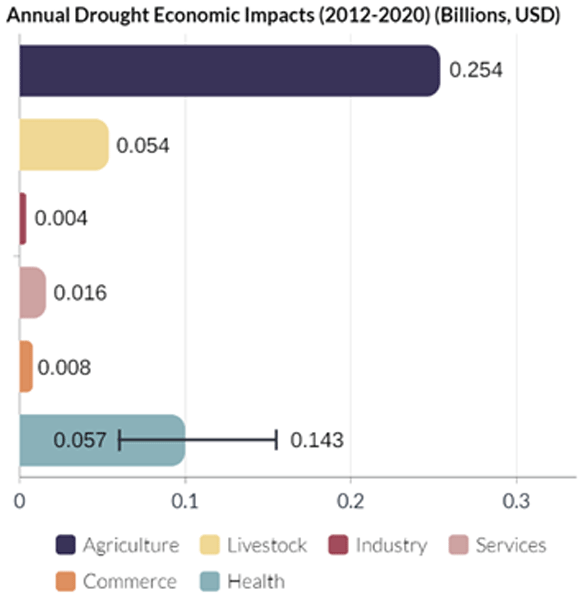
Figure 2 stands out because it captures why this research matters by showing that health impacts aren't just a footnote but are actually comparable to livestock or service sector losses. I think the figure should be moved higher in the manuscript and given greater emphasis.
Conversely, and significantly for the main conclusion, the economic weight of the paper rests almost entirely on the "Value of Statistical Life" at USD 1.09 million, yet there is very little justification for why this specific figure was chosen for the Brazilian context. What this value refers to and justification for the specific valuation need to be further described.
The use of "groundwater-use licenses" as a proxy for actual water access may also be tenuous. Just because a well is licensed does it mean it was providing clean water during a record-breaking drought?
Additionally, without a deeper discussion comparing this to similar studies elsewhere, it is difficult for a reader outside of Brazil to see how these findings could apply to their own region.
The title states “human health impacts” yet the manuscript focuses on “diarrhoea-related hospitalisations”. There should be some discussion of other drought-induced human health impacts.
Specific comments
The opening line of the abstract reads like a conclusion, which does not really match the title of the paper. Either the title needs adjusting to mention groundwater, or the opening line needs to better match the premise of the manuscript title.
The manuscript requires some grammatical adjustments as follows:
Lines 31 and 71: “… not having non-interrupted access…” this phrasing requires some mental gymnastics to figure out. It should be simplified to something like “… having interrupted access …”.
Line 37: “Since 2012, the population of this region has been affected by the most severe drought to be recorded in Northeast Brazil.” The authors state elsewhere that the drought ended in 2020, while this sentence suggests it is ongoing.
Citation: https://doi.org/10.5194/egusphere-2026-678-RC2 -
AC2: 'Reply on RC2', Alexandre Costa, 07 Apr 2026
Dear Reviewer,
We thank you for your suggestions and comments. Below, they are answered in detail.
General comments
- It is refreshing to see a study that speaks the language of policymakers by converting health outcomes into GDP percentages, which makes a great case for investing in resilient water infrastructure. However, the paper seems somewhat like a technical report that has been dropped into a journal template without enough bigger picture context.
After addressing your suggestions and those from Dr. Raquel Guimarães, we hope that our brief commentary can also delivery a bigger picture context.
- The jump from 10 municipalities to 116 (or 184) across the entire state is a huge leap that assumes everywhere in Ceará is essentially the same, which glosses over local differences in infrastructure and wealth. While the authors acknowledge this as a limitation, the manuscript would benefit from a slightly deeper reflection on how socioeconomic heterogeneities (e.g. varying sanitation coverage) might affect this linear upscaling.
Suggestion taken. We rewrote Section 3.3 Conservative nature and limitations of the estimates, which now reads: “… Consequently, these broader societal disruptions might substantially contribute to a greater economic impact of drought than the values reported here. On the other hand, in drought-affected and resource-constrained areas, some cases may not reach formal health facilities, which could lead to measurement error and potential underestimation of impacts. Furthermore, the translation of impacts from ten municipalities to the entire state under severe drought impacts (116 municipalities), while informative, assumes a uniformity of effect that may not fully reflect local socioeconomic and infrastructural heterogeneities, which may not be completely captured by sample size and selection. For instance, it is expected that municipalities serving with a much better sanitation coverage are more resilient against human-health effects of drought.”
- Given that the necessary data are available for every municipality in the country, why were the results of the 10 municipalities linearly scaled to state level rather than just using actual data?
Our primary goal was to estimate the magnitude of the economic losses averted by the ten municipalities at the state level, rather than investigating the dynamics for the whole 116 municipalities in-depth, which would require substantial additional effort, e.g. with regard to data quality and validation.
- Figure 2 stands out because it captures why this research matters by showing that health impacts aren't just a footnote but are actually comparable to livestock or service sector losses. I think the figure should be moved higher in the manuscript and given greater emphasis.
Thank you for comment. We moved Figure 2 to Section 3.2 Upscaling regional health impacts to the state level. We also added the following specific comment, which was also partially moved from 4. Final considerations, to it: “These findings present huge economic impacts from the implementation of water-supply-based protective measures related to diarrhea hospitalizations during severe droughts, which is comparable to economic drought’s impacts on productive sectors in the same large dryland region (Ministério do Desenvolvimento Regional, 2024; Fig. 2). Therefore, investments in reliable water supply are not only important for public health, but also highly relevant from a macroeconomic perspective, and that the true costs of drought are underestimated when health effects are excluded.”
- Conversely, and significantly for the main conclusion, the economic weight of the paper rests almost entirely on the "Value of Statistical Life" at USD 1.09 million, yet there is very little justification for why this specific figure was chosen for the Brazilian context. What this value refers to and justification for the specific valuation need to be further described.
We thank the reviewer for highlighting the importance of clarifying the Value of Statistical Life (VSL) used in our analysis. The VSL represents society’s willingness to pay for small reductions in mortality risk and is a standard parameter in cost–benefit analysis. In the Brazilian context, there is no recent empirical VSL estimate derived from nationally representative willingness‑to‑pay studies. For this reason, we adopt the official value established in the Brazilian government’s Catálogo de Parâmetros da Avaliação Socioeconômica de Custo‑Benefício (CBA), which sets the VSL at R$ 5.68 million. This parameter is the official reference for socioeconomic appraisal of public policies and indemnification calculations in Brazil, and when converted to USD using the average exchange rate for the period, it corresponds to the USD 1.09 million used in the paper.
To contextualize this figure internationally, the OECD’s recent report Mortality Risk Valuation in Policy Assessment (OECD, 2025) indicates that VSL estimates typically range from about USD 1 million in low‑ and middle‑income countries to USD 7.1–8.5 million in OECD and high‑income countries. Brazil, as an upper‑middle‑income country, falls within the lower end of this range. Since no updated Brazil‑specific empirical VSL estimate is available, the use of the official government parameter ensures methodological consistency with national CBA guidelines and provides a transparent and policy‑relevant basis for our valuation.
We added this explanation to Section 2.3 Economic valuation of avoided morbidity and mortality.
- The use of "groundwater-use licenses" as a proxy for actual water access may also be tenuous. Just because a well is licensed does it mean it was providing clean water during a record-breaking drought?
We did not use all groundwater-use licenses, but only those for drinking water (Line 60 in the submitted version)
- Additionally, without a deeper discussion comparing this to similar studies elsewhere, it is difficult for a reader outside of Brazil to see how these findings could apply to their own region.
Thank you for your suggestion. We added the following discussion in Section 3.2 Upscaling regional health impacts to the state level: “Moreover, these findings are likely be relevant to other drylands, where about 2 billion people live (UNNCD, 2017), with 525 million in Africa alone (Li et al., 2024), because exposure to mild or severe drought is significantly associated with an increased diarrhea risk among children under five in 51 low- and middle-income countries, being stronger in dry zones (Wang et al., 2022).”
- The title states “human health impacts” yet the manuscript focuses on “diarrhoea-related hospitalisations”. There should be some discussion of other drought-induced human health impacts.
Suggestion taken. We added the following discussion in Section 4 Final considerations: “Moreover, there are many other drought-induced or drought-modified human health impacts, such as vector-borne, respiratory, and cardiovascular diseases (e.g. Moreira et al. 2020; 2024), which may also have relevant economic impacts and demand measures and policies far beyond the water management alone.”
Specific comments
- The opening line of the abstract reads like a conclusion, which does not really match the title of the paper. Either the title needs adjusting to mention groundwater, or the opening line needs to better match the premise of the manuscript title.
Thank you for your comment. Now, the abstract reads as follows: “Drought economic assessments tend to focus on productive sectors, such as agriculture, livestock and industry, while providing limited attention to human-health effects of drought. The economic valuation of drought-related health interventions reveals that ensuring groundwater access during severe droughts could avert significant losses in Northeast Brazil. Estimated benefits from reduced diarrhea hospitalizations and mortality total 9.92% of local GDP. When scaled to state level, avoidable losses may reach USD 1.15 billion, which are comparable to the economic drought’s impacts on productive sectors, underscoring the macroeconomic relevance of investing in resilient water infrastructure in a health-promoting perspective.”
The manuscript requires some grammatical adjustments as follows:
- Lines 31 and 71: “… not having non-interrupted access…” this phrasing requires some mental gymnastics to figure out. It should be simplified to something like “… having interrupted access …”.
Thank you for your comment. Rephrasing done as suggested.
- Line 37: “Since 2012, the population of this region has been affected by the most severe drought to be recorded in Northeast Brazil.” The authors state elsewhere that the drought ended in 2020, while this sentence suggests it is ongoing.
Actually, the drought impacts are ongoing. We clarified the drought and analysis’ periods in section 2.2 Hydro-epidemiological modelling: “The time horizon of the targeted and explanatory variables was the whole meteorological drought (2012-2017) and drought recovery (2018-2020) period prior to the covid-19 pandemic outbreak in Ceará state.”
References
Li, F., Diop, S., Hirwa, H., et al.: Dryland Social-Ecological Systems in Africa. In: Fu, B., Stafford-Smith, M. (eds) Dryland Social-Ecological Systems in Changing Environments. Springer, Singapore. https://doi.org/10.1007/978-981-99-9375-8_9
Moreira, R. P., Costa, A. C., Gomes, T. F., and Ferreira, G. de O.: Climate and climate-sensitive diseases in semi-arid regions: a systematic review, Int. J. Public Health, 65, 1749-1761, https://doi.org/10.1007/s00038-020-01464-6, 2020.
Moreira, R. P., da Silva, C. B. C., de Sousa, T. C. et al.: The Influence of Climate, Atmospheric Pollution, and Natural Disasters on Cardiovascular Diseases and Diabetes Mellitus in Drylands: A Scoping Review, Public Health Rev., 45, 1607300, https://doi.org/10.3389/phrs.2024.1607300, 2024.
Naciones Unidas Convención de Lucha contra la Desertificación (UNCCD). Perspectiva Global de la tierra. Bonn: UNCCD, 2017.
Organization for Economic Co-operation and Development (OECD). Mortality risk valuation in policy assessment: A global meta-analysis of value statistical life studies, Paris: OECD Publishing, https://doi.org/10.1787/76ca89a2-en, 2025.
Wang, P., Asare, E., Pitzer, V.E., et al.: Associations between long-term drought and diarrhea among children under five in low- and middle-income countries, Nat. Commun., 13, 3661, https://doi.org/10.1038/s41467-022-31291-7, 2022.
Citation: https://doi.org/10.5194/egusphere-2026-678-AC2
-
AC2: 'Reply on RC2', Alexandre Costa, 07 Apr 2026
Peer review completion


Interactive discussion
Status: closed
-
RC1: 'Comment on egusphere-2026-678', Raquel Guimaraes, 23 Feb 2026
I found this paper very interesting and timely. The topic is highly relevant, especially because economic drought assessments still tend to prioritise productive sectors while giving limited attention to health outcomes. The manuscript is clearly written, policy relevant, and based on an accessible modelling strategy. In my view, it makes a valuable contribution and can be accepted with minor revisions.The paper argues that drought economic assessments usually focus on productive sectors such as agriculture and industry, while neglecting health impacts. Using data from Ceará in Northeast Brazil during the 2012–2020 drought, the authors show that access to groundwater significantly reduced diarrhea hospitalizations and related deaths. They estimate that, in the ten municipalities studied, the economic benefits of avoided morbidity and mortality correspond to almost 10% of local GDP, and when extrapolated to the state level, avoidable losses may reach around USD 800 million, with upper estimates above USD 1 billion. The study concludes that investments in reliable water supply are not only important for public health, but also highly relevant from a macroeconomic perspective, and that the true costs of drought are underestimated when health effects are excluded.Regarding Eq. 1, although the equation has been published in De Souza et al. (2025), it would be helpful to briefly restate the rationale for its application in this study and clarify its transferability to the current estimation exercise. The manuscript should also specify the time horizon of the variables (e.g., monthly or annual) and reflect this explicitly, for example through subscripts. In addition, the number of observations used in the estimation should be clearly indicated (is it a panel estimation?), and the implications of relying on ten municipalities should be discussed more explicitly in terms of external validity.It would also be important to clarify whether potential lagged effects between diarrhea hospitalizations and mortality were considered. For example, if deaths occur with some delay after hospitalization or during prolonged drought exposure, a purely contemporaneous specification may underestimate or misattribute part of the health impact. Even a short discussion of possible lag structures would strengthen the epidemiological interpretation.Moreover, the analysis implicitly assumes that hospitalization and mortality data are of good quality and fully representative. A brief discussion on data reliability would be valuable. For instance, are there concerns regarding underreporting, differences in access to hospital services, or variation in reporting quality across municipalities? In drought-affected and resource-constrained areas, some cases may not reach formal health facilities, which could lead to measurement error and potential underestimation of impacts. Reflecting on these aspects would increase transparency regarding the robustness of the estimates.In the Results section, the reported economic estimates would benefit from a clearer indication of their temporal scale (annual totals, cumulative over 2012–2020, etc.), which would facilitate interpretation and comparison. Finally, the statement that the total economic impact of drought is likely substantially greater than the reported values should be balanced by acknowledging potential sources of overestimation. For example, if the selected municipalities correspond to areas with particularly high disease incidence, selection effects may limit representativeness. A more explicit discussion of temporal scale, sample size, representativeness, and data quality would further strengthen the robustness and interpretability of what is otherwise a strong and policy-relevant contribution.Citation: https://doi.org/
10.5194/egusphere-2026-678-RC1 -
AC1: 'Reply on RC1', Alexandre Costa, 07 Apr 2026
Dear Dr. Raquel Guimarães,
We thank you for your positive feedback about our paper. Below, your comments are answered in detail.
- I found this paper very interesting and timely. The topic is highly relevant, especially because economic drought assessments still tend to prioritise productive sectors while giving limited attention to health outcomes. The manuscript is clearly written, policy relevant, and based on an accessible modelling strategy. In my view, it makes a valuable contribution and can be accepted with minor revisions. The paper argues that drought economic assessments usually focus on productive sectors such as agriculture and industry, while neglecting health impacts. Using data from Ceará in Northeast Brazil during the 2012–2020 drought, the authors show that access to groundwater significantly reduced diarrhea hospitalizations and related deaths. They estimate that, in the ten municipalities studied, the economic benefits of avoided morbidity and mortality correspond to almost 10% of local GDP, and when extrapolated to the state level, avoidable losses may reach around USD 800 million, with upper estimates above USD 1 billion. The study concludes that investments in reliable water supply are not only important for public health, but also highly relevant from a macroeconomic perspective, and that the true costs of drought are underestimated when health effects are excluded.
We thank you for endorsing the scientific and policy relevance of our study. We hope that our study helps to highlight the importance of investigating the impacts of drought on human health and to include them explicitly into drought impact assessments.
- Regarding Eq. 1, although the equation has been published in De Souza et al. (2025), it would be helpful to briefly restate the rationale for its application in this study and clarify its transferability to the current estimation exercise.
We propose the following modification to improve the clarity of the rationale behind the application and its transferability in Section 2.2 Hydro-epidemiological modelling: “With the aim to analyze the impact of severe drought and groundwater access on water security and the prevalence of diarrhea-related hospitalizations in a large tropical semi-arid region of Brazil, De Souza et al. (2025) adjusted a hydro-epidemiological modelling for ten municipalities in Ceará (the black-coloured region in Fig. 1), which have similar socio-economic and sanitation infrastructure comparing to other municipalities of the same large dryland region. The studied municipalities belong to the same health administrative superintendency region and have a rather variable amount of groundwater use for human consumption, ranging from 0.03% to 99.63% of total water for this end (De Souza et al., 2025).”
- The manuscript should also specify the time horizon of the variables (e.g., monthly or annual) and reflect this explicitly, for example through subscripts. In addition, the number of observations used in the estimation should be clearly indicated (is it a panel estimation?),
The time horizon of the targeted and explanatory variables was the whole meteorological drought (2012-2017) and drought recovery (2018-2020) period prior to the covid-19 pandemic outbreak in Ceará state. Therefore, the values of the variables were accumulated over 2012-2020. We included this explanation in methodological section.
- and the implications of relying on ten municipalities should be discussed more explicitly in terms of external validity.
Thank you for your comment. We discussed this issue in Section 3.3 Conservative nature and limitations of the estimates (see 9.)
- It would also be important to clarify whether potential lagged effects between diarrhea hospitalizations and mortality were considered. For example, if deaths occur with some delay after hospitalization or during prolonged drought exposure, a purely contemporaneous specification may underestimate or misattribute part of the health impact. Even a short discussion of possible lag structures would strengthen the epidemiological interpretation.
Since the application was based on accumulated values of the variables over the study period, which was not clear in the text (see 3.), potential lagged effects could be disregarded.
- Moreover, the analysis implicitly assumes that hospitalization and mortality data are of good quality and fully representative. A brief discussion on data reliability would be valuable. For instance, are there concerns regarding underreporting, differences in access to hospital services, or variation in reporting quality across municipalities? In drought-affected and resource-constrained areas, some cases may not reach formal health facilities, which could lead to measurement error and potential underestimation of impacts. Reflecting on these aspects would increase transparency regarding the robustness of the estimates.
Thank you for this comment. Following your suggestion, we modified the paragraph on data availability in Section 2.1. Study area and data availability: “The Brazilian Ministry of Health publishes data on the number of diarrhea hospitalizations, days of hospitalization, hospitalization costs, and hospitalization mortality at municipality and monthly scales for the whole Brazil (Ministério da Saúde, DATASUS, 2025). However, its database, called DATASUS, can compromise uncertainties due to dependence on filling out of forms in the executing hospitals, which generates the possibility of bias in the reporting of information, with a probability of including multiple or wrong diagnoses in the database, in addition to the risk of underreporting (Viana et al., 2023). Despite these uncertainties, DATASUS remains a valuable, large-scale source for observational studies when the research results are treated with caution in a conservative manner.”
We also included aspects of this issue in Section 3.3 Conservative nature and limitations of the estimates, please see below (9.).
- In the Results section, the reported economic estimates would benefit from a clearer indication of their temporal scale (annual totals, cumulative over 2012–2020, etc.), which would facilitate interpretation and comparison.
Suggestion taken. We modified the first statement in Section 3.2 Upscaling regional health impacts to the state level: “Therefore, the total economic benefit of the reduction of diarrhea hospitalizations by groundwater access during the studied severe drought is USD 69.10 million (95% CI: USD 39.49–98.73 million; p < 0.05) cumulative over 2012-2020, which is equivalent to 9.92% of GDP of the ten studied municipalities (Instituto Brasileiro de Geografia e Estatística, 2021).”
- Finally, the statement that the total economic impact of drought is likely substantially greater than the reported values should be balanced by acknowledging potential sources of overestimation. For example, if the selected municipalities correspond to areas with particularly high disease incidence, selection effects may limit representativeness.
Actually, the broader societal impacts described are already sources of overestimation (3.3 Conservative nature and limitations of the estimates). However, following your aforementioned suggestions, we included sources of underestimation. Regarding the uncertainties arising from sample selection, we recognize these, but we think we are not able to assume whether they lead to overestimation or underestimation. Now, this section reads as follows: “… Consequently, these broader societal disruptions might substantially contribute to a greater economic impact of drought than the values reported here. On the other hand, in drought-affected and resource-constrained areas, some cases may not reach formal health facilities, which could lead to measurement error and potential underestimation of impacts. Furthermore, the translation of impacts from ten municipalities to the entire state under severe drought impacts (116 municipalities), while informative, assumes a uniformity of effect that may not fully reflect local socioeconomic and infrastructural heterogeneities, which may not be completely captured by sample size and selection. For instance, it is expected that municipalities serving with a much better sanitation coverage are more resilient against human-health effects of drought.”.
- A more explicit discussion of temporal scale, sample size, representativeness, and data quality would further strengthen the robustness and interpretability of what is otherwise a strong and policy-relevant contribution.
We added a more explicit discussion for each point in the revised version: a) temporal scale: see 3., and 8.; b) sample size and representativeness: see 2., and 9.; c) data quality: see 7., and 9.
After your suggestions, we think we were able to clarify many points in our approach and to expand a necessary discussion on uncertainty. Thank you very much.
References
Viana, S. W., Faleiro, M. D., Mendes, A. L. F. et al.: Limitations of using the DATASUS database as a primary source of data in surgical research: a scoping review, Rev. Col. Bras. Cir., 50, e20233545, https://doi.org/10.1590/0100-6991e-20233545-en, 2023.
Citation: https://doi.org/10.5194/egusphere-2026-678-AC1
-
AC1: 'Reply on RC1', Alexandre Costa, 07 Apr 2026
-
RC2: 'Comment on egusphere-2026-678', Anonymous Referee #2, 30 Mar 2026
The manuscript addresses a critical blind spot in natural hazard research: the economic quantification of human health impacts during droughts. By applying a hydro-epidemiological model to Ceará, Brazil, the authors demonstrate that the economic benefits of groundwater access, primarily through averted diarrhoea-related hospitalisations and mortality, are comparable to the losses seen in traditional productive sectors like agriculture and industry. The paper effectively argues for a "health-promoting" perspective in water infrastructure investment.
General comments
It is refreshing to see a study that speaks the language of policymakers by converting health outcomes into GDP percentages, which makes a great case for investing in resilient water infrastructure. However, the paper seems somewhat like a technical report that has been dropped into a journal template without enough bigger picture context.
The jump from 10 municipalities to 116 (or 184) across the entire state is a huge leap that assumes everywhere in Ceará is essentially the same, which glosses over local differences in infrastructure and wealth. While the authors acknowledge this as a limitation, the manuscript would benefit from a slightly deeper reflection on how socioeconomic heterogeneities (e.g. varying sanitation coverage) might affect this linear upscaling.
Given that the necessary data are available for every municipality in the country, why were the results of the 10 municipalities linearly scaled to state level rather than just using actual data?
Figure 2 stands out because it captures why this research matters by showing that health impacts aren't just a footnote but are actually comparable to livestock or service sector losses. I think the figure should be moved higher in the manuscript and given greater emphasis.
Conversely, and significantly for the main conclusion, the economic weight of the paper rests almost entirely on the "Value of Statistical Life" at USD 1.09 million, yet there is very little justification for why this specific figure was chosen for the Brazilian context. What this value refers to and justification for the specific valuation need to be further described.
The use of "groundwater-use licenses" as a proxy for actual water access may also be tenuous. Just because a well is licensed does it mean it was providing clean water during a record-breaking drought?
Additionally, without a deeper discussion comparing this to similar studies elsewhere, it is difficult for a reader outside of Brazil to see how these findings could apply to their own region.
The title states “human health impacts” yet the manuscript focuses on “diarrhoea-related hospitalisations”. There should be some discussion of other drought-induced human health impacts.
Specific comments
The opening line of the abstract reads like a conclusion, which does not really match the title of the paper. Either the title needs adjusting to mention groundwater, or the opening line needs to better match the premise of the manuscript title.
The manuscript requires some grammatical adjustments as follows:
Lines 31 and 71: “… not having non-interrupted access…” this phrasing requires some mental gymnastics to figure out. It should be simplified to something like “… having interrupted access …”.
Line 37: “Since 2012, the population of this region has been affected by the most severe drought to be recorded in Northeast Brazil.” The authors state elsewhere that the drought ended in 2020, while this sentence suggests it is ongoing.
Citation: https://doi.org/10.5194/egusphere-2026-678-RC2 -
AC2: 'Reply on RC2', Alexandre Costa, 07 Apr 2026
Dear Reviewer,
We thank you for your suggestions and comments. Below, they are answered in detail.
General comments
- It is refreshing to see a study that speaks the language of policymakers by converting health outcomes into GDP percentages, which makes a great case for investing in resilient water infrastructure. However, the paper seems somewhat like a technical report that has been dropped into a journal template without enough bigger picture context.
After addressing your suggestions and those from Dr. Raquel Guimarães, we hope that our brief commentary can also delivery a bigger picture context.
- The jump from 10 municipalities to 116 (or 184) across the entire state is a huge leap that assumes everywhere in Ceará is essentially the same, which glosses over local differences in infrastructure and wealth. While the authors acknowledge this as a limitation, the manuscript would benefit from a slightly deeper reflection on how socioeconomic heterogeneities (e.g. varying sanitation coverage) might affect this linear upscaling.
Suggestion taken. We rewrote Section 3.3 Conservative nature and limitations of the estimates, which now reads: “… Consequently, these broader societal disruptions might substantially contribute to a greater economic impact of drought than the values reported here. On the other hand, in drought-affected and resource-constrained areas, some cases may not reach formal health facilities, which could lead to measurement error and potential underestimation of impacts. Furthermore, the translation of impacts from ten municipalities to the entire state under severe drought impacts (116 municipalities), while informative, assumes a uniformity of effect that may not fully reflect local socioeconomic and infrastructural heterogeneities, which may not be completely captured by sample size and selection. For instance, it is expected that municipalities serving with a much better sanitation coverage are more resilient against human-health effects of drought.”
- Given that the necessary data are available for every municipality in the country, why were the results of the 10 municipalities linearly scaled to state level rather than just using actual data?
Our primary goal was to estimate the magnitude of the economic losses averted by the ten municipalities at the state level, rather than investigating the dynamics for the whole 116 municipalities in-depth, which would require substantial additional effort, e.g. with regard to data quality and validation.
- Figure 2 stands out because it captures why this research matters by showing that health impacts aren't just a footnote but are actually comparable to livestock or service sector losses. I think the figure should be moved higher in the manuscript and given greater emphasis.
Thank you for comment. We moved Figure 2 to Section 3.2 Upscaling regional health impacts to the state level. We also added the following specific comment, which was also partially moved from 4. Final considerations, to it: “These findings present huge economic impacts from the implementation of water-supply-based protective measures related to diarrhea hospitalizations during severe droughts, which is comparable to economic drought’s impacts on productive sectors in the same large dryland region (Ministério do Desenvolvimento Regional, 2024; Fig. 2). Therefore, investments in reliable water supply are not only important for public health, but also highly relevant from a macroeconomic perspective, and that the true costs of drought are underestimated when health effects are excluded.”
- Conversely, and significantly for the main conclusion, the economic weight of the paper rests almost entirely on the "Value of Statistical Life" at USD 1.09 million, yet there is very little justification for why this specific figure was chosen for the Brazilian context. What this value refers to and justification for the specific valuation need to be further described.
We thank the reviewer for highlighting the importance of clarifying the Value of Statistical Life (VSL) used in our analysis. The VSL represents society’s willingness to pay for small reductions in mortality risk and is a standard parameter in cost–benefit analysis. In the Brazilian context, there is no recent empirical VSL estimate derived from nationally representative willingness‑to‑pay studies. For this reason, we adopt the official value established in the Brazilian government’s Catálogo de Parâmetros da Avaliação Socioeconômica de Custo‑Benefício (CBA), which sets the VSL at R$ 5.68 million. This parameter is the official reference for socioeconomic appraisal of public policies and indemnification calculations in Brazil, and when converted to USD using the average exchange rate for the period, it corresponds to the USD 1.09 million used in the paper.
To contextualize this figure internationally, the OECD’s recent report Mortality Risk Valuation in Policy Assessment (OECD, 2025) indicates that VSL estimates typically range from about USD 1 million in low‑ and middle‑income countries to USD 7.1–8.5 million in OECD and high‑income countries. Brazil, as an upper‑middle‑income country, falls within the lower end of this range. Since no updated Brazil‑specific empirical VSL estimate is available, the use of the official government parameter ensures methodological consistency with national CBA guidelines and provides a transparent and policy‑relevant basis for our valuation.
We added this explanation to Section 2.3 Economic valuation of avoided morbidity and mortality.
- The use of "groundwater-use licenses" as a proxy for actual water access may also be tenuous. Just because a well is licensed does it mean it was providing clean water during a record-breaking drought?
We did not use all groundwater-use licenses, but only those for drinking water (Line 60 in the submitted version)
- Additionally, without a deeper discussion comparing this to similar studies elsewhere, it is difficult for a reader outside of Brazil to see how these findings could apply to their own region.
Thank you for your suggestion. We added the following discussion in Section 3.2 Upscaling regional health impacts to the state level: “Moreover, these findings are likely be relevant to other drylands, where about 2 billion people live (UNNCD, 2017), with 525 million in Africa alone (Li et al., 2024), because exposure to mild or severe drought is significantly associated with an increased diarrhea risk among children under five in 51 low- and middle-income countries, being stronger in dry zones (Wang et al., 2022).”
- The title states “human health impacts” yet the manuscript focuses on “diarrhoea-related hospitalisations”. There should be some discussion of other drought-induced human health impacts.
Suggestion taken. We added the following discussion in Section 4 Final considerations: “Moreover, there are many other drought-induced or drought-modified human health impacts, such as vector-borne, respiratory, and cardiovascular diseases (e.g. Moreira et al. 2020; 2024), which may also have relevant economic impacts and demand measures and policies far beyond the water management alone.”
Specific comments
- The opening line of the abstract reads like a conclusion, which does not really match the title of the paper. Either the title needs adjusting to mention groundwater, or the opening line needs to better match the premise of the manuscript title.
Thank you for your comment. Now, the abstract reads as follows: “Drought economic assessments tend to focus on productive sectors, such as agriculture, livestock and industry, while providing limited attention to human-health effects of drought. The economic valuation of drought-related health interventions reveals that ensuring groundwater access during severe droughts could avert significant losses in Northeast Brazil. Estimated benefits from reduced diarrhea hospitalizations and mortality total 9.92% of local GDP. When scaled to state level, avoidable losses may reach USD 1.15 billion, which are comparable to the economic drought’s impacts on productive sectors, underscoring the macroeconomic relevance of investing in resilient water infrastructure in a health-promoting perspective.”
The manuscript requires some grammatical adjustments as follows:
- Lines 31 and 71: “… not having non-interrupted access…” this phrasing requires some mental gymnastics to figure out. It should be simplified to something like “… having interrupted access …”.
Thank you for your comment. Rephrasing done as suggested.
- Line 37: “Since 2012, the population of this region has been affected by the most severe drought to be recorded in Northeast Brazil.” The authors state elsewhere that the drought ended in 2020, while this sentence suggests it is ongoing.
Actually, the drought impacts are ongoing. We clarified the drought and analysis’ periods in section 2.2 Hydro-epidemiological modelling: “The time horizon of the targeted and explanatory variables was the whole meteorological drought (2012-2017) and drought recovery (2018-2020) period prior to the covid-19 pandemic outbreak in Ceará state.”
References
Li, F., Diop, S., Hirwa, H., et al.: Dryland Social-Ecological Systems in Africa. In: Fu, B., Stafford-Smith, M. (eds) Dryland Social-Ecological Systems in Changing Environments. Springer, Singapore. https://doi.org/10.1007/978-981-99-9375-8_9
Moreira, R. P., Costa, A. C., Gomes, T. F., and Ferreira, G. de O.: Climate and climate-sensitive diseases in semi-arid regions: a systematic review, Int. J. Public Health, 65, 1749-1761, https://doi.org/10.1007/s00038-020-01464-6, 2020.
Moreira, R. P., da Silva, C. B. C., de Sousa, T. C. et al.: The Influence of Climate, Atmospheric Pollution, and Natural Disasters on Cardiovascular Diseases and Diabetes Mellitus in Drylands: A Scoping Review, Public Health Rev., 45, 1607300, https://doi.org/10.3389/phrs.2024.1607300, 2024.
Naciones Unidas Convención de Lucha contra la Desertificación (UNCCD). Perspectiva Global de la tierra. Bonn: UNCCD, 2017.
Organization for Economic Co-operation and Development (OECD). Mortality risk valuation in policy assessment: A global meta-analysis of value statistical life studies, Paris: OECD Publishing, https://doi.org/10.1787/76ca89a2-en, 2025.
Wang, P., Asare, E., Pitzer, V.E., et al.: Associations between long-term drought and diarrhea among children under five in low- and middle-income countries, Nat. Commun., 13, 3661, https://doi.org/10.1038/s41467-022-31291-7, 2022.
Citation: https://doi.org/10.5194/egusphere-2026-678-AC2
-
AC2: 'Reply on RC2', Alexandre Costa, 07 Apr 2026
Peer review completion
Journal article(s) based on this preprint
Viewed
| HTML | XML | Total | BibTeX | EndNote | |
|---|---|---|---|---|---|
| 1,580 | 438 | 83 | 2,101 | 198 | 163 |
- HTML: 1,580
- PDF: 438
- XML: 83
- Total: 2,101
- BibTeX: 198
- EndNote: 163
Viewed (geographical distribution)
| Country | # | Views | % |
|---|
| Total: | 0 |
| HTML: | 0 |
| PDF: | 0 |
| XML: | 0 |
- 1
Alexandre C. Costa
Francisco G. F. da Silva
Rafaella P. Moreira
Eduardo S. P. R. Martins
Luewton L. F. Agostinho
Pieter R. van Oel
The requested preprint has a corresponding peer-reviewed final revised paper. You are encouraged to refer to the final revised version.
- Preprint
(513 KB) - Metadata XML