
the Creative Commons Attribution 4.0 License.
the Creative Commons Attribution 4.0 License.
 | 12 Feb 2026
Synergistic Use of Active and Passive Satellite Observations for Monitoring Urban Fossil Fuel CO2 Emission
Abstract. Accurate estimation of fossil fuel CO2 (ffCO2) emissions is essential for climate prediction and the development of mitigation policies. Top-down carbon–nitrogen joint observations offer the potential for more reliable ffCO2 estimates. Here, we establish an inversion framework for urban ffCO2 emissions based on combined active–passive satellite observations. Urban ffCO2 distributions were first constructed using satellite NO₂ data and CO2-NOx emission ratios, and monthly ffCO2 emissions for selected global cities were then estimated by integrating XCO2 observations from the DQ-1 ACDL instrument. Our results show that satellite-derived NOx emissions provide strong constraints on urban anthropogenic CO2 estimates. Validation against TCCON ground-based observations indicates that, compared with conventional top-down inversion approaches, our method more accurately reproduces urban ffXCO2 plume distributions. We further evaluated the influence of different CO2-NOx ratio calculation methods on ffCO2 estimates and found variations exceeding 150, exerting a substantial impact on emission inversions. Under observational constraints, the uncertainty in CO2-NOx ratios derived from different methods decreased by 9.79–38.78 %, and the variation range was reduced by more than 100 %, converging toward a consistent magnitude. This study advances understanding of the spatiotemporal patterns of urban ffCO2 emissions and provides a unified perspective for future CO2-NOx-based anthropogenic carbon emission estimation.
-
Notice on discussion status
The requested preprint has a corresponding peer-reviewed final revised paper. You are encouraged to refer to the final revised version.
-
Preprint
(19028 KB)
-
The requested preprint has a corresponding peer-reviewed final revised paper. You are encouraged to refer to the final revised version.
- Preprint
(19028 KB) - Metadata XML
- BibTeX
- EndNote
- Final revised paper


Journal article(s) based on this preprint
Interactive discussion
Status: closed
-
RC1: 'Comment on egusphere-2026-538', Anonymous Referee #1, 27 Feb 2026
-
AC1: 'Reply on RC1', Jinchun Yi, 12 Mar 2026
The comment was uploaded in the form of a supplement: https://egusphere.copernicus.org/preprints/2026/egusphere-2026-538/egusphere-2026-538-AC1-supplement.pdf
-
AC1: 'Reply on RC1', Jinchun Yi, 12 Mar 2026
-
RC2: 'Comment on egusphere-2026-538', Anonymous Referee #2, 04 Mar 2026
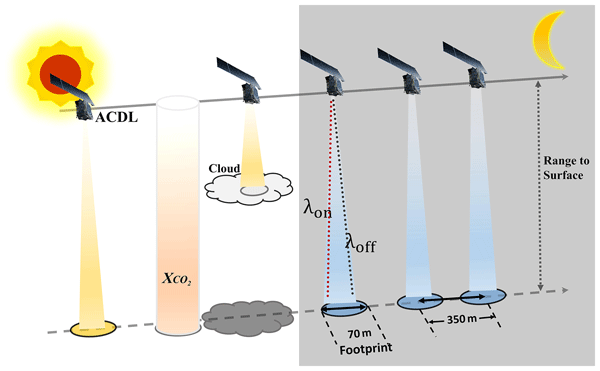
This study proposes a framework to estimate urban fossil fuel CO2 emissions by combining satellite-derived NOx emissions with active CO2 lidar observations. Specifically, NOx emissions are first inferred from TROPOMI NO2 columns using a mass-balance approach and then converted to prior CO2 emissions using CO2-to-NOx ratios. The prior emissions are subsequently constrained by XCO2 observations from DQ-1 through a Bayesian inversion coupled with WRF-STILT simulations. The framework is applied to three cities-Beijing, Paris, and Cairo, to evaluate the influence of different CO2-to-NOx ratio estimation methods on inferred emissions. The manuscript presents an interesting attempt to integrate active and passive satellite observations for urban CO2 emission monitoring, and the discussion of different CO2-to-NOx ratios touches upon the key challenges in recent studies on indirect CO2 emission estimates. However, several methodological aspects and the logical framework of the study require further clarification. The manuscript requires major revisions to address the following comments before it can be considered for publication.
Comments:
Title and Figure 1: The manuscript’s main objective is somewhat unclear. Although the Abstract, Introduction, Section 4 and Section 5 emphasize the importance of uncertainties in the CO2-to-NOx emission ratio for FFCO2 estimation, this key aspect is not reflected in the title or clearly illustrated in Figure 1. Clarifying the important role of the CO2-to-NOx ratio in the title and conceptual framework would improve the overall coherence of the manuscript.
Section 2 (Materials and Methods): The divergence-based approach is a flexible and low-cost method that has been widely applied in previous studies. However, it can be strongly affected by white noise in NO2 observations due to the nonlinear nature of the divergence terms. In the manuscript, the authors evaluate this effect using the ratio of the standard deviation to the mean of the column concentrations. It would be helpful if the authors could further clarify the range of these ratios and provide additional discussion on their variability. Previous studies suggest that the magnitude of this uncertainty may vary considerably, typically ranging from approximately 10% to 40%. The authors are encouraged to provide appropriate references to support this range.
http://dx.doi.org/10.5194/amt-11-6651-2018
http://dx.doi.org/10.5194/amt-14-481-2021
http://dx.doi.org/10.5194/amt-15-2037-2022
http://dx.doi.org/10.1029/2003jd003962
http://dx.doi.org/10.1029/2001jd001027
https://doi.org/10.1109/TGRS.2025.3620116
Section 2 Materials and Methods: The manuscript uses observations from DQ-1 satellite and Sentinel-5P TROPOMI. However, the data description does not clearly specify whether the two satellites have similar overpass times or how the temporal differences are handled. Since both CO2 and NO2 can exhibit noticeable diurnal variability, differences in satellite overpass times may potentially introduce additional biases when applying the Bayesian inversion for the CO2-to-NOx emission ratio. For example, Sentinel-5P TROPOMI typically has an overpass time around 13:30 local time, while the DQ-1 satellite observations used in this study appear to correspond to nighttime conditions (e.g., around 23:00 on 19 August, according to the case shown). It would be helpful if the authors could clarify the overpass times of the satellites used and explain whether any temporal matching or adjustment has been applied to ensure the consistency of the observations. Several studies have discussed these in appropriate way:
https://doi.org/10.5194/acp-19-9371-2019https://doi.org/10.1029/2022JD037736
Figure 3: It is difficult to discern the spatial patterns in b, c, and d without city boundaries. Could the authors clarify where the boundaries are? Additionally, regarding the fitted CO2-to-NOx ratio, was any filtering applied? For instance, in Paris, there appear to be numerous grid cells with values below 200, yet these low values do not seem to appear in Figure 3e. If such low ratios were filtered out, it should be explained that how the remaining grids can represent the CO2-to-NOx ratio for the entire city.
Section3: The manuscript emphasizes the high-resolution of the derived emission estimates. However, several key parameters in the framework, such as the CO2-to-NOx ratio, seems to be treated as fixed values at the city scale (only one value per city for the studied month), without accounting for potential temporal or spatial variability. In addition, although the study focuses on monitoring urban fossil fuel CO2 emissions, no figures are provided to illustrate the spatial distribution of CO2 within these cities. Including such information would better support the claims of high-resolution emission estimates.
Section 4: According to the proposed framework, CO2 emissions are estimated using NOx emissions together with the CO2-to-NOx emission ratio. Therefore, the determination and evaluation of this ratio appear to be a key step in the overall methodology. However, the discussion of the CO2-to-NOx ratio is mainly presented in Section 4 and Section 5, after the CO2 emission results are shown. From a methodological perspective, it might be clearer if the definition, evaluation, and potential adjustment of the CO2-to-NOx ratio were introduced earlier, as part of the methodological framework leading to the CO2 emission estimates.
Section 4: The manuscript discusses both the prior CO2-to-NOx ratio and the posterior ratio obtained from the Bayesian inversion. However, it is not explicitly stated which of these ratios is ultimately used to derive the final CO2 emission estimates. If the prior ratio is used for the final CO2 calculation, it raises the question of why considerable effort was devoted to constraining the posterior ratio, which apparently is not applied in deriving the final emissions.
Citation: https://doi.org/10.5194/egusphere-2026-538-RC2 -
AC2: 'Reply on RC2', Jinchun Yi, 12 Mar 2026
The comment was uploaded in the form of a supplement: https://egusphere.copernicus.org/preprints/2026/egusphere-2026-538/egusphere-2026-538-AC2-supplement.pdf
-
AC2: 'Reply on RC2', Jinchun Yi, 12 Mar 2026
Peer review completion


Interactive discussion
Status: closed
-
RC1: 'Comment on egusphere-2026-538', Anonymous Referee #1, 27 Feb 2026
This study develops a top-down inversion framework to estimate high-resolution, city-scale fossil-fuel CO₂ (ffCO₂) emissions by integrating active and passive satellite observations and coupling CO₂ and NOₓ emissions through NOₓ distributions and CO₂-to-NOₓ emission ratios. It further evaluates how different approaches for deriving the CO₂-to-NOₓ ratio influence the inferred ffCO₂ emissions, showing that optimized ratio estimation enhances emission accuracy and reduces uncertainties in both the ratio and the resulting inversions. The framework is applied to three major metropolitan areas—Beijing, Cairo, and Paris—with comprehensive supporting analyses provided. By improving the estimation of urban carbon emissions at the city scale and lowering associated uncertainties, this work offers valuable contributions to the community for more robust emission quantification and better-informed carbon mitigation strategies.
I recommend this manuscript for publication, with only a few questions and suggestions for consideration.
Mandatory changes:
- 1: Since Aura OMI and OCO-2/3 are not utilized in this study, they should be removed from the figure. In addition, the connections between the different steps of the workflow are not sufficiently clear. The flowchart could be revised to improve clarity and logical progression.
- Section 2.1.1 ACDL Products: The statement "which enables direct 'top-down' observations of atmospheric CO₂" is misleading. While the use of an active lidar sensor is indeed a technological breakthrough, it does not inherently enable "direct" top-down emission estimates. This phrasing should be revised for accuracy.
- P11, Eqs. (4)–(5): Section 2.2.2 (2) is difficult to follow due to insufficient explanation of the parameters in Eqs. (4)–(5). Please revise these equations and clearly describe each variable and its physical meaning.
- Section 3.2.3: The posterior uncertainties reported in the text do not match the ones stated in table 2. The uncertainties reported in table are significantly larger. What is the reason?
Recommended minor changes:
P1, L23: XCO₂ should be defined at its first occurrence in this paper.
P2, L49–51: I would recommend adding more references by citing more relevant papers.
P3, L63: Please clarify what specific measurement limitations are being referred to here.
P5, Fig. 2: It may be more appropriate to relocate this figure to Section A1, where the parameter details are described.
P7, L174: Sun et al. (2018) does not appear to be directly relevant to flux estimation. More appropriate references would include Sun et al. (2022; https://doi.org/10.1029/2022GL101102) and Ayazpour et al. (2025; https://doi.org/10.1029/2024JD042817), which focus specifically on flux estimation methodologies.
P9, L202-212: It would be helpful to elaborate on how the scale height and chemical lifetime are determined.
P12, Eq. (11): Please specify the definition of Sobs.
P16, L336 we don't say 'concentration' when we talk about emissions.
P16, Table 1: Are the chemical lifetime and scale height values spatially averaged across each city?
P28, L548: How is the prior uncertainty of the CO₂-to-NOₓ ratio treated in experiments M4–M6?
Citation: https://doi.org/10.5194/egusphere-2026-538-RC1 -
AC1: 'Reply on RC1', Jinchun Yi, 12 Mar 2026
The comment was uploaded in the form of a supplement: https://egusphere.copernicus.org/preprints/2026/egusphere-2026-538/egusphere-2026-538-AC1-supplement.pdf
-
RC2: 'Comment on egusphere-2026-538', Anonymous Referee #2, 04 Mar 2026
This study proposes a framework to estimate urban fossil fuel CO2 emissions by combining satellite-derived NOx emissions with active CO2 lidar observations. Specifically, NOx emissions are first inferred from TROPOMI NO2 columns using a mass-balance approach and then converted to prior CO2 emissions using CO2-to-NOx ratios. The prior emissions are subsequently constrained by XCO2 observations from DQ-1 through a Bayesian inversion coupled with WRF-STILT simulations. The framework is applied to three cities-Beijing, Paris, and Cairo, to evaluate the influence of different CO2-to-NOx ratio estimation methods on inferred emissions. The manuscript presents an interesting attempt to integrate active and passive satellite observations for urban CO2 emission monitoring, and the discussion of different CO2-to-NOx ratios touches upon the key challenges in recent studies on indirect CO2 emission estimates. However, several methodological aspects and the logical framework of the study require further clarification. The manuscript requires major revisions to address the following comments before it can be considered for publication.
Comments:
Title and Figure 1: The manuscript’s main objective is somewhat unclear. Although the Abstract, Introduction, Section 4 and Section 5 emphasize the importance of uncertainties in the CO2-to-NOx emission ratio for FFCO2 estimation, this key aspect is not reflected in the title or clearly illustrated in Figure 1. Clarifying the important role of the CO2-to-NOx ratio in the title and conceptual framework would improve the overall coherence of the manuscript.
Section 2 (Materials and Methods): The divergence-based approach is a flexible and low-cost method that has been widely applied in previous studies. However, it can be strongly affected by white noise in NO2 observations due to the nonlinear nature of the divergence terms. In the manuscript, the authors evaluate this effect using the ratio of the standard deviation to the mean of the column concentrations. It would be helpful if the authors could further clarify the range of these ratios and provide additional discussion on their variability. Previous studies suggest that the magnitude of this uncertainty may vary considerably, typically ranging from approximately 10% to 40%. The authors are encouraged to provide appropriate references to support this range.
http://dx.doi.org/10.5194/amt-11-6651-2018
http://dx.doi.org/10.5194/amt-14-481-2021
http://dx.doi.org/10.5194/amt-15-2037-2022
http://dx.doi.org/10.1029/2003jd003962
http://dx.doi.org/10.1029/2001jd001027
https://doi.org/10.1109/TGRS.2025.3620116
Section 2 Materials and Methods: The manuscript uses observations from DQ-1 satellite and Sentinel-5P TROPOMI. However, the data description does not clearly specify whether the two satellites have similar overpass times or how the temporal differences are handled. Since both CO2 and NO2 can exhibit noticeable diurnal variability, differences in satellite overpass times may potentially introduce additional biases when applying the Bayesian inversion for the CO2-to-NOx emission ratio. For example, Sentinel-5P TROPOMI typically has an overpass time around 13:30 local time, while the DQ-1 satellite observations used in this study appear to correspond to nighttime conditions (e.g., around 23:00 on 19 August, according to the case shown). It would be helpful if the authors could clarify the overpass times of the satellites used and explain whether any temporal matching or adjustment has been applied to ensure the consistency of the observations. Several studies have discussed these in appropriate way:
https://doi.org/10.5194/acp-19-9371-2019https://doi.org/10.1029/2022JD037736
Figure 3: It is difficult to discern the spatial patterns in b, c, and d without city boundaries. Could the authors clarify where the boundaries are? Additionally, regarding the fitted CO2-to-NOx ratio, was any filtering applied? For instance, in Paris, there appear to be numerous grid cells with values below 200, yet these low values do not seem to appear in Figure 3e. If such low ratios were filtered out, it should be explained that how the remaining grids can represent the CO2-to-NOx ratio for the entire city.
Section3: The manuscript emphasizes the high-resolution of the derived emission estimates. However, several key parameters in the framework, such as the CO2-to-NOx ratio, seems to be treated as fixed values at the city scale (only one value per city for the studied month), without accounting for potential temporal or spatial variability. In addition, although the study focuses on monitoring urban fossil fuel CO2 emissions, no figures are provided to illustrate the spatial distribution of CO2 within these cities. Including such information would better support the claims of high-resolution emission estimates.
Section 4: According to the proposed framework, CO2 emissions are estimated using NOx emissions together with the CO2-to-NOx emission ratio. Therefore, the determination and evaluation of this ratio appear to be a key step in the overall methodology. However, the discussion of the CO2-to-NOx ratio is mainly presented in Section 4 and Section 5, after the CO2 emission results are shown. From a methodological perspective, it might be clearer if the definition, evaluation, and potential adjustment of the CO2-to-NOx ratio were introduced earlier, as part of the methodological framework leading to the CO2 emission estimates.
Section 4: The manuscript discusses both the prior CO2-to-NOx ratio and the posterior ratio obtained from the Bayesian inversion. However, it is not explicitly stated which of these ratios is ultimately used to derive the final CO2 emission estimates. If the prior ratio is used for the final CO2 calculation, it raises the question of why considerable effort was devoted to constraining the posterior ratio, which apparently is not applied in deriving the final emissions.
Citation: https://doi.org/10.5194/egusphere-2026-538-RC2 -
AC2: 'Reply on RC2', Jinchun Yi, 12 Mar 2026
The comment was uploaded in the form of a supplement: https://egusphere.copernicus.org/preprints/2026/egusphere-2026-538/egusphere-2026-538-AC2-supplement.pdf
-
AC2: 'Reply on RC2', Jinchun Yi, 12 Mar 2026
Peer review completion
Journal article(s) based on this preprint
Viewed
| HTML | XML | Total | BibTeX | EndNote | |
|---|---|---|---|---|---|
| 1,200 | 560 | 134 | 1,894 | 230 | 281 |
- HTML: 1,200
- PDF: 560
- XML: 134
- Total: 1,894
- BibTeX: 230
- EndNote: 281
Viewed (geographical distribution)
| Country | # | Views | % |
|---|
| Total: | 0 |
| HTML: | 0 |
| PDF: | 0 |
| XML: | 0 |
- 1
Jinchun Yi
Yiyang Huang
Ge Han

Hongyuang Zhang
Zhipeng Pei
Haotian Luo
Yichi Zhang
Tianqi Shi
Siwei Li
Wei Gong
The requested preprint has a corresponding peer-reviewed final revised paper. You are encouraged to refer to the final revised version.
- Preprint
(19028 KB) - Metadata XML
This study develops a top-down inversion framework to estimate high-resolution, city-scale fossil-fuel CO₂ (ffCO₂) emissions by integrating active and passive satellite observations and coupling CO₂ and NOₓ emissions through NOₓ distributions and CO₂-to-NOₓ emission ratios. It further evaluates how different approaches for deriving the CO₂-to-NOₓ ratio influence the inferred ffCO₂ emissions, showing that optimized ratio estimation enhances emission accuracy and reduces uncertainties in both the ratio and the resulting inversions. The framework is applied to three major metropolitan areas—Beijing, Cairo, and Paris—with comprehensive supporting analyses provided. By improving the estimation of urban carbon emissions at the city scale and lowering associated uncertainties, this work offers valuable contributions to the community for more robust emission quantification and better-informed carbon mitigation strategies.
I recommend this manuscript for publication, with only a few questions and suggestions for consideration.
Mandatory changes:
Recommended minor changes:
P1, L23: XCO₂ should be defined at its first occurrence in this paper.
P2, L49–51: I would recommend adding more references by citing more relevant papers.
P3, L63: Please clarify what specific measurement limitations are being referred to here.
P5, Fig. 2: It may be more appropriate to relocate this figure to Section A1, where the parameter details are described.
P7, L174: Sun et al. (2018) does not appear to be directly relevant to flux estimation. More appropriate references would include Sun et al. (2022; https://doi.org/10.1029/2022GL101102) and Ayazpour et al. (2025; https://doi.org/10.1029/2024JD042817), which focus specifically on flux estimation methodologies.
P9, L202-212: It would be helpful to elaborate on how the scale height and chemical lifetime are determined.
P12, Eq. (11): Please specify the definition of Sobs.
P16, L336 we don't say 'concentration' when we talk about emissions.
P16, Table 1: Are the chemical lifetime and scale height values spatially averaged across each city?
P28, L548: How is the prior uncertainty of the CO₂-to-NOₓ ratio treated in experiments M4–M6?