
the Creative Commons Attribution 4.0 License.
the Creative Commons Attribution 4.0 License.
 | 31 Mar 2026
Evaluating the radiative fidelity of PALM (v25.04) in high-resolution: impact of diverse urban morphology and vegetation on short-wave radiation
Abstract. Validating short-wave radiation in numerical models is non-trivial, as city measurements are heavily influenced by multiple reflections, absorption, and shading processes driven by the three-dimensional urban morphology and vegetation. At the same time, urban micro-scale models are typically forced by only two types of solar radiation inputs: i) field measurements, often represented by the global radiation, rarely by the combination of short-wave and long-wave radiation; and ii) data given from coarser-resolution models. We conduct a novel high-resolution evaluation study of the PALM model (v25.04), driven by the regional WRF model configured in two distinct parameterisation setups, across a multi-episode ensemble spanning from clear-sky to overcast conditions. We validate and quantify PALM's ability to explicitly resolve the spatiotemporal propagation of short-wave radiation and its interaction with heterogeneous urban landscapes against measurements collected from the stations located in morphologically variant urban settings with different solar access. Results demonstrate that PALM resolves urban- and vegetation-induced short-wave radiative exchange (i.e., canyon trapping, vegetation shading, building reflections, interaction with urban surfaces and dynamic timing) with high fidelity regardless of the urban setting, a capability that meso-scale models cannot match. The study reveals the dominant role of biases: despite PALM's superiority, the errors embedded in meso-scale cloud fields and radiation inputs cannot be fully compensated for by the micro-scale model. This work is a benchmark for the validation of high-resolution urban radiative transfer exchanges and shows that future progress in street-scale micrometeorological simulations hinges on rigorous verification of cloud representation and radiative fields in the meso-scale driving data.
-
Notice on discussion status
The requested preprint has a corresponding peer-reviewed final revised paper. You are encouraged to refer to the final revised version.
-
Preprint
(8180 KB)
-
Supplement
(6893 KB)
-
The requested preprint has a corresponding peer-reviewed final revised paper. You are encouraged to refer to the final revised version.
- Preprint
(8180 KB) - Metadata XML
-
Supplement
(6893 KB) - BibTeX
- EndNote
- Final revised paper


Journal article(s) based on this preprint
Interactive discussion
Status: closed
-
RC1: 'Comment on egusphere-2026-1516', Anonymous Referee #1, 01 May 2026
-
AC1: 'Reply on RC1', Jelena Radović, 23 Jun 2026
We would like to thank the reviewer for the comments and constructive suggestions. In response to the review, we have addressed all comments and revised the manuscript accordingly. Detailed responses are provided in the accompanying PDF document.
-
AC1: 'Reply on RC1', Jelena Radović, 23 Jun 2026
-
RC2: 'Comment on egusphere-2026-1516', Sasu Karttunen, 12 May 2026
General statement
The paper “Evaluating the radiative fidelity of PALM (v25.04) in high-resolution: impact of diverse urban morphology and vegetation on short-wave radiation” by J. Radović et al. evaluates 3D urban shortwave radiative transfer model of the PALM model system against pyranometer measurements from four sites near Dejvice, Czech Republic. PALM is run in a spinup mode, without 3D atmospheric model. The evaluation is performed over 16 cases (episodes), with downwelling radiation derived from two different WRF setups. The evaluation shows that PALM is able to capture the SW radiative transfer within urban canopy well, but is limited by the accuracy of the prescribed irradiances from WRF as well as the quality of input data prescribing the urban form.
The scope of the work is well defined and fits within the scope of GMD. The main novelty of the work is the comparison of the PALM-modelled radiative fluxes against real-world pyranometer measurements, an useful addition to prior evaluations of PALM’s representation of urban canopies. The evaluation is methodologically sound, and highlights both the strengths and limitations of PALM’s urban representation adequately. The quality of presentation is generally good, although there is still room for improvement. The paper reports useful findings for researchers working with 3D-resolved urban canopy simulations.
I have some general and specific critical comments as well as suggestions listed below, but I do not think addressing these would require major revisions to the manuscript or any substantial new work. Therefore, I recommend the manuscript to be published in GMD subject to a minor revision that adequately addresses these comments:
Main comments
- I would suggest a small rewrite of the Introduction section so that the theoretical and practical background for the work would be clearer. Currently, the emphasis is too much on different pre-existing models given as examples rather than in fundamental modelling approaches. This gives a lot of focus on the models itself, although they are not used in the study. I would suggest turning this the other way around: introduce the different modelling approaches in general, and just shortly list examples of models implementing the approach.
- I feel that a comprehensive description of the complete evaluation strategy is missing. Instead, the descriptions of the various evaluations and comparisons performed, as well as the reasoning behind them is scattered along the Results section. I suggest adding one as a new subsection to the Methods section, moving all information describing the evaluation (what was done and why) from Results in there. This way, after reading the Methods section, the reader would already have an understanding of how the evaluation was performed and why so, and the Results section could be dedicated purely for reporting the results. Currently, the reader needs to pick these pieces of information while reading through Results.
- I think it would be important to compare whether the averaging time scale has influence on evaluation metrics. Especially during non-clear-sky episodes, the point evaluation with a relatively short temporal averaging can be very sensitive to timing and positioning of single clouds, even if the average radiation over multiple hours (or large spatial area) would be close to truth. In addition to the current hour-by-hour pairwise comparison, I would suggest comparing at least the integrals of daily SW radiation pairwise from the model and the measurements for each of the episodes (and episodes together). The dependency of evaluation metrics on selected averaging time scale could be studied further as well (from 10 min to daily), if authors consider it viable.
Specific comments & suggestions
- The wording in the abstract could be a bit more careful:
- L11-12: “a capability that mesoscale models cannot match”
I think the statement is too general. Mesoscale models can implement coupling to a 3D urban surface model which could match PALM’s capabilities in this regard, one example would be 3DUCM and CSUMM (Conigliaro et al., 2021). This could be possible with WRF-SUEWS as well, using the SPARTACUS-Surface for 3D radiative interactions, however I’m not sure if this is tested in practice. There could be some other examples as well. Nevertheless, my point here is that this statement is not necessarily valid in general. - L12: “PALM’s superiority”
PALM’s superiority is context-dependent, and while in the present study the model performs very well on capturing the SW exchanges in the urban canopy, this statement seems too general.
- L11-12: “a capability that mesoscale models cannot match”
- L1: “Validating short-wave …” → “Validating urban short-wave …”
- L126: “extensible” → “modular” would perhaps be more fitting here.
- L127-129: The spin-up mode should be explained in detail, as this is a key feature of the modelling setup. E.g. what processes are included and what excluded from the computation, how does the solved model system look like, what are remaining factors affecting the SW radiation and what are fixed constants. Given the context of the study, it would be especially important to know whether the albedo of the surfaces can change throughout the simulation (and how so).
- L134-135: “by external forcing” → “by prescribed external forcing” to be more specific.
- L149-150: Specify how the data was interpolated to radiation model time steps and what time step was used to compute the radiation interactions.
- The angular resolution used with RTM ray-tracing is reported, but not the spatial resolution of the PALM surface representation. I think the authors should add a summary of the PALM model setups (e.g. resolution, number of grid points, time step, integration scheme, and any other information that may be important for reproducibility).
- L174-178: Perhaps some information on solar elevation could be added, e.g. range of maximum solar elevation over the episodes.
- Table 2: Measurement heights would be needed here. The authors could also report the view factors (VFs) for surface types for both incoming and outgoing SW radiation (e.g. FLE incoming: 0.xx sky, 0.xx building walls 0.xx tree canopy, …; outgoing: 0.xx road, 0.xx low vegetation, 0.xx …), as computed by PALM. This would help comparing the results across sites.
- The manufacturer as well as the manufacturer's country of origin should be given for the instruments.
- Table 3: The given CMP3 accuracy for incoming SW seems to be unrealistically high for its resolution. Please recheck the numbers for all instruments from the official data sheets.
- Table 5: Instead of absolute and relative differences, perhaps report bias (with the sign) and the relative bias, as the sign is important here.
- L313: “bottlenecks” → “degradation” or similar, I think the audience of GMD would associate “performance bottlenecks” solely with computational bottlenecks.
- L316-319: As discussed earlier, this is not always true for all mesoscale models. But definitely an argument for resolving 3D radiation. This is also an example of text in the Results section that would be better suited for Methods.
- The font size in Figures 5-7 is really small, especially in Figure 7. Check that the texts are readable at true paper size.
- The definitions of the evaluation metrics could be moved from supplementary material to the appendix section of the paper so that they would be more accessible for the reader.
- L587-589: I would perhaps rephrase this a bit as the robustness of radiative transfer simulation is subjective. I would state that the quality and accuracy of the prescribed datasets and mesoscale input forcing data are clearly the dominant sources of errors, not the internal radiative transfer simulation.
Citation: https://doi.org/10.5194/egusphere-2026-1516-RC2 -
AC2: 'Reply on RC2', Jelena Radović, 23 Jun 2026
We would like to thank the reviewer for the comments and constructive suggestions. In response to the review, we have addressed all comments and revised the manuscript accordingly. Detailed responses are provided in the accompanying PDF document.
-
RC3: 'Comment on egusphere-2026-1516', Anonymous Referee #3, 13 May 2026
The paper by Radovic et al. (2026) presents an evaluation of the PALM model's radiation module RTM against measurements from four sites in terms of shortwave radiation. PALM is forced with radiation from two different WRF set-ups for 16 days and run in spin-up mode, i.e. without the resource-consuming calculation of air quantities. PALM is a complex model and has mostly been evaluated with full, realistic set-ups and quantities that require different components of PALM. This paper focusses on a systematic evaluation of one component and is thus highly welcome. In most parts of the paper, in particular in the title and the abstract, this, however, does not become clear. In addition, since the model WRF is used as input, it is actually an evaluation of the coupled WRF/PALM-RTM set-up, which introduces additional uncertainties. I would like to ask the authors to make this clearer in the paper and to clarify the relationship with the stations Karlov and Libus (details below). I thus recommend consideration for publication after major revision.
Major issues:
This paper mostly evaluates the RTM module of PALM. While the land-surface and the building surface module as well as the mesoscale nesting module are also used, the former only supplies surface albedo and the latter facilitates only the radiation input to my understanding. In particular, I assume that only WRF radiation data is used and not other fields; the latter is implied by "dynamic meteorological forcing" (L159). Please clarify this in the paper, in particular in the abstract. Are the surface albedos constant in time or (partly) sun-angle-dependent?
The authors also imply that PALM-RTM could partly correct errors in the radiation input (L12, L290, L357, L376). I think that this is not the case. I consider the radiation fluxes of WRF to be above its (unresolved) canopy and exactly like this, it is considered as input in RTM. RTM mostly distributes it geometrically within the canopy without doing any atmospheric adjustments. This is why using WRF as input actually results in an evaluation of the coupled WRF/PALM-RTM system. Thus, forcing with radiation measurements above the canopy, for example from rooftops, would have removed the uncertainty from the evaluation. Please discuss this. What about the stations Karlov and Libus? Their data is used in the paper but both stations are not introduced at all. Please describe these stations as well. Could their data be used as forcing?
Minor issues:
L12: Does PALM, in particular RTM, compensate for any errors in the radiation input? My understanding is that RTM distributes the radiation within the canopy received as input at the top of the canopy. This input is expected to be correct.
L31: "recognised by THE World Meteorological Organization"
L46: As the authors write in L45, MRT cannot be derived from shortwave radiation alone, but longwave radiation needs to be considered as well.
L106: Without parentheses around the citation.
L144: Are there any differences in the results of RTM 4.1 compared to RTM 4.0 or RTM 3.0 described in Krc et al. (2021) when only a 2.5D geometry is used? The description mentions only numerical advancements.
Section 2.2: Please include more details of the WRF simulations:
* How is WRF forced? Only the discussion section mentions ERA5.
* What are the domain sizes, and are the FU simulations nested into CNU? Or are there any other nesting steps in between? If not, is the difference in resolution between the forcing of WRF and WRF itself (in particular for the FU simulations) not a problem?L170: Is the diffuse shortwave radiation also stored?
Table 1: Which urban canyon parametrization is used? Probably BEP (Martilli et al. 2002), however, SLUCM+BEM (Takane et al. 2024) is also available.
Table 4: Columns Category and CNU/FU are redundant.
L220: Please explain exactly the output quantities: Are the values taken from the bottom surface (height 0m) at the locations of the measurements? For completeness: what does SWin include, only direct and diffuse radiation from the sky or also reflections from the surroundings?
Figures 3 and 4: According to Table 4, the common episodes are e1 to e6. Why do the captions say it is (e3, e5, e6, e8, e9, e16)?
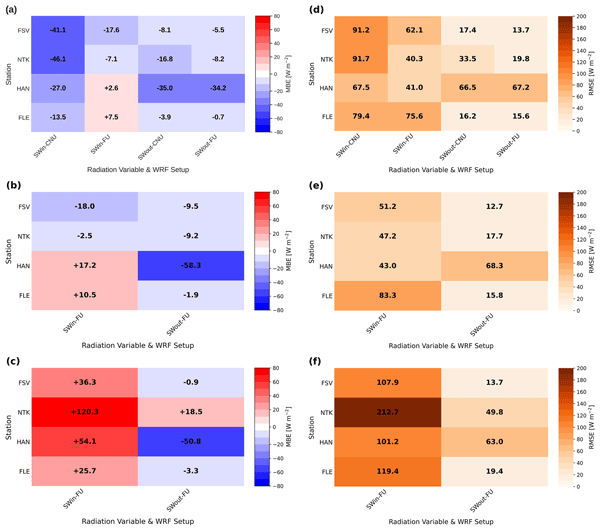
Figure 5, in particular (a): Please discuss why the ratio of PALM-CNU In to WRF-CNU In is so different from the ratio of PALM-FU In to WRF-FU In. Is this related to the the relationship of diffuse and direct radiation? This would highlight that not only the total shortwave input needs to be correct but also the distinction between diffuse and direct.
L331: episode e5 while Figure 6 says e9.
Citation: https://doi.org/10.5194/egusphere-2026-1516-RC3 -
AC3: 'Reply on RC3', Jelena Radović, 23 Jun 2026
We would like to thank the reviewer for the comments and constructive suggestions. In response to the review, we have addressed all comments and revised the manuscript accordingly. Detailed responses are provided in the accompanying PDF document.
-
AC3: 'Reply on RC3', Jelena Radović, 23 Jun 2026
Peer review completion


Interactive discussion
Status: closed
-
RC1: 'Comment on egusphere-2026-1516', Anonymous Referee #1, 01 May 2026
General
This is a comprehensive and timely GMD style evaluation paper. It benchmarks short wave radiation in the microscale model PALM version 25.04 across different urban and vegetated settings in Prague Dejvice, and it does so over a meaningful ensemble of episodes from clear sky to cloudy conditions. The takeaway lands well that PALM can reproduce street scale shading and reflection patterns very convincingly when the incoming radiation is right, but it cannot fix errors coming from the mesoscale cloud and radiation forcing. The results and figures support that message clearly. I generally find the paper well prepared and would recommend a minor to moderate revision focused on reproducibility details and a slightly tighter interpretation at the most problematic site.
Specific comments
- The paper would benefit from a compact run description inside the manuscript itself, not only in the archive. Right now a reader has to piece together key setup details. I suggest to add a short block that states PALM horizontal and vertical grid, time step, episode length, spin up length, and output frequency, plus which modules were active and which radiation options were used. It would also help to explicitly describe how station values were sampled from the model, including the sampling height, whether it is nearest grid cell, and how reflected short wave from the model is matched to the up looking and down looking pyranometers.
- The spin up approach is described as not affecting short wave radiation, but the interpretation needs one more sentence of care. Reflected short wave depends on surface albedo and on surface and canopy state. Please clarify what can change during spin up for the land and vegetation state, especially soil moisture and grass or vegetation parameters, and what is fixed. This matters directly for your explanation of the reflected radiation behavior at the vegetated site.
- The persistent reflected short wave bias at the HAN location is an important result and it is already well highlighted in the tables and discussion, but it still reads a bit like a likely story rather than a demonstrated diagnosis. Since this site drives several conclusions about static driver limitations, I suggest strengthening it with one concrete extra analysis. I guess the simplest option is to show a time series of observed albedo, reflected divided by incoming, and the modeled equivalent for HAN and one well behaving site. Another option is a small sensitivity test with plausible albedo changes, for example plus or minus 0.05 to 0.10, or an alternative grass parameter set, to show how much of the bias is realistically explainable. One of these would turn the HAN section into a clean quantitative lesson for the community. However, I raise it here as an optional extra analysis which, if doable, will enhance the analysis.
- The clear sky versus cloudy episode grouping is a good idea, but it needs an objective definition so others can reuse the protocol. A short criterion based on observed incoming short wave smoothness, or a threshold in modeled cloud fraction, would be enough.
- The paper is right to emphasize PALM superiority in resolving geometry driven shading and reflections, but please keep the wording careful so it does not sound like PALM is resolving cloud processes. The results show excellent redistribution and timing under clear sky and limited ability to correct wrong downwelling radiation when cloud timing is off in the driving model. That nuance is important for a GMD audience.
- There seems to be a small inconsistency between the station year labeling in the table and the narrative description of which sites were active in which year. Please double check that so readers do not get confused about the measurement periods.
- Please state clearly the model sampling height and how it relates to the pyranometer installation height, and confirm whether reflected radiation is taken directly from the surface flux or from a level that matches the sensor exposure.
- The pyranometer specification values in the sensor table look inconsistent in places, especially typical accuracy versus resolution. Please double check the units and the transcription from the original sensor documentation.
- (Optional) A simple schematic showing the chain from WRF to PALM meteo to dynamic driver to PALM RTM, including how direct and diffuse short wave are handled, would improve readability. The text explains this, but a diagram would make it much easier to follow at a glance.
Citation: https://doi.org/10.5194/egusphere-2026-1516-RC1 -
AC1: 'Reply on RC1', Jelena Radović, 23 Jun 2026
We would like to thank the reviewer for the comments and constructive suggestions. In response to the review, we have addressed all comments and revised the manuscript accordingly. Detailed responses are provided in the accompanying PDF document.
-
RC2: 'Comment on egusphere-2026-1516', Sasu Karttunen, 12 May 2026
General statement
The paper “Evaluating the radiative fidelity of PALM (v25.04) in high-resolution: impact of diverse urban morphology and vegetation on short-wave radiation” by J. Radović et al. evaluates 3D urban shortwave radiative transfer model of the PALM model system against pyranometer measurements from four sites near Dejvice, Czech Republic. PALM is run in a spinup mode, without 3D atmospheric model. The evaluation is performed over 16 cases (episodes), with downwelling radiation derived from two different WRF setups. The evaluation shows that PALM is able to capture the SW radiative transfer within urban canopy well, but is limited by the accuracy of the prescribed irradiances from WRF as well as the quality of input data prescribing the urban form.
The scope of the work is well defined and fits within the scope of GMD. The main novelty of the work is the comparison of the PALM-modelled radiative fluxes against real-world pyranometer measurements, an useful addition to prior evaluations of PALM’s representation of urban canopies. The evaluation is methodologically sound, and highlights both the strengths and limitations of PALM’s urban representation adequately. The quality of presentation is generally good, although there is still room for improvement. The paper reports useful findings for researchers working with 3D-resolved urban canopy simulations.
I have some general and specific critical comments as well as suggestions listed below, but I do not think addressing these would require major revisions to the manuscript or any substantial new work. Therefore, I recommend the manuscript to be published in GMD subject to a minor revision that adequately addresses these comments:
Main comments
- I would suggest a small rewrite of the Introduction section so that the theoretical and practical background for the work would be clearer. Currently, the emphasis is too much on different pre-existing models given as examples rather than in fundamental modelling approaches. This gives a lot of focus on the models itself, although they are not used in the study. I would suggest turning this the other way around: introduce the different modelling approaches in general, and just shortly list examples of models implementing the approach.
- I feel that a comprehensive description of the complete evaluation strategy is missing. Instead, the descriptions of the various evaluations and comparisons performed, as well as the reasoning behind them is scattered along the Results section. I suggest adding one as a new subsection to the Methods section, moving all information describing the evaluation (what was done and why) from Results in there. This way, after reading the Methods section, the reader would already have an understanding of how the evaluation was performed and why so, and the Results section could be dedicated purely for reporting the results. Currently, the reader needs to pick these pieces of information while reading through Results.
- I think it would be important to compare whether the averaging time scale has influence on evaluation metrics. Especially during non-clear-sky episodes, the point evaluation with a relatively short temporal averaging can be very sensitive to timing and positioning of single clouds, even if the average radiation over multiple hours (or large spatial area) would be close to truth. In addition to the current hour-by-hour pairwise comparison, I would suggest comparing at least the integrals of daily SW radiation pairwise from the model and the measurements for each of the episodes (and episodes together). The dependency of evaluation metrics on selected averaging time scale could be studied further as well (from 10 min to daily), if authors consider it viable.
Specific comments & suggestions
- The wording in the abstract could be a bit more careful:
- L11-12: “a capability that mesoscale models cannot match”
I think the statement is too general. Mesoscale models can implement coupling to a 3D urban surface model which could match PALM’s capabilities in this regard, one example would be 3DUCM and CSUMM (Conigliaro et al., 2021). This could be possible with WRF-SUEWS as well, using the SPARTACUS-Surface for 3D radiative interactions, however I’m not sure if this is tested in practice. There could be some other examples as well. Nevertheless, my point here is that this statement is not necessarily valid in general. - L12: “PALM’s superiority”
PALM’s superiority is context-dependent, and while in the present study the model performs very well on capturing the SW exchanges in the urban canopy, this statement seems too general.
- L11-12: “a capability that mesoscale models cannot match”
- L1: “Validating short-wave …” → “Validating urban short-wave …”
- L126: “extensible” → “modular” would perhaps be more fitting here.
- L127-129: The spin-up mode should be explained in detail, as this is a key feature of the modelling setup. E.g. what processes are included and what excluded from the computation, how does the solved model system look like, what are remaining factors affecting the SW radiation and what are fixed constants. Given the context of the study, it would be especially important to know whether the albedo of the surfaces can change throughout the simulation (and how so).
- L134-135: “by external forcing” → “by prescribed external forcing” to be more specific.
- L149-150: Specify how the data was interpolated to radiation model time steps and what time step was used to compute the radiation interactions.
- The angular resolution used with RTM ray-tracing is reported, but not the spatial resolution of the PALM surface representation. I think the authors should add a summary of the PALM model setups (e.g. resolution, number of grid points, time step, integration scheme, and any other information that may be important for reproducibility).
- L174-178: Perhaps some information on solar elevation could be added, e.g. range of maximum solar elevation over the episodes.
- Table 2: Measurement heights would be needed here. The authors could also report the view factors (VFs) for surface types for both incoming and outgoing SW radiation (e.g. FLE incoming: 0.xx sky, 0.xx building walls 0.xx tree canopy, …; outgoing: 0.xx road, 0.xx low vegetation, 0.xx …), as computed by PALM. This would help comparing the results across sites.
- The manufacturer as well as the manufacturer's country of origin should be given for the instruments.
- Table 3: The given CMP3 accuracy for incoming SW seems to be unrealistically high for its resolution. Please recheck the numbers for all instruments from the official data sheets.
- Table 5: Instead of absolute and relative differences, perhaps report bias (with the sign) and the relative bias, as the sign is important here.
- L313: “bottlenecks” → “degradation” or similar, I think the audience of GMD would associate “performance bottlenecks” solely with computational bottlenecks.
- L316-319: As discussed earlier, this is not always true for all mesoscale models. But definitely an argument for resolving 3D radiation. This is also an example of text in the Results section that would be better suited for Methods.
- The font size in Figures 5-7 is really small, especially in Figure 7. Check that the texts are readable at true paper size.
- The definitions of the evaluation metrics could be moved from supplementary material to the appendix section of the paper so that they would be more accessible for the reader.
- L587-589: I would perhaps rephrase this a bit as the robustness of radiative transfer simulation is subjective. I would state that the quality and accuracy of the prescribed datasets and mesoscale input forcing data are clearly the dominant sources of errors, not the internal radiative transfer simulation.
Citation: https://doi.org/10.5194/egusphere-2026-1516-RC2 -
AC2: 'Reply on RC2', Jelena Radović, 23 Jun 2026
We would like to thank the reviewer for the comments and constructive suggestions. In response to the review, we have addressed all comments and revised the manuscript accordingly. Detailed responses are provided in the accompanying PDF document.
-
RC3: 'Comment on egusphere-2026-1516', Anonymous Referee #3, 13 May 2026
The paper by Radovic et al. (2026) presents an evaluation of the PALM model's radiation module RTM against measurements from four sites in terms of shortwave radiation. PALM is forced with radiation from two different WRF set-ups for 16 days and run in spin-up mode, i.e. without the resource-consuming calculation of air quantities. PALM is a complex model and has mostly been evaluated with full, realistic set-ups and quantities that require different components of PALM. This paper focusses on a systematic evaluation of one component and is thus highly welcome. In most parts of the paper, in particular in the title and the abstract, this, however, does not become clear. In addition, since the model WRF is used as input, it is actually an evaluation of the coupled WRF/PALM-RTM set-up, which introduces additional uncertainties. I would like to ask the authors to make this clearer in the paper and to clarify the relationship with the stations Karlov and Libus (details below). I thus recommend consideration for publication after major revision.
Major issues:
This paper mostly evaluates the RTM module of PALM. While the land-surface and the building surface module as well as the mesoscale nesting module are also used, the former only supplies surface albedo and the latter facilitates only the radiation input to my understanding. In particular, I assume that only WRF radiation data is used and not other fields; the latter is implied by "dynamic meteorological forcing" (L159). Please clarify this in the paper, in particular in the abstract. Are the surface albedos constant in time or (partly) sun-angle-dependent?
The authors also imply that PALM-RTM could partly correct errors in the radiation input (L12, L290, L357, L376). I think that this is not the case. I consider the radiation fluxes of WRF to be above its (unresolved) canopy and exactly like this, it is considered as input in RTM. RTM mostly distributes it geometrically within the canopy without doing any atmospheric adjustments. This is why using WRF as input actually results in an evaluation of the coupled WRF/PALM-RTM system. Thus, forcing with radiation measurements above the canopy, for example from rooftops, would have removed the uncertainty from the evaluation. Please discuss this. What about the stations Karlov and Libus? Their data is used in the paper but both stations are not introduced at all. Please describe these stations as well. Could their data be used as forcing?
Minor issues:
L12: Does PALM, in particular RTM, compensate for any errors in the radiation input? My understanding is that RTM distributes the radiation within the canopy received as input at the top of the canopy. This input is expected to be correct.
L31: "recognised by THE World Meteorological Organization"
L46: As the authors write in L45, MRT cannot be derived from shortwave radiation alone, but longwave radiation needs to be considered as well.
L106: Without parentheses around the citation.
L144: Are there any differences in the results of RTM 4.1 compared to RTM 4.0 or RTM 3.0 described in Krc et al. (2021) when only a 2.5D geometry is used? The description mentions only numerical advancements.
Section 2.2: Please include more details of the WRF simulations:
* How is WRF forced? Only the discussion section mentions ERA5.
* What are the domain sizes, and are the FU simulations nested into CNU? Or are there any other nesting steps in between? If not, is the difference in resolution between the forcing of WRF and WRF itself (in particular for the FU simulations) not a problem?L170: Is the diffuse shortwave radiation also stored?
Table 1: Which urban canyon parametrization is used? Probably BEP (Martilli et al. 2002), however, SLUCM+BEM (Takane et al. 2024) is also available.
Table 4: Columns Category and CNU/FU are redundant.
L220: Please explain exactly the output quantities: Are the values taken from the bottom surface (height 0m) at the locations of the measurements? For completeness: what does SWin include, only direct and diffuse radiation from the sky or also reflections from the surroundings?
Figures 3 and 4: According to Table 4, the common episodes are e1 to e6. Why do the captions say it is (e3, e5, e6, e8, e9, e16)?
Figure 5, in particular (a): Please discuss why the ratio of PALM-CNU In to WRF-CNU In is so different from the ratio of PALM-FU In to WRF-FU In. Is this related to the the relationship of diffuse and direct radiation? This would highlight that not only the total shortwave input needs to be correct but also the distinction between diffuse and direct.
L331: episode e5 while Figure 6 says e9.
Citation: https://doi.org/10.5194/egusphere-2026-1516-RC3 -
AC3: 'Reply on RC3', Jelena Radović, 23 Jun 2026
We would like to thank the reviewer for the comments and constructive suggestions. In response to the review, we have addressed all comments and revised the manuscript accordingly. Detailed responses are provided in the accompanying PDF document.
-
AC3: 'Reply on RC3', Jelena Radović, 23 Jun 2026
Peer review completion
Journal article(s) based on this preprint
Viewed
| HTML | XML | Total | Supplement | BibTeX | EndNote | |
|---|---|---|---|---|---|---|
| 525 | 313 | 51 | 889 | 107 | 46 | 44 |
- HTML: 525
- PDF: 313
- XML: 51
- Total: 889
- Supplement: 107
- BibTeX: 46
- EndNote: 44
Viewed (geographical distribution)
| Country | # | Views | % |
|---|
| Total: | 0 |
| HTML: | 0 |
| PDF: | 0 |
| XML: | 0 |
- 1
Jelena Radović

Michal Belda
Martin Bureš
Kryštof Eben
Jan Geletič
Jakub Jura
Pavel Krč
Hynek Řezníček
Jaroslav Resler
The requested preprint has a corresponding peer-reviewed final revised paper. You are encouraged to refer to the final revised version.
- Preprint
(8180 KB) - Metadata XML
-
Supplement
(6893 KB) - BibTeX
- EndNote
- Final revised paper
General
This is a comprehensive and timely GMD style evaluation paper. It benchmarks short wave radiation in the microscale model PALM version 25.04 across different urban and vegetated settings in Prague Dejvice, and it does so over a meaningful ensemble of episodes from clear sky to cloudy conditions. The takeaway lands well that PALM can reproduce street scale shading and reflection patterns very convincingly when the incoming radiation is right, but it cannot fix errors coming from the mesoscale cloud and radiation forcing. The results and figures support that message clearly. I generally find the paper well prepared and would recommend a minor to moderate revision focused on reproducibility details and a slightly tighter interpretation at the most problematic site.
Specific comments