
the Creative Commons Attribution 4.0 License.
the Creative Commons Attribution 4.0 License.
 | 09 Feb 2026
The pH and Phosphorus Availability as Primary Drivers of Compost-Induced CO2 Emissions from Malaysian Tropical Soil: Mechanistic Evidence
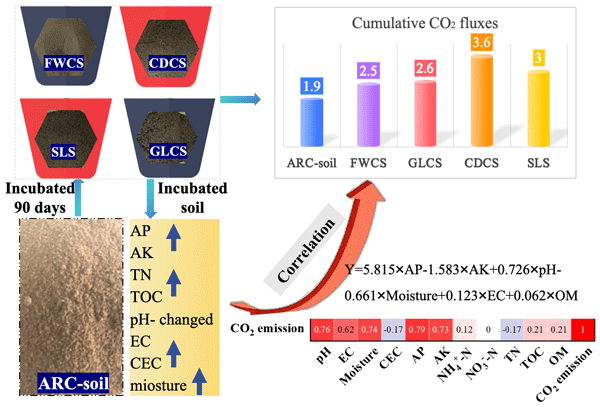
Abstract. Confronting the global need for climate-smart agriculture, this study investigated the mechanisms controlling CO2 emissions from a Malaysian tropical soil amended with four composts. Multiple regression analyses identified soil available phosphorus (AP) and pH as the key interactive drivers of CO2 emissions, which followed the order: chicken dung compost (CDCS) > sludge compost (SLS) > goat manure-leaf compost (GLCS) > food waste compost (FWCS).The significantly higher emissions from CDCS were primarily due to its pronounced elevation of soil pH, likely stimulating microbial activity. The positive correlation with AP indicated that enhanced phosphorus availability further promoted microbial carbon mineralization. The findings demonstrate that compost is not a carbon-neutral amendment; its net climate impact depends on the specific physic-chemical changes it induces in the soil. This provides a scientific basis for optimizing compost selection to reconcile soil fertility improvement with greenhouse gas mitigation in tropical agroecosystems
Competing interests: The authors declare the following financial interests/personal relationships which may be considered as potential competing interests: Chiu Chuen Onn reports financial support was provided by Malaysia Ministry of Higher Education. If there are other authors, they declare that they have no known competing financial interests or personal relationships that could have appeared to influence the work reported in this paper.
Publisher's note: Copernicus Publications remains neutral with regard to jurisdictional claims made in the text, published maps, institutional affiliations, or any other geographical representation in this paper. While Copernicus Publications makes every effort to include appropriate place names, the final responsibility lies with the authors. Views expressed in the text are those of the authors and do not necessarily reflect the views of the publisher.-
Notice on discussion status
The requested preprint has a corresponding peer-reviewed final revised paper. You are encouraged to refer to the final revised version.
-
Preprint
(1724 KB)
-
The requested preprint has a corresponding peer-reviewed final revised paper. You are encouraged to refer to the final revised version.
- Preprint
(1724 KB) - Metadata XML
- BibTeX
- EndNote
- Final revised paper


Journal article(s) based on this preprint
Interactive discussion
Status: closed
-
EC1: 'Comment on egusphere-2026-150', Rafael Clemente, 26 Feb 2026
-
AC1: 'Reply on EC1', Chiu Chuen Onn, 09 Apr 2026
We thank the reviewer for their careful reading of our manuscript and for identifying the issues in the reference list. We have thoroughly revised all citations and the reference list to ensure consistency and accuracy. The corrected version has been uploaded. We appreciate the reviewer’s valuable feedback, which has helped improve the quality of our paper.
Citation: https://doi.org/10.5194/egusphere-2026-150-AC1
-
AC1: 'Reply on EC1', Chiu Chuen Onn, 09 Apr 2026
-
RC1: 'Comment on egusphere-2026-150', Anonymous Referee #1, 01 Apr 2026
1. the manuscript has some grammar and spelling errors
2. the type of composts selected needs to be clearly described on how it was produced, line 903. Need to explain the justification of the 2 amendment ratio, line 95
4. References missing for back titration method, line 100
5. You cannot decide compaction effect based on figures, where is your numerical data, Line 120
6. Figure 2, standardize if you want to show figures/error bars for all, Line 145
7. Figure 4, spelling errors on axis
8. Multiple linear regression analysis, where the values , 0.74, 0.73, in figure tested for significance?, Line 190Citation: https://doi.org/10.5194/egusphere-2026-150-RC1 -
AC2: 'Reply on RC1', Chiu Chuen Onn, 27 Apr 2026
1.We apologize for the language errors in the manuscript. The entire manuscript has been carefully proofread and revised by a native English speaker.
2. We fully understand the importance of characterizing the compost materials. However, the compost used in this study was purchased from the Faculty of Science, University of Malaya, and the supplier does not disclose the proprietary production process or specific formulation. Nevertheless, to ensure the reproducibility and reliability of our study, we have comprehensively characterized the compost based on its physicochemical properties and maturity level, which indirectly reflect its quality and stability. The following parameters were determined and have now been added to the revised manuscript.
3. We have added a justification for the selected amendment ratios (2.5% and 10%). The 2.5% ratio represents a typical field application rate (approximately 50 t ha⁻¹), while the 10% ratio was chosen to amplify treatment effects for mechanistic investigation under controlled conditions.4. We apologize for this omission. The reference for the back-titration method has been added. The method was performed according to Cheng et al. (2025).
5. We thank the reviewer for this important comment. We agree that soil compaction should be quantified by bulk density or penetration resistance measurements. Unfortunately, these parameters were not measured at the time of sampling because the visual difference in soil aggregation was so pronounced that we prioritized other analyses, and the subsequent sample processing (gentle crushing) made it impossible to retrospectively measure bulk density.
6. Thanks for your suggestion. We have now standardized the figure 2 by including error bars for all data points shown. Additionally, we have performed ANOVA followed by Tukey’s HSD post-hoc tests, and have provided the full statistical details in the Supporting Information
7.
hank you for your careful comment. We greatly appreciate your attention to the significance matrix and the correlation coefficients 0.74 and 0.73 mentioned in Line 190. We provide a detailed, step-by-step explanation below to clarify how to read and interpret the significance matrix.
- What do the numbers in the significance matrix (Figure 5b) represent?
The numbers shown in the significance matrix are Pearson correlation coefficients (r).
They describe the strength and direction of the linear relationship between two variables.
The value ranges from −1 to +1.
A value closer to +1 means a strong positive correlation.
A value closer to −1 means a strong negative correlation.
A value near 0 means weak or no correlation.
In brief:
0.74 = correlation coefficient between soil moisture content and CO₂ emission
0.73 = correlation coefficient between available potassium (AK) and CO₂ emission
- What do the colors in the significance matrix mean?
The colors in the matrix represent the statistical significance of the correlation (tested at P < 0.05):
Red cells: correlation is statistically significant (P < 0.05)
White / light-colored cells: correlation is not significant (P ≥ 0.05)
- How to confirm that 0.74 and 0.73 are statistically significant?
We can directly judge from Figure 5b:
For moisture content vs. CO₂ emission:
The number is 0.74, and the cell is red
→ This correlation is significant (P < 0.05).
For available potassium (AK) vs. CO₂ emission:
The number is 0.73, and the cell is red
→ This correlation is significant (P < 0.05).
- Summary of the matrix reading rules
Number = Pearson correlation coefficient (r) → shows how strong the relationship is
Color = statistical significance → shows whether the relationship is reliable (P < 0.05)
Only red-colored cells represent statistically reliable correlations
Both 0.74 (moisture) and 0.73 (AK) are significant at P < 0.05, so they were retained as valid explanatory variables in the multiple linear regression and ridge regression models.
Citation: https://doi.org/10.5194/egusphere-2026-150-AC2
-
AC2: 'Reply on RC1', Chiu Chuen Onn, 27 Apr 2026
-
CC1: 'Comment on egusphere-2026-150', Yurui Fan, 02 Apr 2026
This is a high-quality, well-executed study that makes a valuable contribution to understanding soil carbon dynamics in tropical agroecosystems. The research addresses a critical gap in climate-smart agriculture by systematically quantifying CO2 emissions from compost-amended Malaysian Ultisols and identifying pH and available phosphorus as the primary interactive drivers. The experimental design is rigorous, the statistical approach is robust (ridge regression effectively resolves multicollinearity), and the core findings are novel and mechanistically sound. The manuscript is clearly structured, well-written, and provides actionable insights for optimizing compost management to balance soil fertility and greenhouse gas mitigation. It merits publication with only minor revisions.
- Define all compost abbreviations (CDCS, SLS, GLCS, FWCS) upon their first appearance in the abstract, as abstracts should be self-contained and follow standard academic formatting.
- Add a brief statement in Section 2.1 indicating the maturation period of the tested composts, which will improve the transparency and reproducibility of the experimental protocol.
- Standardize "CO2" to "CO2" (with subscript) in the titles of Figures 3 and 4.
- Correct the misspelling "ART-soil" in Section 3.1 to "ARC-soil".
- Delete the redundant "Maisture" in the correlation matrix section (Section 3.3).
- Fix the spelling error "Analyss" in the title of Figure 5 to "Analysis".
- Add the initial pH and available phosphorus values of the original ARC-soil in Section 2.1 for direct comparison.
- Add "soil pH" to the keyword list, as it is one of the two primary drivers identified in this study and a central research variable.
- Briefly acknowledge the limitation of this being a laboratory incubation study (lack of long-term field validation) in the conclusion.
- Standardize the journal name abbreviations in the references per the target journal's guidelines.
Citation: https://doi.org/10.5194/egusphere-2026-150-CC1 -
AC4: 'Reply on CC1', Chiu Chuen Onn, 28 Apr 2026
1. We agree. The abbreviations were already defined at first use in the original abstract. Specifically, at lines 10–11, the full names appear as "chicken dung compost (CDCS)", "sludge compost (SLS)", "goat manure-leaf compost (GLCS)", and "food waste compost (FWCS)".
2. We thank the reviewer for this suggestion. However, we respectfully note that this information is not available to us. The four composts (FWC, GLC, CDC, and SL) were purchased from the composting facility at the Faculty of Science, University of Malaya. We only obtained the basic physicochemical parameters of these composts (AP, TK, TOC, pH, etc.) from the supplier, as already reported in Section 2.1.
3. We thank the community for identifying these issues. We have addressed all of them as follows.
Typographical corrections have been made: "CO2" is now "CO2" in Figures 3 and 4; "ART-soil" is corrected to "ARC-soil".
We have carefully reviewed Section 3.3 and Figure 5. The correlation matrix in our manuscript uses the correct spelling "Moisture and analysis" and does not contain any redundant or misspelled "Maisture and analyss" entry. We therefore made no change.
Missing information has been added: In Section 3.1, we now state that the initial ARC-soil had pH 6.23 and AP below detection limit (< 0.1 mg/kg). "pH" has been added to the keywords.
A limitation statement has been added at the end of the Conclusion:
“We acknowledge that this study was conducted under controlled laboratory incubation conditions, which may not fully capture the complexity of field environments (e.g., temperature fluctuations, plant root activity, and longer‑term carbon dynamics). Future field‑scale studies with multi‑year monitoring are needed to validate these findings under real agricultural conditions.”.
Finally, all journal name abbreviations in the references have been standardized according to the target journal's guidelines (e.g., "Nature Communications" instead of "Nat. Commun.").
Citation: https://doi.org/10.5194/egusphere-2026-150-AC4
-
RC2: 'Comment on egusphere-2026-150', Anonymous Referee #2, 04 Apr 2026
- Introduction
In the introduction section, the authors do not include the hypothesis of the study.
- Material and methods
In materials and methods section, the text references Supporting information, but these files are not available for download. Please, ensure all supplementary information is properly uploaded. Further, please, include the main methods for nitrogen fraction, available phosphorus and pH assessment in the main manuscript. Further, please, include critical information such as incubation temperature of the soils.
Regarding the use of compost, it’d be interesting to include an initial characterization of the compost used, as the authors state later in the manuscript, the nature of compost used is essential in assessing its effects on soil parameters.
Please specify the exact days of the 14 gas sampling events in the text, rather than leaving the reader to infer them from the graphs.
Regarding the statistical analysis, the manuscript lacks information on how differences between treatments for the soil physicochemical parameters (Figure 2) were assessed. While Section 2.3 solely describes the Multiple Linear Regression model, Section 3.1 repeatedly claims "significant" increases in parameters like TN, AP, and AK without stating the specific mean comparison tests used (e.g., ANOVA, Tukey's HSD). Additionally, Figure 2 omits significance letters to statistical differences and fails to define the error bars in the caption.
- Discussion
Regarding the use of "mechanistic" in the title and abstract, this terminology is an overstatement. While the study successfully identifies strong statistical relationships through multiple linear regression (e.g., between pH, available phosphorus, and CO2 production), correlation does not equate to a biological mechanism. Since the experimental design does not include direct biological measurements such as microbial community shifts, specific enzymatic activities, or isotopic carbon tracing, it cannot claim to provide mechanistic evidence. I strongly recommend softening these claims throughout the manuscript and revising the title to reflect that the study investigates "empirical relationships" or "primary drivers" rather than mechanisms
Citation: https://doi.org/10.5194/egusphere-2026-150-RC2 -
AC3: 'Reply on RC2', Chiu Chuen Onn, 27 Apr 2026
1. Thank you for your thoughtful and constructive comment regarding the introduction section. We agree that a clear statement of research hypotheses is essential for guiding the reader and framing the study. In the revised manuscript, we have added a paragraph that explicitly states our hypotheses.
To address the research gaps identified above, we propose the following hypotheses. First, compost application is known to induce a short term pulse of soil CO2 emissions. We therefore hypothesize that the magnitude and duration of these emissions will vary significantly among different compost types due to their distinct physicochemical properties. Second, compost simultaneously alters multiple soil properties, including labile carbon pools, nitrogen availability, pH, etc. We hypothesize that changes in these physicochemical parameters will collectively drive the dynamics of post compost CO2 emissions. Third, many tropical soils are acidic and limited in phosphorus. We therefore hypothesize that compost induced increases in pH and available phosphorus may exert particularly strong influences on CO2 emissions. Multiple regression analysis will be used to quantitatively assess the relative contribution of each factor and to identify the dominant drivers governing variations in CO2 emissions.
2. We thank the reviewer for these helpful suggestions. We have addressed each point as follows.
First, regarding the Supporting Information, we apologize for the omission. All supplementary files have now been properly prepared and will be uploaded along with the revised manuscript.
Second, regarding the methods for nitrogen fraction, available phosphorus, and pH assessment, we agree that these should be presented in the main manuscript rather than only in the Supporting Information. Accordingly, we have moved these methods to the main Materials and Methods section. The following sentences have been added: “Baseline soil properties were analyzed prior to incubation. Soil pH and EC were measured in a 1:2.5 soil-to-water suspension. Total organic carbon (TOC) was determined by wet oxidation. Available phosphorus (AP) was extracted with 0.5 M NaHCO3 and measured spectrophotometrically. Ammonium (NH4+-N) and nitrate (NO3--N) were extracted with 2mol/L KCl and analyzed by a continuous flow analyzer. Available potassium (AK) was extracted with 1 M NH4OAc and quantified via flame atomic absorption spectroscopy (AAS). Cation exchange capacity (CEC) was determined by the ammonium acetate (NH4OAc) saturation method at pH 7.0.”
Third, we have now added the incubation temperature. The soils were incubated at 28 ± 2°C. This information is now stated in the Materials and Methods section.
Forth, we have added a detailed description in Section 2.1. The new paragraph includes the physicochemical properties of the four composts, such as available phosphorus, total potassium, total organic carbon, and pH. We also stated that CDC and SL are commercially available products with additional phosphorus and potassium supplemented during production (lines 102-109 in revised manuscript). This information helps readers understand the nature of the composts used in this study.
Fifth, we have added a clear statement in Section 2.2. The sentence now reads: “CO2 efflux was measured on 14 occasions over the 90 day incubation period, specifically on days 1, 5, 7, 14, 28, 40, 47, 52, 60, 70, 90, and 90.” Readers no longer need to infer the sampling days from the graphs.
3. Thank you for your careful reading and constructive comments.
We have revised the manuscript according to your suggestions. The detailed changes are as follows.
First, we added a description of the statistical method in the Materials and Methods section in lines 135-140. Specifically, we added “One way analysis of variance (ANOVA) was performed to compare all soil physicochemical parameters (pH, Moisture, EC, CEC, TOC, TC, OM, NH4+-N, NO3--N, TN, AP, and AK) among the nine treatments (ARC- soil control, FWCS 2.5%, FWCS 10%, GLCS 2.5%, GLCS 10%, CDCS 2.5%, CDCS 10%, SLS 2.5%, and SLS 10%). Tukey's honestly significant difference (HSD) post hoc test was used for multiple comparisons. Homogeneity of variances was assessed using Levene's test. A significance level of p < 0.05 was considered statistically significant. All statistical analyses were conducted using SPSS version 26.0 .” at the end of Section 2.4.
Second, In Section 3.1, lines 165 to 183 and 189 to 208 were largely rewritten. We added a sentence at the beginning to clarify that detailed ANOVA results and Tukey HSD grouping letters are provided in Supporting Information Tables S4 and S5. We also added short statistical statements when reporting significant differences, such as p values and comparisons between 10% and 2.5% additions.
Third, we revised the caption of Figure 2. We added two sentences at the end of the original caption. The first sentence states that data are presented as mean ± SD (n = 3). The second sentence explains that different lowercase letters above the bars indicate significant differences according to one way ANOVA followed by Tukey HSD post hoc test (p < 0.05), and that bars sharing the same letter are not significantly different.
4. Thank you very much for your careful and constructive comment.
You are right that our study did not include direct biological measurements such as microbial community or enzyme activities. Therefore, the use of “mechanistic evidence” and “mechanisms” in the title and throughout the manuscript is not fully justified.
To address your concern, we have made the following changes:
In the title, we changed “Mechanistic Evidence” to “Empirical Relationships”. In the abstract , we changed “mechanisms” to “main factors”. In the introduction, we changed “mechanisms” to "key factors". In the introduction, we changed “mechanistic understanding” to “process-based understanding”. In the introduction , we changed “mechanistic understanding” to “process-based understanding” and changed “decipher its key driving mechanisms” to “identify its key driving factors”. In the discussion section title, we changed “Mechanistic Drivers of CO2 emissions: pH and Phosphorus as Key Controls” to “Key Drivers of CO2 Emissions: pH and Phosphorus as Primary Controls”. All other occurrences of "mechanism" or "mechanistic" have been similarly revised or removed.
Citation: https://doi.org/10.5194/egusphere-2026-150-AC3
-
RC3: 'Comment on egusphere-2026-150', Anonymous Referee #3, 24 Apr 2026
GENERAL COMMENTS:
The findings of this paper are essential in identifying the key parameters influencing soil CO₂ emissions, providing valuable insights for advancing sustainable agricultural practices. However, the treatment effects are presented in a generalized manner and do not clearly distinguish between different application rates. Although the same compost is used, its effects should be evaluated and discussed according to the application rates, especially when different responses are observed across those rates.
SPECIFIC COMMENTS:
Introduction : Hypothesis needs to be included.
Materials and Methods:
No. 90 : The initial chemical characteristics of the composts need to be shown in the manuscript as the initial characteristics would be the cause of the significance changes of the parameters in Figure 2.
No 95 : How 1:9 and 1:39, compost-to-soil w/w ratio been determined? What is the basis of this ratio?
Results:
No. 120: I do not see any differences of the compaction level of the soil in the Figure 1. It is better to use method such as penetration resistance, bulk density or any test that is suitable.
No 140: When explaining, use specific treatment names with their rates (e.g., FWCS 10%), as not all FWCS treatments showed a significant increase in TOC, as observed in Figure 2. This should be described carefully.
Conclusion
No 270: Not all compost treatments resulted in a significant increase in organic carbon, and differences are minimal, as I seen in Figure 2c. This should be interpreted cautiously.
Figure 2 : Standardized the arrangement of the treatment in x-axis for all graphs.
All abbreviations should be written in full when first introduced in the manuscript (eg. AK, AP, NO3, NH4)
Citation: https://doi.org/10.5194/egusphere-2026-150-RC3 -
AC5: 'Reply on RC3', Chiu Chuen Onn, 28 Apr 2026
We thank the reviewer for this important comment. We agree that the distinction between application rates (2.5% and 10%) is crucial. In the revised manuscript, we have made the following changes:
Results section: All treatments are now explicitly referred to by their specific names including application rates (e.g., FWCS‑2.5%, FWCS‑10%) rather than general compost types .
Conclusion section: The original statement “Compost addition improved soil physical properties (e.g., reduced compaction, increased moisture retention) and significantly enhanced soil fertility. Total nitrogen, ammonium, nitrate, available phosphorus, available potassium, and organic carbon all increased markedly.” has been changed to: “Compost addition improved soil physical properties (e.g., reduced compaction, increased moisture retention) and significantly enhanced soil fertility. Total nitrogen, ammonium, nitrate, available phosphorus, and available potassium all increased markedly. Organic carbon increased significantly only under FWCS‑10% and GLCS‑10%.”. All changes have been highlighted in green in the revised manuscript for easy identification
1. Thank you for your thoughtful and constructive comment regarding the introduction section. We agree that a clear statement of research hypotheses is essential for guiding the reader and framing the study. In the revised manuscript, we have added a paragraph stating our hypotheses explicitly.
To address the research gaps identified above, we propose the following hypotheses. First, compost application is known to induce a short term pulse of soil CO2 emissions. We therefore hypothesize that the magnitude and duration of these emissions will vary significantly among different compost types due to their distinct physicochemical properties. Second, compost simultaneously alters multiple soil properties, including labile carbon pools, nitrogen availability, pH, etc. We hypothesize that changes in these physicochemical parameters will collectively drive the dynamics of post compost CO2 emissions. Third, many tropical soils are acidic and limited in phosphorus. We therefore hypothesize that compost induced increases in pH and available phosphorus may exert particularly strong influences on CO2 emissions. Multiple regression analysis will be used to quantitatively assess the relative contribution of each factor and to identify the dominant drivers governing variations in CO2 emissions.
2. We agree completely. The initial physicochemical properties of the four composts (FWC, GLC, CDC, SL) will be presented in the revised manuscript.
3. Thank you for raising this. We have now added a clear justification in the Methods section. The two amendment ratios (2.5% and 10%, w/w) were selected based on the following: (1) the 2.5% (1:39 compost-to-soil w/w) ratio corresponds to a typical field application rate of approximately 50 t/ha, which is commonly used in local agricultural practice for mature compost; (2) the 10% (1:9compost-to-soil w/w) ratio was chosen to amplify the treatment effects, allowing for clearer mechanistic observation of compost‑induced changes in soil properties and CO2 emissions under controlled incubation conditions.
4. We thank the reviewer for this important comment. We agree that soil compaction should be quantified by bulk density or penetration resistance measurements. Unfortunately, these parameters were not measured at the time of sampling because the visual difference in soil aggregation was so pronounced that we prioritized other analyses, and the subsequent sample processing (gentle crushing) made it impossible to retrospectively measure bulk density. Therefore, we have revised the text to describe only the visual observation without making a definitive claim about soil compaction in revised manuscript. The revised sentence (line 154) now reads: “The original ARC-soil appeared visually more aggregated than the compost-treated soils (Figure 1)”.
5. We have thoroughly revised this section in the revised manuscript (lines 187-183) . Now, each mention of a treatment includes its specific rate as follows:
“Figure 2(c) demonstrates that incubation with compost generally increased soil TOC relative to the non‑incubated control. Tukey HSD comparisons revealed that FWCS‑10% and GLCS‑10% gave significantly higher TOC than the control and all 2.5% treatments (p < 0.05). Among the amendments, soils receiving FWC and GLC exhibited higher TOC levels than those treated with CDC or SL. It should be noted that lower TOC in a given amendment does not directly translate to reduced CO2 emissions, as the stability of the carbon present also plays a determining role.”
6. We agree with the reviewer. The conclusion has been revised to avoid over generalization. The original statement “Compost addition improved soil physical properties (e.g., reduced compaction, increased moisture retention) and significantly enhanced soil fertility. Total nitrogen, ammonium, nitrate, available phosphorus, available potassium, and organic carbon all increased markedly.” has been changed to: “Compost addition improved soil physical properties (e.g., reduced compaction, increased moisture retention) and significantly enhanced soil fertility. Total nitrogen, ammonium, nitrate, available phosphorus, and available potassium all increased markedly. Organic carbon increased significantly only under FWCS‑10% and GLCS‑10%.” .
7. We have completely reorganized the x‑axis of all sub‑figures in Figure 2 (a–g). The new standardized order is:
ARC-soil→ FWCS‑10% →FWCS‑2.5%→ GLCS‑10% →GLCS‑2.5% → CDCS‑10% →CDCS‑2.5% → SLS‑10% →SLS‑2.5%.
8.
We have carefully reviewed the entire manuscript and expanded all abbreviations at first use:
AP → available phosphorus
TOC → total organic carbon
EC → electrical conductivity
NO₃⁻‑N → nitrate‑nitrogen
NH₄⁺‑N → ammonium‑nitrogen
AK → available potassium
CEC → cation exchange capacity
Citation: https://doi.org/10.5194/egusphere-2026-150-AC5
-
AC5: 'Reply on RC3', Chiu Chuen Onn, 28 Apr 2026


Interactive discussion
Status: closed
-
EC1: 'Comment on egusphere-2026-150', Rafael Clemente, 26 Feb 2026
I have identified several errors in the references list, including incorrect author names/surnames, mismatched DOIs, and citations that cannot be verified by title or author. These inconsistencies must be thoroughly addressed and corrected if a revised version is later submitted.
Citation: https://doi.org/10.5194/egusphere-2026-150-EC1 -
AC1: 'Reply on EC1', Chiu Chuen Onn, 09 Apr 2026
We thank the reviewer for their careful reading of our manuscript and for identifying the issues in the reference list. We have thoroughly revised all citations and the reference list to ensure consistency and accuracy. The corrected version has been uploaded. We appreciate the reviewer’s valuable feedback, which has helped improve the quality of our paper.
Citation: https://doi.org/10.5194/egusphere-2026-150-AC1
-
AC1: 'Reply on EC1', Chiu Chuen Onn, 09 Apr 2026
-
RC1: 'Comment on egusphere-2026-150', Anonymous Referee #1, 01 Apr 2026
1. the manuscript has some grammar and spelling errors
2. the type of composts selected needs to be clearly described on how it was produced, line 903. Need to explain the justification of the 2 amendment ratio, line 95
4. References missing for back titration method, line 100
5. You cannot decide compaction effect based on figures, where is your numerical data, Line 120
6. Figure 2, standardize if you want to show figures/error bars for all, Line 145
7. Figure 4, spelling errors on axis
8. Multiple linear regression analysis, where the values , 0.74, 0.73, in figure tested for significance?, Line 190Citation: https://doi.org/10.5194/egusphere-2026-150-RC1 -
AC2: 'Reply on RC1', Chiu Chuen Onn, 27 Apr 2026
1.We apologize for the language errors in the manuscript. The entire manuscript has been carefully proofread and revised by a native English speaker.
2. We fully understand the importance of characterizing the compost materials. However, the compost used in this study was purchased from the Faculty of Science, University of Malaya, and the supplier does not disclose the proprietary production process or specific formulation. Nevertheless, to ensure the reproducibility and reliability of our study, we have comprehensively characterized the compost based on its physicochemical properties and maturity level, which indirectly reflect its quality and stability. The following parameters were determined and have now been added to the revised manuscript.
3. We have added a justification for the selected amendment ratios (2.5% and 10%). The 2.5% ratio represents a typical field application rate (approximately 50 t ha⁻¹), while the 10% ratio was chosen to amplify treatment effects for mechanistic investigation under controlled conditions.4. We apologize for this omission. The reference for the back-titration method has been added. The method was performed according to Cheng et al. (2025).
5. We thank the reviewer for this important comment. We agree that soil compaction should be quantified by bulk density or penetration resistance measurements. Unfortunately, these parameters were not measured at the time of sampling because the visual difference in soil aggregation was so pronounced that we prioritized other analyses, and the subsequent sample processing (gentle crushing) made it impossible to retrospectively measure bulk density.
6. Thanks for your suggestion. We have now standardized the figure 2 by including error bars for all data points shown. Additionally, we have performed ANOVA followed by Tukey’s HSD post-hoc tests, and have provided the full statistical details in the Supporting Information
7.
hank you for your careful comment. We greatly appreciate your attention to the significance matrix and the correlation coefficients 0.74 and 0.73 mentioned in Line 190. We provide a detailed, step-by-step explanation below to clarify how to read and interpret the significance matrix.
- What do the numbers in the significance matrix (Figure 5b) represent?
The numbers shown in the significance matrix are Pearson correlation coefficients (r).
They describe the strength and direction of the linear relationship between two variables.
The value ranges from −1 to +1.
A value closer to +1 means a strong positive correlation.
A value closer to −1 means a strong negative correlation.
A value near 0 means weak or no correlation.
In brief:
0.74 = correlation coefficient between soil moisture content and CO₂ emission
0.73 = correlation coefficient between available potassium (AK) and CO₂ emission
- What do the colors in the significance matrix mean?
The colors in the matrix represent the statistical significance of the correlation (tested at P < 0.05):
Red cells: correlation is statistically significant (P < 0.05)
White / light-colored cells: correlation is not significant (P ≥ 0.05)
- How to confirm that 0.74 and 0.73 are statistically significant?
We can directly judge from Figure 5b:
For moisture content vs. CO₂ emission:
The number is 0.74, and the cell is red
→ This correlation is significant (P < 0.05).
For available potassium (AK) vs. CO₂ emission:
The number is 0.73, and the cell is red
→ This correlation is significant (P < 0.05).
- Summary of the matrix reading rules
Number = Pearson correlation coefficient (r) → shows how strong the relationship is
Color = statistical significance → shows whether the relationship is reliable (P < 0.05)
Only red-colored cells represent statistically reliable correlations
Both 0.74 (moisture) and 0.73 (AK) are significant at P < 0.05, so they were retained as valid explanatory variables in the multiple linear regression and ridge regression models.
Citation: https://doi.org/10.5194/egusphere-2026-150-AC2
-
AC2: 'Reply on RC1', Chiu Chuen Onn, 27 Apr 2026
-
CC1: 'Comment on egusphere-2026-150', Yurui Fan, 02 Apr 2026
This is a high-quality, well-executed study that makes a valuable contribution to understanding soil carbon dynamics in tropical agroecosystems. The research addresses a critical gap in climate-smart agriculture by systematically quantifying CO2 emissions from compost-amended Malaysian Ultisols and identifying pH and available phosphorus as the primary interactive drivers. The experimental design is rigorous, the statistical approach is robust (ridge regression effectively resolves multicollinearity), and the core findings are novel and mechanistically sound. The manuscript is clearly structured, well-written, and provides actionable insights for optimizing compost management to balance soil fertility and greenhouse gas mitigation. It merits publication with only minor revisions.
- Define all compost abbreviations (CDCS, SLS, GLCS, FWCS) upon their first appearance in the abstract, as abstracts should be self-contained and follow standard academic formatting.
- Add a brief statement in Section 2.1 indicating the maturation period of the tested composts, which will improve the transparency and reproducibility of the experimental protocol.
- Standardize "CO2" to "CO2" (with subscript) in the titles of Figures 3 and 4.
- Correct the misspelling "ART-soil" in Section 3.1 to "ARC-soil".
- Delete the redundant "Maisture" in the correlation matrix section (Section 3.3).
- Fix the spelling error "Analyss" in the title of Figure 5 to "Analysis".
- Add the initial pH and available phosphorus values of the original ARC-soil in Section 2.1 for direct comparison.
- Add "soil pH" to the keyword list, as it is one of the two primary drivers identified in this study and a central research variable.
- Briefly acknowledge the limitation of this being a laboratory incubation study (lack of long-term field validation) in the conclusion.
- Standardize the journal name abbreviations in the references per the target journal's guidelines.
Citation: https://doi.org/10.5194/egusphere-2026-150-CC1 -
AC4: 'Reply on CC1', Chiu Chuen Onn, 28 Apr 2026
1. We agree. The abbreviations were already defined at first use in the original abstract. Specifically, at lines 10–11, the full names appear as "chicken dung compost (CDCS)", "sludge compost (SLS)", "goat manure-leaf compost (GLCS)", and "food waste compost (FWCS)".
2. We thank the reviewer for this suggestion. However, we respectfully note that this information is not available to us. The four composts (FWC, GLC, CDC, and SL) were purchased from the composting facility at the Faculty of Science, University of Malaya. We only obtained the basic physicochemical parameters of these composts (AP, TK, TOC, pH, etc.) from the supplier, as already reported in Section 2.1.
3. We thank the community for identifying these issues. We have addressed all of them as follows.
Typographical corrections have been made: "CO2" is now "CO2" in Figures 3 and 4; "ART-soil" is corrected to "ARC-soil".
We have carefully reviewed Section 3.3 and Figure 5. The correlation matrix in our manuscript uses the correct spelling "Moisture and analysis" and does not contain any redundant or misspelled "Maisture and analyss" entry. We therefore made no change.
Missing information has been added: In Section 3.1, we now state that the initial ARC-soil had pH 6.23 and AP below detection limit (< 0.1 mg/kg). "pH" has been added to the keywords.
A limitation statement has been added at the end of the Conclusion:
“We acknowledge that this study was conducted under controlled laboratory incubation conditions, which may not fully capture the complexity of field environments (e.g., temperature fluctuations, plant root activity, and longer‑term carbon dynamics). Future field‑scale studies with multi‑year monitoring are needed to validate these findings under real agricultural conditions.”.
Finally, all journal name abbreviations in the references have been standardized according to the target journal's guidelines (e.g., "Nature Communications" instead of "Nat. Commun.").
Citation: https://doi.org/10.5194/egusphere-2026-150-AC4
-
RC2: 'Comment on egusphere-2026-150', Anonymous Referee #2, 04 Apr 2026
- Introduction
In the introduction section, the authors do not include the hypothesis of the study.
- Material and methods
In materials and methods section, the text references Supporting information, but these files are not available for download. Please, ensure all supplementary information is properly uploaded. Further, please, include the main methods for nitrogen fraction, available phosphorus and pH assessment in the main manuscript. Further, please, include critical information such as incubation temperature of the soils.
Regarding the use of compost, it’d be interesting to include an initial characterization of the compost used, as the authors state later in the manuscript, the nature of compost used is essential in assessing its effects on soil parameters.
Please specify the exact days of the 14 gas sampling events in the text, rather than leaving the reader to infer them from the graphs.
Regarding the statistical analysis, the manuscript lacks information on how differences between treatments for the soil physicochemical parameters (Figure 2) were assessed. While Section 2.3 solely describes the Multiple Linear Regression model, Section 3.1 repeatedly claims "significant" increases in parameters like TN, AP, and AK without stating the specific mean comparison tests used (e.g., ANOVA, Tukey's HSD). Additionally, Figure 2 omits significance letters to statistical differences and fails to define the error bars in the caption.
- Discussion
Regarding the use of "mechanistic" in the title and abstract, this terminology is an overstatement. While the study successfully identifies strong statistical relationships through multiple linear regression (e.g., between pH, available phosphorus, and CO2 production), correlation does not equate to a biological mechanism. Since the experimental design does not include direct biological measurements such as microbial community shifts, specific enzymatic activities, or isotopic carbon tracing, it cannot claim to provide mechanistic evidence. I strongly recommend softening these claims throughout the manuscript and revising the title to reflect that the study investigates "empirical relationships" or "primary drivers" rather than mechanisms
Citation: https://doi.org/10.5194/egusphere-2026-150-RC2 -
AC3: 'Reply on RC2', Chiu Chuen Onn, 27 Apr 2026
1. Thank you for your thoughtful and constructive comment regarding the introduction section. We agree that a clear statement of research hypotheses is essential for guiding the reader and framing the study. In the revised manuscript, we have added a paragraph that explicitly states our hypotheses.
To address the research gaps identified above, we propose the following hypotheses. First, compost application is known to induce a short term pulse of soil CO2 emissions. We therefore hypothesize that the magnitude and duration of these emissions will vary significantly among different compost types due to their distinct physicochemical properties. Second, compost simultaneously alters multiple soil properties, including labile carbon pools, nitrogen availability, pH, etc. We hypothesize that changes in these physicochemical parameters will collectively drive the dynamics of post compost CO2 emissions. Third, many tropical soils are acidic and limited in phosphorus. We therefore hypothesize that compost induced increases in pH and available phosphorus may exert particularly strong influences on CO2 emissions. Multiple regression analysis will be used to quantitatively assess the relative contribution of each factor and to identify the dominant drivers governing variations in CO2 emissions.
2. We thank the reviewer for these helpful suggestions. We have addressed each point as follows.
First, regarding the Supporting Information, we apologize for the omission. All supplementary files have now been properly prepared and will be uploaded along with the revised manuscript.
Second, regarding the methods for nitrogen fraction, available phosphorus, and pH assessment, we agree that these should be presented in the main manuscript rather than only in the Supporting Information. Accordingly, we have moved these methods to the main Materials and Methods section. The following sentences have been added: “Baseline soil properties were analyzed prior to incubation. Soil pH and EC were measured in a 1:2.5 soil-to-water suspension. Total organic carbon (TOC) was determined by wet oxidation. Available phosphorus (AP) was extracted with 0.5 M NaHCO3 and measured spectrophotometrically. Ammonium (NH4+-N) and nitrate (NO3--N) were extracted with 2mol/L KCl and analyzed by a continuous flow analyzer. Available potassium (AK) was extracted with 1 M NH4OAc and quantified via flame atomic absorption spectroscopy (AAS). Cation exchange capacity (CEC) was determined by the ammonium acetate (NH4OAc) saturation method at pH 7.0.”
Third, we have now added the incubation temperature. The soils were incubated at 28 ± 2°C. This information is now stated in the Materials and Methods section.
Forth, we have added a detailed description in Section 2.1. The new paragraph includes the physicochemical properties of the four composts, such as available phosphorus, total potassium, total organic carbon, and pH. We also stated that CDC and SL are commercially available products with additional phosphorus and potassium supplemented during production (lines 102-109 in revised manuscript). This information helps readers understand the nature of the composts used in this study.
Fifth, we have added a clear statement in Section 2.2. The sentence now reads: “CO2 efflux was measured on 14 occasions over the 90 day incubation period, specifically on days 1, 5, 7, 14, 28, 40, 47, 52, 60, 70, 90, and 90.” Readers no longer need to infer the sampling days from the graphs.
3. Thank you for your careful reading and constructive comments.
We have revised the manuscript according to your suggestions. The detailed changes are as follows.
First, we added a description of the statistical method in the Materials and Methods section in lines 135-140. Specifically, we added “One way analysis of variance (ANOVA) was performed to compare all soil physicochemical parameters (pH, Moisture, EC, CEC, TOC, TC, OM, NH4+-N, NO3--N, TN, AP, and AK) among the nine treatments (ARC- soil control, FWCS 2.5%, FWCS 10%, GLCS 2.5%, GLCS 10%, CDCS 2.5%, CDCS 10%, SLS 2.5%, and SLS 10%). Tukey's honestly significant difference (HSD) post hoc test was used for multiple comparisons. Homogeneity of variances was assessed using Levene's test. A significance level of p < 0.05 was considered statistically significant. All statistical analyses were conducted using SPSS version 26.0 .” at the end of Section 2.4.
Second, In Section 3.1, lines 165 to 183 and 189 to 208 were largely rewritten. We added a sentence at the beginning to clarify that detailed ANOVA results and Tukey HSD grouping letters are provided in Supporting Information Tables S4 and S5. We also added short statistical statements when reporting significant differences, such as p values and comparisons between 10% and 2.5% additions.
Third, we revised the caption of Figure 2. We added two sentences at the end of the original caption. The first sentence states that data are presented as mean ± SD (n = 3). The second sentence explains that different lowercase letters above the bars indicate significant differences according to one way ANOVA followed by Tukey HSD post hoc test (p < 0.05), and that bars sharing the same letter are not significantly different.
4. Thank you very much for your careful and constructive comment.
You are right that our study did not include direct biological measurements such as microbial community or enzyme activities. Therefore, the use of “mechanistic evidence” and “mechanisms” in the title and throughout the manuscript is not fully justified.
To address your concern, we have made the following changes:
In the title, we changed “Mechanistic Evidence” to “Empirical Relationships”. In the abstract , we changed “mechanisms” to “main factors”. In the introduction, we changed “mechanisms” to "key factors". In the introduction, we changed “mechanistic understanding” to “process-based understanding”. In the introduction , we changed “mechanistic understanding” to “process-based understanding” and changed “decipher its key driving mechanisms” to “identify its key driving factors”. In the discussion section title, we changed “Mechanistic Drivers of CO2 emissions: pH and Phosphorus as Key Controls” to “Key Drivers of CO2 Emissions: pH and Phosphorus as Primary Controls”. All other occurrences of "mechanism" or "mechanistic" have been similarly revised or removed.
Citation: https://doi.org/10.5194/egusphere-2026-150-AC3
-
RC3: 'Comment on egusphere-2026-150', Anonymous Referee #3, 24 Apr 2026
GENERAL COMMENTS:
The findings of this paper are essential in identifying the key parameters influencing soil CO₂ emissions, providing valuable insights for advancing sustainable agricultural practices. However, the treatment effects are presented in a generalized manner and do not clearly distinguish between different application rates. Although the same compost is used, its effects should be evaluated and discussed according to the application rates, especially when different responses are observed across those rates.
SPECIFIC COMMENTS:
Introduction : Hypothesis needs to be included.
Materials and Methods:
No. 90 : The initial chemical characteristics of the composts need to be shown in the manuscript as the initial characteristics would be the cause of the significance changes of the parameters in Figure 2.
No 95 : How 1:9 and 1:39, compost-to-soil w/w ratio been determined? What is the basis of this ratio?
Results:
No. 120: I do not see any differences of the compaction level of the soil in the Figure 1. It is better to use method such as penetration resistance, bulk density or any test that is suitable.
No 140: When explaining, use specific treatment names with their rates (e.g., FWCS 10%), as not all FWCS treatments showed a significant increase in TOC, as observed in Figure 2. This should be described carefully.
Conclusion
No 270: Not all compost treatments resulted in a significant increase in organic carbon, and differences are minimal, as I seen in Figure 2c. This should be interpreted cautiously.
Figure 2 : Standardized the arrangement of the treatment in x-axis for all graphs.
All abbreviations should be written in full when first introduced in the manuscript (eg. AK, AP, NO3, NH4)
Citation: https://doi.org/10.5194/egusphere-2026-150-RC3 -
AC5: 'Reply on RC3', Chiu Chuen Onn, 28 Apr 2026
We thank the reviewer for this important comment. We agree that the distinction between application rates (2.5% and 10%) is crucial. In the revised manuscript, we have made the following changes:
Results section: All treatments are now explicitly referred to by their specific names including application rates (e.g., FWCS‑2.5%, FWCS‑10%) rather than general compost types .
Conclusion section: The original statement “Compost addition improved soil physical properties (e.g., reduced compaction, increased moisture retention) and significantly enhanced soil fertility. Total nitrogen, ammonium, nitrate, available phosphorus, available potassium, and organic carbon all increased markedly.” has been changed to: “Compost addition improved soil physical properties (e.g., reduced compaction, increased moisture retention) and significantly enhanced soil fertility. Total nitrogen, ammonium, nitrate, available phosphorus, and available potassium all increased markedly. Organic carbon increased significantly only under FWCS‑10% and GLCS‑10%.”. All changes have been highlighted in green in the revised manuscript for easy identification
1. Thank you for your thoughtful and constructive comment regarding the introduction section. We agree that a clear statement of research hypotheses is essential for guiding the reader and framing the study. In the revised manuscript, we have added a paragraph stating our hypotheses explicitly.
To address the research gaps identified above, we propose the following hypotheses. First, compost application is known to induce a short term pulse of soil CO2 emissions. We therefore hypothesize that the magnitude and duration of these emissions will vary significantly among different compost types due to their distinct physicochemical properties. Second, compost simultaneously alters multiple soil properties, including labile carbon pools, nitrogen availability, pH, etc. We hypothesize that changes in these physicochemical parameters will collectively drive the dynamics of post compost CO2 emissions. Third, many tropical soils are acidic and limited in phosphorus. We therefore hypothesize that compost induced increases in pH and available phosphorus may exert particularly strong influences on CO2 emissions. Multiple regression analysis will be used to quantitatively assess the relative contribution of each factor and to identify the dominant drivers governing variations in CO2 emissions.
2. We agree completely. The initial physicochemical properties of the four composts (FWC, GLC, CDC, SL) will be presented in the revised manuscript.
3. Thank you for raising this. We have now added a clear justification in the Methods section. The two amendment ratios (2.5% and 10%, w/w) were selected based on the following: (1) the 2.5% (1:39 compost-to-soil w/w) ratio corresponds to a typical field application rate of approximately 50 t/ha, which is commonly used in local agricultural practice for mature compost; (2) the 10% (1:9compost-to-soil w/w) ratio was chosen to amplify the treatment effects, allowing for clearer mechanistic observation of compost‑induced changes in soil properties and CO2 emissions under controlled incubation conditions.
4. We thank the reviewer for this important comment. We agree that soil compaction should be quantified by bulk density or penetration resistance measurements. Unfortunately, these parameters were not measured at the time of sampling because the visual difference in soil aggregation was so pronounced that we prioritized other analyses, and the subsequent sample processing (gentle crushing) made it impossible to retrospectively measure bulk density. Therefore, we have revised the text to describe only the visual observation without making a definitive claim about soil compaction in revised manuscript. The revised sentence (line 154) now reads: “The original ARC-soil appeared visually more aggregated than the compost-treated soils (Figure 1)”.
5. We have thoroughly revised this section in the revised manuscript (lines 187-183) . Now, each mention of a treatment includes its specific rate as follows:
“Figure 2(c) demonstrates that incubation with compost generally increased soil TOC relative to the non‑incubated control. Tukey HSD comparisons revealed that FWCS‑10% and GLCS‑10% gave significantly higher TOC than the control and all 2.5% treatments (p < 0.05). Among the amendments, soils receiving FWC and GLC exhibited higher TOC levels than those treated with CDC or SL. It should be noted that lower TOC in a given amendment does not directly translate to reduced CO2 emissions, as the stability of the carbon present also plays a determining role.”
6. We agree with the reviewer. The conclusion has been revised to avoid over generalization. The original statement “Compost addition improved soil physical properties (e.g., reduced compaction, increased moisture retention) and significantly enhanced soil fertility. Total nitrogen, ammonium, nitrate, available phosphorus, available potassium, and organic carbon all increased markedly.” has been changed to: “Compost addition improved soil physical properties (e.g., reduced compaction, increased moisture retention) and significantly enhanced soil fertility. Total nitrogen, ammonium, nitrate, available phosphorus, and available potassium all increased markedly. Organic carbon increased significantly only under FWCS‑10% and GLCS‑10%.” .
7. We have completely reorganized the x‑axis of all sub‑figures in Figure 2 (a–g). The new standardized order is:
ARC-soil→ FWCS‑10% →FWCS‑2.5%→ GLCS‑10% →GLCS‑2.5% → CDCS‑10% →CDCS‑2.5% → SLS‑10% →SLS‑2.5%.
8.
We have carefully reviewed the entire manuscript and expanded all abbreviations at first use:
AP → available phosphorus
TOC → total organic carbon
EC → electrical conductivity
NO₃⁻‑N → nitrate‑nitrogen
NH₄⁺‑N → ammonium‑nitrogen
AK → available potassium
CEC → cation exchange capacity
Citation: https://doi.org/10.5194/egusphere-2026-150-AC5
-
AC5: 'Reply on RC3', Chiu Chuen Onn, 28 Apr 2026
Peer review completion


Journal article(s) based on this preprint
Viewed
| HTML | XML | Total | BibTeX | EndNote | |
|---|---|---|---|---|---|
| 882 | 484 | 120 | 1,486 | 241 | 261 |
- HTML: 882
- PDF: 484
- XML: 120
- Total: 1,486
- BibTeX: 241
- EndNote: 261
Viewed (geographical distribution)
| Country | # | Views | % |
|---|
| Total: | 0 |
| HTML: | 0 |
| PDF: | 0 |
| XML: | 0 |
- 1
Xingxing Cheng
Faridah Othman
Rosazlin Abdullah
The requested preprint has a corresponding peer-reviewed final revised paper. You are encouraged to refer to the final revised version.
- Preprint
(1724 KB) - Metadata XML
I have identified several errors in the references list, including incorrect author names/surnames, mismatched DOIs, and citations that cannot be verified by title or author. These inconsistencies must be thoroughly addressed and corrected if a revised version is later submitted.