
the Creative Commons Attribution 4.0 License.
the Creative Commons Attribution 4.0 License.
 | 25 Mar 2026
Air–sea CO2 exchange in the Southern Adriatic Sea: assessing its role as a moderate carbon sink over the last decade
Abstract. Coastal waters contribute significantly to the total oceanic carbon uptake. In this context, the cumulative influence exerted by marginal seas may be conspicuous. However sparse and unevenly distributed observations in such regions pose a serious limit to an accurate, experimentally based quantification of carbon dynamics. The Southern Adriatic (SAd) is one of the key sites of the Mediterranean Sea where open-ocean deep water formation occurs, a process recognized as a major driver of carbon sequestration. However, only a limited number of studies have investigated surface carbon dynamics and quantified air-sea carbon flux in the SAd. In this study, a newly validated, decade-long (2015–2024) high-resolution time series of CO2 and hydrographic measurements collected at the EMSO-E2M3A South Adriatic observatory, located at the center of the Southern Adriatic Pit, has been analysed. The results showed that seasonal temperature variability and winter convection were the main processes driving the dynamics of surface partial pressure of CO2 (pCO2sw). Air–sea CO2 flux (FCO2), derived from in situ observations, indicated a clear seasonal pattern, with the SAd acting as a CO2 sink during winter and as a source during summer. Importantly, the results revealed that the SAd acted as a moderate carbon sink over the last decade. Uncertainty analysis in the flux estimates were also evaluated, revealing that wind speed input data used for FCO2 calculations influenced the magnitude of FCO2. Finally, the results presented here showed how time series such as the SAd dataset can serve as critical assets for validating operational ocean models, such as the EU Copernicus Marine Service for the Mediterranean, by helping to identify discrepancies in the simulation of key processes.
-
Notice on discussion status
The requested preprint has a corresponding peer-reviewed final revised paper. You are encouraged to refer to the final revised version.
-
Preprint
(1661 KB)
-
Supplement
(943 KB)
-
The requested preprint has a corresponding peer-reviewed final revised paper. You are encouraged to refer to the final revised version.
- Preprint
(1661 KB) - Metadata XML
-
Supplement
(943 KB) - BibTeX
- EndNote
- Final revised paper


Journal article(s) based on this preprint
Interactive discussion
Status: closed
-
RC1: 'Comment on egusphere-2026-1360', Anonymous Referee #1, 06 Apr 2026
- AC1: 'Reply on RC1', Carlotta Dentico, 27 May 2026
-
RC2: 'Comment on egusphere-2026-1360', Anonymous Referee #2, 06 Apr 2026
Please find attached the review of the manuscript.
Best regards.
- AC2: 'Reply on RC2', Carlotta Dentico, 27 May 2026
-
RC3: 'Comment on egusphere-2026-1360', Anonymous Referee #3, 13 Apr 2026
General comments
This paper presents a surface ocean pCO2 time series, along with other parameters, measured in the Southern Adriatic Sea (SAd), from April 2015 to May 2024. This time series had already been presented in Dentico et al., 2026 and this is the continuity of that work. In this more recent paper, a valuable addition was added: the CO2 flux. The CO2 flux estimated from these in situ observations was compared to the CO2 flux estimated using an ocean reanalysis (referred to as model data) and the estimated uncertainties from different methods were discussed. Additionally, the pCO2sw was separated into its thermal and non-thermal components, and the source-sink dynamics for summer-winter, in the SAd were discussed. Two seasonal phases were identified but unfortunately gaps in the dataset prevented further investigation on the role of certain processes, such as the impact of bloom phases in summer on the pCO2sw. Nonetheless, this analysis offers valuable insight on the processes governing air-sea CO2 exchanges in that region.
Although the authors gave a detailed comparison of their study to surface ocean pCO2 variability in the surrounding regions of the Mediterranean Sea, a more quantitative comparison would have been useful. Some values are mentioned for dense water formation sites, for instance the flux in the northern Adriatic Sea and the carbon sequestration rate in the Gulf of Lion, but this comparison could have been deepened.
Once some minor modifications are made, this works merits publication. Indeed, this study provides useful, recent, CO2 flux estimates, discusses systematic uncertainties and enables a model (reanalysis and forecast) sea surface pCO2 validation in that region. While I have no doubt that these results should be published, I still have some questions and I have suggested minor modifications, listed below.
Minor comments and modifications
Section 1: Introduction
Lines 41-48: In the introduction, there is a detailed description on ocean acidification, and while it might be useful to give the general context, there is no further mention on ocean acidification later, this part could be condensed to one or two sentences.
The references should be updated, SOCATv2022 is cited instead of the latest version.
Similarly, a more recent version should be cited: Bakker, D. C., Alin, S. R., Bates, N. R., Becker, M., Feely, R. A., and Gritzalis, T. (2023). SOCAT version 2023- An alarming decline in the ocean CO2 observing capacity.
Lines 67-70: “The latest estimates from Roobaert et al. (2024) quantified the global coastal CO2 flux equal to -2.2 GtCO2 yr-1 (-0.6 PgC yr-1) which represent around 21% of the total current CO2 flux from the atmosphere to the ocean (10.5 GtCO2; Friedlingstein et al., 2025).” Is 2024 really the latest estimate?
Lines 92-101: “The paper is organized as follows. Section 2 describes the study area, Section 3 describes the data used and the thermodynamic calculation performed to estimate carbon flux. Results are presented and discussed in section 4. Conclusions are provided in Section 5.” Is that necessary? I suggest removing this.
Section 2 - Study area: Some paragraphs on the study area are taken from Dentico et al., 2026, section 2.2, it should be cited appropriately.
Although there is a mention of Dentico et al., 2025 (to be corrected to 2026) in section 3, it should be clear from the start that this study is the continuity of a previous, already published, work. The abstract is misleading (lines 18-20): “In this study, a newly validated, decade-long (2015-2024) high-resolution time series of CO2 … has been analysed.”
Legend of figure 1: I don’t see the red lines.
Legend of figure 2: Correct to Dentico et al., 2026 (not 2025). Same comment for the rest of the paper.
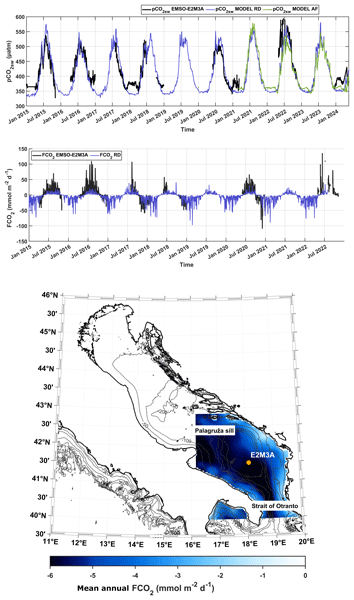
Figure 3a: There are a lot of gaps in FCO2 estimated from in situ observations, and this FCO2EMSO-E2M3A doesn’t seem to compare well with the reanalysis FCO2RD. Considering this, can it be concluded with certainty that this region acted as a mean sink for the 2015-2024 period?
Line 409: “March data were available only in 2024” – on figure 3b should the mean be shown? If there was data available only in March, showing the “mean” here is misleading.
Which method does figure 3b use, M1 or M2?
Line 415-416: “Further, these results confirm the role of dense water formation sites as primary drivers of carbon sequestration.” The results show a negative CO2 flux at the surface, but this doesn’t necessarily indicate carbon export. This only indicates exchanges at the surface, not storage at depth. I suggest rephrasing that sentence.
432-434: “The use of 6-hourly wind speed averages is widely adopted as it smooths extreme values, …” Add a reference.
Lines 482-485: “As shown in Dentico et al., (2025) the measured values by Pro-Oceanus membrane sensor can report higher (>10 μatm) differences with pCO2sw calculated from discrete seawater samples. Here, it was not possible to compute a statistically robust measure of this uncertainty.” Was there no drift of the Pro-Oceanus CO2 sensor?
Line 506: “Finally, in autumn and spring the mean differences were smaller (+5.13 μatm and -16.12 μatm, respectively). » This sentence should be moved to the end of the paragraph.
Section 4.4, lines 500-509: Why was pCO2sw from the probe higher than the reanalysis data in 2022, was the reanalysis product not able to simulate the Marine Heatwave?
Figure 5: Why use AF, a forecast, if RD, a reanalysis is already available?
Lines 533-541: Again, on figure 6, there seems to be a large discrepancy between FCO2 estimated from measurements and FCO2 RD. I’m not convinced by this last paragraph, given those discrepancies, there is no guarantee that the model reanalysis bias would be the same as the observation’s bias.
Line 538-539: “-4.9 mmol m-2 day-1 and -4.5 mmol m-2 day-1, respectively for the two M1 and M2 methods” Is this for the whole period? If so, what would be the mean flux (estimated from observations) obtained using only days with observations, without B? What is the value of B and what is the mean flux using FCO2 RD? What is the difference with (lines 559-560): “These calculations resulted in a mean sink flux of -1.15 mmol m-2 day-1 (M1) and - 0.76 mmol m-2 day-1 (M2) in the period 2015-2024”? This is not very clear.
I understand that to be robust M1 and M2 are compared, but I feel that this might have been better in supplementary. Why not choose one method? Otherwise, it can be confusing, the reader must go back again, to check which method is M1 and which one is M2.
In general, there are a lot of acronyms, which are described only once, and it can be difficult to follow at times.
The highest uncertainty on FCO2 due to U (section 4.3) is around 3 mmol m-2 day-1, which is considerable considering the mean values. Considering these uncertainties, I’m not convinced on the affirmation that this region was a net sink on the 2015-2024 period.
Citation: https://doi.org/10.5194/egusphere-2026-1360-RC3 - AC3: 'Reply on RC3', Carlotta Dentico, 27 May 2026
Peer review completion


Interactive discussion
Status: closed
-
RC1: 'Comment on egusphere-2026-1360', Anonymous Referee #1, 06 Apr 2026
;;;;;;;;;; General comment:
In this manuscript authors describe and interpret new pCO2 data in the Adriatic in 2015-2024. These data were recently presented in detail and published (Dentico et al, 2026). Here authors used the pCO2 data first to separate the drivers (only thermal and non-thermal terms are quantified); the data are then used to calculate CO2 fluxes. As the data were not continuously acquired, two approaches (M1 and M2) are presented to derive CO2 fluxes (synthetized in Table 2) and authors also addressed the uncertainty of the fluxes depending the wind (synthetized in Figure 4). They found that the region is a CO2 sink in October-April and a CO2 source in May-September. The seasonality of pCO2 is mainly control by temperature as observed in previous work in the western Mediterranean Sea (e.g. Bégovic and Copin-Montégut 2002; Hood and Merlivat, 2001; Wimart-Rousseau et al, 2023; Tsiaras et al 2024). The discussion on drivers of pCO2 appears limited to the temperature effect although biological processes and winter mixing are also likely driving the pCO2 temporal variations. Interestingly authors also compare the pCO2 data and derived fluxes with models results (Cossarini et al 2021, available at CMEMS) suggesting that models reproduce the pCO2 time-series excepted in winter (simulated pCO2 lower than observations). The comparison also suggests that simulations are not able to reproduce large anomalies such as in summer 2022. Consequently the large CO2 source observed in summer 2022 (up to 100 mmolC/m2/d) is not simulated and the annual flux from the model probably not correct. These are very interesting results but the processes that explain the differences between data and model are not fully discussed. Would that be linked to the mixed-layer/stratification not well simulated? I think the analysis should extend the discussion to inform what should be corrected in the model. For example, it would be interesting to present and discuss the DIC and TALK profiles from the model. On the other hand, in the title the term “Decadal” suggests that the trend of the CO2 flux would be explored. Is the CO2 sink increase or decrease in the Adriatic ? This is not addressed in the paper although I think authors have in hand the data (E2M3A mooring and models) to explore this topic. In the southern Adriatic Cossarini et al (2021) estimate an increase of the CO2 sink of around 0.1 mmolC/m2/d/yr over 1999–2019. How this is compared with the new results obtained in 2015-2024. This could be also compared with reconstruct pCO2 and air-sea CO2 fluxes also available at CMEMS (Chau et al 2024). Finally, in the introduction authors mentioned the carbon sequestration and ocean acidification. However, this is not discussed although authors have in hand pCO2 data, some discrete TALK data, as well as pH data for 2015-2016 to investigate this topic and to compare with the model. Authors might try to calculate DIC and pH using TALK and pCO2, the time-series of TALK being deduced from TALK/Salinity relation. This could be compared with pH trend deduced from a Neural Network method (pH trend over 2014-2024 = -0.023/decade at the mooring location, Chau et al, 2024). In addition, to complement the mooring data (recently described by Dentico et al, 2026), the authors may add data from SOCAT (in 2014-2020) near the location of the E2M3A mooring. I also strongly recommend send their new pCO2 data to SOCAT. References in this manuscript are adapted and I suggest add few others.
The manuscript is suitable for publication after revision. Specific and minor comments are listed below.
;;;;;;;; Specific comments
C-01: Title: “Air–sea CO2 exchange in the Southern Adriatic Sea: assessing its role as a moderate carbon sink over the last decade”. I suggest specify the period 2015-2024. “Last decade” is somehow general and maybe not appropriate for future readers in 2030, 2035, 2040… Suggestion: “Air–sea CO2 exchange in the Southern Adriatic Sea: assessing its role as a moderate carbon sink in 2015-2024” or “Air–sea CO2 exchange in the Southern Adriatic Sea: an analysis over 2015-2024.”
C-02 Line 20: “The results showed that seasonal temperature variability and winter convection were the main processes driving the dynamics of surface partial pressure of CO2 (pCO2sw).” In winter is it convection or mixing in top layers ? Biological processes are not driving pCO2 in this region ?
C-03: Line 32: Gulev et al., (2021), not in references
C-04: Line 38-48: Authors introduced the ocean acidification but this is not discussed in the results (see also general comment).
C-05: Line 53: Authors write: “in more than 30 million observations in the Surface Ocean CO2 Atlas (SOCAT) V2022 release.” In the most recent version V2025 there are now more than 40 million observations. Please add reference to Bakker et al (2016). Note that version V2026 should be soon available (June 2026).
C-06: Line 55: “….and the amount of new observations per year in the open ocean has decreased since 2017 (Bakker et al., 2023).” This is correct but for this paper focused in the Adriatic is it really useful to recall that in the introduction? Maybe specify that few fCO2 data in SOCAT are available in the Adriatic (and only since 2014).
C-07: Line 58: “However, generating a coupled physical-biogeochemical reanalysis remains a complex challenge (Park et al., 2018), due to uncertainties in the representation of interactions between physical and biogeochemical processes,…“. I guess the comparison of pCO2 presented in figure 5 offers very interesting results to highlight processes not well represented in the model (e.g. winter mixing ?).
C-08: Line 89: Authors write: “..hereafter EMSO-E2M3A, is presented”. I guess you can refer to Dentico et al (2026).
C-09: The introduction is somehow long and, regarding the analysis, might be focused on uncertainty of CO2 flux in the marginal seas and recall Mediterranean Sea specificities such as high salinity and low Revelle factor (see a review in Álvarez et al 2023). For the CO2 data, in addition to SOCAT, you can also refer to the CARIMED data-base (Álvarez et al 2025).
C-10 Line 115: Figure 1 Caption: “…are also displayed and highlighted by the two red lines.” There is no red line in this figure.
C-11 Line 157: “The secondary mooring line is composed of an instrument chain with sensors at different depths for physical and chemical measurements from the seafloor to the intermediate layer (Cardin et al., 2025a).” Here we learn that sensors recorded observations at depth. Why not using these data to get a view of the variability of the MLD and subsurface data to better interpret the surface pCO2 changes ?
C-12 Line 174: “A detailed description of the dataset used here and the quality control procedures applied to the data are available in Dentico et al. (2025).” Dentico et al (2025) not in reference. I suspect this is Dentico et al (2026). Same on Line 213.
C-13 Line 226: “The EU Copernicus Marine Service (CMEMS) provides regular and systematic information on the ocean physics and biogeochemistry for the global ocean”. The CMEMS also provides reconstructed fields of pCO2, AT, CT, pH and air-sea CO2 fluxes (Chau et al, 2024) including in the region investigated here. It might be interesting to use this product available for 1985-2024 to compare with the data and the simulations and discuss the differences.
C-14 Line 228: “the European regional seas (Le Treon et al. 2019).” Correct Name Le Traon et al.
C-15 Line 295: “where, mean refers to yearly mean values of sea surface temperature (SST, °C),” What not using the mean over the full period ?
C-16 Line 308: “However, during winter convection, vertical mixing increased surface pCO2sw, as shown by the pCO2_NT component (Fig. 2a).” Is it also seen in the model ?
C-17 Line 314: “The post-convection periods (usually from March to May-June) were characterised by a phytoplankton bloom (Fig. 2e), but its direct effect on pCO2sw was less clear as few data were available in these periods.” Again, would the model help to interpret the impact of the bloom on pCO2 ?
C-18 Line 322: “Independent measurements from an Unmanned Surface Vehicle (USV) operating in the area in July 2019 during the ATL2MED experiment (Martellucci et al., 2025) further confirmed this pattern, showing coherent short-term variations with the EMSO-E2M3A time series.” It would be interesting to add the data from this USV when it was close to the mooring. This could be added in Figure 2 for July 2019 to complete the time-series.
C-19 Line 324: “Interestingly, higher pCO2sw values were recorded in summer 2022, with a peak in July 2022, coinciding with the occurrence of a Mediterranean Marine Heatwave (MHW).” This is in line with results in the western Mediterranean Sea (Metzl et al, 2025).
C-20 Line 327: “Thus, the elevated pCO2sw observed in this period might be linked to the MHW, although further analyses, for instance in relation to wind change patterns (e.g., Pecci et al., 2024) would be required to confirm this hypothesis.” Pecci et al not yet published ?
C-21 Line 333: “…promoting an efficient exchange between bottom and surface pCO2sw.” Would be interesting to show vertical profiles of DIC in the SAd near the mooring (see for example data available in CARIMED, Álvarez et al, 2025). The DIC profiles are also available in the CMEMS model you used.
C-22 Line 338: “In the SAd the effect of biological activity was less clear because of data gaps.” But the CMEMS model could help to investigate this process.
C-23 Line 341: “… as highlighted in previous studies (Socal et al., 2012; Cerino et al., 2012).” Socal et al not in reference.
C-24 Line 367: Figure 2 caption “Modified from Dentico et al. (2025).” Correct Dentico et al. (2026). Note that Dentico et al. (2026) also show the wind speed.
C-25 Table 2: Would be nice to present a figure of the flux from table 2
C-26: To compare with other studies, what is the integrated annual flux (sum of monthly fluxes in molC/m2/yr) ?
C-27 Line 415: “Further, these results confirm the role of dense water formation sites as primary drivers of carbon sequestration”. Maybe I missed a point but I don’t think the description of the air-sea CO2 fluxes in this section support this conclusion.
C-28: Section “4.3 Estimated uncertainties in FCO2”. Please introduce the aim of this section. Is this section 4.3 really important ? I would suggest move this sensitivity analysis in Supplementary Material.
C-29 Figure 4 is not very clear: only a table would be useful to list the results of this sensitivity analysis.
C-30 Line 481: “Sensor based pCO2sw not always met the manufacturer and the ICOS or SOCAT accuracies (Steinhoff et al., 2025).” Steinhoff et al (2025) not in reference.
C-31 Line 483: “As shown in Dentico et al., (2025) the measured values by Pro-Oceanus membrane sensor can report higher (>10 μatm) differences with pCO2sw calculated from discrete seawater samples.” Recall that discrete samples were dedicated to pH and TALK measurements ?
C-32: Section “4.4. pCO2sw and FCO2: in situ data and model comparison”. To explain the pCO2 differences between data and models authors show that this is not linked to SST and salinity. As there are systematic low pCO2 in the models in winter would that be linked to MLD (less import of DIC-rich from subsurface in the models) ?
C-33: Are the MHW discussed on lines 323-325 identified in the models ?
C-34: I think maps of the annual or seasonal CO2 flux from the model in the Adriatic are missing (see for example Cossarini et al 2021, Figure 11). This would help identifying the distribution of the fluxes regarding the location of the mooring.
C-35 Line 540: “Even if these estimations should be considered with caution, they further confirm that the southern Adriatic acted as a moderate carbon sink over the last decade.” I think authors should conclude this section with results of annual fluxes (sum of monthly values in molC/m2/yr) to compare with other studies.
C-36 Line 551: “In winter, average pCO2sw were around 380 μatm, with marked increase especially during wintertime convection periods when CO2-rich intermediate and deep water were upwelled to the surface.” This is probably correct (import of CO2-rich water), but not quantified. It might be useful to look at the MLD from the models to quantify this process. Again, I think vertical profiles of properties such as DIC and TALK from the model would help to interpret the observed pCO2 seasonality.
C-37 Line 558: “One of the key results of this study was to demonstrate that over the past decade the
SAd acted as a moderate carbon sink.” This is a conclusion for the annual flux and it would be useful to list the annual value (in molC/m2/yr) and indicate if the sink was always moderate or if there any trend (increasing sink ?) as observed in other regions.
C-38 Line 589: Cardin et al, 2025: 2025 a or 2025b or both ?
C-39 Line 607: Acknowledgements: Should you add CMEMS ?
C-40: Figure S6: Caption: correct color code (data and model in black and blue, difference in grey).
;;;;;;;;;;; Reference added in this review not listed in the manuscript
Álvarez, M., et al (2023). Chapter 11 - Mediterranean Sea general biogeochemistry, Editor(s): Katrin Schroeder, Jacopo Chiggiato, Oceanography of the Mediterranean Sea, Elsevier, Pages 387-451, https://doi.org/10.1016/B978-0-12-823692-5.00004-2.
Álvarez, M., et al, CARIMED (CARbon, tracers, and ancillary data In the MEDiterranean Sea): A ship-based data synthesis product – overview and quality control procedures, Earth Syst. Sci. Data Discuss. [preprint], https://doi.org/10.5194/essd-2025-759, in review, 2025.
Bakker, D. C. E., et al: A multi-decade record of high-quality fCO2 data in version 3 of the Surface Ocean CO2 Atlas (SOCAT), Earth Syst. Sci. Data, 8, 383-413, doi:10.5194/essd-8-383-2016, 2016
Bégovic, M. and C. Copin-Montégut: Processes controlling annual variations in the partial pressure of CO2 in surface waters of the central northwestern Mediterranean Sea (Dyfamed site), Deep Sea Res. II, 49, 2031–2047, 2002
Chau, T.-T.-T., et al.,: CMEMS-LSCE: a global, 0.25°, monthly reconstruction of the surface ocean carbonate system, Earth Syst. Sci. Data, 16, 121–160, https://doi.org/10.5194/essd-16-121-2024, 2024.
Dentico, C., Rubino, A., Civitarese, G., Giani, M., Siena, G., Kuchler, S., Le Meur, J., Corbo, A., and Cardin, V.: Surface pCO2 and hydrography in the dense water formation area of the southern Adriatic, Earth Syst. Sci. Data, 18, 2119–2131, https://doi.org/10.5194/essd-18-2119-2026, 2026.
Hood, E. M. and Merlivat, L.: Annual and interannual variations of fCO2 in the northwestern Mediterranean Sea: Results from hourly measurements made by CARIOCA buoys, 1995–1997, J.Mar. Res., 59, 113–131, 2001.
Metzl, N., et al: An updated synthesis of ocean total alkalinity and dissolved inorganic carbon measurements from 1993 to 2023: the SNAPO-CO2-v2 dataset, Earth Syst. Sci. Data, 17, 1075–1100, https://doi.org/10.5194/essd-17-1075-2025, 2025
Steinhoff, T., et al,: The ICOS OTC P CO2 instrument intercomparison, Limnology and Oceanography Methods, 23, 924–948, https://doi.org/10.1002/lom3.10727, 2025.
Tsiaras K, Frangoulis C and Stamataki N (2024) Carbonate system variability in the Mediterranean Sea: a modelling study. Front. Mar. Sci. 11:1347990. doi: 10.3389/fmars.2024.1347990
Wimart-Rousseau, C., Wagener, T., Bosse, A., Raimbault, P., Coppola, L., Fourrier, M., Ulses, C., and Lefèvre, D.: Assessing seasonal and interannual changes in carbonate chemistry across two timeseries sites in the North Western Mediterranean Sea., Front. Mar. Sci., 10, 1281003,
https://doi.org/10.3389/fmars.2023.1281003, 2023.
;;;;;;;;; end review
Citation: https://doi.org/10.5194/egusphere-2026-1360-RC1 - AC1: 'Reply on RC1', Carlotta Dentico, 27 May 2026
-
RC2: 'Comment on egusphere-2026-1360', Anonymous Referee #2, 06 Apr 2026
Please find attached the review of the manuscript.
Best regards.
- AC2: 'Reply on RC2', Carlotta Dentico, 27 May 2026
-
RC3: 'Comment on egusphere-2026-1360', Anonymous Referee #3, 13 Apr 2026
General comments
This paper presents a surface ocean pCO2 time series, along with other parameters, measured in the Southern Adriatic Sea (SAd), from April 2015 to May 2024. This time series had already been presented in Dentico et al., 2026 and this is the continuity of that work. In this more recent paper, a valuable addition was added: the CO2 flux. The CO2 flux estimated from these in situ observations was compared to the CO2 flux estimated using an ocean reanalysis (referred to as model data) and the estimated uncertainties from different methods were discussed. Additionally, the pCO2sw was separated into its thermal and non-thermal components, and the source-sink dynamics for summer-winter, in the SAd were discussed. Two seasonal phases were identified but unfortunately gaps in the dataset prevented further investigation on the role of certain processes, such as the impact of bloom phases in summer on the pCO2sw. Nonetheless, this analysis offers valuable insight on the processes governing air-sea CO2 exchanges in that region.
Although the authors gave a detailed comparison of their study to surface ocean pCO2 variability in the surrounding regions of the Mediterranean Sea, a more quantitative comparison would have been useful. Some values are mentioned for dense water formation sites, for instance the flux in the northern Adriatic Sea and the carbon sequestration rate in the Gulf of Lion, but this comparison could have been deepened.
Once some minor modifications are made, this works merits publication. Indeed, this study provides useful, recent, CO2 flux estimates, discusses systematic uncertainties and enables a model (reanalysis and forecast) sea surface pCO2 validation in that region. While I have no doubt that these results should be published, I still have some questions and I have suggested minor modifications, listed below.
Minor comments and modifications
Section 1: Introduction
Lines 41-48: In the introduction, there is a detailed description on ocean acidification, and while it might be useful to give the general context, there is no further mention on ocean acidification later, this part could be condensed to one or two sentences.
The references should be updated, SOCATv2022 is cited instead of the latest version.
Similarly, a more recent version should be cited: Bakker, D. C., Alin, S. R., Bates, N. R., Becker, M., Feely, R. A., and Gritzalis, T. (2023). SOCAT version 2023- An alarming decline in the ocean CO2 observing capacity.
Lines 67-70: “The latest estimates from Roobaert et al. (2024) quantified the global coastal CO2 flux equal to -2.2 GtCO2 yr-1 (-0.6 PgC yr-1) which represent around 21% of the total current CO2 flux from the atmosphere to the ocean (10.5 GtCO2; Friedlingstein et al., 2025).” Is 2024 really the latest estimate?
Lines 92-101: “The paper is organized as follows. Section 2 describes the study area, Section 3 describes the data used and the thermodynamic calculation performed to estimate carbon flux. Results are presented and discussed in section 4. Conclusions are provided in Section 5.” Is that necessary? I suggest removing this.
Section 2 - Study area: Some paragraphs on the study area are taken from Dentico et al., 2026, section 2.2, it should be cited appropriately.
Although there is a mention of Dentico et al., 2025 (to be corrected to 2026) in section 3, it should be clear from the start that this study is the continuity of a previous, already published, work. The abstract is misleading (lines 18-20): “In this study, a newly validated, decade-long (2015-2024) high-resolution time series of CO2 … has been analysed.”
Legend of figure 1: I don’t see the red lines.
Legend of figure 2: Correct to Dentico et al., 2026 (not 2025). Same comment for the rest of the paper.
Figure 3a: There are a lot of gaps in FCO2 estimated from in situ observations, and this FCO2EMSO-E2M3A doesn’t seem to compare well with the reanalysis FCO2RD. Considering this, can it be concluded with certainty that this region acted as a mean sink for the 2015-2024 period?
Line 409: “March data were available only in 2024” – on figure 3b should the mean be shown? If there was data available only in March, showing the “mean” here is misleading.
Which method does figure 3b use, M1 or M2?
Line 415-416: “Further, these results confirm the role of dense water formation sites as primary drivers of carbon sequestration.” The results show a negative CO2 flux at the surface, but this doesn’t necessarily indicate carbon export. This only indicates exchanges at the surface, not storage at depth. I suggest rephrasing that sentence.
432-434: “The use of 6-hourly wind speed averages is widely adopted as it smooths extreme values, …” Add a reference.
Lines 482-485: “As shown in Dentico et al., (2025) the measured values by Pro-Oceanus membrane sensor can report higher (>10 μatm) differences with pCO2sw calculated from discrete seawater samples. Here, it was not possible to compute a statistically robust measure of this uncertainty.” Was there no drift of the Pro-Oceanus CO2 sensor?
Line 506: “Finally, in autumn and spring the mean differences were smaller (+5.13 μatm and -16.12 μatm, respectively). » This sentence should be moved to the end of the paragraph.
Section 4.4, lines 500-509: Why was pCO2sw from the probe higher than the reanalysis data in 2022, was the reanalysis product not able to simulate the Marine Heatwave?
Figure 5: Why use AF, a forecast, if RD, a reanalysis is already available?
Lines 533-541: Again, on figure 6, there seems to be a large discrepancy between FCO2 estimated from measurements and FCO2 RD. I’m not convinced by this last paragraph, given those discrepancies, there is no guarantee that the model reanalysis bias would be the same as the observation’s bias.
Line 538-539: “-4.9 mmol m-2 day-1 and -4.5 mmol m-2 day-1, respectively for the two M1 and M2 methods” Is this for the whole period? If so, what would be the mean flux (estimated from observations) obtained using only days with observations, without B? What is the value of B and what is the mean flux using FCO2 RD? What is the difference with (lines 559-560): “These calculations resulted in a mean sink flux of -1.15 mmol m-2 day-1 (M1) and - 0.76 mmol m-2 day-1 (M2) in the period 2015-2024”? This is not very clear.
I understand that to be robust M1 and M2 are compared, but I feel that this might have been better in supplementary. Why not choose one method? Otherwise, it can be confusing, the reader must go back again, to check which method is M1 and which one is M2.
In general, there are a lot of acronyms, which are described only once, and it can be difficult to follow at times.
The highest uncertainty on FCO2 due to U (section 4.3) is around 3 mmol m-2 day-1, which is considerable considering the mean values. Considering these uncertainties, I’m not convinced on the affirmation that this region was a net sink on the 2015-2024 period.
Citation: https://doi.org/10.5194/egusphere-2026-1360-RC3 - AC3: 'Reply on RC3', Carlotta Dentico, 27 May 2026
Peer review completion
Journal article(s) based on this preprint
Viewed
| HTML | XML | Total | Supplement | BibTeX | EndNote | |
|---|---|---|---|---|---|---|
| 589 | 234 | 75 | 898 | 122 | 53 | 61 |
- HTML: 589
- PDF: 234
- XML: 75
- Total: 898
- Supplement: 122
- BibTeX: 53
- EndNote: 61
Viewed (geographical distribution)
| Country | # | Views | % |
|---|
| Total: | 0 |
| HTML: | 0 |
| PDF: | 0 |
| XML: | 0 |
- 1
Carlotta Dentico

Gianpiero Cossarini
Giuseppe Civitarese
Michele Giani
Angelo Rubino
Vanessa Cardin
The requested preprint has a corresponding peer-reviewed final revised paper. You are encouraged to refer to the final revised version.
- Preprint
(1661 KB) - Metadata XML
-
Supplement
(943 KB) - BibTeX
- EndNote
- Final revised paper
;;;;;;;;;; General comment:
In this manuscript authors describe and interpret new pCO2 data in the Adriatic in 2015-2024. These data were recently presented in detail and published (Dentico et al, 2026). Here authors used the pCO2 data first to separate the drivers (only thermal and non-thermal terms are quantified); the data are then used to calculate CO2 fluxes. As the data were not continuously acquired, two approaches (M1 and M2) are presented to derive CO2 fluxes (synthetized in Table 2) and authors also addressed the uncertainty of the fluxes depending the wind (synthetized in Figure 4). They found that the region is a CO2 sink in October-April and a CO2 source in May-September. The seasonality of pCO2 is mainly control by temperature as observed in previous work in the western Mediterranean Sea (e.g. Bégovic and Copin-Montégut 2002; Hood and Merlivat, 2001; Wimart-Rousseau et al, 2023; Tsiaras et al 2024). The discussion on drivers of pCO2 appears limited to the temperature effect although biological processes and winter mixing are also likely driving the pCO2 temporal variations. Interestingly authors also compare the pCO2 data and derived fluxes with models results (Cossarini et al 2021, available at CMEMS) suggesting that models reproduce the pCO2 time-series excepted in winter (simulated pCO2 lower than observations). The comparison also suggests that simulations are not able to reproduce large anomalies such as in summer 2022. Consequently the large CO2 source observed in summer 2022 (up to 100 mmolC/m2/d) is not simulated and the annual flux from the model probably not correct. These are very interesting results but the processes that explain the differences between data and model are not fully discussed. Would that be linked to the mixed-layer/stratification not well simulated? I think the analysis should extend the discussion to inform what should be corrected in the model. For example, it would be interesting to present and discuss the DIC and TALK profiles from the model. On the other hand, in the title the term “Decadal” suggests that the trend of the CO2 flux would be explored. Is the CO2 sink increase or decrease in the Adriatic ? This is not addressed in the paper although I think authors have in hand the data (E2M3A mooring and models) to explore this topic. In the southern Adriatic Cossarini et al (2021) estimate an increase of the CO2 sink of around 0.1 mmolC/m2/d/yr over 1999–2019. How this is compared with the new results obtained in 2015-2024. This could be also compared with reconstruct pCO2 and air-sea CO2 fluxes also available at CMEMS (Chau et al 2024). Finally, in the introduction authors mentioned the carbon sequestration and ocean acidification. However, this is not discussed although authors have in hand pCO2 data, some discrete TALK data, as well as pH data for 2015-2016 to investigate this topic and to compare with the model. Authors might try to calculate DIC and pH using TALK and pCO2, the time-series of TALK being deduced from TALK/Salinity relation. This could be compared with pH trend deduced from a Neural Network method (pH trend over 2014-2024 = -0.023/decade at the mooring location, Chau et al, 2024). In addition, to complement the mooring data (recently described by Dentico et al, 2026), the authors may add data from SOCAT (in 2014-2020) near the location of the E2M3A mooring. I also strongly recommend send their new pCO2 data to SOCAT. References in this manuscript are adapted and I suggest add few others.
The manuscript is suitable for publication after revision. Specific and minor comments are listed below.
;;;;;;;; Specific comments
C-01: Title: “Air–sea CO2 exchange in the Southern Adriatic Sea: assessing its role as a moderate carbon sink over the last decade”. I suggest specify the period 2015-2024. “Last decade” is somehow general and maybe not appropriate for future readers in 2030, 2035, 2040… Suggestion: “Air–sea CO2 exchange in the Southern Adriatic Sea: assessing its role as a moderate carbon sink in 2015-2024” or “Air–sea CO2 exchange in the Southern Adriatic Sea: an analysis over 2015-2024.”
C-02 Line 20: “The results showed that seasonal temperature variability and winter convection were the main processes driving the dynamics of surface partial pressure of CO2 (pCO2sw).” In winter is it convection or mixing in top layers ? Biological processes are not driving pCO2 in this region ?
C-03: Line 32: Gulev et al., (2021), not in references
C-04: Line 38-48: Authors introduced the ocean acidification but this is not discussed in the results (see also general comment).
C-05: Line 53: Authors write: “in more than 30 million observations in the Surface Ocean CO2 Atlas (SOCAT) V2022 release.” In the most recent version V2025 there are now more than 40 million observations. Please add reference to Bakker et al (2016). Note that version V2026 should be soon available (June 2026).
C-06: Line 55: “….and the amount of new observations per year in the open ocean has decreased since 2017 (Bakker et al., 2023).” This is correct but for this paper focused in the Adriatic is it really useful to recall that in the introduction? Maybe specify that few fCO2 data in SOCAT are available in the Adriatic (and only since 2014).
C-07: Line 58: “However, generating a coupled physical-biogeochemical reanalysis remains a complex challenge (Park et al., 2018), due to uncertainties in the representation of interactions between physical and biogeochemical processes,…“. I guess the comparison of pCO2 presented in figure 5 offers very interesting results to highlight processes not well represented in the model (e.g. winter mixing ?).
C-08: Line 89: Authors write: “..hereafter EMSO-E2M3A, is presented”. I guess you can refer to Dentico et al (2026).
C-09: The introduction is somehow long and, regarding the analysis, might be focused on uncertainty of CO2 flux in the marginal seas and recall Mediterranean Sea specificities such as high salinity and low Revelle factor (see a review in Álvarez et al 2023). For the CO2 data, in addition to SOCAT, you can also refer to the CARIMED data-base (Álvarez et al 2025).
C-10 Line 115: Figure 1 Caption: “…are also displayed and highlighted by the two red lines.” There is no red line in this figure.
C-11 Line 157: “The secondary mooring line is composed of an instrument chain with sensors at different depths for physical and chemical measurements from the seafloor to the intermediate layer (Cardin et al., 2025a).” Here we learn that sensors recorded observations at depth. Why not using these data to get a view of the variability of the MLD and subsurface data to better interpret the surface pCO2 changes ?
C-12 Line 174: “A detailed description of the dataset used here and the quality control procedures applied to the data are available in Dentico et al. (2025).” Dentico et al (2025) not in reference. I suspect this is Dentico et al (2026). Same on Line 213.
C-13 Line 226: “The EU Copernicus Marine Service (CMEMS) provides regular and systematic information on the ocean physics and biogeochemistry for the global ocean”. The CMEMS also provides reconstructed fields of pCO2, AT, CT, pH and air-sea CO2 fluxes (Chau et al, 2024) including in the region investigated here. It might be interesting to use this product available for 1985-2024 to compare with the data and the simulations and discuss the differences.
C-14 Line 228: “the European regional seas (Le Treon et al. 2019).” Correct Name Le Traon et al.
C-15 Line 295: “where, mean refers to yearly mean values of sea surface temperature (SST, °C),” What not using the mean over the full period ?
C-16 Line 308: “However, during winter convection, vertical mixing increased surface pCO2sw, as shown by the pCO2_NT component (Fig. 2a).” Is it also seen in the model ?
C-17 Line 314: “The post-convection periods (usually from March to May-June) were characterised by a phytoplankton bloom (Fig. 2e), but its direct effect on pCO2sw was less clear as few data were available in these periods.” Again, would the model help to interpret the impact of the bloom on pCO2 ?
C-18 Line 322: “Independent measurements from an Unmanned Surface Vehicle (USV) operating in the area in July 2019 during the ATL2MED experiment (Martellucci et al., 2025) further confirmed this pattern, showing coherent short-term variations with the EMSO-E2M3A time series.” It would be interesting to add the data from this USV when it was close to the mooring. This could be added in Figure 2 for July 2019 to complete the time-series.
C-19 Line 324: “Interestingly, higher pCO2sw values were recorded in summer 2022, with a peak in July 2022, coinciding with the occurrence of a Mediterranean Marine Heatwave (MHW).” This is in line with results in the western Mediterranean Sea (Metzl et al, 2025).
C-20 Line 327: “Thus, the elevated pCO2sw observed in this period might be linked to the MHW, although further analyses, for instance in relation to wind change patterns (e.g., Pecci et al., 2024) would be required to confirm this hypothesis.” Pecci et al not yet published ?
C-21 Line 333: “…promoting an efficient exchange between bottom and surface pCO2sw.” Would be interesting to show vertical profiles of DIC in the SAd near the mooring (see for example data available in CARIMED, Álvarez et al, 2025). The DIC profiles are also available in the CMEMS model you used.
C-22 Line 338: “In the SAd the effect of biological activity was less clear because of data gaps.” But the CMEMS model could help to investigate this process.
C-23 Line 341: “… as highlighted in previous studies (Socal et al., 2012; Cerino et al., 2012).” Socal et al not in reference.
C-24 Line 367: Figure 2 caption “Modified from Dentico et al. (2025).” Correct Dentico et al. (2026). Note that Dentico et al. (2026) also show the wind speed.
C-25 Table 2: Would be nice to present a figure of the flux from table 2
C-26: To compare with other studies, what is the integrated annual flux (sum of monthly fluxes in molC/m2/yr) ?
C-27 Line 415: “Further, these results confirm the role of dense water formation sites as primary drivers of carbon sequestration”. Maybe I missed a point but I don’t think the description of the air-sea CO2 fluxes in this section support this conclusion.
C-28: Section “4.3 Estimated uncertainties in FCO2”. Please introduce the aim of this section. Is this section 4.3 really important ? I would suggest move this sensitivity analysis in Supplementary Material.
C-29 Figure 4 is not very clear: only a table would be useful to list the results of this sensitivity analysis.
C-30 Line 481: “Sensor based pCO2sw not always met the manufacturer and the ICOS or SOCAT accuracies (Steinhoff et al., 2025).” Steinhoff et al (2025) not in reference.
C-31 Line 483: “As shown in Dentico et al., (2025) the measured values by Pro-Oceanus membrane sensor can report higher (>10 μatm) differences with pCO2sw calculated from discrete seawater samples.” Recall that discrete samples were dedicated to pH and TALK measurements ?
C-32: Section “4.4. pCO2sw and FCO2: in situ data and model comparison”. To explain the pCO2 differences between data and models authors show that this is not linked to SST and salinity. As there are systematic low pCO2 in the models in winter would that be linked to MLD (less import of DIC-rich from subsurface in the models) ?
C-33: Are the MHW discussed on lines 323-325 identified in the models ?
C-34: I think maps of the annual or seasonal CO2 flux from the model in the Adriatic are missing (see for example Cossarini et al 2021, Figure 11). This would help identifying the distribution of the fluxes regarding the location of the mooring.
C-35 Line 540: “Even if these estimations should be considered with caution, they further confirm that the southern Adriatic acted as a moderate carbon sink over the last decade.” I think authors should conclude this section with results of annual fluxes (sum of monthly values in molC/m2/yr) to compare with other studies.
C-36 Line 551: “In winter, average pCO2sw were around 380 μatm, with marked increase especially during wintertime convection periods when CO2-rich intermediate and deep water were upwelled to the surface.” This is probably correct (import of CO2-rich water), but not quantified. It might be useful to look at the MLD from the models to quantify this process. Again, I think vertical profiles of properties such as DIC and TALK from the model would help to interpret the observed pCO2 seasonality.
C-37 Line 558: “One of the key results of this study was to demonstrate that over the past decade the
SAd acted as a moderate carbon sink.” This is a conclusion for the annual flux and it would be useful to list the annual value (in molC/m2/yr) and indicate if the sink was always moderate or if there any trend (increasing sink ?) as observed in other regions.
C-38 Line 589: Cardin et al, 2025: 2025 a or 2025b or both ?
C-39 Line 607: Acknowledgements: Should you add CMEMS ?
C-40: Figure S6: Caption: correct color code (data and model in black and blue, difference in grey).
;;;;;;;;;;; Reference added in this review not listed in the manuscript
Álvarez, M., et al (2023). Chapter 11 - Mediterranean Sea general biogeochemistry, Editor(s): Katrin Schroeder, Jacopo Chiggiato, Oceanography of the Mediterranean Sea, Elsevier, Pages 387-451, https://doi.org/10.1016/B978-0-12-823692-5.00004-2.
Álvarez, M., et al, CARIMED (CARbon, tracers, and ancillary data In the MEDiterranean Sea): A ship-based data synthesis product – overview and quality control procedures, Earth Syst. Sci. Data Discuss. [preprint], https://doi.org/10.5194/essd-2025-759, in review, 2025.
Bakker, D. C. E., et al: A multi-decade record of high-quality fCO2 data in version 3 of the Surface Ocean CO2 Atlas (SOCAT), Earth Syst. Sci. Data, 8, 383-413, doi:10.5194/essd-8-383-2016, 2016
Bégovic, M. and C. Copin-Montégut: Processes controlling annual variations in the partial pressure of CO2 in surface waters of the central northwestern Mediterranean Sea (Dyfamed site), Deep Sea Res. II, 49, 2031–2047, 2002
Chau, T.-T.-T., et al.,: CMEMS-LSCE: a global, 0.25°, monthly reconstruction of the surface ocean carbonate system, Earth Syst. Sci. Data, 16, 121–160, https://doi.org/10.5194/essd-16-121-2024, 2024.
Dentico, C., Rubino, A., Civitarese, G., Giani, M., Siena, G., Kuchler, S., Le Meur, J., Corbo, A., and Cardin, V.: Surface pCO2 and hydrography in the dense water formation area of the southern Adriatic, Earth Syst. Sci. Data, 18, 2119–2131, https://doi.org/10.5194/essd-18-2119-2026, 2026.
Hood, E. M. and Merlivat, L.: Annual and interannual variations of fCO2 in the northwestern Mediterranean Sea: Results from hourly measurements made by CARIOCA buoys, 1995–1997, J.Mar. Res., 59, 113–131, 2001.
Metzl, N., et al: An updated synthesis of ocean total alkalinity and dissolved inorganic carbon measurements from 1993 to 2023: the SNAPO-CO2-v2 dataset, Earth Syst. Sci. Data, 17, 1075–1100, https://doi.org/10.5194/essd-17-1075-2025, 2025
Steinhoff, T., et al,: The ICOS OTC P CO2 instrument intercomparison, Limnology and Oceanography Methods, 23, 924–948, https://doi.org/10.1002/lom3.10727, 2025.
Tsiaras K, Frangoulis C and Stamataki N (2024) Carbonate system variability in the Mediterranean Sea: a modelling study. Front. Mar. Sci. 11:1347990. doi: 10.3389/fmars.2024.1347990
Wimart-Rousseau, C., Wagener, T., Bosse, A., Raimbault, P., Coppola, L., Fourrier, M., Ulses, C., and Lefèvre, D.: Assessing seasonal and interannual changes in carbonate chemistry across two timeseries sites in the North Western Mediterranean Sea., Front. Mar. Sci., 10, 1281003,
https://doi.org/10.3389/fmars.2023.1281003, 2023.
;;;;;;;;; end review