
the Creative Commons Attribution 4.0 License.
the Creative Commons Attribution 4.0 License.
 | 05 Feb 2026
Characterising runoff processes for Australia: Insights from a parsimonious rainfall-runoff event identification method
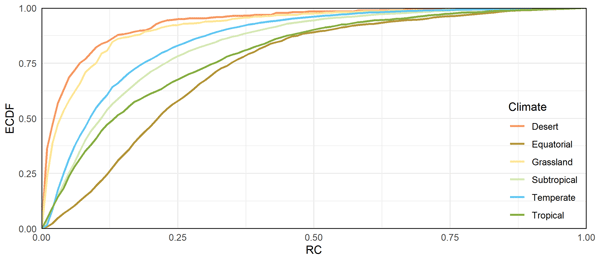
Abstract. Rainfall-runoff events are widely used in hydrological applications, from flood estimation and flood forecasting, to understanding catchment responses in a climate/anthropogenic affected world. The majority of methods used to identify rainfall-runoff events are statistical in nature, relying on subjective, user-defined ‘rules’ (i.e., parameters) that define a rainfall-runoff event. Since no ground-truth information is available to confirm the exact beginning and end of rainfall-runoff events, there is noticeable inconsistency (i.e. uncertainty) within the results. In this study, we propose the Robust Variance-based Event Identification Method (RVEIM), a new parsimonious rainfall-runoff event identification method which uses fewer parameters and better mimics the natural runoff generation process; decreasing the uncertainty in rainfall-runoff event identification. RVEIM detects runoff events by focusing on changes of streamflow variance and pairs to the corresponding rainfall event(s) simultaneously. RVEIM was compared to a benchmarking event identification method in 8 representative catchments in Australia. A sensitivity analysis was performed using a comprehensive set of plausible event identification parameter values for both methods. Results revealed that the variation of rainfall-runoff events characteristics – including annual number, length of runoff events, and the mean volume of runoff events – showed limited uncertainty from the RVEIM (standard deviation within ±15 % of the mean across 8 representative Australian catchments). This demonstrates robustness of RVEIM, while the benchmarking method exhibited considerably greater uncertainty in the event characteristics, with coefficients of variation exceeding 23 % and more than an order of magnitude difference across catchments. Using RVEIM, we present the first comprehensive summary of rainfall-runoff event characteristics across 467 Australian catchments. The distribution of event-scale runoff coefficients for individual catchments shows a strong climate gradient. Such systematic shifts in the distribution of runoff coefficient across climate regions indicate that climate variables play an important role in catchment response and point to potential contrasts in dominating runoff generation mechanisms across climate zones.
-
Notice on discussion status
The requested preprint has a corresponding peer-reviewed final revised paper. You are encouraged to refer to the final revised version.
-
Preprint
(2596 KB)
-
The requested preprint has a corresponding peer-reviewed final revised paper. You are encouraged to refer to the final revised version.
- Preprint
(2596 KB) - Metadata XML
- BibTeX
- EndNote
- Final revised paper


Journal article(s) based on this preprint
Interactive discussion
Status: closed
-
CC1: 'On the validation and transferability of RVEIM', Yiwen Mei, 24 Feb 2026
-
AC3: 'Reply on CC1', Mohammad Masoud Mohammadpour Khoie, 04 May 2026
Responses to Community Comments to ‘Characterising runoff processes for Australia: Insights from a parsimonious rainfall-runoff event identification method’ (EGUSPHERE-2025-6241)
Our responses are provided in italic, and proposed revisions are indicated within quotation marks.
Yiwen Mei
I would like to thank HESS Discussions for providing such a great platform for interactive discussions with authors. I apologize for any additional workload this may create for the authors. I was not officially invited to review this manuscript, but the topic aligns closely with my research interests, which is why I took the opportunity to offer my perspective.
The manuscript “Characterising runoff processes for Australia: Insights from a parsimonious rainfall-runoff event identification method” by Khoie introduces a new parsimonious (two-parameter) rainfall-runoff event identification method called RVEIM. Unlike existing pairing methods, which typically search for rainfall events preceding a runoff event, RVEIM starts the search from a rainfall event and looks forward for the corresponding runoff event. It also employs a variable-length searching window, in contrast to the fixed-length windows used by other methods. RVEIM was applied to 467 Australian catchments, and the resulting event identifications were compared to those obtained using the “local maxima method” (though no citation was provided for this method). The comparison focused on event characteristics such as the number of events per year, runoff coefficient (RC), event length, and event volume.
Overall, the manuscript is well-written. However, I have two major comments that I would like to discuss with the authors, along with several specific comments and editorial suggestions annotated in the manuscript.
We sincerely thank Dr Mei for taking the time to read our manuscript and provide constructive comments through the HESS Discussions platform. We appreciate the positive assessment of the manuscript and the thoughtful suggestions provided. We respond to the main comments below.
Validation strategy for event identification:
The manuscript compares the number of events, event length, and event volume between RVEIM and the local maxima method (Figure 6). One finding is that RVEIM-derived characteristics exhibit lower interannual variability. The manuscript interprets this as evidence that RVEIM introduces less “uncertainty” than the benchmarking method. I question this interpretation because it is reasonable to expect fewer events, shorter durations, and lower flow volumes during dry years. Higher variability in the benchmarking method may actually reflect a better representation of contrasting hydrological conditions between dry and wet years. The fact that RVEIM produces similar event characteristics regardless of wet or dry conditions does not, in my view, appear to be a favorable outcome.
Thank you for this important comment. We agree that higher variability in event characteristics may, in some cases, reflect a method’s ability to capture contrasting hydrological conditions between wet and dry periods.
In our analysis, rainfall-runoff events are identified across the full range of hydrological conditions throughout the full record of individual catchments. It should be clarified that the variability shown in Fig. 6 reflects differences in long-term average event characteristics across catchments, rather than interannual variability within individual catchments. Therefore, the boxplots primarily capture variability associated with event identification uncertainty across catchments.
We also note that this pattern is observed consistently across catchments spanning different hydroclimatic conditions, including both relatively dry and wet regions, suggesting that the observed differences are not driven by specific climatic regimes but reflect systematic differences in how events are defined and filtered by the methods.
Importantly, the interpretation of variability should be considered together with physical plausibility of the identified events. While higher variability of event characteristics may indicate sensitivity to changing event identification, it may also be associated with unrealistic event definitions. For example, local maxima shows variation of around 0 to 40 for the annual number of rainfall-runoff events for catchment 306119 (Fig. 6a). However, for the same catchment, the percentage of RCs > 1 shows variability between 0% to 80% (Fig. 7) which is not only highly uncertain but frequently challenges the physical plausibility of identified rainfall-runoff events.
Another finding concerns the event runoff coefficient (RC). The manuscript reports that RVEIM yields significantly fewer instances of RC > 1 compared to the local maxima method (Figure 7). I agree that a method producing fewer violations of RC > 1 is preferable. However, a key point here is ensuring that both methods start from the same baseline, particularly in how baseflow is separated from streamflow when calculating RC. Both methods use the Lyne-Hollick filter for baseflow separation, but I would like to know whether the same alpha parameter values were used for both methods when producing the comparison in Figure 7. If different values were used, this could explain the observed differences in RC > 1 occurrences.
Thank you for this important observation. We agree that being consistent about alpha parameter sensitivity makes a fair comparison between methods. We will perform an additional sensitivity test for the alpha parameter in the local maxima method.
Additionally, I note that no mathematical definition of RC is provided in the manuscript. I assume that the event RC is calculated as the ratio of quick-flow volume (streamflow minus baseflow) to rainfall volume. Clarifying this would be helpful.
Thank you for this comment. We will add a sentence in line 248 to clearly define the RC as it is the first appearance of RC in the methodology. We suggest the revision of lines 247-248:
“The characteristics here are the volume of paired runoff events, the number of rainfall-runoff events, and the RCs. In this study, RC is calculated as bellow:
RC= (Q_tot-Q_base)/P
Where, RC is event runoff coefficient, Q_tot is total streamflow volume during runoff event (ML), Q_base is the baseflow volume during runoff event (ML), and P is the rainfall volume, calculated by the rainfall depth (mm) multiplied by the catchment area (km2).”
Finally, I believe there are other validation approaches that could strengthen the analysis. Event characteristics should covary with catchment physiographic conditions. For example, one might expect fewer events in larger catchments or lower peak flows in more elongated catchments (Shen et al., 2016). Exploring such relationships could provide additional insight into the performance of RVEIM.
Thank you for this valuable suggestion. We agree that relationships between event characteristics and catchment properties could provide additional insight into the performance of RVEIM. We would like to emphasize that Figure 10 reveals a clear climatic gradient in event runoff coefficients (RCs), with drier catchments dominated by low RC events and wetter catchments showing higher and more evenly distributed RCs. The ECDF shapes shift systematically from steep (arid) to gradual (humid), consistent with a transition from infiltration- to saturation-excess runoff, with tropical regions showing mixed behaviour. This physically consistent covariation between RC distributions and climate align with established rainfall-runoff mechanisms and thus provides a physically-based validation of the event identification approach.
Novelty and transferability of RVEIM:
The manuscript claims three novelties for RVEIM: (a) it is parsimonious, requiring only two parameters; (b) it is rainfall-centered, initiating the search from rainfall rather than runoff events; and (c) it features a variable-length searching window. The authors suggest that these features make RVEIM more transferable than existing methods. I do not see a clear connection between each of these claimed novelties and enhanced transferability.
Regarding point (a), having fewer parameters could imply that the method is less adaptable to catchments with hydrological regimes that differ substantially from those used in method development. For instance, would RVEIM be suitable for snow-influenced catchments? Regarding point (b), whether the search begins from rainfall or runoff appears to be a design choice rather than a feature that inherently improves transferability. I see no clear advantage of one approach over the other in this regard.
Moreover, RVEIM is designed for daily time-series data. However, there are existing event identification methods developed for hourly data (e.g., Mei and Anagnostou, 2015; Thiesen et al., 2019). Given that sub-daily rainfall and streamflow data are available for Australia, I wonder whether RVEIM could be adapted to use higher-resolution inputs, and if so, what advantages or challenges that might present.
Thank you for this thoughtful and constructive comment. The discussion in the manuscript will be amended to discuss the transferability as per the comments below.
The three mentioned features of RVEIM (parsimony, rainfall-centred identification, and a variable-length search window) may not individually guarantee improved transferability. However, their combined use is intended to better reflect the underlying runoff generation process, compared to methods that are purely based on statistical rules to identify rainfall-runoff events (e.g., eventMaxima).
Regarding a) - the parsimonious structure limits the sensitivity of the method to parameter choices. Together, these features enable a more consistent and physically meaningful identification of rainfall-runoff events across different hydrological conditions. On your concern about the applicability across different hydroclimatic regimes, we acknowledge that RVEIM has performed well across a wide range of hydro-climatic conditions in rainfall-driven catchments (as demonstrated over Australia). For regions with significant snow influence, where runoff generation is not directly linked to a rainfall, the current formulation of RVEIM may be less appropriate. This could be assessed in future studies, and we will add acknowledgement of this limitation to the revised manuscript.
Regarding b) and c), the advantage of a rainfall-centred approach mimics the physical cause of runoff events, while the variable-length search window ensures events with different timing and duration can be well captured. These are especially helpful for catchments where rainfall events generate runoff responses with varying timing and duration, a rainfall-centred approach ensures that each independent rainfall event is treated as a potential driver of runoff, while the variable-length search window allows the method to adapt to both fast and delayed responses.
Regarding your final query about the temporal resolution, while RVEIM has been developed for daily data, its conceptual framework is not restricted to this scale. The method relies on the identification of independent runoff events for their corresponding independent rainfall. Therefore, considering that an independent rainfall event can be defined at sub-daily resolutions, RVEIM could be extended to sub-daily data. As per our response to Reviewer #2, we will add a discussion in the revised manuscript to clarify the potential applicability and limitations of RVEIM for sub-daily data.
Thank you for considering my comments. I hope they contribute constructively to the improvement of the manuscript.
Yiwen MeiReferences
Wasko, C., & Guo, D. (2022). Understanding event runoff coefficient variability across Australia using the hydroEvents R package. Hydrological Processes, 36(4 %@ 0885-6087), e14563. https://doi.org/https://doi.org/10.1002/hyp.14563 %U https://onlinelibrary.wiley.com/doi/abs/10.1002/hyp.14563
-
AC3: 'Reply on CC1', Mohammad Masoud Mohammadpour Khoie, 04 May 2026
-
CC2: 'On the validation and transferability of RVEIM', Yiwen Mei, 24 Feb 2026
I would like to thank HESS Discussions for providing such a great platform for interactive discussions with authors. I apologize for any additional workload this may create for the authors. I was not officially invited to review this manuscript, but the topic aligns closely with my research interests, which is why I took the opportunity to offer my perspective.
The manuscript “Characterising runoff processes for Australia: Insights from a parsimonious rainfall-runoff event identification method” by Khoie introduces a new parsimonious (two-parameter) rainfall-runoff event identification method called RVEIM. Unlike existing pairing methods, which typically search for rainfall events preceding a runoff event, RVEIM starts the search from a rainfall event and looks forward for the corresponding runoff event. It also employs a variable-length searching window, in contrast to the fixed-length windows used by other methods. RVEIM was applied to 467 Australian catchments, and the resulting event identifications were compared to those obtained using the “local maxima method” (though no citation was provided for this method). The comparison focused on event characteristics such as the number of events per year, runoff coefficient (RC), event length, and event volume.
Overall, the manuscript is well-written. However, I have two major comments that I would like to discuss with the authors, along with several specific comments and editorial suggestions annotated in the manuscript.
- Validation strategy for event identification
The manuscript compares the number of events, event length, and event volume between RVEIM and the local maxima method (Figure 6). One finding is that RVEIM-derived characteristics exhibit lower interannual variability. The manuscript interprets this as evidence that RVEIM introduces less “uncertainty” than the benchmarking method. I question this interpretation because it is reasonable to expect fewer events, shorter durations, and lower flow volumes during dry years. Higher variability in the benchmarking method may actually reflect a better representation of contrasting hydrological conditions between dry and wet years. The fact that RVEIM produces similar event characteristics regardless of wet or dry conditions does not, in my view, appear to be a favorable outcome.
Another finding concerns the event runoff coefficient (RC). The manuscript reports that RVEIM yields significantly fewer instances of RC > 1 compared to the local maxima method (Figure 7). I agree that a method producing fewer violations of RC > 1 is preferable. However, a key point here is ensuring that both methods start from the same baseline, particularly in how baseflow is separated from streamflow when calculating RC. Both methods use the Lyne-Hollick filter for baseflow separation, but I would like to know whether the same alpha parameter values were used for both methods when producing the comparison in Figure 7. If different values were used, this could explain the observed differences in RC > 1 occurrences.
Additionally, I note that no mathematical definition of RC is provided in the manuscript. I assume that the event RC is calculated as the ratio of quick-flow volume (streamflow minus baseflow) to rainfall volume. Clarifying this would be helpful.
Finally, I believe there are other validation approaches that could strengthen the analysis. Event characteristics should covary with catchment physiographic conditions. For example, one might expect fewer events in larger catchments or lower peak flows in more elongated catchments (Shen et al., 2016). Exploring such relationships could provide additional insight into the performance of RVEIM.
- Novelty and transferability of RVEIM
The manuscript claims three novelties for RVEIM: (a) it is parsimonious, requiring only two parameters; (b) it is rainfall-centered, initiating the search from rainfall rather than runoff events; and (c) it features a variable-length searching window. The authors suggest that these features make RVEIM more transferable than existing methods. I do not see a clear connection between each of these claimed novelties and enhanced transferability.
Regarding point (a), having fewer parameters could imply that the method is less adaptable to catchments with hydrological regimes that differ substantially from those used in method development. For instance, would RVEIM be suitable for snow-influenced catchments? Regarding point (b), whether the search begins from rainfall or runoff appears to be a design choice rather than a feature that inherently improves transferability. I see no clear advantage of one approach over the other in this regard.
Moreover, RVEIM is designed for daily time-series data. However, there are existing event identification methods developed for hourly data (e.g., Mei and Anagnostou, 2015; Thiesen et al., 2019). Given that sub-daily rainfall and streamflow data are available for Australia, I wonder whether RVEIM could be adapted to use higher-resolution inputs, and if so, what advantages or challenges that might present.
Thank you for considering my comments. I hope they contribute constructively to the improvement of the manuscript.
Yiwen Mei
References
Shen, X., Mei, Y., & Anagnostou, E. N. (2017). A Comprehensive Database of Flood Events in the Contiguous United States from 2002 to 2013. Bulletin of the American Meteorological Society, 98(7), 1493-1502. https://doi.org/10.1175/BAMS-D-16-0125.1,
Mei, Y. and Anagnostou, E. N.: A hydrograph separation method based on information from rainfall and runoff records, J. Hydrol., 523, 636–649, https://doi.org/10.1016/j.jhydrol.2015.01.083, 2015.
Thiesen, S., Darscheid, P., and Ehret, U.: Identifying rainfall-runoff events in discharge time series: a data-driven method based on information theory, Hydrol. Earth Syst. Sci., 23, 1015–1034, https://doi.org/10.5194/hess-23-1015-2019, 2019.
Citation: https://doi.org/10.5194/egusphere-2025-6241-CC2 -
RC1: 'Comment on egusphere-2025-6241', Anonymous Referee #1, 27 Feb 2026
This manuscript provides a very useful contribution by introducing a novel, physically based and parsimonious event identification method that exhibits excellent robustness. This offers a standardised and transferable approach for event identification that forms the starting point of much hydrological analysis. However, some aspects of the methodology would benefit from further elucidation.
Major Comments:
- The algorithm flow chart in Figure 2 is a very useful inclusion that I commend, however, please consider the following:
- Consider spacing out the boxes within the “Streamflow statistics” window to allow better interpretation of the flow arrows.
- The left arrow from the first diamond “n_exceed >= len_rain & length(QD[idx_candidate]) >0” is misleading as it says, “We have no streamflow event” yet it flows to “Calculate streamflow event characteristics”.
- For both diamonds it is unclear under what condition you should follow which arrow.
- Please clarify the basis for the *3 scaling factor in equation 4.
- Can you please add further explanation as to why n_exceed >= len_rain is a necessary condition. Are there any situations, such as on a small catchment, where this may not be the case? Does this add any uncertainty? I am not suggesting any further analysis is required, rather just some further discussion. For example, my understanding is that “best_lag” will vary based on the catchment and this should ensure that on average n_exceed >= len_rain. Some words to this effect would be beneficial, I think.
- Line 254-255: I’m concerned about the lack of sensitivity testing for alpha in the local maxima event identification. Whilst I appreciate that it would unlikely change the results significantly or the conclusion of the study, I think for completeness alpha should either be sampled for both or neither algorithm, as it will have an impact on event identification.
- Could you please clarify the ranges of parameters for Local maxima in Table 3, particularly for delta.y? Often the delta.y parameter is specified as a proportion of the peak to account for different catchment scales, however, here it is flow value. Given the range of catchment sizes investigated, i.e. 102-105, is it possible that the uncertainty of the local maxima algorithm is inflated by sampling across an implausible range for some catchments? I also note that in the author’s cited paper from 2025, in Table 1 the parament range for delta.y in the local maxima algorithm is the proportion 0.9-0.7 whilst the delta.y for a different algorithm, local minima, is 0-30 which is what is used in this manuscript. Can you please clarify this?
- Looking at the results in Figure 5 is it possible that RVEIM is truncating the start of events by starting at i, where QDi is first positive, which is resulting in the shorter event lengths and lower volumes in Figure 6 b) & c), and typically lower RC values in Figure 7)? Could you consider starting at i-1 instead?
- I think the results shown in figure 5.2 should be moved out of the discussion and up into the results.
- It would be worth commenting in the discussion whether RVEIM would generalise to use on subdaily data.
Minor Comments:
- Please review the manuscript and ensure correct spelling and grammar is used throughout.
- Please rephrase lines 98-100 “We demonstrated that the proposed rainfall-runoff event identification method leads to noticeably lower percentage of RCs better reflecting physical processes” as it is hard to interpret.
- Please check that the correct conversion of units has been undertaken for Mean annual streamflow in Table 2.
Citation: https://doi.org/10.5194/egusphere-2025-6241-RC1 -
AC1: 'Reply on RC1', Mohammad Masoud Mohammadpour Khoie, 04 May 2026
Responses to Review Comments to ‘Characterising runoff processes for Australia: Insights from a parsimonious rainfall-runoff event identification method’ (EGUSPHERE-2025-6241)
Our responses are provided in italic, and proposed revisions are indicated within quotation marks.
Reviewer 1
The manuscript introduces the Robust Variance-based Event Identification Method (RVEIM), a new and efficient approach for pairing rainfall and runoff events in hydrological studies. Traditional statistical methods often suffer from subjective parameter selection, leading to inconsistent results and physically impossible outcomes, such as runoff volumes exceeding rainfall. By utilizing streamflow variance and a time-variant search window, RVEIM minimizes these uncertainties and better reflects natural catchment responses. When tested across diverse Australian catchments, the method proved more stable than traditional local maxima benchmarks, showing significantly less variation in event characteristics. Overall, the method shows promise for applications in flood analysis and hydroclimatic studies. The study addresses an important methodological gap, and the proposed framework is potentially valuable. The manuscript is generally well written. However, several issues should be addressed to further strengthen the work prior to publication.
We thank the reviewer for the positive assessment of our work and for the constructive feedback provided.
Major Comments:
• The paper presents RVEIM as a significant improvement over existing methods, yet it primarily benchmarks it against a single "local maxima" method. While the authors justify this choice by citing the local maxima method's relatively lower uncertainty compared to others, the paper would be significantly strengthened by comparing RVEIM directly to the variance-based method by Fischer et al. (2021). Since RVEIM is an extension of that specific framework, a direct comparison is necessary to isolate and quantify the specific value-add of the authors' new contributions, such as the simultaneous pairing and the time-variant search window. Furthermore, Table 1 identifies several other sophisticated methods (e.g., DMCA or modified baseflow filters) that are not addressed in the evaluation; including at least one other modern automated method would provide a more rigorous validation of RVEIM’s "transferability" and "robustness" across Australia's diverse hydro-climates.
We agree that a broader benchmarking would strengthen the evaluation of RVEIM. In the original manuscript, we selected the local maxima method as a widely used and representative benchmark. However, we acknowledge that additional comparisons can provide a more comprehensive assessment of robustness and transferability.
Following the reviewer’s suggestion, we will consider including additional benchmarking to strengthen the evaluation. Fischer et al. (2021) and Giani et al. (2022) developed two relevant but distinct frameworks. The DMCA method developed by Giani et al. (2022) has a similar level of complexity to RVEIM as it has only two parameters (R_min, and max_winsow) and simultaneously detects and pairs rainfall-runoff events. Hence, we will perform an additional sensitivity analysis using the DMCA method by Giani et al. (2022) to assess how its parameterization influences the uncertainty of identified rainfall-runoff event characteristics.
• In Equation 2, the search window length is defined using best_lag, which is calculated as the average time between the start of a rainfall event (as shown in a hyetograph) and the start of a runoff event (as shown in a hydrograph). However, it is not clearly explained how this parameter is calculated in practice. In particular, in the procedure used to identify the start times of rainfall and runoff events, as illustrated in Figure 4, best_lag is not shown as how it is calculated.
Thank you for this helpful comment. We agree that the description of best_lag was not sufficiently clear and may have led to confusion. In our method, best_lag is determined, prior to event identification, based on the time lag that maximizes the cross-correlation between rainfall and lagged streamflow time series. Therefore, it is not explicitly shown in Fig. 4, which focuses on the event identification procedure after rainfall events are defined.
We will revise the manuscript to clearly distinguish between the definition and interpretation of best_lag. Specifically, we propose revising lines 164–169 as follows:
“3. Cross-correlation. A runoff event is paired with the corresponding rainfall event based on a time-varying search window controlled by two parameters. The first parameter, which is constant across rainfall events, is best_lag. This parameter is defined as the lag between rainfall and streamflow that maximizes the cross-correlation between these variables (and is calculated prior to rainfall event detection). Physically, best_lag represents the average response time between rainfall and runoff. The second parameter controlling the length of the search window is l_rainfall, which corresponds to the duration of the rainfall event. Therefore, this parameter varies from one rainfall event to another.”
Minor Comments:
• The subplot labeling is inconsistent across figures (e.g., use of “a” vs. “(a)” in Figures 6 and 8). Please standardize. Also, their font size is not consistent, e.g. Figure 9.
Thank you for this comment. We will standardize subplot labeling across all figures and ensure consistent font sizes throughout all figures to improve clarity and visual consistency.
- The algorithm flow chart in Figure 2 is a very useful inclusion that I commend, however, please consider the following:
-
RC2: 'Comment on egusphere-2025-6241', Anonymous Referee #2, 10 Apr 2026
The manuscript introduces the Robust Variance-based Event Identification Method (RVEIM), a new and efficient approach for pairing rainfall and runoff events in hydrological studies. Traditional statistical methods often suffer from subjective parameter selection, leading to inconsistent results and physically impossible outcomes, such as runoff volumes exceeding rainfall. By utilizing streamflow variance and a time-variant search window, RVEIM minimizes these uncertainties and better reflects natural catchment responses. When tested across diverse Australian catchments, the method proved more stable than traditional local maxima benchmarks, showing significantly less variation in event characteristics. Overall, the method shows promise for applications in flood analysis and hydroclimatic studies. The study addresses an important methodological gap, and the proposed framework is potentially valuable. The manuscript is generally well written. However, several issues should be addressed to further strengthen the work prior to publication.
Major Comments:
1. The paper presents RVEIM as a significant improvement over existing methods, yet it primarily benchmarks it against a single "local maxima" method. While the authors justify this choice by citing the local maxima method's relatively lower uncertainty compared to others, the paper would be significantly strengthened by comparing RVEIM directly to the variance-based method by Fischer et al. (2021). Since RVEIM is an extension of that specific framework, a direct comparison is necessary to isolate and quantify the specific value-add of the authors' new contributions, such as the simultaneous pairing and the time-variant search window. Furthermore, Table 1 identifies several other sophisticated methods (e.g., DMCA or modified baseflow filters) that are not addressed in the evaluation; including at least one other modern automated method would provide a more rigorous validation of RVEIM’s "transferability" and "robustness" across Australia's diverse hydro-climates.
2. In Equation 2, the search window length is defined using best_lag, which is calculated as the average time between the start of a rainfall event (as shown in a hyetograph) and the start of a runoff event (as shown in a hydrograph). However, it is not clearly explained how this parameter is calculated in practice. In particular, in the procedure used to identify the start times of rainfall and runoff events, as illustrated in Figure 4, best_lag is not shown as how it is calculated.
Minor comments:
The subplot labeling is inconsistent across figures (e.g., use of “a” vs. “(a)” in Figures 6 and 8). Please standardize. Also, their font size is not consistent, e.g. Figure 9.
Citation: https://doi.org/10.5194/egusphere-2025-6241-RC2 -
AC2: 'Reply on RC2', Mohammad Masoud Mohammadpour Khoie, 04 May 2026
Responses to Review Comments to ‘Characterising runoff processes for Australia: Insights from a parsimonious rainfall-runoff event identification method’ (EGUSPHERE-2025-6241)
Our responses are provided in italic, and proposed revisions are indicated within quotation marks.
Reviewer 2
This manuscript provides a very useful contribution by introducing a novel, physically based and parsimonious event identification method that exhibits excellent robustness. This offers a standardised and transferable approach for event identification that forms the starting point of much hydrological analysis. However, some aspects of the methodology would benefit from further elucidation.
We sincerely thank the reviewer for the positive assessment of our work and for the constructive and insightful comments provided. We particularly appreciate the recognition of the methodological contribution and robustness of the proposed approach. Below, we provide a detailed point-by-point response to each comment.
Major Comments:
• The algorithm flow chart in Figure 2 is a very useful inclusion that I commend, however, please consider the following:
1. Consider spacing out the boxes within the “Streamflow statistics” window to allow better interpretation of the flow arrows.
2. The left arrow from the first diamond “n_exceed >= len_rain & length(QD[idx_candidate]) >0” is misleading as it says, “We have no streamflow event” yet it flows to “Calculate streamflow event characteristics”.
3. For both diamonds it is unclear under what condition you should follow which arrow.
Thank you for these helpful suggestions regarding the flowchart in Figure 2.
1. We agree that the spacing within the “Streamflow statistics” section can be improved. In the revised figure, we will increase the spacing between elements and reorganize the layout so that the pathways to the green boxes are vertically aligned, improving readability and flow interpretation.
2. We acknowledge that the left arrow from the first decision diamond may be misleading. Our intention was to represent cases where rainfall does not generate a detectable runoff event. In such cases, we still consider this as part of the rainfall-runoff process, with resulting event characteristics (runoff volume, duration, and runoff coefficient) equal to zero. To avoid confusion, we will revise the flowchart and clarify the logic in both the figure and its caption.
3. We agree that the decision logic within the diamonds was not sufficiently clear. In the revised flowchart, we will explicitly label each branch using “True” and “False” conditions. This will allow readers to clearly understand under which conditions each pathway is followed and improves the overall interpretability of the flowchart.
We provide the proposed amended flowchart in Fig. R1 (in the attached document).
• Please clarify the basis for the *3 scaling factor in equation 4.
Thank you for this comment. This choice of *3 scaling factor is consistent with robust approaches based on median absolute deviation (MAD), where thresholds in the range of 2–3 are commonly used (Voloh et al., 2020). In this study, we adopt a factor of 3 as a conservative threshold to ensure that only substantial changes in streamflow variability are identified, while avoiding sensitivity to minor fluctuations.
The scaling factor of 3 is also consistent with commonly adopted outlier detection methods which work based on standard deviation (SD). In such methods, values beyond ±3 SD are typically considered rare and indicative of significant deviations from typical behaviour (Fahrnberger, 2019; Santacroce, 2020).
• Can you please add further explanation as to why n_exceed >= len_rain is a necessary condition. Are there any situations, such as on a small catchment, where this may not be the case? Does this add any uncertainty? I am not suggesting any further analysis is required, rather just some further discussion. For example, my understanding is that “best_lag” will vary based on the catchment and this should ensure that on average n_exceed >= len_rain. Some words to this effect would be beneficial, I think.
Thank you for this insightful comment. We agree that further discussion/clarification of this condition is beneficial.
The condition n_exceed ≥ len_rain is introduced to ensure that the identified streamflow response is sufficiently sustained relative to the duration of the corresponding rainfall event. Conceptually, this reflects the expectation that a rainfall event leading to runoff should generate a streamflow signal that persists for at least a comparable duration, due to processes such as storage, routing, and recession, rather than a short-lived or spurious fluctuation (e.g., due in instrumental error etc.). This constraint is not determined by “best_lag”, estimates the typical timing of the runoff response, estimated separately from the rainfall-runoff relationship for each catchment.
In addition, empirical evidence supports the expectation that runoff duration is typically equal to or longer than the duration of the corresponding rainfall event, even in relatively small catchments. For example, in a small headwater catchment in Hong Kong, Zhang et al. (2023) showed that rainfall duration ranged from 24–662 min (mean 108 min), while runoff recession alone ranged from 73–591 min. This reflects the persistence of streamflow due to routing and recession processes following rainfall. Therefore, the adopted condition represents a reasonable and physically consistent expectation for rainfall-runoff events.
We propose adding a sentence in lines 202-204 to make this clear:
“In the search window, if the length of streamflow records which exceed var_lim (n_exceed) is greater or equal to the length of rainfall, the first positive QD represents the start of the runoff event (see the start of bold line of streamflow for both events in Fig. 4). Otherwise, there is no runoff event in the search window. This condition reflects the expectation that a rainfall event leading to runoff should produce a sufficiently sustained streamflow response, rather than a short-lived or spurious fluctuation which might be due to instrumental error.”
• Line 254-255: I’m concerned about the lack of sensitivity testing for alpha in the local maxima event identification. Whilst I appreciate that it would unlikely change the results significantly or the conclusion of the study, I think for completeness alpha should either be sampled for both or neither algorithm, as it will have an impact on event identification.
Thank you for this important comment. We agree that, for completeness, including alpha in the sensitivity analysis of the local maxima method is a reasonable consideration.
In the original design of this study, we focused on comparing the overall uncertainty of event identification methods, noting that methods with higher number of parameters are generally expected to exhibit higher sensitivity to the parameter choices. Therefore, we aimed to evaluate each method based on its commonly used parameter configuration. As such, alpha was not explicitly varied for the local maxima method in the original analysis.
However, following the suggestion, we will perform an additional sensitivity check to explore how varying alpha affects the results for the local maxima.
• Could you please clarify the ranges of parameters for Local maxima in Table 3, particularly for delta.y? Often the delta.y parameter is specified as a proportion of the peak to account for different catchment scales, however, here it is flow value. Given the range of catchment sizes investigated, i.e. 102-105, is it possible that the uncertainty of the local maxima algorithm is inflated by sampling across an implausible range for some catchments? I also note that in the author’s cited paper from 2025, in Table 1 the parament range for delta.y in the local maxima algorithm is the proportion 0.9-0.7 whilst the delta.y for a different algorithm, local minima, is 0-30 which is what is used in this manuscript. Can you please clarify this?
Thank you for this careful and important observation. We acknowledge that there was an error in reporting the range of the Delta.y parameter in Table 3. The correct range of Delta.y is between −0.9 and −0.7 (Mohammadpour Khoie et al., 2025), which represent a proportional decrease of 0.9 to 0.7 from the local maxima. Importantly, this error was limited to the reporting in Table 3 and did not affect the implementation of the local maxima algorithm in our analysis. The parameter sampling was conducted using the correct proportional definition, and therefore the reported uncertainty is not inflated by an implausible parameter range.
We will fix this reporting in the revision.
• Looking at the results in Figure 5 is it possible that RVEIM is truncating the start of events by starting at i, where QDi is first positive, which is resulting in the shorter event lengths and lower volumes in Figure 6 b) & c), and typically lower RC values in Figure 7)? Could you consider starting at i-1 instead?
Thank you for this insightful comment. We acknowledge that, as illustrated in Fig. 5, some runoff events may appear visually truncated at their start. This is primarily a consequence of discretizing continuous streamflow signals into discrete time steps, rather than a limitation in the event identification concept itself. Shifting the starting point one time step backward only marginally affects event characteristics, typically resulting in a one-step increase in duration and a slight increase in runoff volume, without altering the overall patterns or key conclusions of the study. To assess the impact of this choice, we repeated the analysis for representative catchments by shifting the starting index of runoff events one time step backward. The results (Fig. R2 - in the attached document) show only minor changes in runoff event duration and a small increase in runoff volume compared to the original Fig. 6 in the manuscript. These changes do not alter the overall patterns or key conclusions of the study. Given that these changes are minimal and do not affect the key conclusions, we prefer to retain the original results in the main manuscript. We will add these results (shown in Fig. R2 - in the attached document) to the Supplementary section in the revision process.
• I think the results shown in figure 5.2 should be moved out of the discussion and up into the results.
We agree that the results shown in Fig. 11 are relevant to the interpretation of the study. However, as this figure provides supplementary analysis supporting the main findings rather than a core result, it will be moved to improve the flow and readability of the main Discussion section.
• It would be worth commenting in the discussion whether RVEIM would generalise to use on subdaily data.
Thank you for this valuable suggestion. RVEIM fundamentally detects a runoff event based on streamflow sudden changes around each independent rainfall event considering some expectations like n_exceed ≥ l_rainfall. Therefore, in principle, the method can be extended to sub-daily data, provided that rainfall events can be consistently defined at finer temporal resolutions.
However, we acknowledge that sub-daily applications may introduce additional complexities, such as increased signal variability and noises and the need for more precise event separation. These factors may require minor adjustments to parameter definitions or thresholds. We will add a discussion in the revised manuscript to clarify the potential applicability and limitations of RVEIM for sub-daily data.
Minor Comments:
• Please review the manuscript and ensure correct spelling and grammar is used throughout.
We will carefully review the entire manuscript and correct grammatical errors, typos, and wording where necessary to improve clarity and readability.
• Please rephrase lines 98-100 “We demonstrated that the proposed rainfall-runoff event identification method leads to noticeably lower percentage of RCs better reflecting physical processes” as it is hard to interpret.
We suggest the revision of this sentence as follows:
“We show that the proposed rainfall-runoff event identification method yields a lower proportion of physically implausible RCs, indicating improved consistency and a better representation of underlying hydrological processes.”
• Please check that the correct conversion of units has been undertaken for Mean annual streamflow in Table 2.
Thank you for your careful attention. In this study, streamflow is originally measured in ML/day. However, in Table 2, for the purpose of comparison across catchments, we converted mean annual streamflow to an equivalent depth (mm) by normalizing by catchment area. This allows direct comparison with mean annual rainfall and provides a more intuitive interpretation of the proportion of rainfall contributing to runoff across different catchments.
We suggest revising the table caption as follows to add clarity:
“Table 2. Hydroclimate and catchment-specific characteristics of selected catchments. Mean annual streamflow is expressed as an equivalent depth (mm/day) obtained by dividing gauged flow in ML/day by catchment area.”References
Fahrnberger, G. (2019). Outlier removal for the reliable condition monitoring of telecommunication services. 2019 20th International Conference on Parallel and Distributed Computing, Applications and Technologies (PDCAT),
Mohammadpour Khoie, M. M., Guo, D., & Wasko, C. (2025). Improving the consistency of hydrologic event identification. Environmental Modelling & Software, 191, 106521. https://doi.org/https://doi.org/10.1016/j.envsoft.2025.106521
Santacroce, M. (2020). SCREEN: Stata module to quickly identify possible outliers based on the interquartile range, percentile or standard deviation.
Voloh, B., Watson, M. R., König, S., & Womelsdorf, T. (2020). MAD saccade: Statistically robust saccade threshold estimation via the median absolute deviation. Journal of eye movement research, 12(8), 65.
Zhang, L., Xu, Q., Wang, K., Chen, G., Luo, Z., Li, X., & Guo, B. (2023). Event-scaled hydrological response of a headwater catchment in Hong Kong [Original Research]. Frontiers in Environmental Science, Volume 11 - 2023. https://doi.org/10.3389/fenvs.2023.1218239
-
AC2: 'Reply on RC2', Mohammad Masoud Mohammadpour Khoie, 04 May 2026
Peer review completion


Interactive discussion
Status: closed
-
CC1: 'On the validation and transferability of RVEIM', Yiwen Mei, 24 Feb 2026
I would like to thank HESS Discussions for providing such a great platform for interactive discussions with authors. I apologize for any additional workload this may create for the authors. I was not officially invited to review this manuscript, but the topic aligns closely with my research interests, which is why I took the opportunity to offer my perspective.
The manuscript “Characterising runoff processes for Australia: Insights from a parsimonious rainfall-runoff event identification method” by Khoie introduces a new parsimonious (two-parameter) rainfall-runoff event identification method called RVEIM. Unlike existing pairing methods, which typically search for rainfall events preceding a runoff event, RVEIM starts the search from a rainfall event and looks forward for the corresponding runoff event. It also employs a variable-length searching window, in contrast to the fixed-length windows used by other methods. RVEIM was applied to 467 Australian catchments, and the resulting event identifications were compared to those obtained using the “local maxima method” (though no citation was provided for this method). The comparison focused on event characteristics such as the number of events per year, runoff coefficient (RC), event length, and event volume.
Overall, the manuscript is well-written. However, I have two major comments that I would like to discuss with the authors, along with several specific comments and editorial suggestions annotated in the manuscript.
- Validation strategy for event identification
The manuscript compares the number of events, event length, and event volume between RVEIM and the local maxima method (Figure 6). One finding is that RVEIM-derived characteristics exhibit lower interannual variability. The manuscript interprets this as evidence that RVEIM introduces less “uncertainty” than the benchmarking method. I question this interpretation because it is reasonable to expect fewer events, shorter durations, and lower flow volumes during dry years. Higher variability in the benchmarking method may actually reflect a better representation of contrasting hydrological conditions between dry and wet years. The fact that RVEIM produces similar event characteristics regardless of wet or dry conditions does not, in my view, appear to be a favorable outcome.
Another finding concerns the event runoff coefficient (RC). The manuscript reports that RVEIM yields significantly fewer instances of RC > 1 compared to the local maxima method (Figure 7). I agree that a method producing fewer violations of RC > 1 is preferable. However, a key point here is ensuring that both methods start from the same baseline, particularly in how baseflow is separated from streamflow when calculating RC. Both methods use the Lyne-Hollick filter for baseflow separation, but I would like to know whether the same alpha parameter values were used for both methods when producing the comparison in Figure 7. If different values were used, this could explain the observed differences in RC > 1 occurrences.
Additionally, I note that no mathematical definition of RC is provided in the manuscript. I assume that the event RC is calculated as the ratio of quick-flow volume (streamflow minus baseflow) to rainfall volume. Clarifying this would be helpful.
Finally, I believe there are other validation approaches that could strengthen the analysis. Event characteristics should covary with catchment physiographic conditions. For example, one might expect fewer events in larger catchments or lower peak flows in more elongated catchments (Shen et al., 2016). Exploring such relationships could provide additional insight into the performance of RVEIM.
- Novelty and transferability of RVEIM
The manuscript claims three novelties for RVEIM: (a) it is parsimonious, requiring only two parameters; (b) it is rainfall-centered, initiating the search from rainfall rather than runoff events; and (c) it features a variable-length searching window. The authors suggest that these features make RVEIM more transferable than existing methods. I do not see a clear connection between each of these claimed novelties and enhanced transferability.
Regarding point (a), having fewer parameters could imply that the method is less adaptable to catchments with hydrological regimes that differ substantially from those used in method development. For instance, would RVEIM be suitable for snow-influenced catchments? Regarding point (b), whether the search begins from rainfall or runoff appears to be a design choice rather than a feature that inherently improves transferability. I see no clear advantage of one approach over the other in this regard.
Moreover, RVEIM is designed for daily time-series data. However, there are existing event identification methods developed for hourly data (e.g., Mei and Anagnostou, 2015; Thiesen et al., 2019). Given that sub-daily rainfall and streamflow data are available for Australia, I wonder whether RVEIM could be adapted to use higher-resolution inputs, and if so, what advantages or challenges that might present.
Thank you for considering my comments. I hope they contribute constructively to the improvement of the manuscript.
Yiwen Mei
References
Shen, X., Mei, Y., & Anagnostou, E. N. (2017). A Comprehensive Database of Flood Events in the Contiguous United States from 2002 to 2013. Bulletin of the American Meteorological Society, 98(7), 1493-1502. https://doi.org/10.1175/BAMS-D-16-0125.1,
Mei, Y. and Anagnostou, E. N.: A hydrograph separation method based on information from rainfall and runoff records, J. Hydrol., 523, 636–649, https://doi.org/10.1016/j.jhydrol.2015.01.083, 2015.
Thiesen, S., Darscheid, P., and Ehret, U.: Identifying rainfall-runoff events in discharge time series: a data-driven method based on information theory, Hydrol. Earth Syst. Sci., 23, 1015–1034, https://doi.org/10.5194/hess-23-1015-2019, 2019.
Citation: https://doi.org/10.5194/egusphere-2025-6241-CC1 -
AC3: 'Reply on CC1', Mohammad Masoud Mohammadpour Khoie, 04 May 2026
Responses to Community Comments to ‘Characterising runoff processes for Australia: Insights from a parsimonious rainfall-runoff event identification method’ (EGUSPHERE-2025-6241)
Our responses are provided in italic, and proposed revisions are indicated within quotation marks.
Yiwen Mei
I would like to thank HESS Discussions for providing such a great platform for interactive discussions with authors. I apologize for any additional workload this may create for the authors. I was not officially invited to review this manuscript, but the topic aligns closely with my research interests, which is why I took the opportunity to offer my perspective.
The manuscript “Characterising runoff processes for Australia: Insights from a parsimonious rainfall-runoff event identification method” by Khoie introduces a new parsimonious (two-parameter) rainfall-runoff event identification method called RVEIM. Unlike existing pairing methods, which typically search for rainfall events preceding a runoff event, RVEIM starts the search from a rainfall event and looks forward for the corresponding runoff event. It also employs a variable-length searching window, in contrast to the fixed-length windows used by other methods. RVEIM was applied to 467 Australian catchments, and the resulting event identifications were compared to those obtained using the “local maxima method” (though no citation was provided for this method). The comparison focused on event characteristics such as the number of events per year, runoff coefficient (RC), event length, and event volume.
Overall, the manuscript is well-written. However, I have two major comments that I would like to discuss with the authors, along with several specific comments and editorial suggestions annotated in the manuscript.
We sincerely thank Dr Mei for taking the time to read our manuscript and provide constructive comments through the HESS Discussions platform. We appreciate the positive assessment of the manuscript and the thoughtful suggestions provided. We respond to the main comments below.
Validation strategy for event identification:
The manuscript compares the number of events, event length, and event volume between RVEIM and the local maxima method (Figure 6). One finding is that RVEIM-derived characteristics exhibit lower interannual variability. The manuscript interprets this as evidence that RVEIM introduces less “uncertainty” than the benchmarking method. I question this interpretation because it is reasonable to expect fewer events, shorter durations, and lower flow volumes during dry years. Higher variability in the benchmarking method may actually reflect a better representation of contrasting hydrological conditions between dry and wet years. The fact that RVEIM produces similar event characteristics regardless of wet or dry conditions does not, in my view, appear to be a favorable outcome.
Thank you for this important comment. We agree that higher variability in event characteristics may, in some cases, reflect a method’s ability to capture contrasting hydrological conditions between wet and dry periods.
In our analysis, rainfall-runoff events are identified across the full range of hydrological conditions throughout the full record of individual catchments. It should be clarified that the variability shown in Fig. 6 reflects differences in long-term average event characteristics across catchments, rather than interannual variability within individual catchments. Therefore, the boxplots primarily capture variability associated with event identification uncertainty across catchments.
We also note that this pattern is observed consistently across catchments spanning different hydroclimatic conditions, including both relatively dry and wet regions, suggesting that the observed differences are not driven by specific climatic regimes but reflect systematic differences in how events are defined and filtered by the methods.
Importantly, the interpretation of variability should be considered together with physical plausibility of the identified events. While higher variability of event characteristics may indicate sensitivity to changing event identification, it may also be associated with unrealistic event definitions. For example, local maxima shows variation of around 0 to 40 for the annual number of rainfall-runoff events for catchment 306119 (Fig. 6a). However, for the same catchment, the percentage of RCs > 1 shows variability between 0% to 80% (Fig. 7) which is not only highly uncertain but frequently challenges the physical plausibility of identified rainfall-runoff events.
Another finding concerns the event runoff coefficient (RC). The manuscript reports that RVEIM yields significantly fewer instances of RC > 1 compared to the local maxima method (Figure 7). I agree that a method producing fewer violations of RC > 1 is preferable. However, a key point here is ensuring that both methods start from the same baseline, particularly in how baseflow is separated from streamflow when calculating RC. Both methods use the Lyne-Hollick filter for baseflow separation, but I would like to know whether the same alpha parameter values were used for both methods when producing the comparison in Figure 7. If different values were used, this could explain the observed differences in RC > 1 occurrences.
Thank you for this important observation. We agree that being consistent about alpha parameter sensitivity makes a fair comparison between methods. We will perform an additional sensitivity test for the alpha parameter in the local maxima method.
Additionally, I note that no mathematical definition of RC is provided in the manuscript. I assume that the event RC is calculated as the ratio of quick-flow volume (streamflow minus baseflow) to rainfall volume. Clarifying this would be helpful.
Thank you for this comment. We will add a sentence in line 248 to clearly define the RC as it is the first appearance of RC in the methodology. We suggest the revision of lines 247-248:
“The characteristics here are the volume of paired runoff events, the number of rainfall-runoff events, and the RCs. In this study, RC is calculated as bellow:
RC= (Q_tot-Q_base)/P
Where, RC is event runoff coefficient, Q_tot is total streamflow volume during runoff event (ML), Q_base is the baseflow volume during runoff event (ML), and P is the rainfall volume, calculated by the rainfall depth (mm) multiplied by the catchment area (km2).”
Finally, I believe there are other validation approaches that could strengthen the analysis. Event characteristics should covary with catchment physiographic conditions. For example, one might expect fewer events in larger catchments or lower peak flows in more elongated catchments (Shen et al., 2016). Exploring such relationships could provide additional insight into the performance of RVEIM.
Thank you for this valuable suggestion. We agree that relationships between event characteristics and catchment properties could provide additional insight into the performance of RVEIM. We would like to emphasize that Figure 10 reveals a clear climatic gradient in event runoff coefficients (RCs), with drier catchments dominated by low RC events and wetter catchments showing higher and more evenly distributed RCs. The ECDF shapes shift systematically from steep (arid) to gradual (humid), consistent with a transition from infiltration- to saturation-excess runoff, with tropical regions showing mixed behaviour. This physically consistent covariation between RC distributions and climate align with established rainfall-runoff mechanisms and thus provides a physically-based validation of the event identification approach.
Novelty and transferability of RVEIM:
The manuscript claims three novelties for RVEIM: (a) it is parsimonious, requiring only two parameters; (b) it is rainfall-centered, initiating the search from rainfall rather than runoff events; and (c) it features a variable-length searching window. The authors suggest that these features make RVEIM more transferable than existing methods. I do not see a clear connection between each of these claimed novelties and enhanced transferability.
Regarding point (a), having fewer parameters could imply that the method is less adaptable to catchments with hydrological regimes that differ substantially from those used in method development. For instance, would RVEIM be suitable for snow-influenced catchments? Regarding point (b), whether the search begins from rainfall or runoff appears to be a design choice rather than a feature that inherently improves transferability. I see no clear advantage of one approach over the other in this regard.
Moreover, RVEIM is designed for daily time-series data. However, there are existing event identification methods developed for hourly data (e.g., Mei and Anagnostou, 2015; Thiesen et al., 2019). Given that sub-daily rainfall and streamflow data are available for Australia, I wonder whether RVEIM could be adapted to use higher-resolution inputs, and if so, what advantages or challenges that might present.
Thank you for this thoughtful and constructive comment. The discussion in the manuscript will be amended to discuss the transferability as per the comments below.
The three mentioned features of RVEIM (parsimony, rainfall-centred identification, and a variable-length search window) may not individually guarantee improved transferability. However, their combined use is intended to better reflect the underlying runoff generation process, compared to methods that are purely based on statistical rules to identify rainfall-runoff events (e.g., eventMaxima).
Regarding a) - the parsimonious structure limits the sensitivity of the method to parameter choices. Together, these features enable a more consistent and physically meaningful identification of rainfall-runoff events across different hydrological conditions. On your concern about the applicability across different hydroclimatic regimes, we acknowledge that RVEIM has performed well across a wide range of hydro-climatic conditions in rainfall-driven catchments (as demonstrated over Australia). For regions with significant snow influence, where runoff generation is not directly linked to a rainfall, the current formulation of RVEIM may be less appropriate. This could be assessed in future studies, and we will add acknowledgement of this limitation to the revised manuscript.
Regarding b) and c), the advantage of a rainfall-centred approach mimics the physical cause of runoff events, while the variable-length search window ensures events with different timing and duration can be well captured. These are especially helpful for catchments where rainfall events generate runoff responses with varying timing and duration, a rainfall-centred approach ensures that each independent rainfall event is treated as a potential driver of runoff, while the variable-length search window allows the method to adapt to both fast and delayed responses.
Regarding your final query about the temporal resolution, while RVEIM has been developed for daily data, its conceptual framework is not restricted to this scale. The method relies on the identification of independent runoff events for their corresponding independent rainfall. Therefore, considering that an independent rainfall event can be defined at sub-daily resolutions, RVEIM could be extended to sub-daily data. As per our response to Reviewer #2, we will add a discussion in the revised manuscript to clarify the potential applicability and limitations of RVEIM for sub-daily data.
Thank you for considering my comments. I hope they contribute constructively to the improvement of the manuscript.
Yiwen MeiReferences
Wasko, C., & Guo, D. (2022). Understanding event runoff coefficient variability across Australia using the hydroEvents R package. Hydrological Processes, 36(4 %@ 0885-6087), e14563. https://doi.org/https://doi.org/10.1002/hyp.14563 %U https://onlinelibrary.wiley.com/doi/abs/10.1002/hyp.14563
-
CC2: 'On the validation and transferability of RVEIM', Yiwen Mei, 24 Feb 2026
I would like to thank HESS Discussions for providing such a great platform for interactive discussions with authors. I apologize for any additional workload this may create for the authors. I was not officially invited to review this manuscript, but the topic aligns closely with my research interests, which is why I took the opportunity to offer my perspective.
The manuscript “Characterising runoff processes for Australia: Insights from a parsimonious rainfall-runoff event identification method” by Khoie introduces a new parsimonious (two-parameter) rainfall-runoff event identification method called RVEIM. Unlike existing pairing methods, which typically search for rainfall events preceding a runoff event, RVEIM starts the search from a rainfall event and looks forward for the corresponding runoff event. It also employs a variable-length searching window, in contrast to the fixed-length windows used by other methods. RVEIM was applied to 467 Australian catchments, and the resulting event identifications were compared to those obtained using the “local maxima method” (though no citation was provided for this method). The comparison focused on event characteristics such as the number of events per year, runoff coefficient (RC), event length, and event volume.
Overall, the manuscript is well-written. However, I have two major comments that I would like to discuss with the authors, along with several specific comments and editorial suggestions annotated in the manuscript.
- Validation strategy for event identification
The manuscript compares the number of events, event length, and event volume between RVEIM and the local maxima method (Figure 6). One finding is that RVEIM-derived characteristics exhibit lower interannual variability. The manuscript interprets this as evidence that RVEIM introduces less “uncertainty” than the benchmarking method. I question this interpretation because it is reasonable to expect fewer events, shorter durations, and lower flow volumes during dry years. Higher variability in the benchmarking method may actually reflect a better representation of contrasting hydrological conditions between dry and wet years. The fact that RVEIM produces similar event characteristics regardless of wet or dry conditions does not, in my view, appear to be a favorable outcome.
Another finding concerns the event runoff coefficient (RC). The manuscript reports that RVEIM yields significantly fewer instances of RC > 1 compared to the local maxima method (Figure 7). I agree that a method producing fewer violations of RC > 1 is preferable. However, a key point here is ensuring that both methods start from the same baseline, particularly in how baseflow is separated from streamflow when calculating RC. Both methods use the Lyne-Hollick filter for baseflow separation, but I would like to know whether the same alpha parameter values were used for both methods when producing the comparison in Figure 7. If different values were used, this could explain the observed differences in RC > 1 occurrences.
Additionally, I note that no mathematical definition of RC is provided in the manuscript. I assume that the event RC is calculated as the ratio of quick-flow volume (streamflow minus baseflow) to rainfall volume. Clarifying this would be helpful.
Finally, I believe there are other validation approaches that could strengthen the analysis. Event characteristics should covary with catchment physiographic conditions. For example, one might expect fewer events in larger catchments or lower peak flows in more elongated catchments (Shen et al., 2016). Exploring such relationships could provide additional insight into the performance of RVEIM.
- Novelty and transferability of RVEIM
The manuscript claims three novelties for RVEIM: (a) it is parsimonious, requiring only two parameters; (b) it is rainfall-centered, initiating the search from rainfall rather than runoff events; and (c) it features a variable-length searching window. The authors suggest that these features make RVEIM more transferable than existing methods. I do not see a clear connection between each of these claimed novelties and enhanced transferability.
Regarding point (a), having fewer parameters could imply that the method is less adaptable to catchments with hydrological regimes that differ substantially from those used in method development. For instance, would RVEIM be suitable for snow-influenced catchments? Regarding point (b), whether the search begins from rainfall or runoff appears to be a design choice rather than a feature that inherently improves transferability. I see no clear advantage of one approach over the other in this regard.
Moreover, RVEIM is designed for daily time-series data. However, there are existing event identification methods developed for hourly data (e.g., Mei and Anagnostou, 2015; Thiesen et al., 2019). Given that sub-daily rainfall and streamflow data are available for Australia, I wonder whether RVEIM could be adapted to use higher-resolution inputs, and if so, what advantages or challenges that might present.
Thank you for considering my comments. I hope they contribute constructively to the improvement of the manuscript.
Yiwen Mei
References
Shen, X., Mei, Y., & Anagnostou, E. N. (2017). A Comprehensive Database of Flood Events in the Contiguous United States from 2002 to 2013. Bulletin of the American Meteorological Society, 98(7), 1493-1502. https://doi.org/10.1175/BAMS-D-16-0125.1,
Mei, Y. and Anagnostou, E. N.: A hydrograph separation method based on information from rainfall and runoff records, J. Hydrol., 523, 636–649, https://doi.org/10.1016/j.jhydrol.2015.01.083, 2015.
Thiesen, S., Darscheid, P., and Ehret, U.: Identifying rainfall-runoff events in discharge time series: a data-driven method based on information theory, Hydrol. Earth Syst. Sci., 23, 1015–1034, https://doi.org/10.5194/hess-23-1015-2019, 2019.
Citation: https://doi.org/10.5194/egusphere-2025-6241-CC2 -
RC1: 'Comment on egusphere-2025-6241', Anonymous Referee #1, 27 Feb 2026
This manuscript provides a very useful contribution by introducing a novel, physically based and parsimonious event identification method that exhibits excellent robustness. This offers a standardised and transferable approach for event identification that forms the starting point of much hydrological analysis. However, some aspects of the methodology would benefit from further elucidation.
Major Comments:
- The algorithm flow chart in Figure 2 is a very useful inclusion that I commend, however, please consider the following:
- Consider spacing out the boxes within the “Streamflow statistics” window to allow better interpretation of the flow arrows.
- The left arrow from the first diamond “n_exceed >= len_rain & length(QD[idx_candidate]) >0” is misleading as it says, “We have no streamflow event” yet it flows to “Calculate streamflow event characteristics”.
- For both diamonds it is unclear under what condition you should follow which arrow.
- Please clarify the basis for the *3 scaling factor in equation 4.
- Can you please add further explanation as to why n_exceed >= len_rain is a necessary condition. Are there any situations, such as on a small catchment, where this may not be the case? Does this add any uncertainty? I am not suggesting any further analysis is required, rather just some further discussion. For example, my understanding is that “best_lag” will vary based on the catchment and this should ensure that on average n_exceed >= len_rain. Some words to this effect would be beneficial, I think.
- Line 254-255: I’m concerned about the lack of sensitivity testing for alpha in the local maxima event identification. Whilst I appreciate that it would unlikely change the results significantly or the conclusion of the study, I think for completeness alpha should either be sampled for both or neither algorithm, as it will have an impact on event identification.
- Could you please clarify the ranges of parameters for Local maxima in Table 3, particularly for delta.y? Often the delta.y parameter is specified as a proportion of the peak to account for different catchment scales, however, here it is flow value. Given the range of catchment sizes investigated, i.e. 102-105, is it possible that the uncertainty of the local maxima algorithm is inflated by sampling across an implausible range for some catchments? I also note that in the author’s cited paper from 2025, in Table 1 the parament range for delta.y in the local maxima algorithm is the proportion 0.9-0.7 whilst the delta.y for a different algorithm, local minima, is 0-30 which is what is used in this manuscript. Can you please clarify this?
- Looking at the results in Figure 5 is it possible that RVEIM is truncating the start of events by starting at i, where QDi is first positive, which is resulting in the shorter event lengths and lower volumes in Figure 6 b) & c), and typically lower RC values in Figure 7)? Could you consider starting at i-1 instead?
- I think the results shown in figure 5.2 should be moved out of the discussion and up into the results.
- It would be worth commenting in the discussion whether RVEIM would generalise to use on subdaily data.
Minor Comments:
- Please review the manuscript and ensure correct spelling and grammar is used throughout.
- Please rephrase lines 98-100 “We demonstrated that the proposed rainfall-runoff event identification method leads to noticeably lower percentage of RCs better reflecting physical processes” as it is hard to interpret.
- Please check that the correct conversion of units has been undertaken for Mean annual streamflow in Table 2.
Citation: https://doi.org/10.5194/egusphere-2025-6241-RC1 -
AC1: 'Reply on RC1', Mohammad Masoud Mohammadpour Khoie, 04 May 2026
Responses to Review Comments to ‘Characterising runoff processes for Australia: Insights from a parsimonious rainfall-runoff event identification method’ (EGUSPHERE-2025-6241)
Our responses are provided in italic, and proposed revisions are indicated within quotation marks.
Reviewer 1
The manuscript introduces the Robust Variance-based Event Identification Method (RVEIM), a new and efficient approach for pairing rainfall and runoff events in hydrological studies. Traditional statistical methods often suffer from subjective parameter selection, leading to inconsistent results and physically impossible outcomes, such as runoff volumes exceeding rainfall. By utilizing streamflow variance and a time-variant search window, RVEIM minimizes these uncertainties and better reflects natural catchment responses. When tested across diverse Australian catchments, the method proved more stable than traditional local maxima benchmarks, showing significantly less variation in event characteristics. Overall, the method shows promise for applications in flood analysis and hydroclimatic studies. The study addresses an important methodological gap, and the proposed framework is potentially valuable. The manuscript is generally well written. However, several issues should be addressed to further strengthen the work prior to publication.
We thank the reviewer for the positive assessment of our work and for the constructive feedback provided.
Major Comments:
• The paper presents RVEIM as a significant improvement over existing methods, yet it primarily benchmarks it against a single "local maxima" method. While the authors justify this choice by citing the local maxima method's relatively lower uncertainty compared to others, the paper would be significantly strengthened by comparing RVEIM directly to the variance-based method by Fischer et al. (2021). Since RVEIM is an extension of that specific framework, a direct comparison is necessary to isolate and quantify the specific value-add of the authors' new contributions, such as the simultaneous pairing and the time-variant search window. Furthermore, Table 1 identifies several other sophisticated methods (e.g., DMCA or modified baseflow filters) that are not addressed in the evaluation; including at least one other modern automated method would provide a more rigorous validation of RVEIM’s "transferability" and "robustness" across Australia's diverse hydro-climates.
We agree that a broader benchmarking would strengthen the evaluation of RVEIM. In the original manuscript, we selected the local maxima method as a widely used and representative benchmark. However, we acknowledge that additional comparisons can provide a more comprehensive assessment of robustness and transferability.
Following the reviewer’s suggestion, we will consider including additional benchmarking to strengthen the evaluation. Fischer et al. (2021) and Giani et al. (2022) developed two relevant but distinct frameworks. The DMCA method developed by Giani et al. (2022) has a similar level of complexity to RVEIM as it has only two parameters (R_min, and max_winsow) and simultaneously detects and pairs rainfall-runoff events. Hence, we will perform an additional sensitivity analysis using the DMCA method by Giani et al. (2022) to assess how its parameterization influences the uncertainty of identified rainfall-runoff event characteristics.
• In Equation 2, the search window length is defined using best_lag, which is calculated as the average time between the start of a rainfall event (as shown in a hyetograph) and the start of a runoff event (as shown in a hydrograph). However, it is not clearly explained how this parameter is calculated in practice. In particular, in the procedure used to identify the start times of rainfall and runoff events, as illustrated in Figure 4, best_lag is not shown as how it is calculated.
Thank you for this helpful comment. We agree that the description of best_lag was not sufficiently clear and may have led to confusion. In our method, best_lag is determined, prior to event identification, based on the time lag that maximizes the cross-correlation between rainfall and lagged streamflow time series. Therefore, it is not explicitly shown in Fig. 4, which focuses on the event identification procedure after rainfall events are defined.
We will revise the manuscript to clearly distinguish between the definition and interpretation of best_lag. Specifically, we propose revising lines 164–169 as follows:
“3. Cross-correlation. A runoff event is paired with the corresponding rainfall event based on a time-varying search window controlled by two parameters. The first parameter, which is constant across rainfall events, is best_lag. This parameter is defined as the lag between rainfall and streamflow that maximizes the cross-correlation between these variables (and is calculated prior to rainfall event detection). Physically, best_lag represents the average response time between rainfall and runoff. The second parameter controlling the length of the search window is l_rainfall, which corresponds to the duration of the rainfall event. Therefore, this parameter varies from one rainfall event to another.”
Minor Comments:
• The subplot labeling is inconsistent across figures (e.g., use of “a” vs. “(a)” in Figures 6 and 8). Please standardize. Also, their font size is not consistent, e.g. Figure 9.
Thank you for this comment. We will standardize subplot labeling across all figures and ensure consistent font sizes throughout all figures to improve clarity and visual consistency.
- The algorithm flow chart in Figure 2 is a very useful inclusion that I commend, however, please consider the following:
-
RC2: 'Comment on egusphere-2025-6241', Anonymous Referee #2, 10 Apr 2026
The manuscript introduces the Robust Variance-based Event Identification Method (RVEIM), a new and efficient approach for pairing rainfall and runoff events in hydrological studies. Traditional statistical methods often suffer from subjective parameter selection, leading to inconsistent results and physically impossible outcomes, such as runoff volumes exceeding rainfall. By utilizing streamflow variance and a time-variant search window, RVEIM minimizes these uncertainties and better reflects natural catchment responses. When tested across diverse Australian catchments, the method proved more stable than traditional local maxima benchmarks, showing significantly less variation in event characteristics. Overall, the method shows promise for applications in flood analysis and hydroclimatic studies. The study addresses an important methodological gap, and the proposed framework is potentially valuable. The manuscript is generally well written. However, several issues should be addressed to further strengthen the work prior to publication.
Major Comments:
1. The paper presents RVEIM as a significant improvement over existing methods, yet it primarily benchmarks it against a single "local maxima" method. While the authors justify this choice by citing the local maxima method's relatively lower uncertainty compared to others, the paper would be significantly strengthened by comparing RVEIM directly to the variance-based method by Fischer et al. (2021). Since RVEIM is an extension of that specific framework, a direct comparison is necessary to isolate and quantify the specific value-add of the authors' new contributions, such as the simultaneous pairing and the time-variant search window. Furthermore, Table 1 identifies several other sophisticated methods (e.g., DMCA or modified baseflow filters) that are not addressed in the evaluation; including at least one other modern automated method would provide a more rigorous validation of RVEIM’s "transferability" and "robustness" across Australia's diverse hydro-climates.
2. In Equation 2, the search window length is defined using best_lag, which is calculated as the average time between the start of a rainfall event (as shown in a hyetograph) and the start of a runoff event (as shown in a hydrograph). However, it is not clearly explained how this parameter is calculated in practice. In particular, in the procedure used to identify the start times of rainfall and runoff events, as illustrated in Figure 4, best_lag is not shown as how it is calculated.
Minor comments:
The subplot labeling is inconsistent across figures (e.g., use of “a” vs. “(a)” in Figures 6 and 8). Please standardize. Also, their font size is not consistent, e.g. Figure 9.
Citation: https://doi.org/10.5194/egusphere-2025-6241-RC2 -
AC2: 'Reply on RC2', Mohammad Masoud Mohammadpour Khoie, 04 May 2026
Responses to Review Comments to ‘Characterising runoff processes for Australia: Insights from a parsimonious rainfall-runoff event identification method’ (EGUSPHERE-2025-6241)
Our responses are provided in italic, and proposed revisions are indicated within quotation marks.
Reviewer 2
This manuscript provides a very useful contribution by introducing a novel, physically based and parsimonious event identification method that exhibits excellent robustness. This offers a standardised and transferable approach for event identification that forms the starting point of much hydrological analysis. However, some aspects of the methodology would benefit from further elucidation.
We sincerely thank the reviewer for the positive assessment of our work and for the constructive and insightful comments provided. We particularly appreciate the recognition of the methodological contribution and robustness of the proposed approach. Below, we provide a detailed point-by-point response to each comment.
Major Comments:
• The algorithm flow chart in Figure 2 is a very useful inclusion that I commend, however, please consider the following:
1. Consider spacing out the boxes within the “Streamflow statistics” window to allow better interpretation of the flow arrows.
2. The left arrow from the first diamond “n_exceed >= len_rain & length(QD[idx_candidate]) >0” is misleading as it says, “We have no streamflow event” yet it flows to “Calculate streamflow event characteristics”.
3. For both diamonds it is unclear under what condition you should follow which arrow.
Thank you for these helpful suggestions regarding the flowchart in Figure 2.
1. We agree that the spacing within the “Streamflow statistics” section can be improved. In the revised figure, we will increase the spacing between elements and reorganize the layout so that the pathways to the green boxes are vertically aligned, improving readability and flow interpretation.
2. We acknowledge that the left arrow from the first decision diamond may be misleading. Our intention was to represent cases where rainfall does not generate a detectable runoff event. In such cases, we still consider this as part of the rainfall-runoff process, with resulting event characteristics (runoff volume, duration, and runoff coefficient) equal to zero. To avoid confusion, we will revise the flowchart and clarify the logic in both the figure and its caption.
3. We agree that the decision logic within the diamonds was not sufficiently clear. In the revised flowchart, we will explicitly label each branch using “True” and “False” conditions. This will allow readers to clearly understand under which conditions each pathway is followed and improves the overall interpretability of the flowchart.
We provide the proposed amended flowchart in Fig. R1 (in the attached document).
• Please clarify the basis for the *3 scaling factor in equation 4.
Thank you for this comment. This choice of *3 scaling factor is consistent with robust approaches based on median absolute deviation (MAD), where thresholds in the range of 2–3 are commonly used (Voloh et al., 2020). In this study, we adopt a factor of 3 as a conservative threshold to ensure that only substantial changes in streamflow variability are identified, while avoiding sensitivity to minor fluctuations.
The scaling factor of 3 is also consistent with commonly adopted outlier detection methods which work based on standard deviation (SD). In such methods, values beyond ±3 SD are typically considered rare and indicative of significant deviations from typical behaviour (Fahrnberger, 2019; Santacroce, 2020).
• Can you please add further explanation as to why n_exceed >= len_rain is a necessary condition. Are there any situations, such as on a small catchment, where this may not be the case? Does this add any uncertainty? I am not suggesting any further analysis is required, rather just some further discussion. For example, my understanding is that “best_lag” will vary based on the catchment and this should ensure that on average n_exceed >= len_rain. Some words to this effect would be beneficial, I think.
Thank you for this insightful comment. We agree that further discussion/clarification of this condition is beneficial.
The condition n_exceed ≥ len_rain is introduced to ensure that the identified streamflow response is sufficiently sustained relative to the duration of the corresponding rainfall event. Conceptually, this reflects the expectation that a rainfall event leading to runoff should generate a streamflow signal that persists for at least a comparable duration, due to processes such as storage, routing, and recession, rather than a short-lived or spurious fluctuation (e.g., due in instrumental error etc.). This constraint is not determined by “best_lag”, estimates the typical timing of the runoff response, estimated separately from the rainfall-runoff relationship for each catchment.
In addition, empirical evidence supports the expectation that runoff duration is typically equal to or longer than the duration of the corresponding rainfall event, even in relatively small catchments. For example, in a small headwater catchment in Hong Kong, Zhang et al. (2023) showed that rainfall duration ranged from 24–662 min (mean 108 min), while runoff recession alone ranged from 73–591 min. This reflects the persistence of streamflow due to routing and recession processes following rainfall. Therefore, the adopted condition represents a reasonable and physically consistent expectation for rainfall-runoff events.
We propose adding a sentence in lines 202-204 to make this clear:
“In the search window, if the length of streamflow records which exceed var_lim (n_exceed) is greater or equal to the length of rainfall, the first positive QD represents the start of the runoff event (see the start of bold line of streamflow for both events in Fig. 4). Otherwise, there is no runoff event in the search window. This condition reflects the expectation that a rainfall event leading to runoff should produce a sufficiently sustained streamflow response, rather than a short-lived or spurious fluctuation which might be due to instrumental error.”
• Line 254-255: I’m concerned about the lack of sensitivity testing for alpha in the local maxima event identification. Whilst I appreciate that it would unlikely change the results significantly or the conclusion of the study, I think for completeness alpha should either be sampled for both or neither algorithm, as it will have an impact on event identification.
Thank you for this important comment. We agree that, for completeness, including alpha in the sensitivity analysis of the local maxima method is a reasonable consideration.
In the original design of this study, we focused on comparing the overall uncertainty of event identification methods, noting that methods with higher number of parameters are generally expected to exhibit higher sensitivity to the parameter choices. Therefore, we aimed to evaluate each method based on its commonly used parameter configuration. As such, alpha was not explicitly varied for the local maxima method in the original analysis.
However, following the suggestion, we will perform an additional sensitivity check to explore how varying alpha affects the results for the local maxima.
• Could you please clarify the ranges of parameters for Local maxima in Table 3, particularly for delta.y? Often the delta.y parameter is specified as a proportion of the peak to account for different catchment scales, however, here it is flow value. Given the range of catchment sizes investigated, i.e. 102-105, is it possible that the uncertainty of the local maxima algorithm is inflated by sampling across an implausible range for some catchments? I also note that in the author’s cited paper from 2025, in Table 1 the parament range for delta.y in the local maxima algorithm is the proportion 0.9-0.7 whilst the delta.y for a different algorithm, local minima, is 0-30 which is what is used in this manuscript. Can you please clarify this?
Thank you for this careful and important observation. We acknowledge that there was an error in reporting the range of the Delta.y parameter in Table 3. The correct range of Delta.y is between −0.9 and −0.7 (Mohammadpour Khoie et al., 2025), which represent a proportional decrease of 0.9 to 0.7 from the local maxima. Importantly, this error was limited to the reporting in Table 3 and did not affect the implementation of the local maxima algorithm in our analysis. The parameter sampling was conducted using the correct proportional definition, and therefore the reported uncertainty is not inflated by an implausible parameter range.
We will fix this reporting in the revision.
• Looking at the results in Figure 5 is it possible that RVEIM is truncating the start of events by starting at i, where QDi is first positive, which is resulting in the shorter event lengths and lower volumes in Figure 6 b) & c), and typically lower RC values in Figure 7)? Could you consider starting at i-1 instead?
Thank you for this insightful comment. We acknowledge that, as illustrated in Fig. 5, some runoff events may appear visually truncated at their start. This is primarily a consequence of discretizing continuous streamflow signals into discrete time steps, rather than a limitation in the event identification concept itself. Shifting the starting point one time step backward only marginally affects event characteristics, typically resulting in a one-step increase in duration and a slight increase in runoff volume, without altering the overall patterns or key conclusions of the study. To assess the impact of this choice, we repeated the analysis for representative catchments by shifting the starting index of runoff events one time step backward. The results (Fig. R2 - in the attached document) show only minor changes in runoff event duration and a small increase in runoff volume compared to the original Fig. 6 in the manuscript. These changes do not alter the overall patterns or key conclusions of the study. Given that these changes are minimal and do not affect the key conclusions, we prefer to retain the original results in the main manuscript. We will add these results (shown in Fig. R2 - in the attached document) to the Supplementary section in the revision process.
• I think the results shown in figure 5.2 should be moved out of the discussion and up into the results.
We agree that the results shown in Fig. 11 are relevant to the interpretation of the study. However, as this figure provides supplementary analysis supporting the main findings rather than a core result, it will be moved to improve the flow and readability of the main Discussion section.
• It would be worth commenting in the discussion whether RVEIM would generalise to use on subdaily data.
Thank you for this valuable suggestion. RVEIM fundamentally detects a runoff event based on streamflow sudden changes around each independent rainfall event considering some expectations like n_exceed ≥ l_rainfall. Therefore, in principle, the method can be extended to sub-daily data, provided that rainfall events can be consistently defined at finer temporal resolutions.
However, we acknowledge that sub-daily applications may introduce additional complexities, such as increased signal variability and noises and the need for more precise event separation. These factors may require minor adjustments to parameter definitions or thresholds. We will add a discussion in the revised manuscript to clarify the potential applicability and limitations of RVEIM for sub-daily data.
Minor Comments:
• Please review the manuscript and ensure correct spelling and grammar is used throughout.
We will carefully review the entire manuscript and correct grammatical errors, typos, and wording where necessary to improve clarity and readability.
• Please rephrase lines 98-100 “We demonstrated that the proposed rainfall-runoff event identification method leads to noticeably lower percentage of RCs better reflecting physical processes” as it is hard to interpret.
We suggest the revision of this sentence as follows:
“We show that the proposed rainfall-runoff event identification method yields a lower proportion of physically implausible RCs, indicating improved consistency and a better representation of underlying hydrological processes.”
• Please check that the correct conversion of units has been undertaken for Mean annual streamflow in Table 2.
Thank you for your careful attention. In this study, streamflow is originally measured in ML/day. However, in Table 2, for the purpose of comparison across catchments, we converted mean annual streamflow to an equivalent depth (mm) by normalizing by catchment area. This allows direct comparison with mean annual rainfall and provides a more intuitive interpretation of the proportion of rainfall contributing to runoff across different catchments.
We suggest revising the table caption as follows to add clarity:
“Table 2. Hydroclimate and catchment-specific characteristics of selected catchments. Mean annual streamflow is expressed as an equivalent depth (mm/day) obtained by dividing gauged flow in ML/day by catchment area.”References
Fahrnberger, G. (2019). Outlier removal for the reliable condition monitoring of telecommunication services. 2019 20th International Conference on Parallel and Distributed Computing, Applications and Technologies (PDCAT),
Mohammadpour Khoie, M. M., Guo, D., & Wasko, C. (2025). Improving the consistency of hydrologic event identification. Environmental Modelling & Software, 191, 106521. https://doi.org/https://doi.org/10.1016/j.envsoft.2025.106521
Santacroce, M. (2020). SCREEN: Stata module to quickly identify possible outliers based on the interquartile range, percentile or standard deviation.
Voloh, B., Watson, M. R., König, S., & Womelsdorf, T. (2020). MAD saccade: Statistically robust saccade threshold estimation via the median absolute deviation. Journal of eye movement research, 12(8), 65.
Zhang, L., Xu, Q., Wang, K., Chen, G., Luo, Z., Li, X., & Guo, B. (2023). Event-scaled hydrological response of a headwater catchment in Hong Kong [Original Research]. Frontiers in Environmental Science, Volume 11 - 2023. https://doi.org/10.3389/fenvs.2023.1218239
-
AC2: 'Reply on RC2', Mohammad Masoud Mohammadpour Khoie, 04 May 2026
Peer review completion
Journal article(s) based on this preprint
Viewed
| HTML | XML | Total | BibTeX | EndNote | |
|---|---|---|---|---|---|
| 1,213 | 589 | 130 | 1,932 | 177 | 261 |
- HTML: 1,213
- PDF: 589
- XML: 130
- Total: 1,932
- BibTeX: 177
- EndNote: 261
Viewed (geographical distribution)
| Country | # | Views | % |
|---|
| Total: | 0 |
| HTML: | 0 |
| PDF: | 0 |
| XML: | 0 |
- 1
Mohammad Masoud Mohammadpour Khoie

Danlu Guo
Conrad Wasko
The requested preprint has a corresponding peer-reviewed final revised paper. You are encouraged to refer to the final revised version.
- Preprint
(2596 KB) - Metadata XML
I would like to thank HESS Discussions for providing such a great platform for interactive discussions with authors. I apologize for any additional workload this may create for the authors. I was not officially invited to review this manuscript, but the topic aligns closely with my research interests, which is why I took the opportunity to offer my perspective.
The manuscript “Characterising runoff processes for Australia: Insights from a parsimonious rainfall-runoff event identification method” by Khoie introduces a new parsimonious (two-parameter) rainfall-runoff event identification method called RVEIM. Unlike existing pairing methods, which typically search for rainfall events preceding a runoff event, RVEIM starts the search from a rainfall event and looks forward for the corresponding runoff event. It also employs a variable-length searching window, in contrast to the fixed-length windows used by other methods. RVEIM was applied to 467 Australian catchments, and the resulting event identifications were compared to those obtained using the “local maxima method” (though no citation was provided for this method). The comparison focused on event characteristics such as the number of events per year, runoff coefficient (RC), event length, and event volume.
Overall, the manuscript is well-written. However, I have two major comments that I would like to discuss with the authors, along with several specific comments and editorial suggestions annotated in the manuscript.
The manuscript compares the number of events, event length, and event volume between RVEIM and the local maxima method (Figure 6). One finding is that RVEIM-derived characteristics exhibit lower interannual variability. The manuscript interprets this as evidence that RVEIM introduces less “uncertainty” than the benchmarking method. I question this interpretation because it is reasonable to expect fewer events, shorter durations, and lower flow volumes during dry years. Higher variability in the benchmarking method may actually reflect a better representation of contrasting hydrological conditions between dry and wet years. The fact that RVEIM produces similar event characteristics regardless of wet or dry conditions does not, in my view, appear to be a favorable outcome.
Another finding concerns the event runoff coefficient (RC). The manuscript reports that RVEIM yields significantly fewer instances of RC > 1 compared to the local maxima method (Figure 7). I agree that a method producing fewer violations of RC > 1 is preferable. However, a key point here is ensuring that both methods start from the same baseline, particularly in how baseflow is separated from streamflow when calculating RC. Both methods use the Lyne-Hollick filter for baseflow separation, but I would like to know whether the same alpha parameter values were used for both methods when producing the comparison in Figure 7. If different values were used, this could explain the observed differences in RC > 1 occurrences.
Additionally, I note that no mathematical definition of RC is provided in the manuscript. I assume that the event RC is calculated as the ratio of quick-flow volume (streamflow minus baseflow) to rainfall volume. Clarifying this would be helpful.
Finally, I believe there are other validation approaches that could strengthen the analysis. Event characteristics should covary with catchment physiographic conditions. For example, one might expect fewer events in larger catchments or lower peak flows in more elongated catchments (Shen et al., 2016). Exploring such relationships could provide additional insight into the performance of RVEIM.
The manuscript claims three novelties for RVEIM: (a) it is parsimonious, requiring only two parameters; (b) it is rainfall-centered, initiating the search from rainfall rather than runoff events; and (c) it features a variable-length searching window. The authors suggest that these features make RVEIM more transferable than existing methods. I do not see a clear connection between each of these claimed novelties and enhanced transferability.
Regarding point (a), having fewer parameters could imply that the method is less adaptable to catchments with hydrological regimes that differ substantially from those used in method development. For instance, would RVEIM be suitable for snow-influenced catchments? Regarding point (b), whether the search begins from rainfall or runoff appears to be a design choice rather than a feature that inherently improves transferability. I see no clear advantage of one approach over the other in this regard.
Moreover, RVEIM is designed for daily time-series data. However, there are existing event identification methods developed for hourly data (e.g., Mei and Anagnostou, 2015; Thiesen et al., 2019). Given that sub-daily rainfall and streamflow data are available for Australia, I wonder whether RVEIM could be adapted to use higher-resolution inputs, and if so, what advantages or challenges that might present.
Thank you for considering my comments. I hope they contribute constructively to the improvement of the manuscript.
Yiwen Mei
References
Shen, X., Mei, Y., & Anagnostou, E. N. (2017). A Comprehensive Database of Flood Events in the Contiguous United States from 2002 to 2013. Bulletin of the American Meteorological Society, 98(7), 1493-1502. https://doi.org/10.1175/BAMS-D-16-0125.1,
Mei, Y. and Anagnostou, E. N.: A hydrograph separation method based on information from rainfall and runoff records, J. Hydrol., 523, 636–649, https://doi.org/10.1016/j.jhydrol.2015.01.083, 2015.
Thiesen, S., Darscheid, P., and Ehret, U.: Identifying rainfall-runoff events in discharge time series: a data-driven method based on information theory, Hydrol. Earth Syst. Sci., 23, 1015–1034, https://doi.org/10.5194/hess-23-1015-2019, 2019.