
the Creative Commons Attribution 4.0 License.
the Creative Commons Attribution 4.0 License.
 | 06 Jan 2026
Near Real-Time & Benchtop XRF Intercomparison for PM Elemental Analysis on Quartz and Teflon Filters: A Case Study Across Three European Cities
Abstract. This study presents an extensive intercomparison between a benchtop X-ray fluorescence (XRF) system and near real-time XRF monitors (Xact 625 and 625i) for measuring elemental concentrations in ambient aerosols. The measurements were conducted across three locations: Athens (Greece, March 2024), Nicosia (Cyprus, March–January 2023), and Dublin (Ireland, December 2022–February 2023). The focus was on evaluating the chemical composition of particulate matter (PM) and the impact of filter substrate choice on measurement consistency. The study specifically examines the elements Si, S, Cl, K, Ca, V, Ti, Mn, Fe, Cu, Ni, Zn, Sr, and Pb. The results highlight that filter type plays a crucial role in ensuring accurate measurements when utilizing the benchtop XRF system. At the Athens site, where PTFE filters were used, the agreement between the Xact 625i and the benchtop XRF system was stronger, with slopes generally closer to unity for most elements. In contrast, quartz fiber filters at the Dublin and Nicosia sites led to systematic deviations, especially for light elements such as S, Cl, and K, even after applying correction factors. For heavier elements like Fe, Mn, and Cu, the filter effect was less pronounced, though some variation across sites remained. Zn consistently showed good agreement, while Pb exhibited weaker correlation, possibly due to differences in the calibration curves of the two systems. Overall, this study not only evaluates instrument performance across multiple environments but also provides practical guidance for mitigating filter-related artifacts to enhance consistency in elemental aerosol measurements.
-
Notice on discussion status
The requested preprint has a corresponding peer-reviewed final revised paper. You are encouraged to refer to the final revised version.
-
Preprint
(2763 KB)
-
Supplement
(3113 KB)
-
The requested preprint has a corresponding peer-reviewed final revised paper. You are encouraged to refer to the final revised version.
- Preprint
(2763 KB) - Metadata XML
-
Supplement
(3113 KB) - BibTeX
- EndNote
- Final revised paper


Journal article(s) based on this preprint
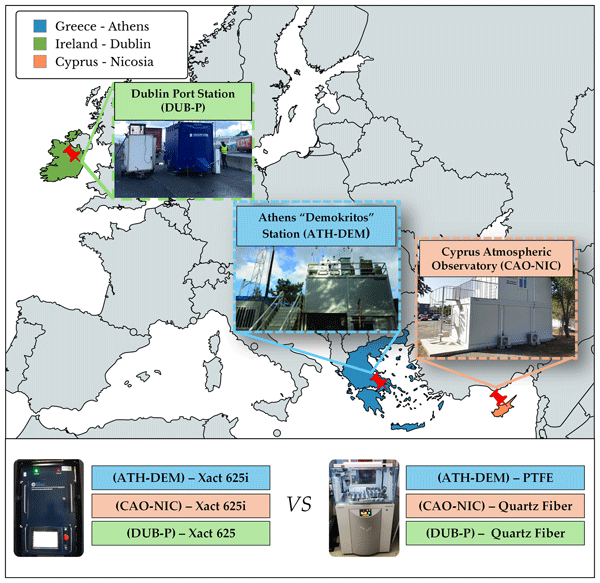
We compared near real-time and benchtop XRF spectrometers measuring trace elements in airborne particles across three European cities. Results show filter material dictates accuracy: Teflon yielded strong inter-instrument agreement, while quartz caused systematic attenuation errors for light elements. Because empirical corrections left residual biases, using optimal substrates—preferably Teflon—is essential for accurately tracking pollution sources.
Interactive discussion
Status: closed
-
RC1: 'Comment on egusphere-2025-5977', Anonymous Referee #1, 13 Feb 2026
-
AC1: 'Reply on RC1', Stefanos Papagiannis, 06 Apr 2026
Itemized Reply for Reviewers
Manuscript No: egusphere-2025-5977, “Near Real-Time & Benchtop XRF Intercomparison for PM Elemental Analysis on Quartz and Teflon Filters: A Case Study Across Three European Cities"
We would like to thank the reviewers for dedicating their time and expertise to reviewing our manuscript, "Near Real-Time & Benchtop XRF Intercomparison for PM Elemental Analysis on Quartz and Teflon Filters: A Case Study Across Three European Cities" (egusphere-2025-5977). Their insightful and highly constructive comments have been invaluable in clarifying our methodology, strengthening our discussion on instrumental and substrate-related discrepancies, and ultimately improving the overall scientific quality of our paper.
We have carefully considered all the comments raised. In the following pages, you will find our point-by-point responses to each specific comment, along with the corresponding revisions made to the manuscript text. For clarity, the reviewers' comments are provided first, followed by our detailed responses and the exact changes incorporated into the revised text.
Sincerely,
Stefanos Papagiannis, Manousos I. Manousakas, Dimitrios F. Anagnostopoulos, Michael Pikridas, Rima Baalbaki, Jean Sciare, Niall O'Sullivan, Stig Hellebust, John Wenger, Kirsten N. Fossum, Jurgita Ovadnevaite, Anja Tremper, David Green, Konstantinos Eleftheriadis, and Evangelia Diapouli
Reviewer #1
Comment 1:
Lines 25-26. Here it is reported only 14 elements even if in the methodology it is reported that both the benchtop XRF and the Xact were calibrated with a significantly larger number of elements. In addition, there is not even a case in which all 14 elements are compared. The choice of the elements investigated should be discussed in more details and explained the reasons for certain choices. For example, Al is never considered, not even for Teflon substrates, even if this an element measurable with XRF and one of the forces of XRF compared to ICP for example. It is not reported because not reliably measurable by the Xact?
Answer:
We agree with the reviewer that the selection criteria for the elements needed further clarification. As we have now detailed in the revised Section 3.2, an element was only included in the intercomparison analysis if its measured concentrations were consistently above the LOQ for both the benchtop ED-XRF and the respective Xact instrument. Consequently, not all 14 elements are compared at every site, as local ambient concentrations often fell below the detection capabilities of one or both instruments.
Regarding Aluminum (Al) specifically, its exclusion is indeed related to the instrument's performance, precisely as the reviewer suspected. The Xact system has limited reliability in measuring Al due to an internal collimator made of Al; variable X-ray scattering off this collimator creates an unstable background for this specific element. For all other unlisted elements calibrated on the instruments, they were excluded simply because they did not meet the mutual >LOQ threshold during the specific measurement periods. We have updated Section 3.2 extensively to explain this methodology and the specific exclusion of Al.
Revised Paragraph 2 of Section 3.2 to: “Building on this, the following inclusion criterion was applied to select the final suite of elements evaluated for each site: an element was only included in the intercomparison analysis if its measured concentrations were consistently above the LOQ for both the benchtop ED-XRF and the respective Xact instrument. Consequently, the specific elements reported vary by measurement site depending on local atmospheric concentrations and the instrumental detection limits. If an element is reported for one site but excluded from another, it indicates that ambient concentrations at the excluded site fell predominantly below the detection capabilities of either the benchtop or the NRT-XRF system. This methodology directly explains why a larger number of elements are evaluated for the CAO-NIC station compared to ATH-DEM and DUB-P; the ambient aerosol mass loadings and elemental profile at CAO-NIC simply yielded a broader range of elements that successfully met this mutual >LOQ threshold. Furthermore, Aluminum (Al) was explicitly excluded from all intercomparisons due to known hardware-related interferences in the NRT-XRF systems, which create an unstable background and limit reliable quantification for this specific element.
Comment 2:
Lines 28. “for most elements”, actually it is reported only for 8 elements.
Answer:
Revised the sentence to: "with slopes across the evaluated elements generally remaining closer to unity compared to the quartz substrates."
Comment 3:
Lines 33-34. Not really clear if this can be achieved form this paper because this may be done comparing measurements on the two substrates with the same instrument and this was not really done systematically.
Answer:
We thank the reviewer for pointing out this statement. The reviewer is correct that a systematic evaluation of filter-related artifacts would require comparing measurements on both substrates using the same instrument, which is not the possible in this study since the Xact monitors operate only with a Teflon tape. Our intent was to emphasize how the choice of filter substrate significantly impacts the intercomparison and comparability between near real-time and benchtop XRF systems. We have revised this sentence in the text to accurately reflect this, removing the claim of demonstrating a systematic mitigation approach and instead focusing on the influence of the substrate on measurement consistency.
Revised the last sentence of the Abstract to: “Overall, this study not only evaluates instrument performance across multiple environments but also highlights how filter substrate selection impacts the comparability of these techniques, emphasizing the need for substrate-specific considerations to enhance consistency in elemental aerosol measurements.”
Comment 4:
Lines 48-54. I would suggest a revision of these sentences mentioning that coal burning, especially in power plants, has been shown to have distinctive Al and Si content (Cesari et al., 2016. Atmospheric Research 182, 282-293) rather than Cl and Br that are often related to sea spray especially near the coasts.
Answer:
We thank the reviewer for pointing out this distinction. We opted to remove the part about Coal Buring entirely.
Comment 5:
Lines 61: Greater than what? It does not seem that Xact have greater precision or identify a larger number of elements. Probably you are referring to the time resolution.
Answer:
We agree with the reviewer. The statement was intended to refer specifically to the greater time resolution provided by the continuous monitors, rather than their precision or the number of elements identified. We have corrected the text to clarify this point.
Line 69: Changed the word precision with " time resolution".
Comment 6:
Lines 69-72: This is interesting but from this work it is not clear if this replacement is actually possible. A comment on this in the conclusions is needed.
Answer:
After a careful examination of the revised manuscript, we opted to avoid using sentences about replacement of methodologies. Therefore, that sentence was completely removed.
Comment 7:
Lines 140 -168: Section 2.2.1. The LODs of several elements, especially when using quartz, are not actually due to the measured of a blank rather, to their variability (i.e. three times standard deviation of concentrations measured on blanks of similar). My question here is if the measurements shown are reported correcting for blanks or not. Furthermore, it is reported a LOD also for Si on quartz. Do you believe that this element can be measured on such substrate if concentrations are larger than LOD? I am not convinced at all of this and results are not reported for this element so why to report a LOD?
Answer:
First, we confirm that all final elemental concentrations reported in this study were indeed blank-corrected; the elemental intensities measured on the corresponding blank filters were subtracted from the ambient sample measurements prior to the intercomparison analysis. Second, regarding the Limits of Detection (LoDs), the values reported are instrumental limits calculated strictly using the standard Eq (1), rather than being derived from the 3σ standard deviation of multiple blank filter concentrations. Finally, we entirely agree with the reviewer regarding Silicon (Si) on quartz substrates. Because the quartz matrix (SiO2) produces a massive intrinsic Si background, quantifying ambient aerosol Si is unfeasible, rendering the mathematically calculated instrumental LoD physically meaningless in this context.
- We have removed the Si LoD for quartz substrates from all relevant graphs and supplementary tables to prevent any confusion.
- Revised Line 177: "Prior to the final quantitative intercomparison, all reported ambient sample concentrations were blank-corrected by subtracting the average elemental concentrations measured on the corresponding field blank filters.
Revised Line 184: “However, because the quartz matrix (SiO₂) produces a massive intrinsic Si background, quantifying ambient aerosol Si on these substrates is unfeasible. Consequently, the mathematically calculated instrumental LoD for Si on quartz is considered physically meaningless in this context and has been excluded from all relevant figures and tables.
Comment 8:
Lines 215-219: Yes, light elements are less easily measurable on quartz. However, some benchtop XRF can do this al least for Na, Al, and Mg like, for example, in Potì et al. (2025, Science of the Total Environment 976, 179283). In my opinion, the part should be explained better because it could be a limitation related to the specific instruments used. Even if XAct should be able to measure Al.
Answer:
We thank the reviewer for the technical question regarding ED-XRF measurements on light elements. While we acknowledge that modern spectrometers may detect spectral peaks for light elements like Na, Mg, and Al on quartz substrates under certain high-loading conditions, our text refers to the inherent physical limitations of accurate quantification, not mere instrumental detection limits. The fundamental physics of X-ray spectrometry dictate that low-energy fluorescent X-rays suffer massive attenuation when escaping from within a thick, porous SiO₂ matrix. Consequently, even if an instrument detects these elements, the required attenuation correction factors are exceptionally large and highly uncertain due to batch-to-batch variations in quartz filter thickness and unpredictable particle penetration depths.
This is not a limitation of our specific instrument, but a widely recognized matrix effect. To underscore this, the official ACTRIS standard procedures for aerosol in-situ measurements (January 2024) explicitly recommend thin PTFE filters for XRF to avoid these exact background and attenuation issues, stating unequivocally regarding elemental mass concentration (EMC2): "The use of quartz fiber filters is allowed only for ICP measurements." We have revised the manuscript to clarify that this is a fundamental physical and methodological limitation, and we have included the ACTRIS guidelines as an authoritative reference.
The 3rd paragraph at section 3.1 was revised to: "When using quartz fiber filters, severe attenuation effects impact the measurement of light elements by weakening low-energy X-rays. Aerosol particles that penetrate the porous quartz matrix experience significant filter attenuation, as the emitted low-energy X-rays are absorbed by the thick filter material before escaping. Additionally, the massive Si matrix from quartz fiber filters not only hinders the precise measurement of lighter elements (Na, Mg, and Al) but also significantly enhances the spectral background and peak overlaps. This fundamental physical limitation further complicates the detection and reliable quantification of these elements, reducing measurement accuracy and sensitivity regardless of the spectrometer's intrinsic capabilities. Because of these severe matrix effects and batch-to-batch filter variations, performing accurate ED-XRF quantification of the lightest elements on quartz substrates requires massive correction factors and is generally considered non-standard. In fact, the recent ACTRIS/GAW standard procedures for aerosol in-situ measurements (CAIS-ECAC: ACTRIS, 2024) explicitly recommend thin PTFE or polycarbonate filters for XRF, stipulating that quartz fiber filters should be restricted to destructive inductively coupled plasma (ICP) measurements."
Comment 9:
Lines 235 and 255: Table 1 and Fig.3. It should be better to show in the figure all 8 elements. In addition, if the fits are done forcing through the origin, the R2 loose its usual meaning and it could be better to report the Pearson coefficient or the square of the Pearson coefficients.
Answer:
We thank the reviewer for the suggestion to include scatter plots for all nine elements. However, we feel that adding five more panels would significantly expand Figure 3, potentially obscuring the main analytical story we wish to convey. We strategically selected two light elements (S and K) to provide robust visual evidence of the massive substrate-induced attenuation (slopes of 1.87 and 1.51), and two heavier elements (Ca and Fe) to clearly demonstrate that the filter matrix effect disappears with increasing atomic number (slopes close to 1:1). We feel this balanced selection efficiently provides the critical evidence while maintaining figure readability.
The full dataset is summarized in Table 1 with the added R2 and values and pair of samples above LoQ as suggested by reviewer 2.
Comment 10:
General Comment: The analysis of the effects of thickness is interesting. However, no comparison with the slopes. mentioned before is reported. How these values agree with your intercomp quartz-teflon?
Answer:
We thank the reviewer for this question, which allows us to further strengthen the connection between our theoretical and empirical findings. The reviewer is correct that an explicit comparison highlights the robustness of the study. The XMI-MSIM simulations predicted that attenuation severity follows the order S > Cl > K. This theoretical behavior aligns with our empirically derived correction factors (slopes) from Table 1, where Sulfur required the largest correction (1.87), followed by Chlorine (1.51) and Potassium (1.48).
Comment 11:
General Comment: It is mentioned that on quartz only three elements were corrected because the other slopes were similar to one. What about the slopes of the elements not checked but reported in table 2?
Answer:
We thank the reviewer for the question. It is important to distinguish between signal loss due to filter substrate attenuation and systematic differences arising from instrumental calibration. As demonstrated in our dedicated intercomparison (Table 1), elements with atomic numbers equal to or greater than Calcium (Ca, Z=20) emit higher-energy X-rays that do not suffer significant attenuation within the quartz matrix, yielding slopes close to 1.0. Consequently, no physical substrate correction factors are mathematically justified or applied for these heavier elements. The varying slopes reported for the heavier, uncorrected elements in Table 2 (e.g., Sr, Pb, V, Mn) do not result from filter attenuation; rather, they reflect expected systematic calibration and geometric differences between the specific Xact 625i and benchtop ED-XRF instruments.
Comment 12:
Line 338: Actually not most elements but for some that have been compared.
Answer:
The reviewer makes a valid point regarding the precision of our language. We agree that stating the instruments produced consistent measurements across "most elements” is an overgeneralization, as our analysis is limited only to the specific subset of elements that were present above the limits of quantification during the campaign. We have corrected this phrasing in Section 3.3 to accurately state that consistency was observed across "the evaluated elements. Changed phrasing at line 388 to: "across the elements evaluated in this study".
Comment 13:
Line 440: Conclusions. Some conclusions on the reliability of XAct should be reported as a summary comment to help in understand if it can replace benchtop instruments in the future.
Answer:
We appreciate the reviewer’s suggestion to explicitly address the reliability and future role of the Xact monitors. We have added a concluding statement to the manuscript emphasizing that NRT-XRF systems are highly reliable, state-of-the-art instruments that excel at capturing high-resolution elemental dynamics. However, we explicitly clarify that they cannot replace benchtop instruments. As we now note in the text, NRT systems are not designed to operate as routine offline analyzers; although they can be used this way for a limited number of filters, routine operation is extremely time-consuming and practically unfeasible. Because the specific analytical needs addressed by each instrument category are fundamentally different, they serve as powerful complementary tools rather than substitutes.
Added a closing statement at Line 559: "Ultimately, this study confirms that near real-time XRF monitors (like the Xact 625i) are highly reliable, state-of-the-art instruments capable of capturing high-resolution temporal dynamics. However, they are not designed to replace traditional filter-based benchtop systems. While NRT monitors can technically be adapted to analyze offline filters for a limited number of measurements, routine operation in this manner is extremely time-consuming and practically unfeasible. The two instrument categories address fundamentally different analytical needs; offline analysis remains indispensable for high-throughput sample processing, physical sample archiving, and multi-technique chemical characterization. Therefore, working in tandem with NRT systems—rather than viewing one as a substitute for the other—allows for a highly comprehensive and robust understanding of ambient aerosol elemental composition.”
Citation: https://doi.org/10.5194/egusphere-2025-5977-AC1
-
AC1: 'Reply on RC1', Stefanos Papagiannis, 06 Apr 2026
-
RC2: 'Comment on egusphere-2025-5977', Anonymous Referee #2, 18 Mar 2026
Referee’s comments on the manuscript “Near Real-Time & Benchtop XRF Intercomparison for PM Elemental Analysis on Quartz and Teflon Filters: A Case Study Across Three European Cities” by the authors Stefanos Papagiannis, Manousos I. Manousakas, Dimitrios F. Anagnostopoulos, Michael Pipkridas, Rima Baalbaki, Jean Sciare, Niall O'Sullivan, Stig Hellebust, John Wenger, Kirsten N. Fossum, Jurgita Ovadnevaite, Anja Tremper, David Green, Konstantinos Eleftheriadis, and Evangelia Diapouli.
The present study focuses on the intercomparison between near real-time XRF monitors (Xact 625 and Xact 625i) and a benchtop XRF spectrometer. The study includes measurements across three locations (Athens, Nicosia, and Dublin) in the PM2.5 size fraction.
The study also investigates the effect of different filter substrates used for XRF analyses (Teflon vs Quartz). For this purpose, a dedicated measurement campaign was conducted using daily PM10 samples in Athens. The resulting data were used to derive correction factors, which enabled the comparison between Xact measurements and daily measurements obtained from quartz filters in Nicosia and Dublin.
Given the increasing use of NRT-XRF spectrometers, studies aimed at characterizing their response compared to more traditional benchtop systems are particularly important. In the Referee’s opinion, the manuscript can be considered for publication only after the authors address the following major revisions.
General comments
- The introduction would benefit from a clearer contextualization of ED-XRF among the techniques used to determine the elemental composition of particulate matter, briefly mentioning other commonly used methods such as ICP-MS and PIXE. In addition, the differences between offline (benchtop) and online (in situ) ED-XRF measurements should be better explained. For example, the higher temporal resolution of online measurements often results in lower collected mass and concentrations closer to the detection limits.
- Different Xact models (625 and 625i) are used in this study. In a dedicated paragraph, the authors should provide a clear description of these instruments, underlining the differences between the two models.
- In Section 2.1, the sampling campaigns are described only focusing on the offline filter samples which were subsequently analysed with the benchtop XRF system. However, additional information (which are now briefly explained in Section 2.2.2) should be provided regarding the sampling campaigns with the Xact systems. For each location, the authors should specify the measurement period with the Xact, the sampled size fraction, the total number of hourly samples collected, and the Xact model used.
- In Section 3, the authors should clearly explain, for each site, the criteria used to select the elements included in each intercomparison analysis. In addition, it is not clear why a larger number of elements are considered for the CAO–NIC station compared to the other sites.
- The authors discuss the limits of detection and quantification in detail, for both benchtop and NRT XRF systems, but it is not clear how the measured concentrations at each site relate to these values. It would be useful to include a table reporting, for each site and each element, the number of samples with concentrations above the limit of quantification relative to the total number of samples collected. The authors should also comment on the content of this table in a dedicated paragraph. This would help the reader better assess the robustness and representativeness of the dataset.
Specific comments
- Page 1, lines 24-25. The authors state that the focus of the manuscript is the evaluation of the chemical composition of particulate matter. However, the study concerns the elemental composition, and the main emphasis seems to be the comparison between near real-time and benchtop XRF systems and the effect of filter substrate choice. The sentence should be revised accordingly.
- Page 2, line 60. When discussing NRT-XRF instruments, the authors mention only the Xact 625 and Xact 625i. However, other systems are available and should be mentioned, such as the Horiba PX-375 monitor.
- Page 2, lines 62-63. The authors state that the Xact systems allow for an “automated sampling of both PM10 and PM2.5”. According to the cited reference, the measurement of different size fractions (e.g., PM10 and PM2.5) with the Xact monitor is achieved using a switching inlet system. However, this configuration is not a standard feature of all Xact 625 instruments. The authors should clarify this aspect.
- Page 3, line 68. The authors mention that an “earlier” version of the Xact625i was used in the cited study. The authors should clarify what relevant differences exist between that version and the instrument considered in the manuscript.
- Page 3, lines 72-76, 87. The authors should specify that, while different substrates can be selected for PM sampling prior to benchtop ED-XRF analysis, Xact monitors only operate with Teflon filter tape. The authors should clarify that the choice of the filter substrate only concerns the comparison between Xact and offline systems, and not the Xact measurements themselves.
- Page 4, line 120. The sentence appears to be incomplete and should be revised.
- Page 5, Section 2.2.1. It is not clear whether the same benchtop ED-XRF system was used to analyse all the offline filters collected at all three sites. If so, the authors should specify in which laboratory the instrument is located.
- Page 6, lines 166-167. The authors state that daily checks with PTFE filters are performed on the benchtop XRF system for QA/QC checks. What about checks with quartz blanks? Were the blanks of the quartz filters measured? If so, were blank values subtracted when calculating the concentrations from the filter analyses in Section 3?
- Page 6, lines 175-176. The authors should provide a clearer description of the Xact operating cycle, particularly the sequence between the sampling and XRF-analysis.
- Page 6, lines 180-181. It appears that two different Xact 625i instruments were used in Athens and Nicosia. If so, this should be more clearly stated, and the authors should clarify whether there are any relevant differences between the two instruments.
- Page 7, lines 182-185. It is not clear whether the limits of detection of the Xact monitors were determined by the authors or if the values reported by the manufacturer were used.
- Page 8, Section 3.1. The authors should clarify why, in the intercomparison campaign dedicated to PTFE and quartz filters, the only elements considered were S, Cl, K, Ca, Ti, Fe, Ni, Cu, and Zn. Why elements such as V, Mn, Sr, Pb (which are listed in Table 2) were excluded?
- Page 8, lines 226-227. The authors state that the fine mode of K, linked to biomass burning, remains the dominant one. This statement may be valid during the winter season and at sites where biomass burning is the main source of K but may not hold true during the summer season or at sites affected by local dust resuspension or by Saharan dust transport. Therefore, the campaign conducted in Cyprus (CAO-NIC) may also be influenced by these effects and the correction factors derived afterwards may not be fully appropriate for this site. Do the authors have any references regarding the typical modes of K at the measurement sites?
- Page 8, line 228. The authors state that linear regressions through the origin were performed. The authors should report whether the intercepts were statistically compatible with zero before forcing the regression through the origin and report their values. Otherwise, constraining the regression to pass through zero may not be justified.
- Page 9, Table 1. R2 values should be added to the table. The table caption would benefit from a more detailed description, including the number of samples considered, the size fraction, and location of the sampling campaign.
- Page 10, lines 260-262. Were the results obtained from the code simulations subsequently used to derive the correction factors in the following part of the manuscript?
- Page 10, Figure 3. Looking at the K plot, most of the points appear to lie outside the confidence band around the regression line. The authors should perform an appropriate statistical test to evaluate whether the data are actually well described by the fitted regression line. Moreover, the figure caption would benefit from a more detailed description, including the measurement campaign to which the data refer.
- Page 11, line 281. For clarity, the authors should specify to which sampling campaign and location the data refer.
- Page 12, Table 2. The table would benefit from an additional line specifying the filter substrates being compared.
- Page 12, lines 291-292. The authors refer to the Si regression line as a “strong agreement between the instruments”. However, the regression line is based on only four data points, which is not statistically robust. Therefore, the authors should interpret this result with greater caution and consider rephrasing their statement.
- Page 12, lines 295-296. The authors claim that Cl shows a “strong correlation”. However, looking at the Cl scatterplot in Figure S1, most of the data points at very low concentrations do not appear to lie on the regression line. In addition, the regression itself seems to be strongly influenced by the presence of an outlier. Since it is well known that outliers can significantly affect correlation analyses, the authors are encouraged to repeat the regression excluding the outlier and discuss its impact on the results.
- Page 4 Supplementary Information, Figure S1. Also considering the Ca scatterplot, the regression appears to be influenced by the presence of an outlier. It would be helpful if the authors could repeat the regression analysis without this point and discuss its impact on the results.
- Page 12, lines 298-299. Since the Fe slope is 0.66, indicating a substantial deviation from unity, the use of the term “strong agreement” to describe Fe appears inappropriate. The authors are encouraged to rephrase this statement.
- Page 14, lines 329-333. The authors state that the applied corrections have substantially improved the correlations. While this appears to be the case for K, it is less evident for S (R² = 0.49) and especially for Cl. The authors should therefore acknowledge that significant discrepancies still remain and moderate their statement accordingly.
- Page 8 Supplementary Information, Figure S5. Considering Cu and Sr scatterplots, the regressions appear to be strongly influenced by the presence of an outlier. The authors should repeat the regression analysis without this point and discuss its impact on the results.
- Page 16, lines 360- 367. The authors should better highlight and discuss those elements for which the correlation coefficients are low, such as Fe, Ca, and K. Possible reasons for these discrepancies should be explored and commented on. In addition, Figure S4 suggests the presence of a clear bias in the K measurements, which should be explicitly discussed by the authors.
- Page 16, line 363. The authors should avoid using the term “excellent”, as the slope is not compatible with unity.
- Page 18, line 388. Please add range (min-max) for R2
- Page 18, lines 396-400. The cited study (Cadeo et al., 2025) used mixed cellulose ester membrane filters, not Teflon filters. While these are also membrane filters, similar to Teflon, the authors should clarify this distinction.
- Page 18, lines 397-398. In this campaign, only 8 elements were considered, whereas the cited article included 16. What about the other elements? The authors should explain the rationale behind their exclusion.
- Page 18, line 399. Xact works only with Teflon filter tape as substrate. The authors should specify that is the intercomparison between Xact measurements and offline XRF measurements which performs better when Teflon filters are used for offline sampling.
- Page 19, lines 405-409. A possible explanation for the observed differences could be related to blank contribution in quartz filters, which can vary significantly from filter to filter. The authors are encouraged to clarify whether field and/or laboratory blanks were measured, whether blank subtraction was performed, and whether the variability of the blanks was evaluated.A more thorough discussion of these aspects is needed to better support the interpretation of the results.
- Page 21, lines 457-458. Have the authors considered potential line interferences between Pb and As as a possible explanation for the suboptimal quantification of Pb?
Technical corrections
- Page 1, line 23: please revise “March-January 2023” to “March 2022-January 2023” to be consistent with what is stated on page 4, line 123.
- Page 2, line 55: “clearly” should be changed to “consequently”
- Page 5, line 135: please revise “ -18°C. until” to “ -18°C until”
- Supplementary Information, Figures S6-S7. The authors are encouraged to change the colour used for the Xact data in these supplementary plots, as the white markers are difficult to see.
Citation: https://doi.org/10.5194/egusphere-2025-5977-RC2 -
AC2: 'Reply on RC2', Stefanos Papagiannis, 06 Apr 2026
Itemized Reply for Reviewers
Manuscript No: egusphere-2025-5977, “Near Real-Time & Benchtop XRF Intercomparison for PM Elemental Analysis on Quartz and Teflon Filters: A Case Study Across Three European Cities"
We would like to thank the reviewers for dedicating their time and expertise to reviewing our manuscript, "Near Real-Time & Benchtop XRF Intercomparison for PM Elemental Analysis on Quartz and Teflon Filters: A Case Study Across Three European Cities" (egusphere-2025-5977). Their insightful and highly constructive comments have been invaluable in clarifying our methodology, strengthening our discussion on instrumental and substrate-related discrepancies, and ultimately improving the overall scientific quality of our paper.
We have carefully considered all the comments raised. In the following pages, you will find our point-by-point responses to each specific comment, along with the corresponding revisions made to the manuscript text. For clarity, the reviewers' comments are provided first, followed by our detailed responses and the exact changes incorporated into the revised text.
Sincerely,
Stefanos Papagiannis, Manousos I. Manousakas, Dimitrios F. Anagnostopoulos, Michael Pikridas, Rima Baalbaki, Jean Sciare, Niall O'Sullivan, Stig Hellebust, John Wenger, Kirsten N. Fossum, Jurgita Ovadnevaite, Anja Tremper, David Green, Konstantinos Eleftheriadis, and Evangelia Diapouli
Reviewer #2:
Comment 1:
General Comment: The introduction would benefit from a clearer contextualization of ED-XRF among the techniques used to determine the elemental composition of particulate matter, briefly mentioning other commonly used methods such as ICP-MS and PIXE. In addition, the differences between offline (benchtop) and online (in situ) ED-XRF measurements should be better explained. For example, the higher temporal resolution of online measurements often results in lower collected mass and concentrations closer to the detection limits.
Answer:
We fully agree with the reviewer's suggestion. Contextualizing ED-XRF alongside other established analytical techniques (such as ICP-MS and PIXE) and explicitly discussing the inherent trade-offs between temporal resolution, mass loading, and detection limits provides a much stronger foundation for the Introduction. We have revised the text to incorporate these points clearly.
Revised in Line 59: "Traditionally, this elemental characterization has relied on laboratory-based, offline techniques such as Inductively Coupled Plasma Mass Spectrometry (ICP-MS), Particle Induced X-ray Emission (PIXE), and benchtop ED-XRF. While ICP-MS offers high sensitivity, it involves destructive and time-consuming sample preparation, whereas PIXE and benchtop ED-XRF provide non-destructive alternatives."
Revised in Line 71: "However, a critical difference between offline benchtop and online in-situ ED-XRF measurements is the trade-off between time resolution and mass loading. The higher temporal resolution of NRT-XRF inherently results in lower collected PM mass per sample. Consequently, online measurements must frequently contend with elemental concentrations that are much closer to the instrumental detection limits compared to traditional 24-hour offline samples."
Comment 2:
General Comment: Different Xact models (625 and 625i) are used in this study. In a dedicated paragraph, the authors should provide a clear description of these instruments, underlining the differences between the two models.
Answer:
We agree with the reviewer that a clearer distinction between the two Xact models was necessary for context. We have revised Section 2.2.2 to include a dedicated paragraph that explicitly describes the hardware, analytical scope, and internal calibration differences between the older Xact 625 and the newer Xact 625i.
Revised Section 2.2.2 (Line 212): "While sharing the same core analytical principles, the Xact 625 and Xact 625i represent different generations of the technology, leading to several operational and hardware differences. The Xact 625 is the earlier model, whereas the Xact 625i is an upgraded version with expanded capabilities. A primary difference lies in their analytical scope: the older Xact 625 deployed in Dublin (16 December 2022–7 February 2023) was configured to report up to 23 elements (Si–Pb), while the newer Xact 625i instruments in Athens (5–25 March 2024) and Nicosia (18 March 2022–17 January 2023) measured up to 35 elements (Al–Pb), reflecting the 625i's expanded hardware capability. Furthermore, the internal calibration standards differ between the two; the Xact 625 uses Palladium (Pd) as its internal calibration standard, whereas the Xact 625i uses Niobium (Nb).”
Comment 3:
General Comment: In Section 2.1, the sampling campaigns are described only focusing on the offline filter samples which were subsequently analyzed with the benchtop XRF system. However, additional information (which are now briefly explained in Section 2.2.2) should be provided regarding the sampling campaigns with the Xact systems. For each location, the authors should specify the measurement period with the Xact, the sampled size fraction, the total number of hourly samples collected, and the Xact model used.
Answer:
We agree with the reviewer that integrating the Xact sampling campaign details directly into Section 2.1 greatly improves the clarity and completeness of the methodology. We have updated the site descriptions for all three locations to explicitly state the Xact model used, the sampled size fraction (PM2.5), the precise measurement periods, and the total number of hourly samples collected during each campaign.
- Revised Line 119: "Concurrently with the offline filter sampling, near real-time PM2.5 elemental concentrations were measured continuously using an Xact 625i spectrometer. Over this same period (March 5 to March 25, 2024), the instrument collected a total of 498 hourly samples."
- Revised Line 143: "Alongside the offline filter collection, an Xact 625i spectrometer was deployed to monitor near real-time PM2.5 elemental composition. During the full measurement period from March 18, 2022, to January 17, 2023, the Xact 625i successfully collected and analyzed 6554 hourly samples."
Revised Line 155: "In parallel with the high-volume sampling, near real-time PM2.5 elemental measurements were conducted using an Xact 625 spectrometer. Throughout the campaign period (16 December 2022 to 7 February 2023), the instrument collected a total of 1887 hourly samples."
Comment 4:
General Comment: In Section 3, the authors should clearly explain, for each site, the criteria used to select the elements included in each intercomparison analysis. In addition, it is not clear why a larger number of elements are considered for the CAO–NIC station compared to the other sites.
Answer:
We agree with the reviewer that the criteria for selecting the elements for each site needed clearer explanation. We have now explicitly detailed in Section 3 that an element was only included in the intercomparison if its measured ambient concentrations were consistently above the Limit of Quantification (LOQ) for both the benchtop and the Xact instruments. This naturally clarifies why the CAO-NIC station, with its specific local aerosol profile, yielded a broader range of evaluated elements compared to the other sites.
Revised Line 332: “Building on this, the following inclusion criterion was applied to select the final suite of elements evaluated for each site: an element was only included in the intercomparison analysis if its measured concentrations were consistently above the LOQ for both the benchtop ED-XRF and the respective Xact instrument. Consequently, the specific elements reported vary by measurement site depending on local atmospheric concentrations and the instrumental detection limits. If an element is reported for one site but excluded from another, it indicates that ambient concentrations at the excluded site fell predominantly below the detection capabilities of either the benchtop or the NRT-XRF system. This methodology directly explains why a larger number of elements are evaluated for the CAO-NIC station compared to ATH-DEM and DUB-P; the ambient aerosol mass loadings and elemental profile at CAO-NIC simply yielded a broader range of elements that successfully met this mutual >LOQ threshold.”
Comment 5:
General Comment: The authors discuss the limits of detection and quantification in detail, for both benchtop and NRT XRF systems, but it is not clear how the measured concentrations at each site relate to these values. It would be useful to include a table reporting, for each site and each element, the number of samples with concentrations above the limit of quantification relative to the total number of samples collected. The authors should also comment on the content of this table in a dedicated paragraph. This would help the reader better assess the robustness and representativeness of the dataset.
Answer:
We thank the reviewer for this suggestion. We agree that detailing the >LOQ detection frequencies provides valuable context regarding the robustness and representativeness of the dataset. To avoid disrupting the flow of the main text, we have compiled this dataset into a new supplementary table (Table S3). Furthermore, we have added a dedicated paragraph to Section 3.2 summarizing these findings, explicitly discussing how the high detection frequencies for major elements confirm the robustness of our regressions, and highlighting the comparative sensitivities of the two instruments for trace and light elements.
Added a final paragraph in section 3.2: " To further assess the robustness and representativeness of the dataset, the number of samples with concentrations above the limit of quantification (>LOQ) relative to the total number of samples was evaluated for each site, instrument, and element (detailed in Table S3). For major elements such as sulfur (S), potassium (K), and iron (Fe), both the benchtop ED-XRF and the continuous Xact monitors achieved near 100% detection rates across all three campaigns, ensuring highly robust datasets for the subsequent regression analyses. Notably, for several trace metals, the Xact monitors successfully quantified a substantially higher number of samples >LOQ compared to the benchtop system. For instance, at the CAO-NIC site (out of 256 total pairs), the Xact 625i detected titanium (Ti) in 255 samples versus 128 for the benchtop, manganese (Mn) in 154 versus 66, and copper (Cu) in 146 versus 75. Similarly, at the DUB-P site (out of 50 total pairs), the Xact 625 quantified vanadium (V) in 46 samples compared to 23 for the benchtop, and nickel (Ni) in 49 compared to 30, highlighting the high sensitivity of the continuous monitors for these specific trace elements. Conversely, the benchtop ED-XRF demonstrated superior sensitivity for very light elements, as evidenced at the ATH-DEM site (out of 21 total pairs) where it successfully quantified silicon (Si) in all 21 samples, whereas the Xact 625i exceeded the LOQ in only 4 instances. "
Table S3: Summary of the number of samples with measured elemental concentrations above the limit of quantification (>LOQ) relative to the total number of paired samples collected at the ATH-DEM, CAO-NIC, and DUB-P monitoring sites.
Ath-DEM (21 pairs total)
CAO NIC (256 pairs total)
DUB P (50 pairs total)
Element
Benchtop ED-XRF
Xact 625i
Benchtop ED-XRF
Xact 625i
Benchtop ED-XRF
Xact 625
Si
21
4
S
21
21
256
256
50
50
Cl
10
18
177
210
49
50
K
21
21
256
256
50
50
Ca
21
21
256
256
37
50
Ti
6
21
128
255
V
23
46
Mn
66
154
Fe
21
21
255
255
46
50
Ni
30
49
Cu
75
146
Zn
21
21
243
256
27
50
Sr
21
38
Pb
76
126
Comment 6:
Lines 24-25: The authors state that the focus of the manuscript is the evaluation of the chemical composition of particulate matter. However, the study concerns the elemental composition, and the main emphasis seems to be the comparison between near real-time and benchtop XRF systems and the effect of filter substrate choice. The sentence should be revised accordingly.
Answer:
We thank the reviewer for pointing out this important distinction. We agree that "elemental composition" is the precise term for XRF analysis and that the text should clearly reflect the study's true emphasis on instrument intercomparison and filter substrate effects. We have revised the sentence accordingly.
Revised Line 24 to: “The primary focus was on comparing the performance of these near real-time and benchtop XRF systems for determining the elemental composition of particulate matter (PM), alongside evaluating the impact of filter substrate choice on measurement consistency.”
Comment 7:
Line 60: When discussing NRT-XRF instruments, the authors mention only the Xact 625 and Xact 625i. However, other systems are available and should be mentioned, such as the Horiba PX-375 monitor.
Answer:
We fully agree with the reviewer that acknowledging other commercially available NRT-XRF systems provides a more accurate overview of the current technological landscape. We have updated the introduction to explicitly mention alternative continuous monitors.
Revised Line 67 to: "...the PX-375 (Horiba) and the ElvaX PmX-5050 (Elvatech)..."
Comment 8:
Line 62-63: The authors state that the Xact systems allow for an “automated sampling of both PM10 and PM2.5”. According to the cited reference, the measurement of different size fractions (e.g., PM10 and PM2.5) with the Xact monitor is achieved using a switching inlet system. However, this configuration is not a standard feature of all Xact 625 instruments. The authors should clarify this aspect.
Answer:
We thank the reviewer for pointing out the technical distinction. We agree that the automated alternating sampling of PM10 and PM2.5 is not a standard out-of-the-box feature, but rather requires a specific optional switching inlet system. We have revised the sentence to accurately reflect this capability.
Revised Lines 69 and 70 to: “In addition, when equipped with an optional switching inlet system, those near real-time XRF spectrometers (NRT-XRF) also allow alternating automated sampling of both PM10 and PM2.5 which greatly enhances the information regarding aerosol composition (Furger et al., 2020).”
Comment 9:
Lines 76-76, 87: The authors should specify that, while different substrates can be selected for PM sampling prior to benchtop ED-XRF analysis, Xact monitors only operate with Teflon filter tape. The authors should clarify that the choice of the filter substrate only concerns the comparison between Xact and offline systems, and not the Xact measurements themselves.
Answer:
We thank the reviewer for pointing out this clarification. We agree that it is crucial to explicitly state that the Xact monitors operate exclusively with Teflon filter tape, and that the evaluation of different filter substrates applies solely to the offline sampling methodology prior to benchtop ED-XRF analysis. We have revised the text to ensure this distinction is perfectly clear.
Added in Line 84: "It is important to clarify that while NRT-XRF monitors like the Xact systems operate exclusively using continuous Teflon filter tape, offline sampling allows for different substrates to be selected prior to benchtop analysis. Consequently, the evaluation of filter choice in this study pertains specifically to the offline samples and how they compare against the standardized Teflon tape measurements of the Xact."
Added in Line 91: "...when comparing these offline measurements to the NRT-XRF data."
Comment 10:
Line 120: The sentence appears to be incomplete and should be revised.
Answer:
We thank the reviewer for noticing the error.
The sentence was revised to (Line 136): " PM2.5 particles were collected on 47-mm diameter quartz filters (Tissuquartz 2500QUAT-UP, Pall) at 10 m above ground level (AGL) using a Leckel SEQ47/50 sampler operating at a flow rate of 2.3 m³/h.”
Comment 11:
Page 5, Section 2.2.1.: It is not clear whether the same benchtop ED-XRF system was used to analyse all the offline filters collected at all three sites. If so, the authors should specify in which laboratory the instrument is located.
Answer:
We appreciate the opportunity to clarify this point. To ensure strict methodological consistency, all offline filters collected across the three measurement sites (Athens, Nicosia, and Dublin) were indeed transported to and analyzed using the exact same benchtop ED-XRF system. This instrument is located at the N.C.S.R. “Demokritos” campus in Athens, Greece. We have updated Section 2.2.1 to explicitly state the instrument's location and to emphasize that a single spectrometer was used for all offline sample analyses.
Revised Line 163 to: "All offline PM2.5 samples collected across the three measurement sites were analysed for major and trace elements using a single high-resolution energy-dispersive X-ray fluorescence (ED-XRF) spectrometer with advanced 3-D optics, the Epsilon 5 (PANalytical), located at the N.C.S.R. “Demokritos” campus in Athens, Greece."
Comment 12:
Lines 166-167.: The authors state that daily checks with PTFE filters are performed on the benchtop XRF system for QA/QC checks. What about checks with quartz blanks? Were the blanks of the quartz filters measured? If so, were blank values subtracted when calculating the concentrations from the filter analyses in Section 3?
Answer:
We thank the reviewer for this question. As detailed in our response to the previous comment (and now explicitly stated in Section 2.2.1), we confirm that all field blanks—including the quartz filters—were indeed measured, and their elemental intensities were subtracted from the respective ambient sample measurements prior to the final calculations. Regarding the daily QA/QC instrument checks, the primary goal is solely to assess instrumental drift over time. For this specific purpose, the exact nature of the substrate is largely irrelevant; the only requirement is to repeatedly measure a stable target with consistent concentrations. We simply utilized an available PTFE filter to serve as this constant reference point. Because the exact same physical filter is measured consistently every time, we can ensure that any observed variations are strictly due to the instrument itself rather than the substrate material. We have briefly clarified this in Section 2.2.1.
Revised Line 195: "For daily instrument stability QA/QC checks, a specific PTFE filter was repeatedly measured to assess instrumental drift over time, providing a constant reference point to monitor instrument performance."
Comment 13:
Lines 175-176.: The authors should provide a clearer description of the Xact operating cycle, particularly the sequence between the sampling and XRF-analysis.
Answer:
We agree with the reviewer that explicitly detailing the operational sequence provides necessary clarity on how the Xact achieves continuous near real-time analysis. We have expanded the description in the methodology section to clearly delineate the step-and-measure sequence between the physical sampling phase and the subsequent XRF irradiation phase.
Revised Line 204 to: “Specifically, the systems utilize a step-and-measure operating sequence: after particulate matter is collected on a distinct spot of the tape for one hour, the tape advances. This moves the newly collected sample directly under the X-ray tube for analysis, while simultaneously, the next hourly sample begins collection on the fresh section of tape now positioned at the sampling inlet. During each analysis cycle, the advanced sample is irradiated using a 50 kV, 50 W Rh-anode X-ray tube, and the resulting fluorescence is recorded by a silicon drift detector.”
Comment 14:
Lines 180-181.: It appears that two different Xact 625i instruments were used in Athens and Nicosia. If so, this should be more clearly stated, and the authors should clarify whether there are any relevant differences between the two instruments.
Answer:
We confirm that two separate Xact 625i units were deployed at the Athens and Nicosia sites. Because both units are the exact same model, there were no relevant hardware, firmware, or operational differences between them. Both instruments were configured identically to measure the same suite of 35 elements, and both were calibrated and operated following the exact same rigorous manufacturer protocols. We have explicitly clarified in Section 2.2.2 that two distinct, identically configured units were used. Please refer to the answer given on your General comment #2.
Comment 15:
Lines 182-185.: It is not clear whether the limits of detection of the Xact monitors were determined by the authors or if the values reported by the manufacturer were used.
Answer:
The reported limits of detection for the Xact monitors are values provided by the manufacturer.
Revised Line 228 to: …(as reported by the manufacturer).
Comment 16:
Section 3.1: The authors should clarify why, in the intercomparison campaign dedicated to PTFE and quartz filters, the only elements considered were S, Cl, K, Ca, Ti, Fe, Ni, Cu, and Zn. Why elements such as V, Mn, Sr, Pb (which are listed in Table 2) were excluded?
Answer:
We appreciate the reviewer pointing this out; it is a very fair observation. The reason only this specific subset of elements (S, Cl, K, Ca, Ti, Fe, Ni, Cu, Zn) was considered for the dedicated filter substrate comparison is that these were the only elements with ambient concentrations consistently above the Limit of Quantification (LOQ) during that specific brief campaign (January 13–31, 2024). Trace elements such as V, Mn, Sr, and Pb were excluded simply because they were below detection limits during those days. Importantly, the fundamental goal of this dedicated campaign was to empirically determine the self-absorption and matrix effects of the quartz substrate. Because these attenuation effects predominantly impact low-energy X-rays (lighter elements from Ca and below), capturing the behavior of low Z elements was our primary objective and was successfully achieved.
Revised Line 266 to: "The selection of elements for this specific substrate analysis was strictly limited to those with ambient concentrations consistently exceeding the limit of quantification (LOQ) on both filter types during the campaign period. Elements falling below this threshold were excluded to ensure the reliability of the derived regression slopes. Since substrate-induced X-ray attenuation predominantly impacts low-energy X-rays, the elements meeting this mutual >LOQ criterion provided sufficient data to fully evaluate the attenuation effects for lighter elements, which was the primary objective of this dedicated comparison. "
Comment 17:
Lines 226-227: The authors state that the fine mode of K, linked to biomass burning, remains the dominant one. This statement may be valid during the winter season and at sites where biomass burning is the main source of K but may not hold true during the summer season or at sites affected by local dust resuspension or by Saharan dust transport. Therefore, the campaign conducted in Cyprus (CAO-NIC) may also be influenced by these effects and the correction factors derived afterwards may not be fully appropriate for this site. Do the authors have any references regarding the typical modes of K at the measurement sites?
Answer:
We thank the reviewer for this insightful comment. We agree that Potassium (K) exhibits a bimodal distribution and that its coarse mode, driven by local soil resuspension and Saharan dust transport, is highly relevant in the Eastern Mediterranean. As the reviewer correctly implies, the PM2.5 size fraction does not exclusively isolate the fine mode; it also captures the lower aerodynamic tail of the coarse dust mode. Consequently, while K in our PM2.5 dataset is primarily linked to biomass burning, we recognize that this fraction exists without excluding some effect of dust (either local or transported).
However, local emissions from biomass burning remain the dominant contributor to the PM2.5 mass at this specific site during the relevant periods. Therefore, while we acknowledge the presence of dust-derived K in the PM2.5 fraction, the fine-mode combustion source is substantial. Applying attenuation correction factors oriented towards fine-mode aerosols represents the most robust practical approach for our dataset, though we fully agree with the reviewer that this introduces an added layer of uncertainty during periods heavily dominated by dust. We have revised the text to explicitly acknowledge the contribution of dust to K in the PM2.5 fraction and have adjusted our discussion accordingly.
Revised the 5th paragraph of section 3.1 to: "Although this comparison was performed on PM10 samples, it remains highly relevant to our PM2.5 dataset, as the elements most affected by attenuation — S, Cl, K—are primarily associated with fine fraction aerosols. Gini et al. (2022) reported that fine elemental Sulfur, mainly present as sulfate (SO₄²⁻), originates from anthropogenic sources and is predominantly found in the submicron range (0.1–1 µm). Similarly, potassium exhibits a bimodal distribution, while its coarse fraction is strongly influenced by local dust resuspension and Saharan dust transport—particularly in the Eastern Mediterranean—its fine fraction, linked to biomass burning, remains the dominant contributor to K in PM2.5."
Comment 18:
Lines 228: The authors state that linear regressions through the origin were performed. The authors should report whether the intercepts were statistically compatible with zero before forcing the regression through the origin and report their values. Otherwise, constraining the regression to pass through zero may not be justified.
Answer:
We appreciate the reviewer's attention for statistical analysis. Because all our measurements were strictly blank-corrected, theoretical expectations dictate a zero intercept (i.e., zero concentration on a quartz filter corresponds to zero concentration on a Teflon filter). We confirmed this statistically before applying the final correction factors. We performed standard ordinary least squares (OLS) regressions (y = mx + b) for the evaluated elements and evaluated the intercepts. Because the p-value is > 0.05, the intercept is statistically compatible with zero. This confirmation across our target elements fully justifies constraining the regressions through the origin to derive the most accurate physical attenuation correction factors. We have added a brief statement to the manuscript to clarify this preliminary statistical check.
Revised Line 278 to: " Prior to forcing the linear regressions through the origin to derive the correction factors, standard unforced regressions were evaluated. The resulting intercepts were confirmed to be statistically compatible with zero (p > 0.05), justifying the use of a zero-intercept model. "
Comment 19:
Table 1: R2 values should be added to the table. The table caption would benefit from a more detailed description, including the number of samples considered, the size fraction, and location of the sampling campaign.
Answer:
The R2 values were added to the table as the reviewer requested as well as the location of the sampling campaign and the number of pair of samples that were considered for the analysis.
Table 1: Linear regression slopes and R2 values for each element comparing Teflon and quartz fiber filters, from the measurement campaign (January 13 to January 31, 2024 - ATH-DEM station) to explore potential differences in elemental composition when using different filter substrates.
Element
Slope
R2
Pair of Samples above LOQ
S
1.87 ± 0.05
0.98
17/19
Cl
1.51 ± 0.08
0.95
19/19
K
1.48 ± 0.06
0.97
19/19
Ca
1.00 ± 0.01
0.99
19/19
Ti
0.95 ± 0.02
0.99
10/19
Fe
0.95 ± 0.01
0.99
19/19
Ni
1.04 ± 0.04
0.95
8/19
Cu
0.98 ±0.02
0.99
11/19
Zn
1.07 ± 0.01
0.99
18/19
Comment 20:
Line 260-262: Were the results obtained from the code simulations subsequently used to derive the correction factors in the following part of the manuscript?
Answer:
We appreciate the opportunity to clarify this point. The results obtained from the XMI-MSIM code simulations were not used to calculate the analytical correction factors applied in this study. As detailed in Section 3.1 and Table 1, our correction factors were derived purely empirically by comparing ambient samples collected simultaneously on Teflon and quartz filters. The Monte Carlo simulation was performed strictly to provide independent, theoretical validation of the physical mechanisms driving the experimental observations. By demonstrating pure physical models predict the exact same severe, thickness-dependent attenuation trend for these light elements, the simulation robustly supports our empirical findings. We have added a clarifying sentence to the manuscript to explicitly state the distinct purpose of these simulations.
Revised Line 318:" It is important to note that these simulated theoretical values were not utilized to derive the analytical correction factors applied to our dataset; rather, they serve as independent physical validation for the severe, element-specific attenuation behavior observed in our empirical intercomparison."
Comment 21:
Figure 3: Looking at the K plot, most of the points appear to lie outside the confidence band around the regression line. The authors should perform an appropriate statistical test to evaluate whether the data are actually well described by the fitted regression line. Moreover, the figure caption would benefit from a more detailed description, including the measurement campaign to which the data refer.
Answer:
The observation that individual data points fall outside the shaded band is mathematically expected, as the shaded region represents the 95% Confidence Interval (CI) of the regression model (which reflects the uncertainty of the calculated mean slope), not the 95% Prediction Interval (PI) of the individual observations. Because the linear correlation is exceptionally high (R2 = 0.97, p < 0.001), the uncertainty of the slope is very small, resulting in a narrow CI band. The scatter of individual ambient measurements will inherently fall outside this narrow mean estimation band. The high R2 of 0.97 serves as the appropriate statistical confirmation that the data are exceptionally well-described by the fitted linear model. Additionally, we agree with the reviewer's suggestion regarding the figure caption and have updated it to include the specific campaign dates and location.
Revised Figure 3 legend to: "Figure 3: Comparison of Elemental Concentrations: Teflon vs. Quartz Filters of S (a), K (b), Ca (c) and Fe (d) using data from the dedicated measurement campaign conducted between January 13 and January 31, 2024, at the ATH-DEM station to explore potential differences in elemental composition across filter substrates. The shaded blue regions denote the 95% confidence intervals of the fitted regression slopes."
Comment 22:
Line 281: For clarity, the authors should specify to which sampling campaign and location the data refer.
Answer:
We completely agree that explicitly stating the sampling locations and dates improves the clarity of the manuscript. As suggested, we have updated the titles for Sections 3.3, 3.4, and 3.5 to directly include the specific campaign stations and measurement dates for the respective datasets being discussed.
Revised the titles of sections 3.3, 3.4 and 3.5 to:
- 3 Benchtop XRF (PTFE) vs Xact 625i at the ATH-DEM station (March 5 - March 25, 2024)
- 4 Benchtop XRF (Quartz Fiber) vs Xact 625i at the CAO-NIC Station (March 18, 2022 – January 17, 2023)
- 3.5 Benchtop XRF (Quartz Fiber) vs Xact 625 at the DUB-P Station (December 16, 2022 – February 7, 2023)
Comment 23:
Table 2: The table would benefit from an additional line specifying the filter substrates being compared.
Answer:
We agree that explicitly stating the instruments and filter substrates directly alongside the table improves clarity. We have updated the caption for Table 2 to clearly define the specific Xact models and the corresponding offline filter substrates (Teflon or quartz) that were compared at each of the three stations.
Revised Table 2 Legend to : "Table 2: Summary of linear regression slopes and R² values for each element at the ATH-DEM, CAO-NIC, and DUB-P stations. The intercomparisons correspond to the benchtop ED-XR offline filters versus the near real-time Xact monitors: ATH-DEM (Xact 625i vs. Teflon filters), CAO-NIC (Xact 625i vs. quartz fiber filters), and DUB-P (Xact 625 vs. quartz fiber filters)."
Comment 24:
Lines 291-292: The authors refer to the Si regression line as a “strong agreement between the instruments”. However, the regression line is based on only four data points, which is not statistically robust. Therefore, the authors should interpret this result with greater caution and consider rephrasing their statement.
Answer:
We thank the reviewer for pointing this out; we entirely agree. Claiming "strong agreement" based on a regression of only four data points may overstate the statistical certainty of the result. We have revised the manuscript to interpret the Si slope with the appropriate scientific caution, explicitly noting that the small sample size precludes robust statistical conclusions.
Revised the Line 374 to: "While this slope is near unity, the very limited number of valid data points (n=4) precludes robust statistical conclusions; therefore, this result should be interpreted with caution as a preliminary observation of comparability rather than definitive agreement."
Comment 25:
Lines 295-296: The authors claim that Cl shows a “strong correlation”. However, looking at the Cl scatterplot in Figure S1, most of the data points at very low concentrations do not appear to lie on the regression line. In addition, the regression itself seems to be strongly influenced by the presence of an outlier. Since it is well known that outliers can significantly affect correlation analyses, the authors are encouraged to repeat the regression excluding the outlier and discuss its impact on the results.
Answer:
We appreciate the reviewer's careful examination of the Cl scatterplot and the valid concern regarding the potential influence of outliers on linear regressions. To rigorously test the robustness of our correlation, we re-analyzed the data with the suspected outlier removed, as suggested. The exclusion of this data point yielded a virtually identical slope of 1.19 ± 0.04 (compared to the original 1.18 ± 0.09) and improved the R² from 0.95 to 0.97. This confirms that the linear trend is inherently robust and not artificially driven by a single outlier. Because the exclusion of the point does not alter the fundamental analytical conclusions, and to present the complete, unaltered dataset collected during the campaign, we have opted to retain the original figure.
Comment 26:
Supplementary Information, Figure S1: Also considering the Ca scatterplot, the regression appears to be influenced by the presence of an outlier. It would be helpful if the authors could repeat the regression analysis without this point and discuss its impact on the results.
Answer:
We thank the reviewer for this suggestion. To address this concern, we performed a sensitivity test on the Calcium (Ca) regression by excluding the most prominent potential outlier. The re-calculated regression yielded a slope of 0.53 ± 0.04 (compared to the original 0.55 ± 0.04) and improved the R² from 0.89 to 0.91. This negligible difference (< 4.2% change in slope) confirms that the overall trend—specifically the systematic underestimation of Ca by the Xact 625i—is an inherent characteristic of the dataset and is not artificially driven by an outlier. Because this sensitivity analysis completely supports our initial findings and does not alter the fundamental scientific conclusions in any way, we have opted to retain the original figure and text without modification to preserve the completeness of the ambient dataset.
Comment 27:
Line 298-299: Since the Fe slope is 0.66, indicating a substantial deviation from unity, the use of the term “strong agreement” to describe Fe appears inappropriate. The authors are encouraged to rephrase this statement.
Answer:
We appreciate the reviewer's careful attention to terminology. The reviewer is entirely correct; while the high R² (0.94) demonstrates a highly linear relationship, the slope of 0.66 indicates a quantitative deviation from unity, making the term "strong agreement" statistically inappropriate. We have rephrased this statement in the manuscript to correctly describe the relationship as a "strong linear correlation," while noting the systematic difference in reported concentrations between the two instruments.
Revised Line 381 to : "Iron (Fe) displayed a slope of 0.66 ± 0.03 (R² = 0.94), indicating a strong linear correlation, though the slope well below unity reflects a systematic difference, with the Xact 625i reporting lower concentrations relative to the benchtop system."
Comment 28:
Line 329-333: The authors state that the applied corrections have substantially improved the correlations. While this appears to be the case for K, it is less evident for S (R² = 0.49) and especially for Cl. The authors should therefore acknowledge that significant discrepancies still remain and moderate their statement accordingly.
Answer:
We agree that describing the post-correction differences as "minor" or stating that comparability was "substantially improved" across the board may overstate the success for S and Cl. While the correction was highly effective for K, the R² of 0.49 for S and the persistent high slope for Cl clearly indicate that significant discrepancies remain. We have revised the text in Section 3.5 to moderate our conclusions, explicitly acknowledging these remaining discrepancies and highlighting the persistent challenges of analyzing the lightest elements on heterogeneous quartz substrates even after applying empirical corrections.
Revised Line 412 to: " Potassium (K) showed a slope of 0.89 ± 0.07 (R² = 0.83), demonstrating good agreement between systems. While the applied correction factors improved the comparability for elements like K, significant discrepancies remain evident, particularly for S and Cl. These pronounced residual differences are likely linked to the heterogeneous structure and variable porosity of quartz fiber filters, which can influence attenuation differently between batches, along with instrument-specific and site-dependent aerosol characteristics. Thus, rather than minor deviations, the remaining variability highlights the persistent limitations of quartz substrates. While the empirical corrections mitigate the most severe attenuation effects, achieving high consistency and reliability across the two platforms for the lightest and most sensitive elements remains highly challenging."
Comment 29:
Figure S5.: Considering Cu and Sr scatterplots, the regressions appear to be strongly influenced by the presence of an outlier. The authors should repeat the regression analysis without this point and discuss its impact on the results.
Answer:
We sincerely thank the reviewer for this careful observation, as it prompted us to deeply review the underlying data for the Cu and Sr figures. Upon closer inspection, we discovered a plotting inconsistency between the scatter plots (Figure S5) and the time series graphs (Figure S8) that inadvertently made these valid, high-concentration data points appear as isolated "outliers." We acknowledge that this visual discrepancy may have understandably caused some confusion during the review process.
Specifically, the highest valid paired measurement for Sr was correctly included in the linear regression scatter plot but had been accidentally omitted from the corresponding time series graph. Without seeing this peak in the time series, it understandably appeared as an anomalous outlier in the regression. Additionally, there were specific ambient peaks (e.g., November 23 for Sr, and August 3 for Cu) where the concentration was high in one instrument but fell below the Limit of Quantification (LoQ) in the other. As per our methodology, these non-paired >LoQ points were correctly excluded from the regression analysis, but their handling in the time series graphs caused further visual confusion. (For a clear view of the corrected time series for both elements, please refer to the updated Figures S7 and S8 provided in our response to Comment #41).
We have now corrected the time series graphs in the Supplementary Information to perfectly align with the paired data used in the scatter plots. Because the specific high-leverage points shown in the regressions represent genuine, naturally occurring high-concentration ambient events where both instruments successfully measured >LoQ, they are critical for evaluating the comparability across the full dynamic range. Therefore, we have retained them in the linear regression analysis, but the corrected time series now provide the proper visual context to confirm they are real physical events rather than statistical errors.
Comment 30:
Lines 360-367.: The authors should better highlight and discuss those elements for which the correlation coefficients are low, such as Fe, Ca, and K. Possible reasons for these discrepancies should be explored and commented on. In addition, Figure S4 suggests the presence of a clear bias in the K measurements, which should be explicitly discussed by the authors.
Answer:
We thank the reviewer for pointing out the need for a deeper discussion regarding the elements with lower correlation coefficients at the DUB-P station. We agree that the discrepancies for Fe (R² = 0.29), Ca (R² = 0.66), and K (R² = 0.42) warrant explicit commentary. Furthermore, the reviewer is entirely correct in identifying a clear systematic bias in the K measurements, where the Xact system consistently reports higher values. We have expanded the text in Section 3.5 to explicitly highlight these elements and discuss that these discrepancies and biases are likely driven by systematic differences in the calibration curves between the benchtop system and the specific older Xact 625 model used during this campaign (which was already mentioned in Section 4 as well).
Revised Line 447 to: "Furthermore, as observed in the time series (Figure S4), K exhibits a clear systematic bias where the Xact 625 consistently reports higher concentrations than the benchtop XRF. "
Revised Line 452 to: "The lower correlation coefficients and greater variability observed for these specific elements (Fe, Ca, and K)—especially when compared to the stronger alignments seen at the ATH-DEM and CAO-NIC stations—are largely attributable to systematic differences in the calibration curves between the older Xact 625 model used at this site and the benchtop XRF system. "
Comment 31:
Lines 363.: The authors should avoid using the term “excellent”, as the slope is not compatible with unity.
Answer:
We appreciate the reviewer's attention to this detail. Our use of the term "excellent" was intended solely to describe the high degree of linearity (R² = 0.96). However, we agree that combining it with the phrase "comparable measurements" is misleading given the slope of 1.37, which indicates a clear quantitative deviation from unity. We have rephrased this sentence to accurately describe the relationship as a "strong linear correlation" while removing the implication of absolute agreement.
Revised Line 449 to: "...reflecting a strong linear correlation, though the slope indicates a systematic difference in quantification between the two instruments"
Comment 32:
Lines 388.: Please add range (min-max) for R2
Answer:
We thank the reviewer for this suggestion. To provide a clearer and more precise statistical picture, we have updated the Discussion section (Section 4) to include the full minimum-maximum range for the R² values wherever a threshold was previously reported.
Comment 33:
Lines 396-400.: The cited study (Cadeo et al., 2025) used mixed cellulose ester membrane filters, not Teflon filters. While these are also membrane filters, similar to Teflon, the authors should clarify this distinction.
Answer:
Revised the Line 487 to: “...using mixed cellulose ester membrane filters…"
Comment 34:
Lines 397-398.: In this campaign, only 8 elements were considered, whereas the cited article included 16. What about the other elements? The authors should explain the rationale behind their exclusion.
Answer:
The reviewer makes a fair observation regarding the difference in the number of elements reported between our campaign and the cited study. As established in our methodology (Section 3.2) and our previous responses, elements were not arbitrarily excluded; the suite of 8 elements reported for the ATH-DEM site represents the entirety of the elements that remained consistently above the Limit of Quantification (LOQ) for both instruments during that specific measurement period. The broader suite of 16 elements reported by Cadeo et al. (2025) reflects the different local ambient concentrations and source profiles present in Milan compared to Athens. To ensure this is clear to the reader within the context of this comparison, we have added a brief clarifying sentence to the Discussion.
Revised Line 490 to: "The smaller subset of elements reported in our ATH-DEM campaign, compared to the Milan study, simply reflects the differing local ambient atmospheric concentrations, as additional elements at our site predominantly remained below the mutual quantification thresholds of the instruments. "
Comment 35:
Lines 399.: Xact works only with Teflon filter tape as substrate. The authors should specify that is the intercomparison between Xact measurements and offline XRF measurements which performs better when Teflon filters are used for offline sampling.
Answer:
We thank the reviewer for pointing out this ambiguity. The reviewer is absolutely correct that the Xact inherently utilizes Teflon filter tape, and our phrasing inadvertently implied that the Xact's operational substrate was the variable being evaluated. Our intent was to emphasize that the intercomparison between the continuous and offline measurements is significantly stronger when the offline sampling also utilizes Teflon filters. We have revised the sentence in the Discussion section to avoid confusion.
Revised line 492 to : "Both studies therefore confirm that the intercomparison between the Xact 625i and benchtop XRF is highly robust when thin, low-attenuation filters (such as PTFE or MCE) are used for offline sampling, confirming the continuous monitor's ability to provide reliable elemental time-series information."
Comment 36:
Lines 405-409.: A possible explanation for the observed differences could be related to blank contribution in quartz filters, which can vary significantly from filter to filter. The authors are encouraged to clarify whether field and/or laboratory blanks were measured, whether blank subtraction was performed, and whether the variability of the blanks was evaluated. A more thorough discussion of these aspects is needed to better support the interpretation of the results.
Answer:
We appreciate the reviewer highlighting the issue of filter-to-filter variability. As already addressed in previous comments, blanks filters were indeed measured, and standard blank subtraction was performed for the offline XRF analysis. However, as detailed in Section 3.1, the primary challenge with quartz fiber filters is their physical structure r. Quartz filters are thick (400–600 μm), non-uniform substrates that allow for deep and very variable aerosol penetration. This complex matrix generates a high spectral background (scattering) that varies significantly from filter to filter. Even after blank subtraction, this structural and spectral variability leaves a residual uncertainty that strongly affects comparability. We have updated the Discussion section to explicitly link this variable spectral background and matrix non-uniformity to the observed discrepancies.
Revised Line 505 to: "Furthermore, as established in Section 3.1, these instrumental differences are severely exacerbated by the inherent physical properties of the quartz fiber filters. Unlike thin PTFE, quartz filters are thick, non-uniform substrates that allow for variable and deep aerosol penetration into the matrix. This structural complexity generates a high spectral background that can vary significantly from one filter to the next. Even with rigorous field and laboratory blank subtraction, this inherent filter-to-filter spectral and physical variability introduces residual uncertainty that disproportionately may impact the quantification of elements."
Comment 37:
Lines 457-458.: Have the authors considered potential line interferences between Pb and As as a possible explanation for the suboptimal quantification of Pb?
Answer:
We appreciate the reviewer raising this point, as As Kα and Pb Lα line interference is a well-known challenge in ED-XRF spectrometry. However, this specific spectral overlap was completely avoided in our analytical methodology through our choice of emission lines and excitation conditions. First, Arsenic was quantified using the As Kα line (10.54 keV), while Lead was quantified using the Pb Lβ line (12.61 keV) rather than the overlapping Pb Lα line. Second, these elements were analyzed under entirely different excitation conditions on the benchtop XRF system. Arsenic was measured using a KBr secondary target, which efficiently excites As but not the Pb L-lines, while Lead was measured in a separate condition using a Mo secondary target. Because As and Pb are evaluated using different secondary targets and emission lines with significant energy separation, spectral interference is physically eliminated. Therefore, the suboptimal quantification of Pb cannot be attributed to line interference, and the discrepancies are instead driven by calibration differences between the instruments.
Comment 38:
Technical correction line 23.: please revise “March-January 2023” to “March 2022-January 2023” to be consistent with what is stated on page 4, line 123.
Answer:
The sentence was revised according to reviewers' suggestion.
Comment 39:
Technical correction line 55.: “clearly” should be changed to “consequently”
Answer:
The wording was revised according to reviewers' suggestion.
Comment 40:
Technical correction line 55.: please revise “ -18°C. until” to “ -18°C until”
Answer:
The wording was revised according to reviewers' suggestion.
Comment 41:
Technical correction Supplementary Information, Figures S6-S7.: The authors are encouraged to change the colour used for the Xact data in these supplementary plots, as the white markers are difficult to see.
Answer:
The supplementary graphs were revised according to reviewers' suggestion with solid purple colorization, instead of hollow.
Citation: https://doi.org/10.5194/egusphere-2025-5977-AC2
Peer review completion


Interactive discussion
Status: closed
-
RC1: 'Comment on egusphere-2025-5977', Anonymous Referee #1, 13 Feb 2026
General comment
The paper reports a comparison of Xact measurements with offline detection of using laboratory XRF. This was done in three sites with short-term campaigns using Teflon and quartz substrates. The topic is interesting even if authors should try to discuss more the reliability of Xact. Moreover, the description of the methods and the discussion/interpretation of results should be revised in a number of different ways, see my specific comment, before considering the paper for publication.
Specific comments
Lines 25-26. Here it is reported only 14 elements even if in the methodology it is reported that both the benchtop XEF and the Xact were calibrated with a significantly larger number of elements. In addition, there is not even a case in which all 14 elements are compared. The choice of the elements investigated should be discussed in more details and explained the reasons for certain choices. For example, Al is never considered, not even for Teflon substrates, even if this an element measurable with XRF and one of the forces of XRF compared to ICP for example. It is not reported because not reliably measurable by the Xact?
Line 28. “for most elements”, actually it is reported only for 8 elements.
Lines 33-34. Not really clear if this can be achieved form this paper because this may be done comparing measurements on the two substrates with the same instrument and this was not really done systematically.
Lines 48-54. I would suggest a revision of these sentences mentioning that coal burning, especially in power plants, has been shown to have distinctive Al and Si content (Cesari et al., 2016. Atmospheric Research 182, 282-293) rather than Cl and Br that are often related to sea spray especially near the coasts.
Line 61. Greater than what? It does not seem that Xact have greater precision or identify a larger number of elements. Probably you are referring to the time resolution.
Lines 69-72. This is interesting but from this work it is not clear if this replacement is actually possible. A comment on this in the conclusions is needed.
Section 2.2.1. The LODs of several elements, especially when using quartz, are not actually due to the measured of a blank rather, to their variability (i.e. three times standard deviation of concentrations measured on blanks of similar). My question here is if the measurements shown are reported correcting for blanks or not. Furthermore, it is reported a LOD also for Si on quartz. Do you believe that this element can be measured on such substrate if concentrations are larger than LOD? I am not convinced at all of this and results are not reported for this element so why to report a LOD?
Lines 215-219. Yes, light elements are less easily measurable on quartz. However, some benchtop XRF can do this al least for Na, Al, and Mg like, for example, in Potì et al. (2025, Science of the Total Environment 976, 179283). In my opinion, the part should be explained better because it could be a limitation related to the specific instruments used. Even if XAct should be able to measure Al.
Table 1 and Fig.3. It should be better to show in the figure all 8 elements. In addition, if the fits are done forcing through the origin, the R2 loose its usual meaning and it could be better to report the Pearson coefficient or the square of the Pearson coefficients.
The analysis of the effects of thickness is interesting. However, no comparison with the slopes mentioned before is reported. How these values agree with your intercomp quartz-teflon?
It is mentioned that on quartz only three elements were corrected because the other slopes were similar to one. What about the slopes of the elements not checked but reported in table 2?
Lines 338. Actually not most elements but for some that have been compared.
Conclusions. Some conclusions on the reliability of XAct should be reported as a summary comment to help in understand if it can replace benchtop instruments in the future.
Citation: https://doi.org/10.5194/egusphere-2025-5977-RC1 -
AC1: 'Reply on RC1', Stefanos Papagiannis, 06 Apr 2026
Itemized Reply for Reviewers
Manuscript No: egusphere-2025-5977, “Near Real-Time & Benchtop XRF Intercomparison for PM Elemental Analysis on Quartz and Teflon Filters: A Case Study Across Three European Cities"
We would like to thank the reviewers for dedicating their time and expertise to reviewing our manuscript, "Near Real-Time & Benchtop XRF Intercomparison for PM Elemental Analysis on Quartz and Teflon Filters: A Case Study Across Three European Cities" (egusphere-2025-5977). Their insightful and highly constructive comments have been invaluable in clarifying our methodology, strengthening our discussion on instrumental and substrate-related discrepancies, and ultimately improving the overall scientific quality of our paper.
We have carefully considered all the comments raised. In the following pages, you will find our point-by-point responses to each specific comment, along with the corresponding revisions made to the manuscript text. For clarity, the reviewers' comments are provided first, followed by our detailed responses and the exact changes incorporated into the revised text.
Sincerely,
Stefanos Papagiannis, Manousos I. Manousakas, Dimitrios F. Anagnostopoulos, Michael Pikridas, Rima Baalbaki, Jean Sciare, Niall O'Sullivan, Stig Hellebust, John Wenger, Kirsten N. Fossum, Jurgita Ovadnevaite, Anja Tremper, David Green, Konstantinos Eleftheriadis, and Evangelia Diapouli
Reviewer #1
Comment 1:
Lines 25-26. Here it is reported only 14 elements even if in the methodology it is reported that both the benchtop XRF and the Xact were calibrated with a significantly larger number of elements. In addition, there is not even a case in which all 14 elements are compared. The choice of the elements investigated should be discussed in more details and explained the reasons for certain choices. For example, Al is never considered, not even for Teflon substrates, even if this an element measurable with XRF and one of the forces of XRF compared to ICP for example. It is not reported because not reliably measurable by the Xact?
Answer:
We agree with the reviewer that the selection criteria for the elements needed further clarification. As we have now detailed in the revised Section 3.2, an element was only included in the intercomparison analysis if its measured concentrations were consistently above the LOQ for both the benchtop ED-XRF and the respective Xact instrument. Consequently, not all 14 elements are compared at every site, as local ambient concentrations often fell below the detection capabilities of one or both instruments.
Regarding Aluminum (Al) specifically, its exclusion is indeed related to the instrument's performance, precisely as the reviewer suspected. The Xact system has limited reliability in measuring Al due to an internal collimator made of Al; variable X-ray scattering off this collimator creates an unstable background for this specific element. For all other unlisted elements calibrated on the instruments, they were excluded simply because they did not meet the mutual >LOQ threshold during the specific measurement periods. We have updated Section 3.2 extensively to explain this methodology and the specific exclusion of Al.
Revised Paragraph 2 of Section 3.2 to: “Building on this, the following inclusion criterion was applied to select the final suite of elements evaluated for each site: an element was only included in the intercomparison analysis if its measured concentrations were consistently above the LOQ for both the benchtop ED-XRF and the respective Xact instrument. Consequently, the specific elements reported vary by measurement site depending on local atmospheric concentrations and the instrumental detection limits. If an element is reported for one site but excluded from another, it indicates that ambient concentrations at the excluded site fell predominantly below the detection capabilities of either the benchtop or the NRT-XRF system. This methodology directly explains why a larger number of elements are evaluated for the CAO-NIC station compared to ATH-DEM and DUB-P; the ambient aerosol mass loadings and elemental profile at CAO-NIC simply yielded a broader range of elements that successfully met this mutual >LOQ threshold. Furthermore, Aluminum (Al) was explicitly excluded from all intercomparisons due to known hardware-related interferences in the NRT-XRF systems, which create an unstable background and limit reliable quantification for this specific element.
Comment 2:
Lines 28. “for most elements”, actually it is reported only for 8 elements.
Answer:
Revised the sentence to: "with slopes across the evaluated elements generally remaining closer to unity compared to the quartz substrates."
Comment 3:
Lines 33-34. Not really clear if this can be achieved form this paper because this may be done comparing measurements on the two substrates with the same instrument and this was not really done systematically.
Answer:
We thank the reviewer for pointing out this statement. The reviewer is correct that a systematic evaluation of filter-related artifacts would require comparing measurements on both substrates using the same instrument, which is not the possible in this study since the Xact monitors operate only with a Teflon tape. Our intent was to emphasize how the choice of filter substrate significantly impacts the intercomparison and comparability between near real-time and benchtop XRF systems. We have revised this sentence in the text to accurately reflect this, removing the claim of demonstrating a systematic mitigation approach and instead focusing on the influence of the substrate on measurement consistency.
Revised the last sentence of the Abstract to: “Overall, this study not only evaluates instrument performance across multiple environments but also highlights how filter substrate selection impacts the comparability of these techniques, emphasizing the need for substrate-specific considerations to enhance consistency in elemental aerosol measurements.”
Comment 4:
Lines 48-54. I would suggest a revision of these sentences mentioning that coal burning, especially in power plants, has been shown to have distinctive Al and Si content (Cesari et al., 2016. Atmospheric Research 182, 282-293) rather than Cl and Br that are often related to sea spray especially near the coasts.
Answer:
We thank the reviewer for pointing out this distinction. We opted to remove the part about Coal Buring entirely.
Comment 5:
Lines 61: Greater than what? It does not seem that Xact have greater precision or identify a larger number of elements. Probably you are referring to the time resolution.
Answer:
We agree with the reviewer. The statement was intended to refer specifically to the greater time resolution provided by the continuous monitors, rather than their precision or the number of elements identified. We have corrected the text to clarify this point.
Line 69: Changed the word precision with " time resolution".
Comment 6:
Lines 69-72: This is interesting but from this work it is not clear if this replacement is actually possible. A comment on this in the conclusions is needed.
Answer:
After a careful examination of the revised manuscript, we opted to avoid using sentences about replacement of methodologies. Therefore, that sentence was completely removed.
Comment 7:
Lines 140 -168: Section 2.2.1. The LODs of several elements, especially when using quartz, are not actually due to the measured of a blank rather, to their variability (i.e. three times standard deviation of concentrations measured on blanks of similar). My question here is if the measurements shown are reported correcting for blanks or not. Furthermore, it is reported a LOD also for Si on quartz. Do you believe that this element can be measured on such substrate if concentrations are larger than LOD? I am not convinced at all of this and results are not reported for this element so why to report a LOD?
Answer:
First, we confirm that all final elemental concentrations reported in this study were indeed blank-corrected; the elemental intensities measured on the corresponding blank filters were subtracted from the ambient sample measurements prior to the intercomparison analysis. Second, regarding the Limits of Detection (LoDs), the values reported are instrumental limits calculated strictly using the standard Eq (1), rather than being derived from the 3σ standard deviation of multiple blank filter concentrations. Finally, we entirely agree with the reviewer regarding Silicon (Si) on quartz substrates. Because the quartz matrix (SiO2) produces a massive intrinsic Si background, quantifying ambient aerosol Si is unfeasible, rendering the mathematically calculated instrumental LoD physically meaningless in this context.
- We have removed the Si LoD for quartz substrates from all relevant graphs and supplementary tables to prevent any confusion.
- Revised Line 177: "Prior to the final quantitative intercomparison, all reported ambient sample concentrations were blank-corrected by subtracting the average elemental concentrations measured on the corresponding field blank filters.
Revised Line 184: “However, because the quartz matrix (SiO₂) produces a massive intrinsic Si background, quantifying ambient aerosol Si on these substrates is unfeasible. Consequently, the mathematically calculated instrumental LoD for Si on quartz is considered physically meaningless in this context and has been excluded from all relevant figures and tables.
Comment 8:
Lines 215-219: Yes, light elements are less easily measurable on quartz. However, some benchtop XRF can do this al least for Na, Al, and Mg like, for example, in Potì et al. (2025, Science of the Total Environment 976, 179283). In my opinion, the part should be explained better because it could be a limitation related to the specific instruments used. Even if XAct should be able to measure Al.
Answer:
We thank the reviewer for the technical question regarding ED-XRF measurements on light elements. While we acknowledge that modern spectrometers may detect spectral peaks for light elements like Na, Mg, and Al on quartz substrates under certain high-loading conditions, our text refers to the inherent physical limitations of accurate quantification, not mere instrumental detection limits. The fundamental physics of X-ray spectrometry dictate that low-energy fluorescent X-rays suffer massive attenuation when escaping from within a thick, porous SiO₂ matrix. Consequently, even if an instrument detects these elements, the required attenuation correction factors are exceptionally large and highly uncertain due to batch-to-batch variations in quartz filter thickness and unpredictable particle penetration depths.
This is not a limitation of our specific instrument, but a widely recognized matrix effect. To underscore this, the official ACTRIS standard procedures for aerosol in-situ measurements (January 2024) explicitly recommend thin PTFE filters for XRF to avoid these exact background and attenuation issues, stating unequivocally regarding elemental mass concentration (EMC2): "The use of quartz fiber filters is allowed only for ICP measurements." We have revised the manuscript to clarify that this is a fundamental physical and methodological limitation, and we have included the ACTRIS guidelines as an authoritative reference.
The 3rd paragraph at section 3.1 was revised to: "When using quartz fiber filters, severe attenuation effects impact the measurement of light elements by weakening low-energy X-rays. Aerosol particles that penetrate the porous quartz matrix experience significant filter attenuation, as the emitted low-energy X-rays are absorbed by the thick filter material before escaping. Additionally, the massive Si matrix from quartz fiber filters not only hinders the precise measurement of lighter elements (Na, Mg, and Al) but also significantly enhances the spectral background and peak overlaps. This fundamental physical limitation further complicates the detection and reliable quantification of these elements, reducing measurement accuracy and sensitivity regardless of the spectrometer's intrinsic capabilities. Because of these severe matrix effects and batch-to-batch filter variations, performing accurate ED-XRF quantification of the lightest elements on quartz substrates requires massive correction factors and is generally considered non-standard. In fact, the recent ACTRIS/GAW standard procedures for aerosol in-situ measurements (CAIS-ECAC: ACTRIS, 2024) explicitly recommend thin PTFE or polycarbonate filters for XRF, stipulating that quartz fiber filters should be restricted to destructive inductively coupled plasma (ICP) measurements."
Comment 9:
Lines 235 and 255: Table 1 and Fig.3. It should be better to show in the figure all 8 elements. In addition, if the fits are done forcing through the origin, the R2 loose its usual meaning and it could be better to report the Pearson coefficient or the square of the Pearson coefficients.
Answer:
We thank the reviewer for the suggestion to include scatter plots for all nine elements. However, we feel that adding five more panels would significantly expand Figure 3, potentially obscuring the main analytical story we wish to convey. We strategically selected two light elements (S and K) to provide robust visual evidence of the massive substrate-induced attenuation (slopes of 1.87 and 1.51), and two heavier elements (Ca and Fe) to clearly demonstrate that the filter matrix effect disappears with increasing atomic number (slopes close to 1:1). We feel this balanced selection efficiently provides the critical evidence while maintaining figure readability.
The full dataset is summarized in Table 1 with the added R2 and values and pair of samples above LoQ as suggested by reviewer 2.
Comment 10:
General Comment: The analysis of the effects of thickness is interesting. However, no comparison with the slopes. mentioned before is reported. How these values agree with your intercomp quartz-teflon?
Answer:
We thank the reviewer for this question, which allows us to further strengthen the connection between our theoretical and empirical findings. The reviewer is correct that an explicit comparison highlights the robustness of the study. The XMI-MSIM simulations predicted that attenuation severity follows the order S > Cl > K. This theoretical behavior aligns with our empirically derived correction factors (slopes) from Table 1, where Sulfur required the largest correction (1.87), followed by Chlorine (1.51) and Potassium (1.48).
Comment 11:
General Comment: It is mentioned that on quartz only three elements were corrected because the other slopes were similar to one. What about the slopes of the elements not checked but reported in table 2?
Answer:
We thank the reviewer for the question. It is important to distinguish between signal loss due to filter substrate attenuation and systematic differences arising from instrumental calibration. As demonstrated in our dedicated intercomparison (Table 1), elements with atomic numbers equal to or greater than Calcium (Ca, Z=20) emit higher-energy X-rays that do not suffer significant attenuation within the quartz matrix, yielding slopes close to 1.0. Consequently, no physical substrate correction factors are mathematically justified or applied for these heavier elements. The varying slopes reported for the heavier, uncorrected elements in Table 2 (e.g., Sr, Pb, V, Mn) do not result from filter attenuation; rather, they reflect expected systematic calibration and geometric differences between the specific Xact 625i and benchtop ED-XRF instruments.
Comment 12:
Line 338: Actually not most elements but for some that have been compared.
Answer:
The reviewer makes a valid point regarding the precision of our language. We agree that stating the instruments produced consistent measurements across "most elements” is an overgeneralization, as our analysis is limited only to the specific subset of elements that were present above the limits of quantification during the campaign. We have corrected this phrasing in Section 3.3 to accurately state that consistency was observed across "the evaluated elements. Changed phrasing at line 388 to: "across the elements evaluated in this study".
Comment 13:
Line 440: Conclusions. Some conclusions on the reliability of XAct should be reported as a summary comment to help in understand if it can replace benchtop instruments in the future.
Answer:
We appreciate the reviewer’s suggestion to explicitly address the reliability and future role of the Xact monitors. We have added a concluding statement to the manuscript emphasizing that NRT-XRF systems are highly reliable, state-of-the-art instruments that excel at capturing high-resolution elemental dynamics. However, we explicitly clarify that they cannot replace benchtop instruments. As we now note in the text, NRT systems are not designed to operate as routine offline analyzers; although they can be used this way for a limited number of filters, routine operation is extremely time-consuming and practically unfeasible. Because the specific analytical needs addressed by each instrument category are fundamentally different, they serve as powerful complementary tools rather than substitutes.
Added a closing statement at Line 559: "Ultimately, this study confirms that near real-time XRF monitors (like the Xact 625i) are highly reliable, state-of-the-art instruments capable of capturing high-resolution temporal dynamics. However, they are not designed to replace traditional filter-based benchtop systems. While NRT monitors can technically be adapted to analyze offline filters for a limited number of measurements, routine operation in this manner is extremely time-consuming and practically unfeasible. The two instrument categories address fundamentally different analytical needs; offline analysis remains indispensable for high-throughput sample processing, physical sample archiving, and multi-technique chemical characterization. Therefore, working in tandem with NRT systems—rather than viewing one as a substitute for the other—allows for a highly comprehensive and robust understanding of ambient aerosol elemental composition.”
Citation: https://doi.org/10.5194/egusphere-2025-5977-AC1
-
AC1: 'Reply on RC1', Stefanos Papagiannis, 06 Apr 2026
-
RC2: 'Comment on egusphere-2025-5977', Anonymous Referee #2, 18 Mar 2026
Referee’s comments on the manuscript “Near Real-Time & Benchtop XRF Intercomparison for PM Elemental Analysis on Quartz and Teflon Filters: A Case Study Across Three European Cities” by the authors Stefanos Papagiannis, Manousos I. Manousakas, Dimitrios F. Anagnostopoulos, Michael Pipkridas, Rima Baalbaki, Jean Sciare, Niall O'Sullivan, Stig Hellebust, John Wenger, Kirsten N. Fossum, Jurgita Ovadnevaite, Anja Tremper, David Green, Konstantinos Eleftheriadis, and Evangelia Diapouli.
The present study focuses on the intercomparison between near real-time XRF monitors (Xact 625 and Xact 625i) and a benchtop XRF spectrometer. The study includes measurements across three locations (Athens, Nicosia, and Dublin) in the PM2.5 size fraction.
The study also investigates the effect of different filter substrates used for XRF analyses (Teflon vs Quartz). For this purpose, a dedicated measurement campaign was conducted using daily PM10 samples in Athens. The resulting data were used to derive correction factors, which enabled the comparison between Xact measurements and daily measurements obtained from quartz filters in Nicosia and Dublin.
Given the increasing use of NRT-XRF spectrometers, studies aimed at characterizing their response compared to more traditional benchtop systems are particularly important. In the Referee’s opinion, the manuscript can be considered for publication only after the authors address the following major revisions.
General comments
- The introduction would benefit from a clearer contextualization of ED-XRF among the techniques used to determine the elemental composition of particulate matter, briefly mentioning other commonly used methods such as ICP-MS and PIXE. In addition, the differences between offline (benchtop) and online (in situ) ED-XRF measurements should be better explained. For example, the higher temporal resolution of online measurements often results in lower collected mass and concentrations closer to the detection limits.
- Different Xact models (625 and 625i) are used in this study. In a dedicated paragraph, the authors should provide a clear description of these instruments, underlining the differences between the two models.
- In Section 2.1, the sampling campaigns are described only focusing on the offline filter samples which were subsequently analysed with the benchtop XRF system. However, additional information (which are now briefly explained in Section 2.2.2) should be provided regarding the sampling campaigns with the Xact systems. For each location, the authors should specify the measurement period with the Xact, the sampled size fraction, the total number of hourly samples collected, and the Xact model used.
- In Section 3, the authors should clearly explain, for each site, the criteria used to select the elements included in each intercomparison analysis. In addition, it is not clear why a larger number of elements are considered for the CAO–NIC station compared to the other sites.
- The authors discuss the limits of detection and quantification in detail, for both benchtop and NRT XRF systems, but it is not clear how the measured concentrations at each site relate to these values. It would be useful to include a table reporting, for each site and each element, the number of samples with concentrations above the limit of quantification relative to the total number of samples collected. The authors should also comment on the content of this table in a dedicated paragraph. This would help the reader better assess the robustness and representativeness of the dataset.
Specific comments
- Page 1, lines 24-25. The authors state that the focus of the manuscript is the evaluation of the chemical composition of particulate matter. However, the study concerns the elemental composition, and the main emphasis seems to be the comparison between near real-time and benchtop XRF systems and the effect of filter substrate choice. The sentence should be revised accordingly.
- Page 2, line 60. When discussing NRT-XRF instruments, the authors mention only the Xact 625 and Xact 625i. However, other systems are available and should be mentioned, such as the Horiba PX-375 monitor.
- Page 2, lines 62-63. The authors state that the Xact systems allow for an “automated sampling of both PM10 and PM2.5”. According to the cited reference, the measurement of different size fractions (e.g., PM10 and PM2.5) with the Xact monitor is achieved using a switching inlet system. However, this configuration is not a standard feature of all Xact 625 instruments. The authors should clarify this aspect.
- Page 3, line 68. The authors mention that an “earlier” version of the Xact625i was used in the cited study. The authors should clarify what relevant differences exist between that version and the instrument considered in the manuscript.
- Page 3, lines 72-76, 87. The authors should specify that, while different substrates can be selected for PM sampling prior to benchtop ED-XRF analysis, Xact monitors only operate with Teflon filter tape. The authors should clarify that the choice of the filter substrate only concerns the comparison between Xact and offline systems, and not the Xact measurements themselves.
- Page 4, line 120. The sentence appears to be incomplete and should be revised.
- Page 5, Section 2.2.1. It is not clear whether the same benchtop ED-XRF system was used to analyse all the offline filters collected at all three sites. If so, the authors should specify in which laboratory the instrument is located.
- Page 6, lines 166-167. The authors state that daily checks with PTFE filters are performed on the benchtop XRF system for QA/QC checks. What about checks with quartz blanks? Were the blanks of the quartz filters measured? If so, were blank values subtracted when calculating the concentrations from the filter analyses in Section 3?
- Page 6, lines 175-176. The authors should provide a clearer description of the Xact operating cycle, particularly the sequence between the sampling and XRF-analysis.
- Page 6, lines 180-181. It appears that two different Xact 625i instruments were used in Athens and Nicosia. If so, this should be more clearly stated, and the authors should clarify whether there are any relevant differences between the two instruments.
- Page 7, lines 182-185. It is not clear whether the limits of detection of the Xact monitors were determined by the authors or if the values reported by the manufacturer were used.
- Page 8, Section 3.1. The authors should clarify why, in the intercomparison campaign dedicated to PTFE and quartz filters, the only elements considered were S, Cl, K, Ca, Ti, Fe, Ni, Cu, and Zn. Why elements such as V, Mn, Sr, Pb (which are listed in Table 2) were excluded?
- Page 8, lines 226-227. The authors state that the fine mode of K, linked to biomass burning, remains the dominant one. This statement may be valid during the winter season and at sites where biomass burning is the main source of K but may not hold true during the summer season or at sites affected by local dust resuspension or by Saharan dust transport. Therefore, the campaign conducted in Cyprus (CAO-NIC) may also be influenced by these effects and the correction factors derived afterwards may not be fully appropriate for this site. Do the authors have any references regarding the typical modes of K at the measurement sites?
- Page 8, line 228. The authors state that linear regressions through the origin were performed. The authors should report whether the intercepts were statistically compatible with zero before forcing the regression through the origin and report their values. Otherwise, constraining the regression to pass through zero may not be justified.
- Page 9, Table 1. R2 values should be added to the table. The table caption would benefit from a more detailed description, including the number of samples considered, the size fraction, and location of the sampling campaign.
- Page 10, lines 260-262. Were the results obtained from the code simulations subsequently used to derive the correction factors in the following part of the manuscript?
- Page 10, Figure 3. Looking at the K plot, most of the points appear to lie outside the confidence band around the regression line. The authors should perform an appropriate statistical test to evaluate whether the data are actually well described by the fitted regression line. Moreover, the figure caption would benefit from a more detailed description, including the measurement campaign to which the data refer.
- Page 11, line 281. For clarity, the authors should specify to which sampling campaign and location the data refer.
- Page 12, Table 2. The table would benefit from an additional line specifying the filter substrates being compared.
- Page 12, lines 291-292. The authors refer to the Si regression line as a “strong agreement between the instruments”. However, the regression line is based on only four data points, which is not statistically robust. Therefore, the authors should interpret this result with greater caution and consider rephrasing their statement.
- Page 12, lines 295-296. The authors claim that Cl shows a “strong correlation”. However, looking at the Cl scatterplot in Figure S1, most of the data points at very low concentrations do not appear to lie on the regression line. In addition, the regression itself seems to be strongly influenced by the presence of an outlier. Since it is well known that outliers can significantly affect correlation analyses, the authors are encouraged to repeat the regression excluding the outlier and discuss its impact on the results.
- Page 4 Supplementary Information, Figure S1. Also considering the Ca scatterplot, the regression appears to be influenced by the presence of an outlier. It would be helpful if the authors could repeat the regression analysis without this point and discuss its impact on the results.
- Page 12, lines 298-299. Since the Fe slope is 0.66, indicating a substantial deviation from unity, the use of the term “strong agreement” to describe Fe appears inappropriate. The authors are encouraged to rephrase this statement.
- Page 14, lines 329-333. The authors state that the applied corrections have substantially improved the correlations. While this appears to be the case for K, it is less evident for S (R² = 0.49) and especially for Cl. The authors should therefore acknowledge that significant discrepancies still remain and moderate their statement accordingly.
- Page 8 Supplementary Information, Figure S5. Considering Cu and Sr scatterplots, the regressions appear to be strongly influenced by the presence of an outlier. The authors should repeat the regression analysis without this point and discuss its impact on the results.
- Page 16, lines 360- 367. The authors should better highlight and discuss those elements for which the correlation coefficients are low, such as Fe, Ca, and K. Possible reasons for these discrepancies should be explored and commented on. In addition, Figure S4 suggests the presence of a clear bias in the K measurements, which should be explicitly discussed by the authors.
- Page 16, line 363. The authors should avoid using the term “excellent”, as the slope is not compatible with unity.
- Page 18, line 388. Please add range (min-max) for R2
- Page 18, lines 396-400. The cited study (Cadeo et al., 2025) used mixed cellulose ester membrane filters, not Teflon filters. While these are also membrane filters, similar to Teflon, the authors should clarify this distinction.
- Page 18, lines 397-398. In this campaign, only 8 elements were considered, whereas the cited article included 16. What about the other elements? The authors should explain the rationale behind their exclusion.
- Page 18, line 399. Xact works only with Teflon filter tape as substrate. The authors should specify that is the intercomparison between Xact measurements and offline XRF measurements which performs better when Teflon filters are used for offline sampling.
- Page 19, lines 405-409. A possible explanation for the observed differences could be related to blank contribution in quartz filters, which can vary significantly from filter to filter. The authors are encouraged to clarify whether field and/or laboratory blanks were measured, whether blank subtraction was performed, and whether the variability of the blanks was evaluated.A more thorough discussion of these aspects is needed to better support the interpretation of the results.
- Page 21, lines 457-458. Have the authors considered potential line interferences between Pb and As as a possible explanation for the suboptimal quantification of Pb?
Technical corrections
- Page 1, line 23: please revise “March-January 2023” to “March 2022-January 2023” to be consistent with what is stated on page 4, line 123.
- Page 2, line 55: “clearly” should be changed to “consequently”
- Page 5, line 135: please revise “ -18°C. until” to “ -18°C until”
- Supplementary Information, Figures S6-S7. The authors are encouraged to change the colour used for the Xact data in these supplementary plots, as the white markers are difficult to see.
Citation: https://doi.org/10.5194/egusphere-2025-5977-RC2 -
AC2: 'Reply on RC2', Stefanos Papagiannis, 06 Apr 2026
Itemized Reply for Reviewers
Manuscript No: egusphere-2025-5977, “Near Real-Time & Benchtop XRF Intercomparison for PM Elemental Analysis on Quartz and Teflon Filters: A Case Study Across Three European Cities"
We would like to thank the reviewers for dedicating their time and expertise to reviewing our manuscript, "Near Real-Time & Benchtop XRF Intercomparison for PM Elemental Analysis on Quartz and Teflon Filters: A Case Study Across Three European Cities" (egusphere-2025-5977). Their insightful and highly constructive comments have been invaluable in clarifying our methodology, strengthening our discussion on instrumental and substrate-related discrepancies, and ultimately improving the overall scientific quality of our paper.
We have carefully considered all the comments raised. In the following pages, you will find our point-by-point responses to each specific comment, along with the corresponding revisions made to the manuscript text. For clarity, the reviewers' comments are provided first, followed by our detailed responses and the exact changes incorporated into the revised text.
Sincerely,
Stefanos Papagiannis, Manousos I. Manousakas, Dimitrios F. Anagnostopoulos, Michael Pikridas, Rima Baalbaki, Jean Sciare, Niall O'Sullivan, Stig Hellebust, John Wenger, Kirsten N. Fossum, Jurgita Ovadnevaite, Anja Tremper, David Green, Konstantinos Eleftheriadis, and Evangelia Diapouli
Reviewer #2:
Comment 1:
General Comment: The introduction would benefit from a clearer contextualization of ED-XRF among the techniques used to determine the elemental composition of particulate matter, briefly mentioning other commonly used methods such as ICP-MS and PIXE. In addition, the differences between offline (benchtop) and online (in situ) ED-XRF measurements should be better explained. For example, the higher temporal resolution of online measurements often results in lower collected mass and concentrations closer to the detection limits.
Answer:
We fully agree with the reviewer's suggestion. Contextualizing ED-XRF alongside other established analytical techniques (such as ICP-MS and PIXE) and explicitly discussing the inherent trade-offs between temporal resolution, mass loading, and detection limits provides a much stronger foundation for the Introduction. We have revised the text to incorporate these points clearly.
Revised in Line 59: "Traditionally, this elemental characterization has relied on laboratory-based, offline techniques such as Inductively Coupled Plasma Mass Spectrometry (ICP-MS), Particle Induced X-ray Emission (PIXE), and benchtop ED-XRF. While ICP-MS offers high sensitivity, it involves destructive and time-consuming sample preparation, whereas PIXE and benchtop ED-XRF provide non-destructive alternatives."
Revised in Line 71: "However, a critical difference between offline benchtop and online in-situ ED-XRF measurements is the trade-off between time resolution and mass loading. The higher temporal resolution of NRT-XRF inherently results in lower collected PM mass per sample. Consequently, online measurements must frequently contend with elemental concentrations that are much closer to the instrumental detection limits compared to traditional 24-hour offline samples."
Comment 2:
General Comment: Different Xact models (625 and 625i) are used in this study. In a dedicated paragraph, the authors should provide a clear description of these instruments, underlining the differences between the two models.
Answer:
We agree with the reviewer that a clearer distinction between the two Xact models was necessary for context. We have revised Section 2.2.2 to include a dedicated paragraph that explicitly describes the hardware, analytical scope, and internal calibration differences between the older Xact 625 and the newer Xact 625i.
Revised Section 2.2.2 (Line 212): "While sharing the same core analytical principles, the Xact 625 and Xact 625i represent different generations of the technology, leading to several operational and hardware differences. The Xact 625 is the earlier model, whereas the Xact 625i is an upgraded version with expanded capabilities. A primary difference lies in their analytical scope: the older Xact 625 deployed in Dublin (16 December 2022–7 February 2023) was configured to report up to 23 elements (Si–Pb), while the newer Xact 625i instruments in Athens (5–25 March 2024) and Nicosia (18 March 2022–17 January 2023) measured up to 35 elements (Al–Pb), reflecting the 625i's expanded hardware capability. Furthermore, the internal calibration standards differ between the two; the Xact 625 uses Palladium (Pd) as its internal calibration standard, whereas the Xact 625i uses Niobium (Nb).”
Comment 3:
General Comment: In Section 2.1, the sampling campaigns are described only focusing on the offline filter samples which were subsequently analyzed with the benchtop XRF system. However, additional information (which are now briefly explained in Section 2.2.2) should be provided regarding the sampling campaigns with the Xact systems. For each location, the authors should specify the measurement period with the Xact, the sampled size fraction, the total number of hourly samples collected, and the Xact model used.
Answer:
We agree with the reviewer that integrating the Xact sampling campaign details directly into Section 2.1 greatly improves the clarity and completeness of the methodology. We have updated the site descriptions for all three locations to explicitly state the Xact model used, the sampled size fraction (PM2.5), the precise measurement periods, and the total number of hourly samples collected during each campaign.
- Revised Line 119: "Concurrently with the offline filter sampling, near real-time PM2.5 elemental concentrations were measured continuously using an Xact 625i spectrometer. Over this same period (March 5 to March 25, 2024), the instrument collected a total of 498 hourly samples."
- Revised Line 143: "Alongside the offline filter collection, an Xact 625i spectrometer was deployed to monitor near real-time PM2.5 elemental composition. During the full measurement period from March 18, 2022, to January 17, 2023, the Xact 625i successfully collected and analyzed 6554 hourly samples."
Revised Line 155: "In parallel with the high-volume sampling, near real-time PM2.5 elemental measurements were conducted using an Xact 625 spectrometer. Throughout the campaign period (16 December 2022 to 7 February 2023), the instrument collected a total of 1887 hourly samples."
Comment 4:
General Comment: In Section 3, the authors should clearly explain, for each site, the criteria used to select the elements included in each intercomparison analysis. In addition, it is not clear why a larger number of elements are considered for the CAO–NIC station compared to the other sites.
Answer:
We agree with the reviewer that the criteria for selecting the elements for each site needed clearer explanation. We have now explicitly detailed in Section 3 that an element was only included in the intercomparison if its measured ambient concentrations were consistently above the Limit of Quantification (LOQ) for both the benchtop and the Xact instruments. This naturally clarifies why the CAO-NIC station, with its specific local aerosol profile, yielded a broader range of evaluated elements compared to the other sites.
Revised Line 332: “Building on this, the following inclusion criterion was applied to select the final suite of elements evaluated for each site: an element was only included in the intercomparison analysis if its measured concentrations were consistently above the LOQ for both the benchtop ED-XRF and the respective Xact instrument. Consequently, the specific elements reported vary by measurement site depending on local atmospheric concentrations and the instrumental detection limits. If an element is reported for one site but excluded from another, it indicates that ambient concentrations at the excluded site fell predominantly below the detection capabilities of either the benchtop or the NRT-XRF system. This methodology directly explains why a larger number of elements are evaluated for the CAO-NIC station compared to ATH-DEM and DUB-P; the ambient aerosol mass loadings and elemental profile at CAO-NIC simply yielded a broader range of elements that successfully met this mutual >LOQ threshold.”
Comment 5:
General Comment: The authors discuss the limits of detection and quantification in detail, for both benchtop and NRT XRF systems, but it is not clear how the measured concentrations at each site relate to these values. It would be useful to include a table reporting, for each site and each element, the number of samples with concentrations above the limit of quantification relative to the total number of samples collected. The authors should also comment on the content of this table in a dedicated paragraph. This would help the reader better assess the robustness and representativeness of the dataset.
Answer:
We thank the reviewer for this suggestion. We agree that detailing the >LOQ detection frequencies provides valuable context regarding the robustness and representativeness of the dataset. To avoid disrupting the flow of the main text, we have compiled this dataset into a new supplementary table (Table S3). Furthermore, we have added a dedicated paragraph to Section 3.2 summarizing these findings, explicitly discussing how the high detection frequencies for major elements confirm the robustness of our regressions, and highlighting the comparative sensitivities of the two instruments for trace and light elements.
Added a final paragraph in section 3.2: " To further assess the robustness and representativeness of the dataset, the number of samples with concentrations above the limit of quantification (>LOQ) relative to the total number of samples was evaluated for each site, instrument, and element (detailed in Table S3). For major elements such as sulfur (S), potassium (K), and iron (Fe), both the benchtop ED-XRF and the continuous Xact monitors achieved near 100% detection rates across all three campaigns, ensuring highly robust datasets for the subsequent regression analyses. Notably, for several trace metals, the Xact monitors successfully quantified a substantially higher number of samples >LOQ compared to the benchtop system. For instance, at the CAO-NIC site (out of 256 total pairs), the Xact 625i detected titanium (Ti) in 255 samples versus 128 for the benchtop, manganese (Mn) in 154 versus 66, and copper (Cu) in 146 versus 75. Similarly, at the DUB-P site (out of 50 total pairs), the Xact 625 quantified vanadium (V) in 46 samples compared to 23 for the benchtop, and nickel (Ni) in 49 compared to 30, highlighting the high sensitivity of the continuous monitors for these specific trace elements. Conversely, the benchtop ED-XRF demonstrated superior sensitivity for very light elements, as evidenced at the ATH-DEM site (out of 21 total pairs) where it successfully quantified silicon (Si) in all 21 samples, whereas the Xact 625i exceeded the LOQ in only 4 instances. "
Table S3: Summary of the number of samples with measured elemental concentrations above the limit of quantification (>LOQ) relative to the total number of paired samples collected at the ATH-DEM, CAO-NIC, and DUB-P monitoring sites.
Ath-DEM (21 pairs total)
CAO NIC (256 pairs total)
DUB P (50 pairs total)
Element
Benchtop ED-XRF
Xact 625i
Benchtop ED-XRF
Xact 625i
Benchtop ED-XRF
Xact 625
Si
21
4
S
21
21
256
256
50
50
Cl
10
18
177
210
49
50
K
21
21
256
256
50
50
Ca
21
21
256
256
37
50
Ti
6
21
128
255
V
23
46
Mn
66
154
Fe
21
21
255
255
46
50
Ni
30
49
Cu
75
146
Zn
21
21
243
256
27
50
Sr
21
38
Pb
76
126
Comment 6:
Lines 24-25: The authors state that the focus of the manuscript is the evaluation of the chemical composition of particulate matter. However, the study concerns the elemental composition, and the main emphasis seems to be the comparison between near real-time and benchtop XRF systems and the effect of filter substrate choice. The sentence should be revised accordingly.
Answer:
We thank the reviewer for pointing out this important distinction. We agree that "elemental composition" is the precise term for XRF analysis and that the text should clearly reflect the study's true emphasis on instrument intercomparison and filter substrate effects. We have revised the sentence accordingly.
Revised Line 24 to: “The primary focus was on comparing the performance of these near real-time and benchtop XRF systems for determining the elemental composition of particulate matter (PM), alongside evaluating the impact of filter substrate choice on measurement consistency.”
Comment 7:
Line 60: When discussing NRT-XRF instruments, the authors mention only the Xact 625 and Xact 625i. However, other systems are available and should be mentioned, such as the Horiba PX-375 monitor.
Answer:
We fully agree with the reviewer that acknowledging other commercially available NRT-XRF systems provides a more accurate overview of the current technological landscape. We have updated the introduction to explicitly mention alternative continuous monitors.
Revised Line 67 to: "...the PX-375 (Horiba) and the ElvaX PmX-5050 (Elvatech)..."
Comment 8:
Line 62-63: The authors state that the Xact systems allow for an “automated sampling of both PM10 and PM2.5”. According to the cited reference, the measurement of different size fractions (e.g., PM10 and PM2.5) with the Xact monitor is achieved using a switching inlet system. However, this configuration is not a standard feature of all Xact 625 instruments. The authors should clarify this aspect.
Answer:
We thank the reviewer for pointing out the technical distinction. We agree that the automated alternating sampling of PM10 and PM2.5 is not a standard out-of-the-box feature, but rather requires a specific optional switching inlet system. We have revised the sentence to accurately reflect this capability.
Revised Lines 69 and 70 to: “In addition, when equipped with an optional switching inlet system, those near real-time XRF spectrometers (NRT-XRF) also allow alternating automated sampling of both PM10 and PM2.5 which greatly enhances the information regarding aerosol composition (Furger et al., 2020).”
Comment 9:
Lines 76-76, 87: The authors should specify that, while different substrates can be selected for PM sampling prior to benchtop ED-XRF analysis, Xact monitors only operate with Teflon filter tape. The authors should clarify that the choice of the filter substrate only concerns the comparison between Xact and offline systems, and not the Xact measurements themselves.
Answer:
We thank the reviewer for pointing out this clarification. We agree that it is crucial to explicitly state that the Xact monitors operate exclusively with Teflon filter tape, and that the evaluation of different filter substrates applies solely to the offline sampling methodology prior to benchtop ED-XRF analysis. We have revised the text to ensure this distinction is perfectly clear.
Added in Line 84: "It is important to clarify that while NRT-XRF monitors like the Xact systems operate exclusively using continuous Teflon filter tape, offline sampling allows for different substrates to be selected prior to benchtop analysis. Consequently, the evaluation of filter choice in this study pertains specifically to the offline samples and how they compare against the standardized Teflon tape measurements of the Xact."
Added in Line 91: "...when comparing these offline measurements to the NRT-XRF data."
Comment 10:
Line 120: The sentence appears to be incomplete and should be revised.
Answer:
We thank the reviewer for noticing the error.
The sentence was revised to (Line 136): " PM2.5 particles were collected on 47-mm diameter quartz filters (Tissuquartz 2500QUAT-UP, Pall) at 10 m above ground level (AGL) using a Leckel SEQ47/50 sampler operating at a flow rate of 2.3 m³/h.”
Comment 11:
Page 5, Section 2.2.1.: It is not clear whether the same benchtop ED-XRF system was used to analyse all the offline filters collected at all three sites. If so, the authors should specify in which laboratory the instrument is located.
Answer:
We appreciate the opportunity to clarify this point. To ensure strict methodological consistency, all offline filters collected across the three measurement sites (Athens, Nicosia, and Dublin) were indeed transported to and analyzed using the exact same benchtop ED-XRF system. This instrument is located at the N.C.S.R. “Demokritos” campus in Athens, Greece. We have updated Section 2.2.1 to explicitly state the instrument's location and to emphasize that a single spectrometer was used for all offline sample analyses.
Revised Line 163 to: "All offline PM2.5 samples collected across the three measurement sites were analysed for major and trace elements using a single high-resolution energy-dispersive X-ray fluorescence (ED-XRF) spectrometer with advanced 3-D optics, the Epsilon 5 (PANalytical), located at the N.C.S.R. “Demokritos” campus in Athens, Greece."
Comment 12:
Lines 166-167.: The authors state that daily checks with PTFE filters are performed on the benchtop XRF system for QA/QC checks. What about checks with quartz blanks? Were the blanks of the quartz filters measured? If so, were blank values subtracted when calculating the concentrations from the filter analyses in Section 3?
Answer:
We thank the reviewer for this question. As detailed in our response to the previous comment (and now explicitly stated in Section 2.2.1), we confirm that all field blanks—including the quartz filters—were indeed measured, and their elemental intensities were subtracted from the respective ambient sample measurements prior to the final calculations. Regarding the daily QA/QC instrument checks, the primary goal is solely to assess instrumental drift over time. For this specific purpose, the exact nature of the substrate is largely irrelevant; the only requirement is to repeatedly measure a stable target with consistent concentrations. We simply utilized an available PTFE filter to serve as this constant reference point. Because the exact same physical filter is measured consistently every time, we can ensure that any observed variations are strictly due to the instrument itself rather than the substrate material. We have briefly clarified this in Section 2.2.1.
Revised Line 195: "For daily instrument stability QA/QC checks, a specific PTFE filter was repeatedly measured to assess instrumental drift over time, providing a constant reference point to monitor instrument performance."
Comment 13:
Lines 175-176.: The authors should provide a clearer description of the Xact operating cycle, particularly the sequence between the sampling and XRF-analysis.
Answer:
We agree with the reviewer that explicitly detailing the operational sequence provides necessary clarity on how the Xact achieves continuous near real-time analysis. We have expanded the description in the methodology section to clearly delineate the step-and-measure sequence between the physical sampling phase and the subsequent XRF irradiation phase.
Revised Line 204 to: “Specifically, the systems utilize a step-and-measure operating sequence: after particulate matter is collected on a distinct spot of the tape for one hour, the tape advances. This moves the newly collected sample directly under the X-ray tube for analysis, while simultaneously, the next hourly sample begins collection on the fresh section of tape now positioned at the sampling inlet. During each analysis cycle, the advanced sample is irradiated using a 50 kV, 50 W Rh-anode X-ray tube, and the resulting fluorescence is recorded by a silicon drift detector.”
Comment 14:
Lines 180-181.: It appears that two different Xact 625i instruments were used in Athens and Nicosia. If so, this should be more clearly stated, and the authors should clarify whether there are any relevant differences between the two instruments.
Answer:
We confirm that two separate Xact 625i units were deployed at the Athens and Nicosia sites. Because both units are the exact same model, there were no relevant hardware, firmware, or operational differences between them. Both instruments were configured identically to measure the same suite of 35 elements, and both were calibrated and operated following the exact same rigorous manufacturer protocols. We have explicitly clarified in Section 2.2.2 that two distinct, identically configured units were used. Please refer to the answer given on your General comment #2.
Comment 15:
Lines 182-185.: It is not clear whether the limits of detection of the Xact monitors were determined by the authors or if the values reported by the manufacturer were used.
Answer:
The reported limits of detection for the Xact monitors are values provided by the manufacturer.
Revised Line 228 to: …(as reported by the manufacturer).
Comment 16:
Section 3.1: The authors should clarify why, in the intercomparison campaign dedicated to PTFE and quartz filters, the only elements considered were S, Cl, K, Ca, Ti, Fe, Ni, Cu, and Zn. Why elements such as V, Mn, Sr, Pb (which are listed in Table 2) were excluded?
Answer:
We appreciate the reviewer pointing this out; it is a very fair observation. The reason only this specific subset of elements (S, Cl, K, Ca, Ti, Fe, Ni, Cu, Zn) was considered for the dedicated filter substrate comparison is that these were the only elements with ambient concentrations consistently above the Limit of Quantification (LOQ) during that specific brief campaign (January 13–31, 2024). Trace elements such as V, Mn, Sr, and Pb were excluded simply because they were below detection limits during those days. Importantly, the fundamental goal of this dedicated campaign was to empirically determine the self-absorption and matrix effects of the quartz substrate. Because these attenuation effects predominantly impact low-energy X-rays (lighter elements from Ca and below), capturing the behavior of low Z elements was our primary objective and was successfully achieved.
Revised Line 266 to: "The selection of elements for this specific substrate analysis was strictly limited to those with ambient concentrations consistently exceeding the limit of quantification (LOQ) on both filter types during the campaign period. Elements falling below this threshold were excluded to ensure the reliability of the derived regression slopes. Since substrate-induced X-ray attenuation predominantly impacts low-energy X-rays, the elements meeting this mutual >LOQ criterion provided sufficient data to fully evaluate the attenuation effects for lighter elements, which was the primary objective of this dedicated comparison. "
Comment 17:
Lines 226-227: The authors state that the fine mode of K, linked to biomass burning, remains the dominant one. This statement may be valid during the winter season and at sites where biomass burning is the main source of K but may not hold true during the summer season or at sites affected by local dust resuspension or by Saharan dust transport. Therefore, the campaign conducted in Cyprus (CAO-NIC) may also be influenced by these effects and the correction factors derived afterwards may not be fully appropriate for this site. Do the authors have any references regarding the typical modes of K at the measurement sites?
Answer:
We thank the reviewer for this insightful comment. We agree that Potassium (K) exhibits a bimodal distribution and that its coarse mode, driven by local soil resuspension and Saharan dust transport, is highly relevant in the Eastern Mediterranean. As the reviewer correctly implies, the PM2.5 size fraction does not exclusively isolate the fine mode; it also captures the lower aerodynamic tail of the coarse dust mode. Consequently, while K in our PM2.5 dataset is primarily linked to biomass burning, we recognize that this fraction exists without excluding some effect of dust (either local or transported).
However, local emissions from biomass burning remain the dominant contributor to the PM2.5 mass at this specific site during the relevant periods. Therefore, while we acknowledge the presence of dust-derived K in the PM2.5 fraction, the fine-mode combustion source is substantial. Applying attenuation correction factors oriented towards fine-mode aerosols represents the most robust practical approach for our dataset, though we fully agree with the reviewer that this introduces an added layer of uncertainty during periods heavily dominated by dust. We have revised the text to explicitly acknowledge the contribution of dust to K in the PM2.5 fraction and have adjusted our discussion accordingly.
Revised the 5th paragraph of section 3.1 to: "Although this comparison was performed on PM10 samples, it remains highly relevant to our PM2.5 dataset, as the elements most affected by attenuation — S, Cl, K—are primarily associated with fine fraction aerosols. Gini et al. (2022) reported that fine elemental Sulfur, mainly present as sulfate (SO₄²⁻), originates from anthropogenic sources and is predominantly found in the submicron range (0.1–1 µm). Similarly, potassium exhibits a bimodal distribution, while its coarse fraction is strongly influenced by local dust resuspension and Saharan dust transport—particularly in the Eastern Mediterranean—its fine fraction, linked to biomass burning, remains the dominant contributor to K in PM2.5."
Comment 18:
Lines 228: The authors state that linear regressions through the origin were performed. The authors should report whether the intercepts were statistically compatible with zero before forcing the regression through the origin and report their values. Otherwise, constraining the regression to pass through zero may not be justified.
Answer:
We appreciate the reviewer's attention for statistical analysis. Because all our measurements were strictly blank-corrected, theoretical expectations dictate a zero intercept (i.e., zero concentration on a quartz filter corresponds to zero concentration on a Teflon filter). We confirmed this statistically before applying the final correction factors. We performed standard ordinary least squares (OLS) regressions (y = mx + b) for the evaluated elements and evaluated the intercepts. Because the p-value is > 0.05, the intercept is statistically compatible with zero. This confirmation across our target elements fully justifies constraining the regressions through the origin to derive the most accurate physical attenuation correction factors. We have added a brief statement to the manuscript to clarify this preliminary statistical check.
Revised Line 278 to: " Prior to forcing the linear regressions through the origin to derive the correction factors, standard unforced regressions were evaluated. The resulting intercepts were confirmed to be statistically compatible with zero (p > 0.05), justifying the use of a zero-intercept model. "
Comment 19:
Table 1: R2 values should be added to the table. The table caption would benefit from a more detailed description, including the number of samples considered, the size fraction, and location of the sampling campaign.
Answer:
The R2 values were added to the table as the reviewer requested as well as the location of the sampling campaign and the number of pair of samples that were considered for the analysis.
Table 1: Linear regression slopes and R2 values for each element comparing Teflon and quartz fiber filters, from the measurement campaign (January 13 to January 31, 2024 - ATH-DEM station) to explore potential differences in elemental composition when using different filter substrates.
Element
Slope
R2
Pair of Samples above LOQ
S
1.87 ± 0.05
0.98
17/19
Cl
1.51 ± 0.08
0.95
19/19
K
1.48 ± 0.06
0.97
19/19
Ca
1.00 ± 0.01
0.99
19/19
Ti
0.95 ± 0.02
0.99
10/19
Fe
0.95 ± 0.01
0.99
19/19
Ni
1.04 ± 0.04
0.95
8/19
Cu
0.98 ±0.02
0.99
11/19
Zn
1.07 ± 0.01
0.99
18/19
Comment 20:
Line 260-262: Were the results obtained from the code simulations subsequently used to derive the correction factors in the following part of the manuscript?
Answer:
We appreciate the opportunity to clarify this point. The results obtained from the XMI-MSIM code simulations were not used to calculate the analytical correction factors applied in this study. As detailed in Section 3.1 and Table 1, our correction factors were derived purely empirically by comparing ambient samples collected simultaneously on Teflon and quartz filters. The Monte Carlo simulation was performed strictly to provide independent, theoretical validation of the physical mechanisms driving the experimental observations. By demonstrating pure physical models predict the exact same severe, thickness-dependent attenuation trend for these light elements, the simulation robustly supports our empirical findings. We have added a clarifying sentence to the manuscript to explicitly state the distinct purpose of these simulations.
Revised Line 318:" It is important to note that these simulated theoretical values were not utilized to derive the analytical correction factors applied to our dataset; rather, they serve as independent physical validation for the severe, element-specific attenuation behavior observed in our empirical intercomparison."
Comment 21:
Figure 3: Looking at the K plot, most of the points appear to lie outside the confidence band around the regression line. The authors should perform an appropriate statistical test to evaluate whether the data are actually well described by the fitted regression line. Moreover, the figure caption would benefit from a more detailed description, including the measurement campaign to which the data refer.
Answer:
The observation that individual data points fall outside the shaded band is mathematically expected, as the shaded region represents the 95% Confidence Interval (CI) of the regression model (which reflects the uncertainty of the calculated mean slope), not the 95% Prediction Interval (PI) of the individual observations. Because the linear correlation is exceptionally high (R2 = 0.97, p < 0.001), the uncertainty of the slope is very small, resulting in a narrow CI band. The scatter of individual ambient measurements will inherently fall outside this narrow mean estimation band. The high R2 of 0.97 serves as the appropriate statistical confirmation that the data are exceptionally well-described by the fitted linear model. Additionally, we agree with the reviewer's suggestion regarding the figure caption and have updated it to include the specific campaign dates and location.
Revised Figure 3 legend to: "Figure 3: Comparison of Elemental Concentrations: Teflon vs. Quartz Filters of S (a), K (b), Ca (c) and Fe (d) using data from the dedicated measurement campaign conducted between January 13 and January 31, 2024, at the ATH-DEM station to explore potential differences in elemental composition across filter substrates. The shaded blue regions denote the 95% confidence intervals of the fitted regression slopes."
Comment 22:
Line 281: For clarity, the authors should specify to which sampling campaign and location the data refer.
Answer:
We completely agree that explicitly stating the sampling locations and dates improves the clarity of the manuscript. As suggested, we have updated the titles for Sections 3.3, 3.4, and 3.5 to directly include the specific campaign stations and measurement dates for the respective datasets being discussed.
Revised the titles of sections 3.3, 3.4 and 3.5 to:
- 3 Benchtop XRF (PTFE) vs Xact 625i at the ATH-DEM station (March 5 - March 25, 2024)
- 4 Benchtop XRF (Quartz Fiber) vs Xact 625i at the CAO-NIC Station (March 18, 2022 – January 17, 2023)
- 3.5 Benchtop XRF (Quartz Fiber) vs Xact 625 at the DUB-P Station (December 16, 2022 – February 7, 2023)
Comment 23:
Table 2: The table would benefit from an additional line specifying the filter substrates being compared.
Answer:
We agree that explicitly stating the instruments and filter substrates directly alongside the table improves clarity. We have updated the caption for Table 2 to clearly define the specific Xact models and the corresponding offline filter substrates (Teflon or quartz) that were compared at each of the three stations.
Revised Table 2 Legend to : "Table 2: Summary of linear regression slopes and R² values for each element at the ATH-DEM, CAO-NIC, and DUB-P stations. The intercomparisons correspond to the benchtop ED-XR offline filters versus the near real-time Xact monitors: ATH-DEM (Xact 625i vs. Teflon filters), CAO-NIC (Xact 625i vs. quartz fiber filters), and DUB-P (Xact 625 vs. quartz fiber filters)."
Comment 24:
Lines 291-292: The authors refer to the Si regression line as a “strong agreement between the instruments”. However, the regression line is based on only four data points, which is not statistically robust. Therefore, the authors should interpret this result with greater caution and consider rephrasing their statement.
Answer:
We thank the reviewer for pointing this out; we entirely agree. Claiming "strong agreement" based on a regression of only four data points may overstate the statistical certainty of the result. We have revised the manuscript to interpret the Si slope with the appropriate scientific caution, explicitly noting that the small sample size precludes robust statistical conclusions.
Revised the Line 374 to: "While this slope is near unity, the very limited number of valid data points (n=4) precludes robust statistical conclusions; therefore, this result should be interpreted with caution as a preliminary observation of comparability rather than definitive agreement."
Comment 25:
Lines 295-296: The authors claim that Cl shows a “strong correlation”. However, looking at the Cl scatterplot in Figure S1, most of the data points at very low concentrations do not appear to lie on the regression line. In addition, the regression itself seems to be strongly influenced by the presence of an outlier. Since it is well known that outliers can significantly affect correlation analyses, the authors are encouraged to repeat the regression excluding the outlier and discuss its impact on the results.
Answer:
We appreciate the reviewer's careful examination of the Cl scatterplot and the valid concern regarding the potential influence of outliers on linear regressions. To rigorously test the robustness of our correlation, we re-analyzed the data with the suspected outlier removed, as suggested. The exclusion of this data point yielded a virtually identical slope of 1.19 ± 0.04 (compared to the original 1.18 ± 0.09) and improved the R² from 0.95 to 0.97. This confirms that the linear trend is inherently robust and not artificially driven by a single outlier. Because the exclusion of the point does not alter the fundamental analytical conclusions, and to present the complete, unaltered dataset collected during the campaign, we have opted to retain the original figure.
Comment 26:
Supplementary Information, Figure S1: Also considering the Ca scatterplot, the regression appears to be influenced by the presence of an outlier. It would be helpful if the authors could repeat the regression analysis without this point and discuss its impact on the results.
Answer:
We thank the reviewer for this suggestion. To address this concern, we performed a sensitivity test on the Calcium (Ca) regression by excluding the most prominent potential outlier. The re-calculated regression yielded a slope of 0.53 ± 0.04 (compared to the original 0.55 ± 0.04) and improved the R² from 0.89 to 0.91. This negligible difference (< 4.2% change in slope) confirms that the overall trend—specifically the systematic underestimation of Ca by the Xact 625i—is an inherent characteristic of the dataset and is not artificially driven by an outlier. Because this sensitivity analysis completely supports our initial findings and does not alter the fundamental scientific conclusions in any way, we have opted to retain the original figure and text without modification to preserve the completeness of the ambient dataset.
Comment 27:
Line 298-299: Since the Fe slope is 0.66, indicating a substantial deviation from unity, the use of the term “strong agreement” to describe Fe appears inappropriate. The authors are encouraged to rephrase this statement.
Answer:
We appreciate the reviewer's careful attention to terminology. The reviewer is entirely correct; while the high R² (0.94) demonstrates a highly linear relationship, the slope of 0.66 indicates a quantitative deviation from unity, making the term "strong agreement" statistically inappropriate. We have rephrased this statement in the manuscript to correctly describe the relationship as a "strong linear correlation," while noting the systematic difference in reported concentrations between the two instruments.
Revised Line 381 to : "Iron (Fe) displayed a slope of 0.66 ± 0.03 (R² = 0.94), indicating a strong linear correlation, though the slope well below unity reflects a systematic difference, with the Xact 625i reporting lower concentrations relative to the benchtop system."
Comment 28:
Line 329-333: The authors state that the applied corrections have substantially improved the correlations. While this appears to be the case for K, it is less evident for S (R² = 0.49) and especially for Cl. The authors should therefore acknowledge that significant discrepancies still remain and moderate their statement accordingly.
Answer:
We agree that describing the post-correction differences as "minor" or stating that comparability was "substantially improved" across the board may overstate the success for S and Cl. While the correction was highly effective for K, the R² of 0.49 for S and the persistent high slope for Cl clearly indicate that significant discrepancies remain. We have revised the text in Section 3.5 to moderate our conclusions, explicitly acknowledging these remaining discrepancies and highlighting the persistent challenges of analyzing the lightest elements on heterogeneous quartz substrates even after applying empirical corrections.
Revised Line 412 to: " Potassium (K) showed a slope of 0.89 ± 0.07 (R² = 0.83), demonstrating good agreement between systems. While the applied correction factors improved the comparability for elements like K, significant discrepancies remain evident, particularly for S and Cl. These pronounced residual differences are likely linked to the heterogeneous structure and variable porosity of quartz fiber filters, which can influence attenuation differently between batches, along with instrument-specific and site-dependent aerosol characteristics. Thus, rather than minor deviations, the remaining variability highlights the persistent limitations of quartz substrates. While the empirical corrections mitigate the most severe attenuation effects, achieving high consistency and reliability across the two platforms for the lightest and most sensitive elements remains highly challenging."
Comment 29:
Figure S5.: Considering Cu and Sr scatterplots, the regressions appear to be strongly influenced by the presence of an outlier. The authors should repeat the regression analysis without this point and discuss its impact on the results.
Answer:
We sincerely thank the reviewer for this careful observation, as it prompted us to deeply review the underlying data for the Cu and Sr figures. Upon closer inspection, we discovered a plotting inconsistency between the scatter plots (Figure S5) and the time series graphs (Figure S8) that inadvertently made these valid, high-concentration data points appear as isolated "outliers." We acknowledge that this visual discrepancy may have understandably caused some confusion during the review process.
Specifically, the highest valid paired measurement for Sr was correctly included in the linear regression scatter plot but had been accidentally omitted from the corresponding time series graph. Without seeing this peak in the time series, it understandably appeared as an anomalous outlier in the regression. Additionally, there were specific ambient peaks (e.g., November 23 for Sr, and August 3 for Cu) where the concentration was high in one instrument but fell below the Limit of Quantification (LoQ) in the other. As per our methodology, these non-paired >LoQ points were correctly excluded from the regression analysis, but their handling in the time series graphs caused further visual confusion. (For a clear view of the corrected time series for both elements, please refer to the updated Figures S7 and S8 provided in our response to Comment #41).
We have now corrected the time series graphs in the Supplementary Information to perfectly align with the paired data used in the scatter plots. Because the specific high-leverage points shown in the regressions represent genuine, naturally occurring high-concentration ambient events where both instruments successfully measured >LoQ, they are critical for evaluating the comparability across the full dynamic range. Therefore, we have retained them in the linear regression analysis, but the corrected time series now provide the proper visual context to confirm they are real physical events rather than statistical errors.
Comment 30:
Lines 360-367.: The authors should better highlight and discuss those elements for which the correlation coefficients are low, such as Fe, Ca, and K. Possible reasons for these discrepancies should be explored and commented on. In addition, Figure S4 suggests the presence of a clear bias in the K measurements, which should be explicitly discussed by the authors.
Answer:
We thank the reviewer for pointing out the need for a deeper discussion regarding the elements with lower correlation coefficients at the DUB-P station. We agree that the discrepancies for Fe (R² = 0.29), Ca (R² = 0.66), and K (R² = 0.42) warrant explicit commentary. Furthermore, the reviewer is entirely correct in identifying a clear systematic bias in the K measurements, where the Xact system consistently reports higher values. We have expanded the text in Section 3.5 to explicitly highlight these elements and discuss that these discrepancies and biases are likely driven by systematic differences in the calibration curves between the benchtop system and the specific older Xact 625 model used during this campaign (which was already mentioned in Section 4 as well).
Revised Line 447 to: "Furthermore, as observed in the time series (Figure S4), K exhibits a clear systematic bias where the Xact 625 consistently reports higher concentrations than the benchtop XRF. "
Revised Line 452 to: "The lower correlation coefficients and greater variability observed for these specific elements (Fe, Ca, and K)—especially when compared to the stronger alignments seen at the ATH-DEM and CAO-NIC stations—are largely attributable to systematic differences in the calibration curves between the older Xact 625 model used at this site and the benchtop XRF system. "
Comment 31:
Lines 363.: The authors should avoid using the term “excellent”, as the slope is not compatible with unity.
Answer:
We appreciate the reviewer's attention to this detail. Our use of the term "excellent" was intended solely to describe the high degree of linearity (R² = 0.96). However, we agree that combining it with the phrase "comparable measurements" is misleading given the slope of 1.37, which indicates a clear quantitative deviation from unity. We have rephrased this sentence to accurately describe the relationship as a "strong linear correlation" while removing the implication of absolute agreement.
Revised Line 449 to: "...reflecting a strong linear correlation, though the slope indicates a systematic difference in quantification between the two instruments"
Comment 32:
Lines 388.: Please add range (min-max) for R2
Answer:
We thank the reviewer for this suggestion. To provide a clearer and more precise statistical picture, we have updated the Discussion section (Section 4) to include the full minimum-maximum range for the R² values wherever a threshold was previously reported.
Comment 33:
Lines 396-400.: The cited study (Cadeo et al., 2025) used mixed cellulose ester membrane filters, not Teflon filters. While these are also membrane filters, similar to Teflon, the authors should clarify this distinction.
Answer:
Revised the Line 487 to: “...using mixed cellulose ester membrane filters…"
Comment 34:
Lines 397-398.: In this campaign, only 8 elements were considered, whereas the cited article included 16. What about the other elements? The authors should explain the rationale behind their exclusion.
Answer:
The reviewer makes a fair observation regarding the difference in the number of elements reported between our campaign and the cited study. As established in our methodology (Section 3.2) and our previous responses, elements were not arbitrarily excluded; the suite of 8 elements reported for the ATH-DEM site represents the entirety of the elements that remained consistently above the Limit of Quantification (LOQ) for both instruments during that specific measurement period. The broader suite of 16 elements reported by Cadeo et al. (2025) reflects the different local ambient concentrations and source profiles present in Milan compared to Athens. To ensure this is clear to the reader within the context of this comparison, we have added a brief clarifying sentence to the Discussion.
Revised Line 490 to: "The smaller subset of elements reported in our ATH-DEM campaign, compared to the Milan study, simply reflects the differing local ambient atmospheric concentrations, as additional elements at our site predominantly remained below the mutual quantification thresholds of the instruments. "
Comment 35:
Lines 399.: Xact works only with Teflon filter tape as substrate. The authors should specify that is the intercomparison between Xact measurements and offline XRF measurements which performs better when Teflon filters are used for offline sampling.
Answer:
We thank the reviewer for pointing out this ambiguity. The reviewer is absolutely correct that the Xact inherently utilizes Teflon filter tape, and our phrasing inadvertently implied that the Xact's operational substrate was the variable being evaluated. Our intent was to emphasize that the intercomparison between the continuous and offline measurements is significantly stronger when the offline sampling also utilizes Teflon filters. We have revised the sentence in the Discussion section to avoid confusion.
Revised line 492 to : "Both studies therefore confirm that the intercomparison between the Xact 625i and benchtop XRF is highly robust when thin, low-attenuation filters (such as PTFE or MCE) are used for offline sampling, confirming the continuous monitor's ability to provide reliable elemental time-series information."
Comment 36:
Lines 405-409.: A possible explanation for the observed differences could be related to blank contribution in quartz filters, which can vary significantly from filter to filter. The authors are encouraged to clarify whether field and/or laboratory blanks were measured, whether blank subtraction was performed, and whether the variability of the blanks was evaluated. A more thorough discussion of these aspects is needed to better support the interpretation of the results.
Answer:
We appreciate the reviewer highlighting the issue of filter-to-filter variability. As already addressed in previous comments, blanks filters were indeed measured, and standard blank subtraction was performed for the offline XRF analysis. However, as detailed in Section 3.1, the primary challenge with quartz fiber filters is their physical structure r. Quartz filters are thick (400–600 μm), non-uniform substrates that allow for deep and very variable aerosol penetration. This complex matrix generates a high spectral background (scattering) that varies significantly from filter to filter. Even after blank subtraction, this structural and spectral variability leaves a residual uncertainty that strongly affects comparability. We have updated the Discussion section to explicitly link this variable spectral background and matrix non-uniformity to the observed discrepancies.
Revised Line 505 to: "Furthermore, as established in Section 3.1, these instrumental differences are severely exacerbated by the inherent physical properties of the quartz fiber filters. Unlike thin PTFE, quartz filters are thick, non-uniform substrates that allow for variable and deep aerosol penetration into the matrix. This structural complexity generates a high spectral background that can vary significantly from one filter to the next. Even with rigorous field and laboratory blank subtraction, this inherent filter-to-filter spectral and physical variability introduces residual uncertainty that disproportionately may impact the quantification of elements."
Comment 37:
Lines 457-458.: Have the authors considered potential line interferences between Pb and As as a possible explanation for the suboptimal quantification of Pb?
Answer:
We appreciate the reviewer raising this point, as As Kα and Pb Lα line interference is a well-known challenge in ED-XRF spectrometry. However, this specific spectral overlap was completely avoided in our analytical methodology through our choice of emission lines and excitation conditions. First, Arsenic was quantified using the As Kα line (10.54 keV), while Lead was quantified using the Pb Lβ line (12.61 keV) rather than the overlapping Pb Lα line. Second, these elements were analyzed under entirely different excitation conditions on the benchtop XRF system. Arsenic was measured using a KBr secondary target, which efficiently excites As but not the Pb L-lines, while Lead was measured in a separate condition using a Mo secondary target. Because As and Pb are evaluated using different secondary targets and emission lines with significant energy separation, spectral interference is physically eliminated. Therefore, the suboptimal quantification of Pb cannot be attributed to line interference, and the discrepancies are instead driven by calibration differences between the instruments.
Comment 38:
Technical correction line 23.: please revise “March-January 2023” to “March 2022-January 2023” to be consistent with what is stated on page 4, line 123.
Answer:
The sentence was revised according to reviewers' suggestion.
Comment 39:
Technical correction line 55.: “clearly” should be changed to “consequently”
Answer:
The wording was revised according to reviewers' suggestion.
Comment 40:
Technical correction line 55.: please revise “ -18°C. until” to “ -18°C until”
Answer:
The wording was revised according to reviewers' suggestion.
Comment 41:
Technical correction Supplementary Information, Figures S6-S7.: The authors are encouraged to change the colour used for the Xact data in these supplementary plots, as the white markers are difficult to see.
Answer:
The supplementary graphs were revised according to reviewers' suggestion with solid purple colorization, instead of hollow.
Citation: https://doi.org/10.5194/egusphere-2025-5977-AC2
Peer review completion
Journal article(s) based on this preprint
We compared near real-time and benchtop XRF spectrometers measuring trace elements in airborne particles across three European cities. Results show filter material dictates accuracy: Teflon yielded strong inter-instrument agreement, while quartz caused systematic attenuation errors for light elements. Because empirical corrections left residual biases, using optimal substrates—preferably Teflon—is essential for accurately tracking pollution sources.
Viewed
| HTML | XML | Total | Supplement | BibTeX | EndNote | |
|---|---|---|---|---|---|---|
| 1,934 | 1,050 | 209 | 3,193 | 294 | 106 | 162 |
- HTML: 1,934
- PDF: 1,050
- XML: 209
- Total: 3,193
- Supplement: 294
- BibTeX: 106
- EndNote: 162
Viewed (geographical distribution)
| Country | # | Views | % |
|---|
| Total: | 0 |
| HTML: | 0 |
| PDF: | 0 |
| XML: | 0 |
- 1
Stefanos Papagiannis

Manousos I. Manousakas
Dimitrios F. Anagnostopoulos
Michael Pipkridas
Rima Baalbaki
Jean Sciare
Niall O'Sullivan
Stig Hellebust
John Wenger
Kirsten N. Fossum
Jurgita Ovadnevaite
Anja Tremper
David Green
Konstantinos Eleftheriadis
Evangelia Diapouli
The requested preprint has a corresponding peer-reviewed final revised paper. You are encouraged to refer to the final revised version.
- Preprint
(2763 KB) - Metadata XML
-
Supplement
(3113 KB) - BibTeX
- EndNote
- Final revised paper
General comment
The paper reports a comparison of Xact measurements with offline detection of using laboratory XRF. This was done in three sites with short-term campaigns using Teflon and quartz substrates. The topic is interesting even if authors should try to discuss more the reliability of Xact. Moreover, the description of the methods and the discussion/interpretation of results should be revised in a number of different ways, see my specific comment, before considering the paper for publication.
Specific comments
Lines 25-26. Here it is reported only 14 elements even if in the methodology it is reported that both the benchtop XEF and the Xact were calibrated with a significantly larger number of elements. In addition, there is not even a case in which all 14 elements are compared. The choice of the elements investigated should be discussed in more details and explained the reasons for certain choices. For example, Al is never considered, not even for Teflon substrates, even if this an element measurable with XRF and one of the forces of XRF compared to ICP for example. It is not reported because not reliably measurable by the Xact?
Line 28. “for most elements”, actually it is reported only for 8 elements.
Lines 33-34. Not really clear if this can be achieved form this paper because this may be done comparing measurements on the two substrates with the same instrument and this was not really done systematically.
Lines 48-54. I would suggest a revision of these sentences mentioning that coal burning, especially in power plants, has been shown to have distinctive Al and Si content (Cesari et al., 2016. Atmospheric Research 182, 282-293) rather than Cl and Br that are often related to sea spray especially near the coasts.
Line 61. Greater than what? It does not seem that Xact have greater precision or identify a larger number of elements. Probably you are referring to the time resolution.
Lines 69-72. This is interesting but from this work it is not clear if this replacement is actually possible. A comment on this in the conclusions is needed.
Section 2.2.1. The LODs of several elements, especially when using quartz, are not actually due to the measured of a blank rather, to their variability (i.e. three times standard deviation of concentrations measured on blanks of similar). My question here is if the measurements shown are reported correcting for blanks or not. Furthermore, it is reported a LOD also for Si on quartz. Do you believe that this element can be measured on such substrate if concentrations are larger than LOD? I am not convinced at all of this and results are not reported for this element so why to report a LOD?
Lines 215-219. Yes, light elements are less easily measurable on quartz. However, some benchtop XRF can do this al least for Na, Al, and Mg like, for example, in Potì et al. (2025, Science of the Total Environment 976, 179283). In my opinion, the part should be explained better because it could be a limitation related to the specific instruments used. Even if XAct should be able to measure Al.
Table 1 and Fig.3. It should be better to show in the figure all 8 elements. In addition, if the fits are done forcing through the origin, the R2 loose its usual meaning and it could be better to report the Pearson coefficient or the square of the Pearson coefficients.
The analysis of the effects of thickness is interesting. However, no comparison with the slopes mentioned before is reported. How these values agree with your intercomp quartz-teflon?
It is mentioned that on quartz only three elements were corrected because the other slopes were similar to one. What about the slopes of the elements not checked but reported in table 2?
Lines 338. Actually not most elements but for some that have been compared.
Conclusions. Some conclusions on the reliability of XAct should be reported as a summary comment to help in understand if it can replace benchtop instruments in the future.