
the Creative Commons Attribution 4.0 License.
the Creative Commons Attribution 4.0 License.
 | 04 Jan 2026
Evaluation of HNO3, SO2, and NH3 in the Surface Tiled Aerosol and Gaseous Exchange (STAGE) option in the Community Multiscale Air Quality Model version 5.3.2 against field-scale, in situ and satellite observations
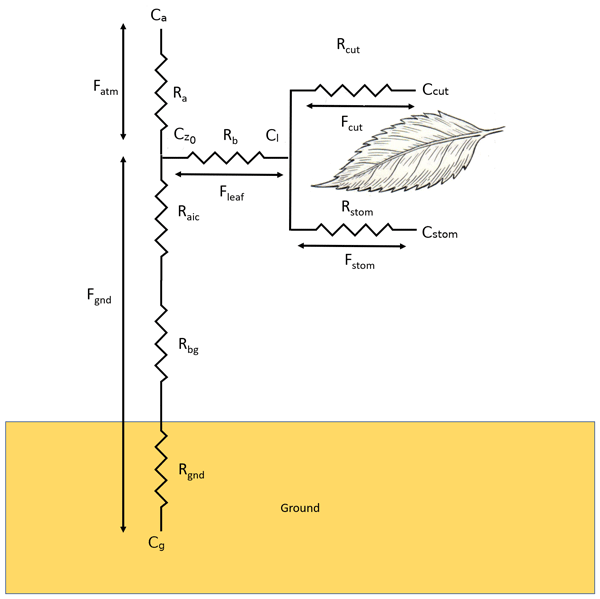
Abstract. The Surface Tiled Aerosol and Gaseous Exchange (STAGE) model was developed for estimating dry deposition and bidirectional exchange for field-scale applications and use within the CMAQ v5.3.2 regional scale model. The model was evaluated against micrometeorological flux measurements of NH3, HNO3, and SO2 at a managed grassland and NH3 in a cultivated corn (Zea Mays) field. When using field-scale observations for soil and vegetation NH3 compensation points, modelled fluxes for all species agreed well, within or near the reported measurement uncertainty. However, when using the CMAQ v5.3.2 values for NH3 emission potentials at the Duke Forest grassland site, the model estimated mean net deposition rate was 1.3 ng m-2 h-1 while the observed mean NH3 evasive flux was 8.4 ng m-2 h-1. Modelled NH3 concentration fields evaluated against Cross-Track Infrared Sounder (CrIS) satellite observations indicates a broad underestimation of NH3 concentrations by approximately 1 to 2 ppb in the U.S. Great Plains. The results from the grassland field data and indicates that there is likely an underestimation of the evasive NH3 flux in grassland sites due to the model's default tabular values of the vegetation/litter NH4+ concentrations. The STAGE's model sensitivity to soil and vegetation emission potentials indicates that regional scale model results for NH3 can be further improved with additional micrometeorological flux and vegetation and soil chemistry measurements over different land use types, soil types, and vegetation phenological stages.
-
Notice on discussion status
The requested preprint has a corresponding peer-reviewed final revised paper. You are encouraged to refer to the final revised version.
-
Preprint
(1845 KB)
-
Supplement
(1076 KB)
-
The requested preprint has a corresponding peer-reviewed final revised paper. You are encouraged to refer to the final revised version.
- Preprint
(1845 KB) - Metadata XML
-
Supplement
(1076 KB) - BibTeX
- EndNote
- Final revised paper


Journal article(s) based on this preprint
Interactive discussion
Status: closed
-
RC1: 'Comment on egusphere-2025-3536', Anonymous Referee #1, 10 Mar 2026
-
AC1: 'Reply on RC1', Jesse Bash, 15 May 2026
General comments:
The manuscript “Evaluation of HNO3, SO2, and NH3 in the Surface Tiled Aerosol and Gaseous Exchange (STAGE) option in the Community Multiscale Air Quality Model version 5.3.2 against field-scale, in situ and satellite observations” has been submitted to the journal GMD. The research emphasizes the uncertainty in the deposition mechanism that developed based on the resistance framework for estimating NH3 flux, and the model improvement using additional micrometeorological fluxes. In general, the complex deposition component makes the approach vital for understanding model performance and, further, for improving it. However, the entire research contains two major issues. (1) The main objective seems to modify the commonly used resistance model based on the previous deposition approach. However, the reason for doing this is not clearly explained. In the Introduction, the author mentioned the emission and deposition are treated differently in the regional model. This is understandable because the sources of emissions, including anthropogenic and natural, differ. Moreover, the deposition process, which depends on land surface, particle size, and meteorological conditions, is highly variable and uncertain. The present manuscript primarily evaluates the NH3 flux by comparing micrometeorological fluxes with CMAQv5.3 tabular, which is not relevant to the literature review. Both emission flux and deposition flux need to be analyzed to address the uncertainty mentioned. Or else, simply emphasizing the limitation of CMAQ STAGE and the importance of using micrometeorological flux measurement for STAGE improvement. (2) The entire manuscript is not well written and requires proofreading. For instance, “…CMAQv5.3.2, table 2…Table 3…” in Line 304-306 is confusing.
Response: We would like to thank the reviewer for their detailed comments and they have been used as a basis for reorganizing the results and discussion section of the manuscript.
Response to issue (1):
As stated in the first introductory paragraph:
“The exchange of atmospheric aerosols and trace gases between the atmosphere and biosphere is an essential process in the source, transport and fate of atmospheric pollutants and represents an important vector of ecosystem and human health exposures (Eschelman and Sabo, 2016; Greaver et al., 2012; Burnett et al., 1998; Galloway et al., 2020).”
Yet there is still a considerable amount of model variability in modeling these processes (Galmarini et al., 2021) and there are inconsistencies in the description of dry deposition and bidirectional exchange processes over natural surfaces that should be governed by the same dynamics in prior versions of CMAQ, lines 63-69. The variability in the model deposition parameterizations are likely due to a paucity of observational data. Here we adapted a commonly used resistance model was for use at the field and regional scale to leverage the utility of the available observations. At the field scale, models aid in understanding dynamics of the air-surface exchange that cannot be directly measured, e.g. stomatal, soil, and cuticular contributions to the net flux. Here we apply the findings of a field scale evaluation to a regional scale simulation and utilize CrIS satellite observations to evaluate if the findings are generalizable.
Response to issue (2):
The manuscript has been revised to address many of the comments below. Specifically, the model simulations have been grouped into cases using default CMAQ v5.3.2 tabular and site specific observed input data. We feel that this has made the presentation of the results and discussion more clear. The following cases have been added to streamline the results, discussion, and Table 3.
-
LM – STAGE model simulation of Lillington, NC fluxes using the default CMAQ v5.3.2 tabular inputs
-
LO – STAGE model simulation of Lillington, NC fluxes using observed stomatal, dew, and soil NH3 emission potentials and minimum stomatal resistance.
-
DFM – STAGE model simulations of the Duke Forest, NC fluxes using the default CMAQ v5.3.2 tabular inputs
-
DFOS - STAGE model simulation of Lillington, NC fluxes using observed stomatal, dew, and soil NH3 emission potentials and minimum stomatal resistance.
-
DFOL - STAGE model simulation of Lillington, NC fluxes using observed stomatal, dew, and leaf litter NH3 emission potentials and minimum stomatal resistance.
Specific comment:
Line 18: What is the importance of this methodology? Why is micrometeorological flux measurement significant for the model evaluation and improvement? What is the main limitation of STAGE? The research question and motivation remain unclear.
Response: The specification of micrometeorological flux measurements is important in this case as these techniques do not alter the environment being measured like chamber techniques and offer higher temporal resolution necessary to capture the dynamics of the processes than can be inferred from biological sampling or isotopic techniques.
Line 81-83: STAGE in CMAQv5.3 has already been publicly released. Is the present research proposing a new parameterization (e.g., new STAGE)?
Response: This research evaluates the STAGE model against fluxes measurements in an agricultural field for NH3 and a grassland site for NH3, HNO3, and SO2. This is the initial evaluation of the model at these sites and the initial evaluation of it at a grassland site for multiple pollutants. Furthermore, we found that updating the regional scale model NH3 emission potentials improved the evaluation of the regional scale model against satellite observations. We are not proposing a new STAGE model as the emission potentials are an input to both the field scale and regional scale versions of the model.
Line 237: What do you mean “would be returned”?
Response: This has been revised. The intent is that U/u*² is numerically the same as Ra in Table 1 if U is estimated for the log linear wind profile in Pleim and Ran 2011. This sentence has been removed.
Line 291: Figure 1 or Figure 2?
Response: This is indeed referencing Figure 2. The text has been corrected.
Line 295: Higher error than which site? Please revise the sentence. How can low LAI and minimal stomatal resistance affect model performance?
Response: Section 3 was revised addressing the general comments. This specific area did need clarification and the text was revised as follows:
The evaluation of modeled H2O and NH3 fluxes at Duke Forest had higher error at than those at the Lillington site (Table 3). This is likely influenced by uncertainty introduced by the lower magnitude of the measured fluxes at the Duke Forest site and the lack of LAI and minimum stomatal resistance measurements which govern the cuticular and stomatal exchange processes respectively
Line 295-298: Please revise the whole sentence!
Response: We have revised this section to include model cases as discussed in the general comments.
Line 298: This seems to be a statistical error? Please use another statistical index that would exclude the effect of the outlier.
Response: This section has been rewritten.
Line 307: How did you define "most sensitive"? Such a description is subjective.
Response: This is a fair criticism. This discussion has been rewritten to highlight that using the observed emission potentials at the Duke Forest site instead of the tabular values from CMAQ v5.3.2 resulted in capturing the direction of the mean flux and improving the model correlation.
Line 309: What do “NH3 observed Γll,ΓstΓdew” in Figure 3 stand for in general?
Response: This the model case where the STAGE simulation used the observed apoplast, leaf litter, and leaf dew observations. These scenarios are now organized as model cases in Table 3, and as addressed in the general comments. Figures 2b and 3 have been revised, please see the attachment.
Line 325: In Figure 3, STAGE overestimates during 7-13h, and underestimates during 14-23h. This is an interesting contrast and is expected for detail explanation. Is there any possibility that NH3 flux is related to daytime meteorological factors, such as intense solar radiation?
Response: We agree that this is interesting and have added a more detailed discussion and figures showing the impact NH3 evasion from dew at the Lillinton, NC site in the SI. This can also be seen in figure 2 but is likely more pronounced at the Lillington site due the higher ammonium concentrations in the soil, vegetation, and dew. In general, we have not been able to capture the morning peak in NH3 emissions. The emissions appear to be related to the drying of the canopy in the morning and is accompanied by a morning peak in emissions (Walker et al., 2013; Wentworth et al., 2016). We did measure emission emission potentials on the same order of magnitude as stomatal sources in the leaf dew water that we collected in the morning but the evasion form this source does not completely account for the observed emissions in agreement with the findings in Walker et al., 2013. The following was added to section 3.1
A consistent min morning emission peak was observed at the Lillington, NC site (Walker et al., 2013). The emissions appear to be related to the drying of the canopy in the morning and similar morning emissions have been observed for a grass canopy (Wentworth et al., 2016). A high emission potential was measured on the dew present on the leaves in the morning, Table 2. When the dew compensation point was included in the STAGE model, case LO, there was insufficient ammonium in the dew to explain the emission peak, Figure S1, in agreement with Walker et al., 2013. At the Lillington site, the canopy did not contain dew according to the leaf wetness measurements after 8:00 EST, Figure S2, and the modeled evasion from dew occurred before this period while the observed morning evasion occurred primarily between 8:00 and 11:00 EST when the canopy was dry, Figure 3. The soil between plants and rows at the Lillington site was exposed and had a much higher emission potential than the canopy. We speculate that the mid morning emission peak could be due to the wetting and drying of surface this NH4+ rich soil that was not captured by the soil moisture probes. These results are in contrast to the the dew drying experiments of Wentworth et al., 2016, where they estimated that the evasion of NH3 during morning dew evaporation could account for morning increases in NH3 at a high elevation grassland field site at Rock Mountain National Park, CO.
Two figures have been added to the supplemental information (please see the attachment)
Line 326: How well is the model performing in capturing SO2, HNO3, and NH3 after the measured soil and canopy parameters are used? Please include the statistics before and after the parameter changes.
Response: The use of observational data only impacted the compensation points and NH3 flux as we did not have an observed minimum stomatal resistance for the Duke Forest site where we measured the SO2 and HNO3 fluxes. The changes in the NH3 statistics using the tabular CMAQ parameterization and the observed values are in Table 3.
Line 328-329: What do you mean by CMAQ tabular data? Are you referring to the default setup? How poor is the original STAGE? Pls explain with the bias or correlation index.
(add to discussion)
Response: Yes, this is referring to the default CMAQ v5.3.2 setup. In Table 3, the LB and DFB cases use the default CMAQ/STAGE parameters. The STAGE model evaluated well against Lillington observations but was initially uncorrelated with the flux observations at Duke Forest. However, the model performed well when observed emission potentials were used as inputs. With the exception of the morning emission peak, the STAGE model can capture the magnitude and dynamics of the observations well indicating that improving the characterization ammonium in surface vegetation and soil media have the potential to improve modeled NH3 and reduced nitrogen fluxes.
Line 409-410: Are you referring to Figure 4?
Response: Yes, this has been corrected.
Technical comment:
Line 81: Two fullstop.
Response: Thanks, this has been corrected.
-
-
AC1: 'Reply on RC1', Jesse Bash, 15 May 2026
-
RC2: 'Comment on egusphere-2025-3536', Anonymous Referee #2, 12 Mar 2026
Review for Geoscientific Model Development (GMD).
“Evaluation of HNO₃, SO₂, and NH₃ in the STAGE Option in CMAQ v5.3.2”
by J. Bash and co-authors.
This paper evaluates the Surface Tiled Aerosol and Gaseous Exchange (STAGE) dry deposition and bidirectional exchange model against field-scale micrometeorological flux measurements and satellite observations. The work addresses an important gap evaluating regional model parametrisations against site measuerment data and satellite data. The paper is generally well written and presents interesting inputs as well as practical value and operational contribution to the CMAQ modeling community. It is well in the scope of GMD.
General comments:
- The site scale box model is evaluated against two sites Duke Forest (2012) and Lillington (2007) and one season of measurement each. Ammonia flux measurements are not easily available for model comparison however, stating that these measurements are “representative” of continental forests and grassland is too much of an extrapolation. Perhaps authors can replace this statement and discuss the limitation of such an approach.
- The paper does not compare STAGE against previous CMAQ schemes or other regional models or simpler approaches thus making it difficult to quantify whether STAGE represents an improvement and whether the added complexity is justified.
- Parametrisation of ammonia emission potential or Gamma is proposed as an explanation for the difference between modelled and observed ammonia fluxes. While it is completely coherent that parameterisation with measured values would give better results than with more generalised values, no mechanistic explanation is given for that, tuning another parameter in the model would probably also have improved the performance. Furthermore, no sensitivity analysis is conducted or referred to, to justify this.
- One of the results highlites that H2O fluxes are overestimated for both sites Duke and Lillington which is argued can be explained by errors in stomatal conductance. This error can propagate to the estimation of NH3 fluxes.This is not mentioned or discussed. Again a sensitivity analysis could help answer this issue.
- The comparison to CrIS data is not sufficiently discussed. CrIS data specially for areas with low concentrations are accompanied by high uncertainty and should be discussed.
- Table 2 presents median values of measured gammas at different sites. Perhaps adding seasonal values or at least uncertainty values to give an idea of the variability of the measurements.
Specific comments:
- Axis for figures show grid indices rather than geogrphic coordinates. Perhaps replacing with lon/lat is more explanatory.
- Add an a small paragraph the logic for having a non zero valus for Gamma cuticle.
Typos and language:
- "and indicates" → "indicate" (ligne 25) ;
- "evaluate" → "evaluated" (ligne 82) ;
- "Figure 1" → "Figure 2" (ligne 291) ;
- "Sierra Nevada's" → "Sierra Nevadas" (ligne 340) ;
- "ares" → "areas" (ligne 341) ;
- "factor a of 5" → "a factor of 5" (ligne 364) ;
- "sight" → "site" (ligne 364).
Citation: https://doi.org/10.5194/egusphere-2025-3536-RC2 -
AC2: 'Reply on RC2', Jesse Bash, 15 May 2026
This paper evaluates the Surface Tiled Aerosol and Gaseous Exchange (STAGE) dry deposition and bidirectional exchange model against field-scale micrometeorological flux measurements and satellite observations. The work addresses an important gap evaluating regional model parametrization against site measurement data and satellite data. The paper is generally well written and presents interesting inputs as well as practical value and operational contribution to the CMAQ modeling community. It is well in the scope of GMD.
We thank anonymous referee 2 for their thoughtful feedback and constructive comments. We have revised the discussion around the regional scale application of limited field scale observations and the evaluation against satellite observations.
General comments:
- The site scale box model is evaluated against two sites Duke Forest (2012) and Lillington (2007) and one season of measurement each. Ammonia flux measurements are not easily available for model comparison however, stating that these measurements are “representative” of continental forests and grassland is too much of an extrapolation. Perhaps authors can replace this statement and discuss the limitation of such an approach.
Response: This is a good point and we agree, rather than generally representative we have revised section 3.2 to soften this statement. Specifically, the statement “The annual regional scale CMAQ model NH3 biases evaluated against CrIS observations are consistent with the box model simulations, assuming that the results at Lillington, NC and the results from Duke Forest, NC may be generally representative of an agricultural cropping system and grasslands, respectively.” has been revised as follows “The annual regional scale CMAQ model NH3 values evaluated against CrIS observations show biases that are directionally consistent with the box model simulations over both grasslands and agricultural areas indicting that the default tabular values are contributing to the observed model biases. ”
- The paper does not compare STAGE against previous CMAQ schemes or other regional models or simpler approaches thus making it difficult to quantify whether STAGE represents an improvement and whether the added complexity is justified.
Response: We believe this is outside the scope of this manuscript. he evaluation of CMAQ with the STAGE and M3Dry deposition options against network observations has been extensively reported in the CMAQ v5.3 evaluation manuscript (Appel et al., 2021). Addition evaluation of the CMAQ deposition options and other regional scale models against observational network and O3 flux field studies can be found in the AQMEII4 special issue (https://acp.copernicus.org/articles/special_issue1130.html). The motivation of the development of this scheme is that it treats the transport processes of bidirectional and dry deposition schemes consistently and can be used for field scale evaluation of multiple pollutants.
- Parametrization of ammonia emission potential or Gamma is proposed as an explanation for the difference between modeled and observed ammonia fluxes. While it is completely coherent that parametrization with measured values would give better results than with more generalized values, no mechanistic explanation is given for that, tuning another parameter in the model would probably also have improved the performance. Furthermore, no sensitivity analysis is conducted or referred to, to justify this.
Response: This is a good point and highlights the strengths of the observations used here. Sensitivity simulations were conducted for both the Lillington and Duke Forest sites by perturbing the minimum stomatal resistance, cuticular resistance, and soil resistance by ±50%. This really highlights the benefit of having flux observations at sites with different land use and observations of multiple species as well as a model that uses a common representation of dynamics across species.
The following was added to the second paragraph of section 2.3.
To investigate the parameter uncertainty of the STAGE model, a sensitivity simulation was conducted for both field scale sites. These simulations consisted of perturbing the CMAQ v5.3.2 default minimum stomatal resistance, cuticular resistance, and ground resistance by ±50%
The following was added to section 3.1
At the Duke Forest site, the sensitivity simulations perturbing the minimum stomatal resistance, cuticular resistance, and ground resistance were unable to capture the direction of the mean observed NH3 flux and generally increased the biases of the modeled SO2 flux, Table S1. The modeled HNO3 flux generally insensitive to the canopy resistance parameters as it is primarily governed by the aerodynamic resistance, Table S1. At the Lillington site, the modeled NH3 flux was sensitive to both the emission potential and the ground resistance indicating the importance of accurately characterizing soils in fertilized agricultural sites for estimating NH3 fluxes, Table S1.
The following table was added to the SI :
Lillington, NC NH3
Duke Forest, NC NH3
Duke Forest, NC SO2
Duke Forest, NC HNO3
CMAQ v5.3.2
40.5% (0.616)
-117.6% (-0.007)
-4.8% (0.411)
19.3% (0.705)
50% Rst_min
49.1% (0.625)
-112.5% (0.116)
7.2% (0.416)
19.4% (0.705)
150% Rst_min
37.0% (0.611)
-118.7% (-0.135)
-8.1% (0.406)
19.3% (0.705)
50% Rcut
36.1% (0.616)
-119.5% (-0.064)
19.4% (0.401)
21.5% (0.705)
150% Rcut
43.3% (0.615)
-116.1% (-0.072)
-14.7% (0.415)
17.3% (0.704)
50% Rgnd
157.0% (0.593)
-127.4% (-0.276)
23.5% (0.401)
24.6% (0.704)
150% Rgnd
0.6% (0.632)
-113.5% (0.040)
-15.0% (0.413)
17.4% (0.705)
LO, DFOS
-12.6% (0.515)
2.0% (0.437)
-4.8% (0.411)
19.3% (0.705)
- One of the results highlights that H2O fluxes are overestimated for both sites Duke and Lillington which is argued can be explained by errors in stomatal conductance. This error can propagate to the estimation of NH3 fluxes. This is not mentioned or discussed. Again a sensitivity analysis could help answer this issue.
Response: This was addressed in the comment above.
- The comparison to CrIS data is not sufficiently discussed. CrIS data specially for areas with low concentrations are accompanied by high uncertainty and should be discussed.
Response: This is a good point and why we primarily focused our discussion around NH3 in agricultural regions and the Great Plains where CrIS observations where the observations are above the reported instrument detection limit of approximately 0.5 ppb reported in Shephard et al., 2025.
Shephard, M.W., Kharol, S.K., Dammers, E., Sioris, C.E., Bell, A., Jansen, R., Caron, J., Snel, R., Palombo, E., Cady-Pereira, K.E., McLinden, C.A., Lutsch, E., Knuteson, R.O.: Infrared Satellite Detection Limits for Monitoring Atmospheric Ammonia. IEEE Journal of Selected Topics in Applied Earth Observations and Remote Sensing 18, 10272–10291. https://doi.org/10.1109/JSTARS.2025.3557240, 2025
- Table 2 presents median values of measured gammas at different sites. Perhaps adding seasonal values or at least uncertainty values to give an idea of the variability of the measurements.
Response: The standard deviation of the observations was added to Table 2.
Specific comments:
- Axis for figures show grid indices rather than geographic coordinates. Perhaps replacing with lon/lat is more explanatory.
Response: I can provide the projection information, but unfortunately no longer have access to the raw CMAQ output files and cannot preform the coordinate transformation.
- Add an a small paragraph the logic for having a non zero values for Gamma cuticle.
Response: Section 3.1 was revised to further discuss the non-zero cuticular gamma values in context of the NH3 evasion from the evaporation of dew.
Typos and language:
-
"and indicates" → "indicate" (ligne 25) ;
Response: “and indicates” was replaced with indicated
-
"evaluate" → "evaluated" (ligne 82) ;
Response: The referee’s suggestion was taken
-
"Figure 1" → "Figure 2" (ligne 291) ;
Response: This was corrected
-
"Sierra Nevada's" → "Sierra Nevadas" (ligne 340) ;
Response: This was corrected
-
"ares" → "areas" (ligne 341) ;
Response: This was corrected
-
"factor a of 5" → "a factor of 5" (ligne 364) ;
Response: This section was revised
-
"sight" → "site" (ligne 364).
Response: This was corrected
-
Peer review completion


Interactive discussion
Status: closed
-
RC1: 'Comment on egusphere-2025-3536', Anonymous Referee #1, 10 Mar 2026
General comments:
The manuscript “Evaluation of HNO3, SO2, and NH3 in the Surface Tiled Aerosol and Gaseous Exchange (STAGE) option in the Community Multiscale Air Quality Model version 5.3.2 against field-scale, in situ and satellite observations” has been submitted to the journal GMD. The research emphasizes the uncertainty in the deposition mechanism that developed based on the resistance framework for estimating NH3 flux, and the model improvement using additional micrometeorological fluxes. In general, the complex deposition component makes the approach vital for understanding model performance and, further, for improving it. However, the entire research contains two major issues. (1) The main objective seems to modify the commonly used resistance model based on the previous deposition approach. However, the reason for doing this is not clearly explained. In the Introduction, the author mentioned the emission and deposition are treated differently in the regional model. This is understandable because the sources of emissions, including anthropogenic and natural, differ. Moreover, the deposition process, which depends on land surface, particle size, and meteorological conditions, is highly variable and uncertain. The present manuscript primarily evaluates the NH3 flux by comparing micrometeorological fluxes with CMAQv5.3 tabular, which is not relevant to the literature review. Both emission flux and deposition flux need to be analyzed to address the uncertainty mentioned. Or else, simply emphasizing the limitation of CMAQ STAGE and the importance of using micrometeorological flux measurement for STAGE improvement. (2) The entire manuscript is not well written and requires proofreading. For instance, “…CMAQv5.3.2, table 2…Table 3…” in Line 304-306 is confusing.
Specific comment:
Line 18: What is the importance of this methodology? Why is micrometeorological flux measurement significant for the model evaluation and improvement? What is the main limitation of STAGE? The research question and motivation remain unclear.
Line 81-83: STAGE in CMAQv5.3 has already been publicly released. Is the present research proposing a new parameterization (e.g., new STAGE)?
Line 237: What do you mean “would be returned”?
Line 291: Figure 1 or Figure 2?
Line 295: Higher error than which site? Please revise the sentence. How can low LAI and minimal stomatal resistance affect model performance?
Line 295-298: Please revise the whole sentence!
Line 298: This seems to be a statistical error? Please use another statistical index that would exclude the effect of the outlier.
Line 307: How did you define "most sensitive"? Such a description is subjective.
Line 309: What do “NH3 observed Γll,ΓstΓdew” in Figure 3 stand for in general?
Line 325: In Figure 3, STAGE overestimates during 7-13h, and underestimates during 14-23h. This is an interesting contrast and is expected for detail explanation. Is there any possibility that NH3 flux is related to daytime meteorological factors, such as intense solar radiation?
Line 326: How well is the model performing in capturing SO2, HNO3, and NH3 after the measured soil and canopy parameters are used? Please include the statistics before and after the parameter changes.
Line 328-329: What do you mean by CMAQ tabular data? Are you referring to the default setup? How poor is the original STAGE? Pls explain with the bias or correlation index.
Line 409-410: Are you referring to Figure 4?
Technical comment:
Line 81: Two fullstop.
-
AC1: 'Reply on RC1', Jesse Bash, 15 May 2026
General comments:
The manuscript “Evaluation of HNO3, SO2, and NH3 in the Surface Tiled Aerosol and Gaseous Exchange (STAGE) option in the Community Multiscale Air Quality Model version 5.3.2 against field-scale, in situ and satellite observations” has been submitted to the journal GMD. The research emphasizes the uncertainty in the deposition mechanism that developed based on the resistance framework for estimating NH3 flux, and the model improvement using additional micrometeorological fluxes. In general, the complex deposition component makes the approach vital for understanding model performance and, further, for improving it. However, the entire research contains two major issues. (1) The main objective seems to modify the commonly used resistance model based on the previous deposition approach. However, the reason for doing this is not clearly explained. In the Introduction, the author mentioned the emission and deposition are treated differently in the regional model. This is understandable because the sources of emissions, including anthropogenic and natural, differ. Moreover, the deposition process, which depends on land surface, particle size, and meteorological conditions, is highly variable and uncertain. The present manuscript primarily evaluates the NH3 flux by comparing micrometeorological fluxes with CMAQv5.3 tabular, which is not relevant to the literature review. Both emission flux and deposition flux need to be analyzed to address the uncertainty mentioned. Or else, simply emphasizing the limitation of CMAQ STAGE and the importance of using micrometeorological flux measurement for STAGE improvement. (2) The entire manuscript is not well written and requires proofreading. For instance, “…CMAQv5.3.2, table 2…Table 3…” in Line 304-306 is confusing.
Response: We would like to thank the reviewer for their detailed comments and they have been used as a basis for reorganizing the results and discussion section of the manuscript.
Response to issue (1):
As stated in the first introductory paragraph:
“The exchange of atmospheric aerosols and trace gases between the atmosphere and biosphere is an essential process in the source, transport and fate of atmospheric pollutants and represents an important vector of ecosystem and human health exposures (Eschelman and Sabo, 2016; Greaver et al., 2012; Burnett et al., 1998; Galloway et al., 2020).”
Yet there is still a considerable amount of model variability in modeling these processes (Galmarini et al., 2021) and there are inconsistencies in the description of dry deposition and bidirectional exchange processes over natural surfaces that should be governed by the same dynamics in prior versions of CMAQ, lines 63-69. The variability in the model deposition parameterizations are likely due to a paucity of observational data. Here we adapted a commonly used resistance model was for use at the field and regional scale to leverage the utility of the available observations. At the field scale, models aid in understanding dynamics of the air-surface exchange that cannot be directly measured, e.g. stomatal, soil, and cuticular contributions to the net flux. Here we apply the findings of a field scale evaluation to a regional scale simulation and utilize CrIS satellite observations to evaluate if the findings are generalizable.
Response to issue (2):
The manuscript has been revised to address many of the comments below. Specifically, the model simulations have been grouped into cases using default CMAQ v5.3.2 tabular and site specific observed input data. We feel that this has made the presentation of the results and discussion more clear. The following cases have been added to streamline the results, discussion, and Table 3.
-
LM – STAGE model simulation of Lillington, NC fluxes using the default CMAQ v5.3.2 tabular inputs
-
LO – STAGE model simulation of Lillington, NC fluxes using observed stomatal, dew, and soil NH3 emission potentials and minimum stomatal resistance.
-
DFM – STAGE model simulations of the Duke Forest, NC fluxes using the default CMAQ v5.3.2 tabular inputs
-
DFOS - STAGE model simulation of Lillington, NC fluxes using observed stomatal, dew, and soil NH3 emission potentials and minimum stomatal resistance.
-
DFOL - STAGE model simulation of Lillington, NC fluxes using observed stomatal, dew, and leaf litter NH3 emission potentials and minimum stomatal resistance.
Specific comment:
Line 18: What is the importance of this methodology? Why is micrometeorological flux measurement significant for the model evaluation and improvement? What is the main limitation of STAGE? The research question and motivation remain unclear.
Response: The specification of micrometeorological flux measurements is important in this case as these techniques do not alter the environment being measured like chamber techniques and offer higher temporal resolution necessary to capture the dynamics of the processes than can be inferred from biological sampling or isotopic techniques.
Line 81-83: STAGE in CMAQv5.3 has already been publicly released. Is the present research proposing a new parameterization (e.g., new STAGE)?
Response: This research evaluates the STAGE model against fluxes measurements in an agricultural field for NH3 and a grassland site for NH3, HNO3, and SO2. This is the initial evaluation of the model at these sites and the initial evaluation of it at a grassland site for multiple pollutants. Furthermore, we found that updating the regional scale model NH3 emission potentials improved the evaluation of the regional scale model against satellite observations. We are not proposing a new STAGE model as the emission potentials are an input to both the field scale and regional scale versions of the model.
Line 237: What do you mean “would be returned”?
Response: This has been revised. The intent is that U/u*² is numerically the same as Ra in Table 1 if U is estimated for the log linear wind profile in Pleim and Ran 2011. This sentence has been removed.
Line 291: Figure 1 or Figure 2?
Response: This is indeed referencing Figure 2. The text has been corrected.
Line 295: Higher error than which site? Please revise the sentence. How can low LAI and minimal stomatal resistance affect model performance?
Response: Section 3 was revised addressing the general comments. This specific area did need clarification and the text was revised as follows:
The evaluation of modeled H2O and NH3 fluxes at Duke Forest had higher error at than those at the Lillington site (Table 3). This is likely influenced by uncertainty introduced by the lower magnitude of the measured fluxes at the Duke Forest site and the lack of LAI and minimum stomatal resistance measurements which govern the cuticular and stomatal exchange processes respectively
Line 295-298: Please revise the whole sentence!
Response: We have revised this section to include model cases as discussed in the general comments.
Line 298: This seems to be a statistical error? Please use another statistical index that would exclude the effect of the outlier.
Response: This section has been rewritten.
Line 307: How did you define "most sensitive"? Such a description is subjective.
Response: This is a fair criticism. This discussion has been rewritten to highlight that using the observed emission potentials at the Duke Forest site instead of the tabular values from CMAQ v5.3.2 resulted in capturing the direction of the mean flux and improving the model correlation.
Line 309: What do “NH3 observed Γll,ΓstΓdew” in Figure 3 stand for in general?
Response: This the model case where the STAGE simulation used the observed apoplast, leaf litter, and leaf dew observations. These scenarios are now organized as model cases in Table 3, and as addressed in the general comments. Figures 2b and 3 have been revised, please see the attachment.
Line 325: In Figure 3, STAGE overestimates during 7-13h, and underestimates during 14-23h. This is an interesting contrast and is expected for detail explanation. Is there any possibility that NH3 flux is related to daytime meteorological factors, such as intense solar radiation?
Response: We agree that this is interesting and have added a more detailed discussion and figures showing the impact NH3 evasion from dew at the Lillinton, NC site in the SI. This can also be seen in figure 2 but is likely more pronounced at the Lillington site due the higher ammonium concentrations in the soil, vegetation, and dew. In general, we have not been able to capture the morning peak in NH3 emissions. The emissions appear to be related to the drying of the canopy in the morning and is accompanied by a morning peak in emissions (Walker et al., 2013; Wentworth et al., 2016). We did measure emission emission potentials on the same order of magnitude as stomatal sources in the leaf dew water that we collected in the morning but the evasion form this source does not completely account for the observed emissions in agreement with the findings in Walker et al., 2013. The following was added to section 3.1
A consistent min morning emission peak was observed at the Lillington, NC site (Walker et al., 2013). The emissions appear to be related to the drying of the canopy in the morning and similar morning emissions have been observed for a grass canopy (Wentworth et al., 2016). A high emission potential was measured on the dew present on the leaves in the morning, Table 2. When the dew compensation point was included in the STAGE model, case LO, there was insufficient ammonium in the dew to explain the emission peak, Figure S1, in agreement with Walker et al., 2013. At the Lillington site, the canopy did not contain dew according to the leaf wetness measurements after 8:00 EST, Figure S2, and the modeled evasion from dew occurred before this period while the observed morning evasion occurred primarily between 8:00 and 11:00 EST when the canopy was dry, Figure 3. The soil between plants and rows at the Lillington site was exposed and had a much higher emission potential than the canopy. We speculate that the mid morning emission peak could be due to the wetting and drying of surface this NH4+ rich soil that was not captured by the soil moisture probes. These results are in contrast to the the dew drying experiments of Wentworth et al., 2016, where they estimated that the evasion of NH3 during morning dew evaporation could account for morning increases in NH3 at a high elevation grassland field site at Rock Mountain National Park, CO.
Two figures have been added to the supplemental information (please see the attachment)
Line 326: How well is the model performing in capturing SO2, HNO3, and NH3 after the measured soil and canopy parameters are used? Please include the statistics before and after the parameter changes.
Response: The use of observational data only impacted the compensation points and NH3 flux as we did not have an observed minimum stomatal resistance for the Duke Forest site where we measured the SO2 and HNO3 fluxes. The changes in the NH3 statistics using the tabular CMAQ parameterization and the observed values are in Table 3.
Line 328-329: What do you mean by CMAQ tabular data? Are you referring to the default setup? How poor is the original STAGE? Pls explain with the bias or correlation index.
(add to discussion)
Response: Yes, this is referring to the default CMAQ v5.3.2 setup. In Table 3, the LB and DFB cases use the default CMAQ/STAGE parameters. The STAGE model evaluated well against Lillington observations but was initially uncorrelated with the flux observations at Duke Forest. However, the model performed well when observed emission potentials were used as inputs. With the exception of the morning emission peak, the STAGE model can capture the magnitude and dynamics of the observations well indicating that improving the characterization ammonium in surface vegetation and soil media have the potential to improve modeled NH3 and reduced nitrogen fluxes.
Line 409-410: Are you referring to Figure 4?
Response: Yes, this has been corrected.
Technical comment:
Line 81: Two fullstop.
Response: Thanks, this has been corrected.
-
-
AC1: 'Reply on RC1', Jesse Bash, 15 May 2026
-
RC2: 'Comment on egusphere-2025-3536', Anonymous Referee #2, 12 Mar 2026
Review for Geoscientific Model Development (GMD).
“Evaluation of HNO₃, SO₂, and NH₃ in the STAGE Option in CMAQ v5.3.2”
by J. Bash and co-authors.
This paper evaluates the Surface Tiled Aerosol and Gaseous Exchange (STAGE) dry deposition and bidirectional exchange model against field-scale micrometeorological flux measurements and satellite observations. The work addresses an important gap evaluating regional model parametrisations against site measuerment data and satellite data. The paper is generally well written and presents interesting inputs as well as practical value and operational contribution to the CMAQ modeling community. It is well in the scope of GMD.
General comments:
- The site scale box model is evaluated against two sites Duke Forest (2012) and Lillington (2007) and one season of measurement each. Ammonia flux measurements are not easily available for model comparison however, stating that these measurements are “representative” of continental forests and grassland is too much of an extrapolation. Perhaps authors can replace this statement and discuss the limitation of such an approach.
- The paper does not compare STAGE against previous CMAQ schemes or other regional models or simpler approaches thus making it difficult to quantify whether STAGE represents an improvement and whether the added complexity is justified.
- Parametrisation of ammonia emission potential or Gamma is proposed as an explanation for the difference between modelled and observed ammonia fluxes. While it is completely coherent that parameterisation with measured values would give better results than with more generalised values, no mechanistic explanation is given for that, tuning another parameter in the model would probably also have improved the performance. Furthermore, no sensitivity analysis is conducted or referred to, to justify this.
- One of the results highlites that H2O fluxes are overestimated for both sites Duke and Lillington which is argued can be explained by errors in stomatal conductance. This error can propagate to the estimation of NH3 fluxes.This is not mentioned or discussed. Again a sensitivity analysis could help answer this issue.
- The comparison to CrIS data is not sufficiently discussed. CrIS data specially for areas with low concentrations are accompanied by high uncertainty and should be discussed.
- Table 2 presents median values of measured gammas at different sites. Perhaps adding seasonal values or at least uncertainty values to give an idea of the variability of the measurements.
Specific comments:
- Axis for figures show grid indices rather than geogrphic coordinates. Perhaps replacing with lon/lat is more explanatory.
- Add an a small paragraph the logic for having a non zero valus for Gamma cuticle.
Typos and language:
- "and indicates" → "indicate" (ligne 25) ;
- "evaluate" → "evaluated" (ligne 82) ;
- "Figure 1" → "Figure 2" (ligne 291) ;
- "Sierra Nevada's" → "Sierra Nevadas" (ligne 340) ;
- "ares" → "areas" (ligne 341) ;
- "factor a of 5" → "a factor of 5" (ligne 364) ;
- "sight" → "site" (ligne 364).
Citation: https://doi.org/10.5194/egusphere-2025-3536-RC2 -
AC2: 'Reply on RC2', Jesse Bash, 15 May 2026
This paper evaluates the Surface Tiled Aerosol and Gaseous Exchange (STAGE) dry deposition and bidirectional exchange model against field-scale micrometeorological flux measurements and satellite observations. The work addresses an important gap evaluating regional model parametrization against site measurement data and satellite data. The paper is generally well written and presents interesting inputs as well as practical value and operational contribution to the CMAQ modeling community. It is well in the scope of GMD.
We thank anonymous referee 2 for their thoughtful feedback and constructive comments. We have revised the discussion around the regional scale application of limited field scale observations and the evaluation against satellite observations.
General comments:
- The site scale box model is evaluated against two sites Duke Forest (2012) and Lillington (2007) and one season of measurement each. Ammonia flux measurements are not easily available for model comparison however, stating that these measurements are “representative” of continental forests and grassland is too much of an extrapolation. Perhaps authors can replace this statement and discuss the limitation of such an approach.
Response: This is a good point and we agree, rather than generally representative we have revised section 3.2 to soften this statement. Specifically, the statement “The annual regional scale CMAQ model NH3 biases evaluated against CrIS observations are consistent with the box model simulations, assuming that the results at Lillington, NC and the results from Duke Forest, NC may be generally representative of an agricultural cropping system and grasslands, respectively.” has been revised as follows “The annual regional scale CMAQ model NH3 values evaluated against CrIS observations show biases that are directionally consistent with the box model simulations over both grasslands and agricultural areas indicting that the default tabular values are contributing to the observed model biases. ”
- The paper does not compare STAGE against previous CMAQ schemes or other regional models or simpler approaches thus making it difficult to quantify whether STAGE represents an improvement and whether the added complexity is justified.
Response: We believe this is outside the scope of this manuscript. he evaluation of CMAQ with the STAGE and M3Dry deposition options against network observations has been extensively reported in the CMAQ v5.3 evaluation manuscript (Appel et al., 2021). Addition evaluation of the CMAQ deposition options and other regional scale models against observational network and O3 flux field studies can be found in the AQMEII4 special issue (https://acp.copernicus.org/articles/special_issue1130.html). The motivation of the development of this scheme is that it treats the transport processes of bidirectional and dry deposition schemes consistently and can be used for field scale evaluation of multiple pollutants.
- Parametrization of ammonia emission potential or Gamma is proposed as an explanation for the difference between modeled and observed ammonia fluxes. While it is completely coherent that parametrization with measured values would give better results than with more generalized values, no mechanistic explanation is given for that, tuning another parameter in the model would probably also have improved the performance. Furthermore, no sensitivity analysis is conducted or referred to, to justify this.
Response: This is a good point and highlights the strengths of the observations used here. Sensitivity simulations were conducted for both the Lillington and Duke Forest sites by perturbing the minimum stomatal resistance, cuticular resistance, and soil resistance by ±50%. This really highlights the benefit of having flux observations at sites with different land use and observations of multiple species as well as a model that uses a common representation of dynamics across species.
The following was added to the second paragraph of section 2.3.
To investigate the parameter uncertainty of the STAGE model, a sensitivity simulation was conducted for both field scale sites. These simulations consisted of perturbing the CMAQ v5.3.2 default minimum stomatal resistance, cuticular resistance, and ground resistance by ±50%
The following was added to section 3.1
At the Duke Forest site, the sensitivity simulations perturbing the minimum stomatal resistance, cuticular resistance, and ground resistance were unable to capture the direction of the mean observed NH3 flux and generally increased the biases of the modeled SO2 flux, Table S1. The modeled HNO3 flux generally insensitive to the canopy resistance parameters as it is primarily governed by the aerodynamic resistance, Table S1. At the Lillington site, the modeled NH3 flux was sensitive to both the emission potential and the ground resistance indicating the importance of accurately characterizing soils in fertilized agricultural sites for estimating NH3 fluxes, Table S1.
The following table was added to the SI :
Lillington, NC NH3
Duke Forest, NC NH3
Duke Forest, NC SO2
Duke Forest, NC HNO3
CMAQ v5.3.2
40.5% (0.616)
-117.6% (-0.007)
-4.8% (0.411)
19.3% (0.705)
50% Rst_min
49.1% (0.625)
-112.5% (0.116)
7.2% (0.416)
19.4% (0.705)
150% Rst_min
37.0% (0.611)
-118.7% (-0.135)
-8.1% (0.406)
19.3% (0.705)
50% Rcut
36.1% (0.616)
-119.5% (-0.064)
19.4% (0.401)
21.5% (0.705)
150% Rcut
43.3% (0.615)
-116.1% (-0.072)
-14.7% (0.415)
17.3% (0.704)
50% Rgnd
157.0% (0.593)
-127.4% (-0.276)
23.5% (0.401)
24.6% (0.704)
150% Rgnd
0.6% (0.632)
-113.5% (0.040)
-15.0% (0.413)
17.4% (0.705)
LO, DFOS
-12.6% (0.515)
2.0% (0.437)
-4.8% (0.411)
19.3% (0.705)
- One of the results highlights that H2O fluxes are overestimated for both sites Duke and Lillington which is argued can be explained by errors in stomatal conductance. This error can propagate to the estimation of NH3 fluxes. This is not mentioned or discussed. Again a sensitivity analysis could help answer this issue.
Response: This was addressed in the comment above.
- The comparison to CrIS data is not sufficiently discussed. CrIS data specially for areas with low concentrations are accompanied by high uncertainty and should be discussed.
Response: This is a good point and why we primarily focused our discussion around NH3 in agricultural regions and the Great Plains where CrIS observations where the observations are above the reported instrument detection limit of approximately 0.5 ppb reported in Shephard et al., 2025.
Shephard, M.W., Kharol, S.K., Dammers, E., Sioris, C.E., Bell, A., Jansen, R., Caron, J., Snel, R., Palombo, E., Cady-Pereira, K.E., McLinden, C.A., Lutsch, E., Knuteson, R.O.: Infrared Satellite Detection Limits for Monitoring Atmospheric Ammonia. IEEE Journal of Selected Topics in Applied Earth Observations and Remote Sensing 18, 10272–10291. https://doi.org/10.1109/JSTARS.2025.3557240, 2025
- Table 2 presents median values of measured gammas at different sites. Perhaps adding seasonal values or at least uncertainty values to give an idea of the variability of the measurements.
Response: The standard deviation of the observations was added to Table 2.
Specific comments:
- Axis for figures show grid indices rather than geographic coordinates. Perhaps replacing with lon/lat is more explanatory.
Response: I can provide the projection information, but unfortunately no longer have access to the raw CMAQ output files and cannot preform the coordinate transformation.
- Add an a small paragraph the logic for having a non zero values for Gamma cuticle.
Response: Section 3.1 was revised to further discuss the non-zero cuticular gamma values in context of the NH3 evasion from the evaporation of dew.
Typos and language:
-
"and indicates" → "indicate" (ligne 25) ;
Response: “and indicates” was replaced with indicated
-
"evaluate" → "evaluated" (ligne 82) ;
Response: The referee’s suggestion was taken
-
"Figure 1" → "Figure 2" (ligne 291) ;
Response: This was corrected
-
"Sierra Nevada's" → "Sierra Nevadas" (ligne 340) ;
Response: This was corrected
-
"ares" → "areas" (ligne 341) ;
Response: This was corrected
-
"factor a of 5" → "a factor of 5" (ligne 364) ;
Response: This section was revised
-
"sight" → "site" (ligne 364).
Response: This was corrected
-
Peer review completion
Journal article(s) based on this preprint
Viewed
| HTML | XML | Total | Supplement | BibTeX | EndNote | |
|---|---|---|---|---|---|---|
| 1,815 | 939 | 144 | 2,898 | 257 | 150 | 162 |
- HTML: 1,815
- PDF: 939
- XML: 144
- Total: 2,898
- Supplement: 257
- BibTeX: 150
- EndNote: 162
Viewed (geographical distribution)
| Country | # | Views | % |
|---|
| Total: | 0 |
| HTML: | 0 |
| PDF: | 0 |
| XML: | 0 |
- 1
Jesse O. Bash
John T. Walker
Zhiyong Wu

Ben Murphy
Christian Hogrefe
Kathleen M. Fahey
Havala O. T. Pye
Matthew R. Jones
K. Wyat Appel
Mark Shephard
Najwa I. Alnsour
Karen E. Cady-Periera
The requested preprint has a corresponding peer-reviewed final revised paper. You are encouraged to refer to the final revised version.
- Preprint
(1845 KB) - Metadata XML
-
Supplement
(1076 KB) - BibTeX
- EndNote
- Final revised paper
General comments:
The manuscript “Evaluation of HNO3, SO2, and NH3 in the Surface Tiled Aerosol and Gaseous Exchange (STAGE) option in the Community Multiscale Air Quality Model version 5.3.2 against field-scale, in situ and satellite observations” has been submitted to the journal GMD. The research emphasizes the uncertainty in the deposition mechanism that developed based on the resistance framework for estimating NH3 flux, and the model improvement using additional micrometeorological fluxes. In general, the complex deposition component makes the approach vital for understanding model performance and, further, for improving it. However, the entire research contains two major issues. (1) The main objective seems to modify the commonly used resistance model based on the previous deposition approach. However, the reason for doing this is not clearly explained. In the Introduction, the author mentioned the emission and deposition are treated differently in the regional model. This is understandable because the sources of emissions, including anthropogenic and natural, differ. Moreover, the deposition process, which depends on land surface, particle size, and meteorological conditions, is highly variable and uncertain. The present manuscript primarily evaluates the NH3 flux by comparing micrometeorological fluxes with CMAQv5.3 tabular, which is not relevant to the literature review. Both emission flux and deposition flux need to be analyzed to address the uncertainty mentioned. Or else, simply emphasizing the limitation of CMAQ STAGE and the importance of using micrometeorological flux measurement for STAGE improvement. (2) The entire manuscript is not well written and requires proofreading. For instance, “…CMAQv5.3.2, table 2…Table 3…” in Line 304-306 is confusing.
Specific comment:
Line 18: What is the importance of this methodology? Why is micrometeorological flux measurement significant for the model evaluation and improvement? What is the main limitation of STAGE? The research question and motivation remain unclear.
Line 81-83: STAGE in CMAQv5.3 has already been publicly released. Is the present research proposing a new parameterization (e.g., new STAGE)?
Line 237: What do you mean “would be returned”?
Line 291: Figure 1 or Figure 2?
Line 295: Higher error than which site? Please revise the sentence. How can low LAI and minimal stomatal resistance affect model performance?
Line 295-298: Please revise the whole sentence!
Line 298: This seems to be a statistical error? Please use another statistical index that would exclude the effect of the outlier.
Line 307: How did you define "most sensitive"? Such a description is subjective.
Line 309: What do “NH3 observed Γll,ΓstΓdew” in Figure 3 stand for in general?
Line 325: In Figure 3, STAGE overestimates during 7-13h, and underestimates during 14-23h. This is an interesting contrast and is expected for detail explanation. Is there any possibility that NH3 flux is related to daytime meteorological factors, such as intense solar radiation?
Line 326: How well is the model performing in capturing SO2, HNO3, and NH3 after the measured soil and canopy parameters are used? Please include the statistics before and after the parameter changes.
Line 328-329: What do you mean by CMAQ tabular data? Are you referring to the default setup? How poor is the original STAGE? Pls explain with the bias or correlation index.
Line 409-410: Are you referring to Figure 4?
Technical comment:
Line 81: Two fullstop.