
the Creative Commons Attribution 4.0 License.
the Creative Commons Attribution 4.0 License.
 | 30 Dec 2025
Atlantic Water flow through Fram Strait to the Arctic Ocean measured by repeated glider transects
Abstract. We present estimates of northward transport of Atlantic Water (AW) across a zonal transect at 77°15′ N using repeated ocean glider observations. Over three missions during autumn and winter of 2020–2022, 22 high-resolution sections were collected, enabling detailed characterization of circulation branches and volume transport. On average, the West Spitsbergen Current (WSC) and the Front Current each transport approximately 2.5 Sv of AW (Θ > 2°C, SA > 35.06 g kg-1) northward, yielding a combined flux of about 5 Sv toward the Arctic. Variability in transport and current structure is substantial and appears linked to atmospheric forcing. Case studies reveal that anomalous northward wind stress coincides with peak AW transport, roughly twice the seasonal mean, consistent with Ekman dynamics and elevated sea surface height along the coast. Conversely, strong southward wind stress weakens the WSC and nearly eliminates the Front Current. Recirculating Atlantic Water (RAW, Θ > 0°C, SA > 35.06 g kg-1) west of the Front Current is estimated to be about 1 Sv, but this does not capture the expected stronger recirculation transport further west, beyond the glider's target transect. These results highlight the capability of gliders to resolve variability in boundary currents that mooring arrays cannot capture. Extended seasonal coverage, including summer, is needed to assess transport variability under peak wind forcing.
Competing interests: Ilker Fer is a member of the editorial board of Ocean Science.
Publisher's note: Copernicus Publications remains neutral with regard to jurisdictional claims made in the text, published maps, institutional affiliations, or any other geographical representation in this paper. While Copernicus Publications makes every effort to include appropriate place names, the final responsibility lies with the authors. Views expressed in the text are those of the authors and do not necessarily reflect the views of the publisher.-
Notice on discussion status
The requested preprint has a corresponding peer-reviewed final revised paper. You are encouraged to refer to the final revised version.
-
Preprint
(8117 KB)
-
The requested preprint has a corresponding peer-reviewed final revised paper. You are encouraged to refer to the final revised version.
- Preprint
(8117 KB) - Metadata XML
- BibTeX
- EndNote
- Final revised paper


Journal article(s) based on this preprint
Interactive discussion
Status: closed
-
RC1: 'Comment on egusphere-2025-6340', Anonymous Referee #1, 02 Feb 2026
- AC1: 'Reply on RC1', Ilker Fer, 22 Feb 2026
-
RC2: 'Comment on egusphere-2025-6340', Rebecca McPherson, 09 Feb 2026
General Comments
This manuscript presents novel estimates of Atlantic Water (AW) transport across a zonal section in the Nordic Seas, using high-resolution glider measurements collected between 2020 and 2022. The use of gliders to provide enhanced vertical and horizontal spatial resolution—beyond what is achievable with traditional mooring arrays—is a valuable contribution to the field. The finding that transport estimates for both northward and recirculating AW generally align with existing mooring data, while providing new insights into the lateral variability of the West Spitsbergen Current (WSC) and the Norwegian Atlantic Front Current, is particularly noteworthy.
The manuscript is very well-written, generally logically structured, and provides a compelling narrative. The clarity of the prose is impressive and makes for an engaging read.
Major Comments
- This concerns the structure of the results and the discussion. While the writing is generally of high quality, the presentation of results and discussion (specifically inSections 3.2 and 3.4) would benefit from tighter organization. Currently, there is a tendency to jump between different results, themes and figures, which can obscure the main and interesting findings. It means it is also unclear why you show certain figure panels as you leave them to much later in the section to discuss, after introducing new figures, so they have lost their relevance. Though this often occurs when results and discussion sections are combined, it can be easily remedied by some restructuring and clearer linking sentences between paragraphs. I suggest ensuring that figures are discussed comprehensively and restructuring the sections so that each paragraph builds towards a central result, using clear linking sentences to connect the current, almost sporadic results, into a more cohesive argument.
- This second point is about strengthening the wind forcing analysis (section 3.4). The case study examining the relationship between wind forcing and AW transport is very interesting but the current approach, which relies on two specific examples of northwards and southwards wind forcing, could be made more robust. I suggest the authors consider inverting their analysis - instead of considering the two examples of different wind forcing and seeing what that corresponds to in the transports, could you instead identify periods of anomalously high/low transport and produce a composite map of the corresponding wind forcing. This ‘reversed’ approach would more definitively establish the role and dominance of the atmospheric forcing on AW transports and strengthen the evidence for the proposed mechanisms.
Specific Comments
Line 11: ‘resolve spatial variability’, as mooring arrays do capture temporal variability better than gliders.
Figure 1: is it still fair to call the northern extent of the WSC (north of 80°N) the WSC? Or more accurately is it the Svalbard Branch? As you have already named the Yermak Branch separately.
Also consider adding a line where the AWI moorings at ~79°N are, as you reference them and the Beszczynska-Müller et al., (2012) volume transport estimates a lot.
Line 25: ‘detailed horizontal structure’
Line 56: Tie the two points about the WSC core and the more northern transports together – does this imply that the WSC core is solely responsible for the transports measured on the southern slope of the Yermak Plateau?
Line 62 - 63: I think the main issue is not the scarcity of data (there are multiple cruises to Fram Strait each year from myriad institutions and all tend to take hydrographic profiles) but that the data is generally summer-focused and therefore not a good representation of annual variability (this is also where the novelty of your glider measurements lies). So gliders not only fill the spatial gap but also in the months where ships don’t generally sample.
Line 88 – what months do you define as autumn and winter? What happens to the data you collect in July and August (which are arguably summer months)?
Line 105 – is this a typical way to define a glider section? It seems overly confusing to split it into distance and then longitude, especially as you refer to distances throughout the rest of the paper (i.e., the lateral boundaries separating the cores). If this is standard practice, can you add a line that says so. Else make it clearer from the beginning why you are doing this as it is not clear.
Line 130: what is the horizontal resolution of this product?
Line 141: you handled this comparison between glider velocities and surface altimetry well – it is well described and makes sense. Can you give a percentage of the difference using each method, like Mork and Skageth (2010) (i.e., their 15%)? You don’t have to show the figure but a number would be very helpful for context.
Section 2.4 – it is a shame that it wasn’t possible to identify the two cores in every section – I had hoped this would be a major advantage of using gliders and moving away from the fixed boundaries that moorings assume. However, you can still resolve the horizontal scales much better so at least the estimates using these fixed boundaries are more accurate. Good progress.
Figure 3 – be more specific about what the light blue markers actually are in the caption (not just that they remain the same in both panels).
Section 3. These two paragraphs before 3.1 should be re-written/removed – they are specific results that don’t fit in this introductory part, and seem unrelated when written in this way. Start with Line 199 (In the following…) and outline what you are going to describe in the upcoming section. Keep the specific (and seemingly randomly chosen) numbers to their relevant section (i.e., maximum temperatures and salinities can be moved to 3.1 when discussing the standard deviation from the mean state). The seasonal cycle of wind stress (Line 200 – 205) also needs some context – move it to the subsection where you link the transport variability to wind forcing.
Line 210 – what is the standard deviation/width of the WSC? How much does it laterally vary?
Line 213 – are the mean hydrographic properties also distinct between branches like the velocities? Warmer temperatures in the WSC? Salinities? Not just seasonal (such as described in Table 2) but as a mean section. You start this in Line 221 – move it up here so the mean sections are described together, and elaborate on the differences between the two currents hydrographically.
Line 239: not actually identical – use a different word.
Line 239 – 240 - ‘mean transports are typically comparable’, some sections show ‘near-instantaneous’ large QAW (to make it clearer than one is from the total mean and the other more of a snapshot), and give some quantitative evidence (e.g., XX%/Sv higher than the mean during the two example time periods).
Line 238 – where does the 5.3 Sv come from? This is the total AW across the whole section? Make this clearer, and perhaps even include it in the table.
Figure 6. Only include the relevant contours (the blue/orange/red) for each panel (i.e., the WSC shouldn’t have the blue southwards contour line)
Figure 7. This would benefit from having some kind of coloured bands representing the seasons across the panels. As it stands, the figure is great but hard to interpret when looking at seasonal variability (the dates on the left hand side are useful but colours would really simplify what you count as autumn or winter). Also add a grid to the panels b and c so it’s easier to read values and compare sections.
Line 278 – remove or reword the ‘in agreement with Beszczynska-Müller et al., (2012)’ as it makes it sound like they also found anomalously higher transports in 2020 and 2022 – emphasise that it’s the seasonal difference observed. However, this also contradicts your point which says that no seasonal cycle was observed in the WSC core by Beszczynska-Müller et al., (2012) so clarify this.
Line 289 – this is a very interesting point (that velocity dominates AW changes in the FC and temperature in the WSC) – can you make it slightly more quantitative/results-based or give more examples with numbers? Right now, it reads like speculation and would benefit from another sentence or 2 to make it stronger.
Section 3.3. There needs to be some mention that it is mostly autumn and winter that are sampled here so spring and summer (thus the whole seasonal cycle) cannot be fully quantified. A definition of each season would also be helpful here (see my earlier comment) as there are sections taken in July/August. I assume that there are not enough repeated sections in these months to say something of statistical significance?
Line 296. -297. This is both a results and discussion section so add some discussion to this result. Is this expected?
Section 3.4. Are you assuming an instantaneous response in the AW transport to the wind forcing?
In this section, better separate the discussion about two wind anomalies – it is sometimes hard to tell if you are discussing the northward or southward wind forcing.
Line 331 – not just northwards transports are presented here
Citation: https://doi.org/10.5194/egusphere-2025-6340-RC2 - AC2: 'Reply on RC2', Ilker Fer, 22 Feb 2026
- This concerns the structure of the results and the discussion. While the writing is generally of high quality, the presentation of results and discussion (specifically inSections 3.2 and 3.4) would benefit from tighter organization. Currently, there is a tendency to jump between different results, themes and figures, which can obscure the main and interesting findings. It means it is also unclear why you show certain figure panels as you leave them to much later in the section to discuss, after introducing new figures, so they have lost their relevance. Though this often occurs when results and discussion sections are combined, it can be easily remedied by some restructuring and clearer linking sentences between paragraphs. I suggest ensuring that figures are discussed comprehensively and restructuring the sections so that each paragraph builds towards a central result, using clear linking sentences to connect the current, almost sporadic results, into a more cohesive argument.
Peer review completion


Interactive discussion
Status: closed
-
RC1: 'Comment on egusphere-2025-6340', Anonymous Referee #1, 02 Feb 2026
Review of the manuscript: “Atlantic Water flow through Fram Strait to the Arctic Ocean measured by repeated glider transects”.
The manuscript presents repeated glider transects on the western slope of Svalbard in 2020-2022. From these transects, volume transport is estimated of the West Spitsbergen, the Front Current and the recirculation branches in Fram Strait at different seasons. Some episodes of anomalous volume transport are analyzed in more details within case studies to suggest process mechanisms behind the variability of the volume transport. The results of this manuscript, although not so novel, highlight how gliders can be used to complement mooring lines and hydrographic transects. This manuscript can then have a significant impact when it comes to planning of future fieldwork. The manuscript is well written, and the methodology seems robust. The figures are clear and self-explanatory. This manuscript should be accepted for publication after some minor revisions.
My main comment regarding the manuscript concerns the description of the case study. I find those very interesting; however I think it would be valuable to be able to add some statistics about the wind. How often do we see these northerly/southerly winds? How representative are the observations over a longer time? A time series of wind over the last 20 years for example, with quantification of the different events will be useful, and some statistics could then be provided on how often the different cases are expected to occur.
Minor comments:
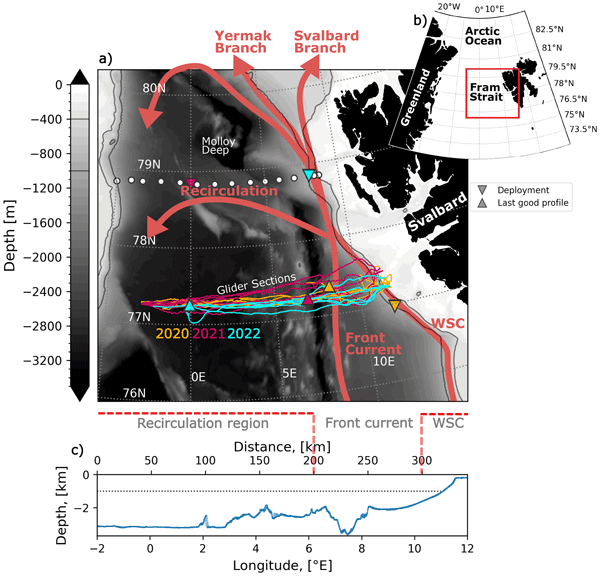
Figure 1: Please move the inset with the small maps, so that we can see the entire coastline of Svalbard. That will help the reader to find out where the study is localized.
Figure 3: what are the light blue dots? They are the same for both panels, but it is not indicated what they represent.
Figure 7: Very nice figure! Would it be possible though to add some scale for volume transport? Or has it been normalized? Also, for guiding the reader I would suggest indicating clearly which sections are autumn and which ones are winter.
- 44: ‘Foot of the shelf slope’: do you mean the shelf rise? Maybe rather use that terminology.
- 103-104: why is there so much variability in the duration of a transect?
- 143: I would suggest deleting ‘To investigate … glider data’
- 216-217: how is the ‘velocity-weighted mean temperature’ defined? As far as I can see it is not defined in the manuscript.
- 234-237: In general, the uncertainties inherent to the methodology are not shown in the study. They should be explained somewhere, as they could potentially explain some of the patterns that are observed.
- 240: Could it also be that the AW has not been lost, but that rather the gliders resolve better the branches thanks to their high resolution?
- 292-293: What happens when considering the volume transport of both the WSC and the Front current together? Does the volume transport shows less variability and become more stable?
- 293: Is there any lag for this co-variability? The co-variability could be quantified better.
Citation: https://doi.org/10.5194/egusphere-2025-6340-RC1 - AC1: 'Reply on RC1', Ilker Fer, 22 Feb 2026
-
RC2: 'Comment on egusphere-2025-6340', Rebecca McPherson, 09 Feb 2026
General Comments
This manuscript presents novel estimates of Atlantic Water (AW) transport across a zonal section in the Nordic Seas, using high-resolution glider measurements collected between 2020 and 2022. The use of gliders to provide enhanced vertical and horizontal spatial resolution—beyond what is achievable with traditional mooring arrays—is a valuable contribution to the field. The finding that transport estimates for both northward and recirculating AW generally align with existing mooring data, while providing new insights into the lateral variability of the West Spitsbergen Current (WSC) and the Norwegian Atlantic Front Current, is particularly noteworthy.
The manuscript is very well-written, generally logically structured, and provides a compelling narrative. The clarity of the prose is impressive and makes for an engaging read.
Major Comments
- This concerns the structure of the results and the discussion. While the writing is generally of high quality, the presentation of results and discussion (specifically inSections 3.2 and 3.4) would benefit from tighter organization. Currently, there is a tendency to jump between different results, themes and figures, which can obscure the main and interesting findings. It means it is also unclear why you show certain figure panels as you leave them to much later in the section to discuss, after introducing new figures, so they have lost their relevance. Though this often occurs when results and discussion sections are combined, it can be easily remedied by some restructuring and clearer linking sentences between paragraphs. I suggest ensuring that figures are discussed comprehensively and restructuring the sections so that each paragraph builds towards a central result, using clear linking sentences to connect the current, almost sporadic results, into a more cohesive argument.
- This second point is about strengthening the wind forcing analysis (section 3.4). The case study examining the relationship between wind forcing and AW transport is very interesting but the current approach, which relies on two specific examples of northwards and southwards wind forcing, could be made more robust. I suggest the authors consider inverting their analysis - instead of considering the two examples of different wind forcing and seeing what that corresponds to in the transports, could you instead identify periods of anomalously high/low transport and produce a composite map of the corresponding wind forcing. This ‘reversed’ approach would more definitively establish the role and dominance of the atmospheric forcing on AW transports and strengthen the evidence for the proposed mechanisms.
Specific Comments
Line 11: ‘resolve spatial variability’, as mooring arrays do capture temporal variability better than gliders.
Figure 1: is it still fair to call the northern extent of the WSC (north of 80°N) the WSC? Or more accurately is it the Svalbard Branch? As you have already named the Yermak Branch separately.
Also consider adding a line where the AWI moorings at ~79°N are, as you reference them and the Beszczynska-Müller et al., (2012) volume transport estimates a lot.
Line 25: ‘detailed horizontal structure’
Line 56: Tie the two points about the WSC core and the more northern transports together – does this imply that the WSC core is solely responsible for the transports measured on the southern slope of the Yermak Plateau?
Line 62 - 63: I think the main issue is not the scarcity of data (there are multiple cruises to Fram Strait each year from myriad institutions and all tend to take hydrographic profiles) but that the data is generally summer-focused and therefore not a good representation of annual variability (this is also where the novelty of your glider measurements lies). So gliders not only fill the spatial gap but also in the months where ships don’t generally sample.
Line 88 – what months do you define as autumn and winter? What happens to the data you collect in July and August (which are arguably summer months)?
Line 105 – is this a typical way to define a glider section? It seems overly confusing to split it into distance and then longitude, especially as you refer to distances throughout the rest of the paper (i.e., the lateral boundaries separating the cores). If this is standard practice, can you add a line that says so. Else make it clearer from the beginning why you are doing this as it is not clear.
Line 130: what is the horizontal resolution of this product?
Line 141: you handled this comparison between glider velocities and surface altimetry well – it is well described and makes sense. Can you give a percentage of the difference using each method, like Mork and Skageth (2010) (i.e., their 15%)? You don’t have to show the figure but a number would be very helpful for context.
Section 2.4 – it is a shame that it wasn’t possible to identify the two cores in every section – I had hoped this would be a major advantage of using gliders and moving away from the fixed boundaries that moorings assume. However, you can still resolve the horizontal scales much better so at least the estimates using these fixed boundaries are more accurate. Good progress.
Figure 3 – be more specific about what the light blue markers actually are in the caption (not just that they remain the same in both panels).
Section 3. These two paragraphs before 3.1 should be re-written/removed – they are specific results that don’t fit in this introductory part, and seem unrelated when written in this way. Start with Line 199 (In the following…) and outline what you are going to describe in the upcoming section. Keep the specific (and seemingly randomly chosen) numbers to their relevant section (i.e., maximum temperatures and salinities can be moved to 3.1 when discussing the standard deviation from the mean state). The seasonal cycle of wind stress (Line 200 – 205) also needs some context – move it to the subsection where you link the transport variability to wind forcing.
Line 210 – what is the standard deviation/width of the WSC? How much does it laterally vary?
Line 213 – are the mean hydrographic properties also distinct between branches like the velocities? Warmer temperatures in the WSC? Salinities? Not just seasonal (such as described in Table 2) but as a mean section. You start this in Line 221 – move it up here so the mean sections are described together, and elaborate on the differences between the two currents hydrographically.
Line 239: not actually identical – use a different word.
Line 239 – 240 - ‘mean transports are typically comparable’, some sections show ‘near-instantaneous’ large QAW (to make it clearer than one is from the total mean and the other more of a snapshot), and give some quantitative evidence (e.g., XX%/Sv higher than the mean during the two example time periods).
Line 238 – where does the 5.3 Sv come from? This is the total AW across the whole section? Make this clearer, and perhaps even include it in the table.
Figure 6. Only include the relevant contours (the blue/orange/red) for each panel (i.e., the WSC shouldn’t have the blue southwards contour line)
Figure 7. This would benefit from having some kind of coloured bands representing the seasons across the panels. As it stands, the figure is great but hard to interpret when looking at seasonal variability (the dates on the left hand side are useful but colours would really simplify what you count as autumn or winter). Also add a grid to the panels b and c so it’s easier to read values and compare sections.
Line 278 – remove or reword the ‘in agreement with Beszczynska-Müller et al., (2012)’ as it makes it sound like they also found anomalously higher transports in 2020 and 2022 – emphasise that it’s the seasonal difference observed. However, this also contradicts your point which says that no seasonal cycle was observed in the WSC core by Beszczynska-Müller et al., (2012) so clarify this.
Line 289 – this is a very interesting point (that velocity dominates AW changes in the FC and temperature in the WSC) – can you make it slightly more quantitative/results-based or give more examples with numbers? Right now, it reads like speculation and would benefit from another sentence or 2 to make it stronger.
Section 3.3. There needs to be some mention that it is mostly autumn and winter that are sampled here so spring and summer (thus the whole seasonal cycle) cannot be fully quantified. A definition of each season would also be helpful here (see my earlier comment) as there are sections taken in July/August. I assume that there are not enough repeated sections in these months to say something of statistical significance?
Line 296. -297. This is both a results and discussion section so add some discussion to this result. Is this expected?
Section 3.4. Are you assuming an instantaneous response in the AW transport to the wind forcing?
In this section, better separate the discussion about two wind anomalies – it is sometimes hard to tell if you are discussing the northward or southward wind forcing.
Line 331 – not just northwards transports are presented here
Citation: https://doi.org/10.5194/egusphere-2025-6340-RC2 - AC2: 'Reply on RC2', Ilker Fer, 22 Feb 2026
- This concerns the structure of the results and the discussion. While the writing is generally of high quality, the presentation of results and discussion (specifically inSections 3.2 and 3.4) would benefit from tighter organization. Currently, there is a tendency to jump between different results, themes and figures, which can obscure the main and interesting findings. It means it is also unclear why you show certain figure panels as you leave them to much later in the section to discuss, after introducing new figures, so they have lost their relevance. Though this often occurs when results and discussion sections are combined, it can be easily remedied by some restructuring and clearer linking sentences between paragraphs. I suggest ensuring that figures are discussed comprehensively and restructuring the sections so that each paragraph builds towards a central result, using clear linking sentences to connect the current, almost sporadic results, into a more cohesive argument.
Peer review completion
Journal article(s) based on this preprint
Data sets
Physical oceanography data from Seaglider missions west of Svalbard, October 2020–February 2023 [dataset] Ilker Fer et al. https://doi.org/10.21335/NMDC-1222822416
Viewed
| HTML | XML | Total | BibTeX | EndNote | |
|---|---|---|---|---|---|
| 539 | 497 | 88 | 1,124 | 177 | 179 |
- HTML: 539
- PDF: 497
- XML: 88
- Total: 1,124
- BibTeX: 177
- EndNote: 179
Viewed (geographical distribution)
| Country | # | Views | % |
|---|
| Total: | 0 |
| HTML: | 0 |
| PDF: | 0 |
| XML: | 0 |
- 1
Vår Dundas
The requested preprint has a corresponding peer-reviewed final revised paper. You are encouraged to refer to the final revised version.
- Preprint
(8117 KB) - Metadata XML
Review of the manuscript: “Atlantic Water flow through Fram Strait to the Arctic Ocean measured by repeated glider transects”.
The manuscript presents repeated glider transects on the western slope of Svalbard in 2020-2022. From these transects, volume transport is estimated of the West Spitsbergen, the Front Current and the recirculation branches in Fram Strait at different seasons. Some episodes of anomalous volume transport are analyzed in more details within case studies to suggest process mechanisms behind the variability of the volume transport. The results of this manuscript, although not so novel, highlight how gliders can be used to complement mooring lines and hydrographic transects. This manuscript can then have a significant impact when it comes to planning of future fieldwork. The manuscript is well written, and the methodology seems robust. The figures are clear and self-explanatory. This manuscript should be accepted for publication after some minor revisions.
My main comment regarding the manuscript concerns the description of the case study. I find those very interesting; however I think it would be valuable to be able to add some statistics about the wind. How often do we see these northerly/southerly winds? How representative are the observations over a longer time? A time series of wind over the last 20 years for example, with quantification of the different events will be useful, and some statistics could then be provided on how often the different cases are expected to occur.
Minor comments:
Figure 1: Please move the inset with the small maps, so that we can see the entire coastline of Svalbard. That will help the reader to find out where the study is localized.
Figure 3: what are the light blue dots? They are the same for both panels, but it is not indicated what they represent.
Figure 7: Very nice figure! Would it be possible though to add some scale for volume transport? Or has it been normalized? Also, for guiding the reader I would suggest indicating clearly which sections are autumn and which ones are winter.