
the Creative Commons Attribution 4.0 License.
the Creative Commons Attribution 4.0 License.
 | 05 Dec 2025
Gliding through marine heatwaves: Subsurface biogeochemical characteristics on the Australian continental shelf
Abstract. Marine heatwaves (MHWs) disrupt ecosystems across multiple trophic levels by altering oxygen and biological productivity through the water column. Yet, most studies focus on the surface, overlooking subsurface processes that shape ecosystem responses, particularly under compound events involving multiple co-occurring extreme environmental conditions. To address this gap, we analysed 16 years of routine and event-based glider observations on the continental shelf around Australia to present the first comprehensive assessment of the subsurface biogeochemical response during surface MHWs across four contrasting coastal regions. Summer surface MHWs were characterised by a shallower mixed layer depth than normal conditions and enhanced stratification, confining warming to the upper ocean, while other seasons allow deeper penetration under weakly stratified conditions. Stratification favoured deeper and intensified deep chlorophyll maxima, aligned with the depth of stratification maxima, and emerged as a useful proxy for the vertical extent of MHWs. Across all regions and seasons, for non-MHW conditions, dissolved oxygen had a bimodal distribution above and below the mixed layer. However, this distribution changed with event severity and included greater concentrations of low dissolved oxygen and reduced concentrations of high dissolved oxygen during strong events. Below the mixed layer, the bimodal distribution was less apparent and oxygen concentrations during strong events were more concentrated towards middle values. During moderate and strong MHWs, chlorophyll concentrations declined in the mixed layer, albeit this trend was not apparent below it. Regional responses were related to the environmental setting, including the continental shelf structure and boundary current influences, underscoring the importance of region-specific monitoring to understand how MHWs influence biogeochemistry, and furthermore, their ecological consequences on coastal waters. The interaction between physical processes, such as seasonal circulation and stratification, and biological feedback, including the presence of deep chlorophyll maxima and potential oxygen production, highlights the complex biogeochemical responses to MHWs.
-
Notice on discussion status
The requested preprint has a corresponding peer-reviewed final revised paper. You are encouraged to refer to the final revised version.
-
Preprint
(6944 KB)
-
Supplement
(3557 KB)
-
The requested preprint has a corresponding peer-reviewed final revised paper. You are encouraged to refer to the final revised version.
- Preprint
(6944 KB) - Metadata XML
-
Supplement
(3557 KB) - BibTeX
- EndNote
- Final revised paper


Journal article(s) based on this preprint
Interactive discussion
Status: closed
-
RC1: 'Comment on egusphere-2025-6045', Anonymous Referee #1, 07 Jan 2026
-
AC2: 'Reply on RC1', Daneeja Mawren, 28 Feb 2026
The comment was uploaded in the form of a supplement: https://egusphere.copernicus.org/preprints/2025/egusphere-2025-6045/egusphere-2025-6045-AC2-supplement.pdf
-
AC2: 'Reply on RC1', Daneeja Mawren, 28 Feb 2026
-
RC2: 'Comment on egusphere-2025-6045', Anonymous Referee #2, 15 Jan 2026
Review of “Gliding through marine heatwaves: Subsurface biogeochemical characteristics on the Australian continental shelf” by Mawren et al.
# General comments
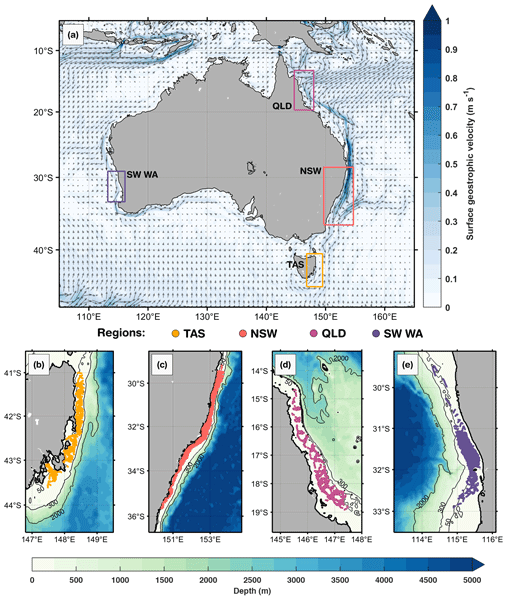
This study aims to characterize the subsurface structure of chlorophyll-a and dissolved oxygen during marine heatwaves by analyzing the 16-year glider observations from four Australian continental shelf regions. Results are presented in two parts: 1) the compilation of all profiles but separating them into non-MHW and MHW cases and also above and below MLD (Section 3.2); and 2) the comparison between non-MHW and MHW cases for each region and season (Section 3.3). Key findings are that: 1) the responses to MHWs can be generally characterized by shallower MLD in summer and deeper MLD in winter, and deeper and stronger subsurface chlorophyll maxima; 2) dissolved oxygen above and below MLD had a bimodal distribution when all profiles were compiled together; and 3) regional responses may be related to local environmental setting.
First of all, it is great to see an effort of compiling 16-year glider observations equipped with biogeochemical sensors. Glider observations are a valuable tool especially for understanding fine-scale and subsurface coastal processes. While I appreciate this great effort, I find several issues in the manuscript mainly due to the insufficient number of sampling. There are 16 years in total, but there are four regions and four seasons to consider because of strong regional and seasonal variability. Hence, for some regions and seasons, the data are limited to robustly characterize MHW impacts (Fig. 4). My detailed feedback is provided below, followed by specific comments and technical corrections for improvements.
## Limitation of the study. I think it is important to acknowledge the limitation of the study due to insufficient sampling. Even though 16 years of glider observations are wonderful, there are regions, depths, and seasons in which samples are insufficient in number to consider that the findings are robust. These regions, depths, and seasons are clearly shown in Figure 2. For example, the subsurface properties during spring MHWs are likely not robustly characterized for TAS (Fig. 6 second column) because these composite profiles are based on two MHW events only (Fig. 2b). There could be a paragraph in the Discussion section to acknowledge this limitation and identify regions and seasons that require further sampling for enabling more robust analysis in the future.
## Seasonal climatology. For the same reason above, referring to the seasonal composite averages as “seasonal mean” can be misleading in Section 3.3. I suggest deleting black lines which the authors refer to as seasonal means, which are the averages of all profiles (non-MHW and MHW profiles). These would be representative of a true seasonal climatology if there is a sufficient number of samples. Considering the MHW definition, there should be at least 90 profiles of non-MHW cases for every 10 MHW profiles. However, there are regions like QLD in which nearly half of the profiles are of MHW cases (Fig. 2e). In this case, seasonal averaging will give a seasonal climatology that is biased towards MHW cases. This is clearly reflected on Fig. 8a, where black is closer to red than to blue. I suggest only presenting and comparing non-MHW (blue) vs. MHW (red) composite means for Figs. 6-9).
## The MHW depth extent. The definition of the MHW depth extent is too broad that it would include any warm/positive anomaly (L238). In the surface, MHWs are defined as above 90th percentile. Should the subsurface MHWs be defined similarly? How did previous studies on subsurface MHWs define? Once again, it would be difficult to define the percentile threshold for some regions/seasons due to sampling biased towards MHWs. I think it is difficult to define the MHW depth extent with the data available.
## Section 3.2. This section is based on the compilation of profiles from all regions and seasons. The findings from this section take up a large part of the abstract (L35-41). However, I am not sure how robust these findings are given the strong regional and seasonal variability. From this analysis, the authors report a bimodal distribution of dissolved oxygen but without an explanation for what this represents. Is this possibly a seasonal cycle (high DO in winter and low DO in summer) or a pattern dominated by two contrasting regions? Similarly, there was no explanation for the difference between the impacts of moderate vs. strong MHWs provided, although their difference was reported (L37). I suggest more careful analysis to come up with a conclusive explanation for the bimodal distribution as well as the MHW severity dependence on the impact on the bimodal distribution. If the seasonal cycle or regional variability was the driver, I suggest focusing on the findings from Section 3.3.
## Figure 10. This figure needs to be included in the results section instead of the discussion section, because it is a result based on the analysis of this study. Likewise, this result needs to be described in the results section first instead of L673 onwards. In this figure, anomalies are used for temperature, chlorophyll-a, and dissolved oxygen. I guess they are anomalies relative to the seasonal means, but for the reason mentioned above (## Seasonal climatology), I suggest not using such anomalies.
## Consistency for the presentation order. It was difficult to follow the manuscript when the presentation order among the four regions was inconsistent throughout the manuscript. For example, Fig. 2 (NSW, TAS, QLD, SW WA in panel i vs. TAS, NSW, QLD, SW WA in the earlier panels), Fig. 3 (TAS, NSW, QLD, SW WA), Fig. 4 (TAS, SW WA, NSW, QLD), Section 3.3 (TAS, NSW, QLD, SW WA), Fig 10 (NSW, TAS, QLD, SW WA). Please carefully reorganize the presentation order for all figures and tables as well as the paragraphs.
# Specific comments and technical corrections
L34: Two issues with this sentence. (1) Instead of “Stratification favoured …” please be more specific that this is referring to specific conditions (i.e., Enhanced stratification during summer MHWs”). (2) It may not be intuitive to follow that enhanced stratification (with shallower MLD; L32) favoured deeper DCM. If you think of light limitation, shallower MLD should lead to photosynthesis at shallower depth. Please consider adding a few words to briefly explain the possible mechanism so that readers will not get stuck with this sentence.
L54: Is it correct to claim that marine heatwaves shoal MLD and alter subsurface BGC? Are MHWs the driver or are they the consequence of some other drivers?
L63: Please consider removing “long-lasting” as MHWs can be as short as 5 days according to the Hobday definition used in this study.
L70-71: Please consider moving this topic statement to the beginning of the next paragraph (L73).
L84: Please considering replacing “latitude” with “light” or similar, as latitude is not a direct factor for phytoplankton growth.
L192-193: It was unclear at first how the outliers were identified. After looking at Fig S1, it became clear to me (if I understand correctly) that the outliers were identified (1) for each glider mission and that (2) the sliding window of 1000 points moves along the glider sampling (so it goes ups and downs). Please re-write the sentence so that these two points will be clear to readers who are not familiar with glider observations/methods.
L237: The definition of the MHW depth extent is too broad. Anything above the seasonal mean implies above 50th percentile, whereas the surface MHW is defined as above 90th percentile. Should the subsurface MHW follow the same percentile criterion as the surface MHW?
L270-271: DOX and CPHL are used as abbreviations for dissolved oxygen and chlorophyll, respectively. Are they commonly used abbreviations for these? Please consider DO and CHL as alternatives, which are more commonly used in the field.
L283: Should “0.005” be “0.05”? p-value of < 0.05 is a commonly used threshold for statistical significance.
L283: What is wrong with the well-mixed profiles? As long as it is anomalously warm (>90th percentile), I do not think there is an issue to consider that the entire profile is a MHW.
L290: Suggest deleting “in surface MHWs” because this section describes both MHW and non-MHW glider missions.
L405-406: The four selected lon/lat coordinates can be indicated either on Fig. 1 or 3.
L428: Please provide a possible explanation for the two oxygen regimes. What are they?
L445: Yes. If the results simply reflect the seasonal or regional differences, they should not be key findings in the abstract. Please carefully check.
L455: Fig. 4 shows that there are glider observations when the MHW severity index was above 3 (Category 3; e.g., Fig. 4d March 2017), but this figure only shows two categories. Why?
L471: “eddy-rich” is mentioned in the section title, but is not mentioned at all in this section. Instead of much of the discussion is attributed to the influence of the EAC extension. I suggest either renaming the title or including the discussion on the influence of eddies.
L500: I do not think that mixing would be the case here, because mixing would break the DCM and the subsurface oxygen maximum.
L531-533: A possible explanation for this vertical structure in DO is that: 1) reduced DO in the upper 20 m due to reduced solubility; and 2) increased DO below 50 m, as a result of increased respiration due to the increased sinking of organic matter from the intermediate depth.
L545: incomplete section title. Missing a word like “area”
L549-550: Suggest rephrasing. “The *seasonal* evolution … followed the *seasonal* cycle.”
L568: “following the summer bloom period”. Are you sure this is sequential? This is based on composite means, so it could be that the summer and autumn DCMs seen in this figure represent different MHW events. It is hard to believe that a DCM shoals from summer to autumn.
L571: Could “contradiction” be a better word than “anomaly” for emphasis here?
L572-573: Chlorophyll-a during MHWs is lower in the upper 20 m, hence it does not support the argument here.
L625: Salinity is missing in the list of properties?
L630: This and the subsequent three paragraphs may be deleted because they are just introductions rather than discussions.
L667-668: “deeper MLD in winter”. I do not understand why this would be the case. Please add an explanation for this mechanism.
L683: Please specify the seasons for clarity instead of “particular seasons”.
L683: Here and elsewhere in this section, it would be good to restate what the hypothesis was, so that readers will not have to go back to the earlier section.
L685: It is incorrect to say that light penetrates deeper. The penetration depth does not change, but due to the shoaling of MLD, phytoplankton have access to stronger light intensity.
L686: “Hayashida and Strutton, 2020” should be “Hayashida et al. 2020” (missing Matear).
L710: “these mechanism” This is the first sentence of a paragraph. As such, it is unclear what “these” refers to.
Citation: https://doi.org/10.5194/egusphere-2025-6045-RC2 -
AC1: 'Reply on RC2', Daneeja Mawren, 28 Feb 2026
The comment was uploaded in the form of a supplement: https://egusphere.copernicus.org/preprints/2025/egusphere-2025-6045/egusphere-2025-6045-AC1-supplement.pdf
-
AC1: 'Reply on RC2', Daneeja Mawren, 28 Feb 2026
Peer review completion


Interactive discussion
Status: closed
-
RC1: 'Comment on egusphere-2025-6045', Anonymous Referee #1, 07 Jan 2026
Review of Mawren et al. “Gliding through marine heatwaves: Subsurface biogeochemical characteristics on the Australian continental shelf”
Marine heatwaves (MHWs) are known to influence oxygen and biological productivity in the water column, but the majority of studies investigating them focus solely on the surface. This study addresses this important gap by analysing 16 years of glider observations on the Australian continental shelf across four contrasting coastal regions.
The authors show that summer surface marine heatwaves had a shallower mixed layer depth and enhanced stratification, confining warming to the upper ocean, whereas in other seasons there is deeper penetration under weakly stratified conditions. The study discusses the impact this has on biogeochemical variables (chlorophyll fluorescence and dissolved oxygen) across contrasting regions and also seasonally. By incorporating rigorous analysis and investigation of the vertical profiles, this study achieves the aim of showing the impact of MHWs goes beyond the surface. The authors have done a good job of summarising a large, multi-regional dataset and presenting a coherent analysis across regions and variables.
Overall, this study fits well within the scope of Ocean Science and is well aligned with the glider special issue theme and I recommend it for publication after the authors address specific comments below:
General comments:
In situ does not need to be italicised. (See English Guidelines in Submission on the Ocean Science webpage).
There is some inconsistency in spelling conventions, with a mix of Oxford and British spelling (e.g., categorized vs characterised). Either convention is acceptable, but consistency throughout the manuscript is required. (See English Guidelines in Submission on the Ocean Science webpage).
Please ensure consistency in the use of abbreviations: define them on the first use only, and use the abbreviated form thereafter. Whilst I have highlighted a few in my specific comments, it may be worth checking through them all.
Within the Results and Discussion, the manuscript refers to different areas within the defined regions such as the ‘continental shelf’ and ‘inner shelf’. For clarity, it would be helpful to explicitly define these terms (e.g. by approximate isobaths) or annotate them in Fig. 1, particularly for readers unfamiliar with the regional shelf structure.
I have a query regarding the calculated of the MHW severity. It is done using the surface based satellite data, but as the authors have pointed out, MHWs can show stronger signals in the subsurface compared to the surface. Would it be possible to justify the use of the SST data only (whether this is quality or sample size) and discuss the limitations.
Specific comments:
Introduction
Lines 63 – 65: Consider explicitly linking MHW characteristics to stratification here. This relationship recurs throughout the manuscript and may benefit from being introduced earlier.
Line 71: The emphasis on coastal areas could be clarified. I appreciate the next paragraph addresses this, but as one of the examples of subsurface MHWs is in the North Pacific, the coastal comment here lacks context and the importance of coastal regions could be emphasised here.
Lines 85-87: This is where it is important to understand the link between MHWs and stratification.
Line 111: Please indicate the temporal limits of glider coverage and comment on how this sampling frequency relates to the duration of extreme events, particularly MHWs.
Lines 113 – 114: Sensors on gliders do not directly measure stratification or phytoplankton, it may be better to list the variables they do measure (e.g. temperature, salinity, oxygen, chlorophyll fluorescence) and then indicate that from these stratification and phytoplankton dynamics can be inferred.
Lines 117 – 120: Were any of the cited studies specifically focused on MHWs? If so, please clarify. Additionally, please define what is meant by “short-term” (e.g. hours, days).
Methods
Line 151: Extra space between “is” and “used”.
Line 163 – 164: IMOS has already been defined on line 123
Line 194 – 197: What was the quenching depth? Is it worth retaining daytime measurements from this depth and below to limit the removal of valuable data? Particularly given several hypotheses rely on chlorophyll interpretation.
Line 202: Consider using “few” instead of “rare”.
Line 217: There appears to be a typesetting issue here and the link doesn’t work.
Line 229 – 230: Is excluding negative seasonal anomalies standard practise when identifying MHWs? Please clarify whether this refers to identifying events or calculating the severity index.
Line 238: Add “defined” before “as”
Line 328: Potentially an extra space between “sampled” and “off”.
Lines 334 – 341: Where possible, figure captions should appear on the same page as the figure.
Results
Lines 369 – 370: How do you define the continental shelf and offshore waters? Also, clarify the area spoken about here is in the QLD region (if I have understood correctly).
Lines 370 – 372: Not sure what is meant here by “In agreement with the higher frequency”, please clarify the link between frequency and duration.
Line 372: GBR has not yet been defined.
Lines 379 – 381: It could be helpful to briefly clarify what types of quality control criteria led to the exclusion of these profiles (e.g. sensor issues, incomplete dives), and whether this could bias the representation of the most extreme conditions.
Lines 389 – 391: Could more frequent summer and autumn events reflect increased glider sampling during these seasons?
Figure 4: Can the axis labels and colourbar labels be larger for readability?
Line 410: DOX has already been defined on line 270.
Line 415: For clarity, refer to the MLD rather than “both layers”.
Lines 434 – 435: Could you elaborate on how the regional and seasonal regimes do affect the multi-modal structure?
Line 476: Missing comma after Holbrook and Bindoff.
Line 501: Should this refer to oxygen saturation rather than DOX?
Lines 504 – 510: Caption placement should ideally be on the same page as the figure.
Line 525: Consider using “DCM” here for consistency.
Line 546: GBR should be defined here rather than later on line 648.
Lines 566 – 569: Could this pattern also reflect autumn stratification breakdown and nutrient entrainment from deeper waters?
Lines 576 – 578: Could nutrient limitation toward the end of the bloom period also contribute?
Line 604: Is oxygen saturation intended rather than DOX?
Discussion
Since results consistency with hypotheses (2) and (4) is discussed, it may be useful to explicitly link findings back to hypotheses (1) and (3) as well, either here or in the conclusions.
Line 668: Do you have a suggestion for why it is different for NSW?
Line 716 – Earlier referred to as the Eastern Australian current on line 473 – be consistent with East or Eastern
Supplementary
Line 6: Add a space after “Panels”.
Fig S6: Also doesn’t have the colour coding Fig. 10 has; consider mentioning this in the caption.
Citation: https://doi.org/10.5194/egusphere-2025-6045-RC1 -
AC2: 'Reply on RC1', Daneeja Mawren, 28 Feb 2026
The comment was uploaded in the form of a supplement: https://egusphere.copernicus.org/preprints/2025/egusphere-2025-6045/egusphere-2025-6045-AC2-supplement.pdf
-
AC2: 'Reply on RC1', Daneeja Mawren, 28 Feb 2026
-
RC2: 'Comment on egusphere-2025-6045', Anonymous Referee #2, 15 Jan 2026
Review of “Gliding through marine heatwaves: Subsurface biogeochemical characteristics on the Australian continental shelf” by Mawren et al.
# General comments
This study aims to characterize the subsurface structure of chlorophyll-a and dissolved oxygen during marine heatwaves by analyzing the 16-year glider observations from four Australian continental shelf regions. Results are presented in two parts: 1) the compilation of all profiles but separating them into non-MHW and MHW cases and also above and below MLD (Section 3.2); and 2) the comparison between non-MHW and MHW cases for each region and season (Section 3.3). Key findings are that: 1) the responses to MHWs can be generally characterized by shallower MLD in summer and deeper MLD in winter, and deeper and stronger subsurface chlorophyll maxima; 2) dissolved oxygen above and below MLD had a bimodal distribution when all profiles were compiled together; and 3) regional responses may be related to local environmental setting.
First of all, it is great to see an effort of compiling 16-year glider observations equipped with biogeochemical sensors. Glider observations are a valuable tool especially for understanding fine-scale and subsurface coastal processes. While I appreciate this great effort, I find several issues in the manuscript mainly due to the insufficient number of sampling. There are 16 years in total, but there are four regions and four seasons to consider because of strong regional and seasonal variability. Hence, for some regions and seasons, the data are limited to robustly characterize MHW impacts (Fig. 4). My detailed feedback is provided below, followed by specific comments and technical corrections for improvements.
## Limitation of the study. I think it is important to acknowledge the limitation of the study due to insufficient sampling. Even though 16 years of glider observations are wonderful, there are regions, depths, and seasons in which samples are insufficient in number to consider that the findings are robust. These regions, depths, and seasons are clearly shown in Figure 2. For example, the subsurface properties during spring MHWs are likely not robustly characterized for TAS (Fig. 6 second column) because these composite profiles are based on two MHW events only (Fig. 2b). There could be a paragraph in the Discussion section to acknowledge this limitation and identify regions and seasons that require further sampling for enabling more robust analysis in the future.
## Seasonal climatology. For the same reason above, referring to the seasonal composite averages as “seasonal mean” can be misleading in Section 3.3. I suggest deleting black lines which the authors refer to as seasonal means, which are the averages of all profiles (non-MHW and MHW profiles). These would be representative of a true seasonal climatology if there is a sufficient number of samples. Considering the MHW definition, there should be at least 90 profiles of non-MHW cases for every 10 MHW profiles. However, there are regions like QLD in which nearly half of the profiles are of MHW cases (Fig. 2e). In this case, seasonal averaging will give a seasonal climatology that is biased towards MHW cases. This is clearly reflected on Fig. 8a, where black is closer to red than to blue. I suggest only presenting and comparing non-MHW (blue) vs. MHW (red) composite means for Figs. 6-9).
## The MHW depth extent. The definition of the MHW depth extent is too broad that it would include any warm/positive anomaly (L238). In the surface, MHWs are defined as above 90th percentile. Should the subsurface MHWs be defined similarly? How did previous studies on subsurface MHWs define? Once again, it would be difficult to define the percentile threshold for some regions/seasons due to sampling biased towards MHWs. I think it is difficult to define the MHW depth extent with the data available.
## Section 3.2. This section is based on the compilation of profiles from all regions and seasons. The findings from this section take up a large part of the abstract (L35-41). However, I am not sure how robust these findings are given the strong regional and seasonal variability. From this analysis, the authors report a bimodal distribution of dissolved oxygen but without an explanation for what this represents. Is this possibly a seasonal cycle (high DO in winter and low DO in summer) or a pattern dominated by two contrasting regions? Similarly, there was no explanation for the difference between the impacts of moderate vs. strong MHWs provided, although their difference was reported (L37). I suggest more careful analysis to come up with a conclusive explanation for the bimodal distribution as well as the MHW severity dependence on the impact on the bimodal distribution. If the seasonal cycle or regional variability was the driver, I suggest focusing on the findings from Section 3.3.
## Figure 10. This figure needs to be included in the results section instead of the discussion section, because it is a result based on the analysis of this study. Likewise, this result needs to be described in the results section first instead of L673 onwards. In this figure, anomalies are used for temperature, chlorophyll-a, and dissolved oxygen. I guess they are anomalies relative to the seasonal means, but for the reason mentioned above (## Seasonal climatology), I suggest not using such anomalies.
## Consistency for the presentation order. It was difficult to follow the manuscript when the presentation order among the four regions was inconsistent throughout the manuscript. For example, Fig. 2 (NSW, TAS, QLD, SW WA in panel i vs. TAS, NSW, QLD, SW WA in the earlier panels), Fig. 3 (TAS, NSW, QLD, SW WA), Fig. 4 (TAS, SW WA, NSW, QLD), Section 3.3 (TAS, NSW, QLD, SW WA), Fig 10 (NSW, TAS, QLD, SW WA). Please carefully reorganize the presentation order for all figures and tables as well as the paragraphs.
# Specific comments and technical corrections
L34: Two issues with this sentence. (1) Instead of “Stratification favoured …” please be more specific that this is referring to specific conditions (i.e., Enhanced stratification during summer MHWs”). (2) It may not be intuitive to follow that enhanced stratification (with shallower MLD; L32) favoured deeper DCM. If you think of light limitation, shallower MLD should lead to photosynthesis at shallower depth. Please consider adding a few words to briefly explain the possible mechanism so that readers will not get stuck with this sentence.
L54: Is it correct to claim that marine heatwaves shoal MLD and alter subsurface BGC? Are MHWs the driver or are they the consequence of some other drivers?
L63: Please consider removing “long-lasting” as MHWs can be as short as 5 days according to the Hobday definition used in this study.
L70-71: Please consider moving this topic statement to the beginning of the next paragraph (L73).
L84: Please considering replacing “latitude” with “light” or similar, as latitude is not a direct factor for phytoplankton growth.
L192-193: It was unclear at first how the outliers were identified. After looking at Fig S1, it became clear to me (if I understand correctly) that the outliers were identified (1) for each glider mission and that (2) the sliding window of 1000 points moves along the glider sampling (so it goes ups and downs). Please re-write the sentence so that these two points will be clear to readers who are not familiar with glider observations/methods.
L237: The definition of the MHW depth extent is too broad. Anything above the seasonal mean implies above 50th percentile, whereas the surface MHW is defined as above 90th percentile. Should the subsurface MHW follow the same percentile criterion as the surface MHW?
L270-271: DOX and CPHL are used as abbreviations for dissolved oxygen and chlorophyll, respectively. Are they commonly used abbreviations for these? Please consider DO and CHL as alternatives, which are more commonly used in the field.
L283: Should “0.005” be “0.05”? p-value of < 0.05 is a commonly used threshold for statistical significance.
L283: What is wrong with the well-mixed profiles? As long as it is anomalously warm (>90th percentile), I do not think there is an issue to consider that the entire profile is a MHW.
L290: Suggest deleting “in surface MHWs” because this section describes both MHW and non-MHW glider missions.
L405-406: The four selected lon/lat coordinates can be indicated either on Fig. 1 or 3.
L428: Please provide a possible explanation for the two oxygen regimes. What are they?
L445: Yes. If the results simply reflect the seasonal or regional differences, they should not be key findings in the abstract. Please carefully check.
L455: Fig. 4 shows that there are glider observations when the MHW severity index was above 3 (Category 3; e.g., Fig. 4d March 2017), but this figure only shows two categories. Why?
L471: “eddy-rich” is mentioned in the section title, but is not mentioned at all in this section. Instead of much of the discussion is attributed to the influence of the EAC extension. I suggest either renaming the title or including the discussion on the influence of eddies.
L500: I do not think that mixing would be the case here, because mixing would break the DCM and the subsurface oxygen maximum.
L531-533: A possible explanation for this vertical structure in DO is that: 1) reduced DO in the upper 20 m due to reduced solubility; and 2) increased DO below 50 m, as a result of increased respiration due to the increased sinking of organic matter from the intermediate depth.
L545: incomplete section title. Missing a word like “area”
L549-550: Suggest rephrasing. “The *seasonal* evolution … followed the *seasonal* cycle.”
L568: “following the summer bloom period”. Are you sure this is sequential? This is based on composite means, so it could be that the summer and autumn DCMs seen in this figure represent different MHW events. It is hard to believe that a DCM shoals from summer to autumn.
L571: Could “contradiction” be a better word than “anomaly” for emphasis here?
L572-573: Chlorophyll-a during MHWs is lower in the upper 20 m, hence it does not support the argument here.
L625: Salinity is missing in the list of properties?
L630: This and the subsequent three paragraphs may be deleted because they are just introductions rather than discussions.
L667-668: “deeper MLD in winter”. I do not understand why this would be the case. Please add an explanation for this mechanism.
L683: Please specify the seasons for clarity instead of “particular seasons”.
L683: Here and elsewhere in this section, it would be good to restate what the hypothesis was, so that readers will not have to go back to the earlier section.
L685: It is incorrect to say that light penetrates deeper. The penetration depth does not change, but due to the shoaling of MLD, phytoplankton have access to stronger light intensity.
L686: “Hayashida and Strutton, 2020” should be “Hayashida et al. 2020” (missing Matear).
L710: “these mechanism” This is the first sentence of a paragraph. As such, it is unclear what “these” refers to.
Citation: https://doi.org/10.5194/egusphere-2025-6045-RC2 -
AC1: 'Reply on RC2', Daneeja Mawren, 28 Feb 2026
The comment was uploaded in the form of a supplement: https://egusphere.copernicus.org/preprints/2025/egusphere-2025-6045/egusphere-2025-6045-AC1-supplement.pdf
-
AC1: 'Reply on RC2', Daneeja Mawren, 28 Feb 2026
Peer review completion
Journal article(s) based on this preprint
Viewed
| HTML | XML | Total | Supplement | BibTeX | EndNote | |
|---|---|---|---|---|---|---|
| 1,979 | 1,457 | 184 | 3,620 | 306 | 110 | 126 |
- HTML: 1,979
- PDF: 1,457
- XML: 184
- Total: 3,620
- Supplement: 306
- BibTeX: 110
- EndNote: 126
Viewed (geographical distribution)
| Country | # | Views | % |
|---|
| Total: | 0 |
| HTML: | 0 |
| PDF: | 0 |
| XML: | 0 |
- 1

Julia Araujo
Romain Le Gendre
Jessica A. Benthuysen
Franck Eitel Kemgang Ghomsi
Jayanthi S. Saranya
Amandine Schaeffer
The requested preprint has a corresponding peer-reviewed final revised paper. You are encouraged to refer to the final revised version.
- Preprint
(6944 KB) - Metadata XML
-
Supplement
(3557 KB) - BibTeX
- EndNote
- Final revised paper
Review of Mawren et al. “Gliding through marine heatwaves: Subsurface biogeochemical characteristics on the Australian continental shelf”
Marine heatwaves (MHWs) are known to influence oxygen and biological productivity in the water column, but the majority of studies investigating them focus solely on the surface. This study addresses this important gap by analysing 16 years of glider observations on the Australian continental shelf across four contrasting coastal regions.
The authors show that summer surface marine heatwaves had a shallower mixed layer depth and enhanced stratification, confining warming to the upper ocean, whereas in other seasons there is deeper penetration under weakly stratified conditions. The study discusses the impact this has on biogeochemical variables (chlorophyll fluorescence and dissolved oxygen) across contrasting regions and also seasonally. By incorporating rigorous analysis and investigation of the vertical profiles, this study achieves the aim of showing the impact of MHWs goes beyond the surface. The authors have done a good job of summarising a large, multi-regional dataset and presenting a coherent analysis across regions and variables.
Overall, this study fits well within the scope of Ocean Science and is well aligned with the glider special issue theme and I recommend it for publication after the authors address specific comments below:
General comments:
In situ does not need to be italicised. (See English Guidelines in Submission on the Ocean Science webpage).
There is some inconsistency in spelling conventions, with a mix of Oxford and British spelling (e.g., categorized vs characterised). Either convention is acceptable, but consistency throughout the manuscript is required. (See English Guidelines in Submission on the Ocean Science webpage).
Please ensure consistency in the use of abbreviations: define them on the first use only, and use the abbreviated form thereafter. Whilst I have highlighted a few in my specific comments, it may be worth checking through them all.
Within the Results and Discussion, the manuscript refers to different areas within the defined regions such as the ‘continental shelf’ and ‘inner shelf’. For clarity, it would be helpful to explicitly define these terms (e.g. by approximate isobaths) or annotate them in Fig. 1, particularly for readers unfamiliar with the regional shelf structure.
I have a query regarding the calculated of the MHW severity. It is done using the surface based satellite data, but as the authors have pointed out, MHWs can show stronger signals in the subsurface compared to the surface. Would it be possible to justify the use of the SST data only (whether this is quality or sample size) and discuss the limitations.
Specific comments:
Introduction
Lines 63 – 65: Consider explicitly linking MHW characteristics to stratification here. This relationship recurs throughout the manuscript and may benefit from being introduced earlier.
Line 71: The emphasis on coastal areas could be clarified. I appreciate the next paragraph addresses this, but as one of the examples of subsurface MHWs is in the North Pacific, the coastal comment here lacks context and the importance of coastal regions could be emphasised here.
Lines 85-87: This is where it is important to understand the link between MHWs and stratification.
Line 111: Please indicate the temporal limits of glider coverage and comment on how this sampling frequency relates to the duration of extreme events, particularly MHWs.
Lines 113 – 114: Sensors on gliders do not directly measure stratification or phytoplankton, it may be better to list the variables they do measure (e.g. temperature, salinity, oxygen, chlorophyll fluorescence) and then indicate that from these stratification and phytoplankton dynamics can be inferred.
Lines 117 – 120: Were any of the cited studies specifically focused on MHWs? If so, please clarify. Additionally, please define what is meant by “short-term” (e.g. hours, days).
Methods
Line 151: Extra space between “is” and “used”.
Line 163 – 164: IMOS has already been defined on line 123
Line 194 – 197: What was the quenching depth? Is it worth retaining daytime measurements from this depth and below to limit the removal of valuable data? Particularly given several hypotheses rely on chlorophyll interpretation.
Line 202: Consider using “few” instead of “rare”.
Line 217: There appears to be a typesetting issue here and the link doesn’t work.
Line 229 – 230: Is excluding negative seasonal anomalies standard practise when identifying MHWs? Please clarify whether this refers to identifying events or calculating the severity index.
Line 238: Add “defined” before “as”
Line 328: Potentially an extra space between “sampled” and “off”.
Lines 334 – 341: Where possible, figure captions should appear on the same page as the figure.
Results
Lines 369 – 370: How do you define the continental shelf and offshore waters? Also, clarify the area spoken about here is in the QLD region (if I have understood correctly).
Lines 370 – 372: Not sure what is meant here by “In agreement with the higher frequency”, please clarify the link between frequency and duration.
Line 372: GBR has not yet been defined.
Lines 379 – 381: It could be helpful to briefly clarify what types of quality control criteria led to the exclusion of these profiles (e.g. sensor issues, incomplete dives), and whether this could bias the representation of the most extreme conditions.
Lines 389 – 391: Could more frequent summer and autumn events reflect increased glider sampling during these seasons?
Figure 4: Can the axis labels and colourbar labels be larger for readability?
Line 410: DOX has already been defined on line 270.
Line 415: For clarity, refer to the MLD rather than “both layers”.
Lines 434 – 435: Could you elaborate on how the regional and seasonal regimes do affect the multi-modal structure?
Line 476: Missing comma after Holbrook and Bindoff.
Line 501: Should this refer to oxygen saturation rather than DOX?
Lines 504 – 510: Caption placement should ideally be on the same page as the figure.
Line 525: Consider using “DCM” here for consistency.
Line 546: GBR should be defined here rather than later on line 648.
Lines 566 – 569: Could this pattern also reflect autumn stratification breakdown and nutrient entrainment from deeper waters?
Lines 576 – 578: Could nutrient limitation toward the end of the bloom period also contribute?
Line 604: Is oxygen saturation intended rather than DOX?
Discussion
Since results consistency with hypotheses (2) and (4) is discussed, it may be useful to explicitly link findings back to hypotheses (1) and (3) as well, either here or in the conclusions.
Line 668: Do you have a suggestion for why it is different for NSW?
Line 716 – Earlier referred to as the Eastern Australian current on line 473 – be consistent with East or Eastern
Supplementary
Line 6: Add a space after “Panels”.
Fig S6: Also doesn’t have the colour coding Fig. 10 has; consider mentioning this in the caption.