
the Creative Commons Attribution 4.0 License.
the Creative Commons Attribution 4.0 License.
 | 12 Dec 2025
Understanding the balance between methane production and oxidation from wetlands using a minimalistic emissions model
Abstract. Wetlands play a crucial role in the global carbon cycle, both by sequestering large amounts of carbon in their soils and acting as a major natural source of atmospheric methane. Methane emissions depend strongly on soil temperature, substrate availability, and the depth of the water table relative to the soil surface, reflecting a balance between production, oxidation, and transport. Here we develop a simple mathematical model that captures how production and oxidation interact to control emissions. We condense these processes into a single ordinary differential equation, parameterised by water-table depth, soil temperature, and vegetation-derived carbon inputs, to mechanistically explore how these factors interact to control wetland methane emissions. Using emission data from six mid-latitude wetlands in the Prairie Pothole Region, we show that the model can reproduce seasonal and inter-annual variation in fluxes. Having established this agreement, we employ the model to investigate the conditions under which emissions are maximised. Peak fluxes consistently occur at or just above the soil surface and are strongly modulated by wetland-specific parameters, with oxidation acting as a significant sink in some systems. Importantly, we find that the temperature sensitivity of oxidation is a key determinant of both the magnitude and location of peak emissions. These results highlight how warming may shift emission dynamics, emphasising the need for site-specific and adaptive wetland management and restoration strategies.
-
Notice on discussion status
The requested preprint has a corresponding peer-reviewed final revised paper. You are encouraged to refer to the final revised version.
-
Preprint
(3306 KB)
-
Supplement
(2507 KB)
-
The requested preprint has a corresponding peer-reviewed final revised paper. You are encouraged to refer to the final revised version.
- Preprint
(3306 KB) - Metadata XML
-
Supplement
(2507 KB) - BibTeX
- EndNote
- Final revised paper


Journal article(s) based on this preprint
Interactive discussion
Status: closed
-
RC1: 'Review of egusphere-2025-6013', Anonymous Referee #1, 27 Jan 2026
- AC1: 'Reply on RC1', Gordon McNicol, 05 Mar 2026
-
RC2: 'Comment on egusphere-2025-6013', Anonymous Referee #2, 02 Feb 2026
I have read the manuscript. I thought the paper was well written and followed a logical workflow. This study provides an excellent example of using extensive field data to parameterize a simplified, quasi-mechanistic modeling approach.
The paper could have provided more information on the data source, which fluxes were used? Each wetland had 5 wetland chambers and 3 upland chambers in each wetland. Were only wetland chambers used? Was there any averaging across chambers?
I also questioned some assumptions in the notes below. The authors should mention the role of methylotrophic methanogenesis, particularly in PPR wetlands (Dalcin et al. https://doi.org/10.1111/gcb.13633, Bechtold et al. https://doi.org/10.1038/s41467-025-56133-0).
There are also methane production in oxic water columns and anerobic conditions that support methanotrophy. These were not discussed.
Title: Minimalist emissions model is very jargony and will lose audience immediately.
- Find a more universal definition of wetlands. Bansal et al. 2023 methods review paper has a lot of basic wetland info and citations: https://doi.org/10.1007/s13157-023-01722-2
- There are many other types of wetlands. The PPR wetlands are often less than 0.1 ha.
- Use a couple PPR-specific citations.
- newer citation on wetland loss. Fluet-Chouinard et al. https://www.nature.com/articles/s41586-022-05572-6
- Or uptake GHGs
- Not clear in sentence that methane or all three gases are the focus.
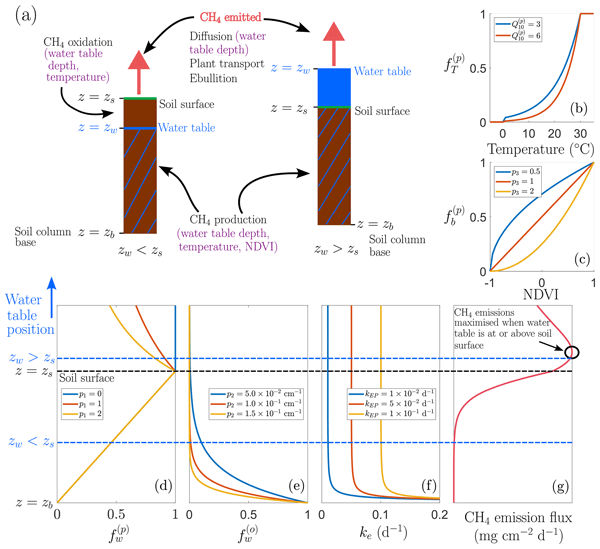
Fig. 1. Most of the abbreviations are not labeled. More labels/graphics to make this information and a conceptual figure would help.
- Water in soils doesn’t really dilute the DOC. If fresh water was moving through the soils, then maybe.
- There are three pathways. Methylotrophic methanogenesis may be very important in PPR wetlands
- >30 degree days are more likely in the future. Impact?
- Plant transport is very dependent on water table. If zw=zb, then plant transport will not be any different than diffusion in terms of methanotropy. When water table is higher, zw>zs, then plant transport allows methane to skip past methanotrophy (Bansal et al. 2020)
- use a PPR citation
- Variables could use more details, NDVI (from Landsat satellite imagery), soil temperature (or water temperature when zw>5 cm), water-filled pore space (top 5 cm soils). Do these detail affect model or interpretation?
- It is possible that removing those high emissions from the dataset is causing the poor performance in P8, which is driven by high rates of ebullition.
Fig 5. Perhaps put area in hectares
- methylotrophic pathways too.
Fig 6s. How did T9 have such high emissions (Me) but very low emissions in panel c?
Citation: https://doi.org/10.5194/egusphere-2025-6013-RC2 -
AC2: 'Reply on RC2', Gordon McNicol, 05 Mar 2026
We thank the reviewer for their positive assessment of our work and have addressed all comments in the attached response document.
-
RC3: 'Reply on AC2', Anonymous Referee #2, 05 Mar 2026
Excellent responses. I am satisfied with the quality of the ms for publication.
Citation: https://doi.org/10.5194/egusphere-2025-6013-RC3 -
AC4: 'Reply on RC3', Gordon McNicol, 06 Mar 2026
We thank the reviewer for their positive assessment of the revised manuscript and are pleased that the revisions have addressed their comments.
Citation: https://doi.org/10.5194/egusphere-2025-6013-AC4
-
AC4: 'Reply on RC3', Gordon McNicol, 06 Mar 2026
-
RC3: 'Reply on AC2', Anonymous Referee #2, 05 Mar 2026
-
EC1: 'Comment on egusphere-2025-6013', Jun Zhong, 05 Feb 2026
I received comments from two anonymous reviewers, and based on their feedback, moderate revisions are necessary. The revised manuscript and response letter are due by March 5th.
Citation: https://doi.org/10.5194/egusphere-2025-6013-EC1 -
AC3: 'Reply on EC1', Gordon McNicol, 05 Mar 2026
We thank the reviewers for their helpful comments. A detailed response to all points has been uploaded, and we await your approval before submitting the revised manuscript.
Citation: https://doi.org/10.5194/egusphere-2025-6013-AC3
-
AC3: 'Reply on EC1', Gordon McNicol, 05 Mar 2026


Interactive discussion
Status: closed
-
RC1: 'Review of egusphere-2025-6013', Anonymous Referee #1, 27 Jan 2026
Review of “Understanding the balance between methane production and oxidation from wetlands using a minimalistic emissions model” by Gordon R. McNicol, Anita T. Layton and Nandita B. Basu.
In their manuscript, McNicol and co-authors propose a zero-dimensional model of methane production, oxidation, and emission. The authors then investigate its application to a number of wetlands in the Prairie Pothole Region. They reduce the model even further and are able to relate methane emissions to water table position, finding maximum emissions with water table at or above the surface.
Overall, this is a very well-written manuscript, presenting a very interesting simple model that allows nicely illustrates the influences on wetland methane emissions. I recommend publication after minor revisions.
Of course there are a few minor points that could be improved:
1) Section 2: “we focus on soil columns at the centre of each wetlands”. Do you know how close to the edge of a wetland one could actually go before the underlying assumptions break down? I suspect it’s very close, but I have no solid arguments. If you have any arguments better than gut feeling, it would be very interesting to discuss these here. If not, you are welcome to skip this point.
2) Section 3.1: You relate WFPS linearly to water table. Strictly speaking, this is not true, as water does not necessarily fill available pore volume from the bottom upwards (nonetheless nearly everyone makes this simplification). You also make some further simplifications, like not considering the three emission pathways explicitly. Please summarize these simplifications and briefly discuss (speculate, if necessary) the effect they have on model results.
3) Section 4.1, Figure 5: Very nice fit to the different wetlands. Did you use identical parameter values for all wetlands, or different ones? Maybe the ones in Table A1? Which parameters weree adjusted, and why? A discussion of the parameter choice would be really interesting.
Further little details:
- Line 9: “Peak fluxes consistently occur at or just above the soil surface” – reads as if flux at surface is meant, but it is the water table at the surface that is important.
- Line 32: “shaped by complex” (without a)
- Line 33: “Among these” (not amongst)
- Line 41: “where microbes instead release” (not releasing)
- Line 180: “aerenchymous plants” (not arenchymous)
- Line 283: “captures the trend” (not capturing)
- Line 363: “...depends on both the…” Either the both is superfluous, or we are missing the other thing that is relevant in addition to the water table. Or you actually mean the wetland-specific parameters, but that doesn’t really become clear from the sentence. I suggest you reformulate it.
Citation: https://doi.org/10.5194/egusphere-2025-6013-RC1 - AC1: 'Reply on RC1', Gordon McNicol, 05 Mar 2026
-
RC2: 'Comment on egusphere-2025-6013', Anonymous Referee #2, 02 Feb 2026
I have read the manuscript. I thought the paper was well written and followed a logical workflow. This study provides an excellent example of using extensive field data to parameterize a simplified, quasi-mechanistic modeling approach.
The paper could have provided more information on the data source, which fluxes were used? Each wetland had 5 wetland chambers and 3 upland chambers in each wetland. Were only wetland chambers used? Was there any averaging across chambers?
I also questioned some assumptions in the notes below. The authors should mention the role of methylotrophic methanogenesis, particularly in PPR wetlands (Dalcin et al. https://doi.org/10.1111/gcb.13633, Bechtold et al. https://doi.org/10.1038/s41467-025-56133-0).
There are also methane production in oxic water columns and anerobic conditions that support methanotrophy. These were not discussed.
Title: Minimalist emissions model is very jargony and will lose audience immediately.
- Find a more universal definition of wetlands. Bansal et al. 2023 methods review paper has a lot of basic wetland info and citations: https://doi.org/10.1007/s13157-023-01722-2
- There are many other types of wetlands. The PPR wetlands are often less than 0.1 ha.
- Use a couple PPR-specific citations.
- newer citation on wetland loss. Fluet-Chouinard et al. https://www.nature.com/articles/s41586-022-05572-6
- Or uptake GHGs
- Not clear in sentence that methane or all three gases are the focus.
Fig. 1. Most of the abbreviations are not labeled. More labels/graphics to make this information and a conceptual figure would help.
- Water in soils doesn’t really dilute the DOC. If fresh water was moving through the soils, then maybe.
- There are three pathways. Methylotrophic methanogenesis may be very important in PPR wetlands
- >30 degree days are more likely in the future. Impact?
- Plant transport is very dependent on water table. If zw=zb, then plant transport will not be any different than diffusion in terms of methanotropy. When water table is higher, zw>zs, then plant transport allows methane to skip past methanotrophy (Bansal et al. 2020)
- use a PPR citation
- Variables could use more details, NDVI (from Landsat satellite imagery), soil temperature (or water temperature when zw>5 cm), water-filled pore space (top 5 cm soils). Do these detail affect model or interpretation?
- It is possible that removing those high emissions from the dataset is causing the poor performance in P8, which is driven by high rates of ebullition.
Fig 5. Perhaps put area in hectares
- methylotrophic pathways too.
Fig 6s. How did T9 have such high emissions (Me) but very low emissions in panel c?
Citation: https://doi.org/10.5194/egusphere-2025-6013-RC2 -
AC2: 'Reply on RC2', Gordon McNicol, 05 Mar 2026
We thank the reviewer for their positive assessment of our work and have addressed all comments in the attached response document.
-
RC3: 'Reply on AC2', Anonymous Referee #2, 05 Mar 2026
Excellent responses. I am satisfied with the quality of the ms for publication.
Citation: https://doi.org/10.5194/egusphere-2025-6013-RC3 -
AC4: 'Reply on RC3', Gordon McNicol, 06 Mar 2026
We thank the reviewer for their positive assessment of the revised manuscript and are pleased that the revisions have addressed their comments.
Citation: https://doi.org/10.5194/egusphere-2025-6013-AC4
-
AC4: 'Reply on RC3', Gordon McNicol, 06 Mar 2026
-
RC3: 'Reply on AC2', Anonymous Referee #2, 05 Mar 2026
-
EC1: 'Comment on egusphere-2025-6013', Jun Zhong, 05 Feb 2026
I received comments from two anonymous reviewers, and based on their feedback, moderate revisions are necessary. The revised manuscript and response letter are due by March 5th.
Citation: https://doi.org/10.5194/egusphere-2025-6013-EC1 -
AC3: 'Reply on EC1', Gordon McNicol, 05 Mar 2026
We thank the reviewers for their helpful comments. A detailed response to all points has been uploaded, and we await your approval before submitting the revised manuscript.
Citation: https://doi.org/10.5194/egusphere-2025-6013-AC3
-
AC3: 'Reply on EC1', Gordon McNicol, 05 Mar 2026
Peer review completion


Journal article(s) based on this preprint
Model code and software
v1.0_methane_emissions_model Gordon R. McNicol https://zenodo.org/records/17795564
Viewed
| HTML | XML | Total | Supplement | BibTeX | EndNote | |
|---|---|---|---|---|---|---|
| 427 | 174 | 45 | 646 | 69 | 25 | 27 |
- HTML: 427
- PDF: 174
- XML: 45
- Total: 646
- Supplement: 69
- BibTeX: 25
- EndNote: 27
Viewed (geographical distribution)
| Country | # | Views | % |
|---|
| Total: | 0 |
| HTML: | 0 |
| PDF: | 0 |
| XML: | 0 |
- 1
Gordon R. McNicol
Anita T. Layton
Nandita B. Basu
The requested preprint has a corresponding peer-reviewed final revised paper. You are encouraged to refer to the final revised version.
- Preprint
(3306 KB) - Metadata XML
-
Supplement
(2507 KB) - BibTeX
- EndNote
- Final revised paper
Review of “Understanding the balance between methane production and oxidation from wetlands using a minimalistic emissions model” by Gordon R. McNicol, Anita T. Layton and Nandita B. Basu.
In their manuscript, McNicol and co-authors propose a zero-dimensional model of methane production, oxidation, and emission. The authors then investigate its application to a number of wetlands in the Prairie Pothole Region. They reduce the model even further and are able to relate methane emissions to water table position, finding maximum emissions with water table at or above the surface.
Overall, this is a very well-written manuscript, presenting a very interesting simple model that allows nicely illustrates the influences on wetland methane emissions. I recommend publication after minor revisions.
Of course there are a few minor points that could be improved:
1) Section 2: “we focus on soil columns at the centre of each wetlands”. Do you know how close to the edge of a wetland one could actually go before the underlying assumptions break down? I suspect it’s very close, but I have no solid arguments. If you have any arguments better than gut feeling, it would be very interesting to discuss these here. If not, you are welcome to skip this point.
2) Section 3.1: You relate WFPS linearly to water table. Strictly speaking, this is not true, as water does not necessarily fill available pore volume from the bottom upwards (nonetheless nearly everyone makes this simplification). You also make some further simplifications, like not considering the three emission pathways explicitly. Please summarize these simplifications and briefly discuss (speculate, if necessary) the effect they have on model results.
3) Section 4.1, Figure 5: Very nice fit to the different wetlands. Did you use identical parameter values for all wetlands, or different ones? Maybe the ones in Table A1? Which parameters weree adjusted, and why? A discussion of the parameter choice would be really interesting.
Further little details: